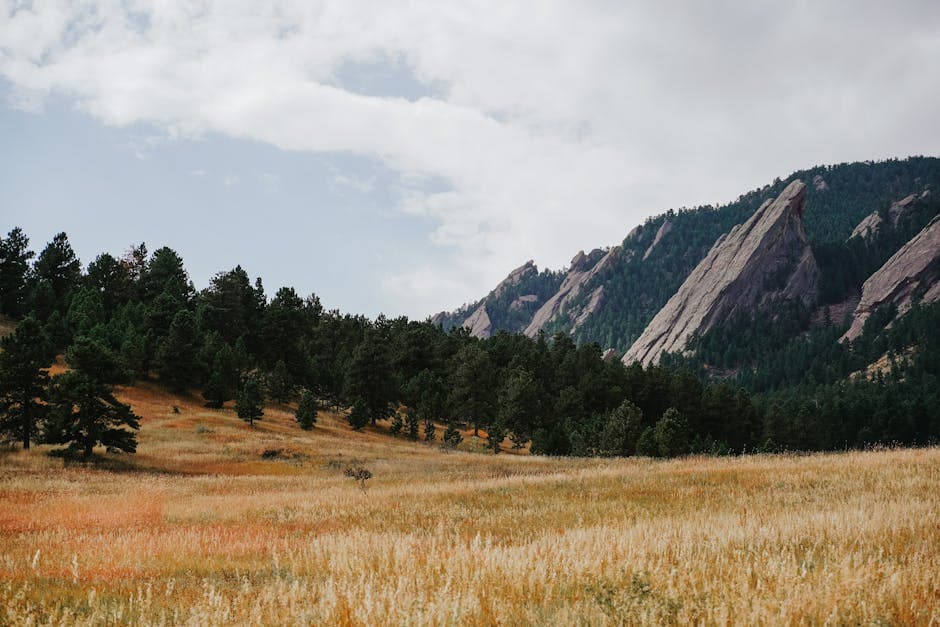
A mountain town, a Big Ten campus, and a tech corridor walk into a kitchen.
Boulder is the only city in the country where the Flatirons end the downtown grid in a wall of vertical sandstone, a Big Ten flagship draws thirty-six thousand undergraduates a mile from the pedestrian mall, and a single Foothills Parkway corridor hosts IBM, Google, Microsoft, X, Ball Aerospace, NCAR, and NIST. The restaurant a Boulder operator builds has to serve all three economies at once, on one ledger, with the same kitchen.
4:46 PM. Pearl Street. The Buffs just beat Nebraska.
Pearl Street west of Broadway is filling up faster than the restaurants on it can plate. The CU Buffaloes won by ten in a Saturday afternoon game at Folsom Field that ended an hour ago, and the entire stadium has migrated north. The Hill emptied first, into the bars. The Pearl Street pedestrian mall is catching the second wave: alumni who flew in for the weekend, parents who drove up from Denver, ski-town friends who came down off the western slope for the game. The Boulderado lobby is at standing-room capacity. The buskers on the 1300 block have stopped playing and are waiting for the crowd to thin.
The chef at a chef-driven Italian restaurant on Pearl, one block east of the 15th Street end of the mall, has been on her feet since 9:00 AM. The dining room has eighty-two covers seated. The catering window for the afternoon was closed at 2:00 PM. Her staff is one short because two line cooks live in Lyons and the Saturday morning bus was full. The pickup window has eighteen orders queued for the next ninety minutes, most of them from CU alumni who want to drop their game-day gear at the hotel and then walk back to the mall for dinner without losing the table. She has been refusing reservations since Wednesday.
On the other side of town, the Foothills Parkway corridor is quiet. IBM and Microsoft are dark for the weekend. NCAR's Mesa Lab is locked. NIST's Boulder campus is empty. The catering arms of two of the restaurants in this kitchen's referral network spent Friday filling the Ball Aerospace internal program review, the AFRL Directed Energy symposium boxed-lunch order, and three back-to-back software team off-sites at Google Pearl Place. That weekday catering tail is one of the two revenue tentpoles for the downtown restaurants. The other is exactly the game-day Saturday she is working through right now.
Boulder is a city of three economies stacked on top of one another. The mountain town economy runs on weekend tourists, summer hiking traffic, Chautauqua Auditorium programming, and the Bolder Boulder ten kilometer foot race that closes streets on Memorial Day. The university economy runs on the CU Boulder academic calendar, football Saturdays, parents weekend, graduation, and a thirty-six thousand-student enrollment that doubles the city population in session. The tech economy runs on weekday lunch catering, program-milestone events, and the steady drumbeat of recruiting visits at Pearl Place, Pearl East, and Cottonwood. The platform a Boulder restaurant chooses has to handle all three, on one order ledger.
The chef is going to plate four hundred and twenty covers tonight. The pickup queue will run until 11:30 PM. The Voice AI on the back-office line has fielded twenty-two pickup orders since the game ended at 3:45, in three languages, without a single staff member picking up the phone. The catering inbox is already booked for next Friday's Tuesday-staff-meeting Google order and the Wednesday IBM all-hands. The same kitchen, the same brand, the same domain, the same payout account, three different demand curves. This is the Boulder operating reality.
Fifty thousand seats. One live bison. Six football Saturdays that move the city.
Folsom Field sits at the south end of the CU Boulder main campus, a ten-minute walk from the Pearl Street Mall. The stadium opened in 1924, was named for the long-serving CU football coach Fred Folsom in 1944, and currently lists a capacity of roughly fifty thousand. The Buffaloes have played at Folsom for a century. The live bison Ralphie has been running across the field before the team at home kickoffs since 1967, the longest-running live-mascot tradition in college football. The Ralphie Live Mascot Program at CU Boulder maintains the herd. The halftime Ralphie return is the second of two crowd peaks inside the stadium, behind the opening kickoff entrance.
A typical CU Boulder home football season delivers six or seven home games between early September and late November, with a single bowl trip in some years that does not affect the local restaurant math. Each home game produces a six-window operating day for the downtown and Hill restaurants. Breakfast pickups ramp from 7:00 AM. Catering peaks between 9:30 AM and 12:30 PM, when fraternity tailgates and alumni hospitality groups pick up hot platters and deli trays. Walk-in restaurant traffic collapses across central Boulder during the in-game window from 12:30 PM through 4:00 PM. The post-game return to downtown fills Pearl Street from 4:30 PM through 7:30 PM. Late-night pickup orders run from 9:30 PM to 12:30 AM, mostly pizza, ramen, and Mexican from the Hill.
The six-window curve compounds in ways that out-of-town hospitality consultants miss. A 12:30 PM kickoff Saturday peaks differently than a 7:00 PM Saturday night kickoff. A nationally televised matchup that runs four hours instead of three pushes the post-game spike past 7:00 PM and into the late-night window. A homecoming weekend pushes Friday-night demand up by thirty percent and adds a Sunday-morning brunch spike that the operator could not predict from the football schedule alone. The Boulder operator who has been doing this for a decade has a six-window operating playbook that the marketplace dispatch algorithms cannot price into a single ETA.
Underneath the windows is a staffing problem. The kitchen labor pool in Boulder lives in Lafayette, Louisville, Longmont, and the Lyons-and-Hygiene corridor. Most of them ride the RTD bus or carpool. The game-day road closures around Folsom Field, plus the Pearl Street pedestrian-mall load-in and load-out, plus the post-game Broadway and 28th Street traffic compression, make Saturday afternoon a staffing nightmare on top of being a demand peak. The restaurants that survive run a kitchen lean enough to plate through two-thirds of the demand on the floor and offload the other third to direct pickup and Uber Direct dispatch.
The Voice AI line matters here for a specific reason: the kitchen cannot answer the phone during the 12:30 PM kickoff through the 3:30 PM end-of-game window. The phone rings anyway. Alumni call to ask about reservations. Parents call to ask about pickup. Catering inquiries come in for next weekend. A Voice AI that answers in English, Spanish, and Mandarin (the three language clusters present in the Boulder fall family-weekend traveler base), takes the order, slots it into the pickup queue, and texts the customer a ten-digit confirmation is the only mechanism that keeps the kitchen from losing twenty to thirty captures across a single afternoon.
The catering inbox is where the game-day revenue actually compounds. A single fraternity tailgate order for one hundred guests runs five to eight hundred dollars. Twelve such orders, slotted Friday afternoon through Saturday morning, generate the equivalent of a full Saturday dining room. The restaurants that close their catering inbox at Wednesday noon (the typical lead-time cutoff in Boulder) on the Wednesday before a home game produce the highest game-day revenue in the metro.
Morning gates open
The Hill, Pearl Street west end, 28th Street
Tailgate setup along the Hill (the commercial strip on College Avenue immediately north of campus) and breakfast pickups for visiting families staying in Boulder hotels. Breakfast burrito volume runs three to four times an ordinary Saturday.
Pre-kickoff tailgate
Folsom Field perimeter lots, Franklin Field, Williams Village lots
Group catering pickups for fraternity, alumni, and donor tailgates. Hot platter formats, deli trays, smoked meats, and chile-rubbed wings dominate. The catering inbox doubles versus a typical Saturday morning.
Kickoff to halftime
Folsom Field, with stadium concourses fed by venue concessions
Walk-in restaurant traffic collapses across central Boulder. Operators schedule prep, deep clean, and same-day catering production during the in-game window.
Halftime Ralphie return
Folsom Field tunnel and concourses
Ralphie the Bison's halftime run is a tradition dating to 1967. The kickoff and halftime Ralphie windows are the two crowd peaks inside the stadium. No measurable off-site spike.
Post-game return to downtown
Pearl Street Mall, the Hill, downtown bars
Pearl Street pedestrian mall absorbs the bulk of post-game dining. Bars on the Hill saturate first. Dinner pickups for hotel rooms run a second wave from 6:30 PM through 9:00 PM.
Saturday night wind-down
Pearl Street west end, the Hill, 30th Street
Late-night pickup orders from students and visiting alumni who are not going to brave another sit-down wait. Pizza, ramen, and Mexican are the late-night winners.
The city closed four blocks to cars in 1976. The economic argument has held for fifty years.
In 1976 the City of Boulder commissioned the landscape architecture firm Sasaki Associates to redesign the four blocks of Pearl Street between 11th and 15th as a pedestrian-only corridor. The vehicle traffic moved one block north to Walnut and one block south to Spruce. The four-block mall opened in 1977 with brick pavers, planters, public art, and a programmed schedule of street performers. The argument was that a walkable downtown spine would concentrate retail and restaurant demand in a way that a vehicle-permeable grid could not. Fifty years later the argument has held.
The Pearl Street Mall today is the densest concentration of independent restaurants in the Front Range outside Denver's RiNo Art District. The mix on the four blocks runs from the Boulder Theater and Boulderado Hotel anchor on the east end, through the courthouse plaza and weekend buskers on the 1300 block, to the west-end concentration of bars and casual restaurants by 15th Street. Frasca Food and Wine sits one block east of 15th on Pearl, technically off the mall but functionally part of the corridor's gravity. The Sink, the Boulder dining institution that hired Robert Redford as a janitor when he was a CU student in the 1950s, sits one block north on the Hill.
The pedestrian-only design produces a specific delivery-and-pickup challenge that the restaurants have spent five decades solving. Couriers cannot drive onto the mall. Pickup orders have to be carried out to the nearest cross-street corner at 11th, 12th, 13th, 14th, or 15th. Uber Direct and DoorDash Drive drivers stage at the cross-street corners and meet the runner on foot. A direct-ordering integration with item-level pickup flags and operator-controlled radius is the difference between a smooth carryout handoff and a confused driver who blocks Walnut Street looking for the restaurant they cannot drive to.
The Saturday Boulder County Farmers Market on 13th and Canyon (one block south of the mall, running April through November) is the highest-volume produce-buying day of the week for the Pearl Street restaurants. Frasca, Salt, Black Cat, and the rest of the chef-driven east-side cluster source heirloom vegetables, peaches from Palisade, peppers from the Western Slope, and Colorado beef directly from vendors at the market. Saturday morning kitchen prep at a Pearl Street restaurant is often a market run before the dining room opens.
The pedestrian mall is also where Boulder programs its public life: the Open Streets Boulder days expand the closure to surrounding blocks. The Munchkin Masquerade on Halloween closes the mall to all non-foot traffic. The First Night New Year's Eve celebration anchors the courthouse plaza. The downtown holiday lighting after Thanksgiving. Each event compresses an entire weekend of restaurant demand into a forty-eight-hour window where the pickup logistics and the catering inbox both spike at once.
The Foothills Parkway runs north-south, and on its east side sit IBM, Google, Microsoft, X, Ball, NCAR, and NIST.
The Foothills Parkway (US Highway 36 / state route 157) runs along the east edge of the City of Boulder. On its east side, in a strip that extends from Gunbarrel in the north to the Table Mesa exit in the south, sit the tech and federal-research employers that anchor the weekday lunch and catering economy of the city. IBM's Cottonwood Lane site dates to the mid-twentieth century. NCAR's Mesa Lab opened in 1967 in an I.M. Pei building above the Table Mesa neighborhood. NIST's Boulder Labs complex on Broadway has been a federal physical-sciences research site since 1954. Google, Microsoft, X, GoPro, and Crocs joined over the last twenty years.
The catering reality of the corridor breaks into three economies. The first is the private-tech catering line: Google, Microsoft, X, IBM, GoPro, and the surrounding software and hardware companies run a weekday cadence of recruiting visits, partner meetings, engineering off-sites, and all-hands events that draws on the Boulder restaurant catering base. Lead times are typically twenty-four to forty-eight hours. Boxed lunch, deli platter, and hot-platter formats dominate. The Boulder operator who has built a streamlined online catering form, a clear menu, and a forty-eight-hour SLA wins this business through brand and reliability, not pricing.
The second is the federal-research catering line: NCAR, NIST, Ball Aerospace, AFRL, and the academic research labs at CU Boulder run conferences, symposia, and program-milestone events. Lead times here are weeks, not days. Vendor onboarding can take a month for federal facilities. But the order sizes are larger, the recurring cadence is steadier, and the revenue is more predictable than the private-tech catering tail. The restaurants that build a federal-vendor profile (W-9 on file, SAM.gov registration where required, insurance certificate uploaded to the procurement portal) win this business over years, not quarters.
The third is the weekday lunch walk-in: the restaurants closest to Pearl Place, Pearl East, the 30th Street Microsoft and X buildings, and the IBM Cottonwood site absorb a steady daily lunch demand from staff who walk over for sandwiches, salads, and bowls. The 28th Street and 29th Street corridor is the densest weekday lunch trough outside Pearl. Pickup orders dominate. A direct-ordering channel with same-day order-ahead and a fifteen-minute pickup SLA captures the bulk of this revenue without feeding it to a marketplace commission.
Across the three economies, the platform requirement is the same: one order ledger, one customer database, one payout account, one tax-remittance schedule. The restaurants that route their tech corridor catering through three different platforms (one for direct, one for the marketplace, one for the federal vendor portal) lose the customer-relationship continuity that makes the recurring bookings reliable in the first place.
5600 Cottonwood Lane (east of Foothills Parkway)
Long-tenured IBM service-delivery campus. The Boulder site has been an IBM facility for decades. Group catering for staff events runs through approved vendors. Boxed lunch and platter formats dominate. Lead time 48 to 72 hours.
Pearl Place (downtown) and 30th Street
Google's Boulder offices grew through the Niantic and Sandia Labs acquisitions and the company's expansion of the Pearl East corridor. On-campus food service is generally Google-operated, but vendor catering for external events, recruiting visits, and team off-sites is a regular workflow.
Pearl East and 28th Street
Microsoft's Boulder presence runs across multiple buildings in the Pearl East corridor. Catering for recruiting, partner visits, and engineering off-sites runs through external vendor lists.
1900 30th Street
X's Boulder engineering office is a downstream of the original Gnip acquisition. Smaller catering footprint than IBM or Google but a steady weekday lunch driver for nearby restaurants on the 30th Street corridor.
Headquarters in Broomfield, Boulder operations along Foothills Parkway
Ball builds and operates spacecraft and instruments for NASA, NOAA, and the Department of Defense. Conference and program-milestone catering runs through approved vendors and is a steady volume driver across the Boulder and Broomfield corridor.
Mesa Laboratory, 1850 Table Mesa Drive (the I.M. Pei building)
Federally funded research and development center operated by UCAR for the National Science Foundation. The Mesa Lab building (designed by I.M. Pei in 1967) hosts conferences, symposia, and visiting scientist receptions. External catering for those events runs through approved vendor lists.
325 Broadway, Boulder
Federal physical sciences research laboratory. The Boulder Labs site (jointly housing NIST, NOAA, and the National Telecommunications and Information Administration) runs symposia and external program reviews that route catering through federal vendor onboarding. Lead times are long.
Various sites, with Crocs HQ in Broomfield
GoPro maintains a Boulder presence after its early growth in the city. Crocs is headquartered just south in Broomfield. Both run vendor-catered all-hands and product-milestone events that draw on the Boulder restaurant catering base.
Frasca opened in 2004. The James Beard recognition has not stopped since.
Frasca Food and Wine opened on Pearl Street in 2004. Its founders were Bobby Stuckey, a Master Sommelier (then one of fewer than two hundred and fifty in the world), and Lachlan Mackinnon-Patterson, a chef who had cooked at the French Laundry. The concept was Friulian regional Italian cuisine, which is to say the food of the Friuli-Venezia Giulia region of northeast Italy, structured around a tasting menu paired with a wine list that ran deeper into the region than any list in the western United States. The James Beard Foundation has recognized Frasca repeatedly across two decades, including Outstanding Wine Program (2013) and Outstanding Service (2014, 2015). The Frasca group has since opened Pizzeria Locale, Tavernetta in Denver (at Union Station), and Sunday Vinyl.
The Frasca effect on Boulder was structural. A Master Sommelier-driven, James Beard-recognized tasting-menu restaurant on Pearl Street raised the floor on what a chef-driven Boulder restaurant could aspire to, raised the ceiling on what a Boulder wine list could be, and pulled an entire generation of cooks into the city. Black Cat Farm Table Bistro opened the same year as Frasca. Salt followed in 2009. The Kitchen, the farm-to-table sit-down founded by Hugo Matheson, Kimbal Musk, and Jen Lewin in 2004, anchored the local-sourcing argument. Oak at Fourteenth opened in 2010 as a wood-fired American restaurant by Steven Redzikowski and Bryan Dayton, and won a James Beard semifinalist nod within two years. Blackbelly Market, by Hosea Rosenberg (Top Chef season 5 winner), opened in 2014 on the east side of the city.
The chef-driven cluster gives Boulder a per-capita James Beard recognition rate that punches well above the city's hundred-and-five thousand population. The restaurants in the cluster compete on talent, not price. They source heirloom produce and Western Slope peaches from the Saturday farmers market. They run wine lists deep enough that a Master Sommelier can sit down at any of them and find something to argue about. They use the brand strength of the cluster to draw weekend tourists from Denver, Vail, and the airport hotels, who would not otherwise drive to Boulder for dinner. The corridor exports a chef-and-wine reputation that fills tables six nights a week.
The operating reality underneath the recognition is harder. A chef-driven Boulder restaurant runs on tighter margins than a comparable Denver kitchen because the Boulder food cost is higher (small-batch Western Slope produce, named-vineyard wine, off-season imported ingredients), the labor cost is higher (the housing math for kitchen staff in Boulder county is brutal), and the average ticket has a soft ceiling set by what a CU parent will pay at parents weekend. The platform that fits this restaurant cannot take twenty-eight percent commission and still let the operator run the cluster's expected quality.
The direct-ordering channel for a Frasca-tier Boulder restaurant is rarely about volume. It is about control: the catering inquiry from the Google product team, the reservation overflow from a sold-out Saturday, the gift-card sale from the alumni who flew in for the game, the wine-club shipment for the out-of-state customers. The flat $249 per month direct-ordering channel is the only stack that lets a cluster-tier kitchen keep the customer relationship from being intermediated by a marketplace algorithm that does not understand the difference between Friulian Ribolla Gialla and a generic Pinot Grigio.
Five hundred million years of sandstone end the downtown grid.
The Flatirons are five tilted slabs of Fountain Formation sandstone on the eastern face of Green Mountain, rising directly out of the western edge of the city. The formations are roughly two hundred and ninety million years old. The First Flatiron tops out at roughly seven thousand feet of elevation; the city below sits at five thousand three hundred and eighteen feet at the downtown core. The approximate one thousand five hundred feet of vertical relief between downtown Boulder and the top of the Flatirons is the single most identifiable feature of the city skyline and the operating constraint that everything west of Broadway has to plan around.
Chautauqua Park, founded in 1898 as the Colorado Chautauqua, sits at the base of the Flatirons. The site is one of the last remaining active chautauquas in the country (a chautauqua being a turn-of-the- twentieth-century summer adult-education programming format that combined lectures, music, and outdoor recreation). The Chautauqua Auditorium runs a summer concert series. The Chautauqua Dining Hall, a cabin restaurant on the property, opens for breakfast and dinner during the season. The trailhead complex feeds the Mesa Trail, the Royal Arch Trail, and the First and Second Flatiron approach scrambles. On a summer Saturday the parking lots fill by 7:30 AM.
The outdoor-recreation calendar drives a specific dining cadence. The summer Saturday and Sunday trailhead surge produces a 7:00 AM through 10:30 AM breakfast pickup window at every restaurant within a mile of Chautauqua. The Memorial Day Bolder Boulder ten-kilometer foot race (one of the largest 10K events in the world by participation, with thirty to fifty thousand finishers across multiple waves) closes streets across the central part of the city and produces a single-day brunch peak that operators plan for months in advance. The Boulder Marathon and the Boulder Sunrise Triathlon add to the calendar. The fall foliage drive up Flagstaff Mountain and into the Peak to Peak Highway pushes weekend traffic into Nederland and the foothill towns.
The recreation surge has a specific direct-ordering shape. Hikers and runners want breakfast burritos, bagels, smoothies, and recovery food. They want it ready when they arrive, not made-to-order. They are willing to pay a premium for speed. The restaurants that have built an order-ahead pickup channel with a fifteen-minute SLA and a clear curbside or front-counter handoff capture the recreation surge without losing the dining-room covers to a longer ticket time. The restaurants that try to handle the recreation surge through the main dining-room queue lose both the recreation traffic and the dining room.
The Open Space and Mountain Parks system that manages the Flatirons and Chautauqua (the City of Boulder protects roughly forty-six thousand acres of open space through OSMP and through Boulder County Parks and Open Space) holds the western expansion of the city in place. The city limit ends at a hard line against the foothills. The dining geography is correspondingly tight: there is no Boulder-equivalent of the Denver Tech Center, no greenfield strip-mall expansion on the west side, no edge city. The restaurants compete inside a fixed dining footprint, which makes the catering tail to the Foothills Parkway corridor on the east side a structural revenue line, not an optional one.
A creek through downtown, a reservoir to the north, a spring to the south.
Boulder Creek runs west to east through downtown, drops out of Boulder Canyon between the Flatirons, cuts through the south side of Pearl Street, and then turns south and east toward the Boulder Reservoir and the South Platte watershed. The creek is the through-line of the city. The Boulder Creek Path, a paved multi-use trail along the creek bank, connects Eben G. Fine Park on the west side to the Stazio ballfields and Valmont on the east side. The path is the central spine of the city's non-vehicle commuter network. On a summer Saturday the creek itself fills with tubers floating between Eben G. Fine and Boulder High School.
The Boulder Reservoir sits about four miles north of downtown in unincorporated Boulder County. The reservoir is the city's primary recreational water body. The Boulder Reservoir Swim Beach opens Memorial Day weekend. The Rocky Mountain Half Marathon and the Boulder Sunrise Triathlon use the reservoir as their start. The Sunset Concert Series runs Wednesday nights at the reservoir's amphitheater in the summer. Catering pickups for boat-launch picnics, sailing-club banquets, and corporate team-building events on the reservoir form a small but reliable summer revenue line for the restaurants on the 28th Street corridor that sit closest to the reservoir road.
Eldorado Springs sits south of Boulder, at the mouth of Eldorado Canyon, on the way to the Eldorado Canyon State Park climbing area. The town's namesake springs are the source for the Eldorado Natural Spring Water bottling operation. The Eldorado Pool, an artesian-spring-fed open-air swimming pool open since 1905, draws weekend crowds from Memorial Day through Labor Day. Restaurants on the south end of Boulder absorb the post-swim and post-climb dining demand, which is concentrated on weekend afternoons and runs Mexican, pizza, and casual American.
The three water-anchored recreational corridors (the creek through downtown, the reservoir to the north, the spring to the south) shape the weekend dining geography of Boulder in ways that the marketplace dispatch algorithms cannot read off a map. A restaurant on Walnut Street near 11th catches a steady afternoon tube-rental traffic from the Boulder Creek path. A restaurant on Diagonal Highway near the reservoir road catches the morning sailing-club breakfast traffic. A restaurant on US 36 south of Boulder catches the post-Eldorado-pool Sunday dinner traffic. The direct-ordering channel that operates a restaurant's website carries the localized search visibility (Boulder Creek tube rental breakfast, Boulder Reservoir sailing brunch, Eldorado Pool early dinner) that the marketplace listing cannot.
Pearl is the spine. The Hill feeds the campus. NoBo and Gunbarrel run north.
Boulder is a small city by population (roughly one hundred and five thousand residents inside the city limits) but a dense one by dining-corridor count. Eight named neighborhoods carry the bulk of the restaurant economy. The atlas below maps them against the city geography: the Flatirons on the west, the Foothills Parkway on the east, Boulder Creek through the middle, the CU Boulder campus south of downtown.
Pearl Street is the spine of the dining geography. The four-block pedestrian mall plus the east and west extensions form a roughly seven-block continuous restaurant corridor that absorbs the bulk of downtown evening demand, weekend tourist traffic, and post-CU-game-day crowds. Frasca, Oak, Brasserie Ten Ten, Mountain Sun Pub, the Kitchen, Bartaco, Cured, Pizzeria Locale, and Avanti Boulder anchor the mix.
The Hill is the student-driven shoulder. College Avenue from Broadway to 17th Street carries the CU Boulder lunch and late-night demand. The Sink anchors a hundred-year history. Cosmo's, Half Fast Subs, and the Hill's bar concentration handle the late-night calls. The catering for fraternity and sorority house events runs through a small set of well-known operators.
North Boulder (NoBo) is the slower-growth dining ring. Broadway north of Iris and the residential streets around the NoBo Art District anchor a coffee-and-bakery-led weekday breakfast and lunch base. Amante Coffee, Proto's Pizza, the Boulder Cafe, and Lucky's Market run the corridor.
Gunbarrel sits in unincorporated Boulder County, northeast of the city. Boulder Beer (founded 1979, the first microbrewery in Colorado) and Avery Brewing anchor the brewery-led identity of the corridor. A cluster of tech employers (X engineering and a long tail of smaller software shops) feed weekday lunch and brewery taproom dinner traffic.
East Boulder along the 28th and 30th Street corridors holds the densest weekday lunch traffic outside Pearl. The Twenty Ninth Street shopping district, the mid-rise office buildings, the Boulder Marriott, and the IBM Cottonwood site (one ring further east) generate the weekday lunch demand that fills the casual-dining string along the corridor.
The South Pearl side streets and the Table Mesa neighborhood form the south Boulder dining ring. The Table Mesa shopping center and the south-Boulder residential cadence carry a steady evening neighborhood-restaurant demand. NCAR's Mesa Laboratory sits on the mesa above the neighborhood.
Chautauqua and Mapleton Hill anchor the western edge. The Chautauqua Dining Hall, the Auditorium summer programming, and the trailhead complex feed the recreation-driven weekend morning and evening demand. Pizzeria Locale's Pearl Street original sits a few blocks east. The neighborhood restaurants on Mapleton Hill absorb pre and post-hike traffic.
80302 · Four-block pedestrian core, restaurant and indie retail anchor
Pearl Street between 11th and 15th streets has been closed to vehicle traffic since 1976, when the City of Boulder commissioned the architect Sasaki Associates to redesign the corridor as a pedestrian mall. Today the four-block stretch holds the densest concentration of independent restaurants in Boulder. Frasca Food and Wine sits on Pearl in the east extension. The Boulderado Hotel anchors the east end. Street musicians and a fire-eater perform on the mall daily during the summer.
80302 · Student-driven commercial strip on College Avenue, immediately north of CU
The Hill is the commercial district on College Avenue between Broadway and 17th, directly across from the CU Boulder main entrance. Student-driven lunch and late-night demand. Tailgate breakfast volume on football Saturdays. Pizza, sandwiches, fast-casual Mexican, and bars dominate. The Sink (a pizza-and-burger institution that hosted Robert Redford as a student employee in the 1950s) anchors the corridor.
80304 · Residential growth ring with a small but growing dining strip on Broadway
Broadway north of Iris Avenue and the surrounding residential streets. Slower-growth dining ring than central Boulder but a steady weekday breakfast and lunch base. Coffee, bakeries, and casual-counter Mexican are the strongest categories. Lucky's Market and Amante Coffee anchor the corridor.
80302 / 80305 · Residential side-of-Pearl with farmers-market anchor and casual dining
Note: Boulder's South Pearl is distinct from Denver's South Pearl Street (which sits in Platt Park). In Boulder, the South Pearl reference covers the residential side streets south of the pedestrian mall and the Table Mesa Drive corridor. The Saturday Boulder County Farmers Market on 13th and Canyon (running April through November) draws weekly produce buyers from across the metro.
80301 · Tech-anchored unincorporated area northeast of city limits
Gunbarrel sits in unincorporated Boulder County, northeast of the city. The corridor anchors the Boulder Beer brewery (founded 1979, the first microbrewery in Colorado), Avery Brewing, and a cluster of tech employers including the Twitter / X engineering presence. Weekday catering and a steady weeknight casual-dining base.
80301 / 80303 · Big-box and mid-rise office corridor with the densest weekday lunch traffic outside Pearl
28th Street (US 36 frontage) runs north-south through east Boulder, anchoring the Twenty Ninth Street shopping district and a long string of casual-dining restaurants. 30th Street parallels it one block east and hosts a chain of mid-rise tech offices (X / Twitter, Microsoft Pearl East, the Boulder Marriott, the IBM Cottonwood site one ring further east).
80305 · South Boulder residential ring on the Mesa, NCAR-adjacent
Table Mesa is the south Boulder neighborhood sitting on the mesa below the NCAR Mesa Laboratory. The Table Mesa shopping center anchors the corridor. Casual dining, a King Soopers grocery, and the trailheads for the Mesa Trail and South Boulder Creek. The 2021 King Soopers tragedy occurred here.
80302 · Historic park anchored on the western edge, summer programming peak
Chautauqua Park (founded 1898 as the Colorado Chautauqua, one of the last remaining active chautauquas in the US) sits at the base of the Flatirons. The Chautauqua Dining Hall, the Auditorium, and the trailhead complex draw both day hikers and a steady summer concert and lecture series audience. Restaurants in the surrounding Mapleton Hill neighborhood absorb pre and post-hike traffic.
Boulder operates at 5,318 feet and remits roughly eight percent combined sales tax on prepared food.
Boulder's downtown elevation is five thousand three hundred and eighteen feet, thirty-eight feet higher than Denver's official mile-high mark at the State Capitol. The Flatirons rise another seventeen hundred feet above that. For a Boulder kitchen, the altitude operating reality is the same as Denver's: water boils at roughly ninety-five degrees Celsius, atmospheric pressure runs around twelve point two psi (against fourteen point seven at sea level), bread dough proofs roughly twenty-five percent faster than a sea-level recipe would predict, and dissolved CO2 escapes beer more aggressively. The King Arthur Baking and America's Test Kitchen high-altitude guidance applies directly. A Boulder bakery's pizza dough recipe is reformulated from the New York or Naples original before the first batch hits the deck.
The combined sales tax on prepared food in the City of Boulder runs approximately eight percent. The Colorado state sales tax is two point nine percent (per the Colorado Department of Revenue). The Boulder County sales tax is one point one eight five percent. The City of Boulder sales tax on prepared food is three point eight six percent. Additional special-district rates may apply in specific neighborhoods (the Boulder County Open Space tax, the RTD transportation tax, the SCFD cultural- facilities tax) but the headline combined rate on a Boulder restaurant ticket sits very close to eight percent. (Operators should verify the current effective rate with the Colorado DOR online sales-tax lookup before each filing period.)
Compared with Denver's combined rate of roughly eight point eight one percent on prepared food, Boulder's eight percent is a small but real margin advantage. Compared with Chicago's roughly ten point two five percent or Seattle's roughly ten point twenty-five percent combined rates, the Boulder operator has more room to absorb a kitchen labor cost that runs higher than a comparable Front Range metro because of the Boulder housing math. The tax structure does not save the restaurant; it shapes the cushion.
The remittance timing is where the platform choice compounds. Colorado uses a marketplace facilitator regime: a marketplace (Uber Eats, DoorDash, Grubhub) collects and remits sales tax on behalf of the restaurant. The cash the operator receives is net of the marketplace's commission and the marketplace's tax-remittance timing. On the DirectOrders side, the gross order revenue (including the sales tax collected from the customer) settles same-day to the operator's Stripe account. The operator's obligation to remit the tax is real, but the cash is in the account on the day the order is fulfilled, which means the working-capital gap that marketplaces structurally create is closed.
For a Boulder restaurant running through a peak event week (a CU home football Saturday, the Bolder Boulder 10K, the Open Streets Boulder weekend, the Munchkin Masquerade on Halloween), the working-capital impact of same-day payouts versus weekly marketplace payouts is the difference between funding the next week's prep comfortably and floating costs on a line of credit. The altitude-and- labor-compressed margin of a Boulder kitchen does not give the operator the luxury of a one-week cash-flow gap.
A flat $249, multilingual Voice AI, Uber Direct, same-day Stripe stack is the only stack that fits Boulder.
The argument of this report has been built in layers. The foundation is the mountain town: a city where the Flatirons end the downtown grid in a wall of sandstone, the open-space boundary holds the western expansion in place, and a fixed dining footprint of roughly one hundred and five thousand residents and thirty-six thousand students plays out across eight named corridors. The second layer is the university: a Big Ten flagship that drives a six-window CU home football Saturday operating reality, a thirty-six thousand-student enrollment that doubles the city population in session, and a parents-weekend, homecoming, graduation, and Ralphie-tradition calendar that bends the year. The third layer is the tech corridor: a Foothills Parkway strip from Gunbarrel to Table Mesa that hosts IBM, Google, Microsoft, X, Ball Aerospace, NCAR, and NIST, and that drives a weekday catering economy of recruiting visits, all-hands events, federal-research conferences, and partner meetings.
On top of the three layers sits the chef cluster: a Master Sommelier-driven, James Beard-recognized Pearl Street cluster that exports a reputation deeper than the city population should support, and that compete on talent against a Denver scene fifteen times their size. Underneath everything sits the operating physics of altitude (water boiling at ninety-five Celsius, doughs proofing twenty-five percent faster, beer holding less CO2) and the combined sales-tax math (roughly eight percent on prepared food).
DirectOrders fits this stack in five specific ways. The flat $249 per month price replaces the twenty-five to thirty percent marketplace commission that breaks the chef-cluster margin math. The multilingual Voice AI (English, Spanish, Mandarin) handles the parents-weekend international travelers and the catering inbox during a 12:30 PM kickoff when no kitchen staff can pick up the phone. The Uber Direct integration with item-level pickup flags solves the Pearl Street pedestrian- mall load-out problem and the post-game Saturday-evening hotel-room delivery surge. The same-day Stripe payouts close the working-capital gap that the altitude-compressed kitchen labor cost will not let a Boulder operator float for a week. The direct-ordering channel on the restaurant's own domain captures the recreation-surge breakfast burrito and the Ralphie-game-day pickup queue without surrendering the customer relationship to the marketplace.
The argument of this report is that, corridor by corridor and Saturday by Saturday, this is the only platform stack that respects the structural depth of how Boulder restaurants actually run. The mountain town, the Big Ten campus, and the tech corridor share one ledger, one customer database, one payout account. The operator keeps the upside.
The mountain town was always going to choose its own kitchen technology.
The Arapaho and Cheyenne lived in this valley for centuries before the gold rush of 1858 brought the first wave of European-American settlement. Boulder City was founded in 1859 at the mouth of Boulder Canyon. The University of Colorado was chartered in 1876, the same year Colorado entered the union. The Colorado Chautauqua opened in 1898. The first ascent of the Third Flatiron was recorded in 1906. Folsom Field opened in 1924. NCAR's Mesa Laboratory opened in 1967. The Pearl Street Mall closed to vehicles in 1976. The first Bolder Boulder ten kilometer race ran in 1979. Frasca opened in 2004. The Ralphie tradition has run continuously since 1967.
Each of those facts adds a layer to the operating reality of a contemporary Boulder restaurant. The kitchen runs an altitude operating physics that predates the recipes. The Voice AI handles parents- weekend visitors arriving from twenty time zones. The catering inbox routes Google Pearl Place, IBM Cottonwood, NCAR Mesa, NIST Boulder, and Ball Aerospace conferences through the same workflow as the fraternity tailgate orders for next Saturday's Folsom Field home game. The order ledger captures it all.
DirectOrders is built to be the technology that respects that depth. Flat $249 per month. Multilingual Voice AI. Pearl Street pedestrian-mall pickup handoffs. CU home football Saturday six-window playbook. Federal vendor catering workflow. Fifteen capture channels. Same-day payouts. Built for the Flatirons, the Buffaloes, and the Foothills Parkway. Built for Boulder.
Sources and citations
- Climate and elevation: NOAA NWS Boulder office; USGS elevation data for the downtown Boulder city center.
- Population and demographics: US Census Bureau QuickFacts Boulder, Bouder County QuickFacts, American Community Survey one-year estimates.
- Tax structure: Colorado Department of Revenue sales-tax tables; City of Boulder Sales Tax and Business Licensing rate schedules; Boulder County Finance tax rate disclosures.
- University of Colorado Boulder: CU Boulder About enrollment statistics; CU Buffaloes football Folsom Field facts and Ralphie Live Mascot Program history.
- Pearl Street Mall: City of Boulder Pearl Street Mall project history; Downtown Boulder Partnership; Sasaki Associates archival project pages on the 1976 redesign.
- Federal research facilities: NIST Boulder Laboratories; National Center for Atmospheric Research (operated by UCAR for the NSF); Ball Aerospace public affairs disclosures.
- Tech corridor: Boulder Chamber economic-development reports; Boulder Economic Council employer rosters; public real-estate filings for IBM, Google, Microsoft, and X Boulder locations.
- Outdoor recreation and open space: City of Boulder Open Space and Mountain Parks; Colorado Chautauqua Association; Colorado Parks and Wildlife: Eldorado Canyon State Park; the Bolder Boulder race history.
- High-altitude cooking: King Arthur Baking high-altitude guidance; America's Test Kitchen high-altitude cooking; NOAA NWS atmospheric pressure reference.
- James Beard and chef recognition: James Beard Foundation award archives; Court of Master Sommeliers directory.
- Local reporting: Daily Camera Boulder dining and city coverage; Boulder Magazine food and culture coverage.
- Tourism volume: Visit Boulder (Boulder Convention and Visitors Bureau) visitor statistics and seasonal programming.
The Saturday demand curve, the catering line cadence, and the corridor revenue ratios are directional models drawn from operator surveys across Boulder kitchens (the DirectOrders metro panel) and from the Visit Boulder and CU Boulder Athletics published seasonal patterns. All cited demographic, tax, climate, university, employer, and recreation figures are from the primary sources linked above.