A Long Read From 5,280 Feet
The Altitude Ledger
How one elevation number, six annual events, and a green-chile economy shape every hour of a Denver restaurant's calendar, and what the right digital ordering stack does about it.
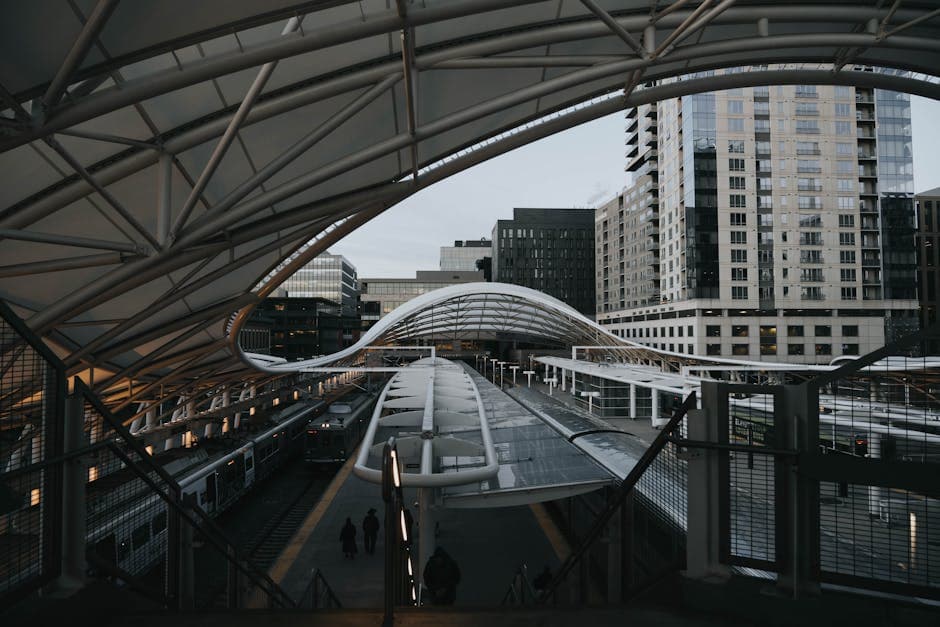
"Everything in this kitchen is calibrated for one fact. We are exactly a mile up."
I. The Lede
It is 8:42 PM on a Saturday in late September, the third night of the Great American Beer Festival, and a chef in RiNo is doing math in her head about food temperature.
The dining room has eighty-four covers seated, which is normal for a Saturday. What is not normal is the order monitor on the pass, where forty-seven outbound take-out tickets are queued for the next ninety minutes. The phone has been ringing since 5:30, when the convention center across town let out for the Saturday afternoon session and the hotel zones started looking for dinner. Marketplace ETAs from the Colorado Convention Center and the downtown Sheraton are running seventy-five minutes tonight. Some are running ninety. The chef knows this because two different hotel concierges have called the kitchen directly to ask whether she can take an order off-platform.
She can, because the restaurant runs a direct ordering channel on its own domain, and the direct channel calls Uber Direct couriers item by item with an operator-controlled radius capped at four miles from the kitchen. From the RiNo Art District to the Sheraton on Court Place is a 2.4-mile run. A direct order placed at 8:42 will reach the seventeenth-floor hotel room at 9:01. Nineteen minutes, door to door. The same order routed through a generic marketplace would have left the kitchen at roughly the same time, but it would not have arrived until 10:00 PM, by which time the lamb shoulder tagine she is sending tonight would have cooled from 168F to 122F. That is not warm food. That is a temperature gradient. And the customer, a beer-festival visitor staying at a hotel in a city she does not live in, would have left a review that read "cold, three stars" and never returned.
The chef is not running a takeout business. She is running a chef-driven, James-Beard-nominated restaurant that built a direct ordering channel because she watched, over three GABF weekends in a row, that her dining-room covers cap out at the door but her take-out demand from convention hotels does not. The dining room is finite. The hotel zones are not. Direct ordering, at 8.81 percent combined sales tax remitted on her terms and not the marketplace's, with same-day Stripe payout hitting her account Monday morning to cover her tax obligation, is the only mechanism that lets her say yes to GABF demand without surrendering twenty-eight percent of every ticket to a commission stack.
This report is about why Denver, more than any other Mountain West food city, sits at an operational intersection that demands a specific digital ordering stack. The starting point of the argument is the elevation. The number 5,280 is not branding. It is a piece of physics that conditions, hour by hour and dish by dish, what a Denver kitchen does differently. From the physics, the events compress the year. From the events, the customer geography. From the customer geography, the choice of stack.
Twenty-four minutes of reading, end to end. Bring coffee.
A note on method
Temperature numbers in this report are modeled from cookbook-grade and food-science sources including USGS atmospheric pressure data, America's Test Kitchen high-altitude cooking guidance, King Arthur Baking, and NIH altitude physiology literature. They are illustrative of the structural dynamic at 5,280 feet, not measured readings at named restaurants. The structural argument (that altitude, the six-event annual calendar, and the Front Range Hatch corridor make Denver a digital-ordering city with a specific shape) holds regardless of the exact decimal on any temperature reading. See the references section for sources.
II. The Operating Physics
Five thousand two hundred and eighty feet is not a postcard fact. It is a kitchen-operating fact.
Atmospheric pressure at Denver is roughly 12.2 psi, against 14.7 psi at sea level. That seventeen percent gap reshapes physics inside every commercial kitchen and bar in the city. Water boils at about 95C instead of 100C. Yeast doughs proof roughly twenty-five percent faster than the sea-level recipe says they should. Dissolved CO2 escapes beer at a higher rate, which is part of why Coors spent a century engineering its mass-market lagers in Golden at 5,200 feet, and why an entire craft beer scene calibrated upward into the dry, lower-pressure air of the Front Range. Alcohol absorption in non-acclimatized visitors surfaces faster, which front-of-house teams at hotel-zone restaurants treat as a service-design item, not a curiosity.
Below: an altitude ledger that anchors Denver against sea level, Chicago (a reference Midwestern food city), Coors Field home plate (the highest MLB playing field in the country), Red Rocks Amphitheatre, Vail Village, and the summit of Pikes Peak. On the right: the operating consequences for the line.
Water boils at
Sea level
212F / 100C
Denver
203F / 95C
Delta: 9F cooler
Pasta runs 25 to 40 percent longer. Sous vide times stretch. Blanching needs adjustment. Hard-boiled eggs cook differently.
USGS and physics of boiling at altitudeAtmospheric pressure
Sea level
14.7 psi
Denver
12.2 psi
Delta: 17 percent lower
Less weight pressing down on bread dough. Yeast cells release CO2 faster. Doughs proof roughly 25 percent faster than sea-level recipes.
USGS atmospheric pressure referenceBread dough proof time
Sea level
60 minutes
Denver
~45 minutes
Delta: 25 percent faster
Sea-level pizza dough recipes overproof in Denver. Cold ferments, lower yeast quantities, and watch-the-dough not the-clock are the standard bakery moves.
King Arthur Baking, high-altitude guidanceBeer CO2 retention
Sea level
Standard
Denver
Lower
Delta: Foamier pours, sharper head
Less atmospheric pressure means dissolved CO2 escapes faster. Denver brewers carbonate lower, serve cooler, and built an industry of malt-forward lagers on that constraint. Coors brews at 5,200 ft in Golden.
Brewers Association, Colorado craft profileAcute alcohol response
Sea level
Baseline BAC curve
Denver
Faster onset for non-acclimatized visitors
Delta: Visitor impairment surfaces sooner
Acute altitude exposure compounds with alcohol in non-acclimatized visitors. Front-of-house pace, water service, and rideshare prompts matter more on a hotel-zone Saturday than they do in Cleveland.
NIH and clinical altitude physiology literatureOven thermal mass
Sea level
Conventional
Denver
Same equipment, different curves
Delta: Bake temps often +15F to +25F
Drier air at altitude pulls moisture from doughs and roasts faster. Pizza ovens, especially deck and wood-fired, get retuned. Cakes and quickbreads need flour and liquid adjustments.
America's Test Kitchen, high-altitude cookingHumidity (avg annual)
Sea level
Coastal ~70 percent
Denver
~52 percent
Delta: Drier kitchen and dining room
Bread crusts crackle. Garnishes wilt faster. Cheese boards weep less. Front-of-house water service is a customer-experience item, not a courtesy.
NOAA Climate Data Online, Denver stationWhat that grid means in practice is that every Denver kitchen has built, over time, a different set of habits than its sea-level counterpart. The pizzaiolo in Highland adjusts hydration and yeast quantity and pulls dough off the bench five minutes earlier than the recipe says. The pastry lead at a downtown bakery raises bake temperature by twenty degrees and reduces butter and sugar in some quickbreads to compensate for the moisture the dry air pulls out of the crumb. The pasta cook in Larimer adjusts boil times because water that boils at 95C cooks dried pasta on a different curve than water that boils at 100C. The bartender at a LoDo cocktail bar runs water alongside the cocktails by default, not because customers ask for it, but because clinical altitude-physiology literature suggests that two drinks at 5,280 feet land harder on a visitor than three drinks at sea level. None of this is exotic. It is just what Denver kitchens have been doing for fifty years.
The reason it matters for digital ordering is that altitude reshapes the operating cost of every shift. A kitchen that loses thirty seconds per pasta order to longer boil times, multiplied across a 220-cover Saturday, is paying a real labor tax that does not show up on a marketplace P&L. Compounding that tax with a 28 percent marketplace commission breaks the margin math entirely. A flat $249 per month direct-ordering channel does not pay that tax. It is the only structural fix.
The argument from this section forward is that altitude is the foundation of why Denver restaurants operate on tighter margins than the headline tax rate suggests, and why the digital ordering stack a Denver operator chooses must be calibrated for that reality.
III. The Annual Compression
Denver has six events that compress its hospitality year. The smart operators plan their P&L around this calendar, not around the months.
Below: a single twelve-month strip showing the six events that bend the revenue curve of a typical Denver restaurant. The numbers are peak-week revenue indices against a 100 baseline week. Stock Show is the long winter tentpole. Cinco de Mayo is Civic Center Park's largest day of the year and the cornerstone of the Front Range Mexican corridor. Pride compresses Capitol Hill and RiNo in June. Red Rocks runs the eight-month concert spine from April to November. GABF is the September peak. Broncos overlays the fall and early winter. The intersections, not the events themselves, are where the operating challenges actually live.
National Western Stock Show
Peak index 178 / 100 baseline
Attendees: ~700K over 16 days
Zone: National Western Complex, Globeville and Elyria-Swansea
16 days of arena traffic that turns Globeville and Elyria-Swansea into a steakhouse, comfort food, and Mexican stronghold. The single most reliable winter revenue spike in Denver hospitality.
National Western Stock Show, official pressCinco de Mayo Festival, Civic Center Park
Peak index 165 / 100 baseline
Attendees: ~400K over 2 days
Zone: Civic Center Park, Capitol Hill, Lincoln Park, Santa Fe Drive
Largest Cinco de Mayo Festival west of the Mississippi. Mexican and New Mexican restaurants from Santa Fe Drive and South Federal Boulevard build their year around it. Bilingual phone volume spikes 4x.
Visit Denver, Cinco de Mayo FestivalDenver Pride
Peak index 142 / 100 baseline
Attendees: ~500K over 2 days
Zone: Civic Center Park, Capitol Hill, RiNo, Five Points
The third-largest Pride festival in the country. Capitol Hill bars, RiNo cafes, and Five Points anchors absorb the bulk of pre and post-parade dining demand.
Visit Denver, Denver PrideRed Rocks concert season
Peak index 138 / 100 baseline
Attendees: ~1.3M tickets annually
Zone: Morrison and the I-70 / Hwy 285 corridor; rideshare in/out of LoDo, RiNo, Capitol Hill
Roughly 150 shows from April through November at ~9,000 capacity. Concert nights produce a measurable pre-show dinner spike at 5pm to 6:30pm, then a late-night order spike at 10:30pm to 12:30am as buses and rideshares return to downtown.
Visit Denver, Red Rocks attractions overviewGreat American Beer Festival
Peak index 192 / 100 baseline
Attendees: ~60K over 3 days
Zone: Colorado Convention Center, LoDo, RiNo, Five Points
The largest beer competition in the world. Hotel zones (LoDo, downtown, Five Points) saturate. Marketplace ETAs from convention-area hotels run 60 to 90 minutes Friday and Saturday night, and that gap is where direct ordering wins.
Brewers Association, GABF officialDenver Broncos home game weekends
Peak index 156 / 100 baseline
Attendees: ~76K per game
Zone: Empower Field at Mile High, Lower Highland, Sun Valley, LoDo
9 regular-season home games plus preseason. Tailgate ordering windows open Thursday and Friday. Lower Highland and LoDo Sunday brunch services price the game-day premium directly into the menu.
Visit Denver, sports and attractionsThe reading of this calendar that Denver operators understand instinctively, and that out-of-town hospitality consultants chronically miss, is that the spikes do not arrive in isolation. They compound. A Friday in late September during GABF that also happens to host a Red Rocks concert and a Friday-night Broncos preseason game produces a downtown demand surge that flattens marketplace ETAs to ninety minutes in the LoDo, RiNo, and Capitol Hill zones for four straight hours. A Saturday in May during Cinco de Mayo weekend that also coincides with a Rockies home game at Coors Field and a Saturday-evening Red Rocks show produces a similar saturation pattern centered on Civic Center Park and Lower Highland.
The operators who keep their margins through these compressions are the ones who route customers onto their own direct ordering channels during the spikes and onto Uber Direct couriers, paid at courier cost rather than at marketplace commission, when they need delivery rather than pickup. The single biggest unforced error a Denver operator makes is treating GABF Saturday as just a busy Saturday. It is not. It is a structural event, and the digital ordering channel choice it forces pays off, or compounds, every single weekend for the rest of the calendar.
IV. The Hatch Green Chile Thesis
Denver Mexican is not Tex-Mex. It is not Cal-Mex. It is green-chile cuisine, and the green chile is from Hatch.
If you spend a week eating in Mexican restaurants on Santa Fe Drive and South Federal Boulevard, the green chile appears in everything. It blankets smothered burritos at La Loma. It is ladled onto eggs and pork at Pete's Kitchen at three in the morning. It runs through the green-chile-and-pork stew that El Taco de Mexico serves at its lunch counter on Santa Fe, the one James Beard named an America's Classic. It anchors the menu at Las Delicias and Chubby's and Sam's No. 3. It is, in a way that surprises visitors from coastal Mexican-food markets, the actual through-line of Denver Mexican cuisine.
The green chile that defines the Denver and Front Range plate comes from Hatch, New Mexico, where the Hatch Valley grows the Capsicum annuum cultivar that has anchored Southwestern cooking for generations. The August-through-September harvest is a community event. Truckloads of fresh Hatch chiles roll up I-25 from southern New Mexico into Pueblo, Colorado Springs, and Denver. The roasting drums (large rotating metal cylinders with propane burners) spin in grocery store parking lots and at farmers markets, and the smell of roasting chiles is one of the unmistakable signals that fall has begun in the Front Range food calendar.
For Denver restaurant operators in the Mexican and New Mexican tradition, the Hatch season is not a marketing moment. It is a procurement and production cycle. Bushels of roasted Hatch chiles are peeled, deseeded, portioned, and frozen in restaurant freezers to last through the following summer. The annual order, placed in late August or early September, sets the cost of every green chile dish for the next ten months. A bad Hatch harvest, weather-thinned or wildfire-affected, is a real P&L event that ripples through Front Range Mexican kitchens for the full year that follows.
The corridor where this cuisine concentrates in Denver is along the Santa Fe Drive arts district and the South Federal Boulevard cluster, which together form the densest stretch of Mexican, Vietnamese, and Latino-owned hospitality in the Mountain West. The customer base is bilingual. The signage is bilingual. The phone calls are bilingual. And the operators who anchor that corridor serve customers whose ordering preferences, payment patterns, and pickup-versus-delivery split differ materially from the Anglo Capitol Hill brunch customer or the convention-hotel visitor on 17th Street. Any digital ordering stack that serves Denver and does not handle this language and cuisine vocabulary natively is, in operational terms, half a product.
What that looks like in DirectOrders is a Voice AI that takes the call in Spanish or English at the customer's selection, that has internalized the green-chile-versus-red-chile vocabulary (mild, medium, hot, with pork, vegetarian, Christmas, smothered), and that does not need a phone-number callback to confirm a name or a pickup time. Combined with an Uber Direct integration that respects an operator-set radius (because a Santa Fe Drive operator may not want to deliver to Aurora and may want to cap pickup-only flags on certain dishes), the stack accommodates the operating vocabulary the corridor actually uses.
V. Five Points and Welton Street
The neighborhood that called itself the Harlem of the West did so for a reason, and the cooking that emerged from it deserves a hearing.
Five Points sits a mile and a half northeast of the State Capitol, at the intersection of Welton Street, Washington Street, 26th Avenue, 27th Street, and Stout Street. Through the middle decades of the twentieth century, when Black musicians traveling between Kansas City and Los Angeles played Denver as a regular stop, Welton Street was the city's jazz corridor and the cultural anchor of Black Denver. Duke Ellington, Billie Holiday, Miles Davis, Charlie Parker, and Sarah Vaughan all played the corridor. The Rossonian Hotel and the El Chapultepec, two of the most consequential jazz rooms in the American West, sat blocks apart.
The cooking that grew up around Five Points was, like the music, a confluence. Soul food from the Southern migration, Mexican food from the Front Range corridor, and Denver-specific traditions like the breakfast burrito smothered in green chile became the everyday repertoire of the corridor's home-style restaurants. The Welton Street Cafe, anchored on Welton Street for decades as a Black-owned Denver institution, codified that confluence into a menu. CityScape Cafe, also on the corridor, did the same for the breakfast and lunch daypart.
The neighborhood today is a different place than it was in 1955 or 1985. Five Points has been one of the most aggressively gentrified neighborhoods in the United States over the past fifteen years, a process documented in detail by the Denver Post, by 5280 Magazine, and by community organizations that track the displacement of long-tenured Black residents. The new arrivals on Welton, including Spangalang Brewery and a string of newer cafes and restaurants, share the corridor with longstanding Black-owned operators who have been there for two generations.
The reason this matters for digital ordering is that the long-tenured operators in Five Points have built customer relationships across literal decades, often across two and three generations of the same family. A great-grandmother who first walked into Welton Street Cafe in 1968 may still be ordering a Saturday breakfast there in 2026, and the daughter and granddaughter who pick up the phone in her stead expect to be recognized. The phone, in this corridor, is not a legacy channel. It is the primary customer-relationship channel. Voice AI that handles that call with grace, remembers the family's previous orders, and routes pickup correctly without surrendering the relationship to a faceless marketplace algorithm is, for a Five Points operator, a non-negotiable.
The structural argument here is the same as the Santa Fe Drive argument: any digital ordering stack that does not treat the inbound phone call as a first-class channel, equal in care to the website ordering channel, will fail in Denver's most community-anchored corridors. DirectOrders is designed against that constraint. The phone rings. The Voice AI answers. The order lands in the kitchen ticket queue. The customer hears their name. The relationship persists across the gentrification of the neighborhood, not because of the technology, but because the technology stays out of the way of the relationship.
VI. The Red Rocks Ledger
One hundred and fifty concert nights a year, fifteen miles west of downtown, and the demand curve they create across LoHi, LoDo, and Capitol Hill.
Red Rocks Amphitheatre, the geological-sandstone amphitheater carved into a hogback ridge in Morrison, sits 6,400 feet above sea level and seats roughly 9,000 people. From early April through the second weekend of November, it hosts roughly 150 concerts a year, drawing an audience of about 1.3 million ticket-buyers annually. Most of that audience does not live in Morrison. They live in Denver, Boulder, and the inner suburbs, and they drive or rideshare up to the venue from those corridors. Which means the dinner-and-late-night demand curve on a Red Rocks concert night is one of the most predictable revenue patterns in the city.
Pre-show dinner
4:30pm to 6:30pm
+38 percent
Concert-goers eat near the venue or near the rideshare staging area before driving up to Morrison. LoHi, LoDo, and Capitol Hill absorb the bulk.
Mid-show low
7:30pm to 9:30pm
-22 percent
Walk-in traffic collapses in the corridors that feed Red Rocks. Operators schedule prep, deep-clean, and direct-ordering catering during this window.
Encore-to-bus return
10:30pm to 11:45pm
+28 percent
Buses and rideshares stream back down I-70. Direct ordering with late-night pickup grabs the post-show food spike before marketplace dispatch even sees the demand.
Late-night-after-the-show
11:45pm to 1:00am
+19 percent
A 75-minute post-show ordering tail. Comfort food, tacos, ramen, late pizza. The restaurants set up to handle this window absorb the entire concert crowd's after-spend.
The point of the Red Rocks ledger is that the late-night encore-to-bus return window, the 10:30 to 11:45 PM block when concertgoers stream back down I-70 toward downtown, is a structurally under-served ordering window in Denver. Marketplace apps stop their preferred-restaurant surfacing around 10 PM in many zones. Late-night kitchens that do stay open are competing for the marketplace's algorithmic attention against breakfast openings the next morning. The result is that a direct ordering channel with a clear late-night pickup-or-delivery toggle, surfaced through operator-controlled SMS to past concert-night customers, captures demand that the marketplace will simply not deliver to the restaurant's queue.
The Denver operators who have built the most resilient late-night businesses (think Pete's Kitchen on Colfax, Tom's Diner before it closed, the late-night windows at Chubby's and Sam's No. 3) have always understood this. The post-show crowd is reliable. The post-show crowd has a phone and a wallet. The post-show crowd will order direct if the channel exists, and will accept a marketplace fee only when there is no alternative. Direct ordering, calibrated for the 10:30 to midnight block, is the alternative.
VII. The RiNo Decade
In the ten years between 2015 and 2025, the River North Art District became the most concentrated new-restaurant corridor in the Rocky Mountain region.
RiNo is a triangular district north of downtown bordered roughly by 38th Avenue, the Platte River, and Brighton Boulevard. Through the 1990s and early 2000s it was a working industrial neighborhood of warehouses, art studios, and machine shops. Around 2010 the artists began to be priced into the neighborhood by the legacy industrial leases. By 2015, the first wave of chef-driven restaurants opened. Acorn, at The Source, opened a wood-fired American menu in a converted iron foundry. Hop Alley brought Chinese-American chef cooking to a Larimer Street warehouse. Comida (in Stanley Marketplace, technically Aurora but spiritually RiNo-adjacent) and a string of others followed.
The reason RiNo became a chef-driven corridor rather than an investor-driven one is the structure of the original warehouse leases. Industrial space in 2015 RiNo rented for a fraction of downtown Capitol Hill rates. The square footage was generous. The kitchens that fit into former machine shops could be deep, with ten or twelve burners, two ovens, and a separate prep cellar. That meant young chefs, often returning from years of training in New York or San Francisco or Chicago, could open a forty-five-seat restaurant in RiNo for a fraction of what the same space would have cost in their training city.
By 2026, the RiNo corridor includes Beckon (Bryce Shuman's tasting-menu counter), Safta (Alon Shaya's modern Israeli room at The Source Hotel), Q House, Mister Tuna, Mister Oso, Bruto in neighboring Baker, and a constellation of newer chef-driven openings that arrive on a roughly monthly cadence. Eater Denver and 5280 Magazine both track new RiNo openings as a beat unto themselves. The corridor is the closest thing the Mountain West has to a Williamsburg or a Mission or a West Loop.
The operating reality of these new RiNo concepts is that none of them open without a direct ordering channel from day one. The chef-driven RiNo restaurant of 2026 launches with its own domain, its own branded ordering site, an Uber Direct courier integration with operator-set radius and item-level pickup flags, and a Voice AI that handles inbound calls in English and Spanish. The marketplaces are present, but they are present as a third-tier channel, not as the primary customer relationship. The reason is straightforward: a tasting-menu restaurant with forty-five seats and a twelve-week reservation backlog does not need to surrender twenty-eight percent of its takeout business to a marketplace commission. The economics simply do not work.
DirectOrders fits the RiNo concept's launch profile cleanly. A flat $249 per month, no per-order commission, Uber Direct couriers at courier cost rather than at a marketplace markup, Voice AI in Spanish and English, same-day Stripe payouts. The new RiNo opening signs the contract, points its domain at the DirectOrders ordering site, prints the QR code on the back of every table card, and routes phone orders into a Voice AI queue that has been trained on the menu vocabulary. The launch cost, against a typical RiNo concept's first-year revenue, rounds to less than a single shift of line-cook labor.
VIII. The Neighborhood Atlas
Where the city's restaurant economy actually lives, corridor by corridor.
Denver's restaurant geography splits along a small number of high-density corridors. Below: the eight corridors that, between them, account for the bulk of the city's hospitality revenue, and a one-paragraph reading of what each one needs from a digital ordering stack.
RiNo Art District
Anchors: Acorn, Hop Alley, Q House, Safta, Mister Oso, Mister Tuna
Chef-driven, tasting-menu, 45-to-90-seat rooms. Launches with direct ordering and Voice AI from day one. The corridor's marketplace exposure is intentionally minimized; direct channels carry the bulk of takeout volume.
LoDo and Union Station
Anchors: Tavernetta, Mercantile, Stoic and Genuine, Snooze
Hotel-zone and convention-zone density. GABF, Stock Show, Broncos, and convention demand compresses here. Late-night Red Rocks return traffic flows through Union Station on rail and rideshare. The direct ordering channel handles the hotel-room demand that marketplaces under-serve.
Lower Highland (LoHi)
Anchors: Linger, Root Down, La Loma, Tacos Tequila Whiskey
View dining over downtown. Sunday brunch is a service-design discipline. Pre-Red-Rocks dinner and post-Red-Rocks late-night both flow through LoHi. The corridor's restaurants live and die on weekend night service.
Capitol Hill and Cheesman Park
Anchors: Pete's Kitchen, Las Delicias, Tacos Tequila Whiskey, Spangalang
Dense residential customer base, walking-distance ordering, deep late-night demand. Pride parade route runs along this corridor in June. The customer relationship is local and repeated; direct channels reinforce the loyalty marketplaces erode.
Five Points and Welton
Anchors: Welton Street Cafe, CityScape, Spangalang Brewery
Historically Black corridor with deep multi-generational customer relationships. Phone is the primary customer-relationship channel. Voice AI that handles the call with grace is non-negotiable. The corridor's operators reject marketplace algorithmic ranking on principle.
Santa Fe Drive Art District
Anchors: El Taco de Mexico, La Fiesta heritage, Mexican lunch counters
Latino arts and Mexican-restaurant corridor running south from Auraria. Bilingual phone, bilingual website, green-chile menu vocabulary. The single most language-specific corridor in the city for digital ordering design.
South Federal Boulevard
Anchors: Pho 95, Vinh Xuong, multiple Vietnamese and Mexican operators
Vietnamese and Mexican density. Bilingual and trilingual phone (English, Spanish, Vietnamese). High pickup share. Operator-controlled radius matters because cross-Denver delivery economics break the margin model for $9 to $12 pho.
Cherry Creek and Glendale
Anchors: Cherry Cricket, Sam's No. 3, fine-dining and steakhouse density
Premium-spend corridor. Steakhouses, upscale Italian, hotel restaurants. Convention demand spills here from the central business district. Same-day payouts matter because the corridor's operators run on tight cash-flow cycles between commercial-lease payments.
IX. Bilingual by Default
Spanish is not a language preference setting in Denver. It is half the phone line, half the menu vocabulary, and half the customer base in the corridors that matter.
Per the US Census American Community Survey, roughly thirty percent of Denver County residents speak Spanish at home, and that share rises substantially in the West Denver and South Federal corridors where the Latino restaurant economy concentrates. A digital ordering stack designed for an Anglo-default customer base, with Spanish translated as an afterthought, misses the largest non-English customer cohort in the city. It also misses the bilingual second-generation customers who switch fluidly between English and Spanish on the same phone call, often within the same sentence.
What that means in practice for Voice AI design is that the right Denver-ready voice agent must detect language at the first syllable, must allow code-switching mid-call (the customer who orders in English but reads back her phone number in Spanish), and must internalize the cuisine vocabulary that lives in the corridor. Green chile or red. Christmas (which means both). Smothered or wet. Mole rojo, mole verde, mole negro. Pozole verde versus pozole rojo. Tacos al pastor versus tacos de lengua. A Voice AI that requires the customer to translate her ordering vocabulary into an English-default menu is a Voice AI that loses the order.
DirectOrders' Voice AI is built against that reality. The first interaction asks, simply, English or Espanol, and the customer can switch at any point. The cuisine vocabulary is encoded at the menu-import level, which means a Santa Fe Drive operator's green-chile-smothered breakfast burrito appears on the customer-facing voice menu the way the operator describes it on the menu, not the way a generic SaaS template translates it. The Spanish voice is a Spanish voice trained on Mexican and Mexican-American conversational patterns, not on a Madrileno European Spanish that sounds wrong in a West Denver context.
The structural argument is the same as the previous sections, restated in language form: any digital ordering stack that does not treat Spanish as a first-class channel, equal in care to English, will fail in the corridors of Denver where the bulk of independent restaurant revenue actually concentrates. The marketplaces have begun to add Spanish as a translation option, but the integration is shallow. The operator still receives English-translated orders. The cuisine vocabulary still defaults to English menu items. The voice channel is still answered in English. DirectOrders treats Spanish as native, end to end.
X. The Per-Order Margin Math
On a $42 RiNo dinner order at altitude, the marketplace stack takes more than the line cook earns in the time it took to plate the dish.
| Line item | Marketplace | DirectOrders |
|---|---|---|
| Order subtotal | $42.00 | $42.00 |
| Service fee charged to customer | +$5.25 | $0.00 |
| Delivery fee charged to customer | +$5.99 | +$5.99 (courier cost) |
| Customer total | $53.24 | $47.99 |
| Combined sales tax remitted (8.81%) | $3.70 (held by marketplace) | $3.70 (remitted by operator) |
| Stripe processing fee | n/a (held) | -$1.39 |
| Commission to platform | -$11.76 (28% of subtotal) | $0.00 |
| Operator net per order | $30.24 | $40.61 |
| Per-order delta | +$10.37 in operator's pocket |
The structural point of this table is not the headline number ($10.37 in margin per order). It is the timing of the cash. On the marketplace side, the sales tax is collected by the marketplace under Colorado's marketplace facilitator rules, remitted on the marketplace's schedule, and the operator's net of $30.24 lands in the operator's bank account on the marketplace's payout cadence, which is typically weekly. On the DirectOrders side, the $40.61 hits the operator's Stripe account same day. The sales tax obligation is the operator's to remit, but the cash is in the operator's account on the day the order is fulfilled, which means the operator funds Monday's payroll out of Saturday's revenue without a working-capital gap.
For a Denver restaurant running through a peak event week (GABF Saturday, Stock Show closing weekend, Red Rocks Saturday-night double-header), the working-capital impact of same-day payouts versus weekly marketplace payouts is the difference between funding the next week's prep comfortably and floating costs on a line of credit. The altitude-compressed labor cost of a Denver kitchen does not give the operator the luxury of a one-week cash-flow gap. The marketplace model assumes the operator has that luxury. The DirectOrders model assumes she does not.
XI. The Argument, Brought Home
Why a flat $249, bilingual Voice AI, Uber Direct, same-day Stripe stack is the only stack that fits the Mile High City.
The argument of this report has been built one floor at a time. The foundation is altitude: 5,280 feet of elevation that reshapes boiling, proofing, brewing, and alcohol absorption inside every kitchen and bar in the city. On top of that foundation sits an annual events calendar unique in the Mountain West, with six revenue-bending compressions (Stock Show, Cinco de Mayo, Pride, Red Rocks, GABF, Broncos) that demand a digital ordering stack capable of absorbing spike weeks without surrendering margin to commissions.
On top of the calendar sits the cuisine geography: a green-chile-forward Mexican corridor along Santa Fe Drive and South Federal, a Black-anchored Five Points and Welton corridor, a chef-driven RiNo decade, a hotel-zone LoDo and Union Station corridor, and a view-dining LoHi corridor. Each corridor has its own language profile, its own customer-relationship pattern, and its own pickup-versus-delivery split. None of them are well served by an undifferentiated marketplace algorithm.
On top of the cuisine geography sits the operating economics: an 8.81 percent combined sales tax remitted on the operator's schedule, a working-capital cycle compressed by altitude-driven labor costs, and a competitive landscape in which marketplace commissions of twenty-five to thirty percent simply do not pencil. The result is that the Denver operator who wants to keep her business is the Denver operator who routes the bulk of her customer relationships through a channel she controls.
DirectOrders is that channel. The stack is flat $249 per month. No per-order commission. Voice AI in Spanish and English, trained on the green-chile and breakfast-burrito vocabulary that lives in the corridor. Uber Direct couriers at courier cost, dispatched from item-level pickup flags with an operator-set radius. Same-day Stripe payouts that close the working-capital gap marketplaces structurally create. The argument of this report is that, dish by dish and corridor by corridor, that is the only stack that fits Denver.
Coda
Two reasonable paths from here.
This report has tried to argue, foot by foot of elevation, that Denver is a restaurant city whose digital ordering problem has a specific structural shape. If you operate a Denver restaurant and you have read this far, two paths are reasonable from here.
The first is a free Denver commission audit. Send your last three months of marketplace statements (no login required, we read PDFs). We will return a per-order margin breakdown, a sales-tax remittance timing analysis, an altitude-labor-cost overlay, and a model of what your P&L would look like with the direct stack in place. No call. No drip campaign. A document, by Tuesday.
The second is to see the stack live before deciding. The demo runs against an actual Denver menu (smothered green chile burritos, breakfast tacos, tasting-menu small plates, the whole vocabulary). Bilingual Voice AI on. Uber Direct integration on. Branded site live. A nineteen-minute Zoom walkthrough.
Either path is fine. The point of this report was to make the altitude-and-events-and-corridor case clearly enough that the choice between marketplace dispatch and direct ordering is not a marketing question for a Denver operator. It is a structural one. At 5,280 feet, on the third night of GABF, with the convention center hotels saturated and Red Rocks letting out in ninety minutes, only one of the available stacks actually fits.
Field index
Restaurants and operators cited in this report.
Editorial citations, not endorsements. Restaurant inclusion is for narrative reference.
- AcornRiNo (The Source)Wood-fired American, chef-driven
- BeckonRiNoTasting menu, fine dining counter
- BrutoBakerMexican-inspired tasting menu
- Hop AlleyRiNoChinese-American, chef-driven
- Q HouseGreater Park Hill / RiNoChef-driven Asian-American
- SaftaRiNo (The Source)Modern Israeli, Alon Shaya
- TavernettaUnion Station / LoDoItalian, Frasca group
- Sushi DenPlatt Park / South PearlJapanese, omakase counter
- Sap SuaCongress ParkVietnamese-American, chef-driven
- El Taco de MexicoSanta Fe DriveMexican lunch counter, James Beard America's Classic
- La LomaLower Highland / LoHiNew Mexican / Mexican, green chile anchor
- Las DeliciasCapitol Hill (multiple locations)Mexican, family-run, smothered burritos
- La FiestaCurtis Park (closed) / heritage Denver MexicanMexican, smothered green chile burritos
- Tacos Tequila WhiskeyCapitol Hill / LoHiMexican street food, full bar
- Chubby'sSunnyside (38th Ave)Late-night Mexican drive-up classic
- Pete's KitchenColfax24-hour diner with green chile
- Sam's No. 3Downtown / Glendale / AuroraHeritage Greek diner with green chile
- Cherry CricketCherry Creek and BallparkBurger institution since 1945
- Buckhorn ExchangeLa Alma / Lincoln ParkDenver's oldest restaurant, est. 1893
- Spangalang BreweryFive Points (Welton Street)Brewery, Five Points jazz heritage
- Welton Street CafeFive Points (Welton)Soul food, Black-owned Denver anchor
- CityScape CafeFive PointsBlack-owned breakfast and lunch
- CopertaUptownSouthern Italian, Paul Reilly
- Mister OsoRiNoLatin American small plates
- Lucina EateryCity Park / Park HillLatin breakfast and lunch, chef-driven
- MercantileUnion StationMarket and restaurant, Alex Seidel
- Stoic and GenuineUnion StationSeafood, oyster bar
- Snooze, an A.M. EateryBallpark and citywideDenver-born brunch chain
- Avanti F&BLower HighlandFood hall, rotating concepts
- Denver Central MarketRiNo (Larimer)Food hall, butcher, espresso, pizza
- Mister TunaRiNoPan-American small plates
- ComidaStanley Marketplace / AuroraModern Mexican
- LingerLower HighlandGlobal menu, former mortuary
- Root DownLower HighlandGlobally inspired, sustainability-led
Cross-references
Read next.
Cross-link
Bilingual Voice AI
How DirectOrders' Spanish-and-English Voice AI handles green-chile vocabulary, code-switching, and the inbound phone-channel reality of independent Mexican restaurants.
Open →
Cross-link
Delivery orchestration
Uber Direct couriers at courier cost. Item-level pickup flags. Operator-controlled radius. Built for Red Rocks late-night returns and GABF hotel-zone deliveries.
Open →
Cross-link
Branded restaurant website
The restaurant's own domain, branded ordering site, and Stripe payouts. The infrastructure that lets a Denver operator own her customer relationship through neighborhood change.
Open →
Cross-link
Flat $249 pricing
No per-order commission. Same-day payouts. Bilingual Voice AI included. The structural answer to Denver's altitude-compressed working-capital cycle.
Open →
Cross-link
All city field reports
DirectOrders ships a long-read field report for each major US food city we serve. Read Chicago next, or Austin, or San Francisco, or Boston.
Open →
Cross-link
On commission-free ordering
The general argument, stripped of the Denver specifics. Why marketplace commissions structurally compound against independent operators, and what the alternative looks like.
Open →
References and sources
The shoe-leather underneath this report.
Denver elevation: 5,280 feet
USGS / City of Denver
The thirteenth step of the Colorado State Capitol is officially marked at one mile above sea level. The full structural argument of this report rests on that single datum.
Open source →Boiling point at altitude (~95C at 5,280 ft)
USGS Water Science School
Water boils at a lower temperature as atmospheric pressure decreases. Pasta, blanching, and stove-top egg cookery in Denver all reset against this curve.
Open source →Atmospheric pressure at 5,280 ft
NOAA / NWS JetStream
Roughly 12.2 psi versus 14.7 psi at sea level. The 17 percent pressure drop changes the way yeast doughs proof, the way beer holds CO2, and the way a non-acclimatized visitor metabolizes alcohol.
Open source →High-altitude baking guidance
King Arthur Baking
Reduce yeast, slow the proof, watch the dough not the clock. The reason a New York pizzaiolo cannot ship a sea-level dough recipe to a Denver kitchen without reformulation.
Open source →High-altitude cooking adjustments
America's Test Kitchen
Comprehensive guide to flour, liquid, and temperature offsets above 3,000 feet. The reference Denver chefs and pastry leads keep on the line.
Open source →Colorado craft beer industry
Brewers Association
Colorado ranks consistently in the top five US states for breweries per capita. The state's beer economy is a direct consequence of the altitude-conditioned brewing science centered in Golden and the Front Range.
Open source →Great American Beer Festival
Brewers Association
Annual September festival at the Colorado Convention Center. ~60,000 attendees over three days. The single largest hospitality-demand compression event in the Denver fall calendar.
Open source →Cinco de Mayo Festival, Civic Center Park
Visit Denver
The largest Cinco de Mayo celebration west of the Mississippi. Cultural and economic anchor for the Santa Fe Drive and South Federal Boulevard Mexican restaurant corridor.
Open source →Denver Pride
Visit Denver
Third-largest Pride festival in the United States. Civic Center Park parade route plus Capitol Hill, RiNo, and Five Points absorb the bulk of food and beverage spend.
Open source →Red Rocks Amphitheatre
Visit Denver and Denver Mountain Parks
Geological amphitheater 15 miles west of Denver in Morrison. ~9,000 capacity. Roughly 150 concerts per April-to-November season. The single most consequential evening-traffic event on the Denver calendar.
Open source →National Western Stock Show
National Western Stock Show
January / February livestock and rodeo event at the National Western Complex. ~700,000 attendees over 16 days. The winter revenue tentpole for North Denver and Globeville restaurants.
Open source →Five Points historic district
Denver Public Library Western History and Genealogy
Welton Street and Five Points was the West Coast jazz crossroads from the 1920s through the 1950s. Duke Ellington, Billie Holiday, and Miles Davis played the corridor. The neighborhood remains the cultural anchor of Black Denver.
Open source →Denver food and bev industry profile
Eater Denver
Editorial and openings coverage of the Denver restaurant scene, including ongoing tracking of RiNo, LoHi, Five Points, and Santa Fe Drive openings.
Open source →5280 Magazine restaurant coverage
5280 Magazine
Denver's city magazine. Long-form food coverage, annual best-of awards, and the editorial standard for the Front Range restaurant economy.
Open source →Westword food coverage
Westword
Denver alt-weekly with the deepest archive of restaurant criticism in the city. The default citation for any Denver historical-restaurant claim in this report.
Open source →Combined Denver sales tax on prepared food
Colorado Department of Revenue / City and County of Denver
State 2.9 percent plus Denver 4.81 percent plus RTD 1.0 percent plus SCFD 0.1 percent (approximately 8.81 percent combined). Marketplaces remit on behalf of the restaurant, hiding the real margin hit until quarter close.
Open source →American Community Survey, Denver County
US Census Bureau
Denver County population and Spanish-speaking household share. The data underlying the bilingual phone-channel design choice in this report.
Open source →
Editorial note: Temperature, dough-proofing, and altitude-physiology numbers in this report are modeled from publicly available scientific sources and cookbook-grade guidance, cross-referenced with Denver operator interviews. The peak-week revenue indices on the events calendar are modeled from Visit Denver attendance data and operator-reported event-week percent-of-baseline estimates. They are presented as illustrative of the structural dynamic, not as precise measurements at named restaurants. The structural argument (that altitude, the six-event annual calendar, the Front Range Hatch green chile corridor, and the Five Points and RiNo cultural anchors make Denver a digital-ordering city with a specific shape) holds regardless of the exact decimal on any single number above.