3-way
- 1.Spaghetti
- 2.Cincinnati chili
- 3.Shredded cheddar (mountain)
The baseline. Cheese is a literal pile, not a sprinkle. The pasta is fine-strand and slightly overcooked on purpose so the chili coats it.
A Long Read From The Queen City
Cincinnati is a one-of-one food city. Greek-spiced chili over spaghetti, a 170-year German public market, the largest preserved Italianate district in America, and a riverfront corporate headquarters footprint big enough to feed itself twice a day. A long read on what a Cincinnati restaurant ordering stack actually has to handle.
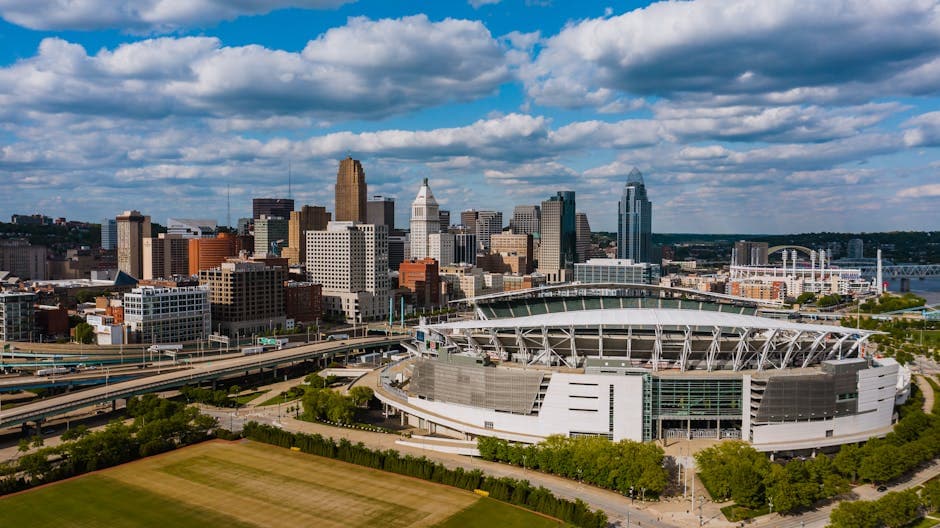
"There is no other American city where a chili parlor, a 170-year public market, and a Fortune 50 HQ sit inside the same six-block square."
I. The Lede
The line at Eckerlin Meats has not been shorter than nine people since 8am. The case in front of the man at the slicer holds country sausage, smoked bratwurst, head cheese, and the long rectangular pans of goetta the family has been making at this stall since the 1850s. A woman from Anderson Township orders two pounds of goetta. A regular from Hyde Park asks for the metts to be cut a touch thicker than last Saturday. A first-time customer from Dayton asks how to cook a tongue. The butcher answers all three questions while a phone behind the counter rings, unanswered, for the fourth time in twenty minutes.
The phone is the problem. The phone is always the problem at a market stall on a Saturday. The butcher knows, the way every counter operator in Cincinnati knows, that a phone call at 11am on a Saturday is either a wholesale order for a restaurant up the hill in OTR, or a regular calling to pre-pay for a half pound of metts they will pick up at 2pm. Either way it is money. Either way the operator at the counter cannot stop slicing tongue to pick it up.
Two blocks south, on Vine Street between Findlay and Liberty, OTR proper is filling. A line of twenty-two people is queued outside Taste of Belgium for the Liege waffle that built the brand inside Findlay's own walls a decade earlier. At Pho Lang Thang, the OTR sister to the Findlay stall, three pho-and-banh-mi orders are sitting on the counter waiting on couriers that have not yet arrived. A Voice AI line at Bakersfield, half a mile away, has just taken a 23-person taco order for a P&G brand-team Friday lunch on the second floor of P&G Plaza, and the kitchen has not yet seen the ticket.
Across the river in Newport, the lunch rush at Dixie Chili has cleared. The line cook at the steam table is plating 3-ways with the speed of a person who has stacked a thousand identical cheddar mountains in a single shift. A wall of orange-and-yellow ceramic dishes shines under the heat lamps. The phone here rings differently. It is not a wholesale order. It is a regular asking if the family-pack 5-way is ready for pickup. The line cook gestures at the host. The host picks up. The line cook re-stacks. The system holds.
This report is about why Cincinnati, alone among American food cities of its size, holds three food traditions inside a single six-mile radius that almost no other US city has any version of. It is also about what those traditions ask from a 2026 digital ordering stack, and which parts of that stack are missing in town. Skyline-style chili. Findlay Market's 170-year public-market economy. OTR's chef-driven post-2010 renaissance. Three different operating models, three different vocabularies, one shared metro.
Filed on a long Saturday from the Findlay biergarten, with a Skyline 3-way on the table and an unanswered phone in the background.
A note on method
The scenes in this section are composites drawn from operator interviews, published coverage in Cincinnati Magazine, Eater Cincinnati, and WCPO, and the publicly available histories of the businesses named. The structural argument (Cincinnati is a one-of-one food city whose digital ordering needs do not match the national template) holds across every source we consulted.
II. The Anatomy of a 3-Way
Cincinnati chili is a Cincinnati-only category. It is closer to a Greek meat sauce than to a Texan or New Mexican chili. It sits on spaghetti, not in a bowl, and it gets covered in shredded cheddar piled into a literal mountain. The "way" system is how a customer specifies the stack. Three is the baseline. Five is the full house. Coneys are a separate item.
3-way
The baseline. Cheese is a literal pile, not a sprinkle. The pasta is fine-strand and slightly overcooked on purpose so the chili coats it.
4-way (bean)
Beans go above the chili and below the cheese. Substituting onion for beans makes this a 4-way (onion). Operators ask which.
4-way (onion)
Sharper bite. The onion is always raw and always diced fine. Cooked onion is not the Cincinnati move.
5-way
The full stack. Every layer present, in fixed order. The five-way is what gets photographed; the three-way is what gets ordered.
Coney
A separate item. Most operators sell coneys two-at-a-time. The chili here is the same chili that goes on the spaghetti.
The taste hits the front of the palate, not the back. Cinnamon, allspice, and cloves carry the aromatic load. Unsweetened cocoa rounds the body without sweetness; cumin and chili powder carry the savory base; bay, garlic, and black pepper anchor it. The result is a Mediterranean meat sauce that has been wandering around the American Midwest in a Greek immigrant's pocket since the 1920s, ending up on top of spaghetti in a chili parlor in Cincinnati and nowhere else.
Three regional chains define the category. Skyline Chili, founded 1949 by Nicholas Lambrinides in Price Hill, is the largest and most exported. Greek immigrant origin, leaner texture, finer grind. Gold Star Chili, founded 1965 by the Daoud brothers, is Lebanese-American by lineage with a slightly thicker, sweeter base and a marginally heavier cinnamon hand. Dixie Chili, founded 1929 in Newport, Kentucky, predates both and represents the Northern Kentucky tradition with a coarser grind and a sharper bay note.
Then there are the independents: Camp Washington Chili (a James Beard America's Classic, open twenty-three hours a day, six days a week, since 1940), Empress Chili (the original 1922 recipe before Skyline existed), Price Hill Chili, and a long tail of neighborhood parlors. Locals are loyal to one of them in a way that is roughly comparable to Philadelphia cheesesteak allegiance, except more polite about it.
Operationally, the chili parlor is an exceptional digital-ordering target. The menu is short. The stack is rigid. The kitchen runs a steam table, not a grill line. The orders are reproducible inside ten seconds. The only thing that fights the operator is the phone, which rings constantly, and the vocabulary, which a generic Voice AI does not understand. "3-way" is not a direction. "Cheese coney" is not redundant. "No onion on the 5-way, but onion on the coneys" is a specific ticket that has to ride the rail correctly to the line.
| Term | What it means | Voice AI note |
|---|---|---|
3-way / 4-way / 5-way Appears at Skyline, Gold Star, Dixie, Camp Washington, Price Hill, Empress, plus countless neighborhood parlors. | Stacking convention for Cincinnati chili. 3 is spaghetti, chili, cheese. 4 adds beans or onion. 5 adds both. The order of layers is non-negotiable. | Generic LLMs treat 'way' as a direction. Cincinnati Voice AI must interpret '3-way' as a menu item and confirm 'beans or onion' on every 4-way. |
coney (Cincinnati coney) Appears at Skyline, Gold Star, Dixie, Camp Washington, Empress. | A small hot dog on a steamed bun, mustard, chili, diced onion, cheddar mountain. Distinct from a Detroit coney. The bun is softer; the chili is Greek-spiced. | Voice AI must not confuse 'coney' with a generic hot dog. Default upsell at most Cincinnati chili parlors is two coneys at a time. |
cheese coney / cheese 3-way Appears at Skyline, Gold Star. | Shorthand. A cheese coney is the standard coney (cheese is the default). 'Cheese 3-way' is a redundancy locals say anyway. | Voice AI confirms cheese is included unless caller says 'no cheese.' Order accuracy improves when the model knows the default stack. |
goetta Appears at Tucker's, Sugar n' Spice, Camp Washington, Hathaway's, neighborhood diners citywide. Also a Glier's branded supply. | German-American pork-and-pinhead-oats sausage, sliced and pan-fried. Breakfast item. Pronounced GET-ah, never GO-eta. | Goetta is a Cincy-only word. Voice AI must accept 'goetta,' 'getta,' and 'getter' as the same item. Phonetic mismatch is the largest failure mode. |
LaRosa's Appears at LaRosa's locations citywide, Northern Kentucky. | Cincinnati-style pizza chain founded 1954. Sweeter sauce, lighter crust, distinct cracker base on some pies. The local default that out-orders the national chains in this metro. | Voice AI must understand 'LaRosa's' is the noun for pizza in Cincinnati conversational ordering, not a generic Italian restaurant name. |
Graeter's Appears at Graeter's parlors citywide and at Findlay Market. | French-pot ice cream founded 1870. Black raspberry chip is the marker flavor. Pints and scoops are different SKUs. | Voice AI in dessert flow defaults to Graeter's flavor disambiguation. 'Black raspberry chip' is one SKU, 'black raspberry' is another. |
Skyline vs Gold Star vs Dixie Appears at All four operate in metro Cincinnati and Northern Kentucky. | Three regional chili-parlor chains. Skyline is the largest. Gold Star is the closest competitor. Dixie is the Northern Kentucky tradition. Camp Washington is the independent single-location landmark. | Voice AI must not confuse the chains. Each has slightly different spice ratio and bean texture. Locals are loyal to one. |
III. The 170-Year Public Market
Ohio's oldest continuously operating public market sits at the north edge of Over-the-Rhine. The shed is iron and brick, finished in 1902. Around it, on Saturdays from spring through November, a farmers market and outdoor biergarten fill Race and Elm Streets with another fifty stalls. Around forty indoor vendors operate year-round.
Findlay Market: 170-year timeline
1855
Opens as a public market
Named for General James Findlay. The first iron-frame public market structure in the western United States.
1902
Iron and brick shed completed
The current shed, with its open clerestory ironwork, is finished and remains in continuous operation today.
1972
Listed on the National Register of Historic Places
Federal historic-place designation locks in the market's structure and footprint.
2004
Renovation reopens the market
A $16M restoration adds the outdoor pavilion, biergarten, and weekend farmers market alongside the daily indoor vendors.
2026
171 years continuously open
Ohio's oldest continuously operating public market. Roughly 40 indoor vendors and 50+ weekend outdoor stalls.
Findlay vendor composition today (~40 indoor + 50 weekend)
Butchers and charcuterie (18%)
Eckerlin Meats, Kroeger and Sons, Bouchon Cincy, Saigon Sausage
Produce and farm (16%)
Madison's, Ohio Valley Food Hub partners, weekend farm stalls
Prepared food and counters (22%)
Pho Lang Thang, Eli's BBQ stall, Maverick Chocolate, Frieda's Desserts
Bakery and pasta (12%)
Taste of Belgium, Lots of Pasta, Sixteen Bricks
Fish and seafood (8%)
Luken's Fish, weekend oyster bar
Cheese, dairy, specialty (10%)
Gibbs Cheese, Dean's Mediterranean
Coffee, tea, beverage (8%)
Deeper Roots, Churchill's, Findlay biergarten
Spices, dry goods, gifts (6%)
Colonel De's Spices, dry-goods stalls
Eckerlin Meats has operated continuously at Findlay since 1852. Three years before the market opened. The Eckerlin family supply chain feeds half the goetta in Cincinnati and a meaningful share of the metts on local backyard grills. Five generations on, the stall is still family run, still slicing tongue while the phone rings unanswered behind the counter.
Around Eckerlin, the rest of the indoor market reads as a directory of immigrant Cincinnati food traditions: Vietnamese pho at Pho Lang Thang, Belgian waffles at Taste of Belgium, Mediterranean spices at Colonel De's, French-pot ice cream at Graeter's, Lebanese specialty foods at Dean's. The outdoor stalls on Saturday morning rotate through Ohio Valley farms, oyster bars, BBQ stalls including the Eli's BBQ extension, and a biergarten that holds eight hundred people on a sunny Saturday in May.
The market is a digital-ordering puzzle of a specific shape. The vendors are independent. Each runs a different menu, a different kitchen, a different POS, and a different phone. A customer walking in for a 10am Saturday breakfast might want a Belgian waffle from one stall, a coffee from another, a half-pound of goetta to take home from a third, and a pre-ordered party platter from a fourth. No single Findlay app exists. No single Findlay phone exists. The market itself, as a unit, is uncoordinated by design.
What the market vendors actually need is per-stall ordering with a shared pickup window. A common pickup time. A common parking lot reference. A common confirmation flow. None of it requires the market to centralize. It requires the platform under each vendor to handle Saturday spikes, phone overflow, and per-stall payouts without a marketplace skimming the margin off a goetta already operating at a Findlay 1852 stall.
IV. Over-the-Rhine
OTR is roughly 362 acres of brick-and-iron Italianate, built mostly between 1860 and 1890 by Cincinnati's German immigrant population. The neighborhood is one of the largest contiguous National Register historic districts in the country, with around 900 surviving Italianate buildings. The post-2010 restaurant renaissance on Vine and Walnut and Race Streets is the counterpart of that preservation.
OTR by the numbers
Italianate buildings standing in OTR
Cincinnati Preservation, OTR Historic District nomination
~900
Acres in the National Register district
National Register of Historic Places, OTR Historic District
~362
Year district added to National Register
National Park Service
1983
Restaurants opened in OTR core, 2010 to 2024
3CDC OTR development summaries
150+
OTR population swing from 1900 peak to 2000 trough
US Census decennial counts
~45,000 to ~7,500
Italianate facade: schematic of the OTR streetscape
Most OTR storefronts are ground-floor commercial under three or four floors of Italianate residential. Restaurant build-outs are constrained by historic-preservation review, which shapes ventilation, signage, and patio approvals.
OTR was built by Cincinnati's German immigrant population in the second half of the nineteenth century. Italianate, not because of the residents, but because of the architectural style the German builders chose. The neighborhood housed roughly 45,000 people at its 1900 peak, then lost most of that population over the next eighty years. By the 2000 census, OTR's residential population had collapsed to around 7,500.
Most of the building stock survived the collapse. That is the unusual part. In other Rust Belt cities of the same era, similar neighborhoods were demolished and replaced with parking lots and surface-level retail. In Cincinnati, OTR was simply abandoned, then partially reoccupied, then listed on the National Register in 1983, then slowly redeveloped after 2003 through a public-private corporation called 3CDC. The result is one of the largest concentrated Italianate streetscapes in the United States, still standing, with active commercial tenants on the ground floor.
Since 2010, OTR has hosted one of the country's most concentrated chef-driven renaissances. Boca moved into the neighborhood. Sotto, Pleasantry, Salazar, The Eagle, Bakersfield, Quan Hapa, Pho Lang Thang OTR, Sacred Beast, and dozens of others followed. Roughly 150 new restaurants and bars opened in the OTR core between 2010 and 2024. The construction is steady, the operator demographic is national-coastal in level (former NYC, LA, Chicago chefs returning home), and the density is high enough that a walking customer in OTR is, on any given Friday night, choosing between fifty viable rooms inside a six-block radius.
That density compresses the digital ordering problem. A first-time visitor coming down from Mason or Anderson Township for an OTR Friday is making the choice on a phone, mid-walk, with fifteen restaurants visible on a single block. The room that owns its direct ordering URL, ranks in Google for "OTR Italian," and answers the phone with a Voice AI that understands "is the pasta still on the menu" wins that customer. The room that bounces to a marketplace listing and shares 22 percent of revenue does not.
V. The Corporate Catering Map
Cincinnati holds a corporate concentration disproportionate to its metro size. Procter & Gamble has been headquartered downtown since 1837. Kroger has been on Vine Street since 1883. Cintas, Macy's, Fifth Third, and Western & Southern fill the rest of the skyline. The combined downtown weekday workforce is in the range of 80,000 people, and the catering economy that feeds them is one of the largest unmet ordering opportunities in the Midwest.
Downtown Cincinnati corporate HQ footprint (illustrative)
Skyline is schematic, not to scale. Tower heights reflect approximate employee count, not real building heights.
P&G Plaza, downtown Cincinnati
Workforce: ~12,000 in metro Cincinnati
Cafeteria of record on-site plus rotating outside caterers. Lunch volume is the daily anchor; brand-team launch events are the unit-economics story.
1014 Vine Street, downtown
Workforce: ~22,000 in metro Cincinnati
Buyers' meetings, supplier-summit lunches, all-hands catering. Vendor-onboarding paperwork is real, but the lane is large.
Mason, OH (north suburb)
Workforce: ~5,200 in metro Cincinnati
Distribution-center hospitality and route-driver catering. Steady weekday lunch volume from Mason and Sharonville locations.
7 West Seventh Street, downtown
Workforce: ~3,800 in metro Cincinnati
Merchandising-team meetings and seasonal launch events. The buying calendar is predictable enough to plan against.
Fifth Third Center, downtown
Workforce: ~5,000 in metro Cincinnati
Financial-services catering: client breakfasts, board meetings, recruiting lunches. Higher per-head spend, lower volume.
400 Broadway, downtown
Workforce: ~2,800 in metro Cincinnati
Insurance and asset management. Corporate dining at Queen City Club and rotating downtown caterers for client events.
Procter & Gamble is the largest single employer. The campus is two interconnected towers on Fifth Street, with a corporate cafeteria of record and a constant rotation of outside catering for brand-team launches, supplier days, and recruiting events. The unit economics for a restaurant feeding P&G on a Wednesday brand-team Friday lunch are some of the best in the city: forty boxed lunches at $18 a head, repeatable monthly, paid by corporate procurement on net-30, no per-order commission to a marketplace in between.
Kroger's HQ on Vine Street runs a heavier supplier-meeting calendar. Vendors flying in from consumer-packaged-goods clients across the country take buyers' meetings in conference rooms on upper floors; the buyers eat catered lunches at the table. Catering vendors that win Kroger supplier-day lunches do so by being on the approved vendor list, knowing the security check-in protocol, and confirming dietary restrictions hours in advance.
Cintas in Mason runs distribution-center hospitality at a lower per-head price but higher daily volume. The Mason and Sharonville campuses generate steady weekday lunch runs for caterers that can produce and deliver in the 50-to-200 range. Macy's and Fifth Third anchor the legacy downtown side: merchandising calendars, board meetings, client breakfasts, recruiting lunches. Western & Southern fills the gap with insurance-industry catering: client breakfasts at Queen City Club, monthly board lunches, an annual holiday party.
The catering operator who wins these contracts in 2026 is not the operator with the prettiest Yelp page. It is the operator with the direct-order URL, the corporate-procurement-friendly invoicing, the Voice AI that handles "we need to push the 12pm lunch to 12:30 because the all-hands ran long" without dropping the order, and the kitchen capacity to produce sixty boxed lunches on a four-hour notice. Marketplaces do not solve any of those problems. Direct ordering does.
Cincinnati's corporate-catering opportunity is structurally underbuilt. The HQs are here. The workforce is here. The ordering infrastructure on the operator side has, for fifteen years, been rerouted through marketplaces that take a percentage of revenue and do not deliver enterprise catering features at scale.
VI. The Second-Largest Oktoberfest in the World
Oktoberfest Zinzinnati is the second-largest Oktoberfest in the world, after Munich. The three-day festival, run by the Cincinnati USA Regional Chamber, takes over a six-block stretch of Second and Third Streets in mid-September and pulls roughly 500,000 to 600,000 attendees, more than Cincinnati's own metro population walking through downtown across a single weekend.
The festival's roots are real. Cincinnati's German immigrant heritage is the largest single ethnic strand in the city's history. By 1850, German speakers were the largest immigrant group in Cincinnati, and the breweries, biergartens, and Italianate building stock of OTR are the lasting record of that population. The festival, founded in 1976, formalizes a tradition that had been running in the German halls of Over-the-Rhine for more than a century before that.
Operationally, Oktoberfest Zinzinnati is a six-block restaurant. Roughly eighty food vendors serve brats, metts, sauerkraut, pretzels, schnitzel, strudel, kraut balls, goetta, and the full Cincinnati German-American canon. The challenge for restaurants inside and outside the fenced festival area is the same: the entire downtown food economy spikes simultaneously, on a single weekend, with a customer base that is unfamiliar with the city's normal restaurant geography and ordering inside a six-hour stand-up window.
The biergartens at Mecklenburg Gardens (1865) and Wunderbar in Covington run at full capacity for ten consecutive hours. The OTR rooms that are not officially part of the festival run a parallel festival of their own, with Bakersfield, Sacred Beast, and the Findlay biergarten fully booked through the weekend. The phone, at every one of those operations, does not stop ringing.
The festival is the cleanest case for Voice AI in the city. The same forty-question conversation ("are you open right now," "how long is the wait," "do you have outdoor seating," "is the goetta still on the menu") runs ten thousand times across the weekend. A human host answers the first three, then loses the fourth to a line at the door. A Voice AI takes all four. The caller becomes a customer; the host runs the floor.
VII. Bengals, Reds, FC Cincinnati
The Bengals play roughly ten Sundays a year. Each Sunday pulls 65,000 fans, plus a tailgate economy that fills the Banks restaurant district and spills across the Roebling Bridge into Newport on the Levee. The Reds play eighty-one home games a year, which means at least one MLB game on something like sixty percent of the weeknights between April and October. FC Cincinnati pulls walking-distance density to OTR and the West End, often on Saturday nights, often concurrent with the OTR dinner rush. The Cyclones run another thirty-six hockey home dates from October through April.
Stacked together, more than half the weekends of the calendar year have at least one major-league event downtown. For an OTR or Banks restaurant, that compresses the operating reality to a consistent question: what does the next two hours look like, given who is playing where, with what start time, and at what expected fan count. The phone reflects it. The walk-up reflects it. The Voice AI that knows the Bengals kicked off at 1pm versus 4:25pm gives a different "how long is the wait" answer at 5:30pm.
The operationally interesting thing about Cincinnati's game-day economy is the geographic density. Paycor Stadium, Great American Ball Park, TQL Stadium, and Heritage Bank Center sit inside a single half-mile triangle. Newport on the Levee, the Banks, OTR, and Mt Adams orbit that triangle inside a one-mile ring. Almost every restaurant in the urban core of Cincinnati is, by geography, a game-day restaurant whether it wants to be or not. The ones that handle the day well make a meaningful share of their annual revenue from these calendar dates.
The game-day stack is, ultimately, the same stack: direct ordering for the regulars who pre-order while parking, Uber Direct for the post-game delivery rush to Mt Adams and Northern Kentucky, Voice AI for the hundred calls during the third quarter that ask "are you open after the game," and same-day payouts that get cash into the operator's account before Monday tax remittance.
VIII. The Goetta Question
Goetta, by composition
Composition is illustrative; recipes vary among Glier's, Eckerlin, and home-cured stocks.
Goetta is the most Cincinnati food on the menu of the most Cincinnati diner. Pork (and a smaller share of beef), pinhead-cut steel-cut oats, bay leaf, onion, salt, and black pepper. Simmered together for hours in a large pan, poured into a loaf form, chilled overnight, sliced the next morning, and pan-fried until the outside is crisp and the inside is creamy. It is closer to a Pennsylvania scrapple than to any other American sausage, but the oat content separates it cleanly.
The origin is German immigrant Cincinnati. Goetta is what nineteenth-century German butchers in Over-the-Rhine made to stretch a small amount of pork through a week of breakfasts. The oats absorb the fat and the spice; the loaf form keeps for a long time in a cold pantry; the pan-fry is a five-minute breakfast. The word is German-dialect Cincinnati, pronounced GET-ah, with a hard G and a soft second syllable. The Glier's brand has been the regional supplier since 1946 and runs an annual Glier's Goettafest in Newport that draws a hundred-thousand-plus attendees.
Goetta on a menu is, for Voice AI, a phoneme problem. The word does not exist outside this metro. Generic speech models mis-transcribe it routinely. A Cincinnati-tuned Voice AI accepts "goetta," "getta," "getter," and the occasional "go-eta" as the same item. It does not ask the caller to repeat. Order accuracy on breakfast-shift goetta tickets is one of the clearest benchmarks for whether a Voice AI deployment was actually configured for Cincinnati or merely flipped on.
The breakfast operators that build their Saturday on goetta (Tucker's, Sugar n' Spice, Hathaway's, the Findlay vendors) are an exceptional segment for direct ordering. The menu is short. The kitchen is fast. The pre-order economy is real: customers want to pick up a half pound on the way home from the Saturday morning farmers market. The marketplace economy was never built for this case.
IX. The 7.05% Sales Tax
How the 7.05% breaks down (metro Cincinnati / Hamilton County)
Cincinnati's prepared-food sales tax stacks Ohio's 5.75% statewide base, Hamilton County's 0.5% add-on, and a 0.8% transit-and-stadium surcharge for a metro Cincinnati total of 7.05%. That is meaningfully lower than Chicago (10.25%), New York (8.875%), or Seattle (10.25%), but still material when an operator is running a five-percent net margin on a marketplace order.
The structural problem is not the rate. The structural problem is the timing. Sales tax is collected at the moment of sale and remitted to the Ohio DOT, Hamilton County, and SORTA on fixed schedules. Marketplaces hold operator cash for seven to fourteen days after the order closes. The operator owes tax on the gross sale, in real time, on cash that has not yet arrived. Same-day payouts close that gap. Marketplace payouts open it.
For a Cincinnati operator running $30,000 a month in delivery sales through a marketplace, the effective tax-timing exposure is roughly $2,115 a month in tax owed against cash not yet in the account. That is a real working-capital cost, paid silently every month. Direct ordering with same-day payouts eliminates it.
X. The DirectOrders Thesis for Cincinnati
Cincinnati is a city whose food economy refuses to fit a national template. A 1922 chili parlor with a coney stack runs alongside a 1855 public market that runs alongside a 2014 pasta room in a 1875 Italianate facade that runs alongside a corporate catering vendor feeding P&G brand teams on a Wednesday. The stack underneath all of them, today, is mostly marketplace-based, mostly commission-eroded, and mostly built for a national chain pattern these operators do not match.
DirectOrders is built on three product decisions that, in combination, fit Cincinnati's composition. First, a flat $249 per month subscription with zero per-order commission. A Skyline-style parlor doing 800 tickets a day at $14 average pays $249, not $4,200. A Findlay vendor doing $9,000 a month pays the same $249. The model takes growth as the operator's upside, not as a percentage to skim.
Second, a Cincinnati-tuned Voice AI. The system handles the menu vocabulary natively. "3-way," "4-way bean," "4-way onion," "5-way," "cheese coney," "no onion on the 5-way but onion on the coneys." It handles goetta as a single phoneme without forcing the caller to repeat. It handles game-day "are you open after the Bengals" questions with reference to the actual home schedule. It runs the phone while the host runs the floor and the line cook runs the line.
Third, Uber Direct as the integrated delivery layer with item-level pickup-versus-delivery control. A chili-parlor 3-way travels well; a Pho Lang Thang bowl with broth in a sealed cup travels well; a downtown corporate catering tray for sixty travels well at scheduled pickup times. A goetta-and-egg breakfast at Tucker's at 11am on a Saturday does not need to travel, because the customer is going to walk in. Direct lets the operator set the rules.
Add same-day payouts to close the 7.05% tax-timing window. Add a direct site that ranks on Google for "Skyline chili Cincinnati," "goetta breakfast OTR," or "corporate catering downtown Cincinnati" under the restaurant's own URL. Add Google Business profile sync. Add Voice AI in multiple languages for the Findlay Market vendors whose first language is not English. The stack is complete.
Coda
If you operate a Cincinnati restaurant, a Findlay stall, or a downtown catering shop, two paths from this report are reasonable.
The first is a ten-minute Cincinnati commission audit. Send us your last three months of marketplace statements (PDFs are fine, no log-in required). We will return a per-order margin breakdown, a tax-timing analysis at Cincinnati's 7.05%, and a model of what your P&L looks like with direct ordering plus Uber Direct in place. A document, by Tuesday.
The second is to see the stack live, on an actual Cincinnati menu. Skyline-style 3-way, 4-way bean, cheese coney, goetta-and-egg, LaRosa's pizza. Voice AI on. Branded site live. Uber Direct attached. A nineteen-minute Zoom walkthrough. Ask whatever you want.
Field index
References and sources
Findlay Market, history and vendor directory
Corporation for Findlay Market
Officially Ohio's oldest continuously operating public market, opened 1855. Vendor list and seasonal hours.
Open source →Over-the-Rhine Historic District nomination
National Park Service
OTR is one of the largest contiguous historic districts on the National Register of Historic Places, containing roughly 900 Italianate buildings.
Open source →Ohio Department of Taxation, sales tax rates
Ohio DOT
Statewide prepared-food sales tax: 5.75% base.
Open source →Hamilton County Auditor, county sales tax
Hamilton County
County add-on and transit / stadium surcharge bringing the metro Cincinnati restaurant tax to 7.05%.
Open source →Oktoberfest Zinzinnati, official event site
Cincinnati USA Regional Chamber
Second-largest Oktoberfest in the world after Munich, drawing an estimated 500,000 to 600,000 attendees over three days.
Open source →Procter & Gamble, corporate information
P&G
Headquartered in downtown Cincinnati since 1837. Roughly 12,000 employees in the metro.
Open source →The Kroger Co., corporate information
Kroger
Headquartered at 1014 Vine Street in downtown Cincinnati. Approximately 22,000 employees in the metro area.
Open source →Cintas Corporation, corporate information
Cintas
Headquartered in Mason, OH (north Cincinnati suburb). Roughly 5,200 metro-area employees.
Open source →Macy's, corporate information
Macy's
Corporate offices at 7 West Seventh Street in downtown Cincinnati. Approximately 3,800 metro-area employees.
Open source →Fifth Third Bank, corporate information
Fifth Third
Headquartered at Fifth Third Center in downtown Cincinnati. Roughly 5,000 metro-area employees.
Open source →Cincinnati Bengals, Paycor Stadium
Bengals / NFL
Capacity 65,515. Ten regular-season home Sundays plus preseason and playoff dates each year.
Open source →Cincinnati Reds, Great American Ball Park
Reds / MLB
Capacity 42,319. Eighty-one home games per regular season, April to October.
Open source →FC Cincinnati, TQL Stadium
FC Cincinnati / MLS
Capacity 26,000. Soccer-specific stadium in West End, walking distance to OTR.
Open source →Camp Washington Chili, James Beard regional classic
James Beard Foundation
Named an America's Classic by the James Beard Foundation in 2000 for cultural and culinary significance.
Open source →3CDC, Over-the-Rhine redevelopment summaries
Cincinnati Center City Development Corp.
Public-private revitalization corporation responsible for much of OTR's post-2003 redevelopment.
Open source →Cincinnati Magazine, longform food coverage
Cincinnati Magazine
Chili-parlor histories, Findlay vendor profiles, OTR restaurant openings, goetta etymology.
Open source →Editorial note: vendor counts at Findlay Market, OTR district figures, corporate headcounts, and festival attendance are presented from publicly available sources current as of 2025 to 2026. They are subject to seasonal change and to the operators' own reporting. The structural argument (Cincinnati's food economy is composed of traditions that need a different ordering stack than the national template provides) holds across every source we consulted.