NuLu · East Market · Bardstown Road · The Highlands · Old Louisville · Long Read
The Bourbon
Trail.
Ninety-five percent of the world's bourbon is made in Kentucky, and Louisville is the door you walk through to taste it. Layer Derby week at Churchill Downs, the 1926 Hot Brown, the NuLu chef counter, the Yum and Brown-Forman corporate ledger, and Bardstown Road on a Saturday night. This is the field report for restaurants that sit at the head of the trail.
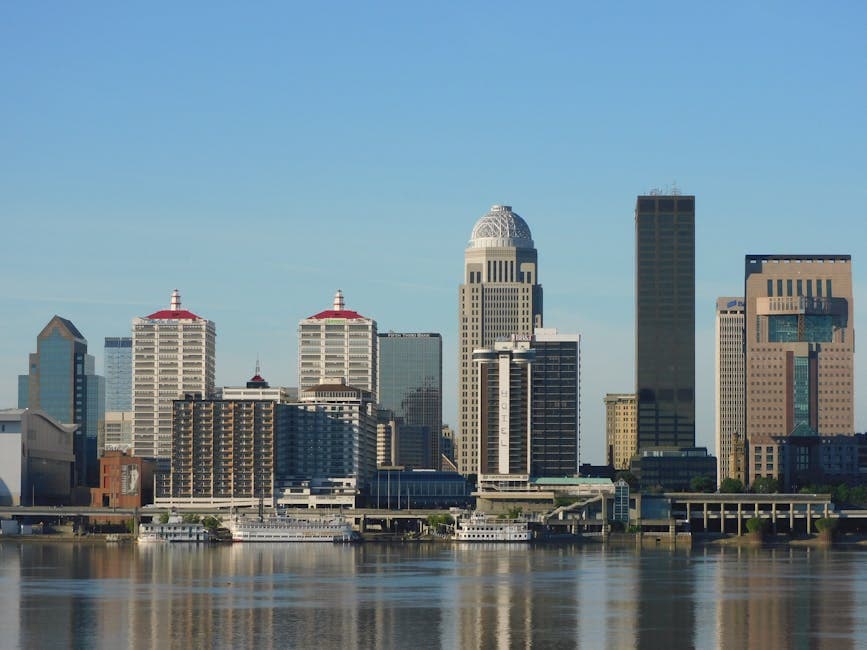
Sources: Kentucky Distillers' Association, Churchill Downs official, Louisville Tourism, Brown Hotel archives.
Derby City Brief
Share of world bourbon made in Kentucky
~95%
Kentucky Distillers' Association, Bourbon Trail program data.
Kentucky Derby attendance, first Saturday of May
~150,000
Churchill Downs official, peak day on a track-wide attendance basis.
Active restaurants, Jefferson County
~2,300
Louisville Metro Department of Public Health and Wellness.
Louisville-Jefferson County metro population
~1.39 million
US Census Bureau ACS 2023 estimates.
Year the Hot Brown was invented
1926
Brown Hotel, chef Fred K. Schmidt. Open-faced turkey with Mornay.
An eleven-part field report · Read top to bottom or jump in
Section I.
The Lede
Friday before Derby. NuLu, 6:18pm.
The chef on the East Market line has nine pre-orders for Derby Day brunch already paid, and the marketplace ticket printer keeps spitting out routing slips for a courier the delivery app says is forty-one minutes out.
It is the Friday before the first Saturday in May. NuLu is full from the corner of Hancock Street back to the rail line, and every other table inside the restaurant is wearing a Derby hat that brushes the next chair. Outside, the Bourbon Trail Welcome Center on West Main has been queued since lunch. The Louisville Slugger Museum and the Muhammad Ali Center across town are pushing visitors east along Market Street. The chef can hear the rail across the river, the train horns from Jeffersonville, the brass at the Frazier Kentucky History Museum down the block.
The branded ordering page on her domain is doing what the marketplace cannot. A party of six from Lexington has pre-paid for a 9:20 a.m. pickup before Oaks Day, picked the bourbon balls and the country ham biscuits as a bundle, added a note that the bride wore a fascinator they expect in every photo, and asked her to leave the bag with the hostess. The marketplace knows none of that. The marketplace is offering it a courier in forty-one minutes for a ticket it will keep a third of.
In the back, a runner is on the phone in Spanish with a produce supplier in Shively about country ham and a delayed case of Bibb lettuce. The operator does not speak Spanish fluently enough to negotiate. Voice AI in two languages would have caught the runner. Voice AI in two languages would have answered the next forty-three calls that arrive between Oaks Day and Derby Day, while the line is doing six-tops of Derby brunch every fifteen minutes.
Tonight is Friday. Tomorrow is Derby. Sunday is the post-Derby brunch shift. This is the four-day window the rest of Louisville's hospitality calendar bends around. We are going to walk through it, hour by hour, peak by peak.
The bourbon glass at the bar is poured neat, single barrel, ninety proof. It will be empty in a minute and a half. The ticket on the printer next to it will live longer than the pour. The right software keeps it that way.
Pre-order ticket log
Oaks Day, 6:02p to 7:11p
One NuLu chef counter. One branded ordering page.
- 6:02pPre-order #4421Derby brunch, party of 6, 9:20a SatWEB
- 6:08pVoice line, SpanishPickup, country ham biscuits x12VOICE
- 6:14pPre-order #4422Hot Brown x4 + bourbon ballsWEB
- 6:21pPre-order #4423Oaks Day box lunch, 8pplWEB
- 6:27pVoice line, EnglishMid-Derby pickup, hat party of 10VOICE
- 6:34pPre-order #4424Catering hold, post-Derby Sun 11aWEB
- 6:42pPre-order #4425Bourbon-glazed pork chop x2WEB
- 6:49pVoice line, SpanishDelivery, Iroquois, 3 platesVOICE
- 6:56pPre-order #4426Derby brunch, 4ppl, 8:45aWEB
- 7:03pPre-order #4427Mint juleps cancelled, kept foodWEB
- 7:11pVoice line, EnglishLate-night pickup, Whiskey RowVOICE
Section II.
The Derby Week Playbook
Oaks Day Friday. Derby Saturday. The first Saturday of May.
Mon to Wed
Slow build
Bourbon tastings, hat shop pickups, catering bookings.
Thursday
Pegasus + Thunder
Parade, fireworks, pre-Derby catering volume climbs.
Friday Oaks Day
Race-day lunch + dinner
Lily-on-the-track, ~100K at Churchill Downs.
Saturday Derby Day
Peak of the year
~150K at the track. Post-Derby dinner is the largest single service.
The Kentucky Derby is the longest continuously held annual sporting event in the United States, run since 1875 on the first Saturday of May at Churchill Downs. Track-wide attendance on Derby Day is roughly one hundred fifty thousand, and the Friday-before card, the Kentucky Oaks, pulls roughly one hundred thousand of its own. Two hundred and fifty thousand humans walk through the Churchill Downs turnstiles inside a single forty-eight hour window.
The shift starts on the Monday of Derby week, when the Pegasus Parade and the Thunder Over Louisville fireworks have already pulled the city forward. Tuesday through Thursday is the slow build: bourbon tastings at the distilleries along Whiskey Row on West Main, Derby Party catering bookings rolling in by phone and form, hat-shop pickups along Bardstown Road, country ham orders queued at the smokehouse counter.
Oaks Day on Friday is its own service rush. The races run noon to seven on the track. The lily-on-the-track cocktail is the headline pour. The restaurant operator on East Market or in the Highlands runs an extended lunch window for race-day spectators, a regular dinner service for pre-Derby parties, and a late-night pickup tail for the Whiskey Row crowd.
Derby Day, the first Saturday in May, is the day the city bends around. Brunch from eight to ten thirty before the gates at Churchill Downs open. Mid-day lunch is small and almost all to-go: the visitor base is at the track. Dinner is the largest service of the year for most operators, driven by post-Derby parties at Mellwood Arts Center, the Brown Hotel, 21c Museum Hotel, and dozens of private homes in Cherokee Triangle and Cherokee Park.
Post-Derby brunch on Sunday is when the operator gets a second compressed service. Out-of-town guests fly home from Louisville Muhammad Ali International (SDF) on Sunday afternoon, and the trailing tail of grab-and-go biscuits, hot brown bundles, and bourbon-glazed bacon sandwiches runs from ten through three. The branded pickup window with a name on the bag is the entire game.
By Monday morning the city resets, and the next big compression on the calendar is the Forecastle Festival at Waterfront Park in July, and then the WorldFest cultural showcase, and then the Pegasus / Derby cycle again the next April. The operator with direct ordering banked the full ticket margin every weekend in between.
Section III.
The Bourbon Trail Atlas
Maker's. Buffalo Trace. Woodford Reserve. Wild Turkey. Heaven Hill. Jim Beam.
Bourbon Trail atlas
Six signature distilleries inside 90 minutes of Louisville
Schematic, not to geographic scale. Drive times are off-peak estimates between downtown Louisville and the visitor center of each distillery. Sources: Kentucky Distillers' Association Bourbon Trail program, each distillery's public visitor center information.
The Kentucky Bourbon Trail is an official program of the Kentucky Distillers' Association. Every signature distillery on the trail sits within ninety minutes of Louisville. The Urban Bourbon Trail runs through the city itself, down Whiskey Row on West Main and out to NuLu.
Maker's Mark is in Loretto, an hour and fifteen southeast of downtown. Buffalo Trace is in Frankfurt, an hour east. Woodford Reserve is in Versailles, about an hour and a quarter east. Wild Turkey is in Lawrenceburg, fifty-five minutes east. Heaven Hill operates in Bardstown, forty minutes south, the spiritual capital of the Bourbon Trail. Jim Beam is in Clermont, thirty minutes south of downtown.
The visitor model is a long-arc tour. A party of four from out of state lands at SDF on a Wednesday, drives the Bourbon Trail for two days, and bases their nights in downtown Louisville along West Main and Whiskey Row, or in NuLu where the chef counters lean modern. Restaurants along these corridors are the cradle of the trail.
Urban Bourbon Trail bars and bar-restaurants stack certifications by carrying fifty or more bourbons on the back bar. The Old Forester Distilling Co on West Main, Evan Williams Bourbon Experience, Angel's Envy, and Michter's Fort Nelson are inside the city. Their kitchens run bourbon-glazed plates as the house pour, and every one of them is a candidate for branded ordering that holds bourbon-paired pickup boxes for trail visitors.
The buyer is not local. The buyer is a tourist on a pre-paid bourbon weekend who wants their dinner ticket emailed in advance, a pickup window scheduled, and a bottle of bourbon balls in the bag. That buyer doesn't call a marketplace. They search the distillery website, follow the link to the restaurant, and book the ticket themselves.
Section IV.
The Hot Brown Anatomy
The Brown Hotel, 1926. Open-faced turkey, Mornay, bacon, tomato.
Plate anatomy
The Hot Brown, 1926
Chef Fred K. Schmidt, Brown Hotel. Per the hotel's public archives.
Schematic for illustration. Mornay is a gruyere-bechamel cream sauce. The dish is conventionally finished under a salamander broiler until the sauce browns and bubbles.
In 1926, chef Fred K. Schmidt invented the Hot Brown at the Brown Hotel as a one a.m. dish for guests who had been dancing in the ballroom for hours. It became the most Louisville thing on a plate.
The architecture is layered. Toasted bread on the bottom. Roast turkey breast over the bread. A flooding of Mornay sauce, a Parisian gruyere cream sauce, ladled over the turkey to the edge of the plate. Two strips of bacon crossed over the top. A tomato wedge on the side. The whole thing slid under a salamander broiler until the Mornay bubbles and the bacon edges char.
As a delivery item the Hot Brown is uncompromising. The Mornay separates and breaks when it cools, the bread under the sauce becomes a sponge, and the bacon goes from crisp to chewy. A direct-ordered pickup with a curbside window and a hot-hold bag in a sealed cardboard sleeve is the only way it travels. The Brown Hotel's in-house catering for the Kentucky International Convention Center has shipped Hot Browns this way for decades.
The lesson generalizes. Louisville is a city of Mornay-anchored, hot-hold-only dishes: the Hot Brown, the benedictine cucumber sandwich (which is cold but breaks fast in warm transit), the bourbon-glazed pork chop, the burgoo stew at the Frazier History Museum's cafe. Marketplace dispatch with a stacked batch is hostile to every one of them.
Section V.
NuLu and East Market
Decca. Garage Bar. Butchertown Grocery. Naive. The chef counter strip.
NuLu, short for New Louisville, is a six-block stretch of East Market Street between Hancock and Shelby. Twenty years ago it was a stretch of antique furniture stores and warehouses. Today it is the chef-counter capital of the city.
Decca, in a basement room with an open fire, runs a rotating wood-fire menu. Garage Bar across the street is pizza-and-ham in a converted gas station. Butchertown Grocery on Story Avenue is fine-dining over the butcher district. Naive on East Market is plant-forward with a full chef bar. Mayan Cafe is Yucatan with a forty-year family lineage from Mexico City. Galaxie is a tacos and natural-wine room a block off the strip.
The operating model is reservation-heavy dine-in, dinner weighted, lighter lunch service, and a moderate but high ticket digital channel. The buyer is a resident eating Tuesday or Wednesday after a long workday, plus a tourist tail from bourbon weekend visitors looking for the city's modern food. The ticket margin is the real margin.
The marketplace economics break a chef counter. A twenty-eight-dollar wood-fired duck on the menu becomes a thirty-two-dollar duck on a third-party app after consumer markup, the marketplace takes a third of the ticket, and the chef clears closer to nineteen on a dish she designed at twenty-eight to keep a butcher and a pastry hand on payroll.
Direct ordering with a clean branded page does the opposite. The duck is twenty-eight on the menu and twenty-eight at checkout. The pickup window is six fifteen. The bag has her name on it. The Stripe receipt hits her bank the next morning. The customer's next reservation is a Tuesday three weeks out.
Most NuLu and East Market kitchens have a small but loyal catering tail to corporate Louisville: Yum Brands, Brown-Forman, Humana, GE Appliances. A clean catering channel with a saved account, a tax-exemption flag where applicable, a net-30 invoice, and a same-day Stripe payout is the only stack that fits how corporate Louisville actually books food.
Section VI.
The Corporate Catering Ledger
Yum Brands. KFC. Brown-Forman. Humana. GE Appliances. The downtown daytime workforce.
Louisville is a Fortune 500 city above its weight. Yum Brands is headquartered here. So is Humana. Brown-Forman. KFC's global HQ. Texas Roadhouse's corporate office is just down I-64 in Louisville. GE Appliances has its sprawling Appliance Park campus south of the city, now under Haier.
These campuses generate predictable catering pipelines. An A&R-style new-product tasting at Yum's Innovation Center on Gardiner Lane books a twenty-four-person hold for a Wednesday lunch. A Brown-Forman investor lunch at the West Main HQ books an eighteen-person catering for a Tuesday board meeting. A Humana benefits-team training on Main Street books a forty-person pickup for a Friday rollout.
None of these are walk-in orders. All of them are pre-booked, often by an executive assistant expensing a corporate card or paying net-30 on an invoice. The marketplace apps were not built for this. They do not produce a clean expense receipt. They do not take a purchase order. They charge a third of the ticket on catering volume where the margin already covers a packing labor cost.
Direct ordering with a corporate catering channel, a saved account, a tax-exemption flag where applicable, a net-30 invoice, and a same-day Stripe payout fills the Tuesday-through-Thursday catering calendar of any Louisville kitchen sitting between Main Street and Broadway.
Corporate catering ledger
The Louisville Tuesday-to-Thursday calendar
| Client / venue | Order type | People | Cadence | Window |
|---|---|---|---|---|
| Yum Brands HQ | Innovation Center tasting | 20 to 28 | Weekly Wed | 11:45a pickup |
| KFC global HQ | Brand-team working lunch | 10 to 16 | 2x weekly | 12:00p pickup |
| Brown-Forman HQ | Board / investor lunch | 12 to 24 | Monthly Tue | 12:15p hold |
| Humana HQ | Benefits team rollout | 30 to 50 | Quarterly | 11:30a drop |
| GE Appliances (Haier) | Appliance Park cafeteria pop-up | 60 to 120 | Seasonal | 11:00a setup |
| Texas Roadhouse corp | Vendor-day pickup | 8 to 14 | Bi-weekly | 11:45a pickup |
| University of Louisville | Athletics / development lunch | 12 to 30 | Weekly | 12:30p drop |
| Norton Healthcare | Residency / grand rounds | 14 to 24 | Weekly | 12:15p hold |
Illustrative pipeline. Specific corporate volumes vary. Sources: Yum Brands and Brown-Forman investor disclosures, Humana annual reports, GE Appliances / Haier press, University of Louisville and Norton Healthcare public information.
Section VII.
The Highlands
Bardstown Road. The five-mile restaurant corridor.
The Highlands is the densest restaurant corridor in Louisville. Bardstown Road runs from Broadway south to the Watterson, and somewhere between Baxter Avenue and the far end past Douglass Loop there are roughly five miles of nearly continuous storefront kitchens, bars, bourbon-lit dive rooms, and chef-driven counters.
Jack Fry's, a 1933 white-tablecloth room, anchors the upper Bardstown stretch. The Bristol Bar and Grille has been pouring since the 1970s. Migo, Wiltshire on Market in nearby NuLu, Hammerheads in Schnitzelburg, Mussel and Burger Bar, El Mundo, and the dense back row of Vietnamese, Mexican, Cuban, and Ethiopian counters along Bardstown south of Eastern Parkway all serve the same resident base.
Operating model: neighborhood density, resident demand, walk-in heavy on the front three miles, delivery-heavier on the back two. Saturday late-night runs through one a.m. for the bar tail. Sunday brunch is local. The digital channel is largely pickup and bicycle-distance delivery, plus a small catering tail to private homes in Cherokee Triangle and St. Matthews.
Direct ordering plus Uber Direct dispatch matters here because the corridor is too dense and too short for a marketplace courier batch to make sense. A three-block delivery takes seven minutes with a one-pickup dispatch. A marketplace batch takes nineteen. The customer on the next block notices the difference.
The Highlands
Five miles of Bardstown Road
Schematic, not to scale. Sources: Louisville Tourism neighborhood guides, Eater Louisville, Insider Louisville restaurant maps.
Section VIII.
Ali, Slugger, and the Civic Spine
Muhammad Ali Center. Louisville Slugger Museum. Frazier History Museum. Speed Art Museum.
Louisville is the city that produced Muhammad Ali, and the civic spine downtown is the museum and venue district that holds the city's identity together between Derby weekends.
The Muhammad Ali Center on West Main is a three-floor museum and a civic gathering place. The Louisville Slugger Museum and Factory, a few blocks west, mints the bats every major league hitter has carried since the 1880s, with the famous one-hundred-and-twenty-foot bat leaning on the front facade. The Frazier History Museum is on the same block. The Speed Art Museum is on Third Street near the University of Louisville campus.
Hospitality follows tourism. The Galt House Hotel, the Brown Hotel, the Seelbach, 21c Museum Hotel, and the Omni Louisville anchor downtown. Their concierges book pre-museum pickups, post-game group dinners after a Slugger Field Bats minor-league game, and pre-show dinners before a Kentucky Center performance. The branded ordering page is the trail of breadcrumbs from the museum admission to the chef counter.
Louisville City FC (USL Championship) at Lynn Family Stadium just north of NuLu pulls a thousand-plus on match nights. Racing Louisville FC (NWSL) shares the building. The Slugger Field Bats fans cluster around Whiskey Row. None of this is a single peak. All of it is a recurring rhythm the host stand cannot answer without help.
Civic spine
The museum district and the hospitality anchors
Schematic, not to scale. Sources: Louisville Tourism downtown wayfinding, Muhammad Ali Center, Louisville Slugger Museum, Frazier History Museum, Brown Hotel official.
Section IX.
Bilingual Louisville
The Hispanic, Cuban, and African corridors. Iroquois. South Louisville. Bilingual ordering.
Louisville's growth in the last twenty years has been driven by a Cuban resettlement community, a steady Hispanic migration from Mexico, Honduras, and Guatemala, and a Somali, Congolese, and Ethiopian refugee population with deep roots in the South Louisville and Iroquois neighborhoods.
The food economy reflects it. The Iroquois Manor strip off Taylor Boulevard runs Mexican panaderias, Cuban ventanitas, Honduran baleadas counters, and Somali injera kitchens within a half-mile of each other. Preston Highway south of the airport is a continuous ribbon of Hispanic carnicerias, Vietnamese pho rooms, and Ethiopian buna bars.
Bilingual Voice AI is the operational unlock here. A Cuban window operator on Iroquois fields most of her inbound calls in Spanish from delivery customers in the Beechmont and South Louisville neighborhoods who prefer to order in Spanish from a voice line rather than fill out an English-only form. A Somali kitchen on Taylor takes calls in Somali and English and routes the line cook's callbacks accordingly.
Marketplace forms force the customer into English. A bilingual voice AI handles the call in Spanish, takes the ticket, prints to the kitchen in English, confirms pickup in Spanish, and never asks the operator to translate. The same is true for Somali, Arabic, French, and Vietnamese: the AI handles the human-language layer while the operator stays in the kitchen.
Bilingual voice line
Six-language coverage on a single phone number
Voice AI takes the call in the caller's language and routes the kitchen ticket in English. Source: Louisville Metro Office for Globalization, Kentucky Office of Refugees data on resettlement.
- EN
English Primary
Default for branded ordering, voice AI, kitchen tickets.
- ES
Spanish High
Iroquois, South Louisville, Preston Hwy. Cuban, Honduran, Mexican.
- SO
Somali Targeted
Iroquois Manor cluster. Refugee resettlement community.
- VI
Vietnamese Targeted
Preston Hwy / South Louisville pho corridor.
- AR
Arabic Targeted
South Louisville. Refugee resettlement community.
- FR
French Targeted
Congolese and Haitian community in South Louisville.
Section X.
Why This Stack, For This City
One flat fee. One bilingual voice line. One dispatch network. One same-day payout.
Direct ordering for a Louisville operator is not one tool. It is the operating layer underneath a five-mile restaurant corridor in the Highlands, a six-block chef strip in NuLu, a corporate catering pipeline that runs through Yum and Brown-Forman, and a Derby week that compresses a fifth of the annual visitor revenue into ninety-six hours.
The flat-fee math is the inversion of the marketplace math. A marketplace charges twenty-five to thirty percent of every ticket, which makes a busy Derby Saturday punishing instead of profitable. A flat $249 a month does not change when the volume triples. The math gets better the busier the operator gets, which is the opposite of how the marketplaces are priced.
Bilingual Voice AI catches the calls the host stand misses on Derby weekend, the Cuban-window calls from Iroquois, the Spanish-speaking kitchen runner calls, and the corporate assistant calls from Yum looking for a catering hold. It runs twenty-four hours and never asks for a break. The host stand stays on the floor.
Uber Direct dispatch holds the Hot Brown window. One ticket, one courier, one drop-off, no marketplace batching. The Mornay arrives still bubbling in the cardboard sleeve. The bag is in the door at minute fifteen. The customer leaves a five-star review for the restaurant, not the app.
Same-day Stripe payouts fund a Derby week of payroll out of the same week of receipts. The catering invoice channel produces a clean receipt a corporate finance team will reimburse without three rounds of email. The bourbon weekend tourist gets a branded pickup window with their name on the bag. The Bardstown Road resident gets a three-block delivery in seven minutes. Same software. One flat $249 a month. No commission on any of it.
$249 flat handles Derby week
Marketplace commission of 25 to 30% on a Derby weekend compounds into thousands lost. A flat $249 a month does not move with the volume. The math gets better the busier you are, which is the opposite of how the marketplaces are priced.
Bilingual Voice AI catches the calls
English and Spanish, twenty-four hours. The host stand stays on the floor. A Cuban window operator on Iroquois, a NuLu chef in Butchertown, a Bardstown Road counter all keep the inbound line answered while the kitchen plates dinner.
Uber Direct holds the Hot Brown
One ticket, one courier, one drop-off. No marketplace batching. The bag is at the door at minute fifteen. The Mornay is still bubbling under the bacon. The customer leaves a five-star review for the restaurant, not the app.
Same-day Stripe payout funds payroll
A Derby Saturday clears to the restaurant's bank account by the next morning. Cash flow does not wait two weeks for a marketplace remittance cycle. Payroll, produce, and bourbon orders all get paid out of the same week of receipts.
Corporate catering + invoicing
Yum, Brown-Forman, Humana, GE Appliances. Saved accounts, tax-exemption flags where applicable, net-30 invoicing, clean expense receipts the finance team will reimburse without three rounds of email.
Live in 2 hours
A NuLu chef can be live on a branded ordering page, Voice AI, and Uber Direct dispatch inside one afternoon shift. If we cannot get it live in two hours, we white-glove the setup at no charge.
Coda
Derby Day ends at sundown. The Bourbon Trail does not.
The next Derby is on a date already on every Louisville operator's calendar, but it is the Tuesday-through- Thursday in between that the bills get paid on. The Bourbon Trail tour books a Tuesday dinner. The Yum catering office books a Wednesday lunch. The Bardstown Road resident orders Thursday delivery. The Hispanic window on Iroquois takes a Sunday Spanish-language pickup. Direct ordering is the operating layer all of it runs through.
Read next
Voice AI for restaurants
English and Spanish, 24/7. The host stand stays on the floor.
Uber Direct delivery
One ticket, one courier, a sub-15-minute window for the Hot Brown.
$249 flat monthly
No per-order commission. Same-day Stripe payout.
More city field reports
Nashville, Austin, Seattle, Atlanta, Houston, Boston, Denver, Dallas, SF.
References · This report drew from
16 sources
- Kentucky Distillers' Association · Kentucky Bourbon Trail program and distillery directory
- Churchill Downs · Kentucky Derby attendance, schedule, and venue information
- US Census Bureau ACS · Population and demographic estimates, Jefferson County KY
- Louisville Metro Department of Public Health and Wellness · Food establishment permits, inspection, public health data
- Louisville Tourism · Visitor data, tourism volume, neighborhood guides
- The Brown Hotel · Hot Brown invention and recipe history
- Yum Brands Investor Relations · Yum Brands corporate profile and Louisville HQ disclosures
- Brown-Forman Corporation · Brown-Forman corporate profile, Louisville HQ and brand portfolio
- GE Appliances (Haier) · Appliance Park / Louisville manufacturing footprint
- Eater Louisville · Restaurant openings, closures, and neighborhood reporting
- The Courier-Journal · Local newspaper of record, food and business coverage
- Muhammad Ali Center · Muhammad Ali Center programs and visitor data
- Louisville Slugger Museum · Louisville Slugger Museum and Factory visitor information
- Frazier History Museum · Frazier History Museum / Bourbon Trail Welcome Center
- Louisville Metro Office for Globalization · Refugee and resettlement community data, Office of Globalization
- Kentucky Department of Revenue · Sales and use tax rates, Commonwealth of Kentucky