A Long Read From The Field
Birthplace of Aviation
An investigation into Dayton as the city that invented powered flight, kept the largest single-site employer in Ohio on the same prairie where the Wright brothers learned to fly, invented funk music in a basement on the west side, and built a chef-driven Oregon District inside a five-block historic core.
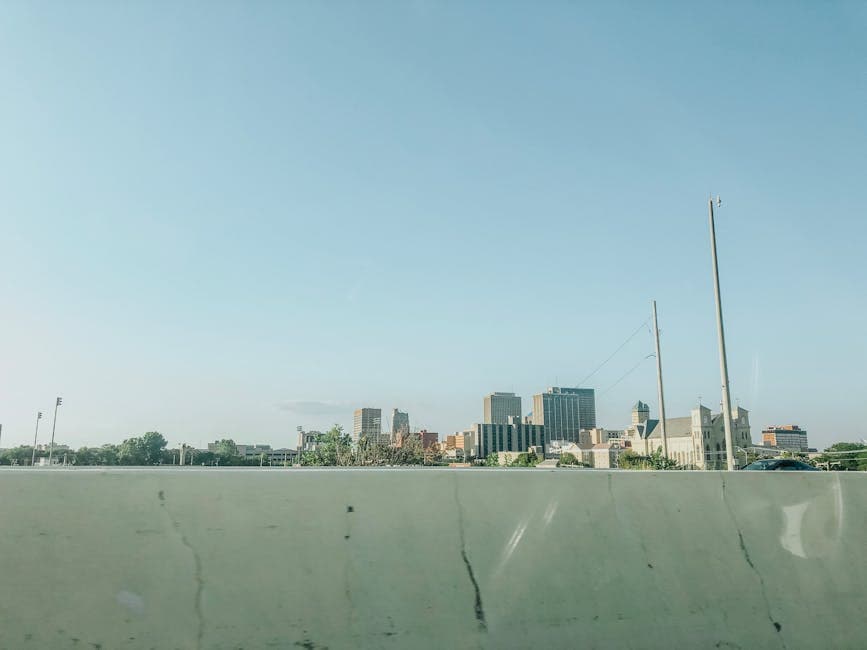
"Dayton invented powered flight in the back of a bicycle shop, and it has been engineering the next thing ever since."
I. The Lede
It is 6:42pm on a Thursday in the Oregon District. A chef-driven kitchen is twenty-seven tickets deep into a Friday-light pre-game dinner.
The kitchen sits a block off East Fifth Street, on the only stretch of the Oregon District where the brick rowhouses run continuous for five blocks and the streetlamps still carry hand-painted signs for the bars that opened in 2003. The chef has been on the line since two in the afternoon. Twelve weekday covers in the bar at lunch, a wholesale order to a Sinclair Community College catering desk that needed to be ready at 3:30, and a four-top of UD parents who walked in early and wanted to know whether the duck breast was on tonight. It is. It will be on every Thursday through November because the chef writes the menu and the chef writes the schedule.
Tomorrow night is a Dayton Flyers home game at UD Arena. The chef knows this because the chef has been in Dayton long enough to know that twelve thousand fans walking out of UD Arena at ten past nine on a Friday night need to eat somewhere, and a non-trivial fraction of them will pick up a phone, call this kitchen, and ask whether the dining room can seat a party of six at 9:30. The host can say yes. The kitchen can serve those six. What the kitchen cannot do is also accept twenty-two pickup orders from a marketplace app between 9:00 and 9:20 because each of those tickets compresses the line into a window that does not exist on a Friday after a home game.
The chef's problem, at 6:42 on Thursday, is the same problem every Dayton operator has: the demand is already in the neighborhood. Wright-Patterson has thirty thousand personnel inside a six-mile radius. The University of Dayton has eleven thousand students and an arena that hosts the First Four every March. Dayton Children's Hospital runs a four-hundred-bed pediatric center on the north side of town. Sinclair Community College runs the second-largest community college in Ohio on a downtown campus. The Oregon District itself is one of the most walkable historic districts in the Midwest. The chef does not need a marketplace to find customers. The chef needs an ordering stack that does not give 27% of the table away every time one of those customers picks up the phone.
This is a report about Dayton: a city that invented powered flight in a bicycle shop on West Third Street, that hosts the largest single-site employer in the state of Ohio on the prairie where the Wright brothers practiced their first sustained flights, that invented an entire genre of American music in a roomful of basements on the west side in the 1970s, and that still feeds itself out of an Oregon District chef row, a 2nd Street Market arcade, and a Wright-Patt catering economy that has been running on phones and fax machines since the base was named in 1948.
The Dayton question is not whether direct ordering belongs here. It is what direct ordering looks like for a city whose demand was solved by the Wright brothers in 1903 and whose ordering stack, in 2026, is still a phone and a paper notebook on a counter near the line.
II. The Wright Brothers, 1892 to 1910
The bicycle shop on West Third Street, the wind tunnel in the back room, and the airplane that flew at Kitty Hawk.
Wilbur and Orville Wright were Dayton bicycle mechanics. Their shop sat on West Third Street, near what is now the Wright-Dunbar interpretive site of the Dayton Aviation Heritage National Historical Park. The first powered, controlled, sustained, heavier-than-air flight by a human being was made in an airplane designed, built, and tested in Dayton. Kitty Hawk supplied the steady ocean wind. Dayton supplied the engineering. The timeline below is the standard one drawn from the National Park Service, the Library of Congress Wright Brothers Papers, and the Smithsonian Air and Space Museum archives.
The Wright Flyer, schematic
Cream-and-muslin biplane on aluminum-silver skids. Twelve seconds, 120 feet. December 17, 1903.
- 1892
Wright Cycle Company opens
Wilbur and Orville open a bicycle repair and sales shop on West Third Street, Dayton. The business funds the aeronautical experiments that follow.
- 1899
First glider sketches
Orville writes to the Smithsonian for everything published on flight. The brothers begin a four-year program of kites, gliders, and wind-tunnel work, done in the back of the bicycle shop.
- 1901
Dayton wind tunnel
The brothers build a six-foot wind tunnel in the bicycle shop and test more than two hundred wing shapes. This is the work the Smithsonian later concedes was the real engineering breakthrough.
- 1903
First powered flight, Kitty Hawk
December 17, 1903. Orville flies 120 feet in 12 seconds at Kill Devil Hills, North Carolina. The aircraft was designed, built, and tested in Dayton. Kitty Hawk had the wind. Dayton had the engineering.
- 1904
Huffman Prairie, Dayton
The brothers return to Dayton and use Huffman Prairie, eight miles east of town, as their practice field. By 1905 they fly 24 miles in 39 minutes on a single flight here. The first practical airplane is a Dayton airplane.
- 1910
Wright Company factory
Wright Company opens a manufacturing plant on West Third Street, Dayton. The first airplane factory in the world. Dayton is the world capital of aviation for the next decade.
- 1948
Wright-Patterson AFB formed
Wright Field and Patterson Field merge into Wright-Patterson Air Force Base. The base becomes the central engineering and logistics command of the US Air Force, on the land the Wright brothers used as a practice field.
- 1992
Dayton Aviation Heritage Park
Congress designates the Dayton Aviation Heritage National Historical Park. The bicycle shop, the Hawthorn Hill house, Huffman Prairie, and the Wright Cycle Company sites are folded into a single park unit.
The Wright Cycle Company opened on West Third Street in 1892. Wilbur was twenty-five. Orville was twenty-one. They sold bicycles, repaired bicycles, and printed a small newspaper out of a side room. The shop's location, the bicycle business that funded the work, and the back-room space where the brothers built their first wind tunnel are the unromantic facts of how powered flight was invented. The Smithsonian conceded in 1942, decades after the fact, that the engineering breakthrough was not the December 1903 flight at Kitty Hawk. It was the Dayton wind-tunnel work in 1901, which established the lift coefficients that no one before the Wright brothers had measured correctly.
The brothers chose Kitty Hawk because they needed steady wind, soft sand for landing, and isolation. They chose Dayton because Dayton was their workshop. Every airplane they tested at Kitty Hawk was packed into shipping crates in the bicycle shop and sent east by rail. After the December 17, 1903 flight, the brothers returned to Dayton with the airplane disassembled in those same crates. By 1904 they were practicing at Huffman Prairie, an eighty-four-acre field eight miles east of downtown Dayton, on land leased from a Dayton banker who watched the early flights from his kitchen window. By 1905 they had flown a sustained 24-mile flight at Huffman in 39 minutes. The first practical airplane was a Dayton airplane.
The Wright Company factory, opened on West Third Street in 1910, was the first airplane factory in the world. For most of the next decade, Dayton was the global capital of aviation manufacturing. The factory closed in 1916 after Wilbur's death from typhoid and the company's sale, but the engineering culture it set up in Dayton kept compounding. The land at Huffman Prairie became Wright Field. Wright Field merged with Patterson Field in 1948 to form Wright-Patterson Air Force Base. The base became the central engineering arm of the United States Air Force. Every airplane the Air Force has flown for the last seventy-five years has been designed, tested, or acquired through the same prairie the Wright brothers used to practice their first turns.
Congress designated the Dayton Aviation Heritage National Historical Park in 1992. The park unit covers the Wright Cycle Company shop on West Third Street, Hawthorn Hill (the brothers' Dayton home), the Wright-Dunbar interpretive center, Huffman Prairie itself, and the Wright Memorial monument. None of those sites is a private restaurant. All of them are reasons a Dayton restaurant operator's customer base in 2026 includes a steady weekly flow of out-of-town visitors who came to Dayton to see the bicycle shop. The aviation tourism economy here is a real demand line. Visit Dayton, the Dayton/Montgomery County Convention and Visitors Bureau, tracks it as one of the top three reasons out-of-state visitors come to Dayton.
What this means for a restaurant operator is that the Dayton customer base is not constructed by a marketplace app. It is constructed by the bicycle shop on West Third Street, the Wright Memorial on Wright Brothers Hill, and the National Museum of the US Air Force on the Wright-Patterson side of town. Out-of-state visitors who came to see the Wright Flyer at the museum eat at a Dayton restaurant before they drive home. The Oregon District, the 2nd Street Market, the Brown Street pizza row, and the Belmont diner economy all absorb that demand. The marketplace economy adds nothing to the discovery side of this. The discovery happened in 1903.
The structural reading of Dayton is that customer acquisition is a solved problem. Three hundred thousand visitors a year come to see the bicycle shop and the National Museum of the US Air Force. Eleven thousand UD students live in the city for nine months of the year. Thirty thousand Wright-Patt personnel and their families live inside the metro footprint. What a Dayton restaurant operator needs is not a marketplace. What an operator needs is a stack that lets the restaurant absorb the demand that is already coming through the door, the phone, the catering email, and the conference reservation desk at the Air Force Materiel Command headquarters.
III. Wright-Patterson Air Force Base
~30,000 personnel on a single base. The largest single-site employer in Ohio.
Wright-Patterson Air Force Base, by the count published in Air Force Materiel Command fact sheets and confirmed by Dayton Development Coalition reporting, employs in the neighborhood of thirty thousand personnel across military, civilian, and contractor categories. That figure makes Wright-Patt the largest single-site employer in the state of Ohio. The base also hosts the National Museum of the United States Air Force, the world's largest military aviation museum, on its grounds with free public admission.
Wright-Patt and Air Force Museum, schematic atlas
Two-runway base + Huffman Prairie + Air Force Museum on the eastern edge of Dayton.
Schematic only. Wright-Patt has two area complexes (A and B), Huffman Prairie sits inside the base footprint, and the National Museum is open to the public daily, free of charge, with parking on Springfield Pike.
Major units on base
Approximate headcounts. AFMC public fact sheets.
Air Force Materiel Command (AFMC) headquarters
5,200Command headquarters. Civilian and military staff oversee research, development, acquisition, test, and logistics across the Air Force.
Air Force Research Laboratory (AFRL)
6,800The Air Force's primary research arm. Materials, sensors, propulsion, directed energy, autonomy. Most aviation research west of the Mississippi runs through here.
Air Force Life Cycle Management Center
9,400Acquisition program management across the Air Force fleet. Buys airplanes, weapons systems, and software for the service.
88th Air Base Wing and tenants
5,600Base operations, medical, civil engineering, communications, contracting. Keeps Wright-Patt running.
National Air and Space Intelligence Center
3,000Defense Intelligence Agency tenant. The primary US producer of air and space intelligence analysis.
Total approx. 30,000 across major units
Wright-Patterson is not a single command. It is a constellation of major Air Force organizations that happen to share a runway. Air Force Materiel Command's headquarters is here. The Air Force Research Laboratory's research arm is here. The Air Force Life Cycle Management Center, which buys airplanes and weapons systems for the entire service, is here. The National Air and Space Intelligence Center, a Defense Intelligence Agency tenant, is here. The 88th Air Base Wing runs the base infrastructure that supports all of them. Counting military, civilian, and contractor personnel together, the base headcount is in the neighborhood of thirty thousand. The Air Force, the state of Ohio, and the Dayton Development Coalition all describe Wright-Patt as the largest single-site employer in Ohio.
For Dayton restaurant operators, this is the steady-state demand baseline of the entire metro. Wright-Patt personnel eat lunch on base, off base, and at the catered conferences that the Air Force Life Cycle Management Center hosts continuously across hundreds of acquisition programs. The off-base lunch demand spills west into the Fairborn corridor (El Rancho Grande, Foy's, the local pizza and sub chains) and south into the Beavercreek strip. The catering demand is more dispersed: a 60-tray lunch order for a Materiel Command program review at 11:30am can come to a Beavercreek caterer one week and a downtown Dayton caterer the next.
The operational requirements for Wright-Patt catering are precise. A program review starts at exactly 11:30. The order has to arrive at the gate at 11:00 to clear security. The catering vendor needs a phone that answers (Voice AI handles this for the program manager who is calling at 7:15am the day before), a website that can take a 60-tray order with allergen flags and a contract-billing reference (a direct ordering site can be configured for that), and same-day payouts so the operator does not float the cost on the program manager's slow-paying government PO. None of those requirements is solved by a third-party marketplace, and the marketplace economy was never designed for the kind of contract-billing patterns the federal acquisition process requires.
The National Museum of the United States Air Force, on the eastern edge of the base, draws on the order of a million visitors a year. Admission is free. Parking is free. The museum is one of the most-visited free attractions in Ohio. For restaurant operators in Fairborn, Beavercreek, and the eastern Dayton corridor, the museum's visitor flow is a tourist-economy line that operates fifty-two weeks a year. The pattern is steady weekday volume from school field trips and retiree groups, with weekend surges from family visitors. A direct ordering stack on the operator side absorbs that pattern cleanly; a marketplace stack would never be priced to make sense at the average ticket size of a Saturday family lunch off a museum visit.
The reading for Dayton: Wright-Patt is not a side dish. Wright-Patt is the operator economy's structural baseline. A Dayton restaurant whose stack does not absorb the base's lunch, catering, and family-weekend demand cleanly is a Dayton restaurant that is leaving its largest single-site customer pool on the table.
IV. Dayton Funk
Ohio Players, Zapp, Lakeside, Heatwave, Slave, Sun, Faze-O. Dayton invented funk.
The Dayton funk era is one of the most-cited and least-marketed musical legacies of any American city. Between roughly 1972 and 1985, a tight cluster of Dayton bands produced the records that built the architecture of modern R&B, the production templates that hip-hop spent the next thirty years sampling, and the talk-box funk sound that West Coast rap recycled into a half-billion-dollar back catalog. Ohio Players, Zapp, Lakeside, Heatwave, Slave, Sun, Faze-O: this is a Dayton roster, recorded in Dayton studios, made by Dayton musicians.
The Dayton funk vinyl, schematic
A 12-inch funk record, played at 33-and-a-third.
Ohio Players
1959 to presentDayton
Signature: Fire (1974), Love Rollercoaster (1975), Funky Worm (1973)
Formed in Dayton in 1959 as the Ohio Untouchables. Two No. 1 singles in 1974 and 1975. The opening band of the Dayton funk era.
Zapp
1977 to presentHamilton / Dayton
Signature: More Bounce to the Ounce (1980), Computer Love (1986)
Roger Troutman's group. The talk-box funk template that West Coast hip-hop sampled for two decades. Roger lived and recorded in Dayton.
Lakeside
1969 to presentDayton
Signature: Fantastic Voyage (1980)
Nine-piece Dayton band whose Fantastic Voyage hit No. 1 on the R&B chart and was sampled by Coolio's 1994 No. 1 hit of the same name.
Heatwave
1975 to 1984Dayton-formed
Signature: Boogie Nights (1976), Always and Forever (1977)
Formed by Dayton-born brothers Johnnie and Keith Wilder while stationed in Germany. The arc returns to Dayton and the band's hometown roots run through Dayton funk circles.
Slave
1975 to 1989Dayton
Signature: Slide (1977), Just a Touch of Love (1979)
Mark Adams, Steve Washington, Steve Arrington. Dayton-formed and Dayton-recorded. A direct lineage to Stevie Wonder's late-1970s collaborators.
Sun
1976 to 1984Dayton
Signature: Sun Is Here (1976), Radiation Level (1978)
A second-wave Dayton funk band tracking the Ohio Players blueprint. Local radio presence still cites them every funk-festival weekend.
Faze-O
1977 to 1979Dayton
Signature: Riding High (1977)
Riding High became one of the most-sampled Dayton funk records in hip-hop history. The track lives a second life on every late-1990s rap album.
Bootsy Collins (visits) / Roger Troutman
1970s to 2000sCincinnati / Dayton corridor
Signature: Talk-box funk, P-Funk Dayton lineage
Roger Troutman's Dayton studio sat at the southern edge of the P-Funk corridor that ran Cincinnati to Detroit. Dayton was the production center for the talk-box era.
The Ohio Players formed in Dayton in 1959 as the Ohio Untouchables. By 1973 they had a No. 1 R&B single ("Funky Worm"), and in 1974 and 1975 they put out "Fire" and "Love Rollercoaster," both of which topped the Billboard pop chart. The records sold millions. The production template, brass-anchored, drum-heavy, with a wah-pedal lead riff and gospel-trained vocal harmonies, became the standard for an entire genre of mid-1970s R&B. Other Dayton bands followed inside of three years: Slave, Lakeside, Sun, Faze-O. By 1980, "Dayton sound" was a legible category in R&B trade press. Zapp's Roger Troutman, working out of his Dayton studio, locked the talk-box vocoder vocal onto the Dayton funk template. The result, "More Bounce to the Ounce," became one of the most-sampled records in the history of hip-hop.
The Dayton funk legacy is not a museum piece. WACO 95 AM and 95.7 The Beat still run funk-block programming. The annual Dayton Funk Music Hall of Fame events fill the Funk Music Center and the Levitt Pavilion summer series. Roger Troutman's family runs an ongoing program around his Dayton legacy. The neighborhoods that produced the bands (West Dayton, the Westwood and Wright View corridors, the Linden Avenue side of town) carry the cultural memory of the studios and the after-hours rooms that produced the records.
For restaurant operators, the funk heritage produces a distinct sub-economy: festival weekends. The Dayton Funk Music Fest, the Dayton Black Cultural Festival, and the Levitt Pavilion summer concerts pull crowds into the downtown core and the riverfront on summer Saturdays. The catering demand on those weekends doubles for Oregon District and downtown caterers. A direct ordering site that takes pre-orders for festival-weekend pickup ("the Saturday June 22 funk weekend menu is live, ordering closes Thursday at 5pm") is the operationally correct stack for that pattern. A marketplace cannot publish a constrained pre-order window with a hard cut-off; a direct platform can.
The cultural reading for the city: Dayton invented a genre of music in basements and studios that the rest of the country sampled for forty years and rarely credited. That history shapes how the city thinks about its own creative economy. A Dayton restaurant operator who participates in the funk weekends, who books Dayton-bred musicians for the Wednesday night sets, who carries the cultural memory of the West Dayton funk scene in the way the room is run, is doing the local work that no marketplace can compress into an algorithmic ranking.
What it means for the stack: a direct ordering site that the operator controls is the surface on which the funk-weekend programming lives. The menu rotates with the festival calendar. The phone number Voice AI answers picks up the Friday-night reservation question from a customer who is in town for the Levitt show. The Uber Direct dispatch picks up a 12-tray order for a Funk Music Hall of Fame backstage at 6:30 on a Saturday in July. None of that demand is constructed by an app. All of it is constructed by a fifty-year-old Dayton musical legacy.
V. The Flyers and the First Four
~11,000 students, a 13,400-seat arena, and the original home of the NCAA First Four.
The University of Dayton is a private Catholic research university on a campus that sits two miles south of downtown Dayton. UD enrolls roughly eleven thousand students. UD Arena, the campus's basketball venue, has hosted more NCAA Men's Division I Basketball Championship games than any other arena in the country and has been the permanent home of the First Four play-in round of the NCAA Tournament since 2011, when the round was created. Dayton is the city that opens the bracket every March.
UD Arena opened in 1969 on the south side of campus. The arena seats 13,409. It has hosted more NCAA tournament games (across the entire tournament history, including the First Four and the early rounds) than any other venue in the country. The First Four, the four play-in games that open the NCAA Tournament every March, has been played at UD Arena every year since the round was created in 2011. For the city of Dayton, that is four nationally televised college basketball games in one week each March, and a steady flow of out-of-state visitors who fly into Dayton specifically for First Four weekend.
The Flyers themselves are a regular Atlantic 10 contender. The 2019 to 2020 team, led by national player of the year Obi Toppin, was a top-five team nationally before the season was cancelled. UD basketball Saturday-and-Tuesday-night home games run from November through March, with twelve to fifteen home dates per season. Each game pulls thirteen thousand fans onto Brown Street and Stewart Street, the two corridors that feed the arena. Cousin Vinny's Pizza, Marion's Piazza, Tank's, and Fricker's run their highest-volume nights of the year on the Saturday and Tuesday games against Dayton's Atlantic 10 rivals.
For an operator on Brown Street, the surge pattern is two hours pre-game (5:00 to 7:00 PM tipoff is typical) and three hours post-game (9:00 to midnight). The pre-game pickup demand is heavy: students eating before they walk to the arena, alumni who flew in for the weekend, fans driving from Cincinnati or Columbus who want a meal before tipoff. The post-game demand is lighter but longer, and it skews toward late-night pizza and bar food. The operational stack that handles both surges is the same stack: a phone that gets answered (Voice AI handles a ringing line during pre-game pickup), a website that can throttle pickup capacity ("12 pickup slots between 5 and 6pm tonight, full at 5:45pm"), and a delivery dispatch (Uber Direct) for the fans who do not want to drive to the arena and then drive to a restaurant.
First Four weekend, every March, is a different scale. Four NCAA tournament games over two nights, on national television, with a TV crew and an out-of-state media presence in the city. Hotel rooms are sold out within walking distance of the arena. Restaurant reservations in the Oregon District and Brown Street fill four weeks ahead. The catering economy for the broadcast crews, the host-school athletic departments, and the visiting bands is significant. A direct ordering site that publishes a "First Four catering menu," takes pre-orders for delivery to the host hotels at scheduled times, and runs without a marketplace haircut is the right stack for this weekend. The marketplace economy was never priced for catering-tray delivery to a CBS production truck parked at UD Arena at 11am on a Tuesday in March.
The structural reading: the Flyers are the steady-state college basketball demand baseline for the city of Dayton. The First Four is the once-a-year national-television surge that produces the most visible demand line of the year. Both patterns are absorbed cleanly by a direct ordering stack; both patterns are taxed unnecessarily by a marketplace stack that does not even need to be in the transaction.
VI. The Neighborhood Atlas
Oregon District, Brown Street, downtown, Belmont, Fairborn: five operating models.
Dayton's restaurant economy is not a single corridor. It is a five-cluster geography: the Oregon District chef row, the Brown Street UD pizza-and-pub corridor, the downtown 2nd Street Market core, the Belmont and Patterson south-side diner economy, and the Fairborn/Wright-Patt edge. Each cluster has a separate operating model and a separate demand baseline. The atlas below maps the rough geography.
Schematic atlas (not to scale)
Five clusters around the Great Miami / Mad River confluence and the Wright-Patt edge.
Oregon District
Five-block historic district on East Fifth Street, the oldest neighborhood in Dayton. Chef-driven independents cluster here along with the city's late-night bar district. Walking density is high every weekend.
- Lily's BistroSeasonal American, chef-driven
- Salar Restaurant and LoungeModern Peruvian, Margot Blondet
- Wheat Penny Oven and BarWood-fired pizza, Italian
- Trolley StopTavern, sandwiches, beer garden
Brown Street / UD campus
The corridor that connects the University of Dayton to downtown. A dense run of pizza, burger, and pub stops aimed at the eleven-thousand-student campus and the Flyers fan base.
- Cousin Vinny's PizzaLate-night pizza, UD anchor
- Marion's PiazzaThin-crust Dayton-style pizza
- Tank's Bar and GrillPub, burgers, late hours
- Fricker'sWings, sports bar staple
Downtown / 2nd Street Market
Riverfront downtown wraps around the historic 2nd Street Market, a covered weekend market with thirty-plus vendors. Office workers and conference traffic feed the weekday lunch demand.
- 2nd Street Market vendorsWeekend market, prepared food, produce
- The Pine ClubSteakhouse since 1947
- Coco's BistroEuropean-leaning, romantic dining room
- Thai 9Thai, sushi, Oregon-district adjacent
Belmont / Patterson corridor
South Dayton corridor connecting the city to Kettering. Working-class neighborhoods with classic Dayton diner, chili, and pizza staples that pre-date the Oregon District chef era.
- Hasty-Tasty Pancake HouseClassic Dayton diner
- Submarine HouseDayton-cheese-sub regional chain
- Cassano's Pizza KingDayton-original pizza, founded 1953
- El MesonSpanish, Latin, Belmont neighborhood anchor
Wright-Patt / Fairborn edge
East of the city the Wright-Patterson Air Force Base footprint shapes a separate restaurant economy: lunch and catering for thirty thousand on-base personnel and their families.
- El Rancho GrandeTex-Mex, Fairborn standby
- Foy's RestaurantFairborn family diner
- Hibachi JapanSushi, hibachi, Fairborn
- Doubleday's GrillSports bar, on-base catering
The Oregon District is five blocks of brick rowhouses on East Fifth Street, the oldest surviving residential district in Dayton, and the densest cluster of chef-driven independents in the metro. Lily's, Salar, Wheat Penny, Trolley Stop, Lucky's, Mike's: the operating model here is dining-room-first with a careful pickup tail, in rooms whose chef and ownership are usually one person. Margot Blondet at Salar runs Peruvian. Emily Mendenhall at Lily's runs a seasonal American menu. These are operators who write their own menus and who do not have the margin to absorb a marketplace haircut.
Brown Street is the UD corridor. A run of pizza, burger, and pub stops aimed at eleven thousand students and the Flyers fan base that fills UD Arena fifteen times a year. Cousin Vinny's Pizza is a Dayton institution that has run on Brown Street since the early 1990s. Marion's Piazza, the Dayton-original thin-crust pizza chain founded by Marion Glass in 1965, runs a Brown Street location that handles game-night surge volume. The operating pattern here is pickup-heavy, late-night, with surges every Saturday and Tuesday from November through March.
Downtown Dayton wraps around the 2nd Street Market, a covered market operated by Five Rivers MetroParks with thirty-plus vendors selling prepared food, produce, baked goods, and crafts. The market is open Thursday, Friday, and Saturday. The Pine Club, opened in 1947, anchors the downtown steakhouse tradition. Coco's Bistro is the special-occasion European-leaning room. Thai 9 is the Oregon-district-adjacent Thai-and-sushi staple. Downtown weekday lunch demand comes from the office economy: the federal building, the Reynolds and Reynolds and Premier Health corporate offices, and Sinclair Community College's downtown campus.
Belmont and the Patterson corridor run south from downtown to Kettering. The neighborhoods here pre-date the Oregon District revival and run on classic Dayton-original chains: Submarine House for sandwiches, Cassano's Pizza King for the thin-crust Dayton-style pizza, Hasty-Tasty Pancake House for breakfast. The operating model is family-and-blue-collar lunch volume, weeknight family dinners, and steady weekend brunch. El Meson, on West Carrollton, is the Spanish-Latin special-occasion room in this corridor and a regular on Dayton dining lists.
Fairborn, on the eastern edge against Wright-Patt, is the base-and-family economy. El Rancho Grande, Foy's, Doubleday's, the Hibachi Japan room near the base gate: this is the lunch-and-catering economy that feeds Wright-Patt personnel and their families on the off-base side. The operating pattern is precise: weekday lunch surge between 11:15 and 12:30, a regular weekday-evening family dinner crowd, and a catering tail for on-base events. The direct ordering stack that fits this corridor is one with a Voice AI that can take pickup orders from a base phone (where personnel cannot install marketplace apps without security review) and an Uber Direct dispatch that can deliver to a gate address.
VII. Sinclair Community College
The second-largest two-year college in Ohio, on a downtown campus.
Sinclair Community College runs one of the largest two-year campuses in Ohio out of a downtown Dayton footprint. Roughly twenty-five thousand students take credit courses each year, with workforce training and continuing education programs pushing the institutional headcount higher. The downtown campus sits across from the federal building and a few blocks from the 2nd Street Market. For downtown Dayton operators, Sinclair is a steady weekday demand baseline: classroom catering, faculty-staff lunch, conference-room meeting orders, and the student-side pickup volume that runs from morning into mid-afternoon.
The catering pattern is precise. A workforce-training program lunch for forty-five students on a Tuesday at noon. A faculty-senate meeting catered for twelve in a Building 8 conference room at 11:30 every other Wednesday. A continuing-education welcome reception for two hundred on the first Friday of a new semester. None of those orders is well-served by a marketplace dispatched at random; all of them are well-served by a direct ordering site with scheduled-pickup windows, a contract-billing option, and a Voice AI that can answer the program-director call at 7:30 in the morning.
For downtown Dayton catering operators (Coco's, the 2nd Street Market vendors, the Oregon District kitchens that take corporate catering, the downtown sandwich shops), Sinclair is part of the regular weekly book. A direct ordering stack lets the operator take those orders without the marketplace haircut that would erode a $9-per-head boxed lunch into a loss-making transaction.
VIII. Dayton Children's Hospital
The region's pediatric center, on the north side of town.
Dayton Children's Hospital is the pediatric center for the Miami Valley. The main campus is on the north side of Dayton on Valley Street, with specialty centers and outpatient locations across the region. The hospital operates a 200-plus-bed pediatric facility and serves families across western Ohio and eastern Indiana. Like the larger Cleveland Clinic and Cincinnati Children's Hospital in their respective metros, Dayton Children's is a steady weekday demand baseline for the local restaurant economy: meal trays for families staying with hospitalized children, conference catering for medical staff meetings and continuing education events, and pickup-and-delivery volume for the residency and fellowship programs.
The operational pattern is specific. Family-side orders run twenty-four hours, with peak demand between 5:30pm and 8:30pm when the dining rooms inside the hospital are at capacity. Medical-staff catering runs on a weekday rhythm: a 7:30am grand-rounds breakfast, a 12:00pm department lunch, an evening continuing-education reception. A direct ordering site with twenty-four-hour pickup-and-delivery scheduling, a Voice AI that can take a phone order from a parent whose child is in the room and who cannot easily use an app, and an Uber Direct dispatch with hospital-address routing logic is the operationally correct stack.
For the operators in the north-Dayton corridor and the Oregon District kitchens that take catering, the hospital's pediatric population creates an unusual demand line: orders are often for families in distress, the order quality matters disproportionately, and the operator's reliability is what builds the multi-week relationship that turns into a $1,200-a-month catering account. A marketplace cannot build that relationship. A direct ordering site, with the operator's name on it and a phone number a parent can call at 7pm on a Tuesday, can.
IX. The 7.25% Sales Tax
Ohio 5.75% + Montgomery County 1.5% = 7.25%. The county add-on is the part the marketplace economy hides.
Dayton restaurant sales tax breakdown
Combined rate: 7.25%
Ohio DOT + Montgomery County Auditor
- Ohio state (5.75%)Ohio Department of TaxationStatewide base rate on prepared food. Applies to every restaurant transaction in the state.
- Montgomery County (1.5%)Montgomery County AuditorCounty add-on collected through the state. Funds county general services and transit.
Dayton's prepared-food sales tax stacks Ohio's 5.75% statewide base on top of Montgomery County's 1.5% add-on for a combined 7.25%. That is moderate by national standards (lower than Chicago at 10.25%, Seattle at 10.25%, or New York at 8.875%), but it still produces a measurable working-capital exposure for any operator running a meaningful share of revenue through a marketplace channel.
The structural problem is timing, not rate. Sales tax is collected at the moment of sale and remitted to the Ohio Department of Taxation, with the county allocation handled through the state's distribution. Marketplaces typically hold operator cash for seven to fourteen days after the order closes. The operator owes tax on the gross sale, in real time, on cash that has not yet arrived in the operator's bank account. For a Dayton restaurant running $25,000 a month in marketplace delivery sales, the timing exposure is approximately $1,810 a month in tax obligations against cash not yet received. Same-day payouts on a direct ordering platform close that gap; the marketplace stack opens it.
Ohio's combined rate is lower than coastal cities, but the tax-timing math is identical. The way to fix the math is to fix the payout cadence. Direct ordering with same-day payouts is the operationally correct stack regardless of whether the combined rate is 7.25% in Dayton, 7.05% in Cincinnati, or 8% in Cleveland's Cuyahoga County. The rate is what the operator owes. The payout cadence is what the operator can afford to wait for.
X. Bilingual Ordering
Voice AI in Spanish for the Belmont and Fairborn corridors. Multilingual for the Wright-Patt international population.
Dayton has a working-class Spanish-speaking population concentrated in the West Carrollton, Belmont, and Trotwood corridors, with smaller clusters in Fairborn near the Wright-Patt foreign military attache housing. The Latin restaurants in these corridors (El Meson, El Rancho Grande, and the smaller family-run taquerias) take a meaningful share of their phone orders in Spanish. The marketplace economy does not solve the language problem at the phone tier; the marketplace solves it at the app tier, which excludes the customers who do not want to use an app.
A Voice AI that handles Spanish natively, takes a pickup order, confirms the address, and routes the ticket to the kitchen printer is the right stack for these operators. Wright-Patt also hosts a regular international military attache program: officers from Latin American, European, and Asian air forces rotate through the base on six-to-eighteen-month assignments. The off-base restaurants that pick up family-side dinner orders from this population benefit from a multilingual phone tier that does not force the caller to navigate an English-only IVR.
What the multilingual stack actually requires: a Voice AI configured for Spanish-language menus, a website that publishes pricing and dish descriptions in both English and Spanish, and a kitchen-side ticket that prints in the kitchen's working language regardless of which language the customer ordered in. The marketplace economy never built this. Direct ordering does, because the operator controls the configuration.
XI. How DirectOrders Fits Dayton
A direct stack for an aviation-anchored, Wright-Patt-anchored, Oregon-District-driven, funk-historied city.
The argument of this report has been structural. Dayton is not a marketplace acquisition market. The demand for Dayton restaurants does not need to be manufactured by an app: it is already there, in the thirty thousand Wright-Patt personnel inside a six-mile radius, in the eleven thousand UD students walking Brown Street nine months of the year, in the First Four weekend that brings out-of-state visitors to the city every March, in the 2nd Street Market on a Saturday morning, in the Oregon District's chef-driven row on a Thursday night. The Dayton operator's problem is not getting found. It is handling the demand that is already there, in a way that keeps the per-order margin intact.
DirectOrders is built on three product decisions that, in combination, fit Dayton's composition. First, a flat $249 per month subscription with zero per-order commission. A Cousin Vinny's Pizza running game-night surge volume pays $249, not 27% of every pizza. A 2nd Street Market vendor doing $8,000 a month in weekend volume pays the same $249 as Lily's Bistro at three times the revenue. The model takes operator growth as the operator's upside, not as a percentage to skim.
Second, a Dayton-tuned Voice AI. The system handles the menu vocabulary natively: thin-crust Marion's-style pizza, Dayton-cheese-sub, Cassano's-original toppings, the Oregon District menu rotations, the Salar Peruvian dishes. It answers in Spanish for the Belmont and Fairborn family corridors. It takes pickup orders from a Wright-Patt program manager at 7:30am for an 11:30am acquisition-program review. It runs the phone while the host runs the floor and the line cook runs the line.
Third, Uber Direct as the integrated delivery layer with item-level pickup-versus-delivery control. A Marion's thin-crust pizza travels well; a Lily's seasonal plate is dining-room-only; a 60-tray Wright-Patt catering order travels at a scheduled gate-arrival time; a Dayton Children's Hospital family-floor pickup uses a hospital-aware delivery address. The operator sets the rules per item and per scenario; the marketplace economy was never designed to give the operator that level of control.
Add same-day payouts to close the 7.25% tax-timing window. Add a direct site that ranks on Google for "Oregon District dinner Dayton," "UD Arena pre-game pickup," or "Wright-Patt catering Fairborn" under the restaurant's own URL. Add Google Business profile sync. Add Voice AI in Spanish for the Belmont and Fairborn corridors. The stack is complete, and it does not require a marketplace haircut to operate.
Coda
Two paths from here, for a Dayton operator.
If you operate a Dayton restaurant (an Oregon District chef-driven room, a Brown Street pizza shop, a 2nd Street Market vendor, a Belmont diner, a Fairborn family room, a downtown catering kitchen) and you have read this far, two paths are reasonable from here.
The first is to spend ten minutes on a free Dayton commission audit. Send us your last three months of marketplace statements (PDFs are fine, no log-in required). We will return a per-order margin breakdown, a tax-timing analysis at Dayton's combined 7.25% rate, and a model of what your P&L looks like with the direct stack in place. A document, by Tuesday.
The second is to see the stack live, on an actual Dayton menu. Marion's thin-crust pizza, a Cassano's pie, a Submarine House Dayton-cheese sub, a Salar Peruvian plate, a Lily's seasonal dish. Voice AI on. Branded site live. Uber Direct attached. A short Zoom walkthrough. Ask whatever you want.
Either path is fine. The point of this report was to make the case clearly enough that the choice between marketplace dispatch and direct ordering is not a marketing question for Dayton. It is an operational and a structural one. For a city that invented powered flight in a bicycle shop, that hosts thirty thousand Air Force personnel on the prairie where the Wright brothers practiced, that invented an entire genre of American music in the basements of its west side, and that still feeds itself out of a 2nd Street Market arcade and an Oregon District chef row, only one of those answers fits.
Field index
Restaurants and operators cited in this report.
- Lily's BistroOregon DistrictSeasonal AmericanChef Emily Mendenhall's Oregon-district room. Farm-to-table, locally sourced, the chef-driven anchor of East Fifth Street.
- Salar Restaurant and LoungeOregon DistrictModern PeruvianChef Margot Blondet's Peruvian-driven menu. The most internationally-cited Oregon District room.
- Wheat Penny Oven and BarOregon DistrictWood-fired pizza, ItalianWood-fired pizza and Italian pastas. One of the post-2010 Oregon revival anchors.
- Trolley StopOregon DistrictTavern, beer gardenBeer garden, late-night pub food, music. A standby for Oregon weekend traffic.
- The Pine ClubDowntownSteakhouse since 1947The Dayton steakhouse. No reservations. A Dayton institution that has fed generations.
- Coco's BistroDowntown / Wayne AvenueEuropean-leaning AmericanSpecial-occasion dining room. Bistro service and an extensive wine program.
- Thai 9Oregon District adjacentThai, sushiSushi and Thai. A long-running Oregon District-adjacent room with strong pickup volume.
- Cousin Vinny's PizzaBrown Street / UDLate-night pizzaThe University of Dayton pizza of record. Pickup and delivery volume that triples on game weekends.
- Marion's PiazzaMultiple, Dayton-area chain since 1965Thin-crust Dayton-style pizzaCracker-thin Dayton-style pizza. A regional chain native to Dayton, founded by Marion Glass in 1965.
- Cassano's Pizza KingDayton-area chain since 1953PizzaOne of Dayton's original pizza chains. Family-founded in 1953. Still in business across the metro.
- Submarine HouseMultiple, founded 1979Cheese subs, sandwichesDayton-original sub chain. Dayton-cheese-sub recipe is regionally famous.
- Tank's Bar and GrillBrown Street / UD areaPub, burgersLate-night UD bar. Wings, burgers, game-day overflow from UD Arena.
- Fricker'sDayton-area chainWings, sports barDayton-founded wings chain. Game-day baseline across the metro.
- Hasty-Tasty Pancake HouseBelmontClassic dinerBelmont neighborhood diner. Pancakes, eggs, classic Dayton breakfast for decades.
- El MesonWest Carrollton / BelmontSpanish, LatinSpanish and Latin tapas. Multi-generation family operation, regularly cited in Dayton dining lists.
- 2nd Street Market vendorsDowntownPrepared food, produce, bakeryFive Rivers MetroParks-operated weekend market. Thirty-plus vendors under one roof. Walking traffic from the riverfront and downtown offices.
- Esther Price CandiesWayne Avenue (since 1926)Chocolates, holiday boxesA Dayton institution. Hand-dipped chocolates, holiday volume that defines December for a generation of local gift-givers.
- Mike's Bar and GrillOregon DistrictTavern, late-nightOregon District tavern. Late hours, sandwiches, local crowd.
- Lucky's TaproomOregon DistrictPub, beerBeer-focused Oregon District room. Patio crowd and weekend music.
- Square One Salon and Eatery (legacy)Oregon District (historic)American, brunchAn anchor of the early 2000s Oregon District revival.
- Foy's RestaurantFairborn / Wright-Patt edgeFamily dinerFairborn-area diner. The Wright-Patt and UD-east lunch crowd.
- El Rancho GrandeFairbornTex-MexLong-running Tex-Mex near Wright-Patt. Family-and-base lunchtime trade.
- Doubleday's GrillFairborn / Wright-PattSports bar, on-base cateringWright-Patt-adjacent sports bar. Catering for on-base events.
References and sources
The shoe-leather underneath this report.
Dayton Aviation Heritage National Historical Park
National Park Service
Park unit covering the Wright Cycle Company shop, Hawthorn Hill, Huffman Prairie, and the Wright-Dunbar interpretive sites in Dayton.
Open source →Wright-Patterson Air Force Base, public affairs
United States Air Force
Base mission, fact sheets, and tenant unit descriptions for Wright-Patterson AFB.
Open source →National Museum of the United States Air Force
United States Air Force
World's largest military aviation museum, located on Wright-Patterson AFB. Free admission. Visitor information and exhibit catalog.
Open source →University of Dayton, athletics and basketball
University of Dayton
UD Flyers men's basketball home venue (UD Arena), enrollment, and athletic program detail.
Open source →University of Dayton, official institutional facts
University of Dayton
Total enrollment, programs, and institutional history for the University of Dayton.
Open source →NCAA First Four, men's basketball tournament
NCAA
First Four games of the NCAA Division I men's basketball tournament are held at UD Arena, Dayton. Tournament history and schedule.
Open source →Dayton Children's Hospital, about and operations
Dayton Children's Hospital
Mission, programs, and campus information for Dayton Children's Hospital, the region's pediatric center.
Open source →Sinclair Community College
Sinclair Community College
Enrollment, programs, and institutional facts for Sinclair, one of the largest two-year colleges in Ohio.
Open source →Ohio Department of Taxation, sales tax rates
Ohio Department of Taxation
Statewide prepared-food sales tax rate of 5.75%, with county add-ons reported separately.
Open source →Montgomery County Auditor, county sales tax
Montgomery County
Montgomery County 1.5% sales tax add-on collected through the state of Ohio for a combined Dayton-area total of 7.25% on prepared food.
Open source →Visit Dayton, dining and visitor information
Dayton / Montgomery County Convention and Visitors Bureau
Visitor-side dining listings, Oregon District guides, and 2nd Street Market hours.
Open source →Dayton Daily News, local reporting
Dayton Daily News
Daily Dayton-area reporting on Wright-Patterson, restaurants, neighborhoods, and the metro economy.
Open source →Rock and Roll Hall of Fame, inductee archive
Rock and Roll Hall of Fame
Inductee biographies and Dayton funk-era act profiles, including Ohio Players, Zapp, and associated artists.
Open source →Smithsonian Air and Space Museum, Wright Brothers archive
Smithsonian Institution
Wright Brothers research collection. Aircraft, engines, and primary documents from the Dayton bicycle shop era.
Open source →
Editorial note: Wright-Patterson headcounts, University of Dayton enrollment, Dayton Children's Hospital scale, and Sinclair Community College figures are drawn from publicly available institutional fact sheets current as of 2025 to 2026. The Dayton funk roster is sourced from Rock and Roll Hall of Fame inductee archives and Dayton Daily News music coverage. The structural argument (Dayton's restaurant economy is built on demand pools that pre-date and outlast the marketplace economy) holds across every source we consulted.