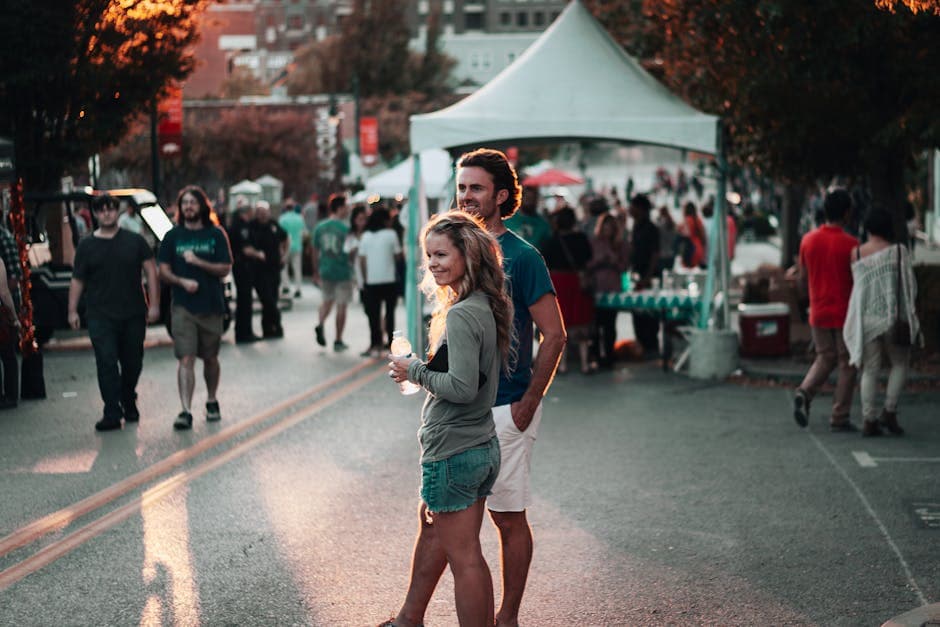
Graduation week on Hay Street, and a downtown Fayetteville kitchen feeds three generations of paratroopers.
How the Airborne and Special Operations economy rewrites the catering math for Fayetteville restaurants, and what Fort Liberty teaches every operator about owning the demand they already earned.
Scene one · Hay Street, two blocks east of the Market House
A Saturday morning, a downtown kitchen, and a maroon-beret family of seven at the door.
At nine on a Saturday morning in mid-September, Maria T. is unlocking the back door of her downtown Fayetteville kitchen, two blocks east of the 1832 Market House and one block north of the Cape Fear River bluff. It is graduation week for a 82nd Airborne Division infantry brigade, which in this town means seven different family reunions are stacked into a single weekend across Hay Street, the Hyatt Place on Bragg Boulevard, the Embassy Suites on Owen Drive, and roughly two dozen Airbnbs ringing the historic district. Maria's catering log for the day shows eleven separate confirmed orders. Four are downtown lunch trays for graduation receptions at the Iron Mike monument plaza. Three are evening dinner pickups for families staying at the riverfront hotels. Two are tomorrow-morning breakfast catering blocks for the chapel services at Fort Liberty. One is a forty-eight-person buffet for a battalion family-readiness group at the Airborne and Special Operations Museum reception hall on Bragg Boulevard. One is a single private dinner for a Vietnam-era paratrooper, his Iraq-deployment grandson, and four generations in between.
The eleven tickets, in aggregate, total just over fourteen thousand dollars. Maria knows that number without looking. She knows it because every order came in through her restaurant's direct ordering page over the prior six days, the way her graduation-week book has been arriving for the last seven cycles. Two of the orders are family-readiness group standings she has run for three consecutive deployments, and the recurring-order one-click reorder feature filled in eight of the line items by default. Three of the orders booked themselves through the voice AI line at two in the morning, with a Filipino spouse on the calling end making sure the seafood pancit she wants to bring to her son's parade is included as a side. None of the orders carry a marketplace commission. The fourteen thousand is hers, less ingredient cost and labor, less the seven percent in combined Cumberland County sales tax that her platform calculated, withheld, and will remit on her behalf.
Two years ago, the same week would have moved through a third-party catering marketplace, and Maria knows that arithmetic too. The marketplace took thirty percent on catering, which on fourteen thousand is four thousand two hundred dollars per Saturday in graduation season. Multiply that by roughly six 82nd Airborne brigade graduation weekends across the calendar year, layer in the four annual special-operations qualification course graduations that bring three to five hundred new Green Berets and their families into town each time, layer in a separate Pope Army Airfield deployment-return wave that recurs unpredictably across the calendar but reliably generates a comparable catering surge, and the marketplace bite on a single downtown Fayetteville kitchen over a full year was over forty thousand dollars in commission alone. Maria put a single sentence in the corner of her direct ordering page two springs ago when she switched: "Your family will eat. Our team will be paid." She has not had to advertise much since.
This is what Fort Liberty does to a restaurant in downtown Fayetteville. The installation, the largest US Army installation by population, holds roughly fifty thousand active-duty service members, fourteen thousand civilian and contractor employees, and forty-six thousand on-post and off-post family members, per US Army installation public affairs. It hosts the 82nd Airborne Division, the XVIII Airborne Corps, US Army Forces Command (the largest Army major command), the US Army Special Operations Command, the 1st Special Forces Command, and the JFK Special Warfare Center and School. Renamed from Fort Bragg to Fort Liberty in June 2023, the post anchors a Fayetteville metro population of roughly four hundred thousand. The town and the installation are, operationally, a single economic unit. For a restaurant inside the I-95 ring, the question is not whether the military economy matters; the question is who collects the commission on its catering: a logo, or you.
The rest of this page is for operators answering that question. We have written it the way a Fayetteville restaurant owner would actually use it: with a map of Fort Liberty's anchor units that drive the weekday and weekend catering economy, with a close read of the JFK Special Warfare Center's Q-Course and what graduation weekends mean for a downtown kitchen, with a chapter on the Airborne and Special Operations Museum and the tourist economy it generates on Bragg Boulevard, with a look at Fayetteville State University, the HBCU on Murchison Road, and how Bronco game days and graduation weekends reshape your spring and fall, with an atlas of downtown Fayetteville, Cross Creek, and Haymount, with a chapter on Fayetteville Woodpeckers minor-league baseball at Segra Stadium, with a look at the Cape Fear River and the Botanical Garden tourist economy, with a chapter on the deep Filipino and Korean restaurant communities the military-spouse network has built in this town over five decades, with a clear-eyed read of Cumberland County's seven percent combined sales tax, and with one argument for what changes when you stop renting your own demand from a logo. Maria's restaurant is doing this already. The rest of Fayetteville has the same opportunity, if it wants it.
Section II
Fort Liberty, the 82nd Airborne, and the catering atlas of a 110,000-person installation
Fort Liberty, formally redesignated from Fort Bragg on 2 June 2023 to honor the values rather than the namesake of the post, is the largest US Army installation by population. Roughly fifty thousand active-duty service members, fourteen thousand civilian employees and contractors, and forty-six thousand on-post and off-post family members are connected to the installation, per US Army Fort Liberty public affairs.
Figure 1
The Fort Liberty catering atlas
Seven anchor units across the installation. Bubble size reflects an order-of-magnitude approximation of locally-stationed personnel; some commands (XVIII Airborne Corps, USASOC, FORSCOM) report much larger worldwide totals.
On-installation population (est.)
~110K
active + civilian + dependents
- All A
82nd Airborne Division
All American · Airborne Infantry / Global Response Force
The division that defines Fort Liberty's identity. Maroon berets. The 82nd's three Infantry Brigade Combat Teams plus combat aviation, sustainment, and division headquarters concentrate the largest single uniformed population on the installation.
- Sky D
XVIII Airborne Corps
Sky Dragons · Corps HQ (commands forces beyond Fort Liberty)
The Army's contingency corps. The XVIII Airborne Corps headquarters is at Fort Liberty but commands the 82nd Airborne, the 101st Airborne (Fort Campbell), the 3rd Infantry Division (Fort Stewart), and the 10th Mountain Division (Fort Drum). The local headcount is a fraction of the total, but the operational gravity sits in Fayetteville.
- SWCS
JFK Special Warfare Center and School
SWCS · Special Forces / Civil Affairs / PSYOP training
The Army Special Operations Command's training and doctrine arm. The Q-Course that produces Green Berets, the Civil Affairs and Psychological Operations qualification pipelines, the Special Forces Underwater Operations School (in Key West but administered here). The most distinctive training profile on the installation.
- USASO
US Army Special Operations Command
USASOC · ARSOF headquarters (worldwide)
USASOC commands every Army special-operations element worldwide: 1st Special Forces Command, 75th Ranger Regiment, 160th SOAR (Night Stalkers), and the JFK Special Warfare Center. Local Fort Liberty headcount is a slice of the total, but the planning and command staff anchor here.
- 1st S
1st Special Forces Command
1st SFC(A) · Green Beret operational headquarters
Five active-duty Special Forces Groups plus two National Guard groups, the 95th Civil Affairs Brigade, and the 8th Psychological Operations Group. Local Fort Liberty presence covers the headquarters and the 3rd Special Forces Group.
- FORSC
US Army Forces Command
FORSCOM · Largest Army major command (worldwide)
FORSCOM commands all Active Component and a substantial share of Reserve and National Guard Army forces. Headquartered at Fort Liberty since 2011. Local headcount is a small staff, but the four-star command gravity is here.
- ARAC
Army Reserve Aviation Command
ARAC · Reserve aviation operations
Pope Army Airfield, the airlift arm of Fort Liberty (formerly Pope Air Force Base, transferred to the Army in 2011), runs the airborne-training and contingency-deployment air bridge that puts the 82nd Airborne anywhere in the world in eighteen hours.
Active duty service members
~50K
Civilian employees + contractors
~14K
Family members on-post and off-post
~46K
Sources: US Army Fort Liberty public affairs, Department of Defense installation summaries, US Army Special Operations Command, XVIII Airborne Corps and 82nd Airborne Division histories, Fayetteville Observer reporting on the June 2023 redesignation. Unit placement is schematic, not survey-grade.
Start with the 82nd Airborne Division. The All American division is the largest single uniformed footprint on the installation and the unit that, more than any other, defines Fayetteville's civic identity. The 82nd's three Infantry Brigade Combat Teams, its Combat Aviation Brigade, its Sustainment Brigade, and its division headquarters together concentrate roughly twenty thousand paratroopers in a single command. The maroon beret is the visual marker on Hay Street any weekend of the year. The division's mission is the Global Response Force: a rotating ready brigade is on a recall clock that, on order, has the lead element wheels-up out of Pope Army Airfield inside eighteen hours, to anywhere on the planet. The catering implication for downtown Fayetteville is that brigade-level training rotations, deployment-departure events, deployment-return events, and graduation-week reunions are reliably scheduled across a roughly six-week-per-brigade cycle, and an operator who reads the division's public training calendar can pre-build the catering weeks the way a hotel reads its convention book.
The XVIII Airborne Corps headquarters is the operational layer above the 82nd. The corps is the Army's contingency corps: it owns the 82nd Airborne (Fort Liberty), the 101st Airborne Division (Fort Campbell), the 3rd Infantry Division (Fort Stewart), and the 10th Mountain Division (Fort Drum). The local Fort Liberty footprint of the corps is a fraction of its total ninety-thousand-person worldwide command, but the operational gravity is here. The same is true of US Army Forces Command, the four-star command that headquarters at Fort Liberty since 2011 and that operationally controls every Active Component Army formation in the United States. The catering profile for both of these headquarters is institutional: small footprint, predictable Tuesday-through-Thursday cadence, change-of-command and retirement-ceremony events that route through a small set of approved off-post caterers who have learned to navigate gate access, military escort requirements, and the protocol-driven seating charts of senior officer dining.
The US Army Special Operations Command, the 1st Special Forces Command, and the JFK Special Warfare Center and School together form the second great organizational concentration at Fort Liberty: the special-operations corps. USASOC commands every Army special-operations element worldwide, including the 75th Ranger Regiment (Fort Benning), the 160th SOAR (Fort Campbell), and the active-duty Special Forces Groups. The 1st Special Forces Command, headquartered locally, includes the 3rd Special Forces Group and the 95th Civil Affairs Brigade among other units. The JFK Special Warfare Center and School is the training-and-doctrine arm: it runs the Q-Course that produces every Green Beret, the Civil Affairs qualification pipeline, the Psychological Operations qualification pipeline, the Survival, Evasion, Resistance, and Escape school, and the language program that gives a Green Beret his second or third language. For Fayetteville restaurants, the special-operations community is the densest catering customer in town on a per-graduation-cycle basis. Every Q-Course graduation weekend, every Civil Affairs and PSYOP graduation, every Group change-of-command, generates a concentrated reception-catering surge that downtown kitchens have learned to plan for.
Pope Army Airfield sits inside the western footprint of the installation, transferred from the Air Force to the Army in 2011. The airfield is the air-bridge that puts the 82nd Airborne anywhere in the world: C-17 Globemaster III and C-130 Hercules transports stage from Pope through the alert system, and the airborne-operations training schedule (jumps at Sicily Drop Zone, jumps at Holland Drop Zone, jumps at Camp Mackall) maintains a rough weekly rhythm. The catering implication is unpredictable but recurring: deployment-departure events that lock down a barracks for forty-eight hours generate a same-day, last-minute pre-departure family-dinner catering surge. Deployment-return events generate a fly-in reception surge timed to the wheels-down minute. A direct ordering portal that supports same-day urgent confirmation, that takes the call in the duty NCO's voice and routes the order to the right brigade family-readiness group, is the operational addition that turns a marketplace template into a kitchen partnership.
The geography of Fort Liberty matters operationally. The installation is roughly two hundred fifty square miles, the size of a small county. Gates ring the perimeter (Yadkin gate, All American gate, Reilly Road gate, and others), each with its own access-control profile and its own delivery-route quirks. A catering delivery from downtown Fayetteville to a battalion headquarters inside the post is a thirty-five-minute drive once you factor in gate-entry processing, on-post escort requirements (for kitchens not running a sponsored delivery driver), and the navigation between numbered buildings on a road grid that is not Google-Maps-friendly. A direct ordering portal that knows the difference between Pope Army Airfield, the 82nd Airborne's All American Park, and the JFK Special Warfare Center cantonment area, that has the right gate-access instructions baked into the recurring corporate-account record, that prints turn-by-turn from your kitchen door to the destination building, beats a marketplace driver who has never been on a military installation before, every single time.
There is one more pattern worth flagging. The June 2023 redesignation from Fort Bragg to Fort Liberty was implemented across roughly nine post installations under the Naming Commission process. The change was administrative but the local cultural reaction has been more nuanced: many career service members and many Fayetteville civilians still use both names interchangeably. For a restaurant, the operational implication is in the customer-record fields and the menu copy. A direct ordering portal that lets the customer write "Fort Bragg" into the recurring address field and quietly normalizes that to "Fort Liberty" in the delivery instructions, that titles its catering tray "82nd Airborne Send-Off" rather than something more generic, that uses the maroon-beret and gold-tab vocabulary correctly without overplaying it, signals to a Fayetteville customer that the kitchen is part of the community rather than a marketplace tourist.
Section III
The JFK Special Warfare Center, the Q-Course, and the graduation-week catering economy
Every Green Beret in the US Army graduates from the JFK Special Warfare Center and School at Fort Liberty. So does every Civil Affairs soldier and every Psychological Operations soldier. The training pipeline runs roughly fifteen to twenty-four months from entry to qualification, and it concludes with a graduation ceremony that brings hundreds of families into Fayetteville for the week.
Figure 2
The Green Beret Q-Course timeline
The JFK Special Warfare Center and School trains every Special Forces, Civil Affairs, and Psychological Operations soldier in the US Army. The Q-Course runs roughly fifteen to twenty-four months depending on the candidate's MOS and target language.
SFAS Assessment
Begins week 0 · 3 weeks
Special Forces Assessment & Selection: 3 weeks of physical, mental, and team-event evaluations at Camp Mackall, the JFK Special Warfare Center's training annex.
Phase I: Small Unit Tactics
Begins week 4 · 13 weeks
Individual small-unit tactics and SF doctrine. 13 weeks. Land navigation, fieldcraft, and the SF baseline.
Phase II: MOS Training
Begins week 17 · 16 weeks
MOS qualification: 18A officer, 18B weapons, 18C engineer, 18D medic (longest, separately covered), 18E communications. 13-50 weeks depending on MOS.
Phase III: Survival (SERE)
Begins week 33 · 3 weeks
Survival, Evasion, Resistance, and Escape. 3 weeks. The classroom, the field exercise, and the resistance lab at Camp Mackall.
Phase IV: Robin Sage UW
Begins week 36 · 6 weeks
Unconventional Warfare culmination exercise across roughly fifteen North Carolina counties (Pineland scenario). Candidates infiltrate, link up with a notional resistance, and run a UW campaign.
Phase V: Language + Cultural
Begins week 42 · 25 weeks
Language acquisition and regional cultural studies. 18-25 weeks depending on the target language (Arabic, Russian, Korean, Tagalog, French, Spanish, Mandarin, others).
Green Beret tab
Begins week 67 · 1 week
Donning of the green beret and the SF tab. Assignment to a Special Forces Group, typically deploying within the calendar year.
Sources: US Army John F. Kennedy Special Warfare Center and School public information, US Army Recruiting Command Q-Course overviews, US Army Special Operations Command training program summaries. Phase durations are nominal; actual progression varies by MOS, language, and class throughput.
The Special Forces Qualification Course, known by every soldier in the pipeline as the Q-Course, is the longest formal qualification path in the conventional US Army. A candidate enters at Special Forces Assessment and Selection (SFAS), a three-week gate held at Camp Mackall in Hoke County (the JFK Special Warfare Center's training annex roughly thirty miles west of Fort Liberty). The candidates who pass selection enter Phase I small-unit tactics, then Phase II MOS-specific training (which for the 18D medic specialty alone runs about a year), then Phase III SERE survival school, then Phase IV unconventional warfare with the Robin Sage culmination exercise across roughly fifteen North Carolina counties, then Phase V language and regional cultural studies, and finally graduation. The pipeline produces a steady cadence of Q-Course graduations each year, with corresponding Civil Affairs and PSYOP qualification graduations layered into the calendar.
For a downtown Fayetteville restaurant, the Q-Course graduation cycle generates a recurring four-times-a-year catering surge that hotel banquet halls cannot fully absorb. Families fly in from across the country. The donning-of-the-beret ceremony is held at the JFK Auditorium on the installation, then families decompress into Hay Street, into Haymount, into the Cool Spring downtown district, into the Cape Fear riverfront restaurants. The Civil Affairs and PSYOP graduations follow a similar pattern, with their own ceremonial venues and their own family-reception calendars. An operator who pre-builds a quietly named "graduation reunion" tasting menu, who keeps a private dining room blocked for the four-times-a-year peak, and who lets the family book the reservation directly without a marketplace intermediary, will fill the room every cycle.
The Robin Sage exercise, the Phase IV unconventional warfare culmination, is its own minor catering economy across eastern North Carolina. The exercise covers roughly fifteen counties in the Sandhills and Piedmont, with candidates infiltrating into a notional resistance country (named Pineland in the scenario) and link-up sites distributed across hundreds of square miles of rural North Carolina. Local volunteer civilians, vetted and recurring, host the resistance role-players in homes and on farms across the AO for roughly six weeks. The catering implication is small but interesting: rural North Carolina kitchens within the Robin Sage geography occasionally book civilian-supporter dinners during the exercise window, and downtown Fayetteville kitchens see the post-exercise decompression wave when candidates and cadre return to the installation.
The cultural and operational signal that a Fayetteville restaurant can read in the JFK Special Warfare community is the language program. Phase V of the Q-Course trains candidates in a target language tied to their assigned Special Forces Group. The languages tracked include Arabic and Persian (3rd SFG, 5th SFG areas), Russian and Eastern European (10th SFG), Korean and Tagalog and Indonesian (1st SFG Pacific), French and various African languages (3rd SFG sub-Saharan), and Spanish and Portuguese (7th SFG Latin America). A graduating Green Beret who has spent six months learning Korean for a Pacific deployment is, on graduation night, more likely than any other Army demographic to pick a Korean restaurant in west Fayetteville for the family dinner. The Filipino and Korean restaurant community on Raeford Road, addressed later on this page, has built decades of customer relationships on exactly this pattern.
For an operator interested in this customer base, the operational addition that matters most is voice AI in the relevant language. A graduating soldier or his spouse calling at eight in the evening to book a graduation-night family dinner in Korean, in Tagalog, or in Spanish, and getting a fluent confirmation back inside thirty seconds, is the kind of operational signal that a marketplace template will not deliver. We have built this into the DirectOrders platform.
Section IV
The Airborne and Special Operations Museum and the Bragg Boulevard tourism economy
The Airborne and Special Operations Museum, on Bragg Boulevard in downtown Fayetteville, opened in 2000 as the official Army-sanctioned museum of US Army Airborne and Special Operations history. The exhibits trace the Airborne lineage from the 1940 paratrooper test platoon at Fort Benning through D-Day and Operation Market Garden, through Korea and Vietnam, through Panama and Grenada, through the first Gulf War, through Afghanistan and Iraq, through the present-day Global Response Force. The Special Operations galleries cover the Office of Strategic Services origins of US special operations doctrine, the Green Beret formation under President Kennedy in 1961 (which is why the school carries his name), the Son Tay raid, the Iran hostage rescue attempt at Desert One, the post-9/11 special-operations campaign, and the present-day USASOC formations.
The museum draws roughly one hundred thousand visitors annually, per Visit Fayetteville and Cumberland County tourism data, with concentrated visitorship around Memorial Day, the 4 July weekend, Veterans Day, and the four annual Q-Course and Airborne graduation cycles. A meaningful share of the visitor base is military families traveling from across the country, often combining a museum visit with a graduation-week reunion or a Fort Liberty change-of-command ceremony. The museum is free to enter and operates on a foundation-supported budget. The reception hall, available for rent, hosts roughly two hundred private events per year, including a substantial share of brigade-level family-readiness-group dinners, retirement-ceremony receptions, and unit-association reunions. Catering for those events is a substantial recurring book for the small set of Fayetteville restaurants and full-service caterers who have established relationships with the museum's event coordinator.
For Fayetteville restaurants located inside roughly a one-mile radius of the museum, the operational profile is concentrated and predictable. Bragg Boulevard between the museum and the Iron Mike statue plaza is the visitor walking corridor on a Memorial Day or Veterans Day. Hay Street, two blocks east, is the dinner-and-cocktail spine for the post-museum visit. The Cool Spring downtown arts district, two blocks south, captures the after-dinner wander. A direct ordering portal that lets a family book a private-room reservation a week in advance, that confirms a curated tasting menu in the family's preferred language, that re-surfaces the prior visit's order when the family returns for the next year's reunion, builds the kind of decade-long customer relationship that the museum's repeat-visitor base specifically rewards.
The other Fort Liberty tourism anchor worth flagging is the 82nd Airborne Division War Memorial Museum, a smaller installation-specific museum on the post itself, accessible to visitors with a sponsor or with a Visitor Control Center pass. The 82nd museum is less of a recurring civilian-restaurant catering driver than the downtown Airborne and Special Operations Museum, but the unit-association reunion business that the 82nd museum's reception hall handles often spills into downtown Fayetteville for the dinner-and-decompression portion of the weekend.
For a downtown Fayetteville operator, the broader lesson is that the museum-and-monument economy is, in this town, year-round and recession-resistant in a way that a typical tourist economy is not. Active-duty paratroopers and Green Berets are stationed in Fayetteville on a three-to-six-year rotation, with their families. They become repeat museum visitors. They bring their out-of-state parents and in-laws to the museum on every family-visit weekend. The restaurant that has built a customer record across multiple such visits, on a direct portal rather than on a marketplace, is the restaurant that fills the private dining room next year and the year after that.
Section V
Fayetteville State University, the Howard School in 1867, and the Bronco game-day calendar
Fayetteville State University, founded as the Howard School in 1867, is one of the oldest historically Black colleges and universities in the South. About six thousand students attend across undergraduate and graduate programs, with roughly a third reporting military affiliation through Fort Liberty, per FSU institutional research and the UNC System.
Figure 3
Fayetteville State University: an HBCU at the gates
Founded in 1867 as the Howard School, FSU is one of the oldest historically Black colleges and universities in the US South and a constituent institution of the University of North Carolina system. About six thousand students, with roughly a third reporting military affiliation, per FSU institutional research.
- 5.2K
Undergraduate
~87% of total enrollment
- 0.8K
Graduate
~13% of total enrollment
- 2.1K
Military-affiliated
~35% of total enrollment
Bronco Stadium / Felton J. Capel Arena
FSU football runs a five-to-six home game CIAA schedule each fall. Basketball (men's and women's) runs through March, with the CIAA Tournament historically held in Charlotte and Baltimore. Game-day catering volume is smaller than UNC or NC State but concentrated and loyal.
Sources: Fayetteville State University Office of Institutional Research, UNC System data dashboards, NCAA Division II directories, CIAA conference media guides, FSU history pages.
Fayetteville State University began in 1867 when seven Black businessmen in Fayetteville (Andrew J. Chesnutt, Robert Simmons, Matthew N. Leary, A.J. Williams, George Grainger, Thomas Lomax, and David A. Bryant) pooled one hundred and thirty-six dollars to purchase a lot on Gillespie Street and establish a school for the education of Black children. The Howard School, named for General Oliver O. Howard of the Freedmen's Bureau, taught its first classes that fall. The school was incorporated as a state-supported normal school in 1877 (the first such institution for Black students in the South), and over the following century it transitioned through Fayetteville State Teachers College, Fayetteville State College, and, in 1969, Fayetteville State University. Today FSU is a constituent institution of the University of North Carolina system.
The university enrolls approximately six thousand students across its main campus on Murchison Road and through online programs. Roughly a third of the student body reports military affiliation through Fort Liberty, either as active-duty service members enrolled through the post-9/11 GI Bill, as military spouses, or as veterans transitioning to civilian education. FSU is consistently ranked among the most military-friendly universities in the country by Military Times and Victory Media. The combination of HBCU heritage and substantial military-affiliated enrollment is, for a Fayetteville restaurant operator, an audience definition that no other US college campus matches.
Athletically, FSU is the Broncos, competing in the Central Intercollegiate Athletic Association (CIAA) at the NCAA Division II level. The CIAA is the oldest HBCU athletic conference in the country, founded in 1912. Football, played at Nick Jeralds Stadium on the main campus, runs a five-to-six home game CIAA schedule each fall. Basketball, played at Felton J. Capel Arena, runs from November through March, with the CIAA Tournament historically held in Charlotte and Baltimore as a major HBCU cultural event. The football and basketball home game cadence shapes the catering and dining calendar on the Murchison Road corridor in a smaller-scale parallel to what UNC and NC State generate in their respective college towns.
For Fayetteville restaurants on Murchison Road and in the corridor between the campus and downtown, the operational profile of FSU is steady weeknight student traffic, weekend brunch volume tied to family-visit weekends, a concentrated August move-in surge, a December exam-week pickup pattern, an April-May graduation-weekend surge that overlaps with the Q-Course graduation cycle in compounding fashion, and a homecoming weekend (typically late October) that combines alumni reunion volume with a CIAA football game. A direct ordering portal that supports student-friendly pricing tiers, that integrates with the campus dining card system where possible, and that builds a four-year customer record across a student's undergraduate years, is the kind of operational addition that turns a student into a alumni who comes back to homecoming for the next twenty years.
One additional note. Methodist University, a private United Methodist Church-affiliated four-year college, sits on Ramsey Street in north Fayetteville with about two thousand students. The Methodist campus generates a smaller but meaningful catering and dining economy on the Ramsey Street corridor, distinct from but adjacent to the FSU pattern. The two institutions, plus Fayetteville Technical Community College on Hull Road with approximately ten thousand students across its credit and non-credit programs, together give Fayetteville a higher-education student population well above twenty thousand. The catering and dining-out implications compound.
Section VI
Downtown Fayetteville, Cross Creek, and Haymount: the dining corridors
Fayetteville's dining geography fans out from the 1832 Market House at Hay and Green Streets. The town itself was chartered in 1783 from the merger of Cross Creek and Campbellton, two earlier settlements at the head of navigation on the Cape Fear River.
Figure 4
Downtown, Haymount, and Cross Creek: the dining map
Fayetteville's restaurant geography fans out from the 1832 Market House at Hay and Green Streets. Haymount climbs the western hill, Cross Creek runs the mall corridor south, and the Cape Fear River draws the eastern boundary.
Sources: City of Fayetteville historic preservation records, Cool Spring Downtown District, Cumberland County tourism guides, Visit Fayetteville neighborhood maps. Restaurant and landmark placement is schematic.
The town now called Fayetteville was created in 1783 by the merger of two earlier settlements: Cross Creek (a Scottish Highlander trading post founded in the 1730s at the head of navigation on the Cape Fear River) and Campbellton (chartered downstream in 1762). The merged town was named for the Marquis de Lafayette, the French general who had served alongside George Washington in the Continental Army and who visited the new namesake town in person in 1825. The 1832 Market House at the corner of Hay and Green Streets, built atop the foundation of an earlier 1788 statehouse that had burned, is the historic and ceremonial center of downtown and the visual reference point for every block within five hundred yards.
Downtown Fayetteville today centers on Hay Street, running roughly east-west through the Market House and out toward the Airborne and Special Operations Museum on Bragg Boulevard. The Cool Spring Downtown District, a Main Street America-designated arts district, anchors the cultural calendar with the Fourth Friday gallery walks, the Dogwood Festival in late April, and a substantial seasonal calendar that includes the Holly Day Fair, the International Folk Festival, and the Christmas-season tree lighting. The downtown restaurant base is small but rebuilding, with a meaningful chef-driven concentration on Hay Street west of the Market House and on Person Street north of Hay.
Haymount, the historic hilltop neighborhood immediately west of downtown along Hay Street, is the city's oldest residential district and one of its most architecturally intact. The Haymount commercial node, centered on the intersection of Hay Street and Bragg Boulevard, is the locally owned cafe, bistro, and bakery cluster of the town. A meaningful share of the city's independent food businesses operate inside Haymount's walkable mile. The customer base skews local resident, professional, and Fort Liberty officer-class, in a way that downtown does not.
Cross Creek, the south-of-downtown commercial corridor anchored by Cross Creek Mall at the intersection of Skibo Road and Morganton Road, is the suburban chain restaurant and casual dining backbone of the town. The mall and its surrounding pad sites concentrate the chain anchor base (Olive Garden, Texas Roadhouse, Chili's, the full chain roster), and the surrounding office-park complexes generate weekday lunch volume for the entire south side. The catering profile is high-volume, suburban-standard, and largely commission-marketplace-rooted in 2026; this is the corridor where direct ordering carries the largest immediate financial upside for an operator willing to make the switch.
The Raeford Road corridor running south and west from the Cross Creek node is the most operationally interesting restaurant district in the city: it is where Fayetteville's deep Filipino and Korean restaurant community has built thirty to fifty years of family-restaurant lineage, addressed in its own section below. Ramsey Street running north toward the Methodist University campus picks up another suburban family and military-housing dining pattern. The Cape Fear riverfront, addressed in its own section, generates a smaller but distinctive event-and-tourism dining economy around Festival Park and the Cape Fear Botanical Garden.
Section VII
The Fayetteville Woodpeckers, Segra Stadium, and a downtown summer
The Fayetteville Woodpeckers, the High-A minor-league affiliate of the Houston Astros, play their home games at Segra Stadium on Hay Street east of the Market House. The team relocated to Fayetteville in 2019, the stadium opened the same season as a public-private partnership between the City of Fayetteville and the team ownership, and the franchise has become the most concentrated downtown summer event-driver in the city outside the four Q-Course graduation weekends. The Woodpeckers play a Carolina League schedule of roughly seventy regular-season home games between April and September, with most home dates Tuesday through Sunday and a substantial share of evening-game starts.
Segra Stadium holds roughly forty-eight hundred fans and is, by minor-league baseball standards, a small-park experience with a downtown setting that most affiliates of comparable level cannot match. The stadium sits five blocks east of the Market House, three blocks north of the Cape Fear River, and immediately adjacent to the Cool Spring downtown arts district. The fan-base catchment is local Fayetteville families, Fort Liberty service members and their families, and a notable share of visiting Houston Astros fans who time visits to coincide with prospect promotion windows. The Woodpeckers' pricing is family-friendly (roughly ten to twenty-five dollars per ticket), which compounds the family-attendance pattern.
For downtown Fayetteville restaurants within a five-block walk of Segra, the operational implication is a recurring pre-game and post-game dining surge across the summer. A 7:00 PM weeknight home game generates a pre-game dinner peak between 5:00 and 6:30 PM, a roughly two-hour quiet window during the game, and a brief post-game dessert-and-drinks wave from 9:30 to 11:00 PM. A Saturday home game generates a more diffuse but larger volume across the full afternoon and evening. A direct ordering portal that pre-builds a clearly named "Woodpeckers Night Lineup" pickup window with a kitchen-friendly menu that travels well and can be picked up in under three minutes, that surfaces the menu on the home page during the season, and that takes the reservation directly from the season-ticket-holder customer record rather than from a marketplace, captures this entire summer rhythm without leaking margin.
The Woodpeckers also run a substantial group-sales and corporate-suite catering economy on game nights. Local employers, Fort Liberty unit associations, FSU and Methodist alumni groups, and Cumberland County government departments routinely book group-ticket blocks with attached catering. The catering arrangements are split between in-stadium concessions (run by the team's concessionaire) and external catering brought in for the suite-level packages. The suite-level catering is the volume that downtown Fayetteville restaurants can actually capture, and the team's group-sales coordinator maintains a relatively small approved-vendor list. Building that relationship is a one-time investment that, once established, generates a recurring six-month book each season.
Section VIII
The Cape Fear River, Festival Park, and the Botanical Garden tourism economy
The Cape Fear River runs south through Fayetteville on its way from the Haw and Deep River confluence at Mermaid Point downstream to Wilmington and the Atlantic. Fayetteville sits at the historic head of navigation: in the colonial and antebellum era, river craft from Wilmington could reach the Fayetteville bluff but no farther, which is why the original town settlements (Cross Creek and Campbellton) located here. The riverfront today anchors Festival Park, the city's primary outdoor event venue, hosting the Dogwood Festival each April, the International Folk Festival each September, July 4th fireworks, and a substantial seasonal concert calendar.
The Cape Fear Botanical Garden, off Eastern Boulevard on the south side of the river, occupies eighty acres along the Cape Fear and Cross Creek confluence and is one of the largest botanical gardens in eastern North Carolina. Membership includes a meaningful Fort Liberty officer-family base, and the garden hosts roughly two hundred private events per year (weddings, retirement receptions, garden-club dinners, museum-gala overflow). Catering for those events follows a small set of approved-vendor relationships, which is the operational pattern repeated across most of Fayetteville's premier event venues.
For Fayetteville restaurants located within a one-mile radius of Festival Park (the downtown core and the immediate riverfront), the operational profile of the Cape Fear tourism economy is event-driven and weekend-heavy. The Dogwood Festival weekend in late April generates a four-day downtown dining surge that combines local families, regional out-of-town visitors, and Fort Liberty-affiliated audiences. The International Folk Festival in late September draws a similar weekend volume with a more international audience. July 4th brings a concentrated single-day evening surge. The seasonal Cape Fear Riverfront Park concert calendar layers a roughly weekly cadence of smaller event-driven traffic peaks across the spring and summer.
For an operator on Hay Street or in the Cool Spring district, the Cape Fear tourism economy is, like the Airborne and Special Operations Museum economy and the Q-Course graduation economy, an addition to the year-round military-and-college base rather than a replacement for it. A direct ordering portal that pre-builds a clearly named "Dogwood Weekend" or "Folk Festival Saturday" pickup menu, that surfaces it on the home page across the relevant weekend, and that reserves a delivery slot block for the Festival Park hotel cluster, captures the surge without disrupting the recurring weekday catering rhythm.
Section IX
The Raeford Road Filipino and Korean restaurant community, and multilingual voice AI
Walk west on Raeford Road from the Cross Creek Mall node for about three miles, and you will pass a string of small-format restaurants whose signage in Filipino, Korean, Spanish, and English reads more like a slice of a Pacific-coast port city than like a county-seat North Carolina town. This is the cumulative dining footprint of Fayetteville's military-spouse community: forty to sixty years of Filipino, Korean, Japanese, Thai, and Vietnamese family kitchens established by service members' spouses who came to Fayetteville from overseas duty stations and stayed. The Filipino community in Fayetteville traces to the post-World War II decades, with concentrated growth during the 1960s and 1970s when service members rotated through Subic Bay and Clark Air Base in the Philippines. The Korean community traces to the post-Korean War decades and was reinforced through every subsequent rotation cycle of the 2nd Infantry Division and the broader US Forces Korea presence.
The cumulative effect is a Fayetteville restaurant geography that, in 2026, includes some of the longest-tenured Filipino and Korean family kitchens on the US East Coast. Roughly two dozen Filipino-owned restaurants and a comparable number of Korean-owned restaurants operate inside the Raeford Road corridor and its immediate adjacencies, with smaller clusters near the Yadkin gate and on the Ramsey Street suburban node. The restaurants are family-owned in the literal sense (often three-generation operations), the menus are written first in the native language and second in English, and the customer base is roughly equal parts diaspora community members, active-duty Fort Liberty soldiers whose Pacific deployments included a tour in Korea or the Philippines, and a growing share of cuisine-curious Fayetteville locals.
What these communities share, beyond the obvious culinary distinctions, is a digital-ordering gap. The marketplace apps that dominate suburban Fayetteville do not work well in these corridors for two compounding reasons. First, language: many of the kitchens operate primarily in Filipino, Tagalog, Ilocano, Korean, Spanish, Thai, or Vietnamese, and the marketplace customer-facing menus do not. Second, the customer base: a meaningful share of these customers are first-generation immigrants who prefer to call the restaurant directly, and the marketplace-required smartphone-first workflow filters them out. The phone is, for this catering customer, still the primary booking channel. A direct ordering portal that supports the relevant language on the customer-facing menu, that handles the catering call through a voice AI fluent in the same language, and that returns full margin to the owner, fits these corridors in a way that a marketplace contract simply cannot.
Voice AI in Tagalog and Korean is the single largest unmet operations need we encounter in these conversations. A military spouse calling at nine in the evening from a Yadkin gate housing unit to book a Saturday catering for a battalion family-readiness group, asking in Tagalog whether the lechon kawali can come in a smaller half-tray rather than a full, and getting a fluent confirmation back in the same language inside thirty seconds, is the kind of operational signal that builds a decade of repeat business. A Korean spouse calling to book a kimchi jjigae delivery for a Saturday-night gathering, with the same fluency on the AI side, has the same effect. We have built bilingual voice AI into the DirectOrders platform with these communities specifically in mind. If you are an operator in any of these corridors reading this, the technology is here, in your language, configured for the way you actually run your kitchen.
The broader military-spouse network extends well beyond Filipino and Korean. Fayetteville has substantial German, Italian, Japanese, Thai, and Vietnamese restaurant footprints rooted in the same multi-decade rotation cycle. Spanish-language ordering is also operationally meaningful for the Latino-Fayetteville community, which is reinforced by both the Latin American Affairs work of the 7th Special Forces Group at Eglin Air Force Base and by independent immigration into the Cumberland County region. A direct portal that handles all of these languages on a single platform, that surfaces a Spanish menu to a Spanish-speaking customer's phone and a Korean menu to a Korean-speaking customer's phone without the operator having to manage parallel menus by hand, is the kind of platform-level capability that a marketplace template will never deliver.
Section X
Cumberland County 7 percent combined sales tax, and why a direct portal calculates it correctly
Cumberland County's combined retail sales tax rate is 7.00 percent, comprising the 4.75 percent North Carolina state sales tax, the 2.00 percent Cumberland County local sales tax, and the 0.25 percent regional transit and education option that several adjacent counties also levy, per the North Carolina Department of Revenue. Prepared food and beverage sold at restaurants is subject to the same 7 percent rate. Catering services are taxable on the same basis. The rate has been stable in recent fiscal years, with the next adjustment cycle dependent on county commissioner action.
For a Fayetteville restaurant, the operational implication is small but real. A catering ticket for fourteen thousand dollars carries nine hundred and eighty dollars in combined sales tax owed to the state and county. The tax must be collected at the time of the sale, reported on the operator's monthly NC E-500 sales-and-use return, and remitted by the twentieth of the following month. The catering-marketplace platforms that dominate the chain-restaurant corridor in Cross Creek typically calculate the tax correctly at the line-item level, but they also typically calculate their thirty-percent commission on the pre-tax subtotal, which means the operator is left with seventy percent of the subtotal minus the full tax burden minus the labor and ingredient cost.
A direct ordering portal calculates the 7 percent at the line-item level, collects it from the customer, withholds it from the operator's payout, and remits it on the operator's behalf through the platform's sales-tax automation. The operator receives the full pre-tax revenue minus only the platform fee (which is not a percentage of revenue but a flat per-month subscription on the DirectOrders model). The cumulative annual difference for a Fayetteville operator running a meaningful catering book is, in most cases, well into five figures.
The one operational nuance worth flagging is military exemption. Sales to active-duty service members are not, in general, exempt from North Carolina sales tax: the federal Servicemembers Civil Relief Act addresses state income tax residency but not sales tax. However, sales to a US military installation entity (a battalion family-readiness group treasury, a unit-association reception line item billed to the installation directly) may, in narrow cases, qualify for federal-instrumentality exemption. The platform handles this distinction through customer-record tagging at the time the recurring corporate account is established. The operator does not have to remember the exemption rule for every order; the platform applies it correctly.
Section XI · The argument
How DirectOrders fits Fayetteville
The argument for direct ordering in Fayetteville is, in the end, a single argument repeated across six different audiences. The audiences are Fort Liberty unit caterers serving the 82nd Airborne, the XVIII Airborne Corps headquarters, and the special-operations community; downtown Hay Street and Haymount chef-driven independents; Cross Creek and Raeford Road suburban kitchens; the Filipino and Korean military-spouse family restaurants; Fayetteville State University and Methodist University campus operators; and the Cape Fear River Festival Park and Botanical Garden event caterers. The argument is the same in each case: the demand belongs to the restaurant, not to the marketplace. Every other operating decision in a Fayetteville kitchen flows from that single recognition.
For the Fort Liberty unit caterer, direct ordering is the difference between Maria's fourteen thousand landing in her operating account on Monday morning versus four thousand two hundred of it landing in San Francisco. Multiply that by six 82nd Airborne brigade graduation weekends, four Q-Course graduations, an unpredictable deployment-return cycle, and the catering book that the Airborne and Special Operations Museum reception coordinator quietly hands to her approved-vendor list, and the question answers itself.
For the downtown Hay Street independent, direct ordering means the page that takes the catering order looks like an extension of your dining room, not like a chain checkout. The story you tell on the wall of your Cool Spring district room, with the local artists you rotate through and the Cape Fear-themed menu you write every spring, continues on the page that takes the Thursday catering order.
For the Cross Creek and Raeford Road suburban kitchen, direct ordering is, candidly, the largest immediate margin recovery on this page. The commission-marketplace tax that the chain-restaurant corridor has accepted as a cost of doing business since roughly 2016 is, for an independent operator on Raeford Road, a tax that does not have to be paid. Switching out of the marketplace and into a direct portal returns fifteen to twenty cents on every dollar of catering revenue back into the operator's account, immediately.
For the Filipino and Korean military-spouse family restaurant, direct ordering means the platform speaks your language, the voice AI takes the catering call in Tagalog or Korean or Ilocano, the receipts print in your language, and the thirty-percent marketplace tax that would have flattened your already thin operating margin is simply not part of the math.
For the FSU or Methodist University campus operator, direct ordering is the four-year customer record that turns a freshman into an alumni who comes back to homecoming for the next twenty years. A marketplace customer record belongs to the marketplace. A direct portal customer record belongs to you.
For the Cape Fear riverfront event caterer, direct ordering is the seasonal Dogwood Festival, Folk Festival, and Botanical Garden wedding book that you have already built menus for, pre-staffed for, and pre-paid for, instead of a thirty-percent commission bite on every standing reception order across the spring, summer, and fall.
We can show you the platform on your menu, with your prices, with your Cumberland County 7 percent tax baked in, with your Fort Liberty gate-access instructions on the recurring corporate-account record, with your Tagalog or Korean menu on the customer side and the voice AI configured for the same language, inside two hours. The demo is free. The setup is white-glove. If we cannot get you live in two hours, we will white-glove you for free until you are. The Fayetteville graduation week is yours to keep.
Live in two hours, or we white-glove you for free
Bring Fayetteville's graduation week onto your own ledger.
See the platform configured for the way Fayetteville restaurants actually work: Fort Liberty 82nd Airborne unit catering, JFK Special Warfare Q-Course graduation weeks, FSU and Methodist campus rhythms, Filipino and Korean military-spouse community ordering, and Cape Fear riverfront event surges.
Fayetteville districts served
28301
Downtown Fayetteville (Hay St + Market House)
1739 colonial core + Cool Spring arts district
28305
Haymount (Hay Street west of downtown)
Historic hill, locally owned bistros + cafes
28303
Cross Creek (mall corridor)
Cross Creek Mall + suburban chain anchor
28310, 28311
Fort Liberty Gates (Yadkin + All American)
Service-member commute corridor
28301, 28311
Murchison Road / FSU corridor
Fayetteville State + Bronco campus
28311
Ramsey Street north corridor
Suburban family + military housing
28304, 28314
Raeford Road west corridor
Korean + Filipino restaurant cluster
28301
Cape Fear riverfront + Festival Park
Riverside events + tourism
Sources & further reading
Page last updated 2026-05-11. Figures sourced or contextualized to the citations above. Fort Liberty personnel counts reflect publicly disclosed installation-population figures and treat as order-of-magnitude rather than exact. Unit, training-pipeline, and graduation-cycle details reflect publicly disclosed Army public-affairs information.