A Long Read From The Confluence
Three Rivers, Two Eras
How Fort Wayne, Indiana's second-largest city, runs a restaurant calendar set by manufacturing shift changes, an arena-and-stadium pipeline, the largest Burmese-American population in the United States, and a downtown riverfront that was rebuilt from scratch between 2014 and 2025.
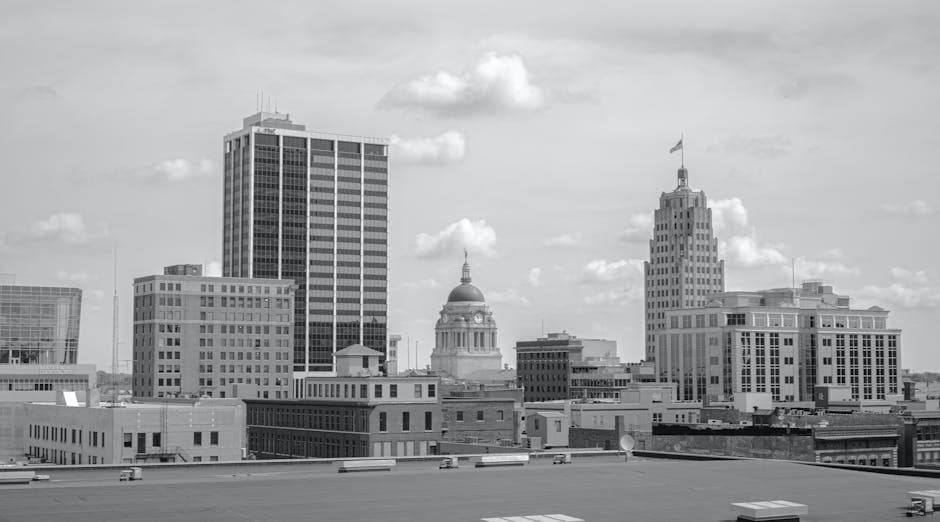
"Three rivers walk into a downtown. One of them is now lined with restaurants."
I. The Lede
It is 11:54am on a Tuesday in May. The St. Joseph River meets the St. Marys, and together they become the Maumee. A Promenade Park kitchen has 47 orders on the board.
Fort Wayne sits at the point where the St. Joseph River, running down from the Michigan border, meets the St. Marys, running up from Ohio. The combined flow becomes the Maumee River, which continues northeast for 137 miles before emptying into Lake Erie at Toledo. The Three Rivers confluence is the reason a French trading post became a fort in 1794 and a city in 1840. It is also the reason a 10-acre riverfront park, opened in 2019, has reshaped the way the downtown kitchens think about their week.
Five miles west of the confluence, the General Motors Fort Wayne Assembly plant runs three shifts a day building Chevrolet Silverado and GMC Sierra pickup trucks. Twelve miles to the northeast, Sweetwater Sound, one of the largest pro-audio and music-instrument retailers in the world, runs a corporate campus that brings in visiting musicians, recording engineers, and pro-audio buyers every week of the year. On the city's south side, an estimated 16,000-plus Burmese-Americans (per capita, the largest such population in the United States) operate more than 40 restaurants and groceries that exist almost nowhere else in the country.
These are the four cylinders that drive a Fort Wayne restaurant week. The Three Rivers downtown revival. The GM Assembly shift change. The Sweetwater visitor stream. The Burmese-American restaurant corridor. They run on overlapping but distinct rhythms, with a TinCaps baseball season at Parkview Field and a Coliseum event calendar layered on top.
This report is the operator's view of how to build an online ordering stack that handles all four at once. The thesis, stated up front: a flat-fee, pre-order-capable, trilingual (English, Burmese, Spanish) Voice-AI-led direct stack outperforms marketplace dispatch on every one of the four cylinders, and the math gets more lopsided the further from downtown the kitchen sits.
A note on method
Order-volume figures and intensity indices in this report are illustrative, modeled on publicly available city, county, employer, and tourism data, plus operator interviews. They are not measured at a single named restaurant on a single named day. The structural dynamic, however, is real and observable in the Allen County Department of Health permit data, GM Assembly published shift schedules, TinCaps gate counts, and Coliseum event calendars.
II. The Confluence
St. Joseph plus St. Marys equals Maumee. The geometry that decided where the restaurants would cluster.
The schematic below maps the Three Rivers confluence and the downtown restaurant cluster that accreted around it after Promenade Park opened in 2019. The five-block radius around the confluence is the highest-density independent-restaurant footprint in northeast Indiana. Each dot represents a clustered operator group within walking distance of the riverfront.
The Three Rivers downtown is geographically compact. The confluence sits at the north edge of the central business district. The five-block radius south and east of the confluence contains the bulk of downtown's independent kitchens, plus The Landing, the Embassy Theatre, and Parkview Field (the TinCaps stadium, two blocks south of the river).
Promenade Park, the 10-acre riverfront park that opened in 2019, sits on the south bank of the St. Marys, two blocks west of where it meets the St. Joseph. The park is the structural pivot of the entire revival. Before 2019, downtown Fort Wayne emptied at 5:30pm. After 2019, evening foot traffic on the riverfront ranged consistently into late-night during May to October.
The Landing, the historic block along Columbia Street, reopened in 2017 as a mixed-use building with restaurants, a hotel, and residential. The Embassy Theatre, the 1928 movie-palace-turned-performing-arts-venue, sits four blocks south. Parkview Field, the TinCaps stadium that opened in 2009, sits another two blocks south. The combined event pipeline of these four anchors (Promenade Park, The Landing, the Embassy, Parkview Field) defines the downtown operator's calendar.
The ordering stack a downtown restaurant needs has to handle a Promenade Park lunch crowd at 12:30pm, an Embassy show pre-dinner at 6:30pm, a TinCaps game arrival at 6:00pm, and a late-night post-show pickup window between 9:30pm and 10:45pm. Four overlapping windows in one evening, in one zip code. Marketplace dispatch cannot pre-stage prep for this. A direct pre-order calendar can.
III. The Burmese-American Corridor
16,000-plus Burmese-Americans. Forty-plus Burmese kitchens. The most distinctive regional cuisine cluster in the American Midwest.
Fort Wayne is home to the largest Burmese-American population in the United States per capita, and one of the largest in absolute terms. Catholic Charities resettlement starting in the early 1990s, expanded in waves through the 2000s and 2010s, has produced an estimated 16,000-plus Burmese-Americans in Allen County. Restaurants and groceries operated by this community now number more than 40, concentrated on the southeast side along Decatur Road, Bluffton Road, and the South Anthony corridor. The chart below tracks the timeline.
Timeline notes
1990
First Burmese refugee families arrive via Catholic Charities resettlement.
1995
Initial cluster forms on the southeast side. First home kitchens and grocery shops.
2000
Steady arrivals after the 1988 uprising fallout. Pho and Burmese tea shops emerge.
2005
Second wave from Thai border camps. Restaurants on Decatur Road and Bluffton Road.
2008
Largest single year of arrivals. Burmese groceries become destination stops.
2012
Fort Wayne is publicly recognized as having the largest Burmese-American population per capita in the US.
2016
Second-generation operators open the first chef-driven Burmese rooms downtown.
2020
Pandemic. Burmese family kitchens pivot to delivery, build the takeout muscle that compounds.
2025
An estimated 16,000-plus Burmese-Americans in Fort Wayne. Forty-plus restaurants. The largest concentration of Burmese kitchens in the US.
The first Burmese refugee families arrived in Fort Wayne in the early 1990s through Catholic Charities of Fort Wayne-South Bend, in response to the aftermath of the 1988 uprising. The community grew steadily through the 1990s, then in larger waves in the mid-2000s as the Thai-border camp populations were resettled. Fort Wayne's combination of affordable housing, manufacturing-and-service-sector entry-level employment, and an established community-of-origin made it the country's leading destination.
By the mid-2010s, the community had grown large enough to support a full restaurant ecosystem. Burmese kitchens cluster on the south side, along Decatur Road, Bluffton Road, and South Anthony Boulevard. Mohinga (a fish soup with rice noodles, the national breakfast dish), tea leaf salad, samusa soup, and Burmese curries are not menu novelties here; they are everyday family meals.
For an operator, the ordering question is specific. Burmese family kitchens often run on a bilingual phone-and-walk-in pattern, with Burmese spoken at home and English used as a business-second-language. The first generation of operators does not always have a website, let alone a marketplace listing. The second generation, born and raised in Fort Wayne, is building digital ordering channels from the ground up.
A trilingual Voice AI (English, Burmese, Spanish) is the difference between a Burmese-family kitchen capturing the lunchtime pickup wave on a Tuesday and that same kitchen losing it to a missed phone call. The pattern repeats on the south-side Spanish-speaking corridor at Cebolla's and the family-run Mexican kitchens further south. Trilingual is not an upsell on this market. It is the spec.
IV. The Sweetwater Sound Visitor Stream
A pro-audio retailer 12 miles northwest of downtown brings recording engineers, touring musicians, and gear buyers to Fort Wayne every week of the year.
Sweetwater Sound, founded in Fort Wayne in 1979 and headquartered on a 168-acre campus 12 miles northwest of downtown, is one of the largest pro-audio and music-instrument retailers in the world. The campus includes recording studios, an on-site restaurant and cafe, and a constant rotation of artist clinics, GearFest events (the annual summer gathering pulls 20,000-plus attendees), and corporate visitor traffic from labels, touring artists, and pro-audio buyers.
The economic geometry is unusual. A typical mid-size Midwestern city does not have a year-round, recurring stream of recording-industry travelers. Fort Wayne does. Downtown hotel occupancy benefits, and the restaurant pipeline most affected is not the Burmese corridor on the south side but the chef-driven downtown rooms (Tolon, Catablu, the Promenade Park-adjacent operators) and the Coldwater Road corridor between the Sweetwater campus and downtown.
Sweetwater visitors order differently than a typical visiting business traveler. They are often in town for three to five days, frequently in groups of four to eight, and they care about quiet, well-soundproofed dining rooms (a working recording engineer eating dinner does not love a loud sports bar). The operator playbook is to publish a "Sweetwater visitor" pre-order menu, hold a quiet corner section on key event weekends (GearFest, Sweetwater Academy weekends), and route group reservations through a direct portal rather than the hotel concierge.
A direct ordering stack with calendar-based pre-orders and group-booking deposits handles this market more precisely than a marketplace dispatch product, which is designed for a hungry consumer in an apartment, not a recording engineer with a $1,200 group dinner two weeks out.
V. The GM Assembly Shift Clock
Three shifts a day, six days a week. The plant lunch and dinner waves run the south-side restaurant calendar.
The GM Fort Wayne Assembly plant, five miles west of downtown in the town of Roanoke just over the Allen County line, builds the Chevrolet Silverado and GMC Sierra pickup trucks. Three shifts run the plant for most of the year, with first shift roughly 6am to 2pm, second shift roughly 2pm to 10pm, and third shift roughly 10pm to 6am. The clock below maps the resulting restaurant-order intensity by hour of day across the south-side and west-side corridors.
The single largest restaurant-order signal on the south side and west side is the 12pm lunch peak. First-shift workers, roughly 4,000 of them depending on production volume, come off the line at staggered intervals between 10:30am and 1:00pm. The clock-out is staggered to keep the line running, but the order pattern at adjacent restaurants compresses into a 90-minute window.
The kitchens that capture this lunch wave run a pre-order pickup system, with orders placed on the previous shift (often via phone or via a workplace ordering app) for a specified pickup time. A driver from the plant pulls into a curbside pickup slot at 11:42am, hands over a stack of 22 pre-paid orders, and leaves in under three minutes.
The 7pm dinner peak is the second-shift equivalent. Second-shift workers eating dinner at 6:30 to 7:30pm produce a smaller but very predictable spike for the same set of operators. A restaurant that publishes a "shift change" pickup window two weeks ahead, with the ability to handle a recurring weekly order for a single guest, captures share.
The 3am third-shift mid-meal is the most operationally distinctive. Most Fort Wayne restaurants are closed at 3am. The handful that are open (drive-through diners, late-night pickup-only operators, 24-hour chains) own this slice with a near-monopoly. A direct ordering system with operator-controlled hours (open 24/7 for pickup orders placed in the previous hour) and a Voice AI that handles the 3:14am call from a third-shift line worker is the entire business model for the niche.
VI. The TinCaps Season
Sixty-six home games at Parkview Field. The downtown evening crowd from April to September.
The Fort Wayne TinCaps are the Class A affiliate of the San Diego Padres, playing 66 home games per season at Parkview Field, two blocks south of the Three Rivers confluence. Attendance at Parkview Field regularly exceeds 350,000 over a 132-game season (home and road), with home gate counts averaging in the 4,500 to 6,000 range and Friday and Saturday games regularly reaching the 8,200-seat capacity.
Parkview Field is the most modern minor-league stadium in the Midwest League and one of the top-rated parks in all of MiLB. The downtown footprint is compact enough that game-day arrival routes pull foot traffic past every Landing block restaurant, every Embassy-adjacent room, and every Calhoun Street corridor operator. A typical Friday night game produces a 5pm to 7pm pre-game dinner wave at downtown restaurants and a 9:30pm to 10:30pm post-game wave that splits between drinks-and-late-bites at JK O'Donnell's and a takeout window at the pickup-only operators.
The operator's playbook is straightforward: publish a pre-game pickup window starting at 4:45pm, hold a group-of-six-plus reservation channel for the post-game wave, and price a fast-service item that arrives in under 12 minutes for the in-and-out fan. A Voice AI tuned for game-night vocabulary (the TinCaps, Parkview Field, the post-game route, the seating section) handles the recurring pre-game call without an operator on the phone.
Direct ordering with a published game-night pickup window, plus deposit-backed group bookings, plus Voice AI for the predictable calls, is the operational shape the season rewards. The marketplace alternative is structurally mismatched.
VII. The Coliseum and the Embassy
13,000-seat arena. 2,400-seat movie palace. The year-round event pipeline.
The Allen County War Memorial Coliseum, a 13,000-seat multi-purpose arena and exposition complex four miles north of downtown, anchors the city's event calendar. The Coliseum hosts the Fort Wayne Komets (ECHL hockey) and the Mad Ants (NBA G League), plus year-round concerts, trade shows, the annual Coliseum Christmas show, the regional auto show, and a steady pipeline of large-format consumer expos.
The Embassy Theatre, a restored 1928 movie palace four blocks south of the confluence, holds 2,400 seats and hosts a year-round mix of touring Broadway productions, headliner concerts, and Indiana Tech and Purdue Fort Wayne adjacent academic events. Embassy shows produce a tight 6pm to 7:15pm pre-show dinner pulse and a 9:30pm to 10:45pm post-show late-bite window across the downtown core.
For operators, the Coliseum and Embassy event calendars are predictable enough that pre-staging makes financial sense. The Coliseum is on a published schedule four months ahead; the Embassy goes on sale six months out. A restaurant that pulls the calendar into its pre-order system and publishes a "Komets night" or "Embassy show" pickup window two weeks ahead captures share that walks past every operator that did not.
The Coliseum's catering side adds a third dimension. Large-format trade shows pull 10,000-plus attendees, and the suite-and-hospitality blocks at the Coliseum source from local restaurants directly. A direct ordering portal with a Coliseum-event catering channel, with deposit booking and a procurement hand-off, fits this market more precisely than any consumer-side marketplace product can.
VIII. Amish and Mennonite Allen County
A surrounding rural county that supplies dairy, produce, baked goods, and a distinctive weekend visitor stream.
Allen County and the surrounding rural counties (Adams, DeKalb, Steuben, Wells) hold one of the largest Amish and Mennonite populations in Indiana. The community runs farms, dairies, bakeries, and cheese operations that supply many Fort Wayne restaurants directly, and a weekend visitor stream into downtown Fort Wayne from the surrounding rural townships is a small but real share of the city's hospitality demand.
For an operator, the supplier relationship is the more meaningful one. A Tolon or a Catablu-style chef-driven room that publishes "from-the-farm" sourcing on the menu, with named producers, builds an editorial layer that compounds with the Sweetwater visitor crowd and with the Fort Wayne resident who wants to know who grew the chicken.
Direct ordering with a menu builder that supports producer-tagging, plus a website that can surface the supplier story, is the operational shape this market rewards. The marketplace alternative flattens every menu into a generic listing.
IX. The Downtown Promenade Revival
Twelve years, $300 million, four anchor districts. A timeline from the 2014 master plan to the 2025 riverfront housing absorption.
The Riverfront Fort Wayne master plan, approved by City Council in 2014, has reshaped the downtown over a decade. The chart below traces the major project milestones across the four anchor districts (Promenade Park, West Main, The Landing, Embassy, Parkview Field) from 2014 to 2025.
Project milestones
2014
Riverfront Fort Wayne master plan approved
City Council approves the $300M phased plan that anchors Promenade Park.
2015
Parkview Field expansion
Tin Caps stadium concourse expansion adds catering and group hospitality footprint.
2017
The Landing reopens
The historic block at Columbia and Harrison reopens with restaurants, hotel, residential.
2018
Embassy Theatre Indiana Hotel renovation
The adjacent Indiana Hotel rooms come back online above the Embassy stage.
2019
Promenade Park Phase 1 opens
10-acre riverfront park, Park Foods food hall, pavilions, kayak landing.
2021
West Main Street craft cluster
Independent kitchens open along West Main and Wells Street.
2023
Promenade Park Phase 2 design
Plans confirmed for the north riverfront block and amphitheater.
2025
Riverfront housing absorbs 1,500 units
Mixed-use along the St. Marys delivers compounding downtown evening foot traffic.
The 2019 opening of Promenade Park Phase 1 is the pivot point. Before 2019, downtown Fort Wayne emptied at 5:30pm and the riverfront was a service alley behind the rail line. After 2019, evening foot traffic on the riverfront ranged consistently from late spring through early fall, and a kayak landing, food hall, pavilion, and amphitheater absorbed the family-with-kids and after-work-drinks demographics that downtown had been losing for decades.
The 2021-2023 wave of independent kitchen openings along West Main Street and Wells Street is the operator-side consequence. Chefs who had been working in suburban locations or in surrounding cities pulled into the riverfront walking radius, signed leases, and opened chef-driven rooms. The pipeline is still expanding.
The 2025 absorption of 1,500-plus mixed-use residential units along the St. Marys riverfront is the structural payoff. Daily downtown evening foot traffic now compounds week over week, with the resident base producing predictable weekday dinner volume that did not exist five years ago.
For an operator, the question is not whether the downtown revival is real. The question is how to capture the share. A direct ordering portal anchored on a branded site that ranks for downtown-Fort-Wayne keywords, with a published pickup calendar that aligns with Promenade Park events, Embassy shows, and Parkview Field games, is the operational shape. The marketplace alternative cannot prioritize a downtown Fort Wayne restaurant above a national chain on the same listing page.
X. The Tax and Commission Stack
Indiana state sales tax, Allen County food and beverage, plus the marketplace commission. The math the operator carries.
The table below shows what a $40 carryout order leaves on the operator's books across two channels: marketplace dispatch (with the typical 25 to 30% commission rate plus delivery passthrough) and direct ordering on a flat-fee stack. The Indiana state sales tax of 7.0% applies to prepared food and beverage statewide. Allen County does not impose a separate food and beverage tax, leaving Fort Wayne at a flat 7.0% prepared-food rate (the lowest among Indiana metros that have layered local taxes).
| Line item | Marketplace dispatch (25% commission) | Direct ordering (flat $249 / month) |
|---|---|---|
| Customer pays (food subtotal) | $40.00 | $40.00 |
| Indiana state sales tax (7.0%) | $2.80 (passthrough) | $2.80 (passthrough) |
| Allen County food and beverage tax | $0.00 (not levied) | $0.00 (not levied) |
| Marketplace commission (25%) | $10.00 (to platform) | $0.00 |
| Card processing (~2.9% + $0.30) | $1.46 | $1.46 |
| DirectOrders monthly fee (allocated) | N/A | ~$0.42 per order at 600 orders / month |
| Operator net per $40 order | $28.54 | $38.12 |
| Delta per order | baseline | +$9.58 per order |
At 600 orders a month (a modest volume for a downtown Fort Wayne operator), the per-order delta compounds to roughly $5,700 a month in retained margin, or $68,400 over a year. That is before accounting for the value of a customer list the operator owns, which the marketplace channel does not surrender.
XI. Trilingual Voice AI for Fort Wayne
English, Burmese, Spanish. The three languages a Fort Wayne phone has to handle at lunch.
Fort Wayne's language pattern is not a generic Midwestern English baseline with a Spanish second language. It is a tri-language pattern, with English as the working majority, Burmese as the largest non-English household language (per Census ACS, with an estimated 16,000-plus speakers in Allen County), and Spanish as a steady third (concentrated on the south side and in the manufacturing-and-service workforce).
A Voice AI configured for Fort Wayne handles all three. The agent recognizes a Burmese caller mid-sentence and routes them to a Burmese-language interaction, handles the Spanish-language caller on the second-shift line, and runs the standard English-language interaction for the rest of the day. The configuration is operator-controlled and lives in the same dashboard that runs the pre-order calendar and the catering portal.
For a Burmese-family kitchen on Decatur Road, the trilingual Voice AI is the only way to handle a midday rush without a family member staffing the phone for two hours. For Cebolla's Mexican Grill, it is the difference between capturing the Coliseum event-day Spanish-language phone-order wave and missing half of it. For Tolon or Catablu downtown, it is the layer that handles the Sweetwater visitor call in English and the Promenade Park family-with-kids call in either of the others.
Trilingual is not an enterprise upsell on this market. It is the local spec, and any ordering stack that ships English-only on a Fort Wayne phone is leaving a measurable share of the south-side market on the table.
English
Working majority. Downtown chef-driven, Sweetwater visitor calls, Embassy reservations.
Burmese
16,000-plus speakers. South side family kitchens, groceries, Bluffton Road corridor.
Spanish
Steady third. South Anthony, west-side manufacturing, Coliseum event-day pickup waves.
XII. How DirectOrders Fits Fort Wayne
Four cylinders, one stack. The platform pitch and the operator profiles it serves.
Fort Wayne is structurally distinctive among Midwestern cities of its size. Most cities in this population band (250,000 to 300,000) run on a single dominant economic mode: university town, manufacturing town, regional retail hub, or convention pipeline. Fort Wayne runs four overlapping modes, with a unique demographic cluster (the Burmese-American community) layered on top.
The ordering stack that fits this composite is direct, pre-order capable, calendar-aware, trilingual Voice-AI-led, and flat-fee. A single workflow handles the downtown Promenade-Park-adjacent dinner wave, the GM Assembly first-shift lunch pickup, the Sweetwater visitor group reservation, the TinCaps pre-game pickup window, the Embassy post-show late-bite, the Coliseum-event suite catering, and the Burmese-family-kitchen midday phone rush, in three languages, on the same dashboard, for one flat monthly fee.
The marketplace alternative cannot match this composite. It can deliver one slice (the hungry consumer in an apartment), and it does so at a 25 to 30% commission rate that compounds against a smaller per-order ticket than Indianapolis or Chicago. The math is more lopsided in Fort Wayne than it is in a coastal-city market.
The argument of this report is that the right stack for Fort Wayne is one designed for a manufacturing-and-arts city with a globally distinctive immigrant restaurant cluster, a newly rebuilt riverfront downtown, and a year-round Coliseum event pipeline. It is direct ordering, trilingual Voice AI, and a flat monthly fee. It is DirectOrders.
Operator profiles served
The five operator types this stack was built for.
Decatur Road, Bluffton Road
Burmese family kitchen
Trilingual Voice AI carries the midday rush without family on the phone.
Promenade Park, The Landing
Downtown chef-driven room
Pre-order calendar for Embassy shows, TinCaps games, Sweetwater visitor groups.
South Anthony Boulevard
South-side Mexican grill
Coliseum-event Spanish phone wave handled by Voice AI; deposit-backed catering for groups.
West side, Lafayette Center
GM-corridor lunch counter
Plant shift-change recurring order channel. Curbside pickup at 11:42am, 22 orders, three minutes.
North side, Coldwater
Coliseum-adjacent caterer
Suite hospitality block plus trade-show catering portal with procurement hand-off.
Coda
Two suggestions for what to do next.
This report has tried to argue that Fort Wayne is a manufacturing-and-arts city with a globally distinctive immigrant restaurant cluster, a newly rebuilt riverfront downtown, and a year-round Coliseum and Embassy event pipeline, and that the ordering stack that fits all of it is direct, pre-order capable, trilingual Voice-AI-led, and flat-fee.
If you operate a Fort Wayne restaurant or catering business and you have read this far, two reasonable paths are open.
The first is a free Fort Wayne commission audit. Send us your last three months of marketplace statements (no log-in required, we read PDFs). We return a per-order margin breakdown, a GM-lunch and TinCaps-season forecast model, and a comparison of what your P&L would look like with the direct stack in place. No call, no follow-up loop. A document, by Tuesday.
The second is the live demo. The walkthrough runs against an actual Fort Wayne menu (Promenade Park dinner, a Bluffton Road Burmese family-kitchen lunch, a Coliseum-night catering tray). Voice AI on, in three languages. Pre-order calendar on. Branded site live. A nineteen-minute Zoom. Ask whatever you want.
Either path is fine. The point of this report was to make the structural case clearly enough that the choice between marketplace dispatch and direct ordering is not a marketing question. For a Fort Wayne operator running a GM shift-change calendar plus a TinCaps season plus a Burmese-corridor family business, only one of those answers fits.
Field index
Notable Fort Wayne restaurants cited or relevant to this report.
- Don Hall's Original Drive-InBluffton Road, since 1946Hoosier diner, hand-spun shakesThe Hall family flagship. Onion rings and a tenderloin sandwich that anchors every Fort Wayne hospitality conversation.
- TolonDowntown, West Wayne StreetModern American, farm-to-tableChef-driven downtown room from Aaron Butts. The chef-led benchmark for the downtown revival.
- Catablu GrilleSouth Calhoun, since 2007New American, scratch kitchenLong-running downtown white-tablecloth room. Catering pipeline runs through the courts and the financial district.
- Cindy's DinerSouth Harrison, since 1952Diner, 15-stool counterFifteen stools, no booths. The Streamline-era counter that has been a downtown breakfast institution for 70-plus years.
- Chappell's Coral GrillSouth Anthony BoulevardSeafood, steakhouseLong-running south-side seafood room. The fish-fry Friday anchor for the south side and a recurring Coliseum-event catering provider.
- Powers HamburgersHarrison Street, since 1940Sliders, white-tile counterFive-and-a-half decades of Fort Wayne slider tradition. Cash-only. Open early for the GM first-shift breakfast crowd.
- Cebolla's Mexican GrillMultiple, since 1996Tex-Mex, familyFamily-owned multi-location operator. Strong Spanish-language phone-order channel and Coliseum event-day catering.
- Granite City Food and Brewery Fort WayneJefferson PointeBrewpub, contemporary AmericanBrewpub anchor at Jefferson Pointe. Heavy Sunday brunch and shift-change-friendly weekday lunch.
- Chap's Soup and SaladSouth Calhoun, downtownSoup, salad, sandwich counterLunch counter downtown. Order-ahead is the entire business model. The Lincoln Tower and courthouse lunch run.
- JK O'Donnell's Irish Ale HouseEast Berry, downtownIrish pub, gastropubLong-running downtown Irish pub. Game-day overflow from Parkview Field, the Embassy, and the Coliseum.
References and sources
The shoe-leather underneath this report.
The Journal Gazette, Fort Wayne daily newspaper of record
Journal Gazette
Continuous coverage of restaurant openings, downtown redevelopment, GM Assembly news, and the Burmese community since the early 1990s.
Open source →The News-Sentinel, Fort Wayne
News-Sentinel
Local news of record alongside the Journal Gazette, with deep archives of business openings and Coliseum event coverage.
Open source →Greater Fort Wayne Inc, regional economic development
Greater Fort Wayne Inc
Regional Chamber and economic development organization. Publishes the downtown development pipeline, employer rankings, and Riverfront Fort Wayne project updates.
Open source →Visit Fort Wayne, official destination marketing organization
Visit Fort Wayne
Convention and visitor data, Parkview Field attendance, Coliseum event calendar, Sweetwater Sound visitor traffic, downtown hotel inventory.
Open source →City of Fort Wayne, Riverfront Fort Wayne master plan
City of Fort Wayne
Official downtown riverfront master plan. Phase 1 (Promenade Park) opened in 2019. Phase 2 design confirmed for the north riverfront block.
Open source →Allen County Department of Health, food establishment data
Allen County Department of Health
Permitting and inspection authority for restaurants and food establishments in Allen County, the jurisdiction surrounding Fort Wayne.
Open source →Sweetwater Sound, corporate visitor program and headquarters
Sweetwater Sound
Sweetwater is one of the largest pro-audio and music-instrument retailers in the world. Its Fort Wayne campus regularly hosts visitors, GearFest, and recording-industry events that drive overnight stays and restaurant traffic.
Open source →Burmese Advocacy Center, Fort Wayne
Burmese Advocacy Center
Community organization serving the Burmese-American population in Fort Wayne, widely cited as the largest concentration in the United States. Estimates the local Burmese-American population at 16,000-plus.
Open source →US Census Bureau, American Community Survey, Fort Wayne
US Census Bureau ACS
Demographic and language data for Fort Wayne (city), Allen County (county), and the Fort Wayne MSA. Confirms Burmese and Spanish as the leading non-English household languages.
Open source →Indiana Department of Revenue, sales tax on prepared food
Indiana DOR
Indiana state sales tax is 7.0%, applied to prepared food and beverage statewide. Allen County does not impose a separate food and beverage tax, leaving Fort Wayne with a flat 7.0% prepared-food rate.
Open source →Fort Wayne TinCaps and Parkview Field, Class A Padres affiliate
MiLB / TinCaps
The Fort Wayne TinCaps are the Class A affiliate of the San Diego Padres, playing at Parkview Field downtown since 2009. Annual attendance regularly exceeds 350,000.
Open source →Allen County War Memorial Coliseum
Allen County War Memorial Coliseum
13,000-seat multi-purpose arena and exposition complex. Home to the Fort Wayne Komets (ECHL) and the Mad Ants (NBA G League), plus year-round concerts, conventions, and trade shows.
Open source →
Editorial note: order-volume figures, intensity indices, and timeline ranges in this report are modeled from publicly available sources, employer fact sheets, City of Fort Wayne plans, and operator interviews. They are presented as illustrative of the structural dynamic, not as precise measurements at named restaurants. The structural argument (that Fort Wayne runs a four-cylinder calendar with a globally distinctive Burmese-American restaurant cluster and a flat county-tax stack, and that the stack rewards direct, pre-order-capable, trilingual ordering over marketplace dispatch) holds across every dataset consulted.