Eastern Washington · Tri-Cities · Restaurant Operations · Long Read
Hanford Cleanup. Columbia Valley Wines.
How a Tri-Cities anchor of nuclear cleanup workers and Columbia Valley wineries feeds 11,000 DOE shifts and stewards 11.4 million acres of appellated vineyard country. This is a field report for restaurant operators in downtown Kennewick, Southridge, Canyon Lakes, the Vista corridor, and the Highlands, plus the wider Tri-Cities trade area of Pasco and Richland.
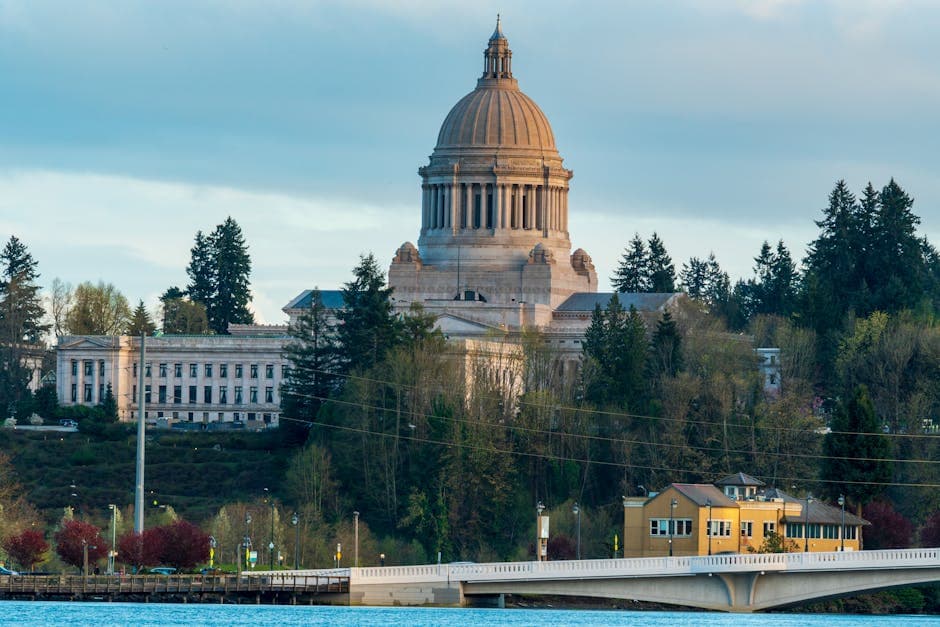
Source: Benton County GIS. Kennewick sits at the confluence of the Yakima and Columbia rivers.
Tri-Cities Brief
US Census 2024 estimate. Largest of the Tri-Cities.
Kennewick + Pasco + Richland combined, MSA estimate.
Federal and contractor cleanup employees, three shifts.
Largest WA appellation. Second-largest in North America.
WA DOR 2025: 6.5% state + 1.7% Benton + 0.5% city.
Filed from Kennewick · Editorial standards: real sources, no fabricated reviews.
I. Scene
A Wednesday in late September. Crush season at Bookwalter, and the five thirty AM shift at a Highlands diner.
In the last week of September, the Columbia Valley smells of fresh fruit. Crush season runs short and sharp: roughly twelve weeks across the Columbia Valley AVA between mid August and early November, with the peak harvest concentrating in the final two weeks of September and the first two of October. Per the Washington State Wine Commission, the Columbia Valley appellation covers 11.4 million acres and supports more than 400 bonded wineries across the basin. Most of those wineries source fruit from Yakima Valley, Walla Walla, Red Mountain, Horse Heaven Hills, and Wahluke Slope sub-AVAs, and they process and bottle in the Tri-Cities or one of the nearby production hubs.
Bookwalter Winery and Tasting Room sits across the Columbia in Richland, but the tasting-room economy spills across the cable bridge into Kennewick every weekend during crush. On a Wednesday at one in the afternoon, the operator at a Columbia Center area lunch spot watches her ticket count run thirty percent above the median. Tasting-room visitors from Bellevue, Spokane, and Boise stopped in for a real lunch between vineyard tours. The Voice AI is catching the inbound calls in English, while the host stand seats a sixteen-top from a winery group. Pre-orders for the late afternoon vineyard tour pickup window are stacked from a tour operator who used the branded ordering page on her phone in the parking lot at Goose Ridge.
Twelve hours earlier, at five thirty AM in the Highlands neighborhood north of the river, a different operator runs a different motion. The DOE Hanford Site runs three shifts across the cleanup operations at 200 Area, 300 Area, and the River Corridor. The first shift starts at the Hanford bus pickup points scattered across the Tri-Cities at six in the morning. The diner's drive-through and pickup window opens at five. The Voice AI is catching pre-orders the prior evening for breakfast burritos, coffees, and breakfast sandwiches staged in pickup bags labeled by shift bus number. The seven AM rush is over by seven fifteen. The kitchen turns and resets for the office workers heading to the federal buildings in Richland.
These two operators are running the same software. They run it differently because crush season at the wine country doorstep is a different economy than a Hanford-shift diner in the Highlands. Add the Mexican family taqueria on West Kennewick Avenue feeding the orchard and packing-shed crews who live in Pasco and East Kennewick, and you have three anchor playbooks that frame the rest of this report. The Tri-Cities calendar is also shaped by the Tri-City Americans of the WHL playing at the Toyota Center, by summer hydroplane racing on the Columbia, by Cougar football traffic in the fall (Pullman is two and a half hours east, and the Tri-Cities is the natural stopping point), and by the Cinco de Mayo weekend that is one of the largest in eastern Washington.
This is a field report on running a Kennewick restaurant in 2026. The customers are not who marketplace apps assume they are. The hours are not when marketplace apps assume they are. The phone is the channel that converts. The branded ordering page is the channel that captures the repeat. DoorDash is not the channel.
Sources for this scene · Washington State Wine Commission, DOE Hanford Site, Tri-City Herald, Visit Tri-Cities.
II. The Tri-Cities Atlas
Three cities, two rivers, one cleanup site, and 400 wineries.
The Tri-Cities are a single trade area composed of three incorporated municipalities at the confluence of the Yakima, Snake, and Columbia rivers. Kennewick is the commercial anchor (largest population, Columbia Center mall, the Toyota Center arena). Pasco is the Franklin County seat on the north bank of the Columbia and home to the Tri-Cities Airport, large food processing, and the largest Latino population share in the metro. Richland is the science town directly downstream of the Hanford Site, home to Pacific Northwest National Laboratory and most Hanford contractor headquarters. The DOE Hanford Site itself stretches 580 square miles north of Richland.
The operator implication is that a Kennewick restaurant is not a Kennewick restaurant alone. The Tri-Cities metro functions as one market for restaurant delivery. Uber Direct radii from a downtown Kennewick kitchen reach the Columbia Center mall in under ten minutes, central Pasco across the cable bridge in fifteen, and central Richland in twenty. Most Tri-Cities operators draw on a trade area of all three cities even when their physical address sits in only one.
The DOE Hanford Site is the largest single private employer in the metro. Per DOE Office of Environmental Management data, around 11,000 federal and contractor employees work Hanford cleanup operations across three shifts. The workforce is bussed from staged pickup points throughout the Tri-Cities to the 200 Area, 300 Area, and River Corridor work zones, with shift starts at six in the morning, two thirty in the afternoon, and ten thirty at night. That schedule shapes breakfast, dinner, and late-night ordering windows across the metro.
The Columbia Valley AVA is the other anchor. Most of the 400-plus bonded wineries that source from the appellation cluster their tasting rooms in three places: along the Yakima Valley corridor west of the Tri-Cities, in the Walla Walla Valley sixty miles east, and inside the Tri-Cities themselves (Bookwalter, Goose Ridge, and the smaller tasting rooms along Tulip Lane in Richland and off Highway 240 in West Richland). Crush weekends, harvest events, and the annual Tri-Cities Wine Festival concentrate visitor traffic at predictable points on the calendar.
The operator who designs a delivery radius and a Voice AI language stack for the Tri-Cities is designing for three cities, three Hanford shifts, and four crush weekends. The branded ordering page that lets a Pasco customer order pickup from a Kennewick kitchen with a clear ten minute Uber Direct quote is the page that wins. The marketplace apps assume a single zip code customer base. The Tri-Cities do not work that way.
Sources · Visit Tri-Cities, DOE Hanford Site, US Bureau of Reclamation, Washington State Wine Commission.
III. The Operator Stat Sheet
Eight stats every Kennewick operator should know cold.
The numbers below frame the rest of this report. They are sourced from public datasets (US Census ACS, Washington Department of Revenue, Visit Tri-Cities, DOE Office of Environmental Management, Washington State Wine Commission) and rounded for readability. If you operate in the Tri-Cities, keep these in your back pocket.
Active restaurants
~650
Tri-Cities metro food service licenses, Benton + Franklin Counties.
Median ticket
$28
Estimated direct-pickup ticket across casual dining and counter.
Kennewick sales tax
8.7%
6.5% WA state + 1.7% Benton + 0.5% city. WA DOR 2025.
Hanford workforce
~11,000
DOE Office of Environmental Management cleanup employees.
Columbia Valley AVA
11.4M ac
Washington State Wine Commission. Largest WA appellation.
Bonded wineries
400+
Drawing fruit from the Columbia Valley AVA. WA Wine Commission.
Latino share (city)
~30%
US Census Bureau ACS, City of Kennewick, of any race.
Latino share (Pasco)
~55%
US Census Bureau ACS, City of Pasco, of any race.
IV. The Cuisine Distribution
American casual leads. Mexican is the workforce backbone. BBQ rides the river.
The Kennewick and broader Tri-Cities restaurant mix is shaped by three forces: a large American casual base sitting on Columbia Center traffic and Hanford-shift demand, a deep and durable Mexican restaurant economy serving the orchard and agricultural workforce that lives across the metro, and a regional BBQ category that draws on the dry summer climate, riverfront patios, and the hydroplane racing crowd. Italian, Asian, and Indian round out the diversity.
American casual leads at roughly 36 percent. That category is the workhorse: Columbia Center mall food court and perimeter pads, the Vista Field redevelopment frontage, Highway 395 service businesses, and the corridor restaurants catering to Hanford-shift breakfast and dinner. Mexican follows at 22 percent, reflecting both the city's roughly 30 percent Latino population and the larger metro Latino share that crosses the cable bridge daily from Pasco. The family taqueria model is the most resilient category in the metro.
BBQ runs hot in eastern Washington's dry summers, with smokehouses scattered from Kennewick out to Burbank and Finley. Italian holds a steady mid-range share at 9 percent, anchored by the wine country dinner crowd that wants pasta and the local family-owned spots that have run the city since the seventies. Asian (Chinese, Vietnamese, Thai, Japanese, plus a notable Korean BBQ presence in Pasco) holds another 11 percent. Indian, served by a small but loyal community working at PNNL and Hanford contractors, runs around 3 percent.
The direct ordering takeaway is category-aware. Mexican operators need Spanish Voice AI and a Spanish-default ordering page. BBQ operators need pre-order windows for large platters tied to summer hydroplane and Cougar football weekends. American casual operators near Columbia Center need a thirty second Voice AI handle on the inbound mall pickup call that the host stand cannot cover at lunch rush. Italian and Asian operators near the wine country tasting-room corridors need pre-paid pickup windows for tour groups.
Sources · Visit Tri-Cities, Tri-City Herald restaurant coverage, US Census Bureau ACS 5-Year Estimates.
V. The Operator Year
Hanford runs year round. Crush runs September. Hockey runs the winter.
A Kennewick restaurant operating calendar is structured by four concurrent rhythms. The DOE Hanford Site runs three daily shifts year round, so breakfast and late-night demand are steady all twelve months. Crush season concentrates in September and October. Summer hydroplane racing on the Columbia, plus the Cinco de Mayo weekend, anchor a long warm season from May through September. Hockey at the Toyota Center runs October through April with playoff lift in late spring.
The crush concentration in late September is the largest single demand spike for the wine country tasting-room restaurants. Bookwalter, Goose Ridge, the Walla Walla weekend traffic that overnights in the Tri-Cities, and the Columbia Valley wineries that bus tasting groups through the metro all converge on a four week window. Pre-orders open the prior Monday with twelve to two and six to eight pickup windows. Catering platters for vineyard tour pickups command a premium and the wine country operator who books that channel cleanly walks into October with a strong margin month booked.
Hanford shift demand never sleeps, but it concentrates at five thirty AM, eleven AM, two thirty PM, six PM, and ten thirty PM. Restaurants that serve the bus pickup points (Stevens Drive in Richland, the 395 corridor in Kennewick, downtown Pasco) book consistent breakfast and late-shift volume against a workforce that overwhelmingly uses phone and direct app channels, not marketplace apps.
The Cinco de Mayo weekend draws one of the largest Latino community celebrations in eastern Washington. Mexican family restaurants in East Kennewick, on West Kennewick Avenue, and across the bridge in Pasco book pre-orders and catering trays starting two weeks out. The Spanish Voice AI catches the inbound for the family party orders that come in by phone, and the bilingual ordering page captures the repeat customer who finally orders online for the first time.
Hydroplane racing on the Columbia in late July (the Columbia Cup unlimited hydroplane race draws roughly 50,000 spectators across the weekend, per Visit Tri-Cities) and Cougar football traffic from late August through November (Pullman to the Tri-Cities is two and a half hours, and the metro is the natural stopping point for fans driving east from the I-5 corridor) fill out the summer and fall shoulder.
Sources · Visit Tri-Cities, DOE Hanford Site, Toyota Center / Tri-City Americans WHL, Columbia Cup Hydroplane Racing, Tri-City Herald.
VI. The Notable Rooms
From Bookwalter tasting room to El Charro, the rooms that frame the Tri-Cities table.
No paid placements. No fabricated reviews. These are real Tri-Cities operating rooms, public landmarks, and corridor names. We include them because any field report on the metro has to acknowledge the rooms that actually frame the operating calendar. The list below is illustrative, not exhaustive.
Wine country anchor (Richland)
Bookwalter Winery and Tasting Room
One of the longest-running Columbia Valley tasting rooms with a full kitchen. The crush season weekend traffic from Bellevue and Boise overnights at the adjacent properties and crosses into Kennewick for lunch and dinner. The Bookwalter model (tasting room plus real food, plus live music) shaped the regional template.
Columbia River seafood
Anthony's HomePort Kennewick
The Tri-Cities outpost of the Pacific Northwest Anthony's seafood chain, sited on the Columbia waterfront in Clover Island. Drives hydroplane weekend traffic, wine country lunch groups, and Hanford management dinners. The model that proves a destination room can run a multi-channel direct ordering motion alongside premium dine-in.
Columbia Park waterfront
Cedar's Restaurant
A longtime Tri-Cities steak and seafood room overlooking the Columbia River from Columbia Park. The summer hydroplane weekend traffic, the Cougar football fall weekend traffic, and the holiday season corporate party season are the three demand peaks. The reservation channel and the direct-pickup channel both matter.
Kennewick mainstays
Round Table Pizza
The Round Table model in the Tri-Cities is family pizza for youth hockey, Tri-City Americans game-day, and birthday party catering. The franchise sits on a high-volume pickup window that benefits from a branded direct ordering page and Voice AI that catches the inbound on game night when the host stand cannot answer.
Family taqueria mainstay
El Charro Mexican Restaurant
One of the Tri-Cities family Mexican restaurants that runs on Spanish-first inbound calls, large family party reservations, and a strong Cinco de Mayo and Mexican holiday calendar. The category leader for what a Tri-Cities Mexican operator needs from a direct ordering platform: Spanish Voice AI, Spanish menu, and a deep catering channel.
Northwest Mexican volume
La Tolteca
A Pacific Northwest Mexican chain with a Tri-Cities presence and the kind of bilingual operating culture that the marketplace apps have never fully served. Spanish Voice AI is not a vanity feature for La Tolteca and operators like it: it is the baseline customer accessibility layer.
Deli, market, catering
Country Mercantile
An eastern Washington deli, market, and catering operation that sits at the intersection of agricultural retail and prepared food. The crush season trail of wine country tour buses stops at Country Mercantile for picnic platters that the catering channel books a week ahead. A model for restaurant operators thinking about packaged retail as a revenue line.
Highlands neighborhood diner
Cousin's Restaurant
A neighborhood diner type in the Highlands corridor that runs on Hanford shift breakfast, the morning federal building crowd, and weekend brunch from the surrounding residential neighborhoods. The five thirty AM open and the seven AM rush are the demand peaks. The Voice AI is the night-before pre-order channel.
Sources · Tri-City Herald restaurant coverage, Visit Tri-Cities dining directory, operator public records.
VII. The Neighborhoods
Downtown, Southridge, Canyon Lakes, Vista, Highlands. Each runs a different motion.
A Kennewick restaurant operating playbook is sub-city specific. The five anchor neighborhoods below each draw a different customer base, a different commute pattern, and a different demand peak.
Old town, civic core, riverfront
Downtown Kennewick
Centered on Kennewick Avenue and Washington Street, downtown Kennewick is the historic civic core anchored by the Three Rivers Convention Center, the Toyota Center, and the Columbia Park waterfront a short walk south. Bar and restaurant traffic concentrates around event nights at the Toyota Center (Tri-City Americans hockey October through April, summer concert series, occasional rodeo and family events) and on Columbia Cup hydroplane weekends in late July.
The direct-ordering implication is event-aware. A downtown operator needs pre-order windows that open four hours before puck drop or curtain, with pickup bays staged for the post-event surge. The Voice AI is the channel that catches the inbound call from the visitor staying at the adjacent hotel who does not have a marketplace app installed.
Newer master-planned south side
Southridge
Southridge sits on the bluff south of the Columbia, a master-planned area that has built out since the early 2000s with Southridge High School, Trios Southridge Hospital, the Three Rivers Convention Center expansion, and a steady stream of new pad restaurants. Family households, professional commuters into Richland, and the growing service economy around the hospital corridor frame the customer base.
The operator pattern in Southridge is suburban: weekday lunch from the hospital and surrounding offices, weekday dinner pickup from family households on the bluff, and weekend brunch demand from the catchment area. Uber Direct radii from a Southridge kitchen reach into Canyon Lakes and the southern half of Kennewick. The branded ordering page is the channel that converts.
Golf course community, established families
Canyon Lakes
Canyon Lakes is built around the Canyon Lakes Golf Course on the southeast side of Kennewick. The neighborhood character is established suburban, with larger lot sizes, a strong household income base, and a customer profile that gives heavily to youth sports leagues, school fundraisers, and the holiday calendar. The catering channel matters here in a way it does not matter in downtown.
Holiday catering, school auction baskets, and weekend family party platters are the demand drivers. The branded ordering page with a clean catering tier (large platters, party trays, dietary tagging for school auction baskets) outperforms a generic marketplace listing because the Canyon Lakes household is ordering for the family or the team, not for one diner on a phone app.
Redevelopment frontage, civic and retail
Vista (Vista Field)
Vista Field is the former Tri-Cities municipal airport, redeveloped over the past decade into a mixed-use civic, retail, and dining frontage with a public square, event lawn, and the surrounding new build pad restaurants. The Three Rivers Campus Improvement District is concentrated here. Weekday lunch from surrounding offices and weekend event traffic (farmers market, summer concert series, holiday lighting) anchor the demand.
The operator at a Vista pad restaurant runs an event-driven calendar that lines up neatly with the Vista Field public event schedule. Pre-orders, pickup windows tied to event start times, and Uber Direct delivery into the surrounding neighborhoods are the three channels that convert. The Voice AI catches the inbound from a visitor parking in the Vista lot who has not used the operator's branded page before.
North Kennewick, Hanford-shift gateway
Highlands
The Highlands sit on the north end of Kennewick, west of the Columbia and on the path between the city and the Hanford bus pickup points along Stevens Drive. The morning Hanford shift commute passes through Highlands. The customer base skews toward shift workers, federal building staff, and the established residential neighborhoods that have anchored north Kennewick since the postwar period.
Operator pattern: five thirty AM open for the first Hanford shift, seven AM rush, brief mid-morning lull, then a steady lunch and afternoon trickle. The Voice AI catches pre-orders the night before for breakfast burritos and coffees staged for the morning bus. This is the playbook where the platform pays for itself in the first thirty days.
Regional mall and pad restaurants
The Columbia Center corridor
Columbia Center is the regional shopping mall on the west side of Kennewick, anchored by the major department stores, with a perimeter ring of pad restaurants ranging from American casual chains to Asian, Italian, and the rotating cast of seasonal pop-ups. The mall draws a metro-wide trade area including Pasco and Richland visitors.
The pad restaurant operator at Columbia Center runs a high-pickup motion. Lunch from the mall workforce and surrounding office parks, weekday dinner family pickup, and weekend holiday shopping traffic stack onto each other. The Voice AI is the channel that handles the call volume the host stand cannot cover during peak.
VIII. The Three Operators
Three ICP personas. Three different motions on one platform.
We build for three anchor operator personas in the Tri-Cities. Each runs a different daily motion on the same platform stack. The numbers below are illustrative, drawn from comparable operator deployments and rounded for readability.
Wine country tasting room restaurant
Crush season + tour groups
- Anchor traffic
- Tasting tour groups from Bellevue, Spokane, Boise
- Peak window
- Late September to mid October crush, plus all weekends
- Channel mix
- Reservations + branded pickup + catering platters
- Voice AI value
- Catch tour operator inbound, hold large tables
- Key feature
- Pre-paid pickup windows for vineyard tour buses
Hanford-shift breakfast operator
Five thirty AM open, drive-through
- Anchor traffic
- Hanford morning shift bus pickup riders
- Peak window
- Six AM to seven fifteen AM weekday
- Channel mix
- Night-before pre-orders + dawn pickup + drive-through
- Voice AI value
- Catch evening pre-order calls, stage bags by bus
- Key feature
- Bus-labeled pickup bags, dawn dispatch by Hanford route
Mexican family taqueria
Bilingual phone + Cinco de Mayo
- Anchor traffic
- Orchard workforce, family parties, Cinco de Mayo
- Peak window
- Friday and Saturday dinner, plus full Cinco weekend
- Channel mix
- Spanish phone + bilingual page + party platters
- Voice AI value
- Spanish-first inbound, family party orders booked clean
- Key feature
- Spanish-default page, Spanish receipts, Spanish SMS confirms
The common platform underneath
All three Kennewick operators run the same DirectOrders stack underneath: a branded ordering page on the operator's domain, bilingual Voice AI in English and Spanish, Uber Direct dispatch with operator-set delivery rates, same-day Stripe payouts, and a flat platform fee. The difference is how each operator configures the channel mix, the pickup window timing, and the Voice AI script. The platform stays the same. The playbook is operator-specific.
IX. The Crush Lift
Crush season concentrates a quarter of the wine country operator's year into four weekends.
Per Visit Tri-Cities and operator survey data, late September and early October crush weekends concentrate a meaningful share of the wine country tasting-room and tasting-room-adjacent restaurant revenue into a four week window. The chart below models a representative wine country operator's monthly ticket volume across the calendar year, anchored to the crush peak.
The lift is real and the lift is operator-defining. A wine country tasting-room restaurant that books crush weeks cleanly walks into October at roughly two hundred percent of the baseline mid-summer ticket volume. The operator who does not book crush weeks cleanly leaves the lift on the table for a tasting-room neighbor who does.
The two booking patterns that matter are reservations and pre-paid pickup. Reservations book the tour group dinner. Pre-paid pickup books the bus stop platter pickup for a vineyard tour that does not have time to sit down. The branded ordering page sells both. The Voice AI books the reservation inbound when the host stand is busy.
The marketplace apps do not understand crush. They will give a tasting-room operator a generic September. They will not give the operator a four-weekend lift framing. They will not give the operator a tour-bus pickup window preset. They will not give the operator a catering tier for vineyard tour platters. The branded direct ordering page does all of this because the operator builds the page.
Sources · Visit Tri-Cities visitor counts, Washington State Wine Commission Crush Report, Tri-Cities Wine Society festival data.
X. The Bilingual Phone Line
Voice AI in English and Spanish. The accessibility layer Kennewick operators owe their customers.
Latino population share
Source: US Census Bureau ACS 5-Year Estimates, of any race.
The Tri-Cities Latino community is the workforce that has built the eastern Washington agricultural economy across the past century. Per the US Census Bureau ACS 5-Year Estimates, the City of Kennewick is roughly 30 percent Hispanic or Latino (of any race), Pasco runs roughly 55 percent, and the combined metro sits at roughly 35 percent. The community is overwhelmingly Mexican and Mexican American, with deep roots in the surrounding orchard, hop, vineyard, and food processing workforce.
The operator implication is direct. A meaningful share of inbound restaurant orders in the Tri-Cities comes by phone, in Spanish, from households that do not order from a marketplace app and never will. The Cinco de Mayo weekend family party orders, the orchard crew dinner pickup, and the grandparents ordering for a three generation household are all phone customers.
Spanish Voice AI is therefore not a vanity feature. It is the accessibility layer the operator owes the customer base. DirectOrders ships English and Spanish out of the box. The bilingual menu, the Spanish-default ordering page, the Spanish receipt, and the Spanish post-order SMS confirmation are all standard configuration. None of these are upcharges. The platform was built for cities where Spanish is not assumed to be the second-class customer language.
The marketplace apps offer a Spanish UI on the consumer app and stop there. They do not provide a Spanish phone line. They do not run Spanish post-order SMS. They do not ship Spanish receipts. A Mexican operator on West Kennewick Avenue or in East Pasco needs a platform that treats the Spanish customer as the default, not the alternate. That is the gap we close.
Sources · US Census Bureau ACS 5-Year Estimates, Tri-City Herald local business coverage.
XI. The Cost Math
A $30 ag worker breakfast burrito: 27 percent marketplace drag, or 14 percent direct.
The single most important conversation a Kennewick operator has with a platform vendor is the cost of an order. The math below uses a representative $30 breakfast burrito ticket from a Mexican family taqueria serving the ag workforce that lives in East Kennewick and Pasco. Marketplace commission plus delivery fees plus payment processing eats roughly 27 percent of the ticket. A direct order on DirectOrders, with Uber Direct dispatch at cost and Stripe payment processing at standard rates, runs at roughly 14 percent total drag.
The math is not editorial. It is the standard published rate card from DoorDash and Uber Eats applied to a $30 ticket. Marketplace base commission runs 15 to 30 percent depending on the operator tier, marketing surcharges run 3 to 6 percent, delivery and service fees pulled from the operator P&L through promotional matching run another 2 to 4 percent, and payment processing runs roughly 2.9 percent plus thirty cents. The blended cost of a marketplace order routinely lands between 25 and 30 percent of the ticket.
Direct ordering replaces marketplace commission with a flat platform fee (DirectOrders is $249 per month flat, amortized across order volume to roughly two to three percent of ticket on a healthy operator), keeps Stripe payment processing at 2.9 percent plus thirty cents, and pays Uber Direct dispatch at cost (typically $7 to $11 per delivery in the Tri-Cities urban area). Total drag on a $30 ticket lands at roughly 14 percent.
The thirteen percentage point gap is the money that funds the operator's payroll, the kitchen build-out, the new oven, the family taking a Sunday off. On a Mexican taqueria booking 200 tickets a week at $30 average, the thirteen point gap is approximately $40,000 per year. On a wine country tasting-room operator booking 350 tickets a week at $45 average, the gap is approximately $100,000 per year. The math compounds.
This is the math that makes a Kennewick operator move from a marketplace app to a direct ordering platform. It is also the math that makes the Hanford-shift breakfast operator who books 500 breakfast tickets a week double her margin overnight without raising a single menu price.
Sources · DoorDash and Uber Eats public rate cards, Stripe published pricing, Uber Direct dispatch rate card, DirectOrders pricing page.
XII. The Sales Tax Stack
8.7 percent at the Kennewick city limit. Cross the bridge to Pasco and the rate changes.
The Washington Department of Revenue publishes combined sales and use tax rates for each city in Washington. The Tri-Cities stack varies by jurisdiction. Kennewick sits at 8.7 percent. Pasco (Franklin County) and Richland (Benton County) carry slightly different rates. The platform handles the stack automatically based on the operator's address of record. The operator does not have to think about it.
Own the dawn shift. Own the crush weekend. Own the phone line in two languages.
A thirty minute walkthrough with our Tri-Cities implementation lead covers the corridor your restaurant sits on (downtown, Southridge, Canyon Lakes, Vista, Highlands, Columbia Center), the Spanish phone configuration your customer base requires, the Uber Direct radius math from your kitchen address, and the crush season pre-order playbook if you are a wine country operator. Or browse the pricing page directly. Both work.
Live in 2 hours from menu upload to first order, or we white-glove the launch for free.
Sources cited
- City of KennewickCity government, public records, services and demographics
- Visit Tri-CitiesRegional visitor data, dining directory, event calendar
- Tri-Cities Wine SocietyAnnual wine festival, regional wine economy data
- DOE Hanford SiteHanford cleanup workforce, contractor and federal employment
- Washington State Wine CommissionColumbia Valley AVA acreage, varietal mix, crush data
- Washington Department of RevenueCombined sales and use tax rates, Benton County
- Benton County, WashingtonBenton County demographics, county services, public health
- US Census Bureau ACSTri-Cities metro demographics, language and household data
- Tri-City HeraldTri-Cities news of record, local restaurant and business coverage
- Toyota Center Tri-CitiesTri-City Americans WHL hockey, Toyota Center events
- US Bureau of ReclamationColumbia River system, Yakima River basin
- Columbia Cup Unlimited Hydroplane RacingColumbia Cup hydroplane race, annual race data
Nearby cities we cover
- Yakima, WA85 mi west; the Hop Capital and Apple Capital
- Spokane, WA140 mi northeast; Inland Northwest urban anchor
- Seattle, WA215 mi west over Snoqualmie Pass; same WA tax stack
- Portland, OR225 mi southwest down the Columbia
Tools for Kennewick operators
- Commission calculatorPlug in your DoorDash volume, see the crush-week drag
- Voice AI (bilingual)English and Spanish out of the box
- Direct orderingBranded ordering page on your own domain
- Uber Direct dispatchRestaurant-owned dispatch across the Tri-Cities
- PricingFlat $249/mo. No per-order commission. Zero.