Central Washington · Restaurant Operations · Long Read
The Hop Capital. The Apple Capital.
Yakima Valley grows roughly seventy five percent of America's hops and about a quarter of the world's, the largest hop-growing region on Earth. It also grows roughly seventy percent of Washington apples. This is a field report for restaurant operators in downtown Yakima, West Valley, Selah, and the orchard towns the Valley feeds.
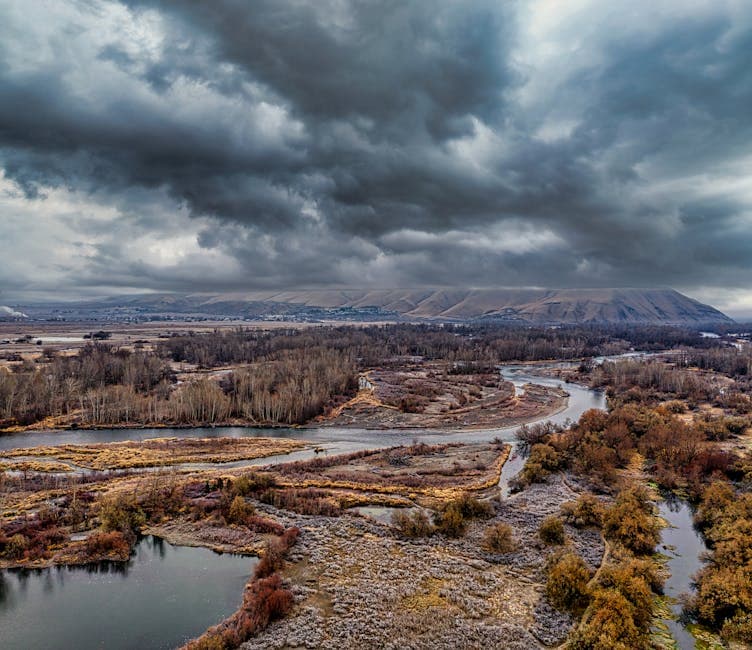
Source: Yakima County GIS. The Valley sits in the Cascade rain shadow at about 1,070 ft elevation.
Yakima Valley Brief
US Census 2024 estimate. Eighth largest city in Washington.
US Census 2024 estimate. Valley-wide trade area.
USDA NASS National Hop Report, 2024 crop year.
WA Apple Commission, Yakima + Wenatchee Valley combined dominant.
WA DOR 2025: 6.5% state + 1.5% local (city limits).
Filed from Yakima · Editorial standards: real sources, no fabricated reviews.
I. Scene
A Tuesday in early September. Yakima Brewing on Front Street, hop harvest week.
In the first ten days of September, the Yakima Valley smells of fresh hop cones. The harvest moves on a tight calendar driven by alpha-acid testing in the fields and by the brewmasters who have flown in from across the country to stand on the picking floor at Yakima Chief Hops, John I. Haas, and the smaller family-run operations along the valley floor. Per the Washington Hop Commission and USDA NASS, the Yakima Valley produces around three quarters of the United States hop crop and roughly a quarter of the world supply, the single largest hop-growing region on the planet.
Inside Yakima Brewing on Front Street, two blocks from the BNSF tracks, the operator does not need a calendar to know it is harvest week. The brewers and the buyers fill her tap room at noon. They came in from Bend, from San Diego, from Portland, from Asheville, from Munich. They are spending the day in cone rooms and breeder trials and they want a real lunch before they head back to the picking floor at one thirty. The fresh hop beers, brewed twelve hours after harvest, are on tap by Thursday.
Her phone has been ringing since ten. The Voice AI catches the inbound calls in English and Spanish and turns them into pickup tickets timed to twelve fifteen and twelve forty five. Half the inbound today is from the warehouse crew on the south edge of town who do not order from a marketplace app and never will. The other half is from a tour bus parked by the Capitol Theatre asking whether the kitchen can hold a table of eighteen at one fifteen. The host stand cannot answer the phone in two languages while seating a sixteen-top. The Voice AI can.
Across town, on West Yakima Avenue in the West Valley commercial spine, a second operator runs a different motion. She is taking pre-orders the full week, with pickup windows from eleven to two for the warehouse and orchard crews on lunch break. The pre-orders alone account for one hundred eighty tickets across the harvest week. Uber Direct handles the four mile delivery into the Selah orchards at a flat rate the operator sets herself, not at a thirty percent commission carved out by an app she does not control.
These two operators are running the same software. They are running it differently because downtown Yakima at harvest week is a different economy than West Valley at orchard lunch hour. The rest of this report is about that distinction, and about the other three concentrations that matter on the Yakima calendar: the Central Washington State Fair in late September, the apple harvest pushing through October, and the Yakama Nation gathering season that runs from spring into fall. This is a field report on running a Yakima restaurant in 2026.
Sources for this scene · Washington Hop Commission, USDA NASS National Hop Report, Yakima Herald-Republic.
II. The Hop Atlas
Seventy five percent of US hops. About a quarter of the world's.
Per USDA NASS National Hop Report data, Washington state is consistently the largest hop-producing state in the United States, and the Yakima Valley produces the overwhelming majority of that crop. The Valley share works out to roughly three quarters of US production and, when paired against published international Hopfen data, to roughly a quarter of the global hop crop. The Hallertau region of Bavaria is the only growing region of comparable scale.
The Yakima Valley sits in the Cascade rain shadow, with hot dry summer days, cool nights, deep volcanic soils, and irrigation water from the Yakima River system. Hops require precisely that climate profile. The Hallertau in Bavaria matches it. Few other places on Earth do. The Hop Growers of America trace the Valley's commercial hop industry to the late nineteenth century, with the modern industry consolidated in the postwar period around Yakima, Toppenish, Moxee, and the lower Valley.
Yakima Chief Hops, John I. Haas, Hopsteiner, and the smaller family operations together handle the lion's share of the Valley crop. The mid-September harvest concentrates a national-scale brewing trade visit into a two-week window. Brewmasters from across the United States, Germany, the United Kingdom, Australia, and Japan fly in to walk the hop yards. The Valley hotel inventory fills. The Capitol Theatre downtown books special harvest-week events. The restaurants run lunch and dinner volumes that compress three months of standard mid-week trade into ten working days.
The operator playbook for hop harvest week is shaped by the trade-visitor calendar. The brewmasters and buyers move on tight schedules. They want a real lunch at noon, a reception at six, and a late dinner at nine thirty. Pre-orders open the prior Monday with twelve to two pickup windows. Voice AI catches the inbound surge from hotel concierges and tour guides asking whether a table of fourteen can be held at one fifteen.
The downtown corridor around Front Street, Yakima Avenue, and the railroad spine sees the largest harvest-week lift. Bale Breaker, Yakima Craft Brewing, Single Hill, Trickster's, and the rotating cast of breweries inside the city limits each draw a slice of the trade visit. Restaurants paired with reservations and a tight branded ordering page convert the trade-visit customer who landed at SEA an hour ago, drove over Snoqualmie Pass, and is opening a phone on the way into town.
The single largest failure mode during hop harvest is not having the phone covered when a tour bus arrives at one o'clock with eighteen brewers. The Voice AI handles it. The branded ordering page captures the pre-order from the Hampton Inn concierge desk a day in advance. The marketplace apps cannot model a hop-harvest trade-visit calendar because the calendar does not exist on their internal taxonomies. DirectOrders does.
By the close of harvest, around the third week of September, the operator who ran this playbook has booked harvest-week ticket volumes that compress a regular October into a single two-week window. The fresh-hop beers are on tap by Thursday. The picking floor closes. The Valley exhales for forty eight hours, then the Central Washington State Fair opens.
Sources · USDA NASS National Hop Report, Washington Hop Commission, Hop Growers of America, Yakima Herald-Republic.
III. The Apple Atlas
Honeycrisp, Pink Lady, Cosmic Crisp. Around seventy percent of Washington apples.
Washington state grows the dominant share of US apple production, and per the Washington Apple Commission the Yakima Valley sits alongside the Wenatchee Valley as one of the two anchor growing regions of the state. The Valley's apple share works out to roughly seventy percent of Washington production by orchard acreage in the broader Yakima basin (Yakima County plus the adjacent Lower Valley orchards), depending on the year's varietal mix and weather.
The varietal mix is the story. Honeycrisp, bred at the University of Minnesota and commercialized in the 1990s, has become a Washington signature variety, with the Yakima basin producing a disproportionate share of the national Honeycrisp crop. Pink Lady (Cripps Pink) follows a similar arc. Cosmic Crisp, bred at Washington State University and released commercially in 2019, is the first major Washington-bred apple variety in a generation and is concentrated in the Yakima and Wenatchee basins. Fuji, Gala, Granny Smith, and Red Delicious round out the mix.
The apple harvest runs from mid August through late October, with the peak weeks of September and October concentrating the orchard workforce and the packing-shed shifts. The workforce is overwhelmingly Hispanic, much of it Mexican and Mexican-American, and a meaningful share is seasonal H-2A visa labor brought in for the harvest window. Per the Washington State Department of Agriculture, the Yakima basin represents the single largest apple-harvest labor concentration in the United States outside the Wenatchee basin.
The operator playbook for apple harvest is volume-aware and language-aware. The orchard and packing-shed crews finish shifts at five thirty, six thirty, and eight depending on the operation. The post-shift dinner pickup wave concentrates along West Yakima Avenue, the Nob Hill corridor, and the Selah strip. A bilingual menu, a Spanish phone line, and a pickup-first ordering page outperform a marketplace listing for that customer base because the marketplace apps are built for downtown white-collar lunch breaks, not for orchard crews finishing a twelve-hour shift in October.
The direct ordering implication is the same it always is in agricultural Washington. The customer base does not match the marketplace persona. The operator who recognizes that and builds a Spanish-first ordering motion captures a category of order that the marketplace apps will never compete for. The phone is the channel. The branded ordering page is the channel. The Voice AI in Spanish is the channel. DoorDash is not the channel.
Sources · Washington Apple Commission, Washington State Department of Agriculture, Washington State University Cosmic Crisp release archive.
IV. The Language Map
About half Hispanic. The largest Latino population in Eastern Washington.
Per the US Census Bureau ACS 5-Year Estimates, the City of Yakima and Yakima County both register roughly fifty percent Hispanic or Latino population (of any race), making Yakima the largest Latino community in Eastern Washington and one of the largest in the Pacific Northwest by absolute count. The community is overwhelmingly rooted in the Mexican and Mexican American agricultural workforce that has built the Valley's orchard, hop, and vineyard economy across the past century.
The operator consequence is straightforward and large. A meaningful share of inbound restaurant orders in Yakima comes by phone, in Spanish, from households that do not order from a marketplace app and never will. The orchard crews finishing a shift at six thirty want a real meal for the family, paid in cash or by Venmo at pickup. The packing-shed workers on lunch break want a fast pickup ticket in Spanish. The community of grandparents and older household members ordering for the family ordering on behalf of three generations is not a marketplace customer. It is a phone customer.
Spanish Voice AI is therefore not a vanity feature in Yakima. It is the accessibility layer the operator owes the customer base. The same is true at the menu and ordering-page level. A bilingual ordering page (Spanish and English, with a language toggle that defaults to Spanish based on browser locale) captures a customer category that the marketplace apps largely do not serve. The Yakima Herald-Republic has documented the local Mexican restaurant economy across the past two decades. The operators who run it know the customer base. The platforms that serve them mostly do not.
DirectOrders ships the Voice AI in English and Spanish out of the box for Yakima operators. The bilingual menu, the Spanish-default language toggle, the Spanish receipt, and the Spanish post-order SMS confirmation are all standard configuration. None of these are upcharges. The platform was built for cities where the customer is not assumed to default to English.
The marketplace apps offer a Spanish UI on the consumer app and stop there. They do not provide a Spanish phone line. They do not run Spanish post-order SMS. They do not ship Spanish receipts. The operator running a Mexican restaurant on the South First Street corridor or in the Lower Valley needs a platform that treats the Spanish customer as the default customer, not the second-class customer. That is the gap DirectOrders closes.
Sources · US Census Bureau ACS 5-Year Estimates, Yakima Herald-Republic local business coverage, Washington State Department of Agriculture farmworker reports.
V. The Fair
Late September. The Central Washington State Fair and its 330,000 attendees.
The Central Washington State Fair is the regional state fair of the Yakima Valley and central Washington, held annually across ten days in late September on the State Fair Park grounds along Fair Avenue, just east of the Yakima Air Terminal. Per the Central Washington State Fair organization, the fair historically draws around three hundred thirty thousand attendees across the ten-day run, making it the second-largest annual gathering of people in the state by attendance count after the Washington State Fair in Puyallup.
The fair anchors the regional calendar in a way that no other single event matches. The 4-H and FFA livestock shows draw exhibitors from across the Yakima basin and the broader central Washington agricultural region. The grandstand concert series brings touring acts that fill the eight thousand seat grandstand on weekend nights. The carnival, the food row, and the agricultural exhibits draw the family weekend traffic. The horseplay, the demolition derby, and the rodeo events draw the rural Eastern Washington base.
The operator playbook for fair week is volume-aware. The fair gates open at eleven on weekdays and ten on weekends. The peak attendance windows are six to nine on weekday evenings and two to nine on Saturday and Sunday. The pre-fair lunch window (eleven to one on the fair grounds and on the strip along East Nob Hill Boulevard) and the post-fair dinner window (eight to ten thirty along Fair Avenue, Nob Hill, and back into downtown) both concentrate restaurant volume in predictable patterns.
The restaurants that capture fair-week volume share three operational moves. First, they open earlier (ten thirty or eleven) on the ten days the fair is running. Second, they run a tight fair-week menu of six to eight high-throughput items optimized for a one-hour pickup window. Third, they use Voice AI to absorb the inbound phone surge from grandparents and families coordinating pickup for groups of eight to fourteen people. The single most expensive failure mode during fair week is the phone ringing unanswered while the host stand is buried with a family of twelve at the door.
The DirectOrders configuration for fair week absorbs both the bilingual phone wave and the catering pre-order from corporate groups attending the fair on a company outing. Same-day Stripe payouts settle Monday morning even with a weekend volume spike. The branded ordering page captures the family customer who pulls up a phone in the fair parking lot at seven o'clock and wants dinner ready at the strip restaurant a mile and a half away.
Sources · Central Washington State Fair official archive, Yakima Valley Tourism, Yakima Herald-Republic fair coverage.
VI. The Yakama Nation
Fourteen confederated tribes and bands. A sovereign nation adjacent to the city.
The Confederated Tribes and Bands of the Yakama Nation, formed by the Treaty of 1855, are a sovereign tribal government representing fourteen tribes and bands. The reservation covers roughly 1.4 million acres of the Yakima Valley south and west of the city, with the tribal seat at Toppenish and administrative offices along US 97. The Yakama Nation is one of the largest treaty tribes in the Pacific Northwest by land area and a foundational presence in the Valley's history, culture, and economy.
For Yakima restaurant operators, the practical context is that the Yakama Reservation is an adjacent jurisdiction with its own government, its own land base, and its own community rhythms. The Heritage Inn and the Legends Casino Hotel at Toppenish are the largest tribally owned hospitality operations in the region. The annual Pi-Nee-Waus Days celebration, the Treaty Day commemoration on June 9, and the regular pow-wow gatherings across the year draw visitors back to the Valley from across the broader Pacific Northwest tribal community.
The restaurant operator implication is that catering and group-order traffic from the Yakama Nation's administrative staff, from Legends Casino Hotel events, and from the broader tribal community is a real channel that the marketplace apps mostly do not serve. A direct ordering site that supports group orders, catering invoices, and tax-exempt purchase orders (where the buyer is the tribal government or a tribal enterprise) captures that channel cleanly. Marketplace apps cannot model tribal sovereign-purchaser tax exemption. DirectOrders can.
We frame this section with care because tribal sovereignty is a real legal and historical category, not a marketing segment. The Yakama Nation's website is the authoritative source on the nation's history, government, and community programming, and operators serving the tribal community should treat the nation's published guidance as the source of record on cultural protocol, treaty rights, and jurisdictional questions. The point of this section is simply that the operator who serves Yakima cannot pretend the Yakama Nation does not exist on the map. It does. It shapes the Valley.
Sources · Confederated Tribes and Bands of the Yakama Nation official website, Treaty of 1855 historical archive, Yakima Herald-Republic tribal affairs coverage.
VII. The Atlas
Downtown, West Valley, Selah. Three operating economies.
The "Yakima restaurant" abstraction does not describe an operating reality. Downtown carries the Capitol Theatre, the Yakima Avenue spine, the railroad-side brewing strip, and the fair-week corridor. West Valley runs a residential and big-box commercial economy along West Yakima Avenue and 40th Avenue. Selah, six miles north up I-82, is its own incorporated city anchored by orchard packing operations and a tight residential dinner book. Same platform, three configurations.
Capitol Theatre + brewing spine
Downtown Yakima
Downtown Yakima runs from the Capitol Theatre on South Third Street east toward the railroad, with the Front Street brewing district anchoring the after-hours economy. The Yakima Avenue retail spine and the historic North Front Street block carry the lunch and dinner book.
Direct ordering succeeds downtown when the operator pairs reservations with a tight branded ordering page and uses Voice AI in English and Spanish to absorb the inbound phone surge during hop harvest week and during the fair.
Residential + commercial spine
West Valley
West Valley is the residential and big-box commercial spine along West Yakima Avenue and 40th Avenue, with the bulk of the city's chain dinner volume and a strong independent pickup book serving family households on weeknights.
Direct ordering wins in West Valley with the family pickup motion at five to seven, a Spanish phone option, and weekend catering pre-orders for soccer leagues, church groups, and family birthdays. Pickup dominates here.
Orchard + residential spine
Selah
Selah, just north of Yakima up I-82, is a separate incorporated city of roughly eight thousand residents anchored by orchard packing operations (Tree Top juice operations are headquartered here) and a tight residential dinner book.
Direct ordering succeeds in Selah with packing-shed-aware lunch and dinner windows, Spanish-default ordering pages for the orchard workforce, and Uber Direct dispatch for the four-mile run into north Yakima where the workforce spends weekend evenings.
VIII. The Wine Country
Yakima Valley AVA. The first federally designated wine region in the Pacific Northwest.
Per the Washington State Wine Commission, the Yakima Valley AVA was designated in 1983, the first federally recognized American Viticultural Area in the Pacific Northwest. The AVA covers roughly 11,000 acres of planted vineyards stretched across the Valley floor and the slopes of Rattlesnake Hills and Snipes Mountain (each of which is itself a nested AVA inside the broader Yakima Valley designation). The Valley is home to several dozen wineries and tasting rooms, with the Prosser corridor an hour southeast carrying the largest tasting-room density.
The operator implication for Yakima city restaurants is the wine-tourism weekend traffic. Spring Barrel Tasting (the last full weekend of April), Catch the Crush (mid-October), and the rolling tasting-room weekend traffic across the rest of the year all pull weekend dinner volume into downtown Yakima and into the Lower Valley wine country. A branded ordering page with reservation integration and Friday and Saturday evening Voice AI handoff converts the wine-tourism customer cleanly.
The wine economy is also a workforce economy. The vineyard and cellar crews follow the same Spanish-first labor pattern as the orchards and hop yards. The same bilingual ordering motion that serves the apple-harvest workforce serves the vineyard workforce. The wine tasting room manager and the vineyard owner are different customers from the picking crew. The branded ordering page handles both. The marketplace apps handle neither.
For an operator opening a Yakima restaurant in 2026, modeling the wine-tourism weekend pull alongside the agricultural weekday workforce is the right shape of the calendar. Weekdays run Spanish-first, pickup-heavy, and short on ticket-time. Weekends run reservation-driven, wine-pairing- aware, and long on table-turn. Same kitchen. Different operating modes.
Sources · Washington State Wine Commission AVA archive, Yakima Valley Tourism wine-country guide, Yakima Herald-Republic food and wine coverage.
IX. The Tax Stack
Yakima runs 8.0 percent combined. Get the destination address wrong and the year adds up.
Per the Washington Department of Revenue's local sales and use tax rate schedule, the combined sales tax rate inside the City of Yakima is 8.0 percent, composed of the 6.5 percent Washington state base rate and a 1.5 percent Yakima County and local add-on covering city, county, and transit. The rate applies to restaurant food sales at the standard rate, with no separate prepared-food surcharge of the kind some other US jurisdictions impose.
Selah, Sunnyside, Toppenish, and the unincorporated Yakima County pockets run at slightly different combined rates inside the 7.9 to 8.3 percent band, with the exact rate determined by the delivery address rather than the restaurant address. The WA DOR's destination-based sourcing rules mean that an order delivered into Selah from a kitchen in downtown Yakima is taxed at the destination rate, not the kitchen's rate.
The Yakama Nation reservation introduces an additional consideration. Sales to the tribal government or to a tribal enterprise are generally exempt from Washington state sales tax under the federal Indian Trader rules and WA DOR policy. Sales to individual tribal members for delivery on the reservation are similarly exempt under certain conditions. A platform that handles tribal tax exemption correctly is the difference between a clean monthly WA DOR remittance and a six-figure audit risk.
The direct ordering implication is plain. A platform that hardcodes a single rate for the entire region overcharges some customers, undercharges others, and mishandles tribal exemptions. DirectOrders computes the rate from the destination ZIP at checkout, handles tribal-purchaser exemption with documentation, generates a monthly export that aligns to the WA combined excise tax return, and keeps the operator on the right side of the rate schedule without a manual tax person.
Source · Washington Department of Revenue, local sales and use tax rates, 2025 schedule. WA DOR Indian Trader rules.
WA state base
Applies statewide
City of Yakima local add-on
City + county + transit
City of Yakima combined
Inside city limits
Selah / Sunnyside / Toppenish
Destination-sourced
Yakama Nation purchaser
Indian Trader / tribal enterprise rules
Destination-based sourcing
On a $38.00 ticket delivered from a kitchen in the City of Yakima (8.0 percent) into a Selah address (~7.9 percent), the tax owed is the destination rate, not the kitchen's rate. A platform that hardcodes the kitchen's rate overcharges by a few cents per ticket. Across 10,000 tickets a year, the operator either remits more than they collected or carries WA DOR audit risk.
What DirectOrders does
Tax is computed from the delivery address at checkout using the WA DOR rate table. Tribal purchaser exemption is handled with documentation. Monthly export aligns to the WA combined excise return line items.
X. The Argument
Why a flat $249 a month is the only stack that actually fits Yakima.
The argument is cumulative. Pull any one of these threads alone and a marketplace plus direct hybrid still works on paper. Pull all five at once, and the only configuration that closes the year is direct first, marketplace off or discovery only.
One. Hop harvest week and the Central Washington State Fair together compress a meaningful share of the operator's annual revenue into a four-week window from late August through early October. A flat-fee subscription that lets the operator keep one hundred percent of those tickets outperforms a per-order commission contract by a wide margin. The math is not close.
Two. About half the city is Hispanic. Spanish Voice AI, Spanish ordering pages, Spanish receipts, and Spanish SMS are not features. They are the accessibility layer the operator owes the customer base. Marketplace apps do not serve that customer category at the channel level.
Three. The Yakama Nation adjacency introduces tribal purchaser tax exemption, a real legal category that requires platform handling, not a manual workaround. The operator serving tribal customers needs a platform that gets the exemption right at checkout.
Four. The 8.0 percent Yakima combined sales tax, plus destination-based sourcing into Selah, Sunnyside, and Toppenish, plus tribal exemption handling, has to be computed correctly on every ticket. A platform that hardcodes a single rate creates tax liability the operator carries. DirectOrders computes from the destination ZIP and handles exemption documentation.
Five. The agricultural workforce dinner book runs on a shift-finish clock, not on a marketplace lunch-break clock. A platform built for white-collar urban lunch breaks misses the post-shift dinner pickup wave at five thirty, six thirty, and eight. DirectOrders does not.
The DirectOrders configuration for Yakima (flat $249 a month plus Uber Direct dispatch plus bilingual Voice AI plus same-day Stripe payouts plus destination-aware tax plus tribal exemption handling) is not a feature list. It is the operating system the hop harvest, the apple harvest, the State Fair, the bilingual customer base, the Yakama Nation adjacency, and the WA tax rule all require simultaneously.
Own the harvest. Own the fair. Own the phone line in two languages.
A thirty minute walkthrough with our Yakima implementation lead covers the corridor your restaurant sits on (downtown, West Valley, Selah, the Nob Hill spine, the fair-week strip), the Spanish phone configuration your customer base requires, and the Uber Direct radius math for your specific kitchen address. Or browse the pricing page directly. Both work.
Live in 2 hours from menu upload to first order, or we white-glove the launch for free.
Sources cited
- USDA NASSNational Hop Report, US hop production by state
- Washington Hop CommissionYakima Valley hop industry overview, production share
- Washington Apple CommissionWashington apple varietal mix and orchard regions
- Washington State Wine CommissionYakima Valley AVA, Rattlesnake Hills, Snipes Mountain
- Washington State UniversityCosmic Crisp breeding program, varietal release record
- Confederated Tribes and Bands of the Yakama NationSovereign government, treaty history, fourteen confederated bands
- Central Washington State FairAnnual fair history and attendance
- Washington Department of RevenueCombined sales and use tax rates, Yakima County
- US Census Bureau ACSYakima County demographic and language data
- Yakima Valley TourismVisitor data, wine country, and event calendar
- Yakima Herald-RepublicLocal restaurant and agriculture coverage of record
- Yakima Valley CollegeTwo-year college serving the Valley workforce
Nearby cities we cover
- Seattle, WA140 mi west over Snoqualmie Pass; same WA tax stack
- Spokane, WA200 mi east; the Inland Northwest urban anchor
- Tacoma, WA150 mi west; Puget Sound port and industrial city
- Portland, OR180 mi southwest; the other PNW chef-driven city
Tools for Yakima operators
- Commission calculatorPlug in your DoorDash volume, see the harvest-week drag
- Voice AI (bilingual)English and Spanish out of the box
- Uber Direct dispatchRestaurant-owned dispatch across downtown and the Valley
- Catering channelHop-harvest trade visits, fair-week corporate groups, tribal POs
- PricingFlat $249/mo. No per-order commission. Zero.