I-90 Corridor · Restaurant Operations · Long Read
I-90 Corridor East of Spokane.
Spokane Valley is a city of roughly 106,000 people that runs as an eight mile commercial spine east of the City of Spokane along I-90, incorporated in 2003 after decades as unincorporated Spokane County. This is a field report for restaurant operators on Sullivan Road, the Argonne corridor, the Spokane Valley Mall ring, and the close-in neighborhoods that fill in between.
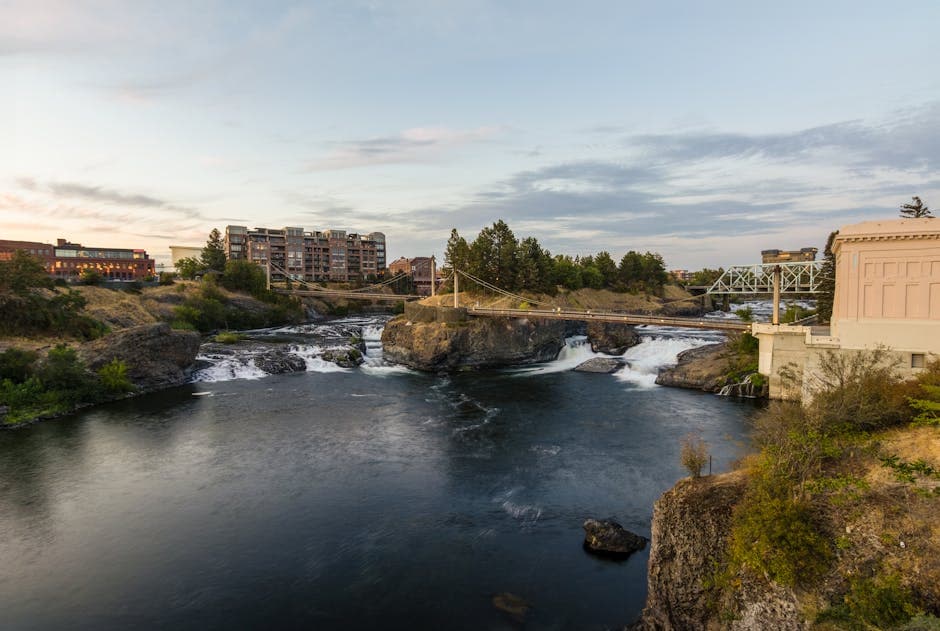
Source: City of Spokane Valley GIS. I-90 corridor looking east from the Sullivan Road interchange.
I-90 Corridor Brief
US Census 2024 estimate. Tenth largest WA city by population.
City of Spokane Valley municipal archive. One of WA's newest cities.
US Census ACS 2024. Concentrated in the East Valley + Trentwood blocks.
WSDOT 2024 count at the Sullivan Rd interchange.
WA DOR 2025: 6.5% state + 1.6% county + 0.85% city.
Filed from Spokane Valley · Editorial standards: real sources, no fabricated reviews.
I. Scene
5:42 p.m. The Sullivan Road interchange. The corridor commute lifts off.
Sullivan Road crosses I-90 a hundred yards south of the Spokane Valley Mall, a 760,000 square foot regional center anchored by Macy's and JC Penney that opened in 1968 and was reframed under Kohan ownership in the late 2010s. The interchange itself carries roughly 110,000 vehicles a day on the through lanes, per the WSDOT 2024 annual traffic count. At 5:42 p.m. on a Tuesday, the eastbound off-ramp is metered. A line of Volkswagens, Silverados, and CRVs waits for the green light at Sullivan and Indiana. The operator standing at the window of a pho counter inside the mall ring watches that line and does his arithmetic.
A meaningful share of the I-90 evening commute is people heading home from work in downtown Spokane or the Spokane International Airport corridor, exiting at Sullivan, Argonne, Pines, or Evergreen to families in Veradale, Greenacres, Liberty Lake, or the East Valley blocks. That commute hits the Spokane Valley restaurant economy between 5:30 and 6:45 p.m. with a force that the City of Spokane simply does not see in the same geometric shape. The corridor is the dinner book.
Inside the pho counter, the phone rings. The operator is expediting a six top family pickup and cannot answer. The Voice AI catches the call, the caller orders two banh mi and a vermicelli bowl, and the ticket prints at the kitchen window timestamped for 6:10 p.m. Two more inbound calls land in the next nine minutes. The Voice AI handles four of five calls between 5:30 and 7:00 p.m. without a human ever lifting a receiver. The host stand is freed up to expedite the dining room.
Across the parking lot, on the other side of Sullivan, a second operator is running a different motion at a Tex-Mex counter aimed at families coming off the mall. Pre-orders opened on the branded website that morning with a 5:45 to 6:30 p.m. pickup window. The pre-orders alone account for 52 tickets that he did not have to fight a marketplace queue for. Uber Direct will run dispatch into Greenacres and Veradale at a flat rate he set himself, not at a 30 percent commission carved out by an app he does not control.
The two operators are running the same software. They are running it differently because the Sullivan ring is a different economy from the Argonne corridor four miles west, and both are a different economy from downtown Spokane Valley proper. The rest of this report is about that distinction, about the 2003 incorporation that made the city possible, and about the I-90 commercial spine that pays the lights on. This is a field report on running a Spokane Valley restaurant in 2026.
Sources for this scene · WSDOT 2024 annual traffic count, City of Spokane Valley municipal archive, Inlander.
II. The Founding
March 31, 2003. Spokane Valley becomes a city.
For most of the twentieth century, the dense band of suburbs east of Spokane was simply unincorporated Spokane County. The county levied taxes, the sheriff handled patrol, the planning office signed off on subdivisions. Per the City of Spokane Valley's official municipal archive, on May 21, 2002, county voters approved Proposition 1, the question of incorporation. The city officially came into existence on March 31, 2003. It was, on incorporation day, one of the largest US cities ever to be created from scratch in a single municipal act.
The arithmetic that drove incorporation was the standard suburban arithmetic. Residents wanted local control over zoning, road maintenance, and police staffing levels that the county apportioned across a much larger geography. The Sullivan Road and Argonne corridor commercial bases were generating sales tax revenue that flowed to the county general fund and was reapportioned to the entire unincorporated tax base, including thinly settled rural blocks far to the north and south.
The city's first council, seated in April 2003, inherited a population of roughly 80,000 and an immediate need to stand up a city hall, a police contract (kept with the Spokane County Sheriff under interlocal agreement), a public works department, and a permitting office. The Spokesman-Review covered the early years closely. The Inlander has run retrospectives on the decade-by-decade evolution since.
Twenty-three years on, Spokane Valley operates as the tenth largest city in Washington State by population per the Census 2024 estimate, ranked between Vancouver and Bellevue on the population ladder. It carries a different civic identity from the older Spokane city limits to the west. The downtown is light. The commercial center of gravity is the I-90 corridor and the Sullivan ring around the mall.
For a restaurant operator, the practical consequence of the 2003 incorporation is that Spokane Valley sets its own business license fees, its own permit rules, its own parking minimums, and (most importantly for the cash register) its own local sales tax add-on inside the WA Department of Revenue's destination-based sourcing framework. The combined rate inside city limits is 8.95 percent. The breakdown is on the tax stack page below.
Sources · City of Spokane Valley municipal archive, Spokesman-Review incorporation coverage, Inlander.
III. The Spine
I-90 is the city's east west spine. The interchanges are the dinner book.
Interstate 90 enters Spokane Valley at the Argonne Road interchange on the west end, runs east through Pines, Evergreen, Sullivan, and Barker, and exits at the Liberty Lake interchange before the Idaho state line. Per the Washington State Department of Transportation 2024 annual traffic counts, the busiest segments through Spokane Valley carry roughly 100,000 to 115,000 vehicles a day on the main lanes. Every interchange is its own restaurant micro economy.
Argonne Road, at the west end, is the historic main street of what was once Millwood and the western Valley suburbs. The Argonne interchange feeds an older retail strip with pre-1990 buildings, a denser block pattern, and a customer base that skews longer-tenured. Restaurant operators here see a higher repeat-customer share and a weeknight pickup rhythm tilted to 5:30 to 6:45 p.m.
Pines and Evergreen are the middle interchanges, feeding the dense residential band of South Pines, Veradale, and the East Valley schools. The dinner book here is family dominated. The pickup share is the highest of any I-90 interchange in the city. Catering for school events, youth sports tournaments at Plante's Ferry, and church fundraisers across the Veradale blocks pulls a third weekly ticket layer that the marketplace apps do not handle well.
Sullivan Road is the commercial peak. The Spokane Valley Mall, the big box ring north of I-90 (Costco, Lowe's, the power centers along Indiana Avenue), the Trent Avenue industrial spine, and the medical campus along Mission Avenue all converge here. The restaurant density is the highest in the city. Demand peaks Tuesday through Saturday evening with a sharp Sunday lunch wave from the family-after-church crowd.
Barker and Liberty Lake are the east end, transitioning to the newer planned subdivisions and the commercial belt at the Idaho border. Liberty Lake itself is technically a separate incorporated city (population roughly 13,000) but is functionally an extension of the Spokane Valley dinner market. A direct ordering site that can accept billing addresses across the state line into Post Falls and Coeur d'Alene captures the east-end visiting share.
Sources · WSDOT 2024 annual traffic count, City of Spokane Valley transportation department.
IV. The Retail Atlas
Spokane Valley Mall, Argonne, Sullivan. Three retail centers of gravity.
The "Spokane Valley restaurant" abstraction does not describe an operating reality. The Spokane Valley Mall ring carries the regional shopping draw. The Argonne corridor runs the older, denser commercial strip with a longer-tenured customer base. Sullivan Road and the big box belt around the mall is the I-90 dinner engine. Same ordering platform, three different configurations of it.
99216
Spokane Valley Mall
Median ~$69K (US Census ACS, 99216)
Saturday afternoon family, Sunday after-church pulse.
99206 / 99212
Argonne Corridor
Median ~$61K (US Census ACS, 99212)
Weeknight family pickup, repeat-customer heavy.
99037 / 99216
Sullivan Road
Median ~$72K (US Census ACS, 99037)
I-90 commute pickup, Veradale family dispatch.
Regional shopping draw
Spokane Valley Mall
The Spokane Valley Mall opened in 1968 on the north side of I-90 at Sullivan Road as a regional enclosed mall anchored by Macy's (originally The Bon Marche) and JC Penney. After the 2008 downturn and the slow national retail re-segmentation through the 2010s, the mall went through ownership changes and now operates under Kohan Retail Investment Group per the Spokesman-Review business desk. It remains the single largest retail draw in the city.
Restaurants inside the mall ring (the in-mall food court, the outparcel pads on Indiana Avenue, the strip centers across Sullivan) see a Saturday afternoon lunch peak and a Sunday family-after-church pulse that no other Valley corridor matches.
Historic commercial strip
Argonne Corridor
Argonne Road is the city's oldest commercial spine, running north from the Argonne I-90 interchange through Millwood and Dishman to the Spokane River. The buildings are older, the blocks denser, the customer base longer-tenured. The restaurant turn here is family-run pho, breakfast diners, taquerias, and old-school grills.
Direct ordering succeeds on Argonne when the operator runs a tight repeat-customer motion, captures the weeknight 5:30 to 6:45 p.m. family pickup, and uses Voice AI to absorb the inbound phone wave from grandparents and older household members who do not order from a marketplace app.
I-90 dinner engine
Sullivan Road
Sullivan Road is the commercial peak of the I-90 corridor. The interchange feeds the Spokane Valley Mall north, the Costco and Lowe's power centers along Indiana Avenue, the Trent industrial spine, the medical campus along Mission, and the Veradale residential band south. The restaurant density is the highest in the city.
Direct ordering wins on Sullivan with branded ordering pages that convert the 5:42 p.m. commute-off-the-ramp customer in under two minutes. Voice AI handles the host stand surge. Uber Direct dispatches the long tail into Greenacres, Veradale, and Liberty Lake at a flat rate.
V. The Two Malls
River Park Square downtown versus the Spokane Valley Mall on Sullivan.
The Spokane metro carries two retail centers of gravity that most local operators understand intuitively and most out-of-market analysts conflate. River Park Square is the downtown Spokane mall, opened in 1974, redeveloped 1999, anchored by Nordstrom and the AMC theater, operated by the Cowles Company. It serves the downtown Spokane lunch crowd, the convention visitor, the Gonzaga family weekend, and the River Park Square garage shopper from the Spokesman-Review business orbit.
The Spokane Valley Mall is the suburban regional center on Sullivan Road, opened in 1968, the more conventional anchor-and-food-court mall on the Macy's plus JC Penney plus box stores model. It serves the Spokane Valley dinner crowd, the East Valley family Saturday, and the Coeur d'Alene day-trip shopper who exits I-90 at Sullivan rather than continuing west to downtown.
The two malls are not in direct competition because they serve different trips. A weekday lunch at River Park Square is a downtown office worker. A Saturday afternoon at the Spokane Valley Mall is a family from Greenacres. The restaurants in each ring optimize for those different trip shapes. A direct ordering operator on Sullivan Road who tries to copy a downtown-Spokane menu and pricing structure misses the Valley dinner book. The reverse is also true.
For a Valley operator, the practical implication is that the marketing voice, the menu shape, and the channel mix should match the Valley dinner book, not the downtown lunch book. Family pickup wins over courier dispatch into a downtown office tower. Saturday afternoon catering wins over a weekday boardroom lunch. The branded ordering page that converts at the Sullivan ring is different from the one that converts at River Park Square.
Sources · Spokesman-Review business desk, City of Spokane Valley commercial real estate registry, Inlander.
VI. The River
The Spokane River cuts through the city. The Centennial Trail rides alongside.
The Spokane River enters the city from the east at the Idaho state line, runs roughly parallel to I-90 a half mile north of the freeway, and exits at the western city limits into the City of Spokane near the Boone Avenue blocks. Per the City of Spokane Valley parks department, the river corridor inside city limits includes Plante's Ferry Sports Complex (the city's largest tournament-class athletic facility), Mirabeau Point Park (an extensive river-front park with the Discovery Playground and the CenterPlace regional event center), and Sullivan Park where the river runs closest to the Sullivan Road corridor.
Riding alongside the river, the Spokane River Centennial Trail is a paved, mostly continuous 37 mile rail-trail running from Nine Mile Falls northwest of the City of Spokane east to the Idaho state line, where it connects to Idaho's North Idaho Centennial Trail and continues to Coeur d'Alene. The Centennial Trail Coalition maintains the route. The segment that runs through Spokane Valley is one of the heaviest-used stretches, with weekend traffic from cyclists, walkers, and family groups concentrated April through October.
The operator consequence is that a restaurant within four blocks of a Centennial Trail access point sees a distinct weekend morning and early afternoon foot-traffic pattern. Brunch and lunch waves run from 10:30 a.m. through 1:30 p.m. on Saturdays and Sundays April through October. The Plante's Ferry tournament weekends (youth soccer, lacrosse, rugby) pull a heavy Saturday catering and pickup wave for team families. The Mirabeau Point summer concert series at CenterPlace pulls evening pickup volume in July and August.
The direct ordering implication is that an event-aware ordering page (a tournament weekend menu, a summer concert pickup window, a Centennial Trail brunch lineup) converts the trail-adjacent customer who opens a phone, searches for a restaurant by name, and completes a transaction in under two minutes. The marketplace apps cannot serve that customer because they cannot model the event-aware menu. DirectOrders can.
Sources · City of Spokane Valley parks department, Centennial Trail Coalition, Visit Spokane.
VII. The Civic Core + East End
The thin downtown. The east end. Liberty Lake on the Idaho border.
Spokane Valley does not have a downtown in the dense nineteenth-century sense that the City of Spokane does. The city's civic core sits along Sprague Avenue between Pines and University Road, with the City Hall complex at Sprague and Dartmouth and the CenterPlace regional event center at Mirabeau Point. East of Sullivan, the city transitions to newer planned subdivisions, the Liberty Lake commercial belt, and the Idaho border at Stateline.
The Sprague Avenue civic corridor runs the city hall complex, the public library, the police precinct (still contracted to the Spokane County Sheriff under interlocal agreement), and a thin commercial strip of older storefronts. The restaurant turn here is modest: a few family diners, a coffee chain, a couple of taquerias. The daytime business pulls a lunch wave from city employees and the courthouse adjacencies. Dinner is light.
East of Sullivan, the Veradale and Greenacres blocks fill in with newer single-family subdivisions, two large school districts (East Valley and Central Valley), and the Plante's Ferry tournament complex. Restaurant operators here win on family pickup, school catering, and youth sports tournament weekends. The customer base is family-driven and pickup-heavy.
Liberty Lake, a separately incorporated city of roughly 13,000 on the Idaho border, is technically not Spokane Valley but is functionally an extension of the dinner market. The Liberty Lake commercial belt at the I-90 Henry Road interchange carries a small but growing restaurant ring, and the Liberty Lake residential blocks feed pickup traffic into the Sullivan and Barker interchanges.
The east end transition to Idaho matters operationally. Post Falls (across the state line) is roughly six miles east of the Liberty Lake interchange. Idaho's sales tax framework is different (6 percent state, no local). A Spokane Valley operator dispatching into Post Falls or Coeur d'Alene needs destination-based tax handling that resolves the state line correctly at checkout. DirectOrders does that.
Sources · City of Spokane Valley civic plan, City of Liberty Lake municipal record, US Census ACS.
VIII. The Distinction
Bigger Spokane and Spokane Valley are two cities. They run differently.
Out-of-market analysts and search-engine geocoders frequently conflate the City of Spokane (population roughly 230,000) and the City of Spokane Valley (population roughly 106,000) into a single "Spokane" entity. Inside the region, the two cities are understood as distinct operating economies that share the I-90 corridor and the Spokane River but otherwise run on different civic clocks. The distinction matters for menu design, channel mix, and tax handling.
The City of Spokane is the older, denser, more urban anchor. It carries the downtown core (Davenport Hotel, Riverfront Park, the convention district), Gonzaga University, the hospital complex on the South Hill, the airport on the west side, and the chef-driven Browne's Addition and Garland neighborhoods that the Inlander has covered for two decades. Median household income inside the City of Spokane runs in the high fifties to low sixties per US Census ACS.
The City of Spokane Valley is the younger, more suburban, more I-90-corridor-organized city to the east. The civic identity is built around the regional mall, the Sullivan Road commercial spine, the Argonne historic strip, and the school district family economy. Median household income inside Spokane Valley runs slightly above the City of Spokane on the ACS 5-year estimate, reflecting the more single-family-detached housing stock and the higher share of two-income households.
The combined sales tax rate is different between the two cities. The City of Spokane runs roughly 9.0 percent combined. Spokane Valley runs 8.95 percent combined. The difference is small in absolute terms but real on every ticket, and the WA Department of Revenue's destination-based sourcing rules mean that the rate is determined by the delivery address, not the kitchen address. A Spokane kitchen dispatching into Spokane Valley charges the Valley rate. A Valley kitchen dispatching into Spokane charges the City of Spokane rate.
For an operator opening a second location, the operating playbook between the two cities is not interchangeable. The menu shape, the channel mix, the catering motion, and the tax handling all need to match the city the kitchen is in. The marketing voice does too. A direct ordering site that frames itself as a downtown-Spokane chef-driven brand misses the Sullivan-Road family dinner book. The reverse also fails.
Sources · US Census Bureau ACS 5-Year Estimates, Washington Department of Revenue, City of Spokane and City of Spokane Valley municipal records.
IX. The Tax Stack
Spokane Valley runs 8.95 percent combined. Every ticket needs the right cent.
Per the Washington Department of Revenue's local sales and use tax rate schedule, the combined sales tax rate inside the City of Spokane Valley is 8.95 percent, composed of the 6.5 percent Washington state base rate, a 1.6 percent Spokane County local add-on, and a 0.85 percent City of Spokane Valley local add-on. The rate applies to restaurant food sales at the standard rate, with no separate prepared-food surcharge of the kind some other US jurisdictions impose.
The City of Spokane immediately west runs 9.0 percent combined (6.5 percent state plus 2.5 percent local). The unincorporated Spokane County pockets to the north and south of both cities run at slightly different combined rates depending on which special-purpose districts apply. Across the Idaho state line east, the rate flips to Idaho's framework: 6 percent state, no local. The WA DOR's destination-based sourcing rule means the rate is set by the delivery address, not the restaurant address.
The direct ordering implication is plain. A platform that hardcodes a single regional rate overcharges some customers and undercharges others, and the operator carries the WA DOR liability for the gap. DirectOrders computes the rate from the destination address at checkout, resolves the state line correctly for cross-border dispatch into Post Falls or Coeur d'Alene, and generates a monthly export that aligns to the WA combined excise tax return.
Source · Washington Department of Revenue, local sales and use tax rates, 2025 schedule.
WA state base
Applies statewide
Spokane County local
County + transit + special
City of Spokane Valley local
City add-on inside SV limits
Spokane Valley combined
Inside city limits
City of Spokane combined
Different local add-on (west of SV)
Post Falls / Coeur d'Alene
Idaho state, no local (east of stateline)
Destination-based sourcing
On a $42.00 ticket dispatched from a kitchen in Spokane Valley (8.95 percent) across the state line into Post Falls (6.0 percent), the tax owed is the destination rate (Idaho). A platform that hardcodes the kitchen rate overcharges by 124 cents per ticket and creates a refund liability the operator carries. The same rule applies in reverse on dispatch into the City of Spokane (9.0 percent).
What DirectOrders does
Tax is computed from the delivery address at checkout, resolves the state line correctly, and uses the kitchen address for pickup tickets. Monthly export aligns to the WA combined excise return line items.
X. The Language Map
Roughly one in ten Spokane Valley residents is Hispanic. The phone line should match.
Per the US Census Bureau ACS 2024 5-Year Estimates, roughly 10 percent of Spokane Valley residents identify as Hispanic or Latino. That share is concentrated in the East Valley and Trentwood blocks, with smaller clusters along the Argonne and Pines corridors. The Spokesman-Review and the Inlander have covered the growing Latino community in the Valley across the last two decades, with a corresponding growth in Latino-owned restaurants, panaderias, and grocers along the Sprague and Trent corridors.
The Russian and Ukrainian speaking community that has long anchored East Spokane and parts of the Spokane Valley (rooted in Inland Northwest settlement of immigrants and refugees from the former Soviet states across the 1990s and 2000s) is the other meaningful non-English language population in the city. The Spokesman-Review has covered the Slavic Christian community in Spokane Valley for two decades.
The order channel implication is direct. A Spokane Valley operator whose customer base includes Spanish-speaking households (East Valley, Trentwood, parts of the Argonne corridor) or Russian and Ukrainian speakers (parts of the Sprague and Trent corridors) serves a real share of inbound orders by phone, from grandparents and older household members who do not order from a marketplace app. The Voice AI that handles those calls in Spanish, Russian, or Ukrainian is not a vanity feature. It is the accessibility layer the operator owes the customer base.
DirectOrders ships the Voice AI in English, Spanish, Russian, and Ukrainian out of the box for Spokane Valley operators who request the configuration. The same voice infrastructure also speaks Mandarin and Vietnamese for the smaller East Asian operator-driven kitchens in the corridor.
Sources · US Census Bureau ACS 5-Year Estimates language tables (Spokane County), Spokesman-Review community coverage, Inlander.
XI. The Argument
Why a flat $249 a month is the only stack that actually fits Spokane Valley.
The argument is cumulative, not single-issue. Pull any one of these threads alone and a marketplace plus direct hybrid still works on paper. Pull all five at once, and the only configuration that closes the year is direct first, marketplace off or discovery only.
One. The I-90 corridor commute concentrates a meaningful share of the operator's weeknight revenue into a 5:30 to 6:45 p.m. pickup window five days a week. A flat-fee subscription that lets the operator keep 100 percent of those tickets outperforms a per-order commission contract by a wide margin. The math is not close.
Two. The Plante's Ferry tournament weekends, the Centennial Trail summer brunch, and the CenterPlace summer concert series each produce predictable, calendar-tied dinner curves that pre-order and Voice AI tooling captures cleanly. Marketplace apps cannot model the Spokane Valley parks calendar.
Three. The 8.95 percent Spokane Valley combined sales tax, plus destination-based sourcing for delivery into the City of Spokane (9.0 percent) or across the Idaho state line into Post Falls (6 percent state, no local), has to be computed correctly on every ticket. A platform that hardcodes a single rate creates tax liability the operator carries. DirectOrders computes from the destination address.
Four. The Spanish-speaking and Slavic-speaking phone-line traffic is real, and the operator cannot afford to staff a multilingual host stand 365 nights. The Voice AI handles the channel the operator cannot afford to staff.
Five. The cross-state-line dinner market into Post Falls and Coeur d'Alene is real, and a direct ordering site that handles out-of-area billing addresses, group catering, and event-tied pre-orders converts the visiting share that marketplace apps treat as noise.
The DirectOrders configuration for Spokane Valley (flat $249 a month plus Uber Direct dispatch plus multilingual Voice AI plus same-day Stripe payouts plus destination-aware tax) is not a feature list. It is the operating system the I-90 commute, the Plante's Ferry tournament calendar, the WA tax rule, and the regional language map all require simultaneously.
Own the corridor. Own the ring. Own the phone line.
A 30 minute walkthrough with our Spokane Valley implementation lead covers the I-90 interchange your restaurant sits on (Argonne, Pines, Evergreen, Sullivan, Barker, Liberty Lake), the Voice AI languages your customer base needs, the Uber Direct radius math for your specific kitchen address, and the destination-tax handling for delivery into the City of Spokane or across the Idaho state line. Or browse the pricing page directly. Both work.
Live in 2 hours from menu upload to first order, or we white-glove the launch for free.
Sources cited
- City of Spokane ValleyMunicipal archive, incorporation date, civic plan
- Washington Department of RevenueCombined sales and use tax rates, Spokane County
- Washington State Department of TransportationI-90 corridor annual traffic counts (AADT)
- US Census Bureau ACSSpokane Valley demographic and language data
- Spokane River Centennial Trail CoalitionCentennial Trail route and access points
- Greater Spokane IncorporatedRegional trade-area data, Inland Northwest framing
- Visit SpokaneVisitor data, event calendar, Centennial Trail
- Spokane Valley Chamber of CommerceBusiness community, Spokane Valley Mall coverage
- Spokesman-ReviewIncorporation history, mall ownership, civic reporting
- InlanderNeighborhood reporting, restaurant openings
- City of Liberty LakeMunicipal record, Henry Rd interchange
- Spokane Regional Health DistrictSpokane Regional Health permits and food code
Nearby cities we cover
- Spokane, WA10 mi west; older urban anchor, 9.0 percent combined
- Seattle, WA280 mi west on I-90; same WA tax framework
- Bellevue, WACross-state corporate dinner geography
- Boise, IDDifferent state tax framework, no local add-on
Tools for Valley operators
- Commission calculatorPlug in your I-90 corridor volume, see the commission drag
- Voice AI (multilingual)English, Spanish, Russian, Ukrainian, Mandarin, Vietnamese
- Uber Direct dispatchSullivan ring to Liberty Lake and across the ID state line
- Catering channelPlante's Ferry tournaments, CenterPlace events, school catering
- PricingFlat $249/mo. No per-order commission. Zero.