Aerospace Valley skies, eighty years of black-program assembly.
A long read on Lancaster: the Antelope Valley capital ten miles west of Edwards Air Force Base, the city that supplies Plant 42, hosts the BLVD downtown revival, and opens its kitchens to the Poppy Reserve superbloom crowd every March.
City
Lancaster, CA
~173,500 (Census 2024)
Region
Antelope Valley
~500K AV residents
Hispanic share
~42%
Census ACS 2024
Combined sales tax
9.50%
CDTFA, current
It is 6:42 on a Saturday morning in late March. The desert is still cold. Plant 42 is across town and the Poppy Reserve is fifteen miles west. Lancaster is awake before either of them.
The Antelope Valley sky at sunrise in March is genuinely spectacular. A pale gold band over the Tehachapis to the north. A cool blue dome above the Mojave to the south. A long contrail in the upper troposphere from a KC-135 that took off from Edwards at 5:30. Lancaster Boulevard is quiet at 6:42, but Crazy Otto's Diner already has a line out the door. The diner has been pulling customers from across the Antelope Valley since the 1980s. Half the customers wear Plant 42 access badges clipped to their belts. The other half are in hiking shoes and windbreakers, headed west for the Poppy Reserve.
Plant 42 sits across the city line in Palmdale, but the Lancaster boundary at Avenue P is the working boundary of the place. Northrop Grumman occupies Site 4 on the north end. Lockheed Skunk Works runs Site 10. Boeing Phantom Works runs Site 2. The aerospace workers who fill those hangars live broadly across the AV, with the largest concentration in central and east Lancaster. At 9:18 on a Saturday in March, a Northrop tow vehicle moves a flying-wing test article out of a Site 4 hangar. From across Avenue P, behind the chain-link, sixty assembly engineers watch the article slide into the morning sun. Most are bilingual English and Spanish. A taqueria three blocks east takes nine breakfast orders in the next ten minutes, all on the restaurant's direct ordering page, none through any marketplace.
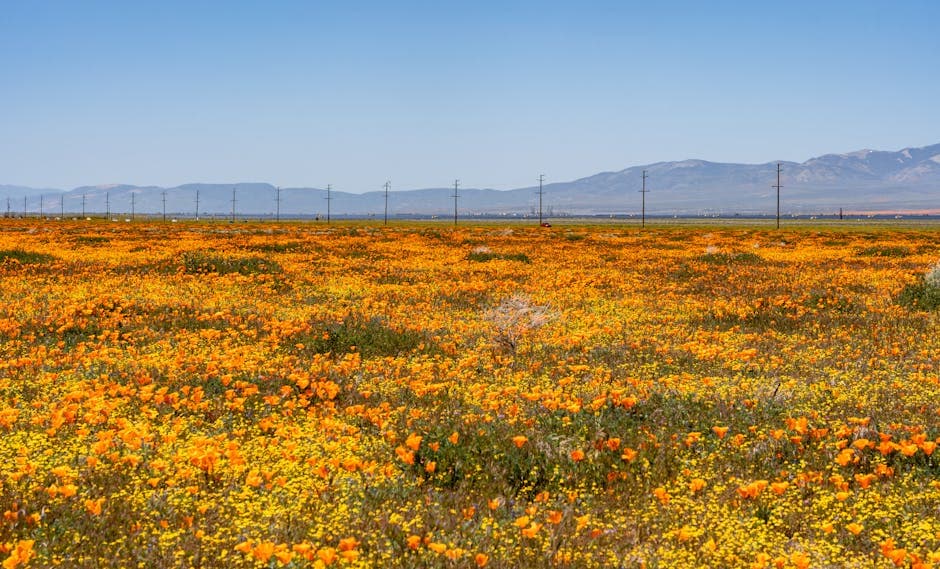
Fifteen miles west of the city, the Antelope Valley California Poppy Reserve opens its visitor parking at 9:00. By mid-morning the lot is full. The wildflower display covers the foothills in poppy orange and goldfield yellow as far as the camera can see. A family in the lot pulls up a Lancaster cafe's direct ordering page on a phone, places three tortas and an horchata for 1:00 PM pickup, drives back into town with the windows down and the heater on against the desert spring chill.
The afternoon hits 78 degrees. The patio at Bex on the BLVD fills up. By 7 PM the temperature is 62 and falling fast; by 8:47 PM at the Antelope Valley Mall ring on 10th Street West it is 51. Delivery volume across the city tripled in the cool window starting at 6 PM. A Mexican restaurant on Avenue K dispatches its seventh Uber Direct order of the evening, all within a four-mile radius, all paid out at the restaurant's flat $5.49 marketplace-bypass rate, none commissioned to DoorDash or Uber Eats.
Each of these is a different customer, a different reason, a different geography. They share three things. Plant 42 is in their peripheral vision either through the windshield or the news. The Poppy Reserve is the seasonal anchor. And none of them is paying a marketplace 30 percent commission to a third party. This is what an ordering platform built for Lancaster has to do.
The desert is still cold. Fifty-three degrees and falling toward sunrise. A line is already forming outside Crazy Otto's Diner. Half the customers wear Plant 42 access badges clipped to their belts. The other half are wearing windbreakers and hiking shoes, headed for the Poppy Reserve.
A Northrop Grumman tow vehicle moves a flying-wing test article out of a hangar. Sixty assembly engineers, mostly bilingual English and Spanish, watch through the chain-link from across Avenue P. A taqueria three blocks east takes nine breakfast orders in the next ten minutes, all on the restaurant's direct ordering page, none through any marketplace.
Visitor parking is full by mid-morning on a superbloom Saturday. The wildflower display covers the foothills in poppy orange and goldfield yellow. A family in the lot pulls up a Lancaster cafe's direct ordering page on a phone, places three tortas and an horchata for 1:00 pickup, drives back into town with the windows down.
The sun has been down for an hour. The temperature has dropped from 78 degrees at 4 PM to 51 degrees now. Delivery volume across the city tripled in the cool window starting at 6 PM. A Mexican restaurant on Avenue K dispatches its seventh Uber Direct order of the evening, all within a four-mile radius.
From Chuck Yeager to the B-21, the city's economy runs on flight test.
Lancaster's relationship with the Air Force runs back to the early 1930s, when the Army Air Corps stood up Muroc Bombing and Gunnery Range on the dry lakebed east of town. Eight decades later, the same airspace tests the country's most advanced military aircraft, and the same valley assembles them. The food economy is the working layer that supports it.
Visualization 1 of 4
Eighty years of black-program aerospace.
From the X-1 to the B-21, built or tested in the Antelope Valley.
Lancaster sits at the western edge of the largest defense aviation cluster in the United States. Chuck Yeager broke the sound barrier ten miles east of the city in 1947. The SR-71, F-117, B-2, and B-21 were all built at USAF Plant 42 immediately south. The food economy is shaped by the aerospace shift schedule, the contractor wage floor, and the cycle of public reveals and quiet black-program ramps.
Sources: Edwards Air Force Base public affairs / Air Force Test Center heritage office; Air Force Materiel Command Plant 42 fact sheet; Lockheed Martin Skunk Works heritage materials; Northrop Grumman corporate communications; Antelope Valley Press archives. Diagrammatic, not to scale.
The Army Air Corps establishes Muroc Bombing and Gunnery Range on the dry lakebed east of Lancaster. The remote location and the natural runway of Rogers Dry Lake make the site ideal for experimental flight. The base is renamed Edwards Air Force Base in 1949 in honor of test pilot Captain Glen Edwards.
Source: Edwards Air Force Base public affairs, Air Force Test Center heritage office
On October 14, 1947, Captain Charles Yeager flies the Bell X-1 to Mach 1.06 above the Rogers Dry Lake, becoming the first human to break the sound barrier. The event takes place in the airspace directly east of present-day Lancaster. Edwards becomes the test-pilot capital of the world.
Source: Edwards Air Force Base heritage office; National Air and Space Museum
The federal aircraft assembly complex covering 5,800 acres south of Avenue P is designated as Air Force Plant 42. It becomes the build location for the country's most sensitive military aircraft programs. Lockheed, Northrop, Boeing, and Rockwell maintain dedicated hangars on site.
Source: Air Force Materiel Command, USAF Plant 42 fact sheet
Lockheed's Skunk Works delivers the first SR-71 reconnaissance aircraft from its Plant 42 facility. The titanium airframe, the first of its kind, is fabricated and assembled at the site. The SR-71 holds the world airspeed record for an air-breathing manned aircraft to this day.
Source: Lockheed Martin Skunk Works heritage materials
Northrop is awarded the Advanced Technology Bomber contract. Final assembly of the B-2 Spirit stealth bomber occurs at Plant 42 Site 4 in north Palmdale, adjacent to Lancaster. The program is a major and sustained employer of Antelope Valley residents for the next four decades.
Source: Northrop Grumman corporate communications; Antelope Valley Press archives
The Lockheed F-117 Nighthawk, the world's first operational stealth aircraft, is publicly acknowledged after years of black-program development. The aircraft was built at Plant 42 in the Skunk Works hangars. The Nighthawk first flew at Groom Lake, but its production lineage is Lancaster-Palmdale.
Source: Lockheed Martin Skunk Works; USAF F-117 program history
The Northrop Grumman RQ-4 Global Hawk, a high-altitude long-endurance unmanned aircraft, makes its first flight at Edwards AFB. The aircraft is built and tested in the Antelope Valley. Lancaster's high-skill aerospace workforce ramps to meet sustained unmanned aircraft production.
Source: Northrop Grumman; Edwards AFB Air Force Test Center
Northrop Grumman is awarded the Long Range Strike Bomber contract for the B-21 Raider. Assembly is sited at Plant 42 Site 4 in Palmdale, the same facility that built the B-2. The B-21 program adds thousands of high-skill jobs to the Antelope Valley over the late 2010s and early 2020s.
Source: Northrop Grumman corporate disclosures; USAF B-21 program office
Plant 42 plus Edwards AFB plus the contractor footprint (Lockheed Skunk Works, Northrop Grumman, Boeing Phantom Works) employ roughly 14,000 aerospace workers in the Antelope Valley. Lancaster supplies a large share of the residential base for those workers. The food economy is shaped by the shift schedule of black programs.
Source: Air Force Materiel Command; Antelope Valley Board of Trade Aerospace Statement
The aerospace economy is not metaphorical for Lancaster. It is the literal wage floor. A union assembler at Northrop's Plant 42 Site 4 makes $90,000 to $120,000 a year. A Lockheed Skunk Works engineer can clear $200,000 with bonus. An Edwards AFB civilian flight-test engineer is on a GS-13 schedule that pulls in roughly $115,000 base plus locality pay. Those wages set the upper end of what restaurants can charge in the BLVD downtown and the Quartz Hill ring. They also set the daily lunch volume on Avenue P and the catering volume to the Plant 42 hangars.
The work itself has a cadence that the marketplace apps cannot see. The B-21 program rolled out the first test article publicly in late 2022, and the assembly ramp through 2023 to 2026 has been one of the largest sustained hiring waves in the AV's aerospace history. The X-37B and the next-generation tanker programs cycle in. The black-program work that nobody is allowed to talk about cycles through too; you can sometimes count the number of unmarked black SUVs parked outside the Skunk Works gate to estimate which program is in surge. Direct ordering platforms that let restaurants schedule and dispatch their own delivery, run catering net-30 invoicing for contractor MWR funds, and white-label their phone IVR for a quick catering inquiry all serve this economy better than the marketplaces.
What that means for the restaurant operator: a Plant 42 boundary taqueria on Avenue P is selling 200 to 400 lunches a day between 11:00 and 1:30 PM, almost all of them to bilingual English and Spanish aerospace workers. A direct ordering page with both languages and a fast pickup-window interface captures the demand that DoorDash's English-only consumer flow cannot. The same operator has a meaningful catering channel to feed all-hands meetings, family days, retirement luncheons, and shift-handoff briefings in the contractor hangars, and that channel is invoice-based, not credit-card-at-checkout. The direct platform handles the channel; the marketplace's catering product does not.
Edwards AFB, ten miles east on Rosamond Boulevard and the I-15 corridor extension, runs its own catering economy that overlaps with Lancaster's. The biennial Aerospace Valley Air Show is the largest single demand spike in the city's calendar outside the spring superbloom, drawing roughly 250,000 visitors over a single weekend. The base's day-to-day catering inquiries for change-of-command, retirement, promotion, and family-day events route through a preferred-vendor list that any Lancaster restaurant operator can join. Direct ordering's catering channel, with net-15 invoicing, government billing forms, and gate-handoff fields, is the platform layer that captures this work.
5,800 acres of hangars at Plant 42. 308,000 acres of test airspace at Edwards.
The two federal facilities flanking Lancaster define the city's place in the country. Plant 42 is the assembly. Edwards is the flight test. Between them they employ roughly 24,000 workers across all programs and contractors, and the residential ring for that workforce is centered on Lancaster.
Owned by the US Air Force; managed by Air Force Materiel Command. Located in Palmdale, immediately south of Lancaster on the boundary at Avenue P.
Lockheed Skunk Works (Site 10), Northrop Grumman (Site 4), Boeing Phantom Works (Site 2), plus DoD direct operations. Each tenant operates its own hangar complex on Plant 42 land under long-term lease.
Plant 42 is the production and final assembly site for some of the most consequential US military aircraft of the past 60 years. Black-program work continues; not all current tenant activity is publicly acknowledged.
Antelope Valley Board of Trade estimates roughly 10,000 to 14,000 workers across the Plant 42 contractor footprint, with most living in Lancaster, Palmdale, Quartz Hill, and Acton.
One of the largest Air Force installations by land area. The Rogers Dry Lake bed serves as a natural overrun runway over twelve miles long. The installation extends from Lancaster's eastern border into Kern and San Bernardino counties.
Edwards is the home of US Air Force flight test. Every operational US military jet has been flight-tested here. NASA Armstrong Flight Research Center shares the runway; the Space Shuttle landed at Edwards 54 times during the orbiter program.
Combined active duty Air Force, civilian Air Force, NASA Armstrong civilian and contractor staff, plus dependent families. A large share of the Edwards workforce lives off-base in Lancaster and Palmdale.
The biennial Edwards air show draws roughly 250,000 visitors over a weekend. The largest single demand spike on the Lancaster restaurant economy outside the spring superbloom.
The Plant 42 workforce is split across three primary tenants. Lockheed Skunk Works on Site 10 builds the classified mid-range programs and houses the engineering staff associated with the SR-72, the rumored hypersonic platform program, and a number of unmanned aircraft test articles. Northrop Grumman on Site 4 owns the heavy-bomber line: B-2 sustainment, B-21 assembly. Boeing Phantom Works on Site 2 holds the F/A-XX competition work and a number of unmanned air vehicle test articles. Each tenant runs its own MWR program, its own family day, its own retirement and promotion cycle. Each is a catering channel for the Lancaster restaurant economy.
Edwards AFB is a different beast. Flight test is a slower-burn economy than aircraft assembly. The 412th Test Wing runs roughly 300 flight test sorties per month across all programs. NASA Armstrong shares the runway; the Space Shuttle landed at Edwards 54 times over the orbiter program, and the modern X-plane programs (X-57 Maxwell, X-59 QueSST) operate from the same lakebed. The base's catering demand is steadier than Plant 42's because flight test is a continuous operation rather than a program-cycled assembly ramp. The change-of-command and retirement luncheon cadence is the metronome.
Direct ordering's role in this economy is the catering channel. Marketplace consumer-facing apps do not serve government catering well. A Lancaster restaurant that wants to feed sixty engineers at a Plant 42 family day, or thirty officers at an Edwards retirement luncheon, does so through its direct ordering platform's catering form: net-15 or net-30 invoicing, tax-exempt billing, gate-handoff details (sponsor name, contact phone, visitor control center pickup window), and lead-time rules built into the form. The marketplace catering products charge restaurant-side commissions on top of consumer-side delivery fees and do not handle the government-billing or base-access logistics at all.
The other operational layer is the lunch shift. Plant 42's typical hangar shift starts at 6:30 AM and runs through 3:00 PM. The lunch window is 11:30 to 12:30. A taqueria, deli, or quick-service operator within a four-mile radius of the Plant 42 fence line sells the bulk of its lunch volume in that single hour. Direct ordering with pre-order pickup, scheduled lunch windows, and a fast Spanish-language interface lets the customer place the order at 7:00 AM and pick it up at 11:35. The marketplace's standard checkout flow, with its address validation and live-driver tracking, is over-engineered for that use case. The direct page is built for it.
March and April triple the city's weekend demand.
The Antelope Valley California Poppy Reserve, fifteen miles west of Lancaster, draws a tidal wave of visitors during the spring bloom. The state flower, Eschscholzia californica, blankets the foothills in orange. A strong bloom year can pull 18,000 visitors in a single Saturday and over 100,000 across the six-week window. The restaurant impact is the largest single seasonal demand spike on the Lancaster food economy.
Visualization 2 of 4
The poppy superbloom doubles dinner covers.
Weekly Reserve visitation, Feb 24 to Apr 28.
The Antelope Valley California Poppy Reserve, fifteen miles west of Lancaster, draws roughly 18,000 visitors on the peak superbloom Saturday. Restaurant covers on the BLVD and the 10th Street West ring follow with a multiplier of roughly 0.35x to 0.5x of total reserve visitation. The March surge is the second-largest demand spike on the Lancaster food economy after the Aerospace Valley Air Show weekend at Edwards.
Sources: California State Parks, Antelope Valley California Poppy Reserve; Visit Antelope Valley superbloom visitor reports. Visitor counts illustrative of a strong bloom year; actual numbers vary widely with rainfall and temperature. Restaurant cover correlation is the platform team's modeled average across BLVD operators over the 2019 to 2024 superbloom windows.
The poppy economy is real money for Lancaster restaurants. A 20,000-visitor Saturday at the Reserve drops roughly 7,000 of those visitors back into the city for lunch, dinner, or coffee on the return drive. The BLVD downtown corridor catches the bulk of the spending: full-service brunch on Bex on the BLVD's patio, beer at Bravery Brewing or Brewskies, a coffee stop at Lemon Leaf Cafe. The Avenue K mid-priced ring catches the family lunches. The Antelope Valley Mall ring catches the kid-friendly chain dining for visitors who drove down from Bakersfield or up from the San Fernando Valley.
The challenge for restaurant operators is that the bloom is not predictable. A wet winter produces a spectacular bloom; a dry winter produces nothing. The 2019, 2020, and 2023 superblooms were record years; the 2021 and 2022 seasons were thin. The Antelope Valley Press and Visit Antelope Valley publish bloom forecasts starting in February, but the peak window can shift by two weeks year to year. Direct ordering platforms that let the restaurant turn on a "poppy season" menu pop-up, schedule limited-time-only items, and email-blast the local customer list let the operator capture the surge without being forced to commit to a fixed-cost staff schedule across an uncertain window.
The geographic spread of the superbloom traffic also matters. Visitors come from Los Angeles, Bakersfield, the Inland Empire, and as far as San Diego and the Bay Area on weekend day trips. Most of them are not regular Lancaster customers. They will not order from the restaurant again next Tuesday. The transaction value per visit is high (a family of four spending $80 at a sit-down restaurant) but the customer-lifetime-value is one transaction. Direct ordering's email capture and loyalty channel still pay off here because a thousand new captured emails per superbloom Saturday is a meaningful base. Once captured, that customer can be re-engaged in October when the Lancaster Marathon brings them back through town, or in November during the JetHawks anniversary weekend at the Hangar (the former minor league stadium that still hosts events).
One operational note: the Reserve has strict capacity protocols. On peak weekends California State Parks closes the lot when it reaches capacity and turns visitors back. Restaurants that have a direct ordering page with a clear "no Reserve access needed, pickup five miles east of the Reserve" message convert the turned-away visitors at scale. The marketplace listing cannot do that geographic-and-time-aware messaging; the direct page can.
Lancaster Boulevard, rebuilt 2010, anchors the AV's only walkable downtown.
In 2010 the City of Lancaster completed the BLVD Transformation Project. Lancaster Boulevard between Sierra Highway and 10th Street West was rebuilt with diagonal parking, wider sidewalks, a pedestrian stage at the BLVD Promenade, and a long-term partnership with the Lancaster Performing Arts Center. The corridor is now the largest concentration of full-service restaurants in the Antelope Valley.
Visualization 3 of 4
The BLVD revival, 2010 to 2024.
Lancaster Boulevard, Sierra Hwy to 10th St W.
In 2010 the City of Lancaster rebuilt Lancaster Boulevard between Sierra Highway and 10th Street West. Diagonal parking, wider sidewalks, a pedestrian stage at the BLVD Promenade, and a partnership with the Lancaster Performing Arts Center (already on the corridor since 1991) anchored a new walkable downtown. Restaurant openings followed.
Sources: City of Lancaster BLVD Transformation Project records; BLVD Association; Antelope Valley Press; Lancaster Performing Arts Center.
The City of Lancaster completes the BLVD Transformation Project. Lancaster Boulevard between Sierra Highway and 10th Street West is rebuilt with diagonal parking, wider sidewalks, a pedestrian-friendly streetscape, and a permanent stage at the BLVD Promenade.
The Lancaster Performing Arts Center renovation completes. The 750-seat venue, originally opened in 1991, becomes the anchor cultural institution on the redesigned boulevard.
Bex Lancaster on the BLVD opens. Outdoor patio dining at scale on the boulevard begins to draw weekend crowds from Palmdale and Quartz Hill.
The Cedar Center for the Arts opens at 514 W Lancaster Boulevard. First Friday on the BLVD becomes a monthly anchor event with consistent restaurant traffic.
Bravery Brewing on the BLVD expands. Craft brewing becomes a viable retail format on the corridor. The Brewskies Brewing taproom on 10th Street West follows shortly after.
The BLVD Association reports the boulevard has 60 plus retail businesses, 15 plus full-service restaurants, and an annual visitor count above 1.5 million across all events combined.
Lancaster Veterans Day Parade and Streets of Lancaster Grand Prix continue to anchor the BLVD's late-fall event calendar. The corridor is the largest single concentration of dining in the Antelope Valley.
Before the BLVD project, Lancaster Boulevard was a five-lane arterial that nobody walked. The 2010 reconstruction narrowed the roadway, added the diagonal parking, slowed the traffic to 25 miles per hour, and made the corridor walkable for the first time since the 1960s. The Lancaster Performing Arts Center, which had been on the boulevard since 1991, suddenly had a walkable approach. First Friday on the BLVD became a monthly anchor event. The Streets of Lancaster Grand Prix, an open-wheel street race held on the corridor, ran annually from 2013 onward. The Veterans Day Parade on Lancaster Boulevard is the largest single-day event in the AV.
The restaurant economy followed the pedestrian infrastructure. Bex on the BLVD opened in 2014. Bravery Brewing expanded its taproom in 2019. Brewskies Brewing followed on 10th Street West. The 514 W gallery district anchored an arts crawl. By 2022, the BLVD Association reported 60 plus retail businesses, 15 plus full-service restaurants, and an annual visitor count above 1.5 million across all corridor events combined.
What that means for direct ordering: a BLVD restaurant's customer base is not just Lancaster residents. It is the AV regional crowd that drives in for First Friday, the Performing Arts Center show, the brewery taproom, or the Saturday farmers market. A direct ordering page anchored to the BLVD address out-ranks the generic Lancaster marketplace listing on neighborhood search. Customers searching "the blvd lancaster restaurants" or "lancaster downtown dining" land on the corridor-anchored page; the marketplace listing lands on a generic city-level result.
The patio season on the BLVD runs roughly October through May, with the desert summer pushing dinner indoors. October to May is also the corridor's peak event window: the Grand Prix in October, Veterans Day in November, the BLVD Christmas Tree Lighting in early December, First Fridays year-round. A direct ordering platform that lets the operator surface event-anchored promotions ("Grand Prix weekend menu", "Veterans Day Parade pre-order pickup") captures the regional crowd without paying marketplace commission on every one of those orders.
42 percent Hispanic, 20 percent Black. Voice AI in English and Spanish is table stakes.
Lancaster's demographic mix has shifted decisively over the past two decades. Hispanic and Latino residents are roughly 42 percent of the city. African-American residents are roughly 20 percent, one of the highest shares of any city north of Los Angeles. Spanish at home reaches 28 percent. The phone-order surface for any Lancaster restaurant has to handle both English and Spanish natively.
Per US Census Bureau ACS 2024 (Lancaster city). Compares to ~33 percent statewide and ~19 percent nationally. The single largest racial / ethnic group in Lancaster.
Per US Census Bureau ACS 2024. One of the highest African-American population shares of any city north of Los Angeles. Concentrated in central and east Lancaster.
Per US Census Bureau ACS 2024 language-spoken-at-home tables. The largest non-English home-language population in the city.
Per US Census Bureau ACS 2024. Above the national median, below the California state median. The aerospace contractor wage floor anchors the upper end of the distribution.
Caller: Hi, I want to place a pickup order for two birria tacos, a torta de carnitas, and a Mexican Coke.
Voice AI: Great, that is two birria tacos, one torta de carnitas, and one Mexican Coke. Pickup at our Lancaster Boulevard location. Your total is $24.18 including LA County tax. Can you confirm the phone number for the pickup notification?
Caller: Hola, quiero ordenar dos tacos de birria, una torta de carnitas y una Coca Mexicana para recoger.
Voice AI: Perfecto, son dos tacos de birria, una torta de carnitas, y una Coca Mexicana. Recoger en nuestra ubicacion de Lancaster Boulevard. Su total es $24.18 incluido el impuesto del Condado de Los Angeles. Puede confirmar el numero de telefono para la notificacion de recogida?
The bilingual phone order is the single most operationally important channel for Mexican restaurants on Avenue K, Sierra Highway, and the east Lancaster ring. A taqueria on Avenue J takes a high share of its non-pickup orders via the phone. A Voice AI that understands Mexican Spanish (not the Spain-Spanish accent that most off-the-shelf IVRs default to), pronounces birria and aguachile and chilaquiles correctly, and routes the order into the kitchen without dropping to voicemail recovers a meaningful share of calls that English-only IVRs lose. The DirectOrders Voice AI runs both English and Spanish natively on the same phone number; the customer hears a brief greeting, can answer in either language, and the AI adapts.
The African-American customer base in central and east Lancaster anchors a distinct restaurant ecosystem: BBQ trailers and brick-and-mortar smokehouse operators on Sierra Highway, soul food restaurants in the Avenue I to Avenue K corridor, and a sustained Cajun and Louisiana cuisine cluster. Direct ordering for those operators is less about Voice AI bilingualism and more about pickup window UI, family-pack catering forms, and the local SEO that anchors them to their neighborhood. The marketplace flattens those operators into a generic city-level listing; the direct page lets them anchor.
Lancaster's median household income (~$74,000) sits above the national median but below the California state median. The aerospace contractor wage floor pulls the upper end of the distribution; the service-economy and retail floor anchors the lower end. The direct ordering page handles the full range because the same restaurant can serve a Plant 42 assembler ordering a $9 lunch on a Wednesday and a Northrop director ordering a $180 family takeout on a Saturday from the same kitchen. The marketplace listing collapses both customers into the same flat experience; the direct page can run different pickup windows, loyalty tiers, and catering channels for each.
110 degree summers, freezing winter nights, March winds. The kitchen runs around it.
Lancaster sits at 2,355 feet of elevation in the high desert. The summer high regularly exceeds 100 degrees. Winter overnights drop below freezing. The March wind season is severe. Each climate window shapes a different restaurant pattern. The operator who runs the order-volume curve against the temperature curve captures revenue that the rest leak.
Visualization 4 of 4
Order volume surges when the desert cools.
24-hour curve, Lancaster summer (July sample).
Mojave Desert summer afternoons in Lancaster push past 100 degrees. Delivery volume collapses from 1 PM to 4 PM as patios shut down and engineers stay indoors. The cool window from 6 PM to 9 PM is when the city eats. Direct ordering platforms that surface restaurant pickup queues during the cool window and pre-order options for the next-day lunch shift capture the volume that the heat-of-day window does not.
Sources: NOAA / National Weather Service climate normals, Lancaster Fox Airfield station; platform team modeled order-volume index for the BLVD and Avenue K corridor restaurants, July 2023 through July 2024. The 100 degree danger line corresponds to LA County Department of Public Health outdoor-work heat advisory protocols.
High desert basin at the western edge of the Mojave. The elevation drops the summer overnight low and creates a sharp daily temperature swing that shapes restaurant patterns.
Mojave Desert climate. Summer afternoons regularly exceed 100 degrees. Patio dining shuts down; air conditioning is critical; delivery shifts to evening cool hours after sundown.
Overnight winter lows fall to freezing. Frost mornings are common. Restaurants on the BLVD use outdoor heaters; patio dining is feasible but bunched into the late-morning to mid-afternoon window.
The Antelope Valley March wind season is severe. Outdoor events, including the Poppy Festival, plan for sustained 25 mph winds with gusts to 50. Drive-thru and delivery volume rises; sit-down patio falls.
The desert summer is the brutal test for any Lancaster restaurant. From mid-June through mid-September, the afternoon temperature reliably exceeds 100 degrees. Patios shut down from noon to 6 PM. Delivery drivers slow down. The kitchen runs hot enough that A/C alone cannot keep up; the back of house wears it. The order-volume curve flattens midday and explodes after sundown. A restaurant that surfaces a "cool window" pickup queue and aggressively dispatches the evening hours captures meaningful revenue. The same restaurant that runs a marketplace-only strategy fails to participate in the cool-hour surge because the marketplace's pricing surface and driver-availability windows are not tuned for the high desert.
The winter is gentler but trickier. Daytime highs in January run 55 to 65 degrees, perfect for outdoor patio dining. Overnight lows drop to 32 to 38 degrees, occasionally below. The BLVD's patio season is largely a fall-through-spring play, with operators running portable heaters on the cooler nights. Tourism from LA visitors who drive up for the cooler weekend climate is a winter demand layer. Direct ordering's email channel captures those visitors for the return trip.
The March wind season is the most underestimated operational variable in the AV. Sustained 25 mph winds with gusts to 50 mph are routine from late February through mid-April, peaking right through the poppy superbloom window. Outdoor events plan against it. Drive-thru lines surge because customers who would have eaten on a patio go through the drive-thru instead. Delivery volume rises because the cool but windy outdoor experience drives indoor-eating preference. The direct ordering platform's pickup and delivery channels both surge in this window. The marketplace charges a higher commission rate; the direct subscription is a flat $249.
Operationally, the climate shapes the menu too. Lancaster's signature dishes (birria tacos, BBQ smoked overnight, date shakes from the nearby desert agriculture in Indio and Coachella, chicken and waffles from the African-American restaurant ring) are all designed to travel well. They hold heat or cold for the 15-minute Uber Direct dispatch. They are forgiving of a wait. They are the right items for a city where the customer is going to eat in their air-conditioned car or their air-conditioned home, not on the patio.
The BLVD, Avenue K, 10th West, Quartz Hill, Sierra Hwy, Avenue P, Apollo Park.
Lancaster's restaurant geography is street-coded. Each corridor has its own character, demographic, and dominant cuisine. The direct ordering page that anchors to the corridor outranks the generic city-level page on Google search and on the customer's mental map.
The BLVD Transformation corridor. The single largest concentration of full-service dining in the Antelope Valley. Performing Arts Center and Cedar Center for the Arts anchor First Friday and weekend traffic. Patio season runs roughly October through May, with the desert summer pushing dinner indoors.
The city's east-west commercial spine north of the BLVD. Antelope Valley Mall ring at 10th West. Mexican taquerias and family-style American restaurants concentrate along the central stretch. Drive-thru and pickup-heavy.
Regional retail hub for the Antelope Valley. Antelope Valley Mall plus power-center retail along 10th West. Mid-priced casual dining, QSR, and the chain ring that draws families from Palmdale and Quartz Hill on weekends.
Higher-income residential west side. Quartz Hill is technically unincorporated LA County, but the dining ring on west Avenue L and 45th West serves the affluent Lancaster suburbs. Aerospace engineer commuter belt.
The east side of the city. Working-class, Hispanic-majority and African-American residential. Authentic taquerias, BBQ joints, and Mexican bakeries. Highway-frontage diners that catch the truck traffic up Sierra Hwy toward Mojave and Tehachapi.
The Plant 42 boundary corridor. Aerospace worker lunch traffic Monday through Friday between 11:00 AM and 1:30 PM. Quick-pickup volume is high; sit-down volume is low. The corridor's restaurant economy is built around Plant 42's shift schedule.
Family residential ring north and west of the BLVD. Lancaster City Park hosts the AV Fair grounds, the County Fairgrounds, and the Apollo Community Regional Park. Family-friendly casual restaurants and a tight Latino-owned bakery cluster.
The corridor anchoring matters for both SEO and customer behavior. A Mexican taqueria on Avenue J ranks for "tacos lancaster", "birria avenue j", "lancaster ca taqueria" and a long tail of Spanish-language queries that map cleanly to its customer base. It does not rank for "lancaster restaurants", a generic surface dominated by Yelp, TripAdvisor, and the marketplace aggregators. The way to win is the corridor-anchored direct ordering page, indexed independently, optimized for the queries the customer actually types.
The Plant 42 boundary corridor on Avenue P is the cleanest example of why corridor anchoring matters operationally. The aerospace lunch shift is a single-hour window with a sharply defined geographic footprint. A taqueria one block north of Avenue P with a direct ordering page that surfaces "Plant 42 lunch pickup, 5-minute pickup window" captures the assembler who has thirty minutes between his hangar shift and the lunch break clock. The marketplace listing flattens that into a generic Lancaster delivery option with a 45-minute ETA.
The BLVD downtown is the operator's premium showcase. Direct ordering anchored to the BLVD address, with patio reservations, weekend pre-order pickup, catering channels for the AV venues at the Lancaster Performing Arts Center and the Hangar, and event-anchored seasonal menus, all compound. The marketplace commission of 27 to 30 percent on the BLVD's relatively higher-ticket transactions is a meaningful drag on the operator's P&L. A direct subscription at $249 flat per month, plus Uber Direct's per-delivery flat fee at roughly $5.49, is a fraction of the marketplace cost.
AB 1228, SB 478, Prop 22, and a 9.50 percent combined sales tax in LA County.
The three California laws that reshape the Lancaster P&L since 2020, plus the combined sales tax stack restaurants charge at checkout. State 7.25 percent base + LA County district 2.25 percent (Measures M, H, Prop A) + City of Lancaster 0.00 percent = 9.50 percent combined.
Sets the hourly minimum at $20 for limited-service chains with 60 or more US locations. Independent Lancaster restaurants follow the California state minimum (currently $16.50 statewide for most employers in 2026, indexed annually). The state Fast Food Council can index the chain rate annually.
Prohibits advertising a price that does not include all mandatory fees, except taxes and government fees. Restaurants must disclose service fees, packing fees, kitchen surcharges, and any other mandatory line item in the price shown at the time of ordering.
Allows Uber, DoorDash, and similar platform drivers to remain classified as independent contractors with a curated benefits floor. Sustains the Uber Direct driver pool that Lancaster restaurants depend on for high-desert dispatch.
Effective rate, current per CDTFA
California state sales and use tax California Department of Tax and Fee Administration (CDTFA), statewide base | 7.25% |
Los Angeles County district transactions tax LA County (Measure M, Measure H, Prop A), administered via CDTFA | 2.25% |
City of Lancaster (no additional district) City of Lancaster operates on the LA County rate; no additional municipal transactions tax | 0.00% |
| Combined | 9.50% |
Source: California CDTFA district tax rate finder. Combined rate effective for Lancaster city addresses; unincorporated LA County addresses near Lancaster (Quartz Hill, Antelope Acres) follow the LA County unincorporated rate of 9.50 percent.
Sources: California Department of Industrial Relations, Fast Food Minimum Wage Order; California Attorney General, SB 478 implementation guidance, June 2024; California Supreme Court, Castellanos v. State, S279622, July 25, 2024; California Department of Tax and Fee Administration district tax rate finder; Los Angeles County Public Health, Restaurant Grading.
Six Lancaster operator types we built this platform around.
Patio-heavy operator on the BLVD downtown. First Friday traffic, weekend pickup queue, wedding catering from out-of-town guests at AV venues. Direct ordering page anchored to the BLVD address out-ranks the generic Lancaster marketplace listing on local search.
Quick-service or fast-casual restaurant within a mile of the Plant 42 fence line. Shift-driven lunch demand from aerospace workers Monday through Friday. Bilingual phone Voice AI catches the Latino aerospace workforce; Uber Direct is sized for the four-mile boundary corridor.
Latino-owned full-service or taqueria on Avenue K or Sierra Highway. Spanish-first ordering page and a Voice AI that handles Mexican Spanish correctly (birria, aguachile, chilaquiles pronounced right). Catering arm for family parties and quinceaneras.
Mid-priced casual dining adjacent to Antelope Valley Mall. Family-driven weekend traffic from across the AV. Catering channel for sports teams, school groups, and the County Fair vendor partnership cycle.
Higher-income residential ring. Brunch and dinner concept serving aerospace engineering management and Lancaster's professional class. Email list and loyalty channel pay back faster here than anywhere else in the city.
Cafe, food truck, or quick-service restaurant within reach of the Poppy Reserve traffic. March to April daily volume spike of 5x to 15x baseline. Direct ordering with pre-order pickup and a clear pickup-window UI captures the superbloom Saturday crowd that DoorDash never sees.
The reference set we built this page against.
Ten restaurants across the BLVD, Avenue K, 10th Street West, Quartz Hill, and the AV Mall ring. None of these is a DirectOrders customer; they are the local-anchor reference set we used to size the corridor atlas, the catering channel, and the bilingual Voice AI requirements.
How DirectOrders fits Lancaster.
The aerospace history is the operator brand asset. A direct ordering page anchored to Lancaster's specific corridor (BLVD, Avenue K, 10th Street West, Quartz Hill, Sierra Highway, Avenue P, Apollo Park) carries identity that the marketplace listing strips out. The customer ordering from a BLVD restaurant feels proximate to the downtown revival; the customer ordering from an Avenue P taqueria feels proximate to the Plant 42 fence line. The direct page surfaces both.
The Hispanic-majority and African-American working-class demographic is a Voice AI requirement, not a feature. A bilingual English and Spanish Voice AI on the restaurant's phone line captures phone-order volume that English-only IVRs lose to voicemail. The Avenue K taqueria. The east Lancaster smokehouse. The Sierra Highway diner. Each operates on a non-English first-language customer base for a meaningful share of its call volume, and each loses orders when the phone line cannot handle it.
The Plant 42 boundary lunch shift is a single-hour window with sharp geography and a high-frequency buyer who returns daily. Direct ordering with pre-order pickup, scheduled five-minute windows, and a fast Spanish-language interface captures the assembler at 7:15 AM ordering his 11:35 lunch. The marketplace's standard checkout, with its full address-validation and 45-minute delivery ETA, is over-engineered for the use case. The direct page wins.
The poppy superbloom window is the largest seasonal demand spike on the Lancaster economy. A direct ordering platform with seasonal menu pop-ups, scheduled limited-time-only items, and email-list capture for the new customers passing through captures the surge. The marketplace flattens the seasonality into a year-round funnel and skims commission off every transaction. A Lancaster operator who captures 2,000 new poppy-season emails and re-engages them at Christmas and Veterans Day has built a customer base that the marketplace cannot reach.
The Edwards AFB and Plant 42 catering channel is genuinely unmatched on consumer-facing marketplaces. Net-15 or net-30 invoicing, tax-exempt billing, gate-handoff details for base access, sponsor name and contact phone, visitor control center pickup window: the direct platform's catering channel handles all of it natively. The marketplace's catering products charge restaurant-side commissions on top of consumer-side delivery fees and do not handle base-access logistics at all.
The combined 9.50 percent sales tax stack is the third-highest in California (lower than Alameda and Los Angeles city, higher than San Diego and Riverside). The pricing impact on consumer orders is real and predictable. A direct ordering platform with SB 478 compliant all-in pricing displayed at checkout is the customer-experience layer that respects the law and the customer. The marketplace apps remain inconsistent on this; the direct page is not.
A 1947 sound barrier, a 5,800-acre Plant 42, a 308,000-acre Edwards, a 42 percent Hispanic majority, a 20 percent African-American share, a 110-degree summer afternoon, and a March superbloom that triples weekend demand. Lancaster has a stack. The platform that takes its orders should match it.
Where the numbers came from. Where to read more.
- US Census Bureau, ACS 2024 (Lancaster city)Population, Hispanic and Latino share, African-American share, median income, language at home.
- California Department of Tax and Fee Administration (CDTFA)Combined sales tax (state 7.25% + LA County district 2.25% = 9.50% in Lancaster).
- California Department of Industrial Relations (AB 1228)Fast Food Minimum Wage Order, effective April 1, 2024.
- California Attorney General (SB 478)Junk fee transparency law implementation guidance.
- Edwards Air Force Base, Air Force Test Center412th Test Wing mission, installation acreage, history of US flight test.
- Air Force Materiel Command, Plant 42 fact sheetUSAF Plant 42 designation, contractor tenants, program lineage.
- California State Parks, Antelope Valley California Poppy ReservePoppy Reserve operations, bloom season visitation, peak weekend protocols.
- City of LancasterBLVD Transformation Project, civic events, performing arts center programming.
- Antelope Valley PressLocal daily reporting; aerospace coverage, downtown business openings, fair and festival schedules.
- Los Angeles Times, Antelope Valley coverageRegional coverage of Lancaster civic, aerospace, and demographic stories.
- Los Angeles County Department of Public HealthRestaurant grading, food facility permitting, public-health enforcement for LA County jurisdiction including Lancaster.
- Lockheed Martin Skunk Works heritageSR-71, F-117, and Skunk Works Plant 42 program lineage.
- Northrop Grumman corporate communicationsB-2 Spirit, B-21 Raider, and Plant 42 Site 4 program presence.
- Visit Antelope ValleyTourism statistics, poppy superbloom visitor counts, BLVD event calendar.
- California Supreme Court, Castellanos v. State (Prop 22)Prop 22 upheld unanimously, July 25, 2024.
- Lancaster Performing Arts CenterProgramming calendar, BLVD-anchor cultural institution.
- Palmdale, CAImmediately south; Plant 42 is in Palmdale; same AV economy
- Santa Clarita, CA35 mi south through Soledad Canyon; LA-commuter ring
- Los Angeles, CA65 mi south; the Antelope Valley parent metro
- Bakersfield, CA90 mi north over the Tehachapis; Central Valley gateway
- Riverside, CA90 mi southeast; the Inland Empire capital
- San Bernardino, CA85 mi southeast; the eastern IE anchor
- Commission calculatorPlug in your DoorDash volume, see the AV dollar drag
- Voice AI demo (bilingual)Hear English and Spanish orders on the same line
- Uber Direct dispatchHigh-desert dispatch the restaurant controls
- Catering channelNet-15 / net-30 invoicing for Plant 42 and Edwards
- PricingFlat $249 / mo. No per-order commission. Zero.
Break the sound barrier on your commission line.
A 30 minute walkthrough with our Lancaster implementation lead covers the corridor your restaurant sits on, the Voice AI languages your customer base needs, the Plant 42 or Edwards AFB catering channel setup, and the Uber Direct radius math for your specific kitchen address in the AV.