Route 66's first drive-through.
A long read on San Bernardino: the city that invented the assembly-line kitchen, the Golden Arches, and the franchise; a 65 percent Hispanic-majority population running one of the most authentic taco corridors in the IE; the foot of the San Bernardino Mountains; and an ordering stack built for all of it.
City
San Bernardino, CA
~222,000 (Census 2024)
County seat of
San Bernardino Co.
Largest US county by area
Hispanic share
~65%
Census ACS 2024
Combined sales tax
8.75%
CDTFA, current
It is 11:14 on a Saturday in May. The Speedee sign is still up on the corner of 14th and E. Around the block, on Mt Vernon Avenue, a third-generation taqueria is already in the lunch rush.
The original McDonald's site is on the southwest corner of North E Street and 14th. The 1948 building is gone (the modern McDonald's Corporation built over it and then closed the location in 1972), but a free public museum sits on the parcel today. Inside, glass cases hold Happy Meal toys from every decade, an original Speedee Service System diagram, and the menu board from 1948 when a hamburger cost 15 cents. Admission is free. It has been free since Albert Okura bought the site in 1998.
The Speedee Service System was a kitchen redesign. The McDonald brothers closed their drive-in for three months in late 1948, fired the carhops, simplified the menu from 25 items to nine, and rebuilt the kitchen as a production line. The food came out faster. The customers walked up to the window instead of getting served at the curb. The whole modern fast food industry, the drive-through, the chain franchise model, the global brand, all of it traces to that single 1948 reopening at the corner of E Street and 14th in San Bernardino.
Four blocks west, on Mt Vernon Avenue, Mitla Cafe at 602 N Mt Vernon has been serving Mexican food continuously since 1937. It opened eleven years before McDonald's ever simplified its menu. The chimichanga on the menu is one of the most documented origin claims of that dish anywhere in California. The same family runs it across three generations. The taqueria does not have a marketplace app on the door because the marketplace commissions do not work on a family-run check average.
At 11:38, a family pulls up to a north-side Salvadoran pupuseria on Foothill Boulevard. They ordered in Spanish on the restaurant's direct ordering page. Two pupusas de queso con loroco, one de chicharron, a side of curtido, and an horchata. The all-in price displayed at checkout was $32.10. The same order on a marketplace app would have been $42 or higher after delivery, service fees, and the marketplace markup the restaurant absorbs.
At 12:02, a CSUSB resident assistant in University Village places a group order for ten birria tacos, three carne asada fries, and a horchata gallon, picked up by Uber Direct dispatched from the restaurant's own ordering page. The student paid on Apple Pay. The restaurant pays a flat $249 a month subscription plus the Uber Direct dispatch fee. No 27 percent marketplace commission.
At 1:47, a Friday-departure family on the way to Big Bear stops at a south-side birria stand on Baseline Road. They are headed up the mountain via the 215, the 18, and the Rim of the World Scenic Byway. They order on the restaurant's direct page rather than DoorDash because the restaurant does not need to lose nine dollars to a marketplace on a $36 order.
Each of these is a different ordering surface, a different language, a different geography. They share two things. They are all in San Bernardino. And none of them is paying a third-party marketplace 27 percent of the ticket. That is what an ordering platform designed for this city has to do.
The McDonald's Original Site Museum opens its doors. A driver pulling off the 215 freeway snaps a photo of the 1953 Speedee sign on the corner. Around the block, a third-generation taqueria on Mt. Vernon Avenue is already cranking out birria for the lunch rush.
A family pulls up to a north-side Salvadoran spot for pupusas curtido and a side of yuca frita. They placed the order in Spanish through the restaurant's direct ordering page. Pickup at 11:40, all-in $32.10, no marketplace markup.
A CSUSB resident assistant places a group order for ten birria tacos, three orders of carne asada fries, and a horchata gallon. The restaurant's direct page accepted the order on Apple Pay. Uber Direct picks up at 12:25 for the campus drop.
A Friday-departure family on the way to Big Bear stops at a south-side birria stand for tacos to-go. The drive up to the cabin is 90 minutes; the birria consome stays warm in the foam cup. They order on the restaurant's direct page rather than a marketplace, because the marketplace adds $9 and the restaurant does not need to lose that on its margin.
The 1948 reopening at 14th and E Street invented fast food. Every ordering format since builds on it.
In 1940 the McDonald brothers opened a BBQ drive-in on North E Street. In 1948 they reopened it as the Speedee Service System. In 1953 the Golden Arches went up. In 1954 Ray Kroc walked in. By 1975 every new McDonald's had a drive-through window. By 2025, every QSR brand on earth runs on that template, and the next inflection is online and Voice AI ordering. San Bernardino owns this lineage. Direct ordering is its current chapter.
Visualization 1 of 4
The 85-year invention timeline of the fast food drive-through.
Every milestone above happened in or because of San Bernardino.
In 1948 the McDonald brothers reopened their San Bernardino drive-in with an assembly-line kitchen, a nine-item menu, and a walk-up window. That redesign invented fast food. Every ordering format since (the drive-through, the franchise, the digital app, the Voice AI) inherits from that 1948 reopening on E Street.
Sources: McDonald's Original Site Museum (1398 N E Street, San Bernardino); McDonald's Corporation corporate history; Library of Congress National Recording Registry; Society for Commercial Archeology; QSR Magazine retrospectives. Diagrammatic timeline, not to scale.
Richard and Maurice McDonald open the McDonald's Bar-B-Q drive-in at 1398 North E Street in San Bernardino. Carhop service, 25 menu items, a charcoal pit out back. The format is the standard Route 66 drive-in of the era.
Source: McDonald's Original Site Museum; San Bernardino Sun historical archive
The brothers close for three months, fire the carhops, and reopen with a redesigned model. They cut the menu to nine items, build a kitchen optimized for assembly-line production, lower hamburger prices to 15 cents, and force customers to walk to a window to place orders. The Speedee Service System is born. It is the first fast food kitchen ever built.
Source: McDonald's Original Site Museum; Library of Congress National Recording Registry
Architect Stanley Meston, with help from the McDonald brothers and signmaker George Dexter, designs the first Golden Arches storefront for a Phoenix franchise. The arches are structural and lit from within at night. The visual language of the entire global brand begins here.
Source: Society for Commercial Archeology; American Institute of Architects history of roadside architecture
A Multimixer milkshake-machine salesman named Ray Kroc visits the brothers in San Bernardino after a single restaurant orders eight of his eight-spindle mixers. He sees the assembly line, asks to franchise, opens the first Kroc-managed McDonald's in Des Plaines, Illinois in April 1955, and ultimately buys the brothers out in 1961 for $2.7 million.
Source: McDonald's Corporation S-1 filing; Ray Kroc, Grinding It Out (1977); McDonald's Original Site Museum
The first true drive-through McDonald's opens in Sierra Vista, Arizona, designed to serve military personnel at Fort Huachuca who could not exit their vehicles in uniform. The format quickly becomes standard. By 1980 every new McDonald's includes a drive-through. The format is now used by every quick-service brand in the world.
Source: McDonald's Corporation corporate history; QSR Magazine 50th anniversary retrospective
Albert Okura, founder of Juan Pollo, buys the original McDonald's site at 1398 North E Street and converts it into a free public museum. The museum houses Happy Meal toys, original signage, and Speedee Service System diagrams. Admission has remained free since opening day.
Source: McDonald's Original Site Museum; The Sun (San Bernardino) archive
The drive-through that San Bernardino invented in 1948 is now joined by app ordering, kiosk ordering, AI-driven drive-through voice ordering, and direct online ordering. Restaurants that own the customer through a direct ordering channel keep the margin. Restaurants that route everything through marketplace apps lose 20 to 30 percent of the ticket. The next inflection is the one the city is still inside.
Source: QSR Magazine 2025 industry report; National Restaurant Association 2025 State of the Industry
The lineage matters because the city is not a museum. The Speedee Service System was a kitchen-and-ordering invention, and the kitchen-and-ordering frontier moves. Drive-through windows arrived in 1975. App ordering arrived in 2013. Voice AI on the phone arrived in 2023. Direct online ordering at the restaurant's own domain, with the customer kept off the marketplace, is the current frontier. San Bernardino invented the original assembly line. It can run the current one.
Direct ordering is not a side feature; it is the structural successor to what the McDonald brothers built in 1948. The 1948 model put the customer at the restaurant's window instead of in front of a carhop. Direct ordering puts the customer at the restaurant's domain instead of in front of a marketplace app. In both cases the restaurant owns the ordering surface. In both cases the unit economics change.
One implication for San Bernardino operators specifically: when the McDonald brothers ran the math in 1948 and decided to fire the carhops, the carhop margin they reclaimed went to the restaurant. When a 2026 San Bernardino taqueria runs the math and decides to leave DoorDash, the 27 percent commission it reclaims goes to the restaurant. The reasoning is identical. The frontier is digital instead of physical, but the structural move is the same.
The Route 66 spine through San Bernardino is 14 miles of continuous Americana.
Foothill Boulevard carries the original 1926 Route 66 alignment. From the Rialto city line, through Mt Vernon Avenue, past the McDonald's site, through downtown and the San Manuel Stadium ring, into the Highland transition, the corridor is a continuous strip of mid-century motels, drive-ins, and family Mexican restaurants. Mitla Cafe at 602 N Mt Vernon, opened 1937, is one of the longest continuously operating restaurants on the entire California section of Route 66.
Visualization 2 of 4
Foothill Boulevard: the Route 66 spine.
14 miles, 7 restaurant clusters, one historic alignment.
Foothill Boulevard carries the 1926 Route 66 alignment from the Rialto city limit, through the Mt Vernon Latino corridor, past the original McDonald's site, through downtown and the San Manuel Stadium ring, into the Highland transition. The corridor is a continuous strip of mid-century motels, drive-ins, family-owned Mexican restaurants, and Salvadoran pupuserias.
Sources: National Park Service Route 66 corridor study; California Department of Transportation State Route 66 designation; City of San Bernardino General Plan Foothill Boulevard subarea; The Sun (San Bernardino) Route 66 corridor reporting. Counts are illustrative densities, not exact counts.
From the Colorado River at Needles to the Santa Monica Pier, the California section of Route 66 runs 315 miles. The San Bernardino segment along Foothill Boulevard and 5th Street is one of the most continuously preserved restaurant rows on the entire route.
From the Rialto city limit through San Bernardino to the Highland transition, Foothill Boulevard runs roughly 14 miles. The corridor carries the original 1926 Route 66 alignment and is dotted with mid-century motels, drive-ins, and family-owned Mexican restaurants.
When held in downtown San Bernardino, the Route 66 Rendezvous classic car festival has drawn upwards of half a million visitors across four days. It is one of the largest classic-car events in the western United States and the largest single F&B demand week on the city calendar.
California State Route 66 is designated a State Historic Highway. The San Bernardino segment is signed with brown shield markers. Mitla Cafe, opened 1937 at 602 N Mt Vernon Avenue, is one of the corridor's longest continuously operating Mexican restaurants.
Foothill Boulevard is not a generic commercial corridor. It carries identity. Customers searching for a family Mexican spot on Route 66 are searching for a specific kind of place: counter service, handmade tortillas, a menu that includes chiles rellenos and birria, a dining room that was wallpapered in 1972. The Route 66 ring gives restaurants here a brand attachment that the marketplace strips out.
The Route 66 Rendezvous, when San Bernardino holds it, runs over four days in downtown and draws on the order of 500,000 visitors. The F&B surge across that single weekend is the largest demand event on the city calendar. Restaurants that build a pre-order pickup channel, a catering form, and a clear walk-up window flow into their direct ordering page capture that demand without the marketplace overhead. Restaurants that route everything through DoorDash during Rendezvous week lose six figures in commission.
Operationally, the corridor anchoring also drives delivery economics. A Foothill Boulevard taqueria's typical delivery radius is 3 to 4 miles, which covers Mt Vernon, downtown, the CSUSB ring, and the south side. Uber Direct dispatch sized for that radius, with the restaurant controlling when to dispatch, is structurally cheaper than a marketplace flat rate. The restaurant chooses the dispatch; the marketplace does not.
The city that invented the chain hamburger runs one of the most authentic taco scenes in Southern California.
Hispanic and Latino residents are roughly 65 percent of San Bernardino, with Spanish at home at 47 percent (US Census ACS 2024). The taco and birria scene clusters along Mt Vernon Avenue, 5th Street, Baseline Road, Highland Avenue, and Pacific Street. The Salvadoran pupuseria belt sits on the west side. A bilingual Voice AI (English and Spanish) on the restaurant's phone line is not a feature; it is a structural requirement.
Visualization 3 of 4
The Latino taco and birria corridor.
Mt Vernon, 5th Street, Baseline, Highland, Pacific.
The city that invented the chain hamburger is also home to one of the most authentic independent Mexican and Salvadoran restaurant scenes in Southern California. The taco and birria belt clusters along Mt Vernon Avenue (the Latino main street), 5th Street (the Route 66 alignment), Baseline Road (the south-side birria belt), Highland Avenue (mariscos), and Pacific Street (Salvadoran pupusas). Each dot below represents a single independent operator.
Sources: San Bernardino County Public Health food facility permit registry; The Sun (San Bernardino) restaurant directory; US Census ACS 2024 language-spoken-at-home tables. Cluster geographies are diagrammatic, not parcel-level.
Per US Census Bureau ACS 2024 for San Bernardino city. One of the highest Hispanic-majority shares of any major Inland Empire city. Compares to ~33 percent statewide and ~19 percent nationally.
Per US Census Bureau ACS 2024 language-spoken-at-home tables. The single largest non-English home-language population in the city by an order of magnitude.
Mexican-origin residents dominate the Hispanic share. A meaningful Salvadoran population on the west and south sides anchors a Salvadoran pupusa and yuca frita corridor that is distinct from the Mexican taqueria scene.
Per US Census Bureau ACS 2024, San Bernardino city. Below the California state median (~$92K) and below the IE metro median (~$80K). Price sensitivity is structural, not a marketing observation.
The Mt Vernon Avenue corridor, anchored by Mitla Cafe and dozens of taquerias, birrierias, mariscos shops, and Mexican bakeries, is the Latino main street of the city. It is the route the McDonald brothers' carhops walked in the 1940s. Today it is the route Spanish-speaking customers default to when they want family-style Mexican food. The customer base on this corridor orders by phone almost as often as it orders online. A bilingual Voice AI that handles Mexican Spanish, pronounces birria and aguachile correctly, and routes the order into the kitchen rather than dropping to voicemail recovers a meaningful share of calls that English-only IVRs lose.
The Salvadoran pupusa belt on the west side and on Pacific Street is smaller in number but distinct in character. Pupusas de queso con loroco, de chicharron, de revueltas, served with curtido and a thin salsa roja. The customer base is bilingual but defaults to Spanish for ordering. A direct ordering page in Spanish, with the same checkout flow as the English page and not a translated afterthought, captures the channel that marketplace apps handle inconsistently.
The economics of marketplace commissions hit hardest on this corridor. A family Mexican restaurant with a $14 average ticket and 800 monthly third-party orders pays roughly $3,000 a month in commission. The same restaurant on a flat $249 direct ordering subscription, with Uber Direct's per-delivery fee passed to the customer transparently under SB 478, keeps that $3,000 in the kitchen. For a family operator running on thin margins, that is the difference between hiring a second cook and closing a station.
Birria is the corridor's signature dish, and the birria channel has its own operational rhythm. Slow-braised consome stays warm in foam cups for an hour-plus, which makes birria genuinely deliverable in a way many wet dishes are not. The Friday and Saturday lunch and weekend brunch volume on Mt Vernon and Baseline is the highest of the week. A direct ordering page with a clearly marked "birria available" status indicator and a tight pickup queue catches that volume. A marketplace listing does not differentiate the way the corridor needs it to.
19,000 students, 76 percent Hispanic, and a price-sensitive ordering demand curve.
CSUSB enrolls roughly 19,000 students. The undergraduate body is roughly 76 percent Hispanic / Latino, one of the highest shares in any four-year university in the country. The CSU system designates CSUSB as both a Hispanic-Serving Institution and an Asian American Native American Pacific Islander-Serving Institution. The off-campus dining demand falls primarily on University Parkway, Kendall Drive, and Highland Avenue restaurants within a 2-mile radius.
California State University, San Bernardino enrolls roughly 19,000 students across undergraduate and graduate programs. About 17,000 are undergraduates. CSUSB is one of two universities in the CSU system holding both HSI and AANAPISI federal designations.
Source: CSUSB Office of Institutional Research, Fall 2024 census
CSUSB's undergraduate population is roughly 76 percent Hispanic/Latino, one of the highest shares in any four-year university in the country. The campus is a Hispanic-Serving Institution and Asian American Native American Pacific Islander-Serving Institution under US Department of Education designations.
Source: US Department of Education HSI and AANAPISI eligibility lists; CSUSB IR
CSUSB's Santos Manuel Student Union and main quad host a small set of campus retail food outlets. The vast majority of student off-campus dining flows to University Parkway, Kendall Drive, and Highland Avenue restaurants within a 2-mile radius.
Source: CSUSB Auxiliary Services dining directory
The CSUSB undergraduate body has a median family income roughly half the UC Riverside undergraduate median. Price sensitivity is real. A flat all-in price at checkout, no marketplace surge, no service fee surprise, matters more here than almost any campus in the IE.
Source: US Department of Education College Scorecard; CSUSB student affairs survey
The CSUSB economy matters for restaurants for a particular reason. Roughly half of the CSUSB undergraduate body lives off campus. Roughly 76 percent of those students are Hispanic / Latino. The median family income is roughly $60,000, half the UC Riverside median. Price sensitivity is not a marketing observation; it is the structural reality of who is ordering and what they can spend.
The marketplace economics fall most heavily on this customer base. A $9 birria taco order with a $4 delivery fee, a $2 service fee, and a 10 percent surge becomes a $17 charge. Students notice, students complain on Reddit, students switch. A direct ordering page with SB 478-compliant all-in pricing displayed at checkout (no surprises, no hidden fees) is structurally aligned with this customer base in a way the marketplace is not.
Group ordering is the operational pattern that matters most at CSUSB. Resident assistants order for floor meetings. Student clubs order for general body meetings. Fraternity and sorority houses order for chapter events. A direct ordering page with a group-order link, splittable payment, and a clear pickup-or-delivery selection is the channel students use. Marketplace apps handle group ordering inconsistently and with high per-head friction. The direct page wins this volume.
The CSUSB academic calendar drives the demand curve. Restaurants in the campus ring do their highest revenue weeks during the first three weeks of fall semester (late August), Family Weekend in October, finals week in December, and the equivalent windows in spring. Summer is the lean season. A direct ordering platform that lets the operator schedule menu seasonality, promotional pushes, and email blasts to that calendar makes more sense than a generic year-round platform.
The 2012 Chapter 9 filing was one of the largest US city bankruptcies. Recovery is incomplete and uneven.
On August 1, 2012, San Bernardino became one of the three largest US city bankruptcies in history (alongside Stockton and Detroit). The city exited Chapter 9 in 2017 under a federal Plan of Adjustment. The food and beverage economy absorbed the demand collapse on its own. Marketplace commissions, COVID, and a slow downtown rebuild compound the small-operator squeeze. Direct ordering at $249 a month flat is structurally aligned with this market in a way percentage-commission marketplaces are not.
On August 1, 2012, San Bernardino files for Chapter 9 municipal bankruptcy. At the time it is one of the three largest US city bankruptcies in history (alongside Stockton CA and later Detroit MI). The triggers: a $45M general fund deficit, the 2008 housing crash, post-recession revenue collapse, and decades of structural deficits.
Source: United States Bankruptcy Court, Central District of California, In re City of San Bernardino, 6:12-bk-28006
San Bernardino exits bankruptcy after a five-year restructuring. Pension obligations are largely preserved. Pay cuts, service reductions, and a Charter restructuring vote (Measure L, November 2016) reshape the city government. The food and beverage economy never sees a dedicated recovery plan; small operators absorb the demand collapse on their own.
Source: City of San Bernardino, Plan of Adjustment; The Sun reporting; San Bernardino County Sentinel
COVID and the subsequent restaurant closures hit San Bernardino harder than the wealthier IE cities. Marketplace commissions on takeout become the single largest variable expense for surviving restaurants. The city's recovery from 2012 stalls a second time.
Source: San Bernardino County Public Health; California Restaurant Association IE chapter
The 2026 city is in slow recovery. Downtown has new infill development around the San Manuel Stadium and the Carousel Mall site. Foothill Boulevard taquerias, the Mt Vernon Avenue Mexican corridor, and the Inland Center ring continue to serve a price-sensitive customer base. Direct ordering at $249/month flat is structurally aligned with this market in a way percentage-commission marketplaces are not.
Source: San Bernardino County 2026 Economic Development Report; The Sun ongoing reporting
The post-bankruptcy structural reality matters because it is what operators in San Bernardino actually navigate. Median household income is roughly $56,000 (below the IE metro median of $80,000 and the California state median of $92,000). The customer base is genuinely price-sensitive. Restaurant margins are tighter. A 27 percent marketplace commission on a $14 ticket is structurally different from a 27 percent commission on a $34 ticket in a wealthier city; the lower the ticket, the more devastating the percentage cut.
Direct ordering at a flat $249 a month subscription rather than a percentage commission is structurally aligned with the city's economic geometry. A restaurant doing 200 third-party orders a month at a $15 average ticket and 27 percent blended commission pays roughly $810 a month to the marketplace. A flat $249 monthly direct ordering subscription with Uber Direct dispatch on the orders that need it costs roughly 70 percent less for the same volume. The 70 percent savings is the difference between making rent and skipping it.
The downtown rebuild around the San Manuel Stadium and the former Carousel Mall site brings new infill development to the civic core. Events at the stadium (San Bernardino Inland Empire 66ers minor league baseball, Mexican Soccer League friendlies, concerts) drive predictable F&B surges. A direct ordering page with a clear pre-game pickup queue and a Uber Direct dispatch radius covering the downtown ring captures that demand. Marketplace apps capture it at a 27 percent cut. The math is straightforward.
San Bernardino is the last supply stop before the Rim of the World ascent.
Big Bear Lake sits at 6,752 feet. Lake Arrowhead at 5,174 feet. The drive up from downtown San Bernardino via SR-18 (the Rim of the World Scenic Byway) or SR-330 is 60 to 90 minutes. Friday afternoon up and Sunday afternoon back are the two largest peaks. Year-round; ski weekends from late November through April; lake weekends from May through October. San Bernardino restaurants on the I-215 northbound ring catch the demand.
Visualization 4 of 4
The Big Bear weekend gateway pattern.
Friday up the mountain. Sunday back through SB.
San Bernardino is the last full-service supply town before the Rim of the World ascent. Friday afternoon and Sunday afternoon are the two largest traffic peaks. Restaurants and pickup operations along the 215, the 330, and the 18 see a predictable surge as cabin-bound families and ski-day visitors stop for food, fuel, and provisions.
Sources: Caltrans District 8 traffic count data (SR-18, SR-330, I-215 northbound); Visit Big Bear seasonal report; Inland Valley Daily Bulletin Big Bear traffic reporting. Indexed for visual clarity, not raw vehicle counts.
Big Bear Lake sits at 6,752 feet elevation. The drive from downtown San Bernardino is roughly 30 miles and 60 to 90 minutes via SR-18 (the Rim of the World Scenic Byway) or SR-330. San Bernardino is the last full-service supply stop before the mountain.
Lake Arrowhead sits at 5,174 feet. The drive from downtown San Bernardino is roughly 26 miles via SR-18, with the SR-189 spur descending into the village. The weekend cabin economy supports a steady year-round visitor flow.
Per USDA Forest Service, the San Bernardino National Forest spans roughly 676,666 acres across the San Bernardino and San Jacinto mountain ranges. San Bernardino city sits at the foot of the Forest's northern entrance. Recreation traffic touches the city year-round.
Snow Summit ski resort's peak elevation is 8,200 ft. Combined with adjacent Bear Mountain, the Big Bear ski complex is the largest in Southern California. Winter weekend traffic through San Bernardino runs from late November through April.
The mountain-gateway traffic pattern is one of the more reliable demand structures in the IE. Caltrans counts on SR-18 and the I-215 northbound corridor confirm the Friday afternoon and Sunday afternoon peaks. Visit Big Bear's seasonal reports map the demand into the city's weekend visitor counts. For restaurants on the Highland Avenue ring, the Waterman Avenue ring, and the I-215 northbound exits, that traffic is a structural F&B opportunity.
The operational pattern is pickup-heavy and to-go heavy. Mountain-bound families do not sit down in San Bernardino restaurants; they grab food and drive. A direct ordering page with a clear pickup queue, a 5 to 15 minute lead time, and a hot-food container option that holds birria consome or tortas during a 90-minute drive captures that demand. Marketplace apps do not differentiate the to-go-for-the-mountain use case from the local-delivery use case, and the dispatch flat fees do not match the customer's actual journey.
The seasonality matters too. Ski weekends from Thanksgiving through April. Lake weekends from Memorial Day through Labor Day. Off-season weekdays are local-traffic-only. A direct ordering platform with seasonal menu changes, weekend-specific promotions, and an email list that pushes a Friday morning "heading up the hill?" offer captures the recurring visitor base. The marketplace does not have the seasonal language, and its blanket promotion engine is too generic to fit the corridor's rhythm.
Snow days are the wild card. When the mountain gets a real storm, San Bernardino restaurants see surges in both directions: cabin-bound visitors stopping for chains and supplies, and stranded mountain residents driving down for the night. A direct ordering page with quick-response menu updates, the ability to mark items 86'd in real time, and a clear pickup window for weather-strained kitchens turns the snow day into operational manageable revenue. Marketplace apps cannot match that operational responsiveness because they are not built for the restaurant; they are built for the marketplace.
The civic event calendar that fills the city's F&B demand curve.
The National Orange Show Events Center, on Mill Street south of the I-10, dates to 1915 and is one of the oldest agricultural exposition venues in California. San Manuel Stadium (formerly Arrowhead Credit Union Park) is the home of the Inland Empire 66ers minor league baseball franchise. The two venues anchor the city's civic event calendar, and both drive concentrated F&B spikes that direct ordering captures more cleanly than marketplace apps.
The National Orange Show Events Center hosts a year-round calendar of trade shows, fairs, cultural festivals, and Mexican Soccer League events. The Orange Show grounds carry agricultural and civic history dating to 1915, when San Bernardino was the heart of the Inland Empire's citrus economy. The venue is a frequent host of regional Mexican cultural events, lucha libre nights, and quinceanera expos. Vendor selection for the on-site F&B is the venue's own; off-site restaurants in the Mill Street and Inland Center ring catch the spillover demand from out-of-town attendees.
San Manuel Stadium, just north of downtown at Arrowhead Avenue and Rialto, hosts the Inland Empire 66ers (the Low-A affiliate of the Los Angeles Angels). Home games run from April through September. The stadium also hosts concerts and special events. On game nights, F&B demand spikes in the surrounding three-block ring as fans grab food before the first pitch. A direct ordering page with a pre-game pickup queue captures that demand. The marketplace does not differentiate the pre-game window from a generic weeknight dinner.
The downtown infill development around the former Carousel Mall site (currently in redevelopment) and the San Bernardino Transit Center (Metrolink, sbX BRT, and Omnitrans transit hub) is the city's slow path to a more conventional downtown F&B economy. As that infill matures, direct ordering positions restaurants to own the customer relationship in a way marketplace apps cannot. The customer who orders pickup from a downtown restaurant for a 66ers game becomes the customer who orders Saturday brunch a week later. Marketplace apps do not own the relationship; the restaurant's direct page does.
The Route 66 Rendezvous classic car festival, when San Bernardino holds it, is the largest single-weekend demand event on the city calendar. Past attendance has reached half a million visitors over four days. F&B demand spikes across downtown, Foothill Boulevard, and the Highland Avenue ring. Restaurants with a Rendezvous-specific direct ordering channel (a clear pre-order window, walk-up pickup tables out front, simplified menus for high-throughput days) capture orders the marketplace cannot operationally handle.
AB 1228, SB 478, Prop 22, and an 8.75 percent combined sales tax stack.
The three California laws that reshape the San Bernardino P&L since 2020, plus the combined sales tax restaurants charge customers at checkout. State 7.25 percent base + San Bernardino County 0.50 percent district tax + City of San Bernardino Measure S 1.00 percent local tax = 8.75 percent combined effective rate.
Sets the hourly minimum at $20 for limited-service chains with 60 or more US locations. Independent San Bernardino taquerias, family-owned Mexican restaurants, and CSUSB-adjacent fast-casual concepts follow the California state minimum (currently $16.50 statewide for most employers in 2026, indexed annually).
Prohibits advertising a price that does not include all mandatory fees, except taxes and government fees. Restaurants must disclose service fees, packing fees, kitchen surcharges, and any other mandatory line item in the price shown at the time of ordering.
Allows Uber, DoorDash, and similar platform drivers to remain classified as independent contractors with a curated benefits floor. Sustains the Uber Direct driver pool that San Bernardino restaurants rely on for direct dispatch.
Effective rate, current per CDTFA
California state sales and use tax California Department of Tax and Fee Administration (CDTFA), statewide base | 7.25% |
San Bernardino County district tax San Bernardino County district transactions and use tax, administered via CDTFA | 0.50% |
City of San Bernardino Measure S City of San Bernardino Measure S transactions and use tax (passed November 2020) | 1.00% |
| Combined | 8.75% |
Source: California CDTFA district tax rate finder; City of San Bernardino Measure S (passed November 2020). Combined rate effective for San Bernardino city addresses; surrounding county addresses may differ.
Sources: California Department of Industrial Relations, Fast Food Minimum Wage Order; California Attorney General, SB 478 implementation guidance, June 2024; California Supreme Court, Castellanos v. State, S279622, July 25, 2024; California Department of Tax and Fee Administration district tax rate finder; City of San Bernardino Measure S transactions and use tax.
English and Spanish on the same phone line. Both first-class. Neither translated.
In a 65 percent Hispanic-majority city, the phone line is the customer surface that determines whether the order makes it into the kitchen. The Voice AI on DirectOrders takes calls in English or Spanish, pronounces birria and aguachile and chilaquiles correctly, and routes the order to the kitchen rather than dropping to voicemail.
"Hi, thanks for calling Mitla Cafe. I can take your order, check the status of an order you already placed, or transfer you to the kitchen. What can I do for you today?"
Customer asks for two carne asada plates and a horchata. The Voice AI confirms the order, reads back the total, and texts the pickup time and the SB 478-compliant all-in price to the caller's phone.
"Hola, gracias por llamar a Mitla Cafe. Puedo tomar su orden, revisar el estado de un pedido, o transferirle a la cocina. En que puedo ayudarle?"
El cliente pide dos ordenes de birria, una de aguachile, y una horchata. La voz AI confirma el pedido, lee el total en voz alta, y manda mensaje al telefono con la hora de recogida y el precio total con impuestos incluidos.
The bilingual phone surface matters because a real share of San Bernardino phone orders come from customers whose primary language is Spanish. An English-only IVR drops those calls to voicemail. The orders the IVR drops are revenue the restaurant never sees. The bilingual Voice AI captures those orders and routes them into the kitchen ticket system without manual intervention.
The Voice AI also handles the most operationally common phone-order questions natively. Hours. Today's specials. The status of an existing pickup order. Whether a particular dish is on the menu. Allergen and ingredient questions. The kitchen never has to pick up the call to answer a question the AI can answer in five seconds. The kitchen picks up only when the customer asks for the manager. That is the workload the staff actually needs to handle.
There is no off-the-shelf marketplace product that handles bilingual Spanish phone ordering at this granularity for a single-city customer base. The investment to build it is not justified by San Bernardino's alone-market economics for a national platform. The investment is justified for DirectOrders because the same Voice AI handles Spanish across every Hispanic-majority city we serve: Riverside, Fontana, Moreno Valley, Ontario, San Bernardino, and beyond.
Ten operators on the Foothill Boulevard, Mt Vernon Avenue, and downtown rings.
The restaurants below are real San Bernardino independents and locally founded concepts. Each anchors a corridor or a customer base that direct ordering serves more cleanly than a 27 percent marketplace commission. Not a recommendation; an editorial sample to illustrate the corridor geography.
Opened 1937. One of the oldest continuously operating Mexican restaurants in California. Located on the original Route 66 alignment. Family-run across three generations.
Beloved north-side family Mexican restaurant. Known for chimichangas, machaca burritos, and a homemade red sauce that locals call the best in the IE.
Breakfast-anchored Mexican spot on 5th Street, the original Route 66 segment through downtown. Chilaquiles, machaca con huevo, and the local breakfast burrito reference point.
Family-run Mexican seafood restaurant. Aguachiles, ceviches, and Mariscos Sinaloa-style preparations. The west-side seafood reference for the Latino community.
Downtown breakfast institution. American diner classics on a Route 66 frontage. Pancake stacks and chicken-fried steak. Catering pickup for civic meetings at City Hall two blocks east.
Sinaloan-style aguachile and shrimp ceviche. Located on the Mt Vernon Avenue Latino corridor. Lunch and weekend brunch volume runs high.
Specializes in Michoacan-style carnitas. Whole-day slow cooking. Tacos de carnitas with handmade tortillas is the order. Beloved by the city's Mexican-origin community.
Founded by Albert Okura, who also owns the McDonald's Original Site Museum. Mexican-style rotisserie chicken with rice, beans, and tortillas. Locally founded chain with deep San Bernardino roots.
Iconic California chili burger institution. While headquartered in Los Angeles, the San Bernardino Highland Avenue location is a recognized Route 66 burger stop in the IE.
Adjacent to the San Bernardino International Airport (the former Norton Air Force Base). Hangar-themed dining room. Catering and pickup volume from airport-adjacent businesses and aviation tenants.
How DirectOrders fits San Bernardino.
The McDonald's lineage is a brand inheritance, not a museum piece. San Bernardino invented the kitchen redesign that the world copied in 1948. Direct online ordering is the current iteration of that same restaurant-owns-the-ordering-surface move. A restaurant that takes ordering off the marketplace and puts it on its own domain is doing in 2026 what the McDonald brothers did at the corner of E Street and 14th in 1948.
The 65 percent Hispanic-majority demographic is a Voice AI requirement, not a feature. The taqueria on Mt Vernon Avenue. The mariscos shop on Highland. The pupuseria on Pacific Street. The carnitas spot on 5th. The birria stand on Baseline. Each operates on a primarily Spanish-speaking customer base. English-only IVRs drop calls. Bilingual Voice AI captures them.
The post-bankruptcy structural reality means the math on percentage commissions is genuinely punishing. A 27 percent cut on a $14 ticket in San Bernardino has a different operational meaning than the same percentage in Beverly Hills. Direct ordering at a flat $249 a month subscription, rather than a percentage commission, is structurally aligned with this market in a way the marketplace is not.
The mountain-gateway weekend traffic and the Route 66 corridor identity are durable demand drivers that direct ordering captures more cleanly than marketplace apps. Pickup queues, seasonal menus, weather-responsive 86 management, and clear walk-up handoff flows are operational features of the direct page. Marketplace apps cannot match the operational responsiveness because they are not built for the restaurant; they are built for the marketplace.
The CSUSB student economy and the National Orange Show calendar are recurring demand surges that the direct ordering platform's email lists, scheduled promotions, and seasonal menu changes can plan against. The marketplace flattens the calendar into a single year-round funnel and skims a flat 27 percent off the top.
The combined 8.75 percent sales tax stack is competitive within the IE and California. SB 478-compliant all-in pricing displayed at checkout is the customer-experience layer that respects the law and the customer. The marketplace apps are inconsistent at this; the direct page is not.
A 1948 kitchen redesign on E Street, a 1937 Mexican restaurant on Mt Vernon, a 65 percent Hispanic majority, a 19,000-student campus, a 2012 bankruptcy, a 6,752-foot mountain gateway, and a 14-mile Route 66 spine. San Bernardino has a stack. The platform that takes its orders should match it.
The county seat of the largest US county by area.
US Census Bureau ACS 2024, San Bernardino city
US Census Bureau ACS 2024, San Bernardino County
US Census Bureau ACS 2024, Riverside-San Bernardino-Ontario MSA
San Bernardino County Public Health food facility permit registry
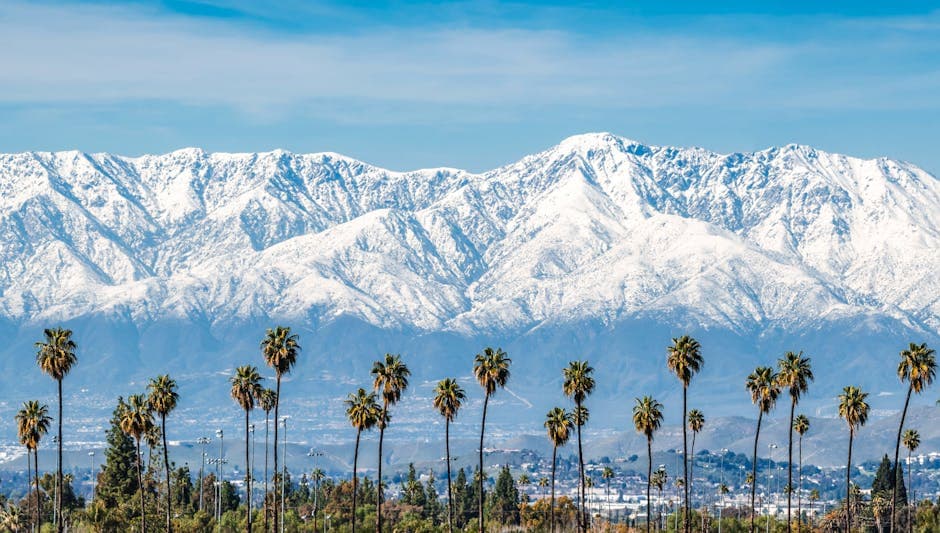
San Bernardino is the county seat of San Bernardino County, the largest county by area in the contiguous United States (over 20,000 square miles, larger than nine US states). The county stretches from the Riverside County line in the south to the Nevada border in the north. The city of San Bernardino sits at the southwestern corner of that geography, at the foot of the San Bernardino Mountains.
The Inland Empire metro (Riverside-San Bernardino-Ontario MSA) is the second-largest metro in California behind Los Angeles and one of the country's ten largest metros. Direct ordering pages anchored to specific San Bernardino corridors (Mt Vernon, Foothill Boulevard, Highland, the CSUSB ring, the San Manuel Stadium ring) rank for the queries customers actually type, where a marketplace listing rankings get diluted across the broader metro.
The metro context matters because San Bernardino operators frequently serve customers from across the IE. A wedding at the National Orange Show pulls guests from Riverside, Fontana, Ontario, and Redlands. The Route 66 Rendezvous brings out-of-town visitors from Los Angeles County and Orange County. The Big Bear weekend traffic pulls families from across Southern California through the I-215 northbound ring. A direct ordering page indexed for both city-level and metro-level queries outranks marketplace listings on most of those queries.
Where the numbers came from. Where to read more.
- US Census Bureau, ACS 2024 (San Bernardino city and county)City population, Hispanic and Latino share, Spanish at home, median household income.
- California Department of Tax and Fee Administration (CDTFA)Combined sales tax (state 7.25 + county 0.5 + city Measure S 1.0 = 8.75 percent).
- California Department of Industrial Relations (AB 1228)Fast Food Minimum Wage Order, effective April 1, 2024.
- California Attorney General (SB 478)Junk fee transparency law implementation guidance.
- McDonald's Original Site Museum1940 BBQ drive-in, 1948 Speedee Service System invention, 1953 Golden Arches, 1954 Ray Kroc visit, museum admission and exhibits.
- California State University, San Bernardino, Office of Institutional ResearchFall 2024 enrollment, Hispanic-Serving Institution designation, undergraduate demographics.
- City of San Bernardino, Office of the City ManagerMeasure S transactions and use tax, post-bankruptcy fiscal recovery, downtown San Manuel Stadium and Carousel Mall site updates.
- San Bernardino County Public HealthFood facility permit registry, restaurant count, public health restaurant inspection records.
- The Sun (San Bernardino Sun)Local daily reporting on bankruptcy proceedings, civic recovery, Foothill Boulevard restaurant rows, Route 66 Rendezvous coverage.
- San Bernardino County SentinelCounty-level government and civic reporting on the 2012 Chapter 9 bankruptcy and subsequent restructuring.
- Press-Enterprise (Inland Empire)IE-wide reporting including San Bernardino downtown, CSUSB, San Manuel Stadium events.
- Inland Valley Daily BulletinInland Empire regional reporting, Big Bear weekend traffic, Foothill Boulevard businesses.
- USDA Forest Service, San Bernardino National ForestForest acreage, San Bernardino city as Forest gateway, year-round recreation traffic.
- Visit Big BearBig Bear Lake elevation, ski resort statistics, weekend visitor flow through San Bernardino.
- Library of Congress, National Recording Registry (Speedee Service System)Cultural and historical significance of the 1948 Speedee Service System as a landmark in commercial development.
- US Bankruptcy Court, Central District of California (In re City of San Bernardino)Case 6:12-bk-28006: San Bernardino Chapter 9 municipal bankruptcy filing (August 2012) and Plan of Adjustment (2017).
- Riverside, CA12 mi south; the citrus origin city
- Fontana, CA10 mi west; Kaiser steel heritage corridor
- Moreno Valley, CA15 mi south; March ARB family ring
- Ontario, CA20 mi west; ONT airport corridor
- Los Angeles, CA60 mi west; the 5pm drive-time tax
- Anaheim, CA50 mi southwest; Orange County resort corridor
- Commission calculatorPlug in your DoorDash volume, see the San Bernardino dollar drag
- Voice AI demo (bilingual)Hear English and Spanish phone orders side by side
- Uber Direct dispatchHow restaurant-owned dispatch beats marketplace
- Catering channelNet-15 / net-30 invoicing for civic and event clients
- PricingFlat $249 / mo. No per-order commission. Zero.
Run your own kitchen.
A 30 minute walkthrough with our San Bernardino implementation lead covers the corridor your restaurant sits on, the bilingual Voice AI setup for your phone line, the National Orange Show or Route 66 Rendezvous calendar effects to plan against, and the Uber Direct radius math for your specific kitchen address.