1865West Side / Institute Park
WPI
~7,300 undergrad + grad
Engineering, computer science, robotics; third-oldest private engineering school in the United States
How ten colleges, thirteen thousand hospital workers, a 2021 ballpark, an 1857 concert hall, a 1923 hot dog stand, and a 1963 smiley face decide whether a Worcester restaurant makes money.
On a Thursday evening in late March, the WPI Quad is set up for the spring Project Presentation Day. Students have rolled tables onto the lawn between Boynton Hall and Higgins Labs. Each table runs a sponsor banner and a poster of the Major Qualifying Project the team finished a week ago. A robotics group has the bipedal walker tethered to a power supply on an extension cord. A bioengineering team has microscope slides labeled in marker. The Mechanical Engineering Dean stands at the podium near Earle Bridge, calling project numbers. Eight hundred undergraduate juniors and seniors will defend their MQPs to industry sponsors over the next three days.
By 7 PM, two hundred students, faculty, and visiting industry reps will leave the Quad and walk down Institute Road toward Highland Street, Park Avenue, and the West Side dinner block. A pizza counter on Highland will run 1.8x baseline for the next ninety minutes. The Indian fast-casual room across from Mass Academy will run out of paneer tikka by 8 PM. A wine bar on Park Avenue, the one near Elm Park, will seat all twelve of its tables with reservations made three weeks ago by visiting Raytheon engineers who flew in from El Segundo on Tuesday.
This is one of the calmer nights of the Worcester academic calendar. WPI is one of ten colleges in the city. Holy Cross is graduating in late May. Clark's reunion is in early June. Worcester State's commencement runs in the third week of May. Assumption's in mid-May. UMass Chan's in early May. Quinsigamond's in late May. Anna Maria's the second weekend of May. MCPHS Worcester graduates with the Boston campus in the second week of May. Inside any given seventy-two-hour window from late April through the first week of June, three or four of these institutions are graduating, and the same hotel rooms downtown sell out for back-to-back weekends.
Three miles south of the Quad, the day shift at the University Campus of UMass Memorial is rotating out. Approximately seventy-five hundred staff move through the Lake Avenue North campus on a busy Thursday: physicians, residents, nurses, techs, transport, food service, security, hospital police, environmental services. Outpatient pharmacy at the campus closes at 9 PM. The Memorial Campus on Belmont Street, on the east side of the city, runs its women and children's services around the clock. Together, the four-campus UMass Memorial Health system employs roughly thirteen thousand people, more than any other single Worcester employer.
Down in the Canal District, the WooSox have a 7:05 PM home game against the Lehigh Valley IronPigs. Polar Park opened in April 2021 after the Triple-A Red Sox affiliate relocated from McCoy Stadium in Pawtucket. The walking radius around the park, four blocks in every direction, is the densest restaurant-and-bar cluster the city has built in fifty years. Wormtown Brewery on Shrewsbury Street, Compass Tavern on Green Street, Birch Tree Bread Company near Crompton Place, and the Crompton Collective vendor market all run 2 to 3x baseline two hours before first pitch. By 10 PM, the post-game spillover lands on Shrewsbury Street's Italian-American restaurant row, where Via Italian Table and 111 Chop House and Peppercorn's Grille turn tables on a Thursday in March the way a Boston neighborhood turns them on a Saturday.
Worcester is, in restaurant terms, four distinct economies that share the same downtown circle. The Colleges Consortium is one. UMass Memorial is another. Polar Park and the Canal District are the third. The Shrewsbury Street Italian canon, the original Coney Island Hot Dog corridor, and the bilingual Main South neighborhood block are the fourth. This page is about the platform you run if you mean to make money in all four.
The Higher Education Consortium of Central Massachusetts (HECCMA), historically known as the Worcester Consortium, is a formal partnership across ten institutions inside the Worcester metro. Combined enrollment is approximately thirty-five thousand students, larger than the resident population of forty-three Massachusetts cities and towns. The consortium runs shared library access, cross-registration, joint research, and the Worcester Higher Education Foundation; it does not run shared dining, which is where the operator opportunity sits.
Worcester Polytechnic Institute, founded in 1865, is the third-oldest private engineering school in the United States after Rensselaer and MIT. The campus runs along Institute Road from West Street to Salisbury Pond and enrolls approximately seventy-three hundred undergraduates and graduate students across engineering, computer science, robotics, and the sciences. The seven-week project terms (instead of fourteen-week semesters) compress the academic calendar in a way most other colleges do not, which means WPI families and visiting industry sponsors arrive in Worcester roughly every two months for project presentations, not just at the start and end of a traditional semester.
The College of the Holy Cross, founded in 1843 on Mount Saint James in the south end of the city, is the oldest Catholic college in New England. Approximately thirty-two hundred undergraduates fill the Jesuit liberal arts curriculum and the Patriot League athletics program, which has produced a steady stream of basketball alumni for fifty years. Holy Cross graduation weekend, the third weekend in May, is one of the year's densest visitor weekends; the alumni-and-parents combination books out hotel rooms downtown and at the Beechwood and the AC Hotel by Marriott for back-to-back weekends.
Clark University, founded in 1887, sits on the Main South campus and enrolls approximately three thousand students across the liberal arts, psychology, geography, business, and the international development programs. Clark's first president, G. Stanley Hall, hosted Sigmund Freud for his only American lectures in September 1909, an event of psychiatric and cultural history that still draws scholars to the campus. The neighborhood around Clark, Main South, is one of the most demographically diverse in New England, which has direct implications for the multilingual phone-line argument later in this issue.
Assumption University, Worcester State University, Quinsigamond Community College, MCPHS Worcester, and Anna Maria College round out the consortium. UMass Chan Medical School, founded in 1962 on Lake Avenue North, is the only public medical school in Massachusetts and runs the residency pipeline into UMass Memorial Medical Center next door. Becker College, founded in 1784, closed during the pandemic in 2021; its alumni network is still locally active, and its veterinary and game-design programs were distributed to Clark, Worcester State, and other consortium members.
The operator implication of the consortium is unusual for a city of Worcester's size. A traditional academic calendar argument (the kind that runs Boston, Providence, or Madison restaurant economics) assumes one or two big move-in weeks in August and one big graduation period in May. Worcester runs a more distributed calendar: WPI's seven-week terms produce four family-and-sponsor weekends per academic year instead of two; Holy Cross runs Family Weekend in October separately from May graduation; the Clark, Worcester State, Assumption, Anna Maria, MCPHS, and UMass Chan graduations are staggered across three consecutive weekends in May, not concentrated into one.
For a Worcester restaurant operator, this means the high-leverage moments are more frequent and slightly smaller in amplitude than a single-flagship-college town. A Park Avenue room near WPI runs above baseline approximately twenty weekends per academic year, not eight. A Shrewsbury Street Italian house books reservation blocks for five different graduation weekends in May, not one. A downtown bar near MCPHS catches the pharmacy school's residency-match dinner the third Friday in March and the white-coat ceremony the first Friday in October.
The platform decision is whether your direct ordering site can run a different reservation block, a different SMS campaign, and a different parents-page menu for each of these weekends across the academic year. A graduation page that ranks for "best Italian Worcester WPI parents" in Google and AI Overviews captures the parent searching from California on the Wednesday before commencement. The marketplace surface, structurally, captures her at thirty percent. The direct ordering site captures her at zero.
Engineering, computer science, robotics; third-oldest private engineering school in the United States
Jesuit liberal arts; oldest Catholic college in New England; basketball-strong Patriot League school
Liberal arts, psychology, geography, business; G. Stanley Hall first president; Freud's only US lectures here in 1909
Catholic liberal arts founded by Assumptionist Fathers; humanities and nursing tracks
Public regional university; business, education, nursing, communications
Only public medical school in Massachusetts; affiliated with UMass Memorial; biomedical research
Two-year community college; nursing, hospitality, manufacturing technology
Massachusetts College of Pharmacy and Health Sciences; pharmacy, nursing, physician assistant
Former veterinary and game design college; closed during pandemic; programs distributed to Clark and others
UMass Memorial Health employs approximately thirteen thousand people across four Worcester-area campuses, more than any other single employer in the city. The system runs a Level I trauma center, the largest emergency department in Central Massachusetts, women and children's services, behavioral health, and an ambulatory surgery network, with affiliated residency and research programs through UMass Chan Medical School next door on Lake Avenue North.
Level I trauma center, academic medical hub adjacent to UMass Chan
Women and children's services, behavioral health
Specialty outpatient, ambulatory surgery
Community hospital extension of the UMass Memorial network
The catering channel into a hospital network of this scale runs on a wholly different rhythm than retail dinner. Department lunches for grand rounds, resident orientation, nursing in-service days, surgical fellowship sessions, and pharmacy continuing education run weekly throughout the academic medical year. Tickets typically run sixteen to twenty-five dollars per head at thirty to eighty heads per order, with twenty-four to forty-eight-hour lead times and procurement-grade invoicing.
Hospital procurement at UMass Memorial, like every academic medical center in the country, requires net-thirty invoicing, departmental budget codes, itemized receipts, and reconciliation against grant or operational budget lines. A delivery-app pickup receipt without an invoice number is not reconcilable in their accounts-payable system. The catering channel that does not produce procurement-grade documentation simply does not get used; it is not an operator preference, it is a finance department policy.
The Memorial Campus on Belmont Street sits at the southern edge of the Shrewsbury Street Italian-American corridor, which means an Italian-American room on Shrewsbury can become a recurring catering vendor for the hospital's women and children's services department by being one phone call and one accepted invoice away. The University Campus on Lake Avenue is adjacent to UMass Chan; a kosher-style deli or a Mediterranean room in the East Side can win the medical school's student lunches the same way.
The platform decision for a Worcester operator is whether the direct ordering site supports a catering portal with department-level budget caps, group order links shareable by hospital email, scheduled pickup windows, lead-time rules, allergen flagging, and net-thirty invoicing that AP can process. If yes, the operator competes for the recurring weekly orders. If no, the operator competes only for the one-off marketplace pickup orders where DoorDash takes thirty percent and produces a receipt finance cannot use. The single recurring weekly catering account from a hospital department at fifteen hundred dollars per order across forty operational weeks is sixty thousand dollars in annual revenue at zero marketplace commission.
Whoever has the catering portal answers the Tuesday-afternoon email from a UMass Chan administrator asking for sixty boxed lunches for Thursday's grand rounds. Whoever does not, loses the line for the year, and possibly the next several years.
The Worcester Red Sox (WooSox) relocated from McCoy Stadium in Pawtucket, Rhode Island, in April 2021, and Polar Park hosted its first regular-season home opener on May 11, 2021. The ballpark sits in the Canal District, on the alignment of the historic Blackstone Canal that once connected Worcester to Providence and the Atlantic before the railroads displaced it. Capacity is approximately ninety-five hundred. The Red Sox AAA affiliate plays a 150-game International League schedule from late March through late September.
Canal District bars and restaurants run 2 to 3x baseline; Crompton Place tenants peak.
Stadium concessions dominate; nearby rooms switch to bar service and to-go counter.
Late-night menu pre-positioned; post-game spillover begins 9 PM on weeknight, 10 PM on weekend.
Canal District 3 to 4x baseline; Shrewsbury Street Italian rooms absorb dinner overflow.
Brunch demand peaks 11 AM to 1 PM at family-friendly rooms within five blocks of the stadium.
Before Polar Park, the Canal District was a stretch of vacant brick warehouses, the Crompton Place collective of vintage and art vendors, and a handful of bars that survived on neighborhood loyalty rather than destination foot traffic. After Polar Park, the same blocks hold Wormtown Brewery, Compass Tavern, Birch Tree Bread Company, Lock 50, Volturno (the Neapolitan pizza room certified by the AVPN), and a growing list of newer operators who priced their leases against the assumption of game-day spillover.
The game-day operating reality is that Polar Park draws an average of approximately six thousand fans on a weekday game and pushes toward capacity (nine thousand-plus) on weekend games and against marquee opponents. The two-hour pre-game window between 5 PM and 7 PM is the highest-amplitude restaurant moment in the city for any operator within a five-minute walk of the stadium. Walk-up volume runs two to three times baseline at Canal District rooms; bar tabs at Wormtown and Compass run two to four times an off-game weeknight.
The post-game window matters as much as the pre-game window. The crowd leaves Polar Park between 10 PM and 11 PM on a weeknight game and between 10:30 PM and 11:30 PM on a weekend. The post-game spillover lands within four blocks for an hour, and then on Shrewsbury Street Italian-American row for late-night dinner. A Friday WooSox home game against the Lehigh Valley IronPigs lands roughly eight thousand fans on the post-game corridor; if you operate within fifteen minutes' walk of the stadium, you are open until midnight on Friday or you are missing the operator opportunity.
The platform decision is whether your direct ordering site can run a game-day mode: extended hours on home-game nights, a pre-game pickup window that closes at 6:30 PM (so the kitchen is not slammed during first pitch), a post-game ordering window that opens at 9:30 PM, and a Polar Park-themed menu collection that lets fans pre-order on the walk over. The marketplace surface, structurally, treats Tuesday at 6 PM the same as Friday at 6:30 PM on a game night. The platform that respects the schedule is the platform that wins the game-day economy.
Harvey Ross Ball, a Worcester-born commercial artist, drafted the yellow smiley face icon in his Worcester studio in late 1963 for a forty-five-dollar fee paid by the State Mutual Life Assurance Company of America. The design was commissioned to boost employee morale during a tense merger between State Mutual and the Guarantee Mutual Company. Ball spent approximately ten minutes on the original sketch. State Mutual printed one hundred buttons. Within ten years, the design appeared on more than fifty million pieces of merchandise globally, none of it paying royalties to Ball, who never trademarked it.
The Smithsonian Magazine documented Ball's design and the forty-five-dollar fee in a 2019 retrospective. The design itself is a perfect circle in process yellow, two oval eyes (not perfectly round), and a wide arc smile (not a perfect curve, drawn freehand). The asymmetric eye spacing and the imperfect mouth arc are deliberate. Ball later said the design's warmth comes precisely from the small imperfections, the same way a hand-drawn line communicates differently than a vector arc.
Worcester claims the smiley as a civic emblem. The original Ball sketch is preserved at the Worcester Historical Museum. The World Smile Foundation, founded by Ball's family in 1999, operates from Worcester and supports children's causes globally. World Smile Day, the first Friday of October, is observed as a Worcester civic event with face-painting on the Common and small charitable runs from local restaurants and businesses.
For an operator running a Worcester room, the smiley is more than a cultural reference; it is a tonal directive. Worcester customers, by long civic habit, reward warmth and reject preciousness. The diner regular at Boulevard or Miss Worcester orders the same plate she has ordered for ten years and expects to be greeted by name. The WPI faculty member at Sole Proprietor on Highland Street wants a competent server, not a tasting menu lecture. The Holy Cross alumni couple at Via Italian Table on Shrewsbury Street wants the chicken parmesan to taste the way it tasted when their kids graduated in 2003.
The platform decision is whether your direct ordering site reads as warm and human or as a generic SaaS template. A claimed Google Business Profile that links to a branded site with the operator's name, family history, real photos of the kitchen, and an SMS that says "welcome back, Linda" instead of "order #43782 has been received" is the platform that respects the Worcester customer relationship. The smiley, in this sense, is the brand specification.
Coney Island Hot Dogs, at 158 Southbridge Street in Worcester, has been continuously operating since 1923. The hot dog stand was founded by Catherine Tsagarelis and her husband, Greek immigrants who arrived in Worcester in the early 1920s. The dog itself is a steamed natural-casing wiener on a steamed bun, topped with a thin meat sauce of Greek origin, yellow mustard, and chopped onion. The recipe predates most New York Coneys; the Coney Island stretch in Brooklyn was named for Conoy Island, not the other way around, and the Greek-American hot dog stand tradition spread from a small number of independent operators in cities like Worcester, Detroit, and Cincinnati during the 1910s and 1920s.
The Tsagarelis family ran Coney Island Hot Dogs for three generations. The neon sign on Southbridge Street, an arched yellow neon "Coney Island Hot Dogs" with a smaller pointing-hand sign, has been a Worcester landmark since 1935. The building itself was renovated in the 1950s with vintage tile and the long counter; it appears in the National Register of Historic Places listing for the Crown Hill neighborhood. The restaurant changed ownership in the 2010s but the original recipe and the counter ritual are preserved.
A meaningful share of New York System hot wieners in Providence and Pawtucket, the New York System dogs in Manhattan, and the Coney Islands of Detroit and Cincinnati trace common ancestry to the Greek-immigrant hot dog tradition that the Worcester stand represents. Worcester's Coney is not New York, despite the name; the name was a marketing borrow, exactly the way the Providence New York System stands borrowed New York's pull a decade later. The original is the Worcester stand on Southbridge Street.
For an operator in the Coney corridor or anywhere on the Southbridge Street and Park Avenue arc, the customer is local, repeat, and largely off-marketplace. A three-dog plate with a Coke is a six-dollar transaction. A thirty percent marketplace commission on six dollars is one dollar and eighty cents, on an order that has roughly a dollar of margin. The marketplace math does not work for the Coney corridor, the same way it does not work for the Providence New York System houses. Direct ordering with phone-line Voice AI handling the lunch and late-night call volume is the structural fit; the marketplace surface captures only the tourist looking up "hot dogs near me."
The Worcester Coney is, in summary, a hundred-year-old neighborhood institution that predates most Coney imitators, has zero use for delivery-app commission, and benefits more from direct ranking on Google for "original Coney Island Hot Dog Worcester" than from any marketplace placement. The platform that captures the search captures the customer.
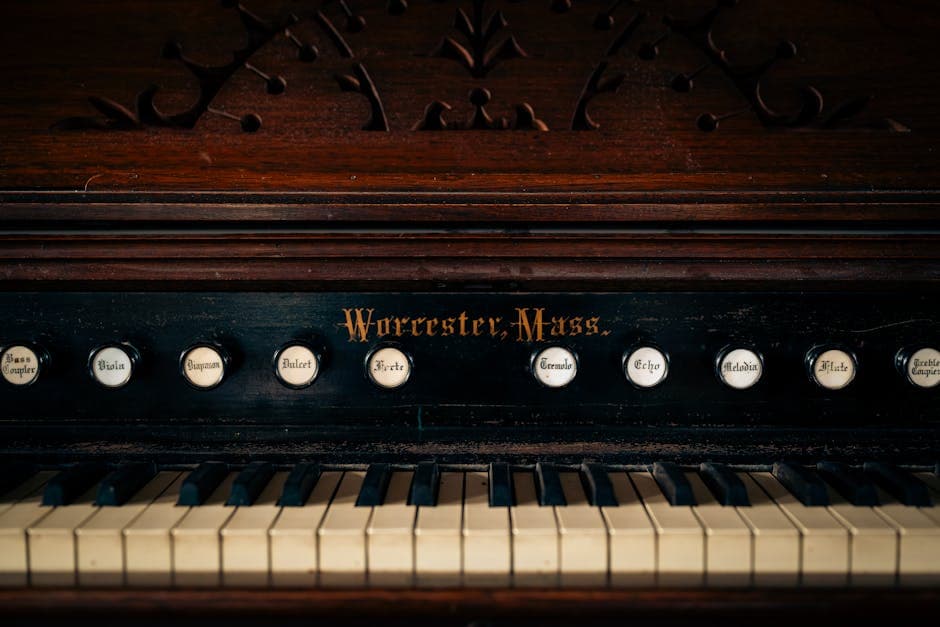
Mechanics Hall, at 321 Main Street downtown, opened on March 19, 1857 as the meeting hall of the Worcester County Mechanics Association. The hall is one of the four oldest concert venues in the United States in continuous use, and is widely considered to have some of the finest acoustics in the country for an unamplified room. Charles Dickens read here in 1867 during his second American tour. Thoreau, Frederick Douglass, Susan B. Anthony, and Mark Twain all spoke from the same Victorian-era stage. The Hook & Hastings pipe organ, installed in 1864 and restored in the 1980s, is still played for the Worcester Chamber Music Society and the Worcester Music Festival.
The Worcester Art Museum, at 55 Salisbury Street, opened in 1898 with a founding bequest from Stephen Salisbury III. The museum holds approximately thirty-eight thousand objects across European, Asian, American, ancient, and modern collections, including the Higgins Armory medieval armor collection acquired in 2014 when the standalone Higgins Armory Museum closed. The museum is one of the largest in New England by collection size after the MFA Boston and the Yale University Art Gallery.
Mechanics Hall, the Worcester Art Museum, the Hanover Theatre, the Worcester Historical Museum, and the EcoTarium together anchor the city's cultural calendar. Concert nights at Mechanics Hall draw an older, dressy, fixed-time audience; pre-concert dinner reservations at downtown rooms run 6 PM to 7:15 PM with the room emptying by 7:30 PM for the 8 PM downbeat. Worcester Art Museum members' opening nights, typically the first Thursday of an exhibition month, push a 5:30 PM to 7:30 PM cocktail-and-dinner window into the Salisbury Street and downtown rooms.
For an operator within five blocks of Mechanics Hall, the platform decision is whether the direct ordering site can run a concert-night reservation block (fixed early seating, set menu option, pre-paid deposits) and an after-concert dessert-and-drink window (open until 11 PM on Mechanics Hall performance nights). The marketplace surface treats Saturday at 6 PM the same on a concert night as on a regular night. The direct ordering site can respect the concert calendar, push pre-show menu collections to the customer database, and capture the eight-week-out reservation that the Mechanics Hall season subscribers make for their dinner-and-show evenings.
Worcester runs on six distinct restaurant economies. Downtown and the Theatre District for civic and cultural traffic; the Canal District for Polar Park and brewery-driven nights; Shrewsbury Street for the Italian-American canon; Main South for the Clark corridor and the multilingual neighborhood; Vernon Hill for the hospital-adjacent overnight pattern; and the West Side for WPI and the family rooms along Salisbury and Highland.
Worcester City Hall, the Hanover Theatre for the Performing Arts, the DCU Center, and Main Street between Park Avenue and Foster Street. Lunch is government employees, court business, and downtown office workers. Evening is Hanover Theatre shows (Broadway tours, the Worcester Symphony Orchestra) and DCU Center events. The MCPHS pharmacy campus on Foster Street adds a steady student lunch crowd.
Bounded roughly by Harding Street, Green Street, and the former Blackstone Canal alignment. The 2021 opening of Polar Park transformed the district from a stretch of vacant warehouses and the Crompton Place collective into a destination corridor. Bars and restaurants within four blocks of the stadium run heavy on WooSox game nights (April through September) and Worcester Railers ECHL hockey nights (October through April) at the DCU Center, which sits at the district's northern edge.
The mile-long stretch from Belmont Street to Lake Avenue holds Worcester's densest Italian-American restaurant corridor. Family-run rooms span four and five decades; newer chef-driven openings coexist with the canon. The corridor is a fifteen-minute walk to downtown and a five-minute drive to the Memorial Campus of UMass Memorial. Lunch is steady weekday hospital and downtown business; dinner is the city's strongest reservation window.
Main Street south of Madison Street, anchored by Clark University at one end and the Mount Carmel Recreation Center at the other. The neighborhood is the most demographically diverse in the city: Vietnamese, Albanian, Dominican, Puerto Rican, Brazilian, and West African communities live block by block. Pho counters, Albanian bakeries, Dominican comedores, Brazilian churrascarias, and West African rice-and-stew rooms share the same blocks. Bilingual ordering is the operating reality, not a feature flag.
East of the Canal District, north of Main South, anchored by the Memorial Campus of UMass Memorial on Belmont Street. Vernon Hill is a residential neighborhood with a meaningful hospital-shift overnight customer base: nurses, residents, EMTs, and security staff who finish a 7 PM to 7 AM shift and want food at 7:30 AM. The breakfast-and-late-night operators here run a wholly different shift pattern than downtown.
The arc from WPI's Institute Park through Salisbury Street to Assumption University and Worcester State. Restaurants run on a college and family rhythm: weekday lunch from WPI faculty and graduate students; weekday dinner from neighborhood families; weekend brunch from parents visiting students. The Worcester Art Museum on Salisbury Street and the EcoTarium science museum draw steady family weekend traffic.
Worcester is one of the most linguistically diverse mid-sized cities in New England. Per US Census American Community Survey five-year language-at-home data, approximately twenty-one percent of city households speak Spanish at home, primarily from the Puerto Rican and Dominican communities concentrated in Main South, Piedmont, Bell Hill, and Greendale. Smaller but meaningful Vietnamese, Brazilian Portuguese, and Albanian populations live in overlapping neighborhoods. A Worcester restaurant that runs a phone line in English only is operating at a structural disadvantage.
Phone-line Spanish first; SMS Spanish; menu Spanish translation.
Phone Vietnamese for lunch counter and family-restaurant calls.
Phone Portuguese for churrascaria and bakery orders; SMS Portuguese.
Phone Albanian for bakery and red-sauce family rooms; lower-volume but loyal.
Phone English; menu localized with regional ingredient names.
The Main South Spanish-speaking customer base is the largest single non-English language community in Worcester. A taqueria, a comedor Dominicano, or a Puerto Rican fonda on Main Street south of Madison takes phone orders in Spanish as the default. The customer is not bilingual by convenience; she is Spanish-first by birth, and the restaurant that takes her order in her language at 7 PM Tuesday is the restaurant she calls back next Tuesday. The marketplace surface does not run Spanish phone lines.
The Brazilian Portuguese community concentrated in Greendale, Lincoln Street, and Burncoat orders from churrascarias, padarias, and the regional Brazilian bakeries that serve pao de queijo and brigadeiros on Saturday mornings. The Vietnamese community in Main South orders from the pho counters and the bun bo Hue rooms that opened in the 1990s and 2000s. The Albanian community in Vernon Hill and Piedmont orders from family-run red-sauce houses and Albanian bakeries that the community has supported since the early 1990s.
The platform decision for a Worcester operator serving any of these communities is whether the phone-line Voice AI handles two languages on the same line and switches mid-call when the caller switches. A customer who starts in Spanish and switches to English to ask about an allergen is the most common phone-line pattern in Main South. A Brazilian Portuguese caller asking about a Saturday morning bakery pickup is the most common Greendale pattern. An Albanian caller calling on behalf of an elderly relative is the most common Vernon Hill pattern.
Direct ordering with multilingual Voice AI on the same phone line is the structural fit. The marketplace surface routes calls through a one-language IVR that cannot switch. The customer database that captures the caller's preferred language is the customer database that compounds repeat orders. The Worcester restaurant that runs Spanish or Portuguese or Albanian on the phone is the Worcester restaurant that holds the loyal customer through the next twenty years.
The Massachusetts state sales tax on prepared meals is 6.25 percent. Per the Massachusetts Department of Revenue, the City of Worcester has not adopted the local 0.75 percent meals tax option that some Massachusetts municipalities (including Boston, Cambridge, and Somerville) levy on top of the state rate. The Worcester operator collects and remits a flat 6.25 percent, not 7 percent.
The simplicity is the operator advantage. A multi-unit operator running a Shrewsbury Street room in Worcester and a sister room in Auburn, Shrewsbury, or Holden does one tax configuration. A catering quote crossing town lines does not need an asterisk for the Worcester customer. The Massachusetts 6.25 percent is, on a per-dollar basis, the most predictable line on the operator's P&L for a Worcester restaurant.
Across an eighty thousand dollar monthly online volume, the sales tax remits five thousand dollars per month to the MA DOR. A twenty-five percent marketplace commission on the same volume is twenty thousand dollars per month. The marketplace commission is, by definition, four times larger than the sales tax. It is also, unlike the sales tax, optional. The decision is whether to keep paying both, or to keep paying only the unavoidable one.
| Line | Marketplace | Direct |
|---|---|---|
| Ticket | $14.00 | $14.00 |
| MA sales tax (6.25%) | ($0.88) | ($0.88) |
| Marketplace fee (28%) | ($3.92) | $0.00 |
| Net to operator | $9.20 | $13.12 |
On 2,000 pasta tickets per month, the commission difference is $7,840. On $80,000 monthly online volume at 28 percent commission, the annual recovery from switching to direct ordering is approximately $94,000 net of platform fee. The Massachusetts 6.25 percent sales tax is unchanged in either column.
Source: Massachusetts Department of Revenue; Square Future of Restaurants 2025 commission ranges.
Five things have to be true at once for a Worcester operator to make money across the year. One: the catering portal has to meet UMass Memorial hospital procurement on procurement's terms (net-thirty invoicing, departmental budget caps, itemized receipts). Two: the direct ordering site has to run a Polar Park game-day mode with extended hours, a pre-game pickup window, and a post-game late-night menu. Three: the phone-line Voice AI has to switch between English and Spanish (Main South), Portuguese (Greendale), Vietnamese (Park Avenue), and Albanian (Vernon Hill) mid-call. Four: the graduation-weekend reservation block has to absorb five different consortium colleges across three consecutive weekends in May. Five: the 6.25 percent state sales tax has to flow through every receipt without operator intervention.
DirectOrders is a flat $249 per month with no per-order commission. The Voice AI handles English plus one or two additional languages on the same phone line, with mid-call language switching. The catering portal supports group order links shareable by email and SMS, scheduled pickup windows, lead-time rules, allergen flagging, per-department budget caps, and net-thirty invoicing that UMass Memorial accounts payable can process. Same-day Stripe payouts mean Friday WooSox night revenue clears Monday morning, which matters for an operator whose Saturday-morning prep payroll runs higher than any other day in the season.
Branded site that ranks for "best Italian Shrewsbury Street", "Polar Park bars", "WPI parents dinner Worcester", "original Coney Island Hot Dog", and "Mechanics Hall pre-concert dinner" in Google search and AI Overviews captures the customer who knows what she wants and the customer who is searching for the first time. Restaurant, Menu, MenuItem, Offer, and LocalBusiness schema markup makes Google index the room as a separate entity from any marketplace listing. Per-item 6.25 percent MA sales tax with monthly remittance-ready Department of Revenue reports removes the quarter-close reconciliation pain.
Uber Direct and DoorDash Drive integrate as flat-rate dispatch (the operator pays the courier, not the marketplace commission) so the WooSox-night fallback works when courier supply tightens around first pitch. The customer database compounds across move-in week at WPI in August, Holy Cross parents weekend in October, the WooSox home opener in April, graduation weekends in May, and World Smile Day on the first Friday of October. SMS campaigns to that database for each of those moments cost a few cents per send and convert at five to twelve percent on a well-built list.
The argument is not that DirectOrders is the only platform that does each of these. The argument is that DirectOrders is the only platform that does all five in one stack with one set of payouts, one phone line, one menu, one tax configuration, and one customer database. Five integrations is five vendors and five reconciliations. One platform is one ledger and one closing.
Strategies for Worcester operators in a college-heavy mid-sized New England city with hospital, stadium, and student calendars.
The step-by-step Worcester restaurants use to shift orders off DoorDash and Uber Eats without losing the long-tail customer.
Rank in 'best Italian Shrewsbury Street' and 'Polar Park bars' searches and capture intent at zero commission.
Turn first-time orders into repeat business across the Worcester Colleges Consortium academic calendars.
See what DoorDash and Uber Eats commission actually costs your Worcester restaurant per month.
Worcester is the second-largest city in Massachusetts, the geographic center of New England, home to ten consortium colleges, thirteen thousand hospital employees, a 2021 ballpark, an 1857 concert hall, a 1923 hot dog stand, and the 1963 yellow smiley face that the rest of the world borrowed. The platform that runs all of it without forcing the operator to be the integration is the platform that compounds the next decade.