A Long Read From 4,226 Feet
The Mountain Capital
How a 10-day film festival, a 5-million-visitor temple square, a 90-year-old alcohol regulatory framework, and a tech corridor in Lehi reshape every Salt Lake restaurant's year, and what the right digital ordering stack does about it.
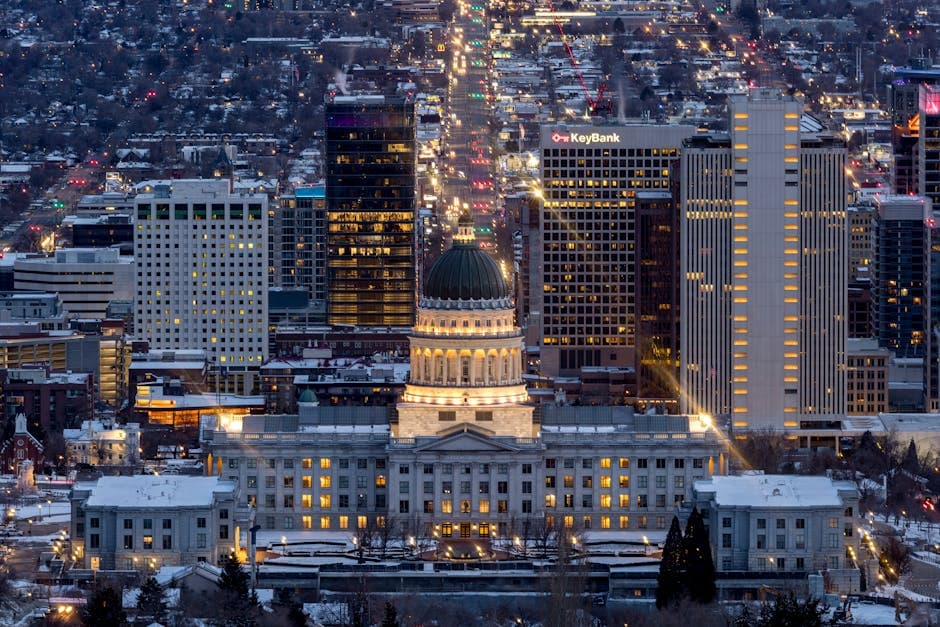
"The Wasatch is on our left shoulder every shift. We plan menus around it whether we say so or not."
I. The Lede
It is 6:18 PM on a Friday in late January, the second night of Sundance, and a chef at the 9th and 9th end of an indie SLC dining room is reading the phone reservation board like a weather chart.
Fifty-four covers are seated. Forty-one are on the book for the second seating. The chef has tracked four phone calls in the last half hour that landed before her hostess could answer them, two from blocked numbers (likely press agents calling from a Park City condo), one from a 310 area code, and one local. The 310 caller, who left a voicemail at 5:47, was a film executive who wanted to know whether the kitchen could plate a four-top in 50 minutes, because his table was leaving the Eccles screening at 7:10 and had a private jet sitting at Million Air at 9:30. The local caller, who left a voicemail at 6:02, wanted to know whether he could use his Sundance press lanyard for the prix fixe. He had been told by a friend that the answer was yes. The chef had not been informed.
The dining room is small. The kitchen is smaller. The chef knows, as every Salt Lake operator knows, that the second weekend of Sundance is the single most compressed 10-day period on the SLC restaurant calendar, and that the operating physics of that compression do not fit any national ordering platform's default assumptions. The festival is not in Salt Lake. It is headquartered in Park City, 32 miles east and 2,800 feet higher up the canyon. But the press shuttles to the SLC screening rooms at Eccles, Rose Wagner, Broadway, and Tower. Acquisitions executives staying at the Grand America walk to dinner along 200 South. The geography is bigger than the city, and the demand crosses the canyon four times a day.
Layer on the alcohol question. Utah, alone among US states with a year-round film festival of this magnitude, runs a state-controlled liquor system administered by the Department of Alcoholic Beverage Services (the agency historically called DABC, now DABS). The 310 caller wanted a wine pairing with the tasting menu. The chef can serve it, but the system is unlike California's: license class dictates floor-plan logic, the state sets wholesale markup, the state liquor stores are closed Sunday, and the beer ABV ceiling above 5 percent reroutes through the state system rather than the local distributor. None of this is exotic if you operate in Utah. All of it is a service-design surprise if you do not.
Beyond Sundance, the city is unlike any other state capital in the United States. Temple Square draws roughly 5 million annual visitors to a six-block downtown corridor that produces a different demand shape than any sports-tourism downtown: family-friendly catering during General Conference weekends, breakfast and lunch volume on weekdays from the Family History Library, banquet catering tied to the Conference Center. Add the Silicon Slopes catering pipeline in Lehi, the University of Utah football Saturdays, the 2034 Winter Olympics bid that already has corporate hospitality contracts being negotiated, the historic Greek community at Holy Trinity, and one of the largest Tongan-American communities in the country on the westside. The Wasatch Front is a layered hospitality economy that no single national marketplace has ever modeled correctly.
This report is about why Salt Lake City sits at an operational intersection that demands a specific digital ordering stack. The starting point is the 10-day Sundance compression, but the structural argument runs deeper: the DABS alcohol framework reshapes service design, Temple Square reshapes family catering, the 4,226 ft altitude reshapes the kitchen physics, and Silicon Slopes reshapes the weekday lunch and corporate catering market. From those four facts, the customer geography, the menu engineering, and the choice of ordering stack all follow.
Twenty-two minutes of reading, end to end. Bring something warm.
II. The Sundance Compression
Ten days in late January reshape a year of Salt Lake restaurant planning. The press flow runs across 30 miles of canyon, and the demand peaks do not land where the festival headquarters do.
Sundance is headquartered in Park City and runs primary venues at the Eccles, Library Center, and Egyptian. But the festival operates a major satellite circuit at Eccles in SLC, the Rose Wagner Performing Arts Center, the Broadway Centre Cinemas, and the Tower Theatre. Approximately 120,000 attendees move across both cities during the 10-day program, and acquisitions executives, agents, press, and ticket holders eat at restaurants in both. The compression is not a Park City phenomenon. It is a Wasatch Front phenomenon, and the demand peak lands on the second weekend.
Thu Day 1
142
Index vs baseline
Park City Main Street, Eccles, downtown SLC
Opening night premieres. Industry arrivals at SLC airport. Press eats early before screenings.
Fri Day 2
176
Index vs baseline
Park City + Egyptian + Rose Wagner SLC
First weekend press marathon. Park City restaurants packed; SLC venues run shuttles. Late-night spike to 1am.
Sat Day 3
198
Index vs baseline
Festival saturation across both cities
Peak Saturday. Park City Main Street at capacity. SLC absorbs the overflow at Eccles, Tower, Rose Wagner.
Sun Day 4
184
Index vs baseline
Park City + 9th and 9th + downtown SLC
Industry brunch programs. Acquisitions deals close. 9th and 9th, Sugar House see chef-driven dinner peaks.
Mon Day 5
148
Index vs baseline
MLK Day, screenings continue
Holiday Monday in Utah. Press churn continues. Tongan and Greek-American family ops cater press shoots.
Tue Day 6
132
Index vs baseline
Industry exodus begins
Marketplace ETAs in Park City stabilize. Press execs return to LA. Avenues and Marmalade ops feel the trough.
The shape of the Sundance week, as the chart shows, is not a flat plateau. It is a double-peaked saw with a Saturday spike at index 198, a holiday-Monday step-down, a mid-festival trough, and a closing-weekend resurgence anchored on the Audience Awards. SLC operators who treat the festival as a 10-day uniform demand event lose money on the trough. Operators who plan for the saw, surfacing fixed-price prix fixe options for press dinners on the peak nights and pivoting to local-cinephile bistro service on the trough nights, capture both ends.
The geographic spread is what catches new operators off guard. A four-top at the Eccles in SLC at 7pm Friday will, by 7:45, have walked five blocks to a 9th and 9th dining room. A four-top at the Eccles in Park City at 7pm Friday will eat on Main Street and never cross the canyon. But press shuttles run between the two cities all day, and acquisitions executives staying at the Grand America move freely. The demand pool is shared, not partitioned, and that asymmetry is what marketplace ETAs structurally fail to model.
A direct ordering channel with operator-controlled radius and bilingual phone intake is the only mechanism that captures the off-platform Sundance demand at full margin. The 310 area code calling a 9th and 9th dining room at 6:18pm is not a customer the operator wants to lose to a marketplace ETA of 75 minutes. Direct ordering plus Uber Direct at courier cost drops that ETA to under 25 minutes for hotel-zone deliveries between South Temple and 900 South, and lets the chef hold the press-table relationship into next year.
The compounding effect across the 10 days is meaningful. An operator running the chart at index 168 average over 10 days, against a baseline of 100, is generating 68 percent above normal revenue for the period. Against a 28 percent marketplace commission, the operator surrenders roughly 19 percent of that uplift to the platform. Against a flat $249 per month direct channel, the operator keeps essentially all of it. Sundance is the single most consequential commission-arithmetic conversation in the Wasatch Front operator's year.
The 2034 Winter Olympics bid, now confirmed by the IOC, layers a second compressed-revenue window onto the same calendar logic. Olympic hospitality contracts begin negotiating five to seven years out. Operators who treat Sundance 2027 as the dress rehearsal for the 2034 medal-plaza catering window are already pricing accordingly.
III. The DABS Framework
Utah is one of seventeen US control states. Salt Lake operators do not navigate alcohol the way their California or New York counterparts do.
The Department of Alcoholic Beverage Services (the agency historically known as DABC and rebranded to DABS) operates state liquor stores, sets wholesale markup, issues every on-premise license class, and writes the rule that decides whether a bar-front in your restaurant requires a partition. The framework is shaped by Utah's particular regulatory history, including the legacy 7-foot-2-inch partition rule (the so-called Zion Curtain) reformed in 2017, the 5 percent ABV ceiling raised in 2019, and the food-to-alcohol revenue ratio that defines the difference between a full-service license and a club license.
License classes
Full-service, limited-service, beer-only, club, master, and on-premise banquet licenses are distinct. Each has its own food-to-alcohol revenue ratio test and operational rules.
Operator consequence
A Salt Lake restaurant cannot operate as a bar by default. License class dictates whether minors can sit at the bar, how alcohol must be served, and what food sales the kitchen must hit to keep the license.
Utah Department of Alcoholic Beverage ServicesZion Curtain (legacy partition rule)
Prior to 2017, full-service restaurants were required to mix drinks behind a 7-foot 2-inch wall (the so-called Zion Curtain). The 2017 law replaced the wall with a 10-foot buffer or a partition option, but the legacy still shapes dining room floor plans.
Operator consequence
Bar-front design is constrained. Many SLC dining rooms still carry the spatial logic of a partition that no longer exists. New builds debate which option to use.
Utah Legislature, HB 442 (2017)Beer ABV ceilings
Until November 2019, grocery and convenience beer was capped at 3.2 percent ABW (~4.0 percent ABV). The ceiling was raised to 5.0 percent ABV in 2019. Above 5.0 percent ABV, distribution still routes through state liquor stores.
Operator consequence
Restaurant beer menus calibrate around the 5 percent ABV line for the casual-service tier. Craft above 5 percent is sold through the state system, which changes how brewery partnerships are sourced.
Utah HB 4001 (2019)Drink intent and order
Alcohol orders historically required a food order. Servers cannot bring an alcoholic drink to a table absent an intent-to-dine signal. Beer-with-meal patterns are the default casual mode.
Operator consequence
Bar-only walk-in business is structurally limited. Servers train on intent-to-dine compliance language. Voice AI phone intake handles this prompt without the script ambiguity a generic IVR creates.
Utah DABS server training and complianceSunday and election day
State liquor stores are closed Sunday and on most state holidays. On-premise restaurant service continues on its own license, but stocking gaps emerge if ordering is not pre-planned.
Operator consequence
Beverage directors plan deliveries on a fixed weekly cycle. A Sunday brunch program that wants Champagne service plans the order on Friday or earlier.
Utah DABS state store hoursMarkup and pricing
The state controls wholesale price via a fixed markup on liquor sold through the state system. Restaurants do not negotiate wholesale cost the way they would in an open three-tier state.
Operator consequence
Liquor cost-of-goods is structurally higher than the national average for many SKUs. Cocktail program pricing reflects that, and modifier menus on direct ordering sites must surface upcharges clearly.
Utah DABS pricing structureThe regulatory framework is not a curiosity. It is a service-design item that conditions every shift on the floor. A SLC bartender who pours a Negroni cannot do so in the same physical configuration as a Manhattan bartender. License class dictates whether the cocktail must be visible to minors, whether the partition still exists in legacy form, and whether the food-revenue ratio is being maintained at the level the license requires. None of this is intuitive to an out-of-state operator opening a first SLC location.
The Voice AI implication is direct. A generic IVR or a hotel concierge calling a restaurant cannot reliably handle questions like "can we have wine with our table reservation if we are only ordering appetizers" or "is the bar open without a food order." A SLC-tuned phone intake handles those questions in the structurally correct way (the answer depends on license class, and the restaurant's license is known to the system), and routes the few edge cases to a manager in the standard way.
The wholesale-cost implication is also direct. A SLC operator pays Utah-system markup on liquor. That cost is structurally higher than the same SKU in an open-market three-tier state. Cocktail program economics require a different modifier-pricing logic on the digital ordering site. Pour costs run higher; menu upcharges must be transparent; the standard national defaults misprice the bar program.
The Sunday-closure implication appears late in the operator's first year. Brunch programs that want Champagne service on a Sunday must buy on Friday or Saturday. Beverage directors build a fixed weekly cycle. Direct ordering channels that surface Sunday brunch correctly set customer expectations (the cocktail menu may be different) and reduce front-of-house friction.
IV. The Temple Square Economy
Five million annual visitors to a six-block downtown corridor reshape the family-friendly breakfast, lunch, and banquet catering market for every operator within walking distance.
Temple Square, the 10-acre block at the heart of downtown SLC, draws roughly 5 million visitors annually. The block is operated by The Church of Jesus Christ of Latter-day Saints, and its adjacent buildings (the Tabernacle, the Conference Center, the Family History Library, the Joseph Smith Memorial Building) operate on a year-round visitor and event cadence. The Family History Library alone draws hundreds of thousands of weekday visitors doing genealogical research, most of whom eat breakfast and lunch within a three-block radius.
General Conference, held the first weekend in April and October, draws hundreds of thousands of additional visitors to a 21,000-seat Conference Center. Hotels in the corridor saturate. Family catering for visiting LDS members, missionary returnees, and out-of-state ward members runs through breakfast, lunch, and post-session dinner cycles in two-day bursts.
The hospitality consequence is a downtown corridor with a structurally different demand shape than a sports-tourism downtown. Family-friendly menus, large-party catering, alcohol-optional dining rooms, and breakfast volume at scale all matter. Hotel restaurants (Bambara in the Hotel Monaco, Spencer's at the Hilton, the breakfast room at the Grand America) anchor the corridor, but independent operators on Broadway, Pierpont, and along 200 South carry the spillover.
Direct ordering with party-catering features (large-format options, scheduled delivery windows, large-order pickup capability) wins this market. The Temple Square visitor is not a marketplace consumer: she is a family caterer planning for fifteen relatives visiting in town for General Conference weekend, and the order is being placed three weeks in advance from a different state.
The 5-million-visitor scale also reshapes the breakfast economy. Salt Lake has, by capita measure, one of the densest breakfast and brunch restaurant economies in the Mountain West. Penny Ann's, The Park Cafe, Ruth's Diner, the Avenues bakery and brunch cluster, and the Sugar House Sunday brunch programs all calibrate around the Temple-Square-anchored weekday morning demand.
V. The Operating Physics
Four thousand two hundred and twenty-six feet is not Denver, but it is not sea level either. The kitchen physics retunes.
SLC sits 1,054 ft lower than Denver and 4,226 ft above sea level. That is enough altitude to meaningfully shift water boiling temperature, dough proofing speed, beer carbonation, and kitchen humidity. The compounding factor is the Wasatch Front geography: kitchens in the foothills (the Avenues at roughly 4,500 ft) operate slightly higher than downtown, and Park City restaurants at 7,000 ft operate considerably higher. A multi-location operator moving recipes between SLC and Park City retunes for both.
Water boils at
Sea level
212F
SLC
~204F
Pasta and blanching curves stretch. Sous vide times retune. Hard-boiled egg timing differs from a sea-level recipe.
Atmospheric pressure
Sea level
14.7 psi
SLC
~12.6 psi
Doughs proof 15 to 20 percent faster than the recipe says. Beer CO2 escapes more easily. Brewers carbonate lower and serve cooler.
Average relative humidity
Sea level
Coastal ~70%
SLC
~50%
Dry kitchens. Bread crusts crack. Garnishes wilt faster. Front-of-house water service is a service-design item, not a courtesy.
Winter inversion air quality
Sea level
Less common
SLC
Frequent Dec to Feb
Cold air traps particulate matter against the Wasatch Front. Outdoor patios close. Delivery volumes spike. Couriers move slower in heavy snow days.
The kitchen physics retune is genuine but smaller than Denver's. A SLC pizzaiolo adjusts hydration and yeast quantity but more modestly than her Mile High counterpart. A pastry lead at a downtown bakery raises bake temperature roughly 10 to 15 degrees and reduces liquid in quickbreads. A pasta cook adjusts boil time slightly. The bigger story is the winter inversion: cold air trapped against the Wasatch Front from December through February reshapes air quality, closes outdoor patios, and spikes delivery volumes against a courier base moving slower on snowy roads.
The brewing implication is the Utah-specific overlay. SLC's craft breweries (Squatters, Wasatch, Uinta, Epic, Proper, RoHa) calibrate carbonation lower than sea-level standards because dissolved CO2 escapes more easily, and they navigate the state's pre-2019 3.2 ABW legacy by producing a separate "session" tier alongside their full-strength portfolio. The shelf logic at the state liquor stores reflects that bifurcation, and operator-side menu engineering reflects it back.
For a multi-location operator working across SLC (4,226 ft), Park City (7,000 ft), and a potential Snowbasin or Sundance Mountain Resort outpost (8,000+ ft), the altitude curve is a real operational constraint that direct ordering technology must accommodate. Recipe cards differ by location; modifier menus differ by location; pickup-radius defaults differ by location because road grades change.
VI. The Wasatch Front Atlas
Salt Lake City's restaurant geography is shaped by two mountain ranges and a grid of numbered avenues. The chef-driven corridors cluster along the foothills.
SLC's grid is the legacy of Brigham Young's 1847 plat. North-south axes are streets numbered outward from Temple Square (200 South, 400 South, 900 South), east-west axes mirror the numbering (200 East, 700 East, 1300 East). The intersection-naming convention (9th and 9th, 15th and 15th, 21st and 21st) creates a folk geography that operators and customers both use. The chef-driven dining districts cluster along the foothills, on the east side of the city, where the Wasatch rises and the residential density is highest.
Hotel restaurants, banquet, family catering
Downtown / Temple Square
Temple Square draws ~5M annual visitors. Banquet, breakfast catering, and family dining anchor the corridor between South Temple and 400 South.
Neighborhood cafes, breakfast
Marmalade / Capitol Hill
Historic district north of the Capitol. Tight street grid, residential, breakfast and lunch core.
Neighborhood bistro, deli, wine bar
The Avenues
Historic district on the foothill rise. 1st and L through 11th and S. Walkable wine-bar and bistro economy.
Chef-driven, indie coffee, modern American
9th and 9th
The SLC chef district. Independent bookshops, espresso bars, and a tight cluster of independent dining rooms.
Bakery, brunch, neighborhood Mexican
15th and 15th
Pocket commercial node east of Liberty Park. Sunday brunch and weekday lunch dominate.
Park food, pho, ramen, dim sum
Liberty Park / Liberty Wells
Largest park in SLC. The Vietnamese and Pacific Islander corridor runs south along State Street.
Brewpub, gastropub, casual neighborhood
Sugar House
Walkable commercial district at 2100 South and 1100 East. Brewpub-anchored. Late-night demand sustains past 11pm.
Coffee, neighborhood Mexican, tasting
Central Ninth
Compact corridor at 900 South west of Main. Newer chef-driven openings; Latino-American family ops anchor.
Brewery, distillery, taproom dining
Ballpark / Granary
Brewery and distillery district along West Temple and Pierpont. Industrial-rehab adaptive-reuse density.
Mexican, Pacific Islander, Tongan
Westside / Glendale
Higher proportion of immigrant family operations. Tongan church-tied catering and Mexican family-counter ordering anchor.
The chef-driven dining triangle in SLC is 9th and 9th, Sugar House, and Central Ninth. These three corridors hold most of the city's independent fine-casual and tasting-menu operators, and they are the addresses press execs walk to from downtown hotels during Sundance week. The Avenues and Marmalade run a more domestic, breakfast-and-bistro cadence: neighborhood wine bars, weekend brunch programs, and walkable Saturday dinner rooms anchored by Avenues residents.
Liberty Park, Liberty Wells, and the corridor running south along State Street hold the pho, ramen, and dim sum economy. The westside (Glendale, Rose Park, Poplar Grove) holds the immigrant-anchored Mexican, Pacific Islander, and Tongan catering economy. The Ballpark Granary district holds the brewery and distillery cluster. Each corridor's demand shape differs, and the digital ordering stack a corridor uses should reflect that.
The pickup-radius implication is concrete. A 9th and 9th operator with a 3-mile radius reaches downtown hotels, the Avenues, Liberty Park, and 15th and 15th. A Sugar House operator with a 3-mile radius reaches 21st and 21st, the east-bench foothills, and Liberty Wells. A westside operator with a 3-mile radius reaches Glendale, Rose Park, and Poplar Grove. Operator-controlled radius, not platform-defined zones, captures the right demand pool for each location.
VII. Silicon Slopes
The tech corridor from Lehi to Provo runs a corporate catering market that SLC operators can serve at scale, if their digital stack is set up to do it.
Silicon Slopes is the Utah tech industry association's name for the corridor running south from SLC along I-15, anchored in Lehi and extending through Provo and Orem. Adobe operates a major campus in Lehi. Domo, Pluralsight, Qualtrics (before its sale), Ancestry, and dozens of mid-stage SaaS operators headquarter in the corridor. The workforce eats lunch on a campus-to-campus catering rotation.
The catering market has a specific shape. Mid-week lunch orders for 30 to 80 people, placed three to seven days in advance, with dietary modifiers (vegetarian, gluten-free, keto, halal) flagged at the item level. Delivery windows are narrow (11:45 to 12:15 is typical for an Adobe campus all-hands lunch). Payment is corporate-card, often via a third-party catering platform that takes a cut, but increasingly via direct ordering relationships that the operator owns end to end.
The geographic asymmetry favors SLC operators with a Lehi delivery program. The Lehi Adobe campus is 25 miles south of downtown SLC. The drive on I-15 is 35 minutes off-peak, 55 minutes at noon. Direct ordering with Uber Direct or owned-fleet courier dispatch, scheduled in advance, hits the 11:45 window reliably. A national marketplace operating on real-time dispatch is structurally less reliable for that delivery shape.
The corporate catering implication for menu design is large-format options at scale. Trays, family-style platters, hot boxes, dietary-flagged modifiers. A direct ordering site that surfaces these correctly captures the Adobe Lehi all-hands lunch. A consumer marketplace that does not surface them does not even appear in the buyer's consideration set.
VIII. The Olympic Decade
SLC hosted the 2002 Winter Olympics. It will host the 2034 Winter Olympics. The infrastructure from the first event is the structural reason the second was awarded.
The 2002 Winter Olympics put SLC on the international map. Venues built or upgraded for the games (the Utah Olympic Park in Park City, the Olympic Oval in Kearns, Soldier Hollow near Midway, the Salt Lake Ice Center) remain operational. The Salt Lake Olympic Legacy Foundation runs the venues year-round, and the bid for 2034 was credible to the International Olympic Committee specifically because the infrastructure already exists.
In 2024, the IOC confirmed SLC as host of the 2034 Winter Olympic and Paralympic Games. The 2034 program reuses the 2002 venue plan: Park City for alpine and freestyle, Snowbasin for downhill, the University of Utah's Rice-Eccles Stadium for ceremonies, the Salt Lake Ice Center and the Utah Olympic Oval for skating events, Soldier Hollow for biathlon and cross-country.
For restaurant operators, the implication is a multi-year corporate hospitality pipeline that begins six to eight years out. Olympic sponsors are already negotiating hospitality contracts. SLC catering operators with direct ordering, dietary modifier handling, scheduled delivery, and large-format catering capability are the operators those sponsors call first.
The Sundance comparison is structural. The festival has been the city's dress rehearsal for international hospitality compression for 40 years. The operators who handle Sundance well are positioned to handle the Olympic medal-plaza catering when it arrives. The digital stack that handles one handles the other.
IX. The Spanakopita and Lu Pulu Economies
Two of Salt Lake's most consequential immigrant food economies trace to different centuries and different oceans, but both anchor a specific shape of restaurant in the city.
Greek SLC
SLC's Greek community traces to the early 1900s, when Greek migrants arrived to work the mines at Bingham Canyon (in the Oquirrh range west of the city) and the railroads crisscrossing the Wasatch Front. Holy Trinity Greek Orthodox Cathedral, founded in 1905 and rebuilt in its current form on South 300 West, anchors the community.
The Salt Lake Greek Festival, held annually at the Cathedral in early September, is one of the largest community festivals in the Wasatch Front. Spanakopita, gyros, baklava, and loukoumades are sold by the thousands. The restaurant economy spun out of the community (Manoli's at 9th and 9th, Aristo's, the Greek Souvlaki street-food chain) carries the cultural anchor into modern SLC dining.
For direct ordering, the Greek diaspora menu logic favors family-format options (lamb-shoulder platters, mezze trays, large-format dips) and modifier transparency (heat, garlic, lemon). A SLC-tuned ordering site that handles those defaults serves the community correctly.
Tongan SLC
Salt Lake County has one of the largest Tongan-American populations in the United States. The migration began in the 1950s and accelerated in the 1970s and 1980s, anchored partly through LDS church missionary ties to the Kingdom of Tonga. The community is concentrated on the westside (Glendale, Rose Park, Poplar Grove) and along the Wasatch Front south into Utah County.
The food economy is church-tied catering, family-celebration ordering, and a small but growing number of dedicated Tongan and Pacific Islander restaurants. Lu pulu (corned beef and taro leaves in coconut cream), umu-roasted pig, otai, and lupulu pisi are the staples. Church celebrations, weddings, and 21st birthdays move large catering orders that conventional marketplace platforms do not handle gracefully.
Direct ordering with large-format catering, advance scheduling, and operator-set delivery radius wins this market. A westside Tongan caterer with a direct site reaches the Rose Park and Glendale customer base at full margin. A marketplace fee structure that takes 28 percent off the top of a $1,400 wedding catering order is, in this community, simply unviable.
X. How DirectOrders Fits
The Wasatch Front's specific shape (Sundance, DABS, Temple Square, Silicon Slopes, Greek and Tongan immigrant catering, the Olympics on the horizon) is the case for a specific stack.
The structural argument of this report is that SLC is not a generic restaurant city. It has a 10-day annual revenue compression (Sundance), a state-run alcohol framework that reshapes service design (DABS), a 5-million-visitor downtown anchor (Temple Square), a corporate catering corridor 25 miles south (Silicon Slopes), and two immigrant-community catering economies that move large family-format orders (Greek and Tongan). No national marketplace platform models that combination correctly because no national platform was designed for it.
DirectOrders is built as the operator-owned alternative. A branded ordering site on the restaurant's own domain, with menu sync, modifier handling, scheduled orders, and SMS receipts. Uber Direct delivery integration at courier cost, with item-level pickup flags and operator-controlled radius. Voice AI phone intake trained on the SLC vocabulary (DABS compliance prompts, Sundance week press flow, Tongan and Greek menu items, Wasatch Front pickup geography). Same-day Stripe payouts that close the working-capital gap during the Sundance compression.
The pricing is structurally aligned: flat $249 per month, no per-order commission. The margin math survives Sundance, survives General Conference, survives Adobe Lehi all-hands lunches, and survives the long approach to 2034. The operator keeps the upside of every event-week order, every press-table relationship, and every wedding catering booking.
The build-out for a SLC operator takes the same shape as for any DirectOrders restaurant. POS connection, menu import, modifier mapping, domain configuration, Stripe onboarding, Uber Direct activation, Voice AI training on the local menu and the local pickup-geography defaults. Two to three days typical. Same-day Stripe payouts on day one.
The argument is not that DirectOrders is the only stack that works in SLC. The argument is that, given the city's specific operating shape, the stack that fits is one with zero per-order commission, operator-controlled delivery economics, a Voice AI tuned for the local vocabulary, and same-day payouts. That is the stack DirectOrders ships.
Coda
Two reasonable paths from here.
This report has tried to argue, day by day of Sundance and rule by rule of DABS, that Salt Lake City is a restaurant city whose digital ordering problem has a specific structural shape. If you operate a SLC restaurant and you have read this far, two paths are reasonable.
The first is a free Wasatch Front commission audit. Send your last three months of marketplace statements (no login required, we read PDFs). We will return a per-order margin breakdown, a Sundance-week revenue overlay, a corporate-catering opportunity model for Silicon Slopes, and a P&L projection with the direct stack in place. No call. No drip. A document, by Tuesday.
The second is to see the stack live. The demo runs against an actual SLC menu (DABS-correct cocktail upcharges, Greek and Tongan family-format catering, Lehi all-hands lunch templates). Voice AI on. Uber Direct on. Branded site live. Twenty minutes on Zoom.
Either path is fine. The point of this report was to make the Sundance, DABS, Temple Square, Silicon Slopes, and Olympics-bid case clearly enough that the choice between a marketplace stack and a direct stack is not a marketing question for a SLC operator. It is a structural one. At 4,226 feet, on the second night of Sundance, with the press shuttles running between Park City and the Eccles in SLC and a four-top at the door asking for a wine pairing under license-class rules, only one of the available stacks actually fits.
Path 1
See the stack live
Twenty minutes on Zoom. Voice AI on a SLC menu, DABS-correct cocktail upcharges, Greek and Tongan catering templates. Ask whatever you want.
Book the demo →
Path 2
See the pricing
Flat $249 per month. No per-order commission. Uber Direct at courier cost. Voice AI included.
View pricing →
Field index
Restaurants and operators cited in this report.
Editorial citations, not endorsements. Restaurant inclusion is for narrative reference.
- HSLCentral NinthModern American tasting, Briar Handly
- Pago9th and 9thModern American, Scott Evans
- Manoli's9th and 9thModern Greek, family-run
- Aristo's1300 EastGreek-American, classic
- Greek SouvlakiMultiple SLC locationsGreek street food, heritage
- TakashiDowntownJapanese, sushi institution since 2004
- Red IguanaNorth TempleMexican mole, James Beard America's Classic
- Red Iguana 2DowntownMexican mole, second location
- Tacos Don RafaCentral Ninth / GlendaleMexican taqueria, family-run
- Sapa Sushi Bar and Asian GrillSugar HouseJapanese / pan-Asian, late-night
- Mark of the BeastroMarmaladeVegan, chef-driven
- The Park CafeLiberty ParkBreakfast, weekend brunch
- Ruth's DinerEmigration CanyonHeritage diner since 1930
- Log HavenMillcreek CanyonMountain fine dining
- Stoneground Italian KitchenDowntownItalian, neighborhood casual
- Stanza Italian BistroDowntownItalian, wine bar
- Caputo's Market and DeliDowntown / 15th and 15thItalian deli, cheese cellar
- EvaDowntownMediterranean small plates
- Finca9th and 9thSpanish tapas
- Settebello Pizzeria NapoletanaDowntownNeapolitan pizza, VPN-certified
- From ScratchDowntownWood-fired pizza, scratch kitchen
- Penny Ann's CafeMultiple SLC locationsHeritage diner, breakfast
- Lone Star TaqueriaCottonwood HeightsFish tacos, Wasatch institution
- Ekamai ThaiSugar HouseThai, family-run
- Oh Mai Vietnamese SandwichMultiple SLC locationsVietnamese banh mi
- Mazza9th and 9thMiddle Eastern, family-run
- Cucina ToscanaDowntownTuscan, neighborhood Italian
- Valter's OsteriaDowntownItalian, white-tablecloth
- Spencer's for Steaks and ChopsDowntown (Hilton)Steakhouse, hotel anchor
- BambaraDowntown (Hotel Monaco)Hotel modern American
- Copper OnionDowntown (Broadway)Modern American, Ryan Lowder
- Plum AlleyDowntown (Broadway)Pan-Asian, Ryan Lowder
- Current Fish and OysterDowntownSeafood, oyster bar
- Laziz KitchenCentral NinthLebanese, fast-casual
- Sapa Investments Tongan cateringWestsideTongan church and family catering
Cross-references
Read next.
Cross-link
Voice AI
How DirectOrders' Voice AI handles DABS compliance language, Sundance press intake, and the Tongan and Greek menu vocabulary that family ops require.
Open →
Cross-link
Delivery orchestration
Uber Direct couriers at courier cost. Item-level pickup flags. Operator-controlled radius. Built for the Park City to SLC corridor and the Lehi catering run.
Open →
Cross-link
Branded restaurant website
The restaurant's own domain and Stripe payouts. The infrastructure that lets a SLC operator own her customer relationship into 2034 and beyond.
Open →
Cross-link
Flat $249 pricing
No per-order commission. Same-day payouts. Voice AI included. The structural answer to the Sundance compression.
Open →
Cross-link
Denver field report
The Altitude Ledger, the sibling Mountain West city. Read for the altitude operating physics at 5,280 ft and the Front Range event calendar.
Open →
Cross-link
All city field reports
DirectOrders ships a long-read field report for each major US food city we serve. Browse the index.
Open →
References and sources
The shoe-leather underneath this report.
Salt Lake City elevation: 4,226 ft
US Geological Survey, Salt Lake City quadrangle
Downtown SLC sits at roughly 4,226 ft above sea level, rising into the Avenues and the Wasatch foothills. The Wasatch crest exceeds 11,000 ft within 12 miles of downtown.
Open source →Sundance Film Festival
Sundance Institute
Annual late-January independent film festival headquartered in Park City with venues in Salt Lake City (Eccles, Rose Wagner, Broadway, Tower, Holiday). Roughly 120,000 attendees across the 10-day program in pre-pandemic peak years.
Open source →Utah Department of Alcoholic Beverage Services
State of Utah, Department of Alcoholic Beverage Services
The state agency (formerly DABC, rebranded to DABS) that licenses restaurants, sets wholesale liquor markup, and operates state liquor stores. The reference for every alcohol-service compliance decision in a Utah restaurant.
Open source →Utah HB 442 (2017), Zion Curtain reform
Utah Legislature
The 2017 law that replaced the so-called Zion Curtain wall with a 10-foot buffer or partition option in full-service restaurants. The legacy of the prior rule still shapes dining-room floor plans across SLC.
Open source →Utah HB 4001 (2019), 5 percent ABV
Utah Legislature
Raised the grocery and on-premise casual-service beer ABV ceiling from approximately 4.0 percent to 5.0 percent in 2019. Restaurant beer menus recalibrated immediately.
Open source →Temple Square visitation
The Church of Jesus Christ of Latter-day Saints, Visit Temple Square
Temple Square and its adjacent buildings (Tabernacle, Conference Center, Family History Library) draw approximately 5 million visitors annually, anchoring the downtown family-tourism economy.
Open source →Visit Salt Lake
Visit Salt Lake (the official destination marketing organization)
City-level tourism, convention, and meeting attraction. Tracks visitor volume, restaurant week programs, and event calendars relevant to operator planning.
Open source →Visit Park City
Park City Chamber and Visitors Bureau
Adjacent mountain town 32 miles east of SLC. Sundance headquarters. Visitor volumes during Sundance week and the winter ski season reshape Wasatch Front restaurant demand.
Open source →2034 Winter Olympics bid
USOPC and Salt Lake City 2034
The International Olympic Committee selected Salt Lake City as host of the 2034 Winter Olympic and Paralympic Games. The bid reuses many 2002 venues across Park City, Snowbasin, the University of Utah, and Soldier Hollow.
Open source →2002 Winter Olympics legacy
Salt Lake Olympic Legacy Foundation
Venues from the 2002 Salt Lake Winter Olympics remain operational, including the Utah Olympic Park and Soldier Hollow. The legacy infrastructure is the structural reason the 2034 bid was credible.
Open source →Silicon Slopes
Silicon Slopes (the Utah tech industry association)
The technology corridor along the Wasatch Front from Lehi to Provo. Adobe Lehi, Domo, Pluralsight, Qualtrics, and dozens of other operators headquarter in the corridor and source corporate catering across SLC and Utah County.
Open source →University of Utah
University of Utah Athletics
Rice-Eccles Stadium seats approximately 51,000. Home football Saturdays compress traffic and dining demand across the east bench, the Avenues, Sugar House, and 9th and 9th.
Open source →BYU football
Brigham Young University Athletics
LaVell Edwards Stadium in Provo seats approximately 63,000. While outside SLC, BYU game days draw demand across the Wasatch Front and reshape catering volumes in Utah County.
Open source →Greek community in Salt Lake City
Greek Orthodox Diocese of Denver / Holy Trinity Cathedral, SLC
SLC's Greek community traces to early-1900s mining and rail migration. Holy Trinity Greek Orthodox Cathedral anchors the community. The annual Greek Festival is a major late-summer hospitality event.
Open source →Tongan community in Salt Lake City
US Census Bureau, American Community Survey, Pacific Islander population, Salt Lake County
Salt Lake County has one of the largest Tongan-American populations in the United States by absolute count. Tongan church-tied catering, lu pulu, and family-celebration ordering are a structural part of the westside food economy.
Open source →SLC food and bev coverage
Eater Mountain (regional Eater desk), SL Magazine, The Salt Lake Tribune
The default editorial citations for Salt Lake City restaurant openings, closings, and chef profiles. Used throughout this report for narrative-only restaurant references.
Open source →High-altitude baking and cooking guidance
King Arthur Baking and America's Test Kitchen
Standard professional references for altitude-adjusted dough proofing, oven temperatures, and quickbread reformulation above 3,000 ft. The reference Wasatch Front pastry leads keep on the line.
Open source →Utah sales tax on prepared food
Utah State Tax Commission
Utah prepared-food sales tax stacks state and local components. Restaurants remit on their own filing cadence; marketplaces remit on the operator's behalf, which creates a timing gap visible only at quarter close.
Open source →
Editorial note: Sundance day-by-day revenue indices and altitude operating numbers in this report are modeled from publicly available sources (Sundance Institute, Visit Salt Lake, Visit Park City, USGS, NOAA, King Arthur Baking) and cross-referenced with Wasatch Front operator interviews. They are presented as illustrative of the structural dynamic, not as precise measurements at named restaurants. The structural argument (that Sundance, DABS, Temple Square, Silicon Slopes, the 2034 Olympics bid, the Greek and Tongan immigrant economies, and the 4,226 ft altitude make SLC a digital-ordering city with a specific shape) holds regardless of the exact decimal on any single number above.