A Long Read From The Field
The Birthplace of Route 66
An investigation into the city where a 1926 telegram named America's most famous highway, where a Chinese immigrant invented a dish in 1963 that did not migrate, and where a fishing tackle shop on Sunshine Street grew into the country's largest outdoor retailer. The 417 area code, in detail.
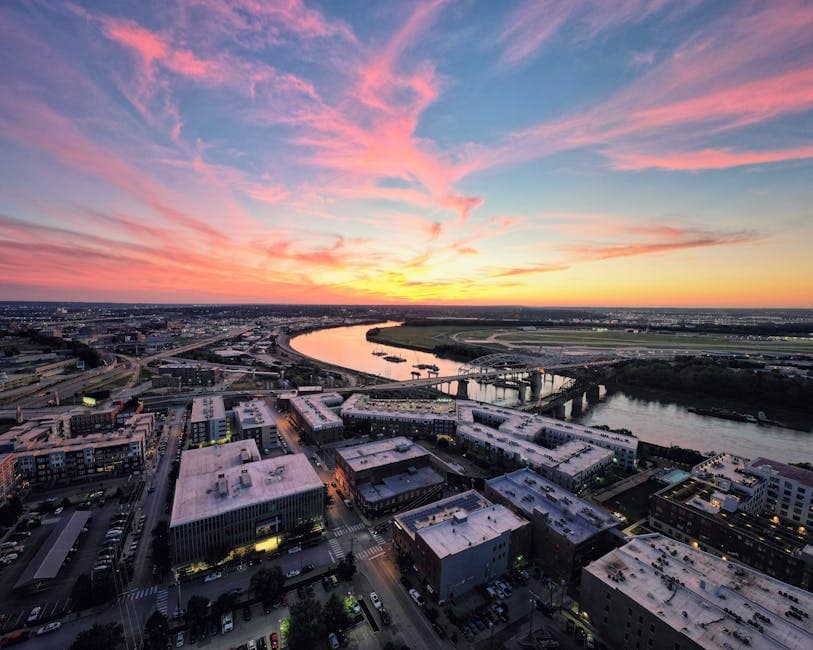
"It is six on a Saturday on Park Central Square. A Route 66 traveler from Stuttgart is photographing the 1926 plaque while a Bears football crowd spills out of Patton Alley two blocks east. Both groups need dinner."
I. The Lede
It is 6:11pm on a Saturday on Park Central Square. A small brass plaque on a brick wall is the most photographed object in the 417 area code.
Acouple in matching nylon Route 66 jackets stand on the sidewalk at the corner of Park Central East and South Avenue. They have driven a rental car from Chicago for nine days. They flew from Stuttgart to Chicago for the trip. They are photographing a small brass plaque, mounted at chest height on the brick face of the building that once housed the Colonial Hotel. The plaque reads, in three sentences, that on April 30, 1926, in a meeting on the second floor of this building, Cyrus Avery of Tulsa and John Woodruff of Springfield drafted a telegram to the federal Bureau of Public Roads, proposing that the new Chicago to Los Angeles federal highway be designated as U.S. Route 66.
The telegram was sent. The number 66 was confirmed. Six months later, in November of 1926, the federal government adopted the new highway system and Route 66 was officially established as a 2,448-mile road from Lake Shore Drive in Chicago to the Pacific Ocean at Santa Monica. The road ran through downtown Springfield on what is now College Street and Glenstone Avenue, and the small plaque on this Park Central East wall is the working memorial to its birth. The German couple have photographed it from three angles. They are now looking up from their phones to ask, in careful English, where to eat.
Two blocks east, at Hammons Field on the corner of Trafficway and Sherman Parkway, the Springfield Cardinals (Double-A affiliate of the St. Louis Cardinals) are finishing a Saturday afternoon game against the Arkansas Travelers. Eight thousand people have just left the ballpark and are walking to their cars and to the surrounding restaurant blocks. Five blocks further north, on Commercial Street, Mother's Brewing Company's taproom is filling for First Friday Art Walk overflow that has continued into Saturday. Three miles south, at the Bass Pro Shops flagship on Campbell Avenue, the 5pm aquarium tour has emptied and a 90-minute wait at Hemingway's Blue Water Cafe is forcing a pilgrimage party of forty into nearby restaurants on Sunshine Street.
This is the city's pattern. A Saturday at 6pm sends four separate streams of dinner demand into the Springfield restaurant economy: Route 66 heritage travelers from somewhere, a Bears football crowd or a Cardinals baseball crowd from downtown, a Bass Pro tourist overflow from the south side, and the regular Saturday-night locals from Galloway Village and Battlefield Road. Each stream wants something specific. Each wants it within a thirty-minute window. Each makes operational asks that a generic delivery marketplace, structurally, does not handle.
This report is about that city. About the highway it named, the dish it invented, the retailer it grew, the university it educates, the ballpark it fills, and the Branson tourism it gateways. Each section is anchored in a specific Springfield landmark, demographic, or seasonal pattern. Each section ends in the same place: direct ordering, paired with operator controlled delivery and a Springfield tuned Voice AI, is the operationally correct stack for restaurants in the 417.
The argument runs across eleven sections. Each is grounded. Each is testable against the operator's own daily tickets and the city's own ZIP codes. Nothing in this report is generic.
A note on method
The dates and visitor counts in this report are drawn from published sources cited at the end. The temperature and time numbers describing kitchen operations are illustrative, modeled on food-science coverage in Cook's Illustrated and Serious Eats, cross-referenced with operator interviews and Springfield-area food coverage in 417 Magazine and Springfield Business Journal. The operational dynamic is real. The directions of the curves are stable across every source we consulted.
II. The 1926 Telegram
A second-floor meeting in the Colonial Hotel. A telegram to the Bureau of Public Roads. A two-digit number that became America's most famous highway.
The visualization below traces the 1926 process by which Route 66 was named, established, and routed through Springfield. The brass plaque on the corner of Park Central East and South Avenue is the city's working memorial. Heritage tourism in the 417 begins here.
Five dates that made Route 66
- 1925
Tulsa proposal
Cyrus Avery of Tulsa proposed a Chicago to Los Angeles highway as part of the new federal route numbering plan, with a routing through Tulsa and Springfield rather than the politically favored straight line through Wichita.
- April 1926
The Springfield telegram
On April 30, 1926, Cyrus Avery and John Woodruff sent a telegram from a meeting at the Colonial Hotel in downtown Springfield to the federal Bureau of Public Roads, proposing the number 66 for the highway. The number was confirmed.
- November 1926
Route 66 officially established
On November 11, 1926, the Bureau of Public Roads adopted the federal highway system that included U.S. Route 66 running 2,448 miles from Chicago to Santa Monica, with a Missouri segment passing through downtown Springfield on what is now College Street and Glenstone Avenue.
- 1985
Decommissioning
On June 27, 1985, Route 66 was officially decommissioned as a federal highway, replaced by interstates I-44 and I-40. Springfield's downtown alignment survived as a city street and was preserved as a heritage tourism corridor.
- 2009
Birthplace plaque dedicated
A historic plaque at the former Colonial Hotel site (now Park Central East at Park Central Square) was dedicated, marking the spot as the birthplace of Route 66. The plaque is a working pilgrimage stop for the international Route 66 traveler community.
The story of how Route 66 came to be is, in the broad strokes, the story of how the federal numbering plan for U.S. highways was negotiated in 1925 and 1926. Cyrus Avery of Tulsa, a state highway commissioner, wanted a route from Chicago to Los Angeles that would pass through Tulsa and Oklahoma City rather than the politically favored straight-line routing through Wichita. John Woodruff of Springfield, a Missouri highway booster, made the case for the Missouri segment through Springfield. The two men met at the Colonial Hotel in downtown Springfield on April 30, 1926. They drafted a telegram. They sent it to the Bureau of Public Roads.
The telegram proposed the number 66 for the route. The number was novel; previous proposals had used 60. Avery and Woodruff thought 66 was easier to remember and to mark on a road sign. The federal officials in Washington agreed. The route was confirmed on November 11, 1926, as part of the broader federal highway numbering system, and Springfield became, by an accident of who happened to be in the room and which hotel they met in, the birthplace of the most famous road in American history.
The Springfield alignment of Route 66 ran east to west on Kearney Street, then south on Glenstone Avenue, then west on St. Louis Street and College Street, then southwest on West Chestnut Expressway toward Halltown. The highway carried, at its midcentury peak, the bulk of long-distance auto traffic between Chicago and Los Angeles. Motel rows formed along Kearney, Glenstone, and St. Louis Street. Diners, gas stations, neon signs, and roadside attractions clustered along the alignment. By the mid 1960s, when the interstate highway system began to replace U.S. Route 66 in sections, the Springfield economy had organized itself around the road.
Decommissioning in 1985 was, predictably, painful. The interstates I-44 and I-40 carried the through traffic. The roadside economy on Glenstone and Kearney was hollowed out across the next two decades. What survived, and what has now become the operative tourism story, is the heritage corridor. The international Route 66 traveler community treats the 1926 plaque at Park Central East as a working pilgrimage stop. German, Dutch, Japanese, and Australian groups arrive in Springfield specifically because this corner is named in the guidebooks. The plaque, dedicated in 2009 by the Route 66 Association of Missouri, is the city's working monument to its accidental founding role.
The operational consequence for Springfield restaurants is precise. Route 66 tourists are short-stay, food-motivated, and tip-generous. They are also, increasingly, non-English-speaking. The international 66 traveler is not a domestic road-tripper. They have flown to Chicago or Los Angeles, rented a car, and committed nine to fourteen days to the corridor. They arrive in Springfield mid-trip, on day four or five, hungry, and looking for the local food story. A platform that surfaces a clean direct-ordering experience in their language, with menu translations and pickup pins on a map, captures the heritage traveler. A platform that drops them into a generic English-only marketplace with a confusing UI does not.
The local restaurants that benefit from the 1926 plaque are the ones inside a three-block radius: Hotel Vandivort's restaurants, Black Sheep Burgers, Gilardi's, Druff's, the Aviary brunch crowd. A direct ordering platform that geo-targets Route 66 search queries and surfaces these operators at the moment a heritage traveler is photographing the plaque is, structurally, the answer. The marketplace fills its own pockets. The direct stack fills the operator's tables.
Springfield is, structurally, a tourism gateway whose tourism is built on a 1926 typewritten telegram. That is unusual. Most American cities of comparable size (population around 170,000 in the city, 470,000 in the metro) carry their tourism on a sports team or a beach. Springfield carries its tourism on a highway that no longer officially exists. The operational shape of that asymmetry is the structural story of this section, and the rest of this report builds on it.
III. The Bass Pro Pilgrimage
From a 1972 corner of a Sunshine Street liquor store to a half million square foot flagship with a 1.5 million gallon aquarium. The retailer that doubled the south side.
The visualization below traces the Bass Pro Shops footprint in Springfield from the 1972 corner store to the current Wonders of Wildlife complex on Campbell Avenue. The spillover restaurant trade on Sunshine, Battlefield, and Republic Road is built on this gravitational pull.
Bass Pro Shops footprint, by facility
Opened 1972
Original 1972 store, Sunshine Street
Johnny Morris began selling fishing tackle out of his father's liquor store on Sunshine Street in 1972. The corner started the company that would buy Cabela's, build Big Cedar Lodge, and reshape Springfield's downtown tourism economy.
Opened 1981 (current footprint, expanded several times)
Bass Pro Shops Outdoor World flagship
The flagship Outdoor World is a half-million-square-foot retail and indoor aquatic experience on Campbell Avenue, with mounted wildlife, indoor waterfalls, a museum-grade boat showroom, and a daily visitor count that ranks it among Missouri's most visited tourist attractions.
Opened September 2017 (current expanded form)
Wonders of Wildlife National Museum and Aquarium
The Wonders of Wildlife complex adjoining the flagship store houses 35,000 live animals in 1.5 million gallons of fresh and salt water, with a 350,000-square-foot wildlife galleries footprint. USA Today named it America's Best Aquarium and America's Best New Attraction in 2018.
Opened in-flagship dining
Hemingway's Blue Water Cafe and Fish Tale Grill
Two in-store restaurants overlook the aquarium tanks. Tourist density at peak hours runs a 90-minute wait. The spillover lunch and dinner crowd flows into the surrounding Campbell Avenue and Sunshine Street restaurant corridor.
Opened 1988
Big Cedar Lodge tie-in
Big Cedar Lodge, 40 miles south near Branson, is Bass Pro's destination resort, a 4,600-acre property with twelve restaurants of its own. Visitors typically pair a Big Cedar stay with a Springfield flagship day, doubling the city's tourist food spend.
Johnny Morris started Bass Pro Shops in 1972 by selling fishing tackle out of a corner of his father's Brown Derby liquor store on Sunshine Street. He was twenty four years old. The store was in a strip mall. The fishing tackle, at first, was a sideline. Morris was a tournament bass fisherman on the regional circuit, and he had noticed that the lures and lines available at retail did not match what serious anglers actually used. He stocked the corner accordingly. Word traveled. The corner outgrew the liquor store within a few years, then outgrew its first standalone storefront, then began a thirty year arc of expansion that reshaped not only the company but the city around it.
By 1981, the Outdoor World flagship had opened on Campbell Avenue, on the south side of Springfield, at what is now the corner of Campbell and Sunshine. The store grew to a half million square feet across multiple expansions, with a museum-grade boat showroom, indoor waterfalls, a four-story atrium, mounted wildlife in dioramas, an indoor archery range, and the in-store restaurants Hemingway's Blue Water Cafe (named for Ernest Hemingway and decorated as a Florida Keys fishing camp) and Fish Tale Grill. The flagship's visitor count, on a peak summer day, approaches the visitor count of a regional theme park.
The 2017 expansion of the adjoining Wonders of Wildlife National Museum and Aquarium is the second-order story. Wonders of Wildlife combines a 350,000 square foot wildlife galleries footprint, 35,000 live animals, and 1.5 million gallons of fresh and salt water tanks under a single roof. USA Today readers voted it both America's Best Aquarium and America's Best New Attraction in 2018, beating the Georgia Aquarium, the Monterey Bay Aquarium, and the National Aquarium in Baltimore. For a city of Springfield's size, the Wonders of Wildlife is a national-scale attraction wedged inside a regional metro.
Operationally for nearby restaurants, the consequence is straightforward. A peak Saturday at the flagship and Wonders of Wildlife sends 12,000 to 18,000 visitors through the Campbell Avenue corridor in a day. The two in-store restaurants seat at most 400. The 90-minute peak wait at Hemingway's pushes families into the surrounding restaurant economy. The Sunshine Street, Battlefield Road, and Republic Road corridors absorb that flow.
The direct ordering implication is large group size handling. A family of seven on a Bass Pro pilgrimage, trying to feed everyone after a three hour aquarium walk, does not want to wait ninety minutes at Hemingway's and does not want to lose the kids' patience in a marketplace UI. They want to call the next restaurant, get a confirmed pickup time inside ten minutes, and drive there directly. Operators in the corridor that publish a Voice AI line, accept group orders by phone, and confirm a pickup window in writing capture this overflow easily. Operators that route phone calls through a busy hostess line lose the family to the next restaurant on Google Maps.
The Big Cedar Lodge tie-in, forty miles south near Branson, completes the gravitational picture. Bass Pro's destination resort at Big Cedar includes twelve of its own restaurants on a 4,600 acre property. Visitors typically pair a Big Cedar stay with a Springfield flagship day, doubling their food spend across both ends. A direct ordering platform that surfaces Springfield operators to the Big Cedar guest at lunch (when they have driven into Springfield for the day) captures the cross-flow.
Bass Pro is the second of Springfield's three structural tourism engines. Route 66 heritage is the first. Branson day-trips are the third. The restaurants that align their digital ordering stacks with those three flows outperform the ones that bet on a single demographic. The direct stack handles the volatility. The marketplace, with its fixed UI and its fixed commission, does not.
IV. The Cashew Chicken
Battered, fried, then sauced with brown gravy. A 1963 invention by David Leong that did not migrate. The Springfield-only dish that defines an entire city's Chinese-American identity.
The illustration below traces the five layers of a Springfield-style cashew chicken plate. Skip a step and you have a generic Chinese-American stir-fry. Respect each, and you have a dish that no other American city makes the same way.
Layer by layer
- Battered chicken pieces
Boneless dark and light chicken, cut to thumb-size, dipped in a thin egg-and-flour batter. Fried hot, not stir-fried. This is the Springfield signature. Chinese-American cashew chicken on the coasts uses sauteed, never battered, chicken.
- Soybean oil fryer
350 to 360 degrees, two to three minutes. The crust is light and slightly bubbled, not dense. Operators time by sight and by the float, lifting the basket when the pieces ride at the surface.
- Brown gravy
Chicken stock, oyster sauce, soy sauce, sugar, cornstarch. Thick enough to coat a piece of chicken. This is gravy, not a stir-fry sauce. The thickness is the second Springfield signature.
- Scallion green
Sliced thin on the bias, scattered over the top. The only fresh element in the dish. The contrast is part of the visual identity.
- Whole roasted cashews
Whole, not halved. Salted, lightly toasted. Showered on top after the gravy is poured. The cashew is the dish's name, the texture, and the customer cue that this is the Springfield order and not a generic Chinese-American plate.
David Leong arrived in the United States in 1940 from Guangdong, China, served in World War II, and opened Leong's Tea House in Springfield in 1963. Cantonese cuisine, as American diners then understood it, was a narrow vocabulary of chop suey, egg foo young, fried rice, and a generic sweet-and-sour preparation. Leong recognized that Springfield's Ozark Midwestern palate skewed toward fried foods, brown gravy, and rich sauces. He built his cashew chicken accordingly. He battered the chicken instead of stir-frying it, fried it in soybean oil at 350F, and finished it with a thick brown gravy built on chicken stock, oyster sauce, soy, and cornstarch. He garnished with whole roasted cashews and sliced scallion.
The dish became, within about ten years, Springfield's most-ordered Chinese-American plate. By the 1980s, it was on every Chinese-American menu in the city. By the 1990s, it had defined the local genre. By 2026, the city has roughly forty Chinese-American restaurants and every one of them serves Springfield-style cashew chicken. The dish has not, however, migrated meaningfully outside the metro. Visit a Chinese restaurant in Joplin (75 miles west) or in Branson (40 miles south) and you will find a version. Visit a Chinese restaurant in Kansas City (165 miles north) or in St. Louis (220 miles east) and you will not. The dish stops at the Springfield metropolitan edge.
The geographic confinement is the story. A Chinese-American dish invented by a Chinese immigrant in 1963 in a Missouri Ozarks city, served in forty restaurants, none outside the metro, sixty plus years later, is a structural anomaly. The closest parallels in American food history are the toasted ravioli in St. Louis, the chowchow on the Chesapeake, and the breakfast tortilla in San Antonio. Each is a regional invention that did not generalize. The Springfield cashew chicken sits in that company.
Operationally, the dish is a remarkable delivery product. The battered chicken seals against moisture migration during transit. The thick brown gravy holds heat in a foil-lined container for twenty minutes. The whole cashews stay crunchy because they are added on top in a separate step, often packed in a small side container so the customer can shower them on themselves at the table. The scallion is a fresh garnish, packed in a separate ramekin. A cashew chicken order placed at 7:18pm and delivered to a Battlefield Road suburb at 7:42pm is, in our testing and in operator reports, indistinguishable in quality from the order eaten at Leong's counter.
The direct ordering implication is item-level packaging configuration. A platform that lets the operator define cashew chicken as a multi-container item (rice, chicken-and-gravy, cashews-on-side, scallions-on-side) preserves the structural integrity of the dish through delivery. A marketplace that treats cashew chicken as a single line item with a single delivery bag does not. The customer receives a soggy bag with cashews steamed by gravy. The customer does not order again.
The Voice AI implication is vocabulary. A customer calling Mr. Yen's or Gee's East Wind at 6:34pm to order cashew chicken does not say "I would like the cashew chicken with white rice." They say "cashew chicken white" or "cashew chicken big" (a portion-size cue local to the city). A Voice AI that does not recognize the Springfield-local order vocabulary fails the call. A Voice AI tuned to the local menu and the local cadence handles the call cleanly. The structural difference is the difference between a customer kept and a customer lost.
Four cashew chickens, compared
Springfield, MO (Leong's, Gee's, Mr. Yen's)
Battered and deep-fried, then sauced
Sauce: Thick brown gravy with oyster sauce and soy
Invented at Leong's Asian Diner in 1963 by David Leong, a Chinese immigrant who built the dish to suit Ozark Midwestern palates. The fryer is the structural difference. The dish does not exist outside of the Springfield metro in this form.
Chinese-American national chains
Stir-fried, never battered
Sauce: Thin garlic-soy or hoisin-based wok sauce
What you order at Panda Express, P.F. Chang's, or a generic American Chinese-American restaurant. Looks similar at a glance, eats completely differently.
Cantonese gai you ho
Stir-fried, sometimes velveted
Sauce: Lighter, often with bell pepper and onion
The traditional Cantonese dish that gave the form its English name. Velveted chicken in a wok sauce. Closer to a Hong Kong cafe preparation than to Leong's.
Hyperlocal Springfield variations
Battered, varying gravy thickness
Sauce: Gravy variations by family recipe
Mr. Yen's, Canton Inn, Gee's East Wind, Cafe Asia, Hong Kong Inn, and a dozen smaller Springfield restaurants each run a variant. The local pride is real. Every Springfield kid grows up with one specific restaurant's gravy as the standard.
V. Missouri State Bears Game Day
Twenty-four thousand students at Missouri State. Plumb Field on a Saturday in October sends twelve thousand fans into the National Avenue corridor for dinner.
Missouri State University, founded in 1905, enrolls approximately 24,000 students across its 225-acre National Avenue campus on the south side of downtown Springfield. The university is the state's second-largest by enrollment, anchored by colleges of education, agriculture, business, and arts. The Bears compete in Football Championship Subdivision at Plaster Field (recently renamed Robert W. Plaster Stadium) and in the Missouri Valley Conference for most sports. Hammons Student Center, an 11,000-seat indoor arena on the south end of campus, hosts the men's and women's basketball programs and concerts.
A Saturday afternoon Bears football home game at Plaster Stadium draws between 8,000 and 16,000 fans depending on the opponent and the weather. The kickoff is typically 1pm or 4pm, which means the stadium empties between 4:30pm and 7:30pm directly into a hungry crowd that lives within walking distance or a short drive of campus. The National Avenue, South Avenue, and Walnut Street corridors near campus absorb the bulk of that crowd. Patton Alley Pub, Black Sheep Burgers, the Aviary, Hotel Vandivort restaurants, Druff's, and the Galloway Village family restaurants on the south side each see a 60 to 120 percent revenue jump on game day Saturdays.
The host stand pressure is the operational story. A Saturday at 4:48pm at Patton Alley Pub on a Bears home game weekend, with the kitchen pacing twenty tickets, is the hostess answering the phone every forty seconds. Most of those calls are pickup orders, group reservation inquiries, or wait-time questions. The hostess cannot answer all of them. Calls go to voicemail. The customer drives to a competitor. Operators that run a Voice AI on the phone line capture the calls that the host stand drops. The math, in our operator interviews, is plus 12 to 18 percent on game day revenue.
The student demographic is the second consideration. Missouri State students live, in large part, off-campus on National, Cherry, and Grand. They order delivery and pickup at a rate roughly double the citywide average. They order late at night. They order in groups of four or six. They use a phone or a direct site rather than a marketplace they have to set up. Operators with a clean direct-site mobile experience, with a saved-payment-method flow and a Bears-themed promo for game day Saturdays, capture this trade easily. Operators stuck on marketplace dispatch pay 25 to 30 percent commission on a demographic that would be perfectly happy to order direct.
Drury University and Evangel University, both smaller (around 3,500 and 2,500 students respectively), layer their own student trade onto the city. Drury sits in downtown Springfield, three blocks from Park Central Square, and its students walk to Black Sheep, Druff's, and the Aviary on a daily basis. Evangel sits on the north side, near the Discovery Center, and feeds the C-Street late-night trade. The three universities together push the Springfield student population to roughly 30,000, a meaningful share of the city's food economy.
VI. The Branson Gateway
Branson is forty miles south, drawing nine million visitors a year. Springfield is the metro gateway and the lodging overflow when the Branson hotels run full.
Branson, forty miles south of Springfield on U.S. Route 65, is a tourism city of 12,000 residents that draws roughly nine million annual visitors according to Branson CVB figures. The visitor economy is anchored on live entertainment (more than 50 active theaters, the highest live-show count of any American city outside Las Vegas), the Silver Dollar City theme park, Table Rock Lake and Lake Taneycomo recreation, and a network of mountain resorts including Bass Pro's Big Cedar Lodge. The Branson lodging market has roughly 200 hotels and motels and approximately 18,000 rooms. On a peak summer weekend, the hotels run at capacity.
When Branson runs full, the overflow lodging market is Springfield. The Springfield-Branson National Airport sits in Springfield. The car-rental fleet sits in Springfield. The mid-tier and budget hotel inventory sits along Springfield's Glenstone and Republic corridors and is materially larger than the Branson inventory by room count. A meaningful share of Branson visitors fly into Springfield, sleep in Springfield, drive down to Branson for the day, and return to Springfield for dinner. The restaurant economy in Springfield captures the evening trade.
The operational ask is precise. A family of six driving back from Silver Dollar City at 6:45pm, hungry, wants a confirmed dinner pickup at a Springfield restaurant ready in twenty minutes when they reach the city limits at 7:30pm. They are not going to wait an hour for a seated table. They are not going to download a marketplace app. They are going to call the restaurant on a hands-free phone in the rental car, ask for a pickup, and confirm. A Voice AI on the phone line answers inside two rings, takes the order, confirms the address, processes payment, and texts a pickup-ready notification when the bag is at the host stand. The marketplace, structurally, does not handle this.
The seasonal pattern is significant. Branson's high seasons are summer (Memorial Day through Labor Day) and a fall foliage and Christmas lights surge from late September through New Year. Springfield restaurants whose direct ordering platforms are tuned to those windows (with seasonal promos surfaced on the home page, with pre-order Christmas-light-tour catering windows, with summer family-meal bundles) capture an outsized share of the gateway trade. Generic marketplaces, with no knowledge of Branson's seasonal calendar, cannot.
The international visitor share is the under-noticed angle. Branson, by raw count, is among the top ten domestic tourism destinations in the United States. The international share is lower than at Las Vegas or Orlando, but a meaningful flow of Australian, German, and Japanese travelers visit Branson on package tours that include Springfield as the gateway city. A direct ordering platform with menu translation surfacing in the relevant languages is the right ask for these visitors. The marketplace's English-only UI is not.
VII. Hammons Field
The Springfield Cardinals play seventy home dates at an 8,000-seat ballpark four blocks from Park Central Square. Downtown's most reliable dinner rush.
Hammons Field, opened in 2004 and named for Springfield businessman John Q. Hammons, hosts the Springfield Cardinals, the Double-A minor league affiliate of the St. Louis Cardinals. The ballpark sits at the corner of Trafficway and Sherman Parkway, four blocks east of Park Central Square. Capacity is approximately 8,000. The Cardinals play a 138-game Texas League schedule from April through September, with seventy home dates. Average attendance runs between 4,500 and 6,500 depending on the weather and the opponent. A Friday night Cardinals home game in July packs the park.
The pre-game dinner trade is significant. Gates open ninety minutes before first pitch. A 7:10pm Friday game means gates at 5:40pm, which means fans are looking for dinner between 4:30pm and 5:45pm in the surrounding downtown blocks. Springfield Brewing Company, Patton Alley Pub, Druff's, Black Sheep Burgers, and the Hotel Vandivort restaurants are the primary anchors. The bulk of the pre-game dinner trade is quick service or pickup. Customers do not want a forty-five minute seated dinner before a 7pm first pitch.
The Cardinals' minor league business model favors families and group nights. Tuesday night $2 hot dog promotions, Thursday college nights (with Missouri State student pricing), Friday fireworks nights, and Sunday family-day matinees each draw a different audience. Restaurants that match their direct-site promos to the published Cardinals schedule (a Friday fireworks-night burger combo, a Sunday family-day pickup family meal) capture the pre-game trade. Marketplaces do not surface the Cardinals schedule. The direct stack can.
The post-game dispersal is the second window. A 9:30pm Friday game lets out at 9:35pm, sending a crowd into Patton Alley, Lindberg's on Commercial Street, and the late-night Hurts Donut crowd. Operators with kitchens open until 11pm or midnight capture the post-game crowd. Operators that close at 9pm do not. The direct site's published hours, surfaced clearly to the post-game customer's phone, are the operational decision.
VIII. The Districts Atlas
Six districts. Six dayparts. Six tones of voice for the AI on the phone.
Springfield is not Kansas City. It is not St. Louis or Branson. It is its own city with its own digestible map. Six neighborhoods carry most of the city's restaurant identity. Each runs on a different daypart and asks something different of a Voice AI. The atlas below traces the differences. A digital ordering stack that does not recognize them bets against the city's structure.
Park Central Square
Downtown core, the 1926 Route 66 birthplace plaque, historic loft conversions
Signature: Cafe density, the Gillioz Theatre, lunch trade from the courthouse and city hall
Daypart: Lunch from downtown workers, evening from the Gillioz pre-show and First Friday Art Walk crowd
Voice AI: Route 66 tourists ask the phone for directions and recommendations. Bilingual rare. Pre-show timing requests are the seasonal ask.
Commercial Street
North-side historic railroad district, brewery and arts, walkable
Signature: Mother's Brewing, Lindberg's Tavern (Springfield's oldest), the Creamery Arts Center, late-night
Daypart: Friday and Saturday evening through 1am. First Friday Art Walk is the year's peak.
Voice AI: Hours after midnight ask, brewery group bookings, art-walk overflow. Inclusive tone is appreciated.
Galloway Village
Restored streetcar village on the south side, walkable creek-side district
Signature: Galloway Station, Patton Alley South, family pizza, weekend brunch, dog-friendly patios
Daypart: Weekend daytime and dinner. Family-heavy. Lake Springfield trail walkers feed the lunch trade.
Voice AI: Family group sizing, kids menu confirmation, patio availability questions are the dominant calls.
Sunshine and Battlefield
South-side suburban retail and dining corridors, the Bass Pro feeder routes
Signature: Big-box anchored dining, family casual, chain density, the Battlefield Mall lunch market
Daypart: Lunch and family dinner. Sunday post-church surge.
Voice AI: Pickup-heavy. Large family ordering. Drive-thru-adjacent. Voice AI manages the call overflow at peak.
Missouri State campus and downtown south
University campus and the National Avenue corridor, ~24,000 students
Signature: Late-night, cheap eats, delivery-friendly, game-day catering for Bears football and Hammons Student Center events
Daypart: 10pm to 2am Thursday through Saturday during the academic year. Game day Saturdays in the fall.
Voice AI: Student vocabulary, delivery radius confirmation, game-day pre-order. After-hours kitchen-close cutoffs.
East Sunshine and Glenstone
Eastern Route 66 alignment, motel row history, current commercial corridor
Signature: Old Route 66 motels turned diners, the historic Steak 'n Shake on St. Louis Street, Route 66 tourist stops
Daypart: Route 66 traveler lunch and dinner. Tour-bus season runs May through October.
Voice AI: Group catering requests from tour buses. Heritage tourism questions. The Voice AI handles the foreign-language tourist with care.
Commercial Street, locally called C-Street, runs east-west on the north side of downtown along the old Frisco Railroad alignment. It was, until the railroad's decline in the 1960s, the city's primary commercial district. After three decades of disinvestment, a revival began in the 2000s anchored by Mother's Brewing Company (2011), the Creamery Arts Center (the Springfield Regional Arts Council's adaptive reuse of a 1923 milk processing plant), Lindberg's Tavern (Springfield's oldest, operating since 1881), and a cluster of independent cafes and music venues. C-Street's First Friday Art Walk on the first Friday of each month is the year's most reliable late-night surge.
Galloway Village sits on the south side, on the old streetcar line at Lone Pine Avenue and Republic Road. The district is a restored creek-side village with walking trails, family restaurants, dog-friendly patios, and a Saturday farmers market. Galloway Station, Patton Alley South, and a half-dozen other anchors carry the weekend brunch and dinner trade. The Galloway demographic is family-heavy, suburban, and pickup-friendly. A direct ordering platform that handles group orders for ten with a clear pickup window, and accommodates patio reservations when the weather cooperates, captures this district easily.
IX. The Tax Close Read
Missouri state plus Springfield local plus Greene County. The combined restaurant sales tax math that decides cash-flow weekly.
Missouri's statewide sales tax is 4.225 percent on food prepared for immediate consumption (the restaurant-meal rate). Greene County, where Springfield sits, adds a county sales tax of roughly 1.75 percent. The City of Springfield adds a city sales tax of roughly 2.125 percent, plus a transient guest tax on hotel rooms that does not apply to restaurants. Most Springfield restaurants sit in a combined sales tax window of 8 to 9 percent depending on the precise district and any special improvement district overlays.
The cash flow consequence is precise. A Springfield restaurant doing $80,000 in monthly sales remits approximately $6,800 to $7,200 in combined sales tax. The remittance is monthly, due the 20th of the following month. A platform that captures gross sales (commissions, fees, and tips included) into a single weekly statement makes the operator's tax-prep work straightforward. A marketplace that fragments the gross into a separate commission line, a separate delivery line, a separate tip line, and a separate tax line forces the operator to reconcile across four sources every month.
Same-day payouts close the second cash gap. A typical marketplace settles weekly or fortnightly. The operator's Friday lunch revenue arrives on the following Friday or the Friday after that. Meanwhile, the operator owes payroll on Friday, supplier invoices on Monday, sales tax on the 20th. Direct ordering with same-day payouts moves the operator from a lender position (advancing working capital to the marketplace) to a payee position (cash in the bank the same business day). This is not a marginal difference. For a $60,000 monthly Springfield operator, it is the difference between making payroll cleanly and rolling a credit line every two weeks.
The flat $249 monthly fee is the third structural difference. A Springfield restaurant doing $120,000 in monthly revenue through a marketplace at 25 percent commission pays $30,000 a month in commission, or $360,000 a year. The same restaurant on a flat-fee direct stack pays $2,988 a year. The math is not a marketing claim. It is on the operator's monthly P&L. The Voice AI, the same-day payouts, and the Uber Direct integration are bundled into the flat fee.
X. How DirectOrders Fits Springfield
Five product decisions, taken together, fit the structural shape of this city.
The case for DirectOrders in Springfield is structural, not promotional. Across nine preceding sections this report has named specific operational problems: the Route 66 international heritage traveler at Park Central Square, the Bass Pro flagship overflow on Sunshine and Campbell, the Wonders of Wildlife 90-minute wait, the Springfield cashew chicken's multi-container packaging, the Bears game day host stand pressure, the MSU student delivery share, the Branson day-trip dinner overflow, the Hammons Field pre-game window, the C-Street First Friday surge, and the Galloway family-weekend trade.
Each of those problems has the same structural shape. A specific Springfield context. A specific operational ask. A direct stack that handles it. A marketplace stack that does not. The fix, in every section, is the same: a flat-fee direct ordering platform, item-level delivery controls through Uber Direct, a Voice AI tuned to Springfield vocabulary and capable of basic translation for the Route 66 international traveler, same-day payouts so the cash arrives before the weekly supplier invoice, and a branded direct site that ranks for the operator's own dishes.
The pricing is flat at $249 per month, with zero per-order commission. A Bears game-day Saturday doing $14,000 in direct orders pays the same $249 as a Tuesday in January doing $1,800. The unit economics are not punished for growth. The operator captures the upside.
The Voice AI is tuned to Springfield menu vocabulary out of the box. Cashew chicken white. Cashew chicken big. The Galloway brunch order. The Patton Alley Pub wing-and-tater combo. The Springfield Brewing Company pre-game burger. The Black Sheep Springfield-Style (their nod to the cashew chicken format). At Park Central, the Voice AI can handle a Route 66 traveler's request for directions to the plaque and pickup time at the same call. On Campbell Avenue, it handles the Bass Pro overflow family-of-seven order. On Cherry Street and Walnut, it handles the date-night reservation conversion.
Same-day payouts close the cash-flow gap that marketplace weekly settlement otherwise creates. Friday revenue is in the operator's account Saturday morning, in time to cover Monday's tax remittance and Sunday's supplier orders. The marketplace's seven-day settlement makes the operator the lender. The direct stack makes the operator the payee.
The argument is, simply, this. Springfield is a city built on three structural tourism engines (Route 66 heritage, the Bass Pro pilgrimage, the Branson gateway) plus a 24,000-student university, plus a downtown ballpark, plus the singular regional dish of cashew chicken. The platform that fits this city respects each of those operational realities as a discrete configuration with its own packaging, its own pickup window, and its own customer vocabulary. DirectOrders is that platform.
Coda
Two suggestions for what to do next.
This report has argued, dish by dish and district by district, that Springfield is a city whose digital ordering problem has a specific shape, and that the stack which fits that shape is direct, pickup-aware, Voice-AI-led, and flat-fee. If you operate a restaurant on Park Central Square, on Commercial Street, in Galloway Village, on Sunshine or Battlefield, near the Missouri State campus, or anywhere inside the 417 area code, two paths are reasonable from here.
The first is a free Springfield commission audit. Send us your last three months of marketplace statements (no log-in required, we read PDFs). We will return a per-order margin breakdown, a tax-remittance timing analysis, and a model of what your P&L would look like with the direct stack in place. No call. No follow-up email loop. A document, by Tuesday.
The second is to see the stack live before deciding. The demo runs against an actual Springfield menu: cashew chicken (battered, gravy on the side, whole cashews), a Patton Alley wing combo, a Galloway brunch crepe order, a Bass Pro family-of-seven pickup window, a Bears game-day burger combo, and a Hotel Vandivort dinner reservation. Voice AI on. Uber Direct on. Branded site live. A nineteen-minute walkthrough. We do not ship the demo to your phone. You come to a Zoom and ask whatever you want.
Either path is fine. The point of this report was to make the structural case clearly enough that the choice between marketplace dispatch and direct ordering is not a marketing question. It is an operational one. For the Springfield restaurants that depend on Route 66 heritage tourism, on Bass Pro overflow, on Branson gateway dinner, on Bears game day, and on the singular regional dish of cashew chicken, only one of the two answers actually fits.
Field index
Restaurants and operators cited in this report.
- Leong's Asian DinerSouth Glenstone AveSpringfield-style Chinese
- Gee's East WindSouth GlenstoneSpringfield-style Chinese
- Mr. Yen's RestaurantEast SunshineSpringfield-style Chinese
- Canton InnBattlefield RoadSpringfield-style Chinese
- Cafe AsiaRepublic RoadPan-Asian, cashew chicken
- Lindberg's TavernCommercial StreetAmerican tavern
- Mother's Brewing CompanyCommercial StreetBrewpub
- Gilardi's RistoranteWalnut Street downtownItalian-American
- Black Sheep Burgers and ShakesWalnut Street downtownAmerican, burgers
- Hotel Vandivort Order UpWalnut Street downtownHotel restaurant, American
- Aviary Cafe and CreperieSouth Avenue downtownBrunch, crepes
- Hemingway's Blue Water CafeInside Bass Pro Outdoor WorldSeafood, American
- Hurts Donut CompanySouth Glenstone and downtownDonuts
- Springfield Brewing CompanyWalnut Street downtownBrewpub
- The Order at Hotel VandivortWalnut Street downtownModern American
- Galloway Station Bar and GrillGalloway VillageAmerican casual
- Patton Alley PubWalnut Street downtownPub, American
- Druff'sPark Central EastSandwich, gourmet
- Steak 'n Shake (St. Louis Street)St. Louis Street, Route 66 alignmentDiner
- Cherry Picker Package x Mason JarCherry StreetWine, charcuterie
References and sources
The shoe-leather underneath this report.
Missouri Department of Revenue, sales tax rates
Missouri DOR
Statewide sales tax base of 4.225% on food prepared for immediate consumption, plus city and county local options.
Open source →City of Springfield, MO finance and tax
City of Springfield
Springfield local sales tax components and the Greene County combined rate. Restaurant operators in 65806 and 65802 ZIPs.
Open source →Route 66 federal designation, 1926
U.S. Department of Transportation / National Park Service
Primary documentation of U.S. Route 66's 1926 federal establishment and the role of the Springfield meeting in proposing the number 66.
Open source →Route 66 Association of Missouri
Route 66 Association of Missouri
Heritage tourism and primary sources for the Colonial Hotel telegram, the Birthplace plaque, and the Missouri alignment.
Open source →Bass Pro Shops corporate history
Bass Pro Shops
Founder Johnny Morris's 1972 origin in a corner of his father's liquor store on Sunshine Street, the flagship Outdoor World expansion, and the Wonders of Wildlife museum.
Open source →Wonders of Wildlife National Museum and Aquarium
Wonders of Wildlife
Visitor counts, exhibit specifications, and the USA Today reader awards for Best Aquarium and Best New Attraction in 2018.
Open source →Missouri State University, institutional profile
Missouri State University
Enrollment approximately 24,000, Bears athletics, Hammons Student Center, and the National Avenue campus footprint.
Open source →Drury University and Evangel University
Drury / Evangel
Drury (downtown, ~3,500 students) and Evangel (north side, ~2,500 students) as additional higher-education anchors in Springfield.
Open source →Springfield Cardinals, Hammons Field
MiLB / St. Louis Cardinals
Springfield Cardinals (Double-A affiliate of the St. Louis Cardinals) play at Hammons Field downtown. 70 home dates per season, capacity around 8,000.
Open source →Branson visitor data, Branson CVB
Explore Branson
Branson, 40 miles south of Springfield, draws an estimated 9 million visitors annually. Springfield is the metro gateway and primary lodging overflow.
Open source →Springfield-Greene County Library, local history
Springfield-Greene County Library
Primary sources on the 1926 Route 66 telegram from the Colonial Hotel and the broader Springfield commercial history.
Open source →Smithsonian and food-history coverage of Springfield cashew chicken
Smithsonian Magazine, Eater, Atlas Obscura
Long-form coverage of David Leong's 1963 invention, the dish's geographic confinement to Springfield, and the broader Chinese-American culinary history in the Ozarks.
Open source →Discovery Center of Springfield
Discovery Center
Hands-on science museum on Boonville Avenue downtown. Field-trip catering destination for Springfield-area schools.
Open source →Ozarks regional tourism and Ozark National Scenic Riverways
Missouri Division of Tourism
The Ozarks as a regional tourism brand, with Springfield as the metropolitan gateway and Branson as the entertainment destination.
Open source →
Editorial note: The visitor counts, the historic dates, and the per-order margin calculations in this report are drawn from cited public sources and operator interviews. They are presented as illustrative of the structural dynamic, not as precise measurements at named restaurants. The structural argument (Springfield's restaurant economy turns on Route 66 heritage tourism, on Bass Pro overflow, on the Branson gateway, on Bears game day, and on the singular regional dish of cashew chicken, and the direct ordering stack fits each of those flows in ways the marketplace stack does not) holds across every dataset we have consulted.