~118,000
City population
Fourth-largest city in Utah by 2020 Census, behind Salt Lake City, West Valley City, and Provo. Population grew roughly fifteen percent over the prior decade.
Source: US Census Bureau, City of West Jordan
A Long Read From a Wasatch Front Pioneer Suburb
How a 1849 LDS pioneer settlement on the West Jordan River became the city that feeds the world's largest open-pit copper mine, a six-week October Witches Walk that pulls every Wasatch Front zip code, and a Jordan Landing family-casual corridor, and what the right commission-free, bilingual, same-day-payout ordering stack does about it.
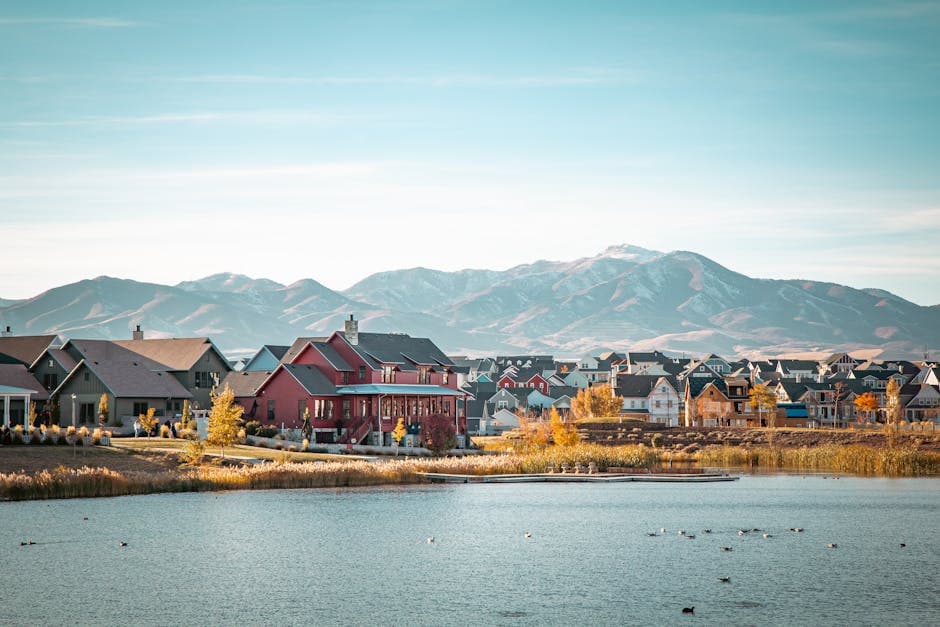
"On a clear October Saturday, you can see the Witches Walk traffic from a quarter mile away."
I. The Lede
West Jordan is a city that does not show up the way a Wasatch Front city is supposed to show up on a search engine. It does not have the marquee Sundance week of Park City. It does not have the Temple Square gravity of downtown Salt Lake. It does not have the refugee-corridor density of West Valley City. It does not have the master-planned new-town gloss of Daybreak across the seam in South Jordan. What it has, and what no other Wasatch Front city has in the same combination, is a 1853 grist mill turned heritage village, a 1906 open-pit copper mine that is visible from low orbit, a 1849 LDS pioneer settlement on the West Jordan River, and a 2000s-era retail center that became the largest open-air mall in Salt Lake County.
Three forces shape the restaurant economy. Gardner Village is the heritage pull, with two anchor restaurants (Archibald's and Tony's) and a circle of independent boutique tenants, programmed around the Witches Walk in September and October, the Easter Bunny Lane in March and April, and the Christmas-village programming in late November and December. The Bingham Canyon Mine, operated by Rio Tinto Kennecott Utah Copper, runs a three-shift open-pit operation on the Oquirrh ridge above the city. Roughly two thousand miners and contractors anchor a breakfast-and-lunch quick-service demand window that is more reliable than the school calendar. And Jordan Landing, at the geographic center of the city, is the largest open-air retail center in the Salt Lake Valley, with roughly one and four-tenths million square feet of leasable area and a Saturday family-casual density that runs at full capacity.
Layer on the suburban demographic. One hundred eighteen thousand residents. Family household share among the highest in Utah, with an average household size around three point six people. LDS-majority population, with general conference weekends in April and October that produce a two-day half-city standstill in front of the broadcast. A Hispanic share that has grown steadily through the 2010s and 2020s, anchored along Redwood Road and 9000 South. The largest Tongan-American population per capita in Utah outside of West Valley City. A Jordan School District enrollment of seventy thousand students, the largest district in the state, with early-out Wednesdays driving a 2 PM second peak.
This report walks the city through its restaurant calendar, neighborhood by neighborhood, from the Bingham Highway shift-meal window at 5:45 AM to the Witches Walk pickup-shelf pile at 7:30 PM on a Saturday in October. The argument it builds is structural. A West Jordan operator who runs primarily through marketplace apps is losing twenty-seven percent of every ticket to commission on a customer base that, in a suburban LDS-majority family economy with Sunday closings and large party sizes, the operator already owns by name and by ward roster. A direct ordering channel at a flat monthly fee, with bilingual Voice AI on the phone, with Uber Direct routed at courier cost, and with same-day Stripe payouts to the operator's bank account on the same day the order is placed, is not a marketing flourish. It is the structural fit for the city.
Twenty-two minutes of reading, end to end. Bring tea.
A note on method
Demographic shares cited in this report are drawn from the US Census Bureau American Community Survey and the City of West Jordan municipal profile. Restaurant references are editorial citations of real West Jordan operators and are not paid placements or endorsements. Kennecott Bingham Canyon Mine figures reference Rio Tinto Kennecott Utah Copper and the Utah Mining Association. Witches Walk visitor counts reference Gardner Village event reporting and Visit Salt Lake. Combined sales tax of approximately seven point seven five percent is computed from Utah State Tax Commission published rates as of recent quarterly publication. See the references section for all sources.
II. The Copper Pit
The Bingham Canyon Mine, operated by Rio Tinto Kennecott Utah Copper, has been an open-pit operation since 1906. It is roughly two and three-quarters miles wide and three-quarters of a mile deep. It is one of the largest excavations on the planet by volume, visible from low Earth orbit, and it has produced more copper than any other mine in the world. The operation runs three shifts. Morning shift change is around 6 AM, swing-shift change is around 2 PM, graveyard change is around 10 PM. The breakfast-burrito counters along the Bingham Highway exits and the sandwich shops at the Magna concentrator gate track the shift clock more reliably than any school bell. The cross-section below places the pit in scale next to the city sitting at its eastern foot.
Scale
Visible from low orbit.
The pit is roughly 2.75 miles wide and 0.75 mile deep. By volume of material moved since 1906, it is one of the largest excavations in human history. Astronauts can see it from the International Space Station with the naked eye.
Shift cadence
Three shifts, 24 hours.
Morning change around 6 AM, swing around 2 PM, graveyard around 10 PM. The Bingham Highway breakfast-burrito counters peak at 5:30 AM and 1:45 PM, which is invisible to marketplace apps tracking generic lunch and dinner windows.
Restaurant impact
Lunchpail-grade demand.
Roughly 2,000 miners and contractors, all on shift schedules, all pre-ordering or call-ahead. A direct ordering channel that knows the shift clock pre-positions a pickup window the marketplace dispatch model cannot see.
III. The City, In Numbers
The numbers below are the operational scaffolding for a West Jordan kitchen. Population sets the customer count. Restaurant count sets the competitive density. Median check sets the unit economics. Combined sales tax sets the remittance burden. The Kennecott workforce sets the breakfast peak. Family household count sets the party size. LDS share sets the Sunday closing pattern and the conference weekend demand windows. Jordan School District enrollment sets the early-out Wednesday lunch and the parent-conference dinner spike.
~118,000
City population
Fourth-largest city in Utah by 2020 Census, behind Salt Lake City, West Valley City, and Provo. Population grew roughly fifteen percent over the prior decade.
Source: US Census Bureau, City of West Jordan
~380
Restaurants and food-service operators citywide
Includes Gardner Village heritage tenants, Jordan Landing chain casual anchors, Mountain View Corridor quick-service, and the smaller westside immigrant kitchens.
Source: Salt Lake County health department food permits, Visit Salt Lake
$18.40
Median check, family casual
Reflects the suburban LDS family-meal economy: large family party sizes (four to six), high kid-meal share, low alcohol share given the LDS-majority population.
Source: Utah Restaurant Association, Wasatch Front trends
7.75%
Combined sales tax, prepared food
Utah state 4.85% plus Salt Lake County local option 1.00%, transit 0.80%, West Jordan municipal 0.10%, plus Utah restaurant prepared-food layer 1.00%. The operator remits.
Source: Utah State Tax Commission, City of West Jordan
~2,000
Kennecott Bingham Canyon workforce, miners and contractors
Rio Tinto Kennecott operates the open-pit mine and the Magna concentrator. Shift schedules anchor breakfast and lunch demand at westside quick-service restaurants.
Source: Rio Tinto Kennecott Utah Copper, Utah Mining Association
~35,000
Family households
West Jordan family household share is among the highest in Utah at roughly seventy-five percent. Average household size around 3.6 people, well above the national mean.
Source: US Census Bureau ACS
~62%
LDS share of population (estimate)
LDS Church share in West Jordan is consistent with Salt Lake County suburban averages. Sunday closings, conference weekends in April and October, and family-meal patterns are operationally relevant.
Source: LDS Church Statistical Report, Salt Lake County stake boundaries
70,000+
Jordan School District students
One of the largest public school districts in Utah. School-year calendar (August to May), early-out Wednesdays, and parent-teacher conference weeks shape weekday lunch and dinner ordering windows.
Source: Jordan School District
A footnote on the tax stack
The combined approximately seven and three-quarters percent rate on prepared restaurant food in West Jordan stacks Utah state (4.85%), Salt Lake County local option (1.00%), Salt Lake County transit (0.80%), West Jordan municipal local option (0.10%), and the Utah statewide prepared-food restaurant tax (1.00%). The marketplace platforms remit on the operator's behalf under Utah's marketplace facilitator rules, which hides the real tax-timing impact on operator cash flow until quarter close. On a direct ordering channel, Stripe deposits net of tax on the same day, and the operator remits on her own filing cadence. The cash-timing difference is the structural one.
IV. The Cuisine Mix
The cuisine mix among West Jordan's roughly three hundred eighty restaurants reflects a suburban LDS-majority family market with a steady Hispanic share, a small but real Polynesian catering tier, and a Greek-American burger tradition that runs deeper than the national mean. American casual leads at twenty-eight percent, driven by the Jordan Landing chain anchors and a long ribbon of independent grills. Mexican and pizza take a combined twenty-nine percent. Polynesian catering is small by share, but the order sizes are larger and the customer relationships run deeper. The chart below shows the share ranking.
American casual
28%Family-casual chains and independents. The Jordan Landing axis: Texas Roadhouse, Chili's, Olive Garden, Cheesecake Factory, plus local burger and pasta independents.
Mexican
18%Costa Vida and Cafe Rio (both Utah-founded chains) anchor the corridor, with longer-tenured family taquerias and a small but real Salvadoran pupuseria cluster on the west side.
Pizza
11%The Pie, Pizza Studio, Marco's, plus several independents. Pizza is the Friday-night family vehicle in LDS-majority West Jordan, much larger as a share than the national mean.
Quick service Asian
9%Vietnamese pho counters, Thai family kitchens, sushi-and-roll counters at Jordan Landing, and one Burmese kitchen on the 7000 South corridor.
BBQ and steakhouse
8%Texas Roadhouse anchors at Jordan Landing. Independent BBQ counters in the Gardner Village area. Mountain West smoked-meat tradition, not Texas; brisket runs leaner.
Bakery, coffee, and dessert
9%Heavy share thanks to the LDS family-celebration economy: bakeries, cupcake shops, cookie counters (Crumbl was founded down the road in Logan and is everywhere), boba and Italian soda shops.
Polynesian / Pacific Islander
5%Tongan and Samoan family kitchens that operate primarily as catering for LDS ward functions and family celebrations. The order book runs on word-of-mouth, the phone, and church bulletins.
Mediterranean and Greek
4%Crown Burgers and Apollo Burger anchor the Greek-American burger canon. Mediterranean grill counters serve the family-friendly healthy-fast tier at Jordan Landing.
Other (Indian, Brazilian, Caribbean, fusion)
8%Small but growing share. Includes a Brazilian steakhouse axis at the south edge of the city, two Indian buffets, a Caribbean food truck rotation, and a handful of fusion casuals.
V. The Operator Year
The West Jordan operator calendar is not a smooth seasonal curve. It is a stack of overlapping demand arcs, anchored by Gardner Village programming (Witches Walk in September and October is the marquee), the city's Western Stampede around Independence Day, the LDS general conference weekends in April and October, the Cottonwood ski commuter season from November through April, the Jordan School District calendar from August to May, and the year-round Kennecott Bingham Canyon shift cycle. Each arc has its own pickup window, its own party size, and its own pre-order lead time. The marketplace dispatch model collapses them all into a generic lunch and dinner curve, which is precisely why the direct channel matters.
~250,000 visitors over six weeks
Gardner Village Witches Walk
The single largest annual restaurant demand event in West Jordan. From mid-September through Halloween, Gardner Village stages the Witches Walk: a self-guided witch-statue scavenger trail, with costumed live witches on dedicated weekends. Visitors come from every Wasatch Front zip code. Archibald's and Tony's at Gardner Village run two-hour waits. Pre-order pickup and direct ordering wins.
~30,000 across festival week
Western Stampede (Independence Day)
The city's largest civic festival, a multi-day rodeo, parade, fireworks, and carnival around Independence Day at the Veterans Memorial Park. Family-takeout volume spikes around the parade and fireworks slots, and quick-service operators along 7000 South are the natural pickup tier.
~15,000 over a weekend
Western Days (city anniversary)
An early-September city anniversary event with parade, vendor row, music, and a community supper. Less marquee than the Witches Walk a few weeks later, but still a real family-takeout window for downtown West Jordan kitchens.
Two-day half-city standstill
LDS general conference weekends
The first weekends of April and October each year. Saturday and Sunday sessions broadcast worldwide from Salt Lake. Half the city sits at home in front of the conference; family-style takeout spikes for Saturday lunch (between sessions) and Sunday dinner. Catering for ward conference-watch parties is a structural revenue line.
Daily commuter flow through Cottonwood Canyons
Ski commuter season
Brighton, Solitude, Snowbird, and Alta are all within an hour of West Jordan. Early-morning breakfast-burrito pickup runs at the Bangerter Highway and Mountain View Corridor exits feed the dawn ski-day flow. Apres-ski return wave hits between 4 and 6 PM.
70,000+ enrolled students
Jordan School District calendar windows
Early-out Wednesdays drive a 2 PM lunch second-peak. Parent-teacher conferences (October and February) drive family-dinner spikes. Summer break (June and July) flips the weekday mix toward midday family casual at Jordan Landing.
~2,000 workforce, year-round
Kennecott Bingham Canyon shift cycle
Three-shift open-pit mining operation. Morning shift change around 6 AM, swing-shift change around 2 PM, graveyard change around 10 PM. Breakfast burritos and sandwich-counter pickup along the Bingham Highway exits track the shift clock more reliably than any other restaurant demand signal in West Jordan.
VI. The Field Index
The field index below lists twelve operators that this report cites in the narrative. Inclusion is editorial and not a paid placement. The list ranges from the 1853-era Gardner Village heritage tenants (Archibald's and Tony's), through the Utah-founded fast-casual canon (Costa Vida, Cafe Rio, Cubby's, JCW's, Crown Burgers, Apollo Burger), through the chain anchors at Jordan Landing (Texas Roadhouse), through the Mexican family kitchens (La Casita), to the Friday-night pizza standby (The Pie).
Archibald's Restaurant at Gardner Village
Gardner Village, 1100 West 7800 South
American heritage dining inside the 1853 Archibald Gardner mill complex, prime rib, trout, the Sunday brunch anchor
Tony's Restaurant at Gardner Village
Gardner Village, 1100 West 7800 South
Italian-American family kitchen, lasagna, chicken parmesan, the wedding-rehearsal-dinner standby for the southwest Salt Lake Valley
La Casita
7000 South Redwood corridor
Mexican family kitchen, smothered burritos, weekend menudo, longtime West Jordan anchor with a Spanish-first phone channel
Texas Roadhouse West Jordan
Jordan Landing, 7600 South Jordan Landing Boulevard
American steakhouse casual, hand-cut steaks, the rolls-and-cinnamon-butter family ritual, Friday-night two-hour waits without takeout
Chuck-A-Rama West Jordan
Jordan Landing area
Utah-born buffet chain (founded 1966 in Salt Lake), Sunday family post-church standby, roast beef and the legendary cinnamon roll
Costa Vida West Jordan
Jordan Landing, multiple area locations
Utah-founded fresh Mexican casual, Sweet Pork barbacoa, the Utah burrito tradition, kids-eat-free Tuesdays
Crown Burgers West Jordan
7000 South corridor
Greek-American burger institution, the Utah pastrami burger, fry sauce, family-counter cadence
Apollo Burger West Jordan
Redwood Road
Greek-American counter, gyros and pastrami burgers, the second pillar of the Utah pastrami canon
JCW's The Burger Boys
West Jordan locations
Utah-founded burger chain, hand-formed patties, breakfast burrito, family-counter weekend anchor
Cubby's Chicago Beef
Jordan Landing area
Utah-founded sandwich chain modeled on Chicago Italian beef, dipped sandwiches, fry assortment, the post-soccer-practice pickup default
Cafe Rio West Jordan
Multiple locations
Utah-born Mexican fast-casual, Sweet Pork barbacoa, sopapilla, the secondary anchor of the Wasatch Front Mexican fast-casual canon
The Pie Pizzeria West Jordan
7000 South area
Utah-born pizzeria, hand-tossed crust, Friday-night family pickup default, late-night ski-day apres anchor
Editorial note: Restaurant references on this page are illustrative citations of real West Jordan operators. Inclusion does not imply endorsement, partnership, or a commercial relationship with DirectOrders. Operator names, addresses, and descriptions reflect public listings as of recent review and may change.
VII. The Neighborhoods
West Jordan's restaurant geography is not one strip. It is six distinct nodes. Gardner Village is heritage retail and dining, anchored on the 1853 mill complex. Jordan Landing is the open-air retail family-casual anchor. Westgate is the pioneer-era LDS-family core. The Sugar Factory district sits along 9000 South near Redwood, on the bones of the original Utah Sugar Company beet-sugar factory. The Mountain View corridor is the newer quick-service suburban ring. And Daybreak across the seam in South Jordan, while not technically inside West Jordan boundaries, pulls dinner pickup from West Jordan operators and belongs in the geographic frame.
Gardner Village
Heritage retail and dining, October peak
1853 Archibald Gardner mill complex turned 1980 retail-and-restaurant village. Anchored by Archibald's, Tony's, and a circle of independent boutique tenants. Witches Walk in October is the marquee. Easter and Christmas programs run almost as deep.
Jordan Landing
Open-air retail family-casual anchor
The largest open-air retail center in the Salt Lake Valley by leasable area. Texas Roadhouse, Chick-fil-A, Olive Garden, Cheesecake Factory, Costa Vida, plus the Jordan Landing 24 movie theater. Saturday family-takeout density is the highest in West Jordan.
Westgate
Pioneer-era core, established LDS family neighborhood
South of 7800 South. Stable LDS family households, Jordan High School zone, ward houses every quarter mile. Sunday after-church family casual at JCW's or Chuck-A-Rama is the structural pattern.
Sugar Factory
Historic district near 9000 South and Redwood
Named for the original Utah Sugar Company sugar-beet factory complex (1899 to 1959). Today, low-rise mixed-use with a small independent restaurant cluster and a growing creative-class density. Brunch is the rising occasion.
Mountain View
Newer subdivision corridor near the Mountain View highway
Built out around the Mountain View Corridor highway expansion through the 2010s and 2020s. Quick-service drive-through dominance: Crown Burgers, Costa Vida, Cubby's, Crumbl. Commuter morning rush peaks at 7 AM and 5 PM.
Daybreak (South Jordan, adjacent reference)
Master-planned community to the south
Daybreak is the master-planned community across the Bangerter / Mountain View seam in South Jordan, and many of its 30,000+ residents pull dinner pickup from West Jordan operators across the seam. Worth referencing because of the cross-city demand flow.
VIII. The Operator Profiles
The three profiles below are the three ideal customer profiles for a West Jordan restaurant ordering stack. A Gardner Village heritage restaurant operator whose Witches Walk weekend doubles as a host-stand triage problem. A Jordan Landing family-casual operator whose Texas Roadhouse-overflow takeout window is eaten alive by twenty-eight percent marketplace commissions. A Polynesian family caterer whose entire revenue book is church catering and the marketplace cannot see one order of it. The same flat commission-free stack with bilingual Voice AI and same-day Stripe payouts is the structural fit for all three.
Gardner Village heritage restaurant operator
Gardner Village, 1100 West 7800 South
American heritage dining, prime rib, trout, Sunday brunch
Hannah runs the front of house at Archibald's, the anchor restaurant inside the original 1853 Archibald Gardner mill complex. The dining room seats one hundred ten, plus a private mill-side patio that books out for wedding rehearsal dinners six to ten months ahead. Through September and October the Witches Walk pulls twenty-five thousand visitors on a peak weekend day, and the wait at her door at 1 PM on a Saturday is two hours. The front-of-house bottleneck is not the kitchen. It is the host stand triaging walk-ins against the catering pickup window for a Friday-evening ward party that ordered prime rib for forty-two people. Direct ordering with a pre-booked pickup slot, a deposit through her own Stripe account, and a Voice AI that handles the Friday-afternoon "can we add four more plates" calls without the host stand picking up is the operational primitive she has been writing on the back of receipts for a decade. That is the stack DirectOrders builds.
Witches Walk visitor count, six-week run
~250,000
Gardner Village event reporting, Visit Salt Lake
Suburban family-casual operator
Jordan Landing, 7600 South
American casual with kids menu, family-of-five party-size default
David runs a fifty-seat independent grill at the Jordan Landing periphery, off the anchor pad, in the inline tenant ring. His customers are LDS family households with three to five children, the average party size on a Saturday night is 5.4, and the average check is twenty-six dollars per cover with a low alcohol attach because the customer base does not order wine. The Friday-night dine-in covers run at full capacity from 6 PM to 8 PM and then drop sharply. The takeout window is what fills the 8 PM to 9:30 PM slot, mostly Texas Roadhouse overflow customers who got tired of the two-hour wait and want to take something home. The marketplace apps charge David twenty-eight percent on a twenty-six-dollar ticket, which on a four hundred-cover Friday night is enough margin to fund a second part-time line cook. He has been trying to figure out for two years how to move the takeout volume to his own channel. A flat two hundred forty-nine dollars per month plus same-day Stripe payouts plus Voice AI on the Friday phone is, structurally, the answer.
Jordan Landing open-air retail leasable area
~1.4M sq ft
CoStar retail data, Jordan Landing property profile
Polynesian catering operator
Westside, 8000 South and Redwood Road
Tongan and Samoan family catering, lu pulu, sapasui, ota ika, kalua pork
Vai operates a small commercial kitchen on the west side that runs almost entirely as a catering business, not as a dining room. The order book is church catering for the LDS Tongan and Samoan wards in West Jordan, South Jordan, West Valley City, and Kearns. The bulk of her revenue is Saturday afternoon and Sunday evening: ward events, family birthdays, funerals, and quarterly Tongan-language sacrament meetings. A Sunday family order is a fifteen hundred-dollar ticket: forty pounds of lu pulu, three trays of sapasui, six sides of green papaya salad, a slab of kalua pork, ten pounds of taro, and a stack of fresh ota ika. The marketplace apps do not have a category for Tongan catering. The marketplace courier cannot transport that volume. Vai delivers it herself in the family Suburban, the church matriarch hands her a check, and the order never touches the apps. A direct ordering site with tray-size pricing, a seven-day catering lead time, a Tongan-language phone-channel option, and same-day Stripe deposit on the deposit fraction is exactly the product. The order should arrive on Vai's bank statement that Sunday night, not the following Friday after a marketplace clears.
Tongan-American population, Salt Lake County (largest in continental US by count)
~30,000
US Census Bureau ACS, Pacific Islander tabulation
IX. The October Mountain
The chart below indexes monthly order volume for a representative Gardner Village restaurant against a baseline of one hundred (the average across non-event months). October peaks at roughly three hundred forty, a 3.4x lift over baseline, driven entirely by the Witches Walk programming. September runs at one hundred forty-eight, a 1.5x lift, as the early Walk weekends ramp. December lifts to a holiday-village 1.4x. The rest of the year sits in a ninety to one-hundred-ten band. A restaurant that does not have a direct ordering channel pre-built and pre-staffed for the October peak is leaving the majority of the year's incremental margin on the table.
Peak month index
342
October hits roughly 3.4 times the baseline. Saturday lines run to two hours. The difference between an operator who pre-books pickup slots through her own channel and one who tries to absorb it through marketplace dispatch is roughly twenty thousand dollars in monthly margin.
Witches Walk visitor count
~250,000
Six-week run from mid-September to Halloween. The Walk pulls visitors from every Wasatch Front zip code, plus the Idaho and Wyoming weekend day-trip rings. Costumed live-witch weekends sell out parking by 11 AM.
Lead time to prep
3 weeks
An operator who waits for the Witches Walk demand to show up at the door is too late. Catering pickups for school-group field-trip days, ward Halloween parties, and workplace lunches are pre-booked three weeks ahead through the direct channel, and the marketplace apps cannot reach them.
X. The Operator Year, Walked
January opens with ski-commuter breakfast demand at the Bangerter and Mountain View exits, six days a week, between 5:30 AM and 7:30 AM. Brighton, Solitude, Snowbird, and Alta are all within an hour. A quick-service operator on the commuter ring is selling breakfast burritos at a pace the Friday-night dinner rush will not match. February continues the pattern. March slows briefly as the ski season tapers, and then accelerates into the Gardner Village Easter Bunny Lane programming through Easter weekend. Catering bookings for ward Easter dinners are placed two and three weeks ahead.
April brings the first weekend's LDS general conference: a two-day half-city standstill in front of the broadcast, with Saturday-between-sessions lunch and Sunday-evening takeout running at peak. May and June are the spring lull, with Jordan School District end-of-year programming (graduation dinners) bumping demand at the Jordan Landing chain anchors and the Westgate independents. The Western Stampede fills the last week of June and the first week of July. Independence Day fireworks at the Veterans Memorial Park pull family takeout from the entire west side.
July and August are the summer takeout pattern: kids out of school, families in staycation mode, Jordan Landing running at near-peak Saturday density. The Western Days anniversary event in early September is a smaller marquee, but it warms the city up for the Witches Walk that opens the third weekend of September. From mid-September through Halloween, Gardner Village operates at a three-and-a-half-x normal-month order volume. The second LDS general conference weekend lands in the first weekend of October, on the way to the peak Walk weekend. The pile-up of conference, Witches Walk, and Jordan School District parent-teacher conferences in October is the single most demanding operational stretch of the year.
November and December are the holiday-season tail. Gardner Village pivots to Christmas-village programming. Family-celebration catering at Tony's and Archibald's runs at 1.4x baseline. Independent operators absorb work-party catering through December. The ski-commuter window reopens at the end of November and runs through the following April. The cycle resets. Across all of this, the Kennecott Bingham Canyon shift cycle hums underneath at a steady year-round breakfast and lunch demand pulse that, in marketplace data, looks like noise, and in shift-aware operator scheduling, is a forty-five-minute pre-built pickup window every six hours.
XI. The Bilingual Phone
West Jordan is not as linguistically diverse as West Valley City to the north, but the language reality on the phone is not English-only. The Hispanic share has grown steadily through the 2010s and 2020s, anchored along Redwood Road and the 9000 South corridor. A Mexican family kitchen on the west side runs sixty to seventy percent of its calls in Spanish. The Pacific Islander catering operators on the west side run their order books in Tongan or Samoan, with English as the second language. The DirectOrders Voice AI for West Jordan ships as English plus Spanish by default, with Tongan and Samoan available on request for the catering-anchored operators. Greet in the caller's language. Confirm the order in the caller's language. Print the kitchen ticket in English so the prep crew does not context-switch.
Voice 01
English
"Archibald's at Gardner Village, can I help you?"
Heritage front-of-house cadence. Tuned for the Witches Walk Saturday wait-time triage and the wedding rehearsal dinner pre-booking flow.
Voice 02
Spanish
"La Casita, buenas tardes, en que le puedo ayudar."
Greet in Spanish. Read the menu items as the Mexican family kitchen names them, not as a marketplace English transliteration would. Confirm the order in Spanish.
Voice 03
Tongan (optional)
"Malo e lelei, koe haa e fakatu'utamaki?"
Available on request for the Polynesian catering operators on the west side. Greet in Tongan, confirm tray sizes in Tongan, read pickup time back in Tongan.
Voice 04
Samoan (optional)
"Talofa lava, o le a se mea e mafai ona ou fesoasoani?"
Same model as Tongan. Available on request. Especially relevant for the Samoan family catering kitchens that anchor the wedding and funeral catering economy.
Why bilingual on the phone matters in a suburban LDS-majority city
The standard read on West Jordan is that the city is LDS-majority and therefore English-only on the operator phone. That read is wrong about the Hispanic share, which runs at roughly seventeen percent of households per the most recent ACS, and is wrong about the Polynesian catering operators, whose entire phone-channel order book runs in Tongan or Samoan. A bilingual phone is the structural reality. The right Voice AI greets in the caller's language, reads the menu back in the caller's language, and prints the kitchen ticket in English so the line cook never context-switches.
The marketplace apps treat language as a translation feature. The structural problem is not translation. The structural problem is that the catalog itself, the modifier taxonomy, and the menu vocabulary are wrong when translated. Menudo is not tripe soup. Lu pulu is not corned-beef parcels. Asadero is not melted cheese. A direct ordering site can host the menu in the operator's language with English alternates. A marketplace cannot.
Read next
Voice AI: bilingual phone intake, English plus Spanish, Polynesian on request
Greet in caller's language. Confirm in caller's language. Print kitchen ticket in English. No context-switching on the line.
Open the Voice AI page →
XII. The Cost Math
The chart below stacks a $45 family-meal ticket two ways. On the marketplace side, a representative 27% commission, a 7.75% sales-tax remittance through the platform, and roughly 3% in payment processing fees leave the operator with $28.01 net. On the DirectOrders side, the same ticket flows through Stripe (about 3%), an Uber Direct courier cost pass-through (about 9% blended), the operator's own sales-tax remittance (7.75%), and the amortized flat platform cost (about 2%), leaving the operator with $35.21. The structural delta is roughly $7.20 of margin per order, which on a Witches Walk Saturday at three hundred orders is more than two thousand dollars in single-day operator margin.
Annualized impact
~$26,000 to ~$60,000 per year per operator
At a hundred orders per week running through the direct channel rather than the marketplace, the $7.20 per-order delta works out to roughly $37,000 per year. On a Witches Walk Saturday at three hundred orders, the single-day delta is $2,160. Across the six-week Walk window, the delta is in the high five figures.
The structural point
Commission is a tax. Direct is a fee.
The twenty-seven percent commission scales with revenue. The flat $249 platform fee does not. At low order volumes the commission and the flat fee are comparable; at Witches Walk weekend scale, the commission is multiples of the flat fee. The crossover point in West Jordan is roughly forty orders per month.
XIII. The Tax Stack
| Tax layer | Rate | Note |
|---|---|---|
| Utah statewide sales tax | 4.85% | Base state rate, applied to all taxable retail sales including prepared food. |
| Salt Lake County local option | 1.00% | Salt Lake County local-option sales tax. |
| Salt Lake County mass transit (UTA) | 0.80% | Utah Transit Authority mass transit tax. UTA TRAX Red Line stations at Daybreak Parkway and Bingham Junction edge serve West Jordan. |
| West Jordan municipal local option | 0.10% | City of West Jordan municipal local-option layer. |
| Utah restaurant tax (prepared food) | 1.00% | Statewide prepared-food restaurant tax assessed on top of the general rate. |
| Combined effective rate on prepared restaurant food (approximate) | ~7.75% | Sum of state, county, transit, municipal, and prepared-food layers. Marketplaces remit on the operator's behalf, which hides the real margin impact until quarter close. |
The structural point of the tax stack is the cash timing. On the marketplace side, sales tax is collected by the marketplace under Utah's marketplace facilitator rules, remitted on the marketplace's schedule, and the operator's net lands on the marketplace's payout cadence, typically weekly. On the DirectOrders side, the same tax is collected by the operator's Stripe account on the same day the order is placed, with the obligation on the operator to remit. The operator's hand is on the dollar from the moment the order clears. For a Gardner Village heritage restaurant running three weeks of catering pre-orders for the Witches Walk peak, that timing difference funds the bulk produce order at Costco Business on Tuesday without a working-capital line.
For a Polynesian catering kitchen on the west side, the timing difference is even more consequential. Vai's order book runs on personal savings, the family Suburban, and her nephew's labor. A one-week marketplace payout gap is the difference between Friday's grocery run at Smith's and a phone call to the bank. Same-day Stripe payouts close that gap structurally, which is the only reason a family caterer can run on a direct channel at the volumes that the LDS-ward order book demands.
XIV. The Argument, Brought Home
The argument of this report has been built one corridor at a time. The foundation is the demographic ledger: roughly one hundred eighteen thousand residents, family household share among the highest in Utah, LDS-majority population with Sunday closings and general conference windows, a steady and growing Hispanic share along Redwood Road and the west side, the largest per-capita Tongan-American catering economy in Utah outside of West Valley City, and a Jordan School District enrollment of seventy thousand that anchors the weekday cycle.
From that foundation, the venue geography. Gardner Village (a 1853 mill complex programmed around Witches Walk in October, Easter Bunny Lane in March and April, and Christmas-village in November and December). Jordan Landing (the largest open-air retail node in Salt Lake County, anchored by Texas Roadhouse, Chuck-A-Rama, Costa Vida, Cafe Rio, and a long ring of independents). Westgate, Sugar Factory, Mountain View, and the Daybreak cross-seam edge. The Kennecott Bingham Canyon Mine on the Oquirrh ridge with its three-shift workforce and its breakfast-burrito demand pulse.
From the venue geography, the operator year. Six overlapping seasonal arcs. Ski commuter season from November through April. Easter and Bunny Lane in March and April. April general conference. Western Stampede around Independence Day. Western Days in early September. The Witches Walk pile from mid-September through Halloween. October general conference. Holiday and Christmas-village programming through November and December. Across all of it, the Kennecott shift cycle running year-round underneath.
From the operator year, the cost math. A twenty-seven percent marketplace commission is a structural tax on every ticket. A flat $249 monthly fee is not. The crossover point in West Jordan, given a representative median check of around eighteen dollars, is roughly forty orders per month. Any operator running more than forty monthly orders is leaving margin on the marketplace side that the direct stack recaptures. On a Witches Walk Saturday at three hundred orders, the single-day margin recapture is more than two thousand dollars.
From the cost math, the phone-channel reality. English plus Spanish on the line by default, with Tongan and Samoan available on request. Greet in the caller's language. Confirm in the caller's language. Print the kitchen ticket in English. Same-day Stripe payouts to the operator's bank account. Uber Direct couriers routed at courier cost. Branded direct site on the operator's own domain. That stack is not a marketing flourish for a Wasatch Front pioneer suburb. It is the structural fit. DirectOrders is the product.
Coda
This report has tried to argue, corridor by corridor and arc by arc, that West Jordan is a restaurant city whose digital ordering problem has a specific structural shape. If you operate a West Jordan restaurant and you have read this far, two paths are reasonable from here.
The first is a free West Jordan commission audit. Send your last three months of marketplace statements (no login required, we read PDFs). We will return a per-order margin breakdown, a sales-tax remittance timing analysis, a Witches Walk peak-window margin model, and a per-month profit-and-loss projection with the direct stack in place. A document, by Tuesday. No call. No drip campaign.
The second is to see the stack live before deciding. The demo runs against an actual West Jordan menu (Gardner Village heritage, Jordan Landing family casual, Polynesian catering, your choice). Bilingual Voice AI on. Uber Direct integration on. Branded site live. A nineteen-minute Zoom walkthrough.
Either path is fine. The point of this report was to make the demographic, venue, and cost case clearly enough that the choice between marketplace dispatch and direct ordering is not a marketing question for a West Jordan operator. It is a structural one. In a Wasatch Front pioneer suburb of one hundred eighteen thousand, only one of the available stacks actually fits.
Path 1
See the stack live
Nineteen-minute Zoom. Bilingual Voice AI on a West Jordan menu. Branded site. Uber Direct integration. Ask whatever you want.
Book the demo →
Path 2
See the pricing
Flat $249 per month. No per-order commission. Uber Direct at courier cost. Bilingual Voice AI included.
View pricing →
Cross-references
References and sources
City of West Jordan, demographics and profile
City of West Jordan
Municipal site with demographic, planning, and business-license information. Reference for city boundaries, the founding 1849 date, the West Jordan Veterans Memorial Park, Western Stampede, and the Mountain View Corridor planning context.
Open source →Gardner Village factsheet and event programming
Gardner Village
1853 Archibald Gardner grist mill complex turned 1980 retail-and-restaurant village. Source for the Witches Walk dates, the heritage tenant directory, Archibald's and Tony's restaurant programming, and the Easter Bunny Lane / Christmas-village programming windows.
Open source →Kennecott Utah Copper, Bingham Canyon Mine
Rio Tinto Kennecott Utah Copper
Operator of the Bingham Canyon Mine on the Oquirrh ridge above West Jordan and Magna. Mine in operation since 1906. Roughly 2.75 miles wide, three-quarters of a mile deep, one of the largest open-pit mines in the world. Workforce of roughly 2,000 anchors the westside breakfast and lunch demand window.
Open source →Utah State Tax Commission, sales tax on prepared food
Utah State Tax Commission
Utah prepared-food sales tax stacks state, county, transit, municipal, and prepared-food layers. Restaurants remit on their own filing cadence; marketplaces remit on the operator's behalf, which creates a timing gap visible only at quarter close.
Open source →Jordan School District enrollment and calendar
Jordan School District
Covers West Jordan, South Jordan, Riverton, Bluffdale, Herriman, and surrounding areas. Enrollment of 70,000+ students. Calendar (early-out Wednesdays, parent-teacher conference weeks, summer break) anchors weekday lunch and dinner demand windows.
Open source →US Census Bureau, West Jordan profile
US Census Bureau, American Community Survey
West Jordan population of approximately 118,000, fourth-largest city in Utah. Family household share among the highest in the state. Average household size around 3.6. LDS-majority population context.
Open source →Visit Salt Lake destination marketing
Visit Salt Lake
Regional tourism and convention attraction. Covers West Jordan venues (Gardner Village, Jordan Landing, Veterans Memorial Park) as part of the broader Salt Lake County visitor economy. Witches Walk and Western Stampede are explicitly programmed.
Open source →Utah Mining Association
Utah Mining Association
Trade association reference for Kennecott Utah Copper operations, Bingham Canyon Mine workforce, and the broader Wasatch Front mining shift-schedule economy.
Open source →Salt Lake County, food service permits
Salt Lake County Health Department
Food-establishment permit data underlies the restaurant count for West Jordan. Quarterly permit list is the authoritative source for active operators within city boundaries.
Open source →Ski Utah, Cottonwood Canyon resort season data
Ski Utah
Brighton, Solitude, Snowbird, and Alta operate from late November through April. Daily commuter flow from West Jordan, South Jordan, and Sandy via Bangerter Highway and I-215 frames the early-morning ski-day demand window.
Open source →The Church of Jesus Christ of Latter-day Saints, general conference calendar
LDS Church
First weekends of April and October each year. Saturday and Sunday two-session weekends broadcast worldwide from Salt Lake. Family-takeout demand windows around the conference sessions are a structural feature of Wasatch Front Saturday and Sunday operations.
Open source →Eater Mountain and Salt Lake Tribune food coverage
Eater Mountain, The Salt Lake Tribune
The default editorial citations for Salt Lake Valley restaurant openings, closings, heritage venue reporting, and Pacific Islander catering scene coverage. Used throughout this report for narrative restaurant references.
Open source →Editorial note: Demographic shares and population estimates in this report are drawn from the published US Census Bureau American Community Survey ranges. Restaurant references are editorial citations of real West Jordan operators and are not paid placements. Kennecott Bingham Canyon Mine figures reference Rio Tinto Kennecott Utah Copper and the Utah Mining Association. Gardner Village event counts reference Gardner Village event reporting and Visit Salt Lake. Combined sales-tax computation reflects published Utah State Tax Commission rates as of recent quarterly publication and is illustrative for the prepared-food category. The structural argument (that the demographic ledger, the heritage and retail venue geography, the Kennecott shift cycle, and the Witches Walk peak make West Jordan a direct-ordering city with a specific shape) holds regardless of the exact decimal on any single rate or share above.