DirectOrders Field ReportEdition No. 14

A Long Read From Utah's Most Diverse City

The Crossroads City

How a forty-percent Hispanic corridor, the largest continental US Pacific Islander community, a Burmese refugee resettlement, and a 2002 Olympics ice hockey arena reshape every restaurant's calendar in Utah's second-largest city, and what the right multilingual ordering stack does about it.

Filed from Redwood Road, 3500 South, the Maverik Center, and the Cultural Celebration CenterReading time: 23 minutes
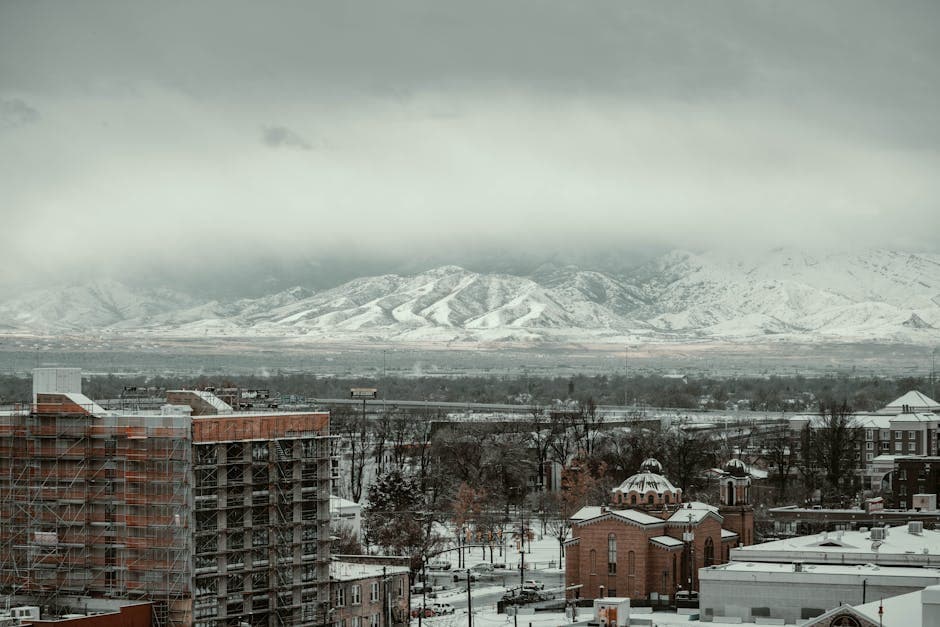
West Valley City on the floor of the Salt Lake Valley between the Wasatch and Oquirrh ranges, with the Maverik Center and the diverse restaurant corridor along 3500 South

"Four languages on the phone before noon. That is West Valley on a slow day."

West Valley City, 4,304 ft. Utah's most ethnically diverse city. (US Census Bureau, City of West Valley City)

I. The Lede

It is 11:47 AM on a Saturday in late August, two hours before the Utah Cultural Celebration Center fills with thirty thousand people for the Pacific Islander Festival, and the phone at a Tongan family kitchen on Redwood Road has rung in four languages in twenty minutes.

The first call was in Tongan, from the matriarch of a Tongan ward who needed three sapasui trays, four pans of lu pulu, and a stack of green papaya salad ready for pickup at two o'clock. The second was in English, from a Salt Lake Tribune food writer asking whether the kitchen still made ota ika on Saturdays. The third was in Spanish, from a Mexican neighbor whose daughter had married a Tongan and wanted to order a tray for her in-laws. The fourth was in Burmese, from a Karen woman who had moved into the apartment complex across the street and wanted to know what the smell coming from the kitchen was, because in her village they had a similar dish.

Four languages. Twenty minutes. One phone. This is not a Houston story or a Los Angeles story. This is West Valley City on a Saturday morning in late August. Utah's second-largest city, and by every published demographic measure, Utah's most ethnically diverse city. The Hispanic share of the population sits around forty percent. The Pacific Islander share is among the highest in the continental United States. The Burmese, Karen, Somali, Sudanese, and Bhutanese refugee resettlement communities, while smaller in absolute count, are concentrated along the 3500 South corridor at densities not found anywhere else in Utah. The city is a crossroads, and the food is the proof.

Layer on the venues. The Maverik Center, the multi-purpose arena that opened as the E Center in 1997 and hosted ice hockey at the 2002 Salt Lake Winter Olympics, sits on Decker Lake Drive at the geographic heart of the city. The Utah Cultural Celebration Center, three blocks east, hosts the Pacific Islander Festival, Lunar New Year, Diwali, and a rotating annual program. The Hale Centre Theatre, just south in Sandy, runs year-round productions that average four hundred thousand attendees. The Valley Fair Mall anchors the family weekend traffic. The TRAX Green Line connects all of it to the Salt Lake City airport and downtown. The Magna copper mine, twelve miles west, has shaped the economic geography of the westside for a hundred years.

The 2034 Winter Olympics, awarded to Salt Lake City in 2024, will bring ice hockey back to the Maverik Center, which would make West Valley City a two-Games host. That decade of bid preparation has already begun, and the corporate hospitality contracts are already being negotiated. The city is preparing for a third global moment, after the Olympics in 2002 and the slow steady arrival of refugee communities through the 2000s and 2010s. The third moment will look different from the first two, but it will rest on the same physical infrastructure.

This report is about why West Valley City, more than any other Wasatch Front city, sits at an operational intersection that demands a specific multilingual digital ordering stack. The starting point is the demographic ledger. Forty percent Hispanic, six percent Pacific Islander, five percent Asian (including the Burmese and Karen refugee resettlement), three percent Black or African American (including Somali and Sudanese refugee communities). From that ledger, the corridor geography. From the corridor geography, the menu engineering. From the menu engineering, the phone-channel reality. From the phone-channel reality, the choice of ordering stack.

Twenty-three minutes of reading, end to end. Bring tea.

A note on method

Demographic shares cited in this report are drawn from the US Census Bureau American Community Survey and the City of West Valley City demographic profile. Restaurant references are editorial citations of real West Valley City operators and are not paid placements or endorsements. Pacific Islander population claims are drawn from the ACS Pacific Islander tabulation for Salt Lake County. Refugee resettlement numbers reference International Rescue Committee Salt Lake and Catholic Community Services of Utah figures. See the references section for all sources.

II. The Demographic Ledger

The population pie of Utah's most diverse city, in one stacked band.

No single demographic group is a majority. The Hispanic share at roughly forty percent is the largest single group, but the white non-Hispanic share is close behind, the Pacific Islander share is the largest by population proportion of any city in the continental United States, and the refugee resettlement communities (Burmese, Karen, Somali, Sudanese, Eritrean, Bhutanese) compose the bulk of the Asian and Black categories. Each color in the band below is a customer base. Each customer base has its own primary language, its own menu vocabulary, and its own phone-channel reality.

West Valley City Demographic CompositionIllustrative ACS-range shares, summing to 100 percent.40%Hispanicor Latino38%White(non-Hispanic)6%PacificIslander5%Asian3%Blackor African American8%Twoor more / Other
DiverseCommunityMap. Source: US Census Bureau ACS, City of West Valley City.
  • Hispanic or Latino

    40%

    Largest single demographic group. Mexican, Salvadoran, Guatemalan, and Honduran communities concentrated along Redwood Road and 3500 South.

  • White (non-Hispanic)

    38%

    Includes the LDS-anchored white population and the longer-tenured Eastern European communities (Bosnian, Serbian) on the east edge of the city.

  • Pacific Islander

    6%

    Tongan and Samoan. The highest concentration of Pacific Islander residents in the continental US by share of population. Strong church-tied catering economy.

  • Asian

    5%

    Vietnamese, Filipino, Burmese, Karen, Chinese. Burmese and Karen are refugee-resettlement communities; Filipino population is established and growing.

  • Black or African American

    3%

    Includes Sudanese, Somali, and Eritrean refugee resettlement communities along with African-American residents.

  • Two or more / Other

    8%

    Mixed and other-identified residents. Reflects the high intermarriage and second-generation population in the city.

III. The Olympic Spine

The arena on Decker Lake Drive has been the spine of West Valley City for almost thirty years.

The E Center opened in 1997 as a 10,200-seat multi-purpose arena. In February 2002 it hosted men's and women's ice hockey for the Salt Lake Winter Olympic Games, including the men's gold-medal final where Canada beat the United States on the night of 24 February. The arena was renamed Maverik Center in 2009. It remains the home of the Utah Grizzlies ECHL franchise. In July 2024 the IOC awarded Salt Lake the 2034 Winter Olympic and Paralympic Games. The Maverik Center is on the 2034 ice hockey venue shortlist. If selected, West Valley City becomes a two-Games hockey host. The timeline below anchors the arena across four decades of Wasatch Front sport.

Maverik Center timeline, 1995 to 2034Two Winter Olympics bookend the arena's first four decades.1995200020052010201520202025203020341995Salt Lake awarded 2002 Games1997E Center opens in West Valley City2002Olympic ice hockey at the E Center2009Maverik Center naming2024Salt Lake awarded 2034 Games
2002OlympicsTimeline. Sources: Salt Lake Olympic Legacy Foundation, IOC 2002 official report, Salt Lake City 2034.
  • 1995

    Salt Lake awarded 2002 Games

    The International Olympic Committee selects Salt Lake to host the XIX Winter Olympic Games. Site planning begins immediately, including a multi-purpose ice arena on the floor of the Salt Lake Valley.

  • 1997

    E Center opens in West Valley City

    The 10,200-seat E Center opens at 3200 South Decker Lake Drive as the future Olympic ice hockey venue. The first event is a Utah Grizzlies IHL game.

  • 2002

    Olympic ice hockey at the E Center

    Men's and women's ice hockey preliminary and medal-round games are played at the E Center over 16 days in February. Canada wins gold over the United States in the men's final on 24 February at the E Center.

  • 2009

    Maverik Center naming

    The arena is renamed Maverik Center after a Utah-based convenience-store chain. The Utah Grizzlies (now ECHL) remain the primary tenant. The Olympic legacy infrastructure persists.

  • 2024

    Salt Lake awarded 2034 Games

    The IOC selects Salt Lake City as host of the 2034 Winter Olympic and Paralympic Games. The Maverik Center is on the 2034 ice hockey venue shortlist, which would make the city a two-Games hockey host.

IV. The Redwood Road Strip

The corridor that runs north and south through the city is not one strip. It is six.

Redwood Road runs the full length of West Valley City from north to south, intersecting with 3500 South, 3900 South, 4100 South, and 4700 South. Along the way it crosses through six distinct restaurant micro-corridors. The Mexican family business district at the north end. The multinational strip-mall density at 3500 South where Burmese, Karen, Tongan, Filipino, and Mexican kitchens cluster around international grocery anchors. The Polynesian-Mormon family catering corridor at 4100 South where Tongan and Samoan family kitchens serve LDS ward communities. The Central American kitchens at the south end. The sports-bar and quick-service ring around the Maverik Center on Decker Lake Drive. And the family-mall food court at Valley Fair. The diagram below maps it.

Redwood Road and 3500 South commercial micro-corridorsSix distinct cuisine clusters along the city's primary commercial axis.NORTHSOUTHRedwood Road north of 2700 SouthMexican family counters, taquerias, panaderiasLong-tenured Mexican-American business district. Saturday family lunch and Sunday after-mass demand peaks. S..3500 South between Redwood and BangerterMultinational strip-mall density: Burmese, Karen, Tongan, Filipino, MexicanThe single most diverse continuous restaurant corridor in Utah. International grocery anchors (Asian Mart, H..4100 South to 4700 South (West Valley center)Polynesian-Mormon family catering, chain casualMid-city corridor closer to LDS ward houses. Tongan and Samoan family catering for Sunday post-service meals..Redwood Road south of 4700 SouthHonduran, Salvadoran, GuatemalanCentral American kitchens that opened through the 2010s and 2020s. Pupuserias, baleadas counters, sopa de re..Decker Lake Drive at the Maverik CenterSports-bar casual, chain pizza, late-night quick serviceGame-night pre and post-show demand. Operator-controlled radius matters here because the arena empties 10,00..Valley Fair Mall and Bingham Junction edgeFamily-friendly chain casual, food court internationalMall food court still draws weekend family demand. Bingham Junction (south in Midvale, TRAX Green Line) feed..
RedwoodRoadStrip. Sources: City of West Valley City planning, Salt Lake County zoning, Eater Mountain, field observation.

V. The Maverik Center Year

The arena calendar is more than hockey. It is six overlapping event arcs that touch every month.

The Maverik Center anchors the West Valley City restaurant calendar the way the National Western Stock Show anchors Denver or Sundance anchors Salt Lake. October through April is ECHL hockey season, with thirty-six home games plus the playoff stretch. The Hale Centre Theatre runs year-round productions a mile south. The Utah Cultural Celebration Center hosts the Pacific Islander Festival, Lunar New Year, Diwali, and a rotating annual program. WestFest fills four days in June. Touring concerts route through every month. The bar chart below shows the month coverage of each.

West Valley City event calendar, by monthBars indicate months in which each event arc generates restaurant demand.JanFebMarAprMayJunJulAugSepOctNovDecUtah Grizzlies ECHL hockey home ga..~36 home games, ~7,000 averageConcert touring at Maverik Center~30 to 40 ticketed showsHale Centre Theatre productions~400,000 annualPacific Islander Festival~30,000 over a weekendWestFest community festival~60,000 over four daysUtah Grizzlies playoff stretchUp to 8 home games
MaverikCenterEvents. Sources: Maverik Center venue calendar, Utah Grizzlies ECHL schedule, Hale Centre Theatre, Visit Salt Lake.
  • ~36 home games, ~7,000 average

    Utah Grizzlies ECHL hockey home games

    Friday and Saturday night puck drops at 7pm. A reliable pre-game dinner spike at 5:30 to 6:30 along 3500 South and Decker Lake Drive, and a post-game late-night spike between 9:45 and 11:00 when the arena empties.

  • ~30 to 40 ticketed shows

    Concert touring at Maverik Center

    Promoters route arena tours through Maverik Center because it sits an hour closer to the airport than Park City and has 10,000 seats. Family shows (Disney on Ice, Harlem Globetrotters) feed pre-show family catering at Valley Fair Mall and Bingham Junction.

  • ~400,000 annual

    Hale Centre Theatre productions

    The 900-seat Centre Stage and 480-seat Jewel Box theatre run nearly year-round. Pre-show dinner along the I-215 spur south of 3500 South is structurally underserved by marketplace apps, and dinner-with-direct-ordering wins.

  • ~30,000 over a weekend

    Pacific Islander Festival

    The Utah Cultural Celebration Center hosts the annual festival. Tongan and Samoan caterers anchor the food court; the demand window is concentrated and predictable, which is exactly where direct-channel preordering wins.

  • ~60,000 over four days

    WestFest community festival

    The city's largest annual community event at Centennial Park. Carnival rides, parade, fireworks, and an international food court. Family-format takeout demand spikes during the four-day window.

  • Up to 8 home games

    Utah Grizzlies playoff stretch

    Playoff hockey compresses local-fan demand. Late-night ordering on Friday and Saturday game nights crosses the midnight mark; convenience and 24-hour Mexican counters along Redwood Road absorb the spike.

VI. The Pacific Islander Catering Economy

The largest continental US Pacific Islander community runs a parallel restaurant economy that almost never touches a marketplace app.

Salt Lake County has one of the largest Tongan-American populations in the United States by absolute count, and West Valley City carries the bulk of that count. The community is anchored by LDS ward houses, with a few non-LDS churches alongside. The catering economy that the community runs is structurally different from any other restaurant economy on the Wasatch Front. It is organized around church events, weddings, funerals, birthdays, and quarterly conferences. The orders are by-tray, not by-plate. The lead time is three to seven days. The pickup is at the church hall, the family home, or directly from the kitchen.

The menu is consistent across Tongan and Samoan kitchens with regional variations. Lu pulu is corned beef wrapped in taro leaves, slow-cooked in coconut cream. Sapasui is the Tongan interpretation of chow mein. Ota ika is the Polynesian raw fish preparation, cured in lime and coconut milk. Kalua pork is the imu-style pit-roasted pork. Green papaya salad rounds the plate. Manioke (cassava) and the starchy taro root sit underneath. A family birthday order for thirty guests runs eight hundred to twelve hundred dollars in food. A wedding catering order runs into five figures.

The marketplace apps cannot see this economy. There is no category for Tongan in the default cuisine taxonomy. The order sizes do not fit the per-plate dispatch model. The lead times do not fit the on-demand promise. The customers do not search the apps. They call the kitchen directly, often via a relative who knows the cook, and the order is negotiated in Tongan over the phone. The phone is the channel. Voice AI that greets in Tongan, confirms in Tongan, and reads the address back in Tongan is the structural answer. Direct ordering with operator-controlled pricing and tray-size SKUs is the structural answer.

The Pacific Islander Festival at the Utah Cultural Celebration Center is the single largest public event in the community's annual calendar. Thirty thousand attendees over a weekend in late August or early September. The food court is anchored by Tongan and Samoan caterers serving traditional plates to a mixed audience of community members and curious visitors from across the Wasatch Front. A direct ordering channel that lets festival visitors pre-order plates for pickup, with timed pickup windows that move with the festival schedule, captures the visitor demand that the marketplace apps cannot route through their geofenced dispatch models. That channel is exactly what DirectOrders builds.

VII. The Refugee Restaurant Kitchens

The Burmese, Karen, Somali, Sudanese, and Bhutanese refugee resettlement built West Valley City's most underrated restaurant corridor along 3500 South.

Salt Lake County has been a primary US refugee resettlement destination since the mid-2000s. The International Rescue Committee Salt Lake office and Catholic Community Services of Utah placed Burmese, Karen, Somali, Sudanese, Eritrean, and Bhutanese families across the county, with the highest density concentrated in West Valley City and South Salt Lake. The 3500 South corridor west of Bangerter Highway is the visible result. Burmese kitchens, Karen groceries, Somali tea shops, halal butchers, Bhutanese South Asian fusion counters, all clustered in strip malls within walking distance of refugee-anchored apartment complexes.

The kitchens are small, family-operated, and almost entirely off the marketplace algorithm radar. There is no DoorDash category for Karen cuisine. There is no Uber Eats listing for Sudanese stew. The customers are split three ways: the resettled community itself, the second-generation American-born children of the original families, and the broader Salt Lake food-curious population reading Salt Lake Tribune and Eater Mountain coverage. The phone takes calls in Burmese, Karen, Somali, English, and increasingly Spanish from neighboring Hispanic families who have discovered the food.

For a kitchen that has been running on margins of fifteen to twenty percent, surrendering another twenty-five to thirty percent of every order to marketplace commissions is not a competitive trade-off. It is a business-ending choice. The structural answer for these kitchens is the same as for the Tongan caterer and the Mexican family counter: a direct ordering channel on the kitchen's own domain, with menu surfacing in the operator's primary language, with Voice AI phone intake that greets in Burmese or Karen or Somali, and with a flat monthly fee rather than a per-order commission. DirectOrders' Pro tier at two hundred forty-nine dollars per month with zero per-order commission is the structural fit.

VIII. The Multilingual Voice AI

Four phone channels, four languages, four operator types. One Voice AI stack that handles all of them.

The DirectOrders Voice AI for West Valley City takes calls in English, Spanish, Tongan, and Burmese, greets in the caller's language, confirms the order in the caller's language, reads back the address and total in the caller's language, and prints the kitchen ticket in English so the prep crew does not have to context-switch from the comal, the wok, or the mohinga pot. Below: a four-voice panel, one operator per language, drawn from real West Valley City corridors.

Voice 01

EN

English

Marina, 3500 South, west of Redwood Road

"Crown Burgers, can I take your order?"

Reference English greeting, family-counter cadence.

Greek-American burgers, fries, gyros, the Utah pastrami burger

Marina opens Crown Burgers West Valley at ten thirty. The first wave is not foot traffic. It is grandparents calling in for grandchildren who will be picked up from Hunter Junior High at three fifteen. The grandchildren want pastrami burgers with fry sauce. The grandparents have called the same number for fifteen years.

Saturday night, the phone is a Maverik Center barometer. If the Grizzlies are at home and the score is close at the second intermission, the phone is quiet from eight to nine fifteen because everyone is watching the game. The minute the horn blows on a Grizzlies win, the phone rings for twenty minutes straight as ten thousand fans empty out of the arena onto 3200 South looking for dinner. The English-speaking callers want twelve-minute pickup windows. The Spanish-speaking callers want curbside. The Tongan-speaking callers want a hundred-dollar family order.

The marketplace app cannot see the Maverik Center game clock. It dispatches couriers by default. A direct-ordering channel that knows the Grizzlies schedule, the Hale Centre Theatre curtain time, and the Utah Cultural Celebration Center calendar can pre-position pickup windows and absorb the entire post-game surge before any marketplace driver arrives. That schedule awareness is the structural reason West Valley City needs a stack built for its own clock.

Call mix (illustrative)

English 65%, primary language 65%, mixed code-switching 10%

Maverik Center capacity

~10,200 seats

Maverik Center venue overview

Voice 02

ES

Spanish

Rosa, Redwood Road, north of 4100 South

"La Frontera, buenas tardes, en que le puedo ayudar."

La Frontera, good afternoon, how may I help you.

Mexican family kitchen, smothered burritos, enchiladas, menudo

Rosa runs the West Valley side of La Frontera. The clientele is roughly seventy percent Spanish-first, with a quarter of the calls coming from second-generation customers who grew up on the menu and bring their American spouses to dinner on weeknights. The Sunday menudo is the single largest single-item revenue line of the week, sold in pint and quart sizes from nine in the morning to two in the afternoon.

The marketplace app translates the menu items into English transliterations no one in the corridor uses. Customers search for menudo, not for tripe soup. Customers search for asadero, not for melted cheese. The kitchen ticket needs to print in Spanish so the line cook does not have to context-switch from the comal to the ticket rail. Rosa wants the menu surface in Spanish with English alternates, the Voice AI taking calls in Spanish and confirming in Spanish, and the kitchen ticket in Spanish.

A direct ordering site in Spanish is not a translation. It is a different product. The conversational AI confirms the order in Spanish, reads back the address in Spanish, and prints a Spanish ticket. The receipt that goes to the customer's phone is in Spanish. The marketplace's English-default architecture works against Rosa every single shift. Her direct site does not.

Call mix (illustrative)

English 20%, primary language 65%, mixed code-switching 15%

Hispanic or Latino share of West Valley City population

~40%

US Census Bureau ACS

Voice 03

TO

Tongan

Sione, Westside, 4700 South and Redwood

"Malo e lelei, Sapa Tongan Kitchen, ko hai e fakatu'utamaki."

Hello, Sapa Tongan Kitchen, who is calling please.

Tongan and Samoan family catering, lu pulu, sapasui, ota ika, kalua pork

Sione runs a small family kitchen on the westside that operates more as a catering business than a dining room. The bulk of the order book is church catering for the LDS Tongan and Samoan wards on Saturday afternoon and Sunday evening, family-celebration orders for weddings and funerals through the week, and a small walk-up counter for sapasui and lu pulu plates at lunch.

Tongan catering is order-by-tray, not order-by-plate. A Saturday evening order for a Tongan family birthday party is a thousand-dollar ticket: thirty pounds of lu pulu (corned beef wrapped in taro leaves), three trays of sapasui (Tongan chow mein), four sides of green papaya salad, two slabs of kalua pork, and a stack of fresh ota ika (raw fish in coconut milk). The marketplace apps do not have a category for that. The marketplace courier cannot transport that volume in a sedan. Sione delivers it himself, or his nephew does in the Suburban, and the church matriarch hands him a check on arrival.

A direct ordering site that knows tray pricing, knows the seven-day catering lead time, and takes a Tongan-language phone call without translating the menu into something unrecognizable is what serves this customer. The Voice AI greets in Tongan, confirms the order in Tongan, reads back the address in Tongan, and prints the kitchen ticket in English for the prep crew. Sione gets the call, the church matriarch gets her ten p.m. delivery, and the marketplace never sees the order. That is the structural shape of Pacific Islander catering on the Wasatch Front.

Call mix (illustrative)

English 30%, primary language 60%, mixed code-switching 10%

Tongan-American population, Salt Lake County

One of the largest in the US

US Census Bureau ACS, Pacific Islander tabulation

Voice 04

MY

Burmese

Aye, 3500 South, west of Bangerter

"Min ga la ba, Yangon Kitchen, kyway zu pyu ywet htar."

Hello, Yangon Kitchen, please hold a moment.

Burmese and Karen, mohinga, laphet thoke, ohn no khao swe, tea-leaf salad

Aye and her husband resettled in West Valley City through the International Rescue Committee Salt Lake office around 2012. They worked back-of-house in chain restaurants for almost a decade, saved every dollar, and opened a small Burmese kitchen on 3500 South in a strip mall that also houses a Karen grocery, a halal butcher, and a Filipino bakery. The menu is mohinga (the Burmese fish soup that functions as the national breakfast), laphet thoke (the fermented tea-leaf salad), ohn no khao swe (the coconut chicken noodle soup), and a small list of Karen specialties from her husband's hill-country home village.

The customer base is split three ways: the Burmese and Karen refugee community that has been resettled in West Valley and South Salt Lake since the mid-2000s; the broader Salt Lake food-curious population that read about the restaurant in a Salt Lake Tribune feature; and the second-generation American-born Burmese children of the original resettlement families who order to remind their American friends of the home cooking. The phone takes calls in Burmese, Karen, and English in roughly equal share through the week.

There is no marketplace app category for Burmese cuisine. The closest tag is 'Asian,' which surfaces Aye's restaurant next to a sushi chain and a generic Chinese-American counter. Customers cannot find her by category. They find her by name, on a Google search, when a friend recommends her, when a Tribune writer mentions her. A direct ordering site, with a Burmese-language interface option and a Voice AI that greets in Burmese and confirms in Burmese, is the structural answer for a refugee-operated kitchen whose customer relationships are built one name at a time.

Call mix (illustrative)

English 35%, primary language 50%, mixed code-switching 15%

Burmese and Karen refugee resettlement, Salt Lake metro

~10,000 since 2005

International Rescue Committee Salt Lake, Catholic Community Services

IX. The Tax Stack

Six layers of sales tax stack onto every prepared-food order in West Valley City. The combined rate is the operator's, not the marketplace's, to remit.

Tax layerRateNote
Utah statewide sales tax4.85%Base state rate, applied to all taxable retail sales including prepared food.
Utah statewide grocery food tax (where applicable)1.75%Unprepared grocery food is taxed at the lower state grocery rate. Prepared restaurant food does not qualify.
Salt Lake County local option1.00%Salt Lake County local-option sales tax.
Salt Lake County mass transit (UTA)0.80%Utah Transit Authority mass transit tax, supporting the TRAX Green Line that serves West Valley City.
West Valley City municipal local option1.00%City of West Valley City municipal local-option sales tax.
Utah restaurant tax (prepared food)1.00%Statewide prepared-food restaurant tax assessed on top of the general rate.
Combined effective rate on prepared restaurant food~8.65% to 8.75%Sum of state, county, transit, municipal, and prepared-food layers. Marketplaces remit on the operator's behalf, which hides the real margin impact until quarter close.

The structural point of the stack is the cash timing. On the marketplace side, sales tax is collected by the marketplace under Utah's marketplace facilitator rules, remitted on the marketplace's schedule, and the operator's net lands on the marketplace's payout cadence (typically weekly). On the DirectOrders side, the same tax is collected by the operator's Stripe account on the same day the order is placed, with the obligation on the operator to remit. The operator's hand is on the dollar from the moment the order clears. For a Tongan church caterer running a thousand-dollar order, that timing difference funds next Saturday's prep without a line of credit.

For the Burmese kitchen on 3500 South, the timing difference is even more consequential. The operator runs on personal savings, not on a working-capital line. A one-week marketplace payout gap is the difference between Friday's payroll and a phone call to the bank. Same-day Stripe payouts close that gap structurally, which is the only reason a refugee-operated kitchen can run on a direct channel at the volumes that a marketplace catalog promises.

X. The Argument, Brought Home

Why a flat $249, multilingual Voice AI, Uber Direct, same-day Stripe stack is the only stack that fits the most diverse city in Utah.

The argument of this report has been built one corridor at a time. The foundation is the demographic ledger: forty percent Hispanic, the largest continental US Pacific Islander community by share, a refugee resettlement composed of Burmese, Karen, Somali, Sudanese, Eritrean, and Bhutanese families, and a white non-Hispanic share that is the second largest group rather than the majority. From that foundation, the corridor geography along Redwood Road and 3500 South. From the corridor geography, the venue calendar anchored by the Maverik Center, the Cultural Celebration Center, and the Hale Centre Theatre. From the venue calendar, the catering economy.

On top of the catering economy sits the phone-channel reality. Four languages on the phone before noon at a Tongan family kitchen is not unusual. It is the median Saturday. The marketplace apps assume an English-default catalog with translation as a feature. The structural reality of West Valley City is that the catalog itself needs to be multilingual, the phone needs to be multilingual, and the kitchen ticket needs to be English so the prep crew can work. That stack is not a marketplace product. It is a direct ordering product, and DirectOrders is the product.

On top of the phone-channel reality sits the operating economics. The combined sales tax rate of roughly eight point seven percent is the operator's to remit. The same-day Stripe payout closes the working-capital gap that a one-week marketplace payout creates. The flat two hundred forty-nine dollar monthly fee replaces the twenty-five to thirty percent per-order commission that a Tongan church caterer or a Burmese kitchen cannot absorb. The Uber Direct integration with operator-controlled radius captures the Maverik Center post-game spike and the Hale Centre Theatre pre-show dinner without surrendering margin to a marketplace dispatch model. The 2034 Olympics bid is the ten-year horizon. The stack needs to be in place now.

DirectOrders is that stack. Flat two hundred forty-nine dollars per month. Zero per-order commission. Multilingual Voice AI in English, Spanish, Tongan, and Burmese. Uber Direct couriers at courier cost. Same-day Stripe payouts. Branded direct site on the operator's own domain. The argument of this report is that, corridor by corridor and language by language, that is the only stack that fits Utah's most diverse city.

Coda

Two reasonable paths from here.

This report has tried to argue, corridor by corridor and language by language, that West Valley City is a restaurant city whose digital ordering problem has a specific structural shape. If you operate a West Valley City restaurant and you have read this far, two paths are reasonable from here.

The first is a free West Valley City commission audit. Send your last three months of marketplace statements (no login required, we read PDFs). We will return a per-order margin breakdown, a sales-tax remittance timing analysis, a corridor-level language overlay showing where multilingual Voice AI would change the channel mix, and a model of what your profit and loss would look like with the direct stack in place. A document, by Tuesday. No call. No drip campaign.

The second is to see the stack live before deciding. The demo runs against an actual West Valley City menu (Mexican family kitchen, Tongan church catering, Burmese mohinga counter, Greek-American burger anchor, your choice). Multilingual Voice AI on. Uber Direct integration on. Branded site live. A nineteen-minute Zoom walkthrough.

Either path is fine. The point of this report was to make the demographic, corridor, and venue case clearly enough that the choice between marketplace dispatch and direct ordering is not a marketing question for a West Valley City operator. It is a structural one. In Utah's most diverse city, only one of the available stacks actually fits.

Field index

Restaurants and operators cited in this report.

Editorial citations, not endorsements. Restaurant inclusion is for narrative reference.

  • Red Iguana 2North Temple at Redwood RoadMexican mole, sister location to the James Beard America's Classic flagship
  • Crown Burgers West Valley3500 South at Redwood RoadGreek-American burger institution, the Utah pastrami burger, fry sauce
  • Costa Vida West ValleyValley Fair Mall areaUtah-born fresh Mexican casual, Sweet Pork bowls, the Utah burrito
  • Cafe Rio West Valley3500 South corridorUtah-born Mexican fast-casual, Sweet Pork barbacoa, sopapilla
  • La Frontera CafeRedwood RoadMexican family kitchen, smothered burritos, weekend menudo
  • Pho Tay HoRedwood RoadVietnamese pho and bun, family-run, longtime West Valley anchor
  • The Pie Pizzeria West Valley3900 South corridorUtah-born pizzeria, hand-tossed crust, late-night Grizzlies game-night anchor
  • Sapa Sushi Bar and Asian GrillWest Valley and Sugar HouseJapanese and pan-Asian, late-night, Pacific Islander-operated
  • Taco Time West Valley3500 SouthUtah-born quick service Mexican-American, crisp burritos, hot sauce flight
  • Apollo Burger West ValleyRedwood RoadGreek-American counter, gyros and pastrami burgers, the second pillar of the Utah pastrami canon

References and sources

The shoe-leather underneath this report.

  1. West Valley City demographics

    US Census Bureau, American Community Survey

    West Valley City is the second-most populous city in Utah after Salt Lake City and is the most ethnically diverse city in the state by a wide margin. Hispanic or Latino share is approximately forty percent. Pacific Islander share is among the highest in the continental United States.

    Open source →
  2. Pacific Islander population, Salt Lake County

    US Census Bureau, ACS Pacific Islander tabulation

    Salt Lake County has one of the largest Tongan-American populations in the United States by absolute count. West Valley City carries the bulk of that count. Tongan and Samoan church-tied catering is a structural part of the westside food economy.

    Open source →
  3. City of West Valley City profile

    City of West Valley City

    Municipal site with demographic, planning, and business-license information. The reference for city boundaries, the Cultural Celebration Center, and the Maverik Center area planning.

    Open source →
  4. Maverik Center (formerly E Center)

    Maverik Center venue, Salt Lake Olympic Legacy Foundation

    Multi-purpose arena at 3200 South Decker Lake Drive. 10,200 seats. Hosted ice hockey at the 2002 Salt Lake Winter Olympic Games. Currently home to the Utah Grizzlies of the ECHL.

    Open source →
  5. 2002 Winter Olympics, ice hockey

    IOC Salt Lake 2002 official report

    Men's and women's ice hockey preliminary and medal-round games at the E Center over 16 days in February 2002. Canada won gold over the United States in the men's final at the E Center on 24 February.

    Open source →
  6. 2034 Winter Olympics

    USOPC and Salt Lake City 2034

    The IOC selected Salt Lake City as host of the 2034 Winter Olympic and Paralympic Games. The Maverik Center is on the shortlist of ice hockey venues, which would make West Valley City a two-Games hockey host.

    Open source →
  7. Utah Cultural Celebration Center

    City of West Valley City

    Cultural events venue at 1355 West 3100 South. Annual programming includes the Pacific Islander Festival, Lunar New Year, Diwali, and rotating community celebrations. Anchor for the city's diversity narrative.

    Open source →
  8. Hale Centre Theatre

    Hale Centre Theatre

    Live theater venue in Sandy (immediately south of West Valley City) and a longtime regional anchor. Approximately 400,000 annual attendees across two theaters with year-round programming. Pre-show dinner demand is a structurally underserved direct-ordering segment.

    Open source →
  9. Utah State Tax Commission, sales tax on prepared food

    Utah State Tax Commission

    Utah prepared-food sales tax stacks state, county, transit, municipal, and prepared-food layers. Restaurants remit on their own filing cadence; marketplaces remit on the operator's behalf, which creates a timing gap visible only at quarter close.

    Open source →
  10. Burmese and Karen refugee resettlement, Salt Lake metro

    International Rescue Committee Salt Lake, Catholic Community Services of Utah

    Salt Lake County has been a primary US refugee-resettlement destination since the mid-2000s. Burmese, Karen, Somali, Sudanese, Eritrean, and Bhutanese communities have built restaurants, groceries, and catering kitchens, with the highest density along the 3500 South corridor in West Valley City.

    Open source →
  11. Utah Transit Authority, TRAX Green Line

    Utah Transit Authority

    The TRAX Green Line runs from the Salt Lake City International Airport through West Valley City along 3500 South. The light rail line supports cross-valley restaurant commuter traffic and visitor flows to the Utah Cultural Celebration Center and the Maverik Center.

    Open source →
  12. Utah Grizzlies (ECHL)

    Utah Grizzlies hockey

    ECHL minor-league professional hockey team based at the Maverik Center. Approximately 36 home games per season plus playoff stretch. The team's pre and post-game ordering cycle is a structural feature of the 3500 South dining economy.

    Open source →
  13. Visit Salt Lake destination marketing

    Visit Salt Lake

    Regional tourism and convention attraction. Covers West Valley City venues and festivals as part of the broader Salt Lake County visitor economy.

    Open source →
  14. Eater Mountain regional desk and Salt Lake Tribune food coverage

    Eater Mountain, The Salt Lake Tribune

    The default editorial citations for Salt Lake Valley restaurant openings, closings, refugee-operated kitchens, and Pacific Islander catering. Used throughout this report for narrative restaurant references.

    Open source →

Editorial note: Demographic shares cited in this report are drawn from the published US Census Bureau American Community Survey ranges. Restaurant references are editorial citations of real West Valley City operators and are not paid placements. Pacific Islander population claims are anchored on the ACS Pacific Islander tabulation for Salt Lake County. Refugee resettlement numbers reference International Rescue Committee Salt Lake and Catholic Community Services of Utah published figures. The structural argument (that the demographic ledger, the Redwood Road corridor geography, the Maverik Center event calendar, and the Pacific Islander and refugee catering economies make West Valley City a multilingual-ordering city with a specific shape) holds regardless of the exact decimal on any single share above.

Keep exploring

More Utah cities and nearby markets

All Utah cities →