Delivery App Commission Rates 2026: Every Platform Compared
How much does DoorDash charge restaurants? Every delivery app's 2026 commission rates, verified against vendor pricing pages, in one reference table.
Updated Aug 18, 2026
July 2026 rates, checked against every vendor pricing page
TLDR
As of July 2026, DoorDash charges restaurants 15%, 25%, or 30% commission on delivery orders and 6% on pickup. Uber Eats charges 20%, 25%, or 30% for delivery and 7% for pickup. Grubhub advertises marketing rates of 5% to 20%, plus a 10% delivery fee and order processing. ezCater takes 15% plus 2.99% processing. Deliveroo runs 25% to 35%, Just Eat 14% to 30% plus VAT, Swiggy and Zomato roughly 18% to 25% before GST. Every rate below links to its source.
TLDR
As of July 2026, DoorDash charges restaurants 15%, 25%, or 30% commission on delivery orders and 6% on pickup. Uber Eats charges 20%, 25%, or 30% for delivery and 7% for pickup. Grubhub advertises marketing rates of 5% to 20%, plus a 10% delivery fee and order processing. ezCater takes 15% plus 2.99% processing. Deliveroo runs 25% to 35%, Just Eat 14% to 30% plus VAT, Swiggy and Zomato roughly 18% to 25% before GST. Every rate on this page links to its source and carries a verification date.
This is a maintained reference page. Every US rate below was checked against the vendor's own pricing page on July 12, 2026, and changes are logged in the changelog at the bottom. Where a platform does not publish rates (Grubhub's processing fee, Deliveroo, Swiggy, Zomato), we say so and give the credible reported range instead of a fake point figure.
What every delivery app charges restaurants in 2026
As of July 2026, DoorDash charges restaurants 15% to 30% of each delivery order and Uber Eats charges 20% to 30%, with payment processing included in both. Grubhub charges a 5% to 20% marketing commission plus a 10% delivery fee and separate processing. Pickup orders run 6% to 10%. Here is the full rate card.
| Platform and plans | Delivery orders | Pickup orders | Payment processing | Payout timing | Source |
|---|---|---|---|---|---|
| DoorDash (Basic / Plus / Premier) | 15% / 25% / 30% of subtotal | 6% on all plans | Included in commission | Weekly, or daily at no charge | DoorDash pricing |
| Uber Eats, includes Postmates (Lite / Plus / Premium) | 20% / 25% / 30% marketplace fee | 7% with validated in-store pricing, otherwise 10% | Included in commission | Weekly, daily option | Uber Eats pricing |
| Grubhub | 5% to 20% marketing commission, plus 10% delivery fee if Grubhub delivers | Marketing commission applies | Separate fee, rate not published (reported near 3.05% + $0.30) | Weekly, twice weekly, or every two weeks by direct deposit | Grubhub fees FAQ |
| ezCater (catering marketplace) | 15% commission, excludes taxes and voluntary tips | Not applicable | Separate 2.99% transaction fee, excludes tips | Weekly | ezCater help center |
Three reading notes. First, DoorDash and Uber Eats fold credit card processing into the commission, while Grubhub and ezCater bill it separately, so headline rates are not directly comparable across columns. Second, Postmates runs on Uber's merchant platform: one signup, the same plan tiers, and your menu appears on both apps (Uber, 2026). Third, commissions apply to pre-tip food value: DoorDash states its percentage applies to the order subtotal, and ezCater excludes taxes and tips from commission.
International platforms (Deliveroo, Just Eat, Swiggy, Zomato) get their own table below, because most of them do not publish rate cards and the honest answer is a sourced range.
How much does DoorDash charge restaurants in 2026?
DoorDash charges 15% (Basic), 25% (Plus), or 30% (Premier) commission on the subtotal of delivery orders, and 6% on pickup orders across all plans, as of July 2026. The commission includes credit card processing, Dasher pay and insurance, and customer support. New merchants pay 0% for 7 days on Basic and 30 days on Plus and Premier.
What the tiers actually buy, per DoorDash's pricing page (verified July 12, 2026):
- Basic, 15% delivery / 6% pickup: listing on the marketplace, online ordering, and a free professional menu photoshoot. Smallest delivery radius, and customers pay higher delivery fees, which suppresses conversion.
- Plus, 25% / 6%: everything in Basic, a wider delivery area, lower customer-side fees, and access to DashPass subscribers, who order more frequently than non-members.
- Premier, 30% / 6%: the widest delivery area, a $200 photo and styling credit, a complimentary Sponsored Listing ad, and a growth guarantee: at least 20 orders a month or DoorDash refunds that month's commission.
Costs that sit outside the commission: the DoorDash tablet runs $6 per week after the trial (you can skip it by integrating your POS), and marketing products such as ads and promotions bill on top. There are no monthly, activation, or cancellation fees. Payouts arrive weekly for a Monday-through-Sunday period, or you can switch to daily payouts at no charge (DoorDash merchant help, 2026).
DoorDash also sells first-party products: Online Ordering (Storefront) takes 0% commission with processing at 2.9% plus $0.30 per order on its Boost and Pro packages (3.3% plus $0.30 on Starter), and Drive On-Demand dispatches Dashers from your own channels for a flat per-delivery fee quoted at signup (DoorDash commission explainer, 2026). To see these rates against your own order volume, run the DoorDash fee calculator, and if you are weighing the marketplace against a direct channel, the side-by-side comparison covers that decision in full.
How much does Uber Eats charge restaurants?
Uber Eats charges a 20% marketplace fee on delivery orders on Lite, 25% on Plus, and 30% on Premium, plus 7% on pickup orders with validated in-store pricing (10% without), as of July 2026. Payment processing is included. Restaurants using their own couriers pay a 15% self-delivery fee. Plus-plan orders from Uber One members add 5%.
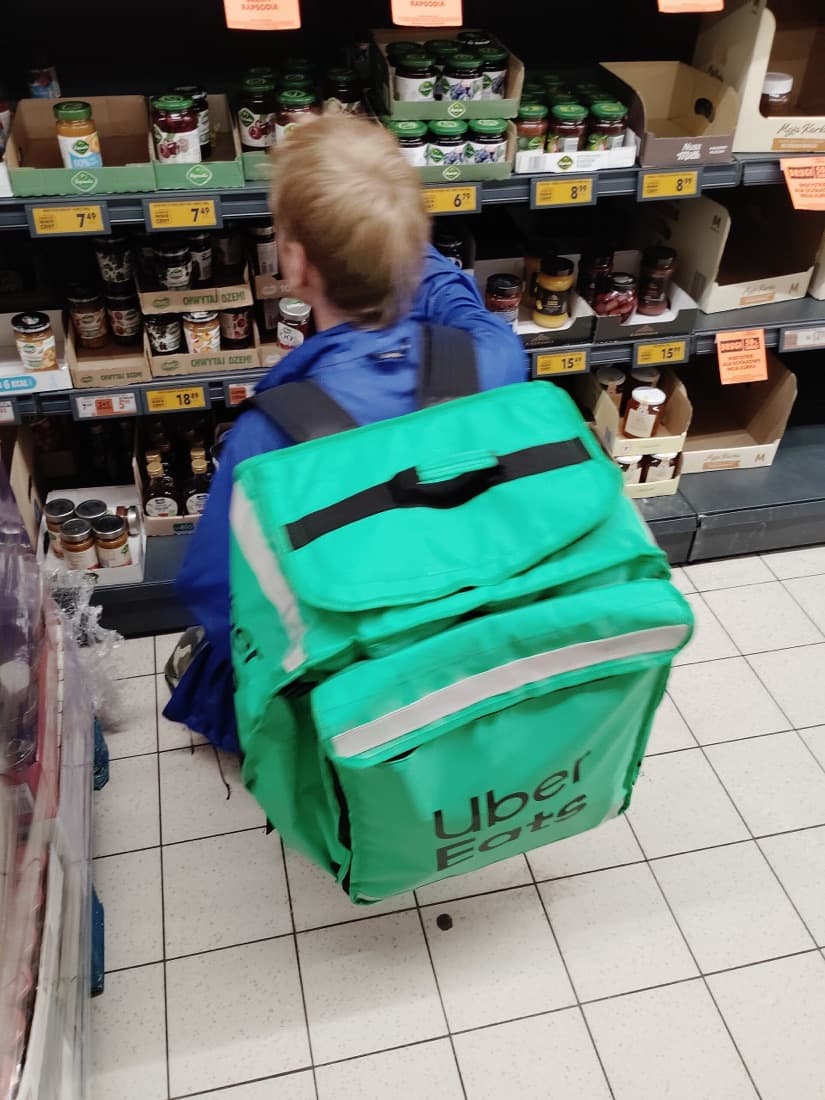
Details from Uber Eats' US pricing page (verified July 12, 2026):
- Lite, 20% delivery / 7% pickup: the entry tier, with standard in-app visibility and no Uber One matching. Worth knowing: when Uber launched tiered pricing in 2021, Lite cost 15% (Nation's Restaurant News, 2021). The floor has drifted up 5 points since.
- Plus, 25% / 7%: a 0% introductory rate for 30 days, increased search visibility, and Uber One member orders at an additional 5% (effectively 30% on those orders).
- Premium, 30% / 7%: a 0% intro rate for 30 days, Uber One benefits included at no extra charge, matching of ad spend up to $100 per month, and 0% fees in any of the first 6 months where you receive fewer than 20 orders.
- Self-Delivery, 15% / 7%: you appear in the app but your own staff delivers.
The 7% pickup rate requires validated in-store pricing, meaning your in-app menu matches what you charge at the counter; without validation, pickup costs 10%. Payouts run weekly, with deposits typically landing midweek, and a daily-pay option exists (Uber merchant help, 2026). Uber's first-party products price separately: Webshop, its hosted ordering page, charges a 2.5% processing fee plus $0.29 per order with no commission, and Uber Direct, its white-label courier service, starts at $7.99 per delivery.
How much does Grubhub charge restaurants?
Grubhub no longer publishes a full rate card. As of July 2026 its pricing page advertises rates as low as 5%, and its FAQ describes a marketing commission of 5% to 20% of each order depending on package, a 10% delivery fee when Grubhub couriers deliver, and a separate order processing fee whose rate it does not disclose.
That is a real change in transparency. Before its sale, Grubhub published package rates (its packages carried 15%, 20%, and 25% marketing commissions), and third-party guides in 2026 still report order processing at about 3.05% plus $0.30 (Menuviel, 2026). Grubhub's own current language commits only to the ranges: marketing commission of 5% to 20%, delivery fee of 10%, processing unspecified (Grubhub fees FAQ, verified July 12, 2026). Stack the middle of those ranges and a delivered order costs a typical independent 25% to 30% all-in, which is why the worked example below models Grubhub at 29.6% on a $20 order.
Ownership context matters for where this pricing goes next: Wonder, Marc Lore's food-hall and delivery company, completed its acquisition of Grubhub on January 7, 2025 for $650 million, buying it from Just Eat Takeaway, which had paid $7.3 billion for the same asset in 2021 (TechCrunch, January 2025). Payouts are flexible: weekly, twice-weekly, or every-two-weeks direct deposit, or a monthly mailed check (Grubhub payment FAQ). If you sign with Grubhub in 2026, get the processing rate and the fee base (subtotal versus total) in writing before you countersign.
What does ezCater charge for catering orders?
ezCater charges catering partners a 15% commission plus a 2.99% payment transaction fee on marketplace orders, per its help center as of July 2026. The commission excludes taxes and voluntary tips, and the processing fee excludes tips. Orders placed through ezOrdering, its ordering button for your own website, cost 7% plus the same 2.99%.
There are no setup or monthly fees, and payouts arrive weekly (ezCater help center; ezOrdering explainer). Because corporate catering tickets run far larger than restaurant delivery orders, the absolute dollars are the thing to model: on a $500 office order, 15% commission is $75 and the 2.99% processing fee is about $14.95, so roughly $90 of the order, an 18% effective rate, goes to the platform. The same $500 through ezOrdering costs about $49.95, and ezCater is one of the few platforms where moving a repeat client to your own site keeps you inside the same ecosystem at roughly 45% less per order.
What do delivery apps charge restaurants outside the US?
Outside the US, most delivery platforms negotiate rates privately and publish nothing, but the reported ranges are consistent across sources: Deliveroo takes 25% to 35% for full delivery service, Just Eat UK charges 14% plus VAT for self-delivery or about 30% plus VAT delivered, and Swiggy and Zomato typically take 18% to 25% before India's 18% GST on commission.
| Platform | Main markets | Reported commission, 2026 | Notes and sources |
|---|---|---|---|
| Deliveroo | UK, France, EU, Middle East | 25% to 35% for full delivery service; new partners in France commonly quoted 30% to 35%; self-delivery (Marketplace) plans lower | Not published by Deliveroo; marketing and miscellaneous fees can push the all-in toward 33% to 40% (Menuviel, 2026; Commande Ici, 2026) |
| Just Eat | UK | 14% + VAT when you self-deliver, about 30% + VAT when Just Eat delivers, plus a 50p admin charge per order | One-off joining fee of £699 has applied, though it is frequently waived; weekly settlement with Friday deposits (MyFoodFast, 2026; Just Eat partner site) |
| Swiggy | India | Typically 18% to 25% of order value, negotiated by city and volume | 18% GST applies on top of the commission, and per-order platform fees charged to customers reached Rs 10 to 15 in 2024 (SpiceAdvisors, 2025; Business Standard, 2024) |
| Zomato | India | Roughly 15% to 28% depending on city, category, and volume | With GST, platform fees, and expected discount participation, restaurateurs report effective deductions of 25% to 35% per order (SpiceAdvisors, 2025) |
Treat every number in this table as a negotiated range, not a menu price. The pattern that holds worldwide: platforms that publish rates (DoorDash, Uber Eats, ezCater) cluster their top tiers around 30%, and platforms that do not publish rates land in the same place once marketing and processing are added.
What do the fees add up to on a $20 order?
On a $20 delivery order in July 2026, a restaurant keeps between $14.00 and $17.00 on the major US marketplaces, depending on platform and plan. The commission is the whole story on DoorDash and Uber Eats, while Grubhub's stack of marketing, delivery, and processing fees lands at the expensive end.
Assumptions: $20 food subtotal, customer-paid delivery fees and tips excluded, Grubhub processing modeled at the reported 3.05% plus $0.30 since Grubhub does not publish it.
| Channel | Platform fees on a $20 order | Restaurant keeps | Effective rate |
|---|---|---|---|
| DoorDash Basic | $3.00 | $17.00 | 15.0% |
| DoorDash Plus | $5.00 | $15.00 | 25.0% |
| DoorDash Premier | $6.00 | $14.00 | 30.0% |
| Uber Eats Lite | $4.00 | $16.00 | 20.0% |
| Uber Eats Plus | $5.00, or $6.00 on Uber One member orders | $15.00 or $14.00 | 25% to 30% |
| Uber Eats Premium | $6.00 | $14.00 | 30.0% |
| Grubhub, mid-range 15% marketing + 10% delivery + estimated processing | $5.91 | $14.09 | 29.6% |
| Flat-fee direct channel (DirectOrders at 300 orders/month) | $1.71, of which $0.83 is the fee share and $0.88 is card processing | $18.29 | 8.6% |
The flat-fee row works differently from the rest: $249 per month divided by 300 orders is $0.83 per order, plus standard card processing around 2.9% and $0.30. At 500 orders a month the fee share falls to $0.50 and the effective rate to 6.9%, because a fixed cost shrinks per order as volume grows while a percentage never does. To rerun this table with your own average ticket and volume, use the delivery commission calculator. For a founder's line-by-line version of the same math against a real P&L, read the real math of restaurant commission.
Why is the effective take rate higher than the headline commission?
Because the headline number excludes stacked fees. Grubhub adds a 10% delivery fee and processing on top of its marketing commission. Uber Eats adds 5% on Uber One orders under the Plus plan. DoorDash bills $6 a week for its tablet. Ads, promotions, and loyalty programs bill on top everywhere, and abroad, taxes compound the rate.
New York City's fee cap accidentally published the anatomy of a delivery bill: 15% for delivery, 5% for marketing, 3% for transaction processing, and up to 20% more for optional enhanced services. That is four separate line items behind what a restaurant experiences as one deduction, and a NYC restaurant that consents to everything can legally pay up to 43% of an order. The same anatomy shows up elsewhere as VAT on top of Just Eat's 14% to 30%, as India's 18% GST on Swiggy and Zomato commissions plus growing platform fees, and as Deliveroo's 2% to 4% marketing add-ons reported by French operators.
The practical checklist when reading any delivery contract: what is the fee base (subtotal or total), is card processing inside or outside the commission, what does the platform charge for hardware, what marketing spend is presumed, and what happens to the rate on subscriber orders. Two platforms quoting "25%" can differ by 5 points of take-home once those five answers are on the table.
Are delivery app commissions capped by law?
Only in a few places. New York City caps third-party delivery fees at 15% for delivery, 5% for marketing, and 3% for transaction processing, and since Local Law 79 of 2025 restaurants can consent in writing to enhanced services worth up to 20% more, a 43% ceiling. San Francisco permanently caps core delivery at 15% with optional paid add-ons above it.
The NYC story is the one to watch because it moved most recently. The city made its pandemic caps permanent in August 2021, DoorDash, Uber Eats, and Grubhub sued, and the eventual compromise passed the City Council in spring 2025 and became Local Law 79 of 2025 that June: the 15/5/3 caps stayed, and a new opt-in tier lets platforms sell up to 20% of additional services (wider radius, promotions) only with a restaurant's written consent, enforced by the Department of Consumer and Worker Protection (Restaurant Business, 2025; NYC admin code § 20-563.3). San Francisco followed the same arc earlier: a permanent 15% cap on core delivery and listing, amended so platforms can sell opt-in marketing services above it, which ended the DoorDash and Grubhub lawsuits (Restaurant Dive). Most other cities' pandemic-era caps (Chicago, Los Angeles, Philadelphia, and others) expired quietly. If you operate in NYC or SF, audit your statements against these caps; overcharges are enforceable violations, and DCWP maintains a current fee-cap explainer.
How do restaurants offset delivery app commissions?
Two ways, in practice: marking up in-app menu prices, and moving repeat customers to direct channels. Markups are the common first move, and the data says they carry a real cost: limited-service brands averaged 20% delivery-app markups per a 2023 Credit Suisse analysis, and DoorDash's own research shows marked-up menus sell measurably less.
The markup evidence is worth reading before you set prices. DoorDash's 2023 internal study of more than 4,500 restaurants found that stores with marked-up menus see up to 37% fewer sales and up to 78% lower reorder rates, and it now excludes restaurants with markups above 10% from its Most Loved program (DoorDash merchant learning center, 2023). The consumer side shows why demand sags: FinanceBuzz's May 2026 study priced identical fast-food orders across the four major US apps and found the all-in delivered cost runs 69% (Uber Eats) to 92% (Postmates) above in-store menu prices once markups and fees stack, with DoorDash at 83% and Grubhub at 80% (FinanceBuzz, May 2026). A markup recovers some margin but taxes your own demand, which caps how far it can go.
That ceiling is why the durable offset is channel mix rather than price: keep marketplaces for discovery, then route regulars to a channel where the commission is zero. The full landscape of ways to do that, from first-party marketplace products to independent platforms, is in our guide to DoorDash alternatives for restaurants.
What does the flat-fee alternative cost?
A flat-fee ordering platform charges the same dollar amount every month regardless of volume, so its effective rate falls as sales grow. DirectOrders, for example, costs $249 per month with zero commission: 4.2% effective at $6,000 in monthly direct sales, 2.5% at $10,000, and 1.2% at $20,000, plus standard card processing around 2.9% and $0.30 per order.
The honest breakeven math, using a $20 average order: a 25% marketplace commission with processing included costs $5.00 per order, while the direct order costs the flat fee's per-order share plus about $0.88 of card processing. Set those equal and the flat fee wins above roughly $1,200 in monthly direct sales, about 60 orders a month, and every order past breakeven widens the gap. The marketplaces' own first-party products are priced on the same logic and confirm the direction: DoorDash Online Ordering at 0% plus 2.9% and $0.30, and Uber Eats Webshop at 2.5% plus $0.29, both as of July 2026. What none of the per-order products change is that a percentage scales with your success and a flat fee does not. If you are comparing flat-fee and zero-commission providers against each other, the fee structures behind those pitches (setup fees, processing spreads, customer-paid surcharges) are broken down in the hidden cost of zero commission platforms.
For delivery fulfillment without a marketplace, white-label courier APIs price per drop rather than per percentage: Uber Direct starts at $7.99 per delivery as of July 2026, a fee that direct-channel restaurants typically pass through to the customer at checkout.
Changelog
July 2026: initial publication, all rates verified against vendor pages. DoorDash, Uber Eats, Grubhub, and ezCater rates checked against their pricing pages and help centers on July 12, 2026; international ranges cross-checked against the partner guides and reporting linked above on the same date. This page is re-verified monthly, and every change to a platform's published rate will be logged here with its date.
Sources
Primary vendor pages, verified July 12, 2026:
- DoorDash merchant pricing
- DoorDash: commission and fees explained
- DoorDash: payouts and statements
- DoorDash: menu pricing insights study
- Uber Eats US merchant pricing
- Uber Eats: how store payments work
- Postmates merchant signup (Uber platform)
- Grubhub pricing and fees
- Grubhub: what fees does Grubhub charge restaurants
- Grubhub: how will Grubhub pay my restaurant
- ezCater Marketplace pricing and payment
- ezCater: what is ezOrdering
Regulation:
- NYC Local Law 79 of 2025
- NYC Administrative Code § 20-563.3, fee caps
- NYC DCWP delivery fee caps explainer
- Restaurant Business: NYC council votes to lift cap on delivery fees
- Restaurant Dive: San Francisco weakens 15% delivery fee cap
Studies, reporting, and international ranges:
- FinanceBuzz: food delivery app cost comparison, May 2026
- Restaurant Business: DoorDash pushes back against inflated delivery prices
- Nation's Restaurant News: Uber Eats and Postmates introduce tiered pricing, 2021
- TechCrunch: Just Eat Takeaway completes Grubhub sale to Wonder, January 2025
- Menuviel: Deliveroo fees and commissions guide, 2026
- Commande Ici: Deliveroo restaurant commission rates, 2026
- MyFoodFast: Just Eat fees explained, 2026
- Just Eat UK food partner signup
- SpiceAdvisors: Swiggy vs Zomato commission structure, 2025
- Business Standard: Swiggy, Zomato platform fees, 2024
Platforms change rates without notice. If a number above no longer matches the vendor page it links to, the vendor page wins, and the discrepancy will be corrected in the next monthly verification pass.
Frequently Asked Questions
As of July 2026, DoorDash charges 15% (Basic), 25% (Plus), or 30% (Premier) of the order subtotal on delivery orders, and 6% on pickup orders across all three plans. The commission includes credit card processing, Dasher pay, and customer support, so there is no separate processing fee on marketplace orders. New partners get a 0% introductory rate for 7 days on Basic and 30 days on Plus and Premier.
Related resources
Related Articles
Sarah M.
James K.
Lisa R.
Owned contacts
2,847
Does DoorDash Share Customer Data With Restaurants? (2026)
No. DoorDash, Uber Eats and Grubhub keep marketplace customers' emails and phone numbers. What you see per order, which products share data, and the NYC law.
Pankaj Avhad
ezCater marketplace
$140.70
in channel fees
Kitchen keeps $114
Direct catering channel
$45.53
in channel fees
Kitchen keeps $209
Same $500 catering order, two channels
ezCater Commission: What Restaurants Pay in 2026
How much does ezCater charge restaurants? The reported 15% commission, 2.99% processing, ezDispatch and ezOrdering fees, plus the direct catering math.
Pankaj Avhad
Pros and Cons of Food Delivery Services for Restaurants
An honest look at whether DoorDash, Uber Eats, and Grubhub help or hurt your restaurant. When to use them, when to go direct.
Pankaj Avhad