Restaurant Opening Budget for 2026 and 2027: Costs, Cash, Timing
A restaurant opening budget that survives 2026 costs: setup, pre-opening, contingency, operating cash, landlord allowance timing, a 3-month cash model, and 2027 refresh rules.
TOTAL FUNDING
$325,000
Price every line of the build, then date every payment
TLDR
A restaurant opening budget has to answer two questions: what will the project require, and when must the money be available. Split it into four parts (setup, pre-opening, project contingency, and operating cash), build a dated cash schedule rather than a single total, and treat landlord allowances as reimbursements that arrive after you have paid the contractor. In an illustrative build, $265,000 of project funding plus a $60,000 operating reserve is $325,000, and the deepest post-opening cash dip lands at the end of month two, not month one. Stress-test a four-week delay and sales 20% under plan before you sign anything, and refresh every quote, wage, and insurance figure before a 2027 opening.
TLDR
A restaurant opening budget has to answer two questions: what will the project require, and when must the money be available. Split it into four parts (setup, pre-opening, project contingency, operating cash), build a dated cash schedule rather than a single total, and treat landlord allowances as reimbursements that arrive after you have paid the contractor. In the illustrative build below, $265,000 of project funding plus a $60,000 operating reserve is $325,000, and the deepest cash dip lands at the end of month two, not month one. Stress-test a four-week delay and sales 20% under plan before you sign, and refresh every quote, wage, and insurance figure before a 2027 opening.
The renovation quote fits. The equipment package looks affordable. You have enough for the deposit.
Then the gaps appear. The equipment needs electrical work the quote did not mention. Training starts before revenue does. Rent begins before the doors open. The landlord's improvement allowance arrives six weeks after the contractor's final invoice was due. None of these is a surprise to anyone who has opened a restaurant before, and every one of them is a surprise to most people opening their first.
A useful opening budget answers two questions, not one: what will this project require, and when must the money be available? Having enough funding in total does not guarantee having it on the date a payment is due. That is why this guide builds two documents side by side, a project budget and a cash schedule, and why the numbers in it are deliberately illustrative. Your building, your city, and your menu will produce different figures. The structure is what transfers.
The cost backdrop makes the structure matter more than it did a few years ago. In a July 2026 analysis, the National Restaurant Association estimated that total expenses for an average restaurant jumped 36% between 2019 and 2026 (National Restaurant Association, July 2026). An opening plan built from a 2022 template is not conservative. It is wrong by roughly a third before you have read it.
What are the four parts of a restaurant opening budget?
Separate setup, pre-opening expenses, project contingency, and operating cash. They answer different questions, they are spent at different times, and they fail in different ways.
| Part | Examples | Main question |
|---|---|---|
| Setup | Building work, equipment, furniture, technology | What makes the premises operational? |
| Pre-opening | Training, deposits, opening stock, professional fees | What is paid before normal trading? |
| Contingency | Uncertain project work and changes | What could cost more than the current plan? |
| Operating cash | Cash deficits while sales develop | What funds the business after opening? |
The Small Business Administration recommends distinguishing one-time expenses from monthly expenses when planning a business, and its startup-cost guidance recognizes the cash needed to cover early operating deficits (SBA, plan your business and SBA, how to estimate starting costs). The SBA does not tell you to hold a year of idle cash, and neither does this guide. It tells you to know the date of every payment.
Two accounting habits that hide cash problems deserve a warning early. Refundable deposits are not ordinary operating expenses, but they still tie up cash for months or years, so they belong in the schedule. And equipment is an asset on the balance sheet while requiring a large immediate payment, so a plan that shows a healthy net worth can still bounce a check to the hood installer.
What should you define before you buy a single piece of equipment?
Write a one-page opening specification first: menu, service periods, order channels, seating plan, expected peak volume, preparation methods, storage, and receiving arrangements. Every equipment quote and every construction scope should trace back to a line on that page.
The specification is what stops the budget from drifting toward a different restaurant than the one you can afford. A menu that depends on extensive prep needs space and paid hours outside customer service. A large dining room can overwhelm a small dishwashing area. A delivery-heavy operation needs room for packing and a handoff point that does not collide with seated guests. If the format itself is still open, the guide to foodservice systems maps concepts to production models before you map them to equipment.
Test capacity against demand by service period rather than assuming every seat stays full all day. For an illustrative dine-in scenario, 40 seats at 1.5 turns and 60% average occupancy with a $25 check produces $900 per service period. That is an assumption to validate, not a forecast, and pickup and delivery may add revenue while competing for the same kitchen capacity. The demand side of that test, including the three-day footfall count and the rent-to-sales math, lives in how to choose a restaurant location. This guide starts where that one ends: the site is chosen, and the question is what it takes to open it and keep it trading.
What does a complete restaurant opening budget look like?
A complete budget has a line for every category, a supplier and a date behind every line, and a separate operating reserve that the project cannot borrow from. Here is the illustrative structure, with the arithmetic checked.
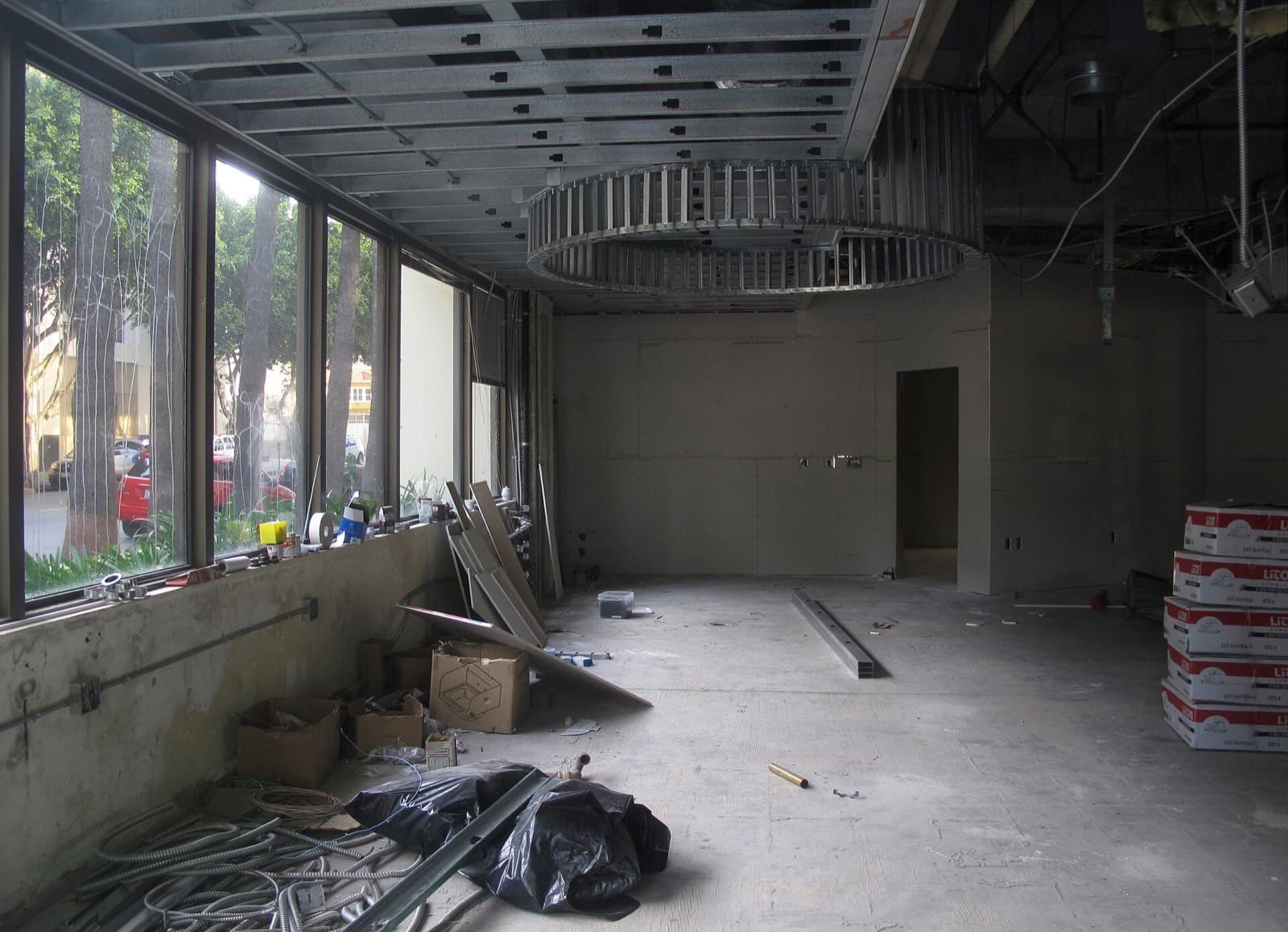
| Category | Illustrative amount |
|---|---|
| Lease and utility deposits | $15,000 |
| Design, professional advice, and permits | $12,000 |
| Construction and building work | $100,000 |
| Equipment, delivery, and installation | $60,000 |
| Furniture and smallwares | $20,000 |
| Technology setup | $5,000 |
| Opening inventory | $8,000 |
| Pre-opening payroll and training | $15,000 |
| Opening marketing and materials | $5,000 |
| Project contingency | $25,000 |
| Project funding subtotal | $265,000 |
| Separate operating reserve | $60,000 |
| Total illustrative funding | $325,000 |
The $325,000 Illustrative Budget: Four Parts, One Calendar
The total is the easy part. The calendar underneath it is what decides whether the money is there on the day a bill is due.
When the money leaves
- 6 months outDeposits, design, permits
- 4 months outConstruction progress payments
- 2 months outEquipment balance and install
- 1 month outRent, training, opening stock
- OpeningDoors open
- Month 1Landlord allowance reimbursed
- Month 2Deepest cash dip
Illustrative budget and sequence, not a national estimate. Your lease, contractor, and permit timeline set the real dates.
These amounts demonstrate structure. A different building, city, menu, or construction scope produces very different numbers, and the contingency and reserve are assumptions rather than recommended percentages. The mistake this table prevents is not a wrong number. It is a missing line.
For every line, record the supplier, the scope, the quotation date, a confidence level, the payment date, and whether tax, freight, and installation are included. Separate estimates from signed commitments, because a budget built on estimates is a wish list with a total.
Then maintain a forecast-final-cost column: paid to date, plus remaining committed spending, plus expected spending not yet committed. Looking only at money already spent hides the bills that are coming, and on an opening project the bills that are coming are the whole point.
How do you compare contractor and equipment quotes fairly?
Send every bidder the same written scope and ask each one to list exclusions. Quotes that arrive against different scopes are not comparable, and the lowest one is usually the one that left the most out.
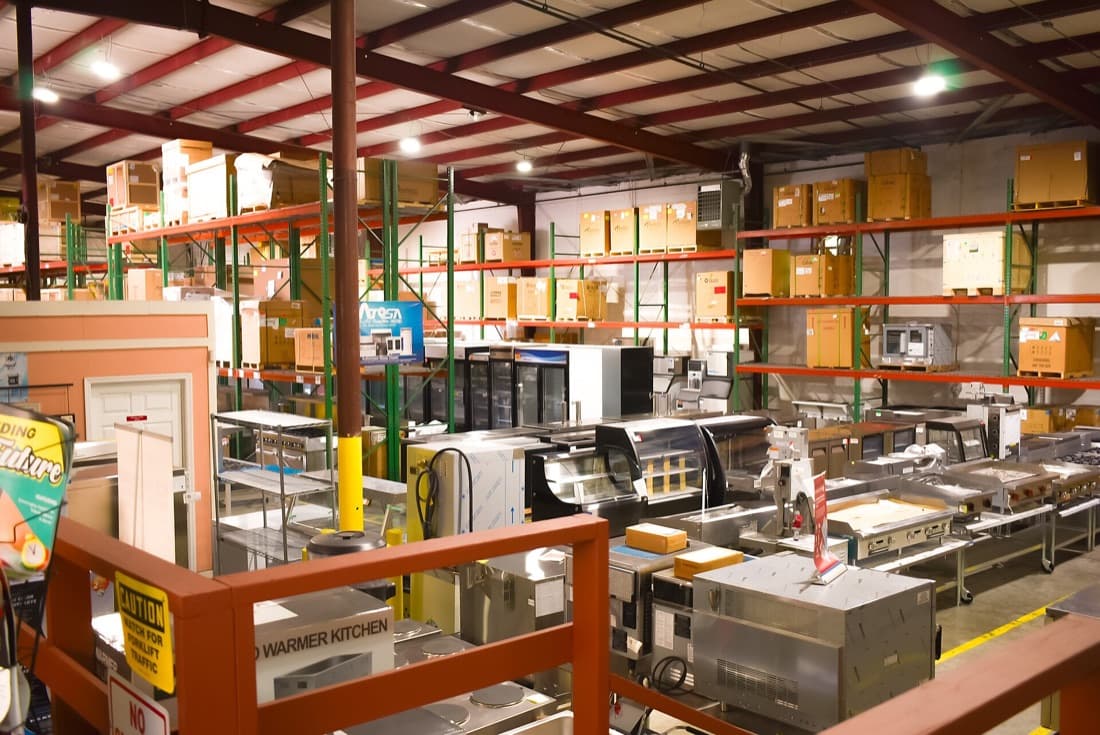
- For equipment, compare the whole delivered cost. Model, usable capacity, required electrical and gas connections, ventilation needs, freight, unloading, installation, startup, staff training, warranty, and local service access. Check whether accessories shown in the brochure are actually included.
- For building work, assign every interface. Clarify who handles permits, utility upgrades, inspections, finishes, disposal, and corrections, and name who is responsible for the connection between the equipment installer and the building contractor. The gap between those two trades is where "not in my scope" lives.
- Compare total ownership cost, not purchase price. ENERGY STAR advises restaurants to consider energy and water consumption over the life of commercial food service equipment rather than purchase price alone, and publishes model lists and rebate finders for commercial kitchen categories (ENERGY STAR, restaurants and ENERGY STAR, commercial food service).
Suppose one installed appliance costs $8,000 and another $10,000. If verified operating assumptions suggest the second saves $700 a year, the simple payback on its $2,000 premium is about 2.9 years. Add maintenance, financing, useful life, and your local utility rates before choosing, and treat the example as arithmetic rather than a savings claim for any particular appliance.
Purchase Price vs Total Ownership Cost
A $2,000 premium and $700 a year of verified savings pay back in about 2.9 years. Whether that is good depends on useful life, maintenance, financing, and your utility rates.
Appliance A, installed
$8,000
Lower price on day one
Appliance B, installed
$10,000
$700 a year lower energy and water cost (verified assumption)
Cumulative savings on appliance B against its $2,000 premium
Break-even at about 2.9 years
Illustrative arithmetic, not a savings claim for any particular appliance. ENERGY STAR publishes certified model lists and rebate finders for commercial food service equipment; check local utility rates and rebates before choosing.
If your concept is prep-heavy, one more comparison belongs in the equipment conversation: whether some of that production belongs in cheaper square footage at all. Our commissary and central kitchen guide covers when a shared or off-site kitchen changes the opening budget.
Which building issues rewrite the budget before opening?
The ones nobody inspected. Review the proposed menu and layout with the appropriate local professionals before committing to equipment, because the building decides what the equipment will actually cost to install.
The FDA's plan-review guidance for food establishments emphasizes checking equipment and the electrical, mechanical, and plumbing specifications before construction and installation (FDA, food establishment plan review guide). Investigate ventilation, drainage, power, water heating, refrigeration, waste handling, and required fire protection, and confirm which existing systems can support the proposed use rather than assuming a former restaurant space is ready.
Include accessibility in the same review. The ADA distinguishes obligations for existing facilities from the requirements for alterations and new construction, and an older premises is not automatically exempt (Department of Justice, ADA primer for small business). An accessible entrance and restroom discovered as a requirement after the drywall is up is the most expensive way to learn the rule.
Local opening requirements also affect the sequence, which affects the cash schedule. New York City's restaurant guidance illustrates how equipment, alcohol service, outdoor seating, and proposed activities can each involve separate approvals (NYC, restaurant resources). Use your own jurisdiction's requirements for the actual project, and put each approval on the calendar with the date the next payment depends on it.
Why can a landlord's allowance still leave you short on cash?
Because most leases provide reimbursement after the work is completed and documented, not money before the work starts.
Imagine a $40,000 improvement allowance payable after specified documents and approvals. If the contractor needs $40,000 of progress payments during construction, the project still has to fund that interval from somewhere. The allowance reduces the total cost of the project. It does nothing for the cash schedule until the day it lands.
Before treating an allowance as available cash, establish eligibility, payment conditions, timing, exclusions, and what happens if the opening is delayed. Then read rent commencement, additional rent, repair obligations, and who owns the improvements at the end of the term, because the same lease that gives you $40,000 can also start charging full rent on a date you cannot meet.
Have a local commercial lease professional review the actual terms. New York City's commercial lease guide is a useful checklist of issues to discuss even though its specifics are written for New York, and our location guide walks through the lease clauses that most often catch first-time tenants.
How much operating cash do you need after opening?
Enough to cover the deepest cumulative cash shortfall your forecast shows, plus a cushion for what the forecast cannot see. Forecast receipts and payments by date, and during the opening period use weekly detail, because monthly totals hide the Friday when payroll and the produce bill land together.
Start with the cash remaining after pre-opening payments. Add expected customer collections and any confirmed funding. Subtract the payments due: payroll, suppliers, occupancy, taxes, debt service, and planned capital spending. Here is a simplified operating scenario with variable cash costs equal to 40% of sales and $45,000 a month of fixed cash operating costs.
| Line | Month 1 | Month 2 | Month 3 |
|---|---|---|---|
| Sales and same-month collections | $50,000 | $65,000 | $80,000 |
| Variable cash costs (40%) | $20,000 | $26,000 | $32,000 |
| Fixed cash operating costs | $45,000 | $45,000 | $45,000 |
| Operating cash result | minus $15,000 | minus $6,000 | plus $3,000 |
| Cumulative cash position | minus $15,000 | minus $21,000 | minus $18,000 |
The Cash Dip Is Deepest in Month Two
Monthly results of minus $15,000, minus $6,000, and plus $3,000 look like recovery. The cumulative line is what the bank balance sees.
Simplified model: sales collected in the same month, variable cash costs at 40% of sales, fixed cash operating costs of $45,000 a month. Excludes payment timing differences, debt service, taxes, later capital purchases, and owner draws. Illustrative, not a forecast.
The deepest cumulative deficit is $21,000 at the end of month two. Ending month three at minus $18,000 does not mean $18,000 was enough to get there, and that distinction is the whole reason to model by period rather than by total.
This simplified model excludes payment timing differences, debt service, taxes, later capital purchases, and owner draws. Add them to the real forecast, and avoid counting an expense in both the fixed and the variable lines. Timing differences cut both ways: card settlements that arrive days after the sale widen the dip, which is why payout speed is a cash flow question and not a convenience, while supplier terms can narrow it.
The same assumptions imply an operating break-even of $45,000 divided by 60%, or $75,000 in monthly sales. Break-even is not recovery of the opening investment, and it moves if labor or other capacity costs step up as sales grow. For where those fixed and variable lines sit in a mature P&L, see the 30/30/30 rule, and for the margins that survive after break-even, the 2026 profit margin benchmarks.
How do you stress-test delays and slow sales?
Build a downside version before the money is committed, and change one assumption at a time so you can see which one hurts most.
- A four-week delay. At $2,500 of continuing weekly costs plus $4,000 of rescheduling and storage charges, four weeks requires $14,000 of additional cash. Add only the costs that actually continue during a delay; do not simply repeat the full trading budget.
- Sales 20% below plan. Rerun the three-month model with every sales line reduced by a fifth and watch what the deepest cumulative deficit becomes.
- A delayed reimbursement. Move the landlord allowance out by 90 days and see whether any contractor payment is now uncovered.
- A major quote overrun. Take the largest single line, usually construction, and add the exclusions you found during quote comparison.
Contingency covers project uncertainty. Operating cash covers trading needs. Moving the same $25,000 between those labels does not create another $25,000, and a stress test that survives only because the reserve was counted twice is a stress test that failed.
If the business still loses cash after sales reach a realistic stable level, more reserve only postpones the problem. Revisit the concept, the prices, the cost structure, or the project scale. The restaurant failure rate data puts first-year closures for independents at roughly 17%, not the mythical 90%, and undercapitalization at opening is one of the reasons that number is not lower.
What can you cut without weakening the opening?
Start with complexity and timing, not with the lines that keep you legal and operational.
Open with a focused menu, defer optional decor, phase nonessential purchases, and compare complete supplier offers rather than shaving individual line items. A smaller menu also cuts opening inventory and training hours, which shows up in two budget lines at once; our food cost guide covers how to cost that opening menu so the inventory line is a calculation rather than a guess.
Protect the spending needed for required approvals, safe operation, dependable production, and staff preparation. Budget paid training correctly: required job-related training for covered nonexempt employees generally counts as working time under federal law (Department of Labor, hours worked), and a team that opens untrained produces remakes, slow tickets, and refunds that cost more than the payroll saved. The checklist in our kitchen ticket workflow guide is the cheapest pre-opening test you can run.
Use written change control. Before approving any additional work, record the reason, the price, the schedule effect, and the funding source. Small changes are individually reasonable and collectively how a $100,000 construction line becomes $130,000 without anyone deciding to spend $30,000.
Where does direct ordering belong in an opening budget?
In the technology line, and in the operating model. The $5,000 illustrative technology line above covers POS hardware and software setup, and our POS system cost breakdown shows why year-one POS spend ranges so widely. The channel decision behind it matters more than the hardware.
A flat-fee direct ordering platform is a small, predictable line: on DirectOrders, $249 a month with no per-order commission, which is $2,988 for the first year before card processing. A marketplace commission of 15% to 30% is not a line at all. It is a share of every order, and at 25% it has charged the same $249 once about $996 of marketplace sales have gone through in a month. Both channels can belong in an opening plan, but only one of them scales with your success, and it is worth deciding on purpose before opening day rather than by default after it. Model your own mix with the break-even calculator, and see what a commission-free ordering channel includes before you assume the marketplace is the only way to be found.
How can AI help build the budget, and what can it not do?
AI can extract quotes into a comparison table, flag missing installation, delivery, or warranty details, and turn a pile of PDFs into one sheet with the same columns for every bidder. Require a page reference for every amount and check each one against the original document.
It cannot inspect the building, authorize a code interpretation, or know your local permit timeline. Do not use generated estimates as substitutes for actual local quotes, and do not let a model fill a blank line with a plausible national figure.
A prompt that respects those limits:
Here are [number] quotes for [equipment or construction scope] as
attached documents. Build one comparison table with these columns:
supplier, model or scope, base price, freight, installation, startup,
training, warranty term, exclusions stated, and quote expiry date.

Cite the page and line for every amount. Where a quote is silent on
an item, write "not stated" rather than estimating. List the
questions I should send each supplier to make the quotes comparable.

Do not estimate costs that are not in the documents, and do not
assume any local code, permit, or utility requirement.
The output is a list of questions for suppliers and a cleaner sheet, not a budget. The budget still needs a person who has walked the space.
What should you refresh for a 2027 opening?
Every dated input, before commitment, because a 2027 opening will be built with 2026 quotes and paid for with 2027 costs.
- Quote validity. Construction and equipment quotes expire. A quote from spring 2026 is a conversation starter for a 2027 build, not a price.
- Wages and scheduled changes. Put known minimum wage steps in the model now. Alaska is a worked example: under Ballot Measure 1 the state minimum wage rose to $14.00 an hour on July 1, 2026 and rises to $15.00 on July 1, 2027, subject to the statute's exemptions (Alaska Department of Labor). Your state and city have their own schedules.
- Food prices. USDA's Food Price Outlook of August 25, 2026 forecasts food-away-from-home consumer prices up 3.6% in 2026 and 2.7% in 2027, with a 2027 prediction interval running from 0.0% to 5.5% (USDA Economic Research Service, Food Price Outlook). That is a consumer price forecast, not your supplier's invoice, so use it to frame the range rather than to set the opening inventory line.
- Insurance, financing, utilities, and permit timing. Get fresh quotes and current processing times, then move the opening date in the model if the permits will not be back in time.
Keep a dated assumptions sheet with an owner for each update. There is no need to pretend next year's local costs are already known, and no excuse for opening with last year's.
The opening budget checklist
The whole method in ten lines:
- Write the one-page opening specification before requesting a single quote.
- Budget in four parts: setup, pre-opening, contingency, operating cash, and never let two share a dollar.
- Give every line a supplier, scope, quote date, confidence level, payment date, and inclusions.
- Keep a forecast-final-cost column: paid, committed, and still expected.
- Compare quotes against one written scope, with exclusions listed and interfaces assigned.
- Inspect ventilation, drainage, power, fire protection, and accessibility before buying equipment.
- Treat the landlord allowance as a reimbursement with a date, not as cash in hand.
- Model cash by week for the first quarter and fund the deepest cumulative dip, plus a cushion.
- Stress-test a four-week delay, sales 20% under plan, a late reimbursement, and a quote overrun.
- Refresh quotes, wages, insurance, and permit timing before a 2027 commitment.
Get those ten right and the budget stops being a number you hope is enough. It becomes a calendar you can defend.
Sources
Startup planning and cash:
- US Small Business Administration, Plan Your Business: distinguishing one-time from monthly expenses and covering early operating deficits
- US Small Business Administration, How to Estimate Starting Costs: startup cost categories and cash needs
Equipment and building review:
- ENERGY STAR, Restaurants: total ownership cost including energy and water consumption
- ENERGY STAR, Commercial Food Service: certified model lists, rebate finders, and specifications
- FDA, Food Establishment Plan Review Guide: equipment, electrical, mechanical, and plumbing review before construction and installation
- US Department of Justice, ADA Primer for Small Business: existing facilities, alterations, and new construction
Local approvals and leases (New York examples, not national rules):
- NYC, Restaurant Resources: separate approvals for equipment, alcohol service, and proposed activities
- NYC Small Business Services, Comprehensive Guide to Commercial Leasing: allowance, rent commencement, and lease terms to review
Labor:
- US Department of Labor, Fact Sheet 22, Hours Worked Under the FLSA: required job-related training as working time for covered nonexempt employees
Cost context for 2026 and 2027:
- National Restaurant Association, Elevated Costs Continue to Pressure Restaurant Profitability (July 2026): total expenses for an average restaurant estimated up 36% between 2019 and 2026
- USDA Economic Research Service, Food Price Outlook, Summary Findings (August 25, 2026): food-away-from-home prices forecast up 3.6% in 2026 and 2.7% in 2027, with a 2027 prediction interval of 0.0% to 5.5%
- Alaska Department of Labor and Workforce Development: minimum wage of $14.00 from July 1, 2026 and $15.00 from July 1, 2027 under Ballot Measure 1
All budget, capacity, payback, and cash-flow figures in this guide are illustrative arithmetic, not national estimates or recommendations for any specific project.
Frequently Asked Questions
It depends on the premises, the concept, the construction scope, local approvals, and how much cash you need while sales ramp up, which is why a complete project estimate beats any national average. The illustrative budget in this guide totals $325,000, made up of $265,000 in project funding (including a $25,000 contingency) and a separate $60,000 operating reserve. A different building, city, menu, or construction scope produces a very different number, and the National Restaurant Association estimated in July 2026 that total expenses for an average restaurant rose 36% between 2019 and 2026, so figures from an older plan will understate the build.
Related resources
Related Articles
#1042
PICKUP
no onion
+ bacon
read back
#1042
REPRINT
1 Burger
+ bacon
do not cook
#1043
DELIVERY
Bag 2 of 2
4 items
all checked
Kitchen Order Tickets (KOT) in 2026: Stop Lost, Wrong, and Duplicate Orders
Run kitchen order tickets (KOT) so nothing gets lost, remade twice, or cooked with a missed change: routing, KDS vs printer, fire times, outage drill, 9 launch tests.
Pankaj Avhad
How to Run a Restaurant Without Being There Every Shift (2026)
Run a restaurant without working every shift: audit your interruptions, give every task an owner and a backup, set decision limits, verify training, and step away in stages.
Pankaj Avhad
$8,000 rent at 8% of sales
154 orders a day
How to Choose a Restaurant Location: Rent, Research, 2027
Choose a restaurant location with rent math, customer research, building and lease checks, and AI. Includes a practical checklist for planning a 2027 opening.
Pankaj Avhad