Restaurant Online Ordering Trends for 2027 (2026 Calls Scored)
Online ordering trends for 2027, with ten 2026 predictions scored. Google Maps now takes orders, AI agents place only a few hundred, and app fees rose.
Maps Ordering
Live Aug 2026
AI Assistants
Few orders yet
AI Visibility
74.9% missing
Voice AI
40% calls missed
App Fees
Rose in 2026
Direct Ordering
58% prefer it
TLDR
This blog made 10 online ordering predictions for 2026: 2 happened, 5 partly happened and 3 did not. For 2027, watch the new front doors that send orders into your own system. Google Maps has taken orders for Toast and Square restaurants since August 6, 2026. AI agents still place very few orders (Uber Eats counted about 500 in one week), and 74.9% of restaurants are missing from Google's AI picks.
TLDR
This blog made 10 online ordering predictions for 2026: 2 happened, 5 partly happened, 3 did not. For 2027, watch the new front doors that send orders into your own system. Google Maps has taken orders for Toast and Square restaurants since August 6, 2026. AI agents still place very few orders (Uber Eats counted about 500 in one week), and 74.9% of restaurants are missing from Google's AI picks.
Last verified: November 2026. Numbers link to their sources; surveys paid for by a vendor are labeled, and the $30 order is an example.
In February 2024, Google said it would stop taking food orders. Its Order with Google feature would send diners to restaurant and partner websites instead (Verdict Foodservice, February 2024).
On August 6, 2026, Google came back. The chat inside Google Maps, called Ask Maps, can now take a food order and fill the cart (Google, August 2026).
This time the order does not stay with Google. It goes into the restaurant's own Toast or Square online ordering (Nation's Restaurant News, August 2026).
That U-turn sums up online ordering going into 2027. New front doors keep opening, and the ones that last plug into the restaurant's own ordering. This guide scores ten predictions made here for 2026, then covers what matters for your own online ordering in 2027. For sales, prices and wages, see the restaurant industry outlook for 2027.
| What | Number | Source | Date |
|---|---|---|---|
| Google Maps ordering (Ask Maps) | Live: Toast, Square | Aug 2026 | |
| Uber Eats orders from AI agents, one week | About 500 | Food On Demand | Nov 2026 |
| Restaurants missing from Google's AI picks | 74.9% of 10,000 | Local Falcon | Jun 2026 |
| Restaurants using AI for customer orders | 6% | Restaurant Dive | Feb 2026 |
| Taco Bell drive-thrus with voice AI | Over 900 | Restaurant Business | Nov 2026 |
| Uber Eats' cheapest plan | 20%, was 15% | Restaurant Dive | Mar 2026 |
| Operators: app orders not profitable | 45% | NRA | May 2026 |
| DoorDash orders in one quarter | 993 million | DoorDash | Oct 2026 |
What are the online ordering trends for restaurants in 2027?
Five trends matter most in 2027: orders arriving through Google Maps and AI assistants, AI visibility, voice AI on the phone, rising app fees, and owning your guest list.
An order can now reach your kitchen through five front doors: your own website, Google Maps, an AI assistant, a delivery app, or the phone. They differ on two things. Who charges a commission, and who keeps the guest.
Five Front Doors: How an Order Reaches Your Kitchen in 2027
Four of the five doors end in your own system with no commission. Only the marketplace door charges one and keeps the guest.
Your website or app
Your own online ordering
No commissionYou keep the guestGoogle Maps
Ask Maps, through Toast or Square ordering, since Aug 6, 2026
No Google commissionLands in your POSAI assistants
ChatGPT and Claude for Square sellers, since Jul 1, 2026
No added commissionLands in your POSMarketplace apps
DoorDash and Uber Eats
15% to 30% on deliveryThe app keeps the guestThe phone
Your staff, or voice AI on the overflow
No commissionYou keep the guest
Payment processing still applies on the commission-free doors. Marketplace rates are the published US delivery tiers for DoorDash (15%, 25%, 30%) and Uber Eats (20%, 25%, 30%) as of November 2026.
One idea ties the trends together. Every channel ends at a checkout. A channel that ends at your checkout adds no commission as it grows. A channel that ends at someone else's usually does.
How did the 2026 predictions hold up?
Two of the ten came true, five came partly true, and three did not. The biggest miss was the headline call that AI ordering was going mainstream.
| Prediction for 2026 | What happened | Verdict |
|---|---|---|
| AI ordering goes mainstream | 6% of restaurants use it | Partly |
| Ghost kitchens mature | Shared sites closed, kitchen brands launched | Partly |
| Subscriptions spread | Panera capped its club | No |
| Same-day payouts everywhere | Square charges 1.95% for it | Partly |
| Personal marketing wins | AI marketing agents arrived | Partly |
| Order from anywhere | Maps, ChatGPT and Claude take orders | Yes |
| Owners push back on fees | Uber Eats raised its lowest plan | Partly |
| Diners pick green restaurants | It arrived as a state law | No |
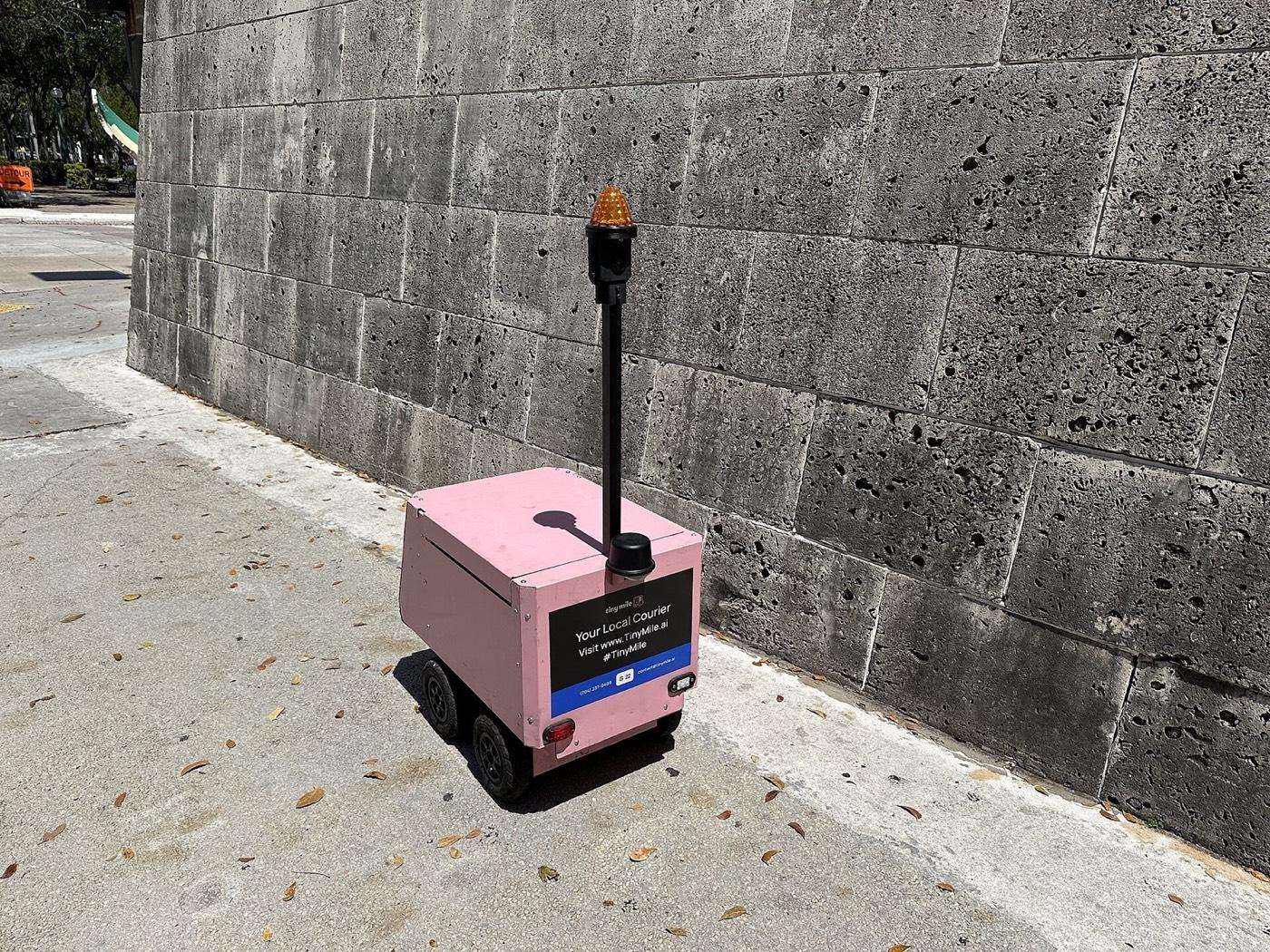
| Robot delivery stays slow | DoorDash Dot is in test markets | Yes |
| Ordering inside social apps | TikTok's guide books tables only | No |
The 2026 Ordering Predictions, Scored
Ten calls from March 2026, checked against the evidence in November 2026. Two happened, five partly happened, and three did not.
- Order from anywhereHappenedGoogle Maps, ChatGPT, and Claude now take orders
- Robot delivery stays slowHappenedDoorDash Dot: high single-digit share in one test market
- AI ordering goes mainstreamPartlyOnly 6% of restaurants use AI for customer orders
- Ghost kitchens maturePartlyBrands from existing kitchens held up; shared sites closed
- Same-day payouts everywherePartlyOffered, but often a paid extra (Square: 1.95%)
- Personal marketing winsPartlyAI marketing agents arrived through POS vendors
- Owners push back on feesPartlyLouder, yet Uber Eats' cheapest plan rose from 15% to 20%
- Subscriptions spreadDidn't happenPanera capped its 'unlimited' drink club at 30 a month
- Diners pick green restaurantsDidn't happenArrived as law (New Jersey's no-utensils default), not demand
- Ordering inside social appsDidn't happenNo in-app ordering; TikTok's October 2026 guide books tables only
Verdicts compare what the March 2026 post said with sources dated through November 2026. Every source is linked in the text.
What came true. Ordering from anywhere happened, though not as pictured. Google Maps, ChatGPT and Claude now take orders through the online ordering a restaurant already runs. Robot delivery stayed slow. DoorDash expects its Dot robot "to deliver a high single-digit percentage of orders in our largest test market by the end of the year" (DoorDash, August 2026).
What came partly true. AI ordering is real at big chains and rare elsewhere. Same-day payouts exist, often as a paid extra. Ghost kitchen brands held up when run from an existing kitchen, while shared sites closed. And fees rose despite the pushback.
What did not. Panera cut its drink club to 30 drinks a month and dropped the word "unlimited" (Nation's Restaurant News, July 2026). Green ordering arrived as law. Since August 1, 2026, New Jersey restaurants may hand out utensils and condiments only on request (Cooper Levenson, July 2026). And social apps still do not take orders. TikTok's restaurant guide, launched in October 2026, books tables through OpenTable (Nation's Restaurant News, October 2026).
Can customers order food from Google Maps now?
Yes, in the US, if the restaurant uses Toast or Square online ordering. Since August 6, 2026, Ask Maps can take a pickup or delivery order in a chat and fill the cart for the guest to review (Restaurant Business, August 2026).
The order then lands in the restaurant's own system. Toast says these orders flow through its own ordering "without adding third-party commission fees" (Toast, August 2026).
One Order, From the Google Maps Chat to Your Kitchen
Since August 6, 2026 the chat inside Google Maps can take a pickup or delivery order and pass it to the restaurant's own online ordering.
Your cart
1 × Pepperoni pizzaPickup
Review and order
Pickup order
Your own ordering1 × Pepperoni pizza
From Ask Maps into Toast or Square
Google commission$0
Third-party commissionNone
Card processingYour usual rate
Live for restaurants on Toast or Square online ordering. Google says Uber Eats is coming soon.
- 1A guest opens the chat inside Google Maps.
- 2They type what they want, in plain words.
- 3Ask Maps finds an open place and fills the cart.
- 4The order lands in the restaurant's own system.
- 5No commission line. Card fees stay as usual.
What do you need? "The only requirement for restaurants is having a Google Business Profile," the same Restaurant Business report says. Menu, hours and location sync on their own.
Two limits are worth knowing. Uber Eats is "coming soon", Google says, and Uber says those orders will check out in its own app (Food On Demand, August 2026). And Google's open standard for other ordering systems is still a waitlist (Google for Developers).
What it means for you: On Toast or Square, check that online ordering is on and your Google Business Profile is claimed. On another system, ask your provider about Google's waitlist. Do not pay extra for "Google Maps ordering" until you have seen a test order go through.
Will diners order through ChatGPT and other AI assistants?
Some will, but very few do yet. In the week of Halloween 2026, Uber Eats counted about 500 orders from outside AI agents. Uber as a whole handled roughly 320 million trips and orders that week (Food On Demand, November 2026).
The checkout story explains why. OpenAI built checkout inside ChatGPT, then pulled back in March 2026 and let merchants run their own (TechCrunch, March 2026). When Starbucks launched a ChatGPT app in April, checkout stayed on Starbucks' own app and website (PYMNTS, April 2026).
Restaurants do have a direct route. Since July 1, 2026, Square restaurants with online ordering can take orders from ChatGPT and Claude, with no added marketplace commission (Square, July 2026). The delivery apps are building routes too: DoorDash says it has shipped a connection for outside AI agents (DoorDash, October 2026).
I spent more than 15 years building software in Silicon Valley, including on Chromium at Google. Here's what I think the checkout story says: assistants will fight to be the front door, and the restaurants that win won't be the ones listed inside every assistant. They'll be the ones whose menu, prices, and checkout are clean enough that any assistant can hand a guest over without breaking the order.
What it means for you: You do not need your own ChatGPT app. You need a menu with real prices that software can read, and a mobile checkout that is fast for a guest arriving from an assistant.
Why can't AI assistants find most restaurants?
AI assistants mostly recommend restaurants they can verify. In a May 2026 check of 10,000 US restaurants, 74.9% never appeared in Google's AI recommendations (Local Falcon, June 2026).
Reviews alone did not fix it. Places with more than 1,000 Google reviews were still left out 70.9% of the time. Local Falcon sells local search tools, and it measured Google's AI Overviews only.
Guests also double-check. In a survey paid for by Menufy, an ordering vendor, 47% said they would visit the restaurant's own website before ordering from an AI pick. Only 2% would order without checking another source (FSR Magazine, September 2026).
What it means for you: Your website is the proof page. Put the full menu with prices on it as text, keep hours current, and claim every listing. The steps are in how to get your restaurant recommended by ChatGPT, and the marketing side is in restaurant marketing trends.
Is voice AI ready to take restaurant orders?
For many restaurants, yes, if a guest can reach a person fast. The 2026 record is mixed, and the big chains are still pushing ahead.
Taco Bell has voice AI in more than 900 drive-thrus and expects more than 1,500 by the end of 2026 (Restaurant Business, November 2026). Burger King cut its test to 50 to 70 drive-thrus. "There are drive offs because guests don't want to talk to a bot," its technology lead said (Nation's Restaurant News, September 2026).
On the phone, the gap is missed calls. Revmo, which sells AI phone agents, studied 12,091 restaurant calls and found that quick-service restaurants miss 40% of them (Revmo, August 2026).
What it means for you: Point voice AI at the calls you already miss: the rush and after hours. Send complaints, allergies and catering to a person. The phone order script and checklist covers the handoff.
Do diners prefer ordering direct or through delivery apps?
Most diners say they prefer to order direct. In NCR Voyix's survey, 58% preferred a restaurant's own app or website for delivery (Restaurant Dive, January 2025).
What they do is different. 68% of delivery customers used a third-party app in the past six months, and 45% of operators say those orders are not profitable (National Restaurant Association, May 2026).
I've watched neighborhood restaurants (a family taqueria, a pho shop, a pizza place) hand a large share of their revenue to platforms that don't share the customer's email address back. Here's what I think the 2026 numbers say: guests aren't loyal to the apps, they're loyal to convenience. Make your own ordering as easy as the app and most of your regulars will use it, but only if they know it exists.
A guest list is the payoff. Loyalty vendor Paytronix reports that 95% of guests return after their fourth visit (Restaurant Dive, April 2026). What an app tells you about the guest is limited: see does DoorDash share customer data with restaurants.
What it means for you: Keep the apps where they pay for themselves. Move every regular you can to your own ordering, and collect phone and email with consent.
What did delivery apps change about fees in 2026?
Fees went up, not down. On March 11, 2026, Uber Eats raised its cheapest plan from 15% to 20% and began charging 30% on Plus orders from Uber One members (Restaurant Dive, March 2026). On a $30 order, each change costs the restaurant $1.50 more.
The March 2026 Fee Step, on One $30 Order
Uber Eats changed two rates on March 11, 2026. Same order, same food. Each change moved the app's cut up one step.
Lite plan
The cheapest plan
15%
$4.50
Before
20%
$6.00
From March 11, 2026
Plus plan
Uber One member orders
25%
$7.50
Before
30%
$9.00
From March 11, 2026
Same $30 order, same food
$1.50 more to the app, on each step
- 1One $30 delivery order on Uber Eats.
- 2Until March 2026, the cheapest plan kept 15%.
- 3On March 11 it stepped up to 20%, or $6.00.
- 4Plus orders from Uber One members: 25% to 30%.
- 5Each step costs $1.50 more on a $30 order.
DoorDash's US plans did not change: 15%, 25% or 30% for delivery and 6% for pickup (DoorDash). Every current rate is in the delivery app commission rates card.
Some operators walked. Rave Restaurant Group pulled Pizza Inn and Pie Five off Uber Eats. "We're going to lose some volume as a result of this," its CEO said (TheStreet, April 2026).
None of it slowed the platforms. DoorDash orders rose 28% from a year earlier to 993 million in the third quarter of 2026 (DoorDash, October 2026). On October 29 it agreed to buy Instacart for about $17 billion (same release).
Regulators are looking at the customer side. The FTC asked for comments on delivery fee practices in April 2026 (Federal Register). In October it opened an inquiry into how nine companies, DoorDash and Uber among them, use customer data to set prices (Nation's Restaurant News, November 2026).
What it means for you: Both big apps tie their lowest pickup rate to matching in-store prices. If you mark up app menus, check which rate you pay.
What changes in 2027?
Three dated changes are already public.
- Voice AI at the biggest chain. McDonald's expects its voice ordering system to be in most US restaurants by the end of 2027 (Restaurant Dive, November 2026).
- Driver pay in New York City. The city says it "will be setting a minimum pay rate for all delivery apps in early 2027" (NYC DCWP).
- DoorDash and Instacart. DoorDash expects the deal to close at the end of 2027 or in the first half of 2028 (DoorDash, October 2026).
Two things have no date yet. Google has not said when Uber Eats joins Ask Maps. And no delivery app has announced a 2027 change to its restaurant rates.
What to do in the next 90 days
- Claim your Google Business Profile. Fill in every field, holiday hours too (days 1 to 30).
- Put your menu online as text. The full menu, with prices, on your own website.
- Switch on online ordering. On Toast or Square, that is what lets Ask Maps send you orders. On Square it also covers ChatGPT and Claude.
- Work out your real app rate. Divide what each app kept over 90 days by your sales there (days 31 to 60).
- Check your pickup rate. Matching in-store prices can bring it down to 6% on DoorDash and 7% on Uber Eats.
- Collect phone and email. Ask for consent on every direct order, in a system you can export (days 61 to 90).
- Test voice AI on your two busiest nights. Keep a fast path to a person.
Where DirectOrders fits
DirectOrders is commission-free online ordering for independent restaurants on a flat monthly fee: Pro is $249 a month, and Pro + Voice is $349 a month with 500 AI phone minutes included, with a 14-day free trial (pricing). Every plan includes a branded website with online ordering plus SMS and email marketing, so the menu, the checkout and the guest list this guide keeps pointing to are yours, and the restaurant owns its customer data. It runs alongside Toast, Square, Clover, Lightspeed, and Revel rather than replacing them.
Sources
- Verdict Foodservice, February 2, 2024: Google to transition direct ordering service to partner restaurants
- Google, August 6, 2026: Ask Maps gets more helpful with food ordering
- Nation's Restaurant News, August 7, 2026: Google brings restaurant ordering to Google Maps
- Restaurant Business, August 11, 2026: Google gets back into restaurant ordering
- Toast, August 6, 2026: AI-powered Toast ordering arrives on Google Maps
- Food On Demand, August 12, 2026: Google Maps launches agentic ordering feature
- Google for Developers, opened November 24, 2026: Universal Commerce Protocol guide
- Food On Demand, November 12, 2026: Who takes the order when AI orders lunch?
- Square, July 1, 2026: Square introduces new ChatGPT and Claude integrations
- TechCrunch, March 24, 2026: OpenAI's plans to make ChatGPT more like Amazon
- PYMNTS, April 17, 2026: ChatGPT is taking your order now
- Local Falcon, June 12, 2026: The Restaurant AI Visibility Index
- FSR Magazine, September 29, 2026: How AI is influencing independent restaurant dining decisions
- Restaurant Dive, February 18, 2026: Over 25% of restaurant operators use AI
- Restaurant Business, November 4, 2026: Taco Bell doubles down on Voice AI
- Nation's Restaurant News, September 24, 2026: Burger King rethinks its drive-thru AI strategy
- Restaurant Dive, November 5, 2026: McDonald's aims for nationwide drive-thru AI in 2027
- Revmo, August 6, 2026: The State of Restaurant Calls 2026
- Restaurant Dive, January 30, 2025: Most customers prefer ordering delivery directly from restaurants
- National Restaurant Association, May 2026: Comments to the FTC on online food delivery fees
- Restaurant Dive, April 8, 2026: Why points-based loyalty programs aren't cutting it anymore
- Restaurant Dive, March 10, 2026: Uber Eats raises marketplace fees
- DoorDash, opened November 24, 2026: Merchant fees and pricing
- TheStreet via Yahoo Finance, April 2, 2026: Popular pizza chain cuts ties with Uber Eats
- DoorDash, October 29, 2026: Third quarter 2026 financial results
- DoorDash, August 5, 2026: Second quarter 2026 financial results
- Federal Register, April 16, 2026: Rule on unfair or deceptive fees in online food delivery services
- Nation's Restaurant News, November 20, 2026: DoorDash pushes back on FTC pricing inquiry
- NYC Department of Consumer and Worker Protection, opened November 24, 2026: Delivery worker minimum pay rate
- SFist, November 17, 2025: Cloudkitchens closes its East Oakland ghost kitchen complex
- Orange County Business Journal, October 9, 2026: Kei Concepts opens ghost kitchen, Holy Heat
- Nation's Restaurant News, July 13, 2026: Panera to limit drinks in Unlimited Sip Club
- Square Support Center, opened November 24, 2026: Set up and edit transfer options
- Toast, November 3, 2026: Third quarter 2026 financial results
- Cooper Levenson, July 29, 2026: New Jersey Skip the Stuff law takes effect August 1
- Nation's Restaurant News, October 28, 2026: TikTok launches new dining guide called Must Eat
Frequently Asked Questions
Five trends matter most. Google Maps and AI assistants are becoming front doors that send orders into a restaurant's own system. Most restaurants are still missing from AI recommendations. Voice AI is spreading at big chains and works best with a fast path to a person. Delivery app fees rose in 2026. And a guest list of your own matters more as checkout moves back to restaurants.
Related resources
Related Articles
AI answers
Restaurant Phone Ordering System: 2026 Buyer Guide
Compare the 5 types of restaurant phone ordering systems by cost, coverage, and data ownership, then pick the right one with a missed-call cost model.
Pankaj Avhad
POST /orders
201 Created
1 Smash Burger
1 Fries, large
Toast Partner API in 2027: How Toast Integrations Work
The Toast Partner API is the door other software uses to read your menu and send orders into Toast. What moves, what it costs, and four checks for 2027.
Pankaj Avhad
How to Take Online Orders for a Restaurant in 2027: 5 Ways
Five ways to take online orders in 2027 and what each costs on a $30 order: up to $9.00 on a delivery app, about $1.17 on your own site. 7-day plan inside.
Pankaj Avhad