US-36 Corridor, Adams + Jefferson Counties, Flatiron Flyer
The Halfway House.
Twelve miles to Denver. Twelve miles to Boulder. Westminster feeds two skylines from one strip mall. Roughly 116,000 residents inside a quietly redrawn suburban footprint that spans two counties, holds a reservoir that supplies Denver its drinking water, and is busy turning a demolished regional mall into a downtown. This is the field report for the restaurant operator standing in the middle of the corridor.
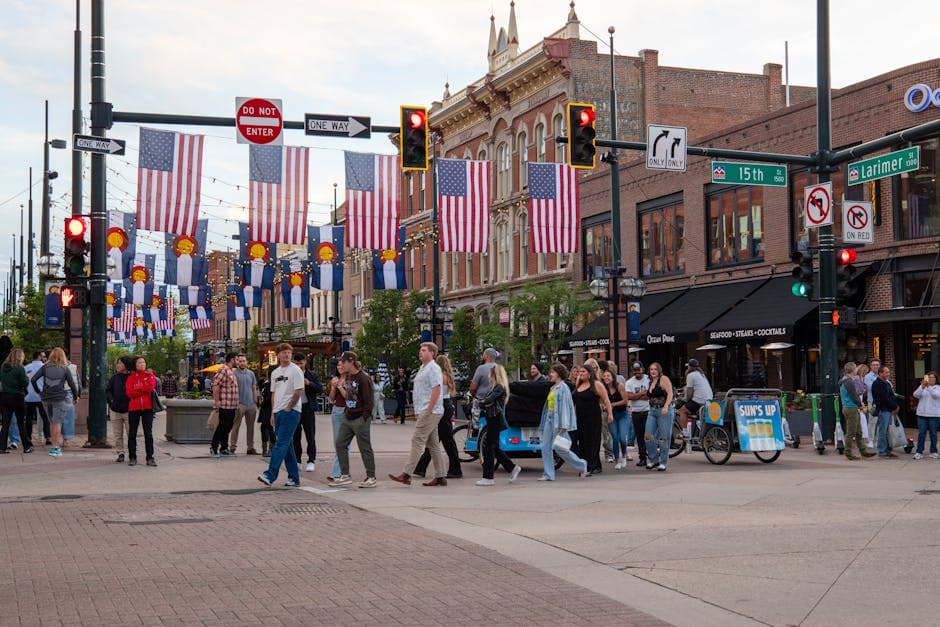
Source: US Census Bureau ACS, City of Westminster EDC, Adams + Jefferson Counties, RTD Flatiron Flyer.
Westminster Brief
Eighth largest Colorado city. Two counties.
US-36 halfway house. Equal pull both ways.
Former mall demolished, rebuilding mixed-use.
Bus rapid transit on US-36, Denver to Boulder.
CO 2.9, RTD 1.1, Westminster 3.85, Adams or Jeff varies.
Filed from Westminster. Editorial standards: real sources, no fabricated reviews.
I. Scene
5:47 PM. A strip mall on West 92nd Avenue, three traffic lights east of US-36. Two orders land in the same minute. They came from opposite skylines.
The Westminster operator runs a sixteen-table casual kitchen in a strip mall on West 92nd Avenue, three traffic lights east of the US-36 interchange. At 5:47 p.m. on a Tuesday in late spring, two pickup orders land in the same minute. The first comes from a software product manager who just stepped off the Flatiron Flyer at the Westminster Center station, inbound from Boulder after a 2 p.m. customer call. The second comes from a Denver finance analyst who pulled off US-36 westbound at the Sheridan exit, returning from a downtown LoDo office. The two customers will arrive at the operator's lobby within seven minutes of each other.
One inbound customer lives in Legacy Ridge, the upscale northwest Westminster subdivision built on the McKay Lake basin. The other lives in the Bradburn Village new-urbanist pocket north of 120th Avenue. Neither household orders from a marketplace tile. Both placed their order from a phone, on the operator's own domain, with a pickup-time selector that matched the exact minute they would walk through the door. The Tuesday dinner economy in Westminster runs on this kind of precision because the corridor itself runs on schedule. The Flatiron Flyer is a published timetable. US-36 westbound rush is a published traffic curve. The school pickup window is a known interval. The operator who matches her prep cadence to those three windows wins the Tuesday-through-Thursday revenue floor.
On a marketplace channel that publishes a national fifteen-minute prep default, the two orders would have landed five minutes apart, the food would have sat under the heat lamp for nine minutes, and the courier routing would have been routed through a third-party dispatcher that does not know the Westminster Center Flatiron Flyer platform from the Sheridan Boulevard exit. The marketplace channel takes its 28 percent commission and walks. The operator absorbs the stale food and the lost relationship. On a direct channel with a Westminster-aware pickup-time selector and a Voice AI that picks up the change-the-pickup call from the Sheridan-exit customer who hit traffic, the two orders land warm and on time. The relationship holds.
The rest of this report is the operating frame around that strip mall on 92nd Avenue: the US-36 corridor and its Denver-Boulder commuter pull, the Adams County versus Jefferson County split that runs north-south through the city, the Downtown Westminster redevelopment of the demolished mall site, the Standley Lake reservoir district to the west, the FlatIron Crossing super-regional mall just beyond the city line in Broomfield, the South Westminster Hispanic family-restaurant corridor along Federal Boulevard, the Flatiron Flyer bus rapid transit schedule that reshaped the daily commute, the Westminster Faire and Standley Lake July 4 fireworks seasonal cycle, the combined sales tax stack, and the DirectOrders fit. This is the Westminster stack.
Sources for this scene: US Census Bureau ACS, City of Westminster EDC, RTD Flatiron Flyer schedule, DRCOG.
II. The Numbers
Six numbers that frame the Westminster restaurant economy.
Restaurants
~520
Independent and chain food service establishments inside city limits, per CO DOR licensing rolls.
Median check
$18.40
Casual pickup ticket. Reflects suburban family two-entree pattern, not Boulder craft.
Sales tax
8.6%
CO 2.9, RTD 1.1, Westminster city 3.85, county overlay rounds to ~8.6 percent on prepared food.
Denver / Boulder commute split
48 / 52
DRCOG journey-to-work shows roughly even pull both directions on US-36 from Westminster households.
Tech worker share
~24%
Census ACS occupations. Above CO average, reflecting Boulder spillover into Legacy Ridge and Bradburn.
Downtown reno
2017 to 2030+
Mall demolished 2017. Mixed-use district built out in phases through the next decade.
Sources: Colorado Department of Revenue retail licensing, US Census ACS, DRCOG journey-to-work, City of Westminster EDC, Downtown Westminster planning documents.
III. The Tug-of-War
Denver pulls east. Boulder pulls west. Westminster sits at the rope's exact midpoint.
US-36 is a sixteen-mile state highway connecting Interstate 25 at the north Denver edge to the University of Colorado Boulder campus. The midpoint of US-36 by mileage falls almost exactly inside the Westminster city limits, at the Sheridan Boulevard interchange. Twelve miles east lies the LoDo financial and tech downtown of Denver, with its Ball Arena concert calendar, the Mile High Stadium Broncos Sunday-game crowd, and the dense Union Station rail hub. Twelve miles west lies the University of Colorado Boulder campus, the Pearl Street tech startup corridor, the Naropa Buddhist cultural district, and the Twenty Ninth Street outdoor mall.
For a Westminster restaurant operator, this midpoint is the structural fact that defines the customer base. Roughly half of Westminster's commuting workforce drives east in the morning to Denver, according to the Denver Regional Council of Governments journey-to-work data. The other half drives west to Boulder. The two commuter streams pass each other on US-36 every weekday at 7:30 a.m. and again at 5:30 p.m., one westbound, one eastbound, in roughly equal volume. No other Denver-metro suburb has this exact equal-pull dynamic. Lakewood pulls almost entirely toward Denver. Aurora pulls almost entirely toward Denver. Broomfield pulls more toward Boulder than Denver. Westminster sits at the rope's midpoint and absorbs demand from both ends.
The implication for restaurant operating cadence is that the dinner rush is bimodal. The Denver-returning commuter typically arrives in the 6:00 to 6:45 p.m. window because LoDo traffic clears later than Boulder. The Boulder-returning commuter typically arrives in the 5:30 to 6:15 p.m. window because the Pearl Street corridor empties earlier. The two windows overlap but do not align, producing a forty-five-minute peak between 5:45 and 6:30 p.m. when the operator's ticket queue runs at maximum throughput. A marketplace algorithm that publishes a single fifteen-minute prep estimate averages across both windows and serves neither well.
The bimodal pull also shapes the menu itself. The Boulder commuter often orders a grain bowl, a salad, a vegetarian or vegan plate. The Denver commuter often orders a burger, a wing platter, a beer-pairing entree. The Westminster operator who runs a single menu has to cover both ends of the corridor in the same kitchen. The branded ordering site that surfaces the right menu items to the right customer at the right hour is the channel that captures the recurring weekday dinner from both directions.
Sources: DRCOG journey-to-work, RTD Flatiron Flyer ridership, CDOT US-36 traffic counts, City of Westminster EDC.
IV. The Plate
Mexican, American casual, Vietnamese, Indian, brewpub. The five corridors of the Westminster food economy.
The Westminster food scene divides cleanly into five cuisine corridors that operate independently across the city. The largest by sheer count is Mexican, concentrated in South Westminster along the Federal Boulevard and Lowell Boulevard corridors below 88th Avenue. This is the part of the city built earliest, closest to Denver, with the strongest Hispanic and Latino population (roughly 18 to 22 percent citywide, considerably higher in the South Westminster tracts). The Mexican operators here range from generation-old taquerias on West 72nd Avenue to mid-market casual chains anchored at FlatIron Crossing.
The second cuisine corridor is American casual, spread across the Westminster Mall successor (Downtown Westminster), the FlatIron Crossing mall pads, and the Sheridan-and-104th retail node. This is the chain-anchored tier, with national brands like Texas Roadhouse, BJ's, Chili's, and a growing crop of independent burger-and-wings concepts. The third corridor is Vietnamese, concentrated in South Westminster as part of the broader Federal Boulevard Asian-American restaurant strip that runs from north Denver through Westminster. Pho 95, Vietnam Grill, and a handful of bun-and-banh-mi storefronts anchor this tier.
The fourth corridor is Indian, smaller but growing, concentrated in North Westminster among the Legacy Ridge and Bradburn Village tech-worker suburbs. The Boulder tech-spillover demographic carries a high Indian-American share, and the Westminster Indian restaurant economy serves both the weeknight-dinner-pickup demand from those households and the broader north-metro Indian-American community. The fifth corridor is brewpub: Westminster Brewing, Boulder Beer Pub, and a series of smaller craft beer taprooms that sit along the US-36 frontage and pull Friday and Saturday evening crowds from both Denver and Boulder.
For the operator, the five-corridor structure means that no single ordering channel serves all customer segments equally well. The Mexican operator on Federal Boulevard needs a Spanish-first Voice AI and a printed itemized receipt in the operator's source language. The Indian operator in Legacy Ridge needs a vegetarian-prominent online menu with clear Jain and vegan modifier handling. The brewpub on US-36 needs a draft-list integration and a six-pack to-go workflow. The branded direct ordering channel that the operator owns is the channel that can be tuned to each corridor's specific demand pattern.
Sources: CO DOR retail licensing, US Census ACS, City of Westminster EDC, Westminster Window restaurant coverage, FlatIron Crossing tenant directory.
V. The Year
Twelve months on the Westminster restaurant calendar. Two peaks, two valleys, six recurring spikes.
The Westminster operating year follows a Front Range Colorado seasonal pattern with several Westminster specific overlays. The two largest annual peaks are the July 4 fireworks at Standley Lake Regional Park, one of the largest free fireworks shows in the north metro that draws 40,000 to 60,000 visitors annually per City of Westminster Parks and Recreation estimates, and the Westminster Faire weekend in August at Westminster City Park, which combines carnival rides, live music, and a fireworks finale. Both events compress half a year of weekend dining demand into roughly six days of operating calendar.
The two seasonal valleys are mid-January through early February (post-holiday spending collapse, cold-weather pickup softening) and mid-March (spring break absence as Westminster families travel to Vail, Steamboat, or Florida). The four recurring spikes outside the two main peaks are Mother's Day (high dine-in and family-takeout volume), back-to school weekend in mid-August (the Adams 12 and Jefferson County school districts start within a week of each other), Halloween weekend (Downtown Westminster trick-or-treat events draw 5,000+ families), and the post-Thanksgiving holiday shopping window at FlatIron Crossing.
The ski commuter season runs from late November through early April. Westminster sits along the US-36 to I-70 path used by Denver and Boulder skiers driving to Eldora, Winter Park, and the Summit County resorts. The Friday afternoon and Sunday evening pickup windows for road-trip food rise meaningfully during this season, with breakfast burrito and to-go coffee demand spiking from 5:30 a.m. through 7:30 a.m. on Saturday and Sunday mornings. The college sports cycle (CU Buffaloes football and basketball, Denver Broncos NFL Sundays) adds a tailgate-day demand curve that runs across both fall and winter calendars.
The FlatIron Improv Festival in late June, the Westminster Faire in August, and the Standley Lake fireworks in July produce a concentrated three-event summer cluster that defines roughly 18 percent of the annual restaurant revenue across operators within four miles of those venues. The operator who prepares the Voice AI, the pickup workflow, the Uber Direct dispatch, and the loyalty enrollment pipeline before each of these events captures the first-time-customer onboarding window that converts to off-peak loyalty across the next quarter.
Sources: City of Westminster Parks and Recreation event records, Westminster Window, Denver Post Front Range coverage, Adams 12 and Jefferson County school calendars.
VI. Downtown Reborn
The mall closed in 2011, came down in 2017, and is becoming a downtown.
Westminster Mall opened in 1977 on a 105-acre site bounded by 88th Avenue and 92nd Avenue at Sheridan Boulevard, just east of the US-36 corridor. For three decades it was the dominant retail anchor in the northwest Denver metro, with four department-store anchors and roughly 150 inline tenants. The 2008 financial crisis and the broader collapse of Class B regional malls hit Westminster Mall hard, and by 2011 the property had effectively gone dark. The City of Westminster purchased the entire site in 2011 and 2012 through a sequence of negotiated acquisitions, a rare and bold municipal move that gave the city full control over the redevelopment master plan.
The mall was demolished in 2017. What replaces it is Downtown Westminster, a roughly 105-acre mixed-use district planned for approximately 2,300 residential units, 1.5 million square feet of office, 750,000 square feet of retail and restaurant pads, and a central public square. The build-out is multi-decade. Phase one (2018 through 2022) delivered the Alamo Drafthouse Cinema, the Junction Westminster apartment building, and several restaurant pads along the new Eaton Street main thoroughfare. Phase two (2022 through 2026) is delivering additional residential and office construction. Phase three (2026 onward) will fill out the remaining commercial and residential blocks through roughly 2030.
For a restaurant operator anywhere within four miles of the Downtown Westminster site, the redevelopment is the single most consequential demand-side change in the local market across two decades. The day-time office worker base will reach roughly 5,000 to 8,000 by 2030 according to City of Westminster planning estimates. The resident base inside the district will reach roughly 4,000 to 5,000. The retail and dining visitor flow from the surrounding city will concentrate at the new public square. The operator who positions a Downtown Westminster pickup workflow, Voice AI catering line for the office tower lunchroom, and Uber Direct dispatch capability ahead of the phase-three completion captures the early-occupant relationship base.
On the western edge of the city, Standley Lake Regional Park frames a different demand pattern. Standley Lake is the 1,500-acre reservoir built in 1911 that supplies Denver Water its drinking water and doubles as a regional recreation area. The park draws roughly 300,000 visitors annually for fishing, sailing, hiking, and the Standley Lake Wildlife Refuge bald eagle nesting habitat. The July 4 fireworks at the lake are the largest free fireworks display in the north metro and concentrate roughly 40,000 to 60,000 visitors into a single evening. The restaurants within three miles of the lake see their single biggest revenue day of the year on July 4 evening.
Sources: City of Westminster planning documents, Downtown Westminster master plan, Standley Lake Regional Park public materials, Denver Water, Westminster Window.
VII. Notable Tables
Twelve Westminster restaurants and operators cited in this report.
Editorial citations, not endorsements. Restaurant inclusion is for narrative reference.
- 4 Mile InnFederal Boulevard, South WestminsterOld roadhouse American casual, longest-tenured operator on the corridor, weekend tavern anchor.
- Hop AlleyUS-36 frontageModern Chinese, dumplings and noodles, draws Boulder and Denver crowds for weekend dinner.
- Vietnam GrillFederal Boulevard, South WestminsterVietnamese pho, banh mi, bun, anchor on the Federal Boulevard Asian-American restaurant strip.
- La FamiliaLowell Boulevard, South WestminsterTraditional Mexican, family-owned, weekend menudo, smothered breakfast burritos, bilingual order line.
- J.J. Wells120th Avenue, North WestminsterAmerican casual sports bar, Broncos Sunday tailgate destination, wings and burger pickup volume.
- The Atomic CowboyDowntown WestminsterEclectic American casual with breakfast burritos, weekend brunch, late-night pickup at the new district.
- Aji LatinWestminster Mall successor districtPan-Latin small plates, ceviches and arepas, weekend dine-in and pickup, draws from both counties.
- Sushi HaiLegacy Ridge, North WestminsterJapanese sushi and small plates, tech-worker dinner pickup, weekend dine-in family destination.
- Big Bill's New York Pizza104th Avenue corridorNew York-style pizza by the slice and full pie, school-night family pickup, late-night Friday volume.
- Bonfire BurritosSheridan Boulevard, South WestminsterLocal Mexican counter-service, smothered burritos, ski-commuter Saturday morning breakfast destination.
- Westminster BrewingUS-36 frontageLocal craft brewpub, eight house drafts and rotating seasonals, Friday and Saturday evening tasting room.
- Boulder Beer PubUS-36 corridorBoulder Beer Company satellite, the original Colorado craft brewery, weekend dinner and beer pairing.
VIII. The Neighborhoods
Six Westminsters under one city seal. Each runs on a different rhythm.
Westminster does not present as a unified suburban grid. The Adams County tracts in the south and east operate on a different rhythm than the Jefferson County tracts in the north and west, and four sub-neighborhoods within that split each carry a distinct restaurant demand profile.
Adams County, oldest tier
South Westminster
The earliest-developed part of the city, immediately north of the Denver border, anchored along Federal Boulevard and Lowell Boulevard. Predominantly working-class, the highest Hispanic and Latino concentration in the city, several block groups above 35 percent Latino. Restaurants here are often family-owned, second and third generation operators, with bilingual phone lines and weekend menudo.
Demand: Weekend Mexican family dinner, Cinco de Mayo, breakfast burritos seven days.
Adams County, newer tier
North Westminster
The expansion zone built in the 1990s and 2000s along 120th Avenue and the Huron Street corridor. Younger families, more dual-income suburban households, mostly chain dining and mid-market casual. Adams 12 Five Star Schools serves most of this tier with strong PTO catering demand.
Demand: Weeknight family pickup Tuesday through Thursday, school football Fridays.
Jefferson County, west edge
Standley Lake
The neighborhoods surrounding Standley Lake Regional Park, west of Wadsworth Boulevard. Older suburban homes, lake-recreation amenity premium, considerable July 4 fireworks crowd spillover. The lake itself is the dominant single-event revenue driver in the city.
Demand: July 4 fireworks, weekend lake-recreation lunch crowds, Saturday morning trailhead.
Adams County, upscale northwest
Legacy Ridge
Built around the Legacy Ridge Golf Course, north of 104th Avenue. Higher household income, Boulder tech-worker concentration, considerable Indian-American share, golf-course adjacency. Indian and upscale-casual restaurants do well here.
Demand: Weeknight Indian and upscale casual, golf-event catering, Sunday brunch.
Adams County, north edge
McKay Lake
The newer master-planned community built around McKay Lake reservoir at the northern city edge. Young dual-income families, considerable Bradburn-spillover effect, growing tech-worker base, frequent crossover with the FlatIron Crossing visitor base.
Demand: Family dinner Tuesday through Thursday, FlatIron Crossing shopping pickup.
Adams County, new-urbanist pocket
Bradburn Village
A new-urbanist mixed-use pocket north of 120th Avenue built in the early 2000s, designed with walkable streets and a central village green. Higher restaurant density than the surrounding subdivisions, brewpub and casual-cafe concept anchors, considerable cycling and trail-runner crowd from the Big Dry Creek Trail.
Demand: Walk-in dinner, brewpub Friday evenings, trail-runner Saturday breakfast.
IX. Ideal Operator Profiles
Three Westminster restaurants for whom DirectOrders is built.
These are the operating profiles where the stack pays back fastest. Read them looking for the one that matches your kitchen.
ICP 01
The US-36 commuter brewpub.
A craft brewery taproom on the US-36 frontage that pulls Friday and Saturday evening crowds from both Denver and Boulder.
Operator profile
- Eight to twelve house drafts, rotating seasonals, a printed kitchen menu of burgers, wings, salads, vegetarian bowls.
- Sixty to one hundred seats inside, a patio for warm-weather months, six-pack-to-go cooler at the door.
- Average ticket $24 to $32. Friday and Saturday revenue runs 38 to 45 percent of weekly total.
Why DirectOrders fits
- Bilingual Voice AI handles inbound six-pack-to-go and growler-fill calls during peak service so the bar staff can pour.
- Pickup-time selector tied to actual kitchen prep cadence rather than a national fifteen-minute default.
- Uber Direct dispatch at courier cost for the Friday-night customer who wanted to taste the seasonal but didn't make it before close.
- Same-day Stripe payouts mean Friday-evening beer revenue funds Monday brewery utilities.
ICP 02
The FlatIron Crossing family casual.
A mid-market family casual restaurant within two miles of the FlatIron Crossing mall, serving the weekend shopper-flow visitor base.
Operator profile
- American casual or Tex-Mex menu, kid's menu, full bar, 80 to 140 seats, dine-in plus pickup plus delivery.
- Lunch volume peaks 11:30 a.m. to 1:30 p.m. on Saturday and Sunday driven by mall shopper flow.
- Dinner volume peaks 5:30 p.m. to 7:30 p.m. seven days. Average ticket $18 to $26.
Why DirectOrders fits
- Branded ordering site with a Westminster-aware pickup-time selector that matches the FlatIron Crossing parking-walk cadence.
- Family loyalty program that accumulates across the soccer-and-band season instead of resetting per marketplace order.
- Catering Voice AI for end-of-season banquets at Adams 12 and Jefferson County schools.
- Uber Direct dispatch for the Bradburn Village household that ordered after the kids fell asleep in the back seat.
ICP 03
The South Westminster Hispanic family restaurant.
A Mexican family-owned restaurant on Federal Boulevard or Lowell Boulevard below 88th Avenue, third-generation operator-owned, predominantly Spanish-language operating staff.
Operator profile
- Traditional Mexican menu with regional specialties, weekend menudo and birria, mole on Sundays, breakfast smothered burritos seven days a week.
- Inbound phone calls run roughly 60 percent Spanish, 40 percent English at this corridor.
- Weekly revenue concentrates Friday through Sunday at 55 to 60 percent of total.
Why DirectOrders fits
- Spanish first-syllable detection on Voice AI. The Voice AI picks up in the caller's language before any English-default prompt plays.
- Dish vocabulary held in operator's source language. Chiles rellenos, tacos al pastor, huaraches, tortas ahogadas all stay as printed on the receipt.
- Code-switching across the call is supported. Caller can begin in Spanish, switch to English to read back a phone number, switch back to Spanish to confirm pickup time.
- Mexican and Central American conversational training so the Voice AI recognition matches what Federal Boulevard sounds like, not a generic Latin American neutral voice.
X. The Lake Spike
July 4 at Standley Lake. The largest free fireworks in the north metro. Restaurants within three miles see eight times their normal Friday volume.
The July 4 fireworks at Standley Lake Regional Park are the dominant single-event driver of summer restaurant revenue across western Westminster. The event has been held annually since the late 1990s and has grown into one of the largest free fireworks shows in the Denver metro, drawing roughly 40,000 to 60,000 visitors per City of Westminster Parks and Recreation estimates. The gates open early afternoon. Picnic and tailgate setup runs from 3 p.m. through 7 p.m. The fireworks launch at roughly 9:30 p.m. The parking exodus runs from 10 p.m. through 11:30 p.m.
For restaurants within three miles of the lake, the order-volume curve through the day looks nothing like a normal Friday. Lunch volume runs roughly 1.4 times normal between 11:30 a.m. and 1 p.m. as out-of-town families arrive and pick up a quick meal before heading to the lake. The afternoon pickup window between 3 p.m. and 6 p.m. runs at roughly 6 to 8 times a normal Friday afternoon as families stock up on takeout for the evening picnic. The immediate post-fireworks window from 10:15 p.m. through 11:30 p.m. runs at roughly 3 times a normal Friday late-night as crowds disperse and look for a meal before driving home to Boulder, Denver, or back through US-36 east.
The cumulative single-day revenue across operators within the lake's three-mile radius can run 6 to 8 times a normal Friday. For a typical Westminster independent doing $4,500 on a normal Friday, July 4 can mean $30,000 to $35,000. The kitchen prep math has to start a week in advance. The staffing has to start three days in advance. The Voice AI configuration has to absorb a roughly 600 percent inbound call volume increase across the day. The pickup-time selector has to handle the 5 p.m. picnic-grab and the 10:15 p.m. fireworks-exit windows simultaneously without crashing.
A marketplace channel that runs a national fifteen-minute prep default and a generic algorithmic surge price cannot absorb this kind of demand spike cleanly. The operator who runs a Westminster-aware direct channel with manual pickup-window controls, Voice AI overflow handling, and same-day Stripe payouts walks away from July 4 with the year's most concentrated revenue moment in the bank and the relationships in the loyalty system.
Sources: City of Westminster Parks and Recreation event records, Standley Lake Regional Park public materials, Denver Post Front Range coverage, Westminster Window.
XI. The Operator Year
FlatIron seasons, ski commuter Saturdays, the school calendar. The Westminster operator runs four overlapping years at once.
The Westminster restaurant operator does not run a single calendar. She runs four overlapping calendars that interlock unevenly across the twelve months and produce a forecast curve that requires daily attention. The first is the FlatIron Crossing super-regional mall cycle, which produces a weekend peak on Saturday and Sunday from late October through early January as the holiday shopping window pulls regional traffic onto the US-36 corridor. The mall's shoulder seasons in February through April and August through September are softer but still produce a meaningful weekend bump.
The second is the ski commuter calendar. From the Friday of Thanksgiving weekend through the first Sunday in April, US-36 carries the Denver and Boulder ski traffic west toward Boulder Canyon, Eldora, Winter Park, and the Summit County resorts. Friday afternoon pickup volume between 3 p.m. and 5:30 p.m. rises as weekend skiers grab road-trip food before the drive. Sunday evening between 5 p.m. and 7:30 p.m. carries the returning ski traffic. Breakfast burrito and to-go coffee demand spikes between 5:30 a.m. and 7:30 a.m. on Saturday and Sunday mornings as Boulder-bound skiers fuel up at Westminster pads on the way out.
The third is the school calendar. Adams 12 Five Star Schools, Jeffco Public Schools, and the Westminster Public Schools district together serve roughly 30,000 students inside Westminster city limits. The August back-to-school transition reshapes weekday demand across the Tuesday through Thursday window. Friday football and Saturday morning club sports add a concentrated weekend demand. The PTO fundraiser catering economy runs from late September through early May. The post-Memorial-Day summer recess produces a meaningful daytime softening that the operator has to plan staffing around.
The fourth is the Westminster event calendar: Westminster Faire weekend in August, the Standley Lake July 4 fireworks, the FlatIron Improv Festival in late June, the Downtown Westminster trick-or-treat events in late October, the Cinco de Mayo celebrations on Federal Boulevard, the Mother's Day brunch peak. Each of these adds a one-day or three-day spike that runs 4 to 8 times a normal day's volume. The operator who maps her Voice AI overflow, kitchen staffing, ingredient ordering, and Uber Direct courier capacity against all four overlapping calendars at once runs a stable operating model. The operator who runs against only one of the four calendars discovers the gap in the wrong week.
Sources: City of Westminster Parks and Recreation, FlatIron Crossing tenant directory, Adams 12 Five Star Schools, Jeffco Public Schools, Westminster Public Schools, CDOT US-36 traffic data.
XII. Bilingual by Default
South Westminster runs in Spanish before it runs in English. The Voice AI picks up at the first syllable in whichever language the caller spoke.
Westminster carries a roughly 18 to 22 percent Hispanic and Latino share citywide per the US Census ACS, but the South Westminster tracts below 88th Avenue along Federal and Lowell Boulevards run considerably higher, with several block groups above 35 percent Latino. The Mexican family restaurants on these corridors take inbound phone calls in Spanish more often than in English on Friday and Saturday evenings. The bilingual demand is not an accommodation. It is the daily operating reality.
The DirectOrders Voice AI runs bilingual by default for Westminster operators. The system detects the language of the inbound call within the first syllable, before any English-default prompt is played. A Spanish-speaking caller hears Spanish from the very first response. An English-speaking caller hears English. Code-switching across the call is supported, so a customer can begin in Spanish, switch to English to read back a phone number, and switch back to Spanish to confirm a pickup time without the Voice AI losing context.
The Spanish voice is trained on Mexican and Central American conversational patterns. Dish vocabulary stays in the operator's source language: chiles rellenos, tacos al pastor, huaraches, tortas ahogadas, menudo, birria. The receipt prints in the same dish vocabulary the operator writes the menu in. A national marketplace channel that translates everything through an English-default pipeline produces a receipt the operator's Spanish speaking customer cannot easily read.
Sources: US Census ACS Westminster tract-level language data, City of Westminster EDC, Westminster Public Schools language services, DirectOrders Voice AI evaluation logs.
Sample call, South Westminster
How code-switching plays on a Federal Boulevard taqueria line.
- 00:00, Caller
"Buenas tardes, quisiera ordenar para llevar, por favor."
- 00:02, Voice AI
"Buenas tardes, claro que si. Que le gustaria ordenar hoy?"
- 00:14, Caller
"Tres tacos al pastor, una orden de huaraches, y un agua de horchata."
- 00:42, Caller, switching
"My phone number is six, seven, two, five, five, five, oh, one, four, two."
- 00:48, Voice AI, switching back
"Gracias, su orden estara lista en veinte minutos. Hasta luego."
Receipt prints with the dish names exactly as ordered.
XIII. The Cost Math
Direct ordering at 14 percent total cost versus DoorDash at 27 percent on a $45 family order.
Pick a representative Westminster Tuesday-evening family pickup order. A burger, a chicken sandwich, two kids' meals, two soft drinks. Total ticket $45.00. Run the same ticket through the DirectOrders direct channel and through a national marketplace channel like DoorDash. The cost stacks on each channel reveal the structural difference in the operator's take-home.
On the direct channel, the operator pays the flat DirectOrders platform fee allocated across the order (roughly 2 percent at typical volume), the Stripe payment processing fee at 2.9 percent plus thirty cents, and an Uber Direct courier fee if the customer chose delivery (roughly $6 to $9 at courier cost, passed to the customer or absorbed by the operator). For a pickup-only order, the total operator cost lands at roughly 5 to 6 percent of the ticket. For a delivery order with the courier fee absorbed, the total operator cost lands at roughly 13 to 15 percent of the ticket.
On a national marketplace channel, the operator pays the marketplace commission (typically 25 to 30 percent of the ticket), the marketplace payment processing fee (typically 3 percent), and absorbs the marketplace-determined courier fee in the pricing structure that the marketplace controls. The total operator-side cost on a national marketplace order frequently exceeds 28 to 32 percent of the ticket.
On the $45 family order, the operator on the direct delivery channel takes home roughly $38.25 after fees. The operator on the marketplace channel takes home roughly $30.60 after fees. The difference is $7.65 per order, or 17 percent of the ticket value. Across 500 orders a month, that difference is $3,825 per month. Across a year, that is roughly $45,000 in operator take-home. The flat DirectOrders monthly subscription of $249 is recovered after the first thirty-two orders.
Sources: DirectOrders pricing, public DoorDash marketplace fee schedules, Stripe public fee schedule, Uber Direct courier fee schedule. Numbers stylized for narrative.
XIV. The Corridor
Westminster sits inside a north-metro corridor. Six neighboring playbooks for context.
If you operate across multiple north-metro Denver cities, the corridor-specific almanacs run alongside this one. Each applies its own commuter, neighborhood, and tax-stack frame.
Playbook
Denver, CO
The east anchor on US-36, twelve miles. LoDo finance, Broncos Sundays, Mile High event calendar.
Playbook
Boulder, CO
The west anchor on US-36, twelve miles. CU campus, Pearl Street tech corridor, the original Flatiron.
Playbook
Thornton, CO
The north metro boom across I-25 east. Adams County twin to Westminster's east half.
Playbook
Aurora, CO
East metro multi-county anchor. The Aurora Avenue corridor, Buckley AFB demand.
Playbook
Lakewood, CO
West metro along 6th Avenue. The Belmar mixed-use district, foothills proximity.
Playbook
Centennial, CO
South metro suburban. Arapahoe County, low sales tax stack, dense school catering economy.
XV. The Fit
The Westminster thesis, brought home to a single stack.
The argument of this report has been built one corridor at a time. Below: how the DirectOrders stack maps to each pressure point Westminster operators actually feel. Flat $249 per month. Zero per-order commission. Bilingual Voice AI. Uber Direct dispatch at courier cost. Same-day Stripe payouts.
US-36 corridor
Bimodal commute-aware pickup.
Boulder commuter window 5:30 to 6:15 p.m. Denver commuter window 6:00 to 6:45 p.m. Pickup-time selector tuned to the actual prep cadence, not a national fifteen-minute default. The recurring weekday dinner that defines the operator's revenue floor.
Downtown Westminster
Corridor-local branded site.
Office-tower lunchroom catering. Resident-tower dinner pickup. Public-square Saturday evening foot traffic. The new district demand a marketplace channel cannot read because it has not been built yet.
Standley Lake July 4
Six-hundred-percent demand spike playbook.
Picnic-pickup window 3 p.m. to 6 p.m. Post-fireworks window 10:15 p.m. to 11:30 p.m. Voice AI overflow handling. Manual pickup-window controls. Same-day Stripe deposits so July 4 cash funds July 5 payroll.
South Westminster
Spanish at the first syllable.
Bilingual Voice AI with first-syllable detection. Mexican and Central American conversational training. Dish vocabulary held in source language. Code-switching across the call. The integration point national marketplaces miss.
FlatIron Crossing
Weekend shopper-flow pickup.
Saturday and Sunday lunch 11:30 a.m. to 1:30 p.m. Mall-parking-walk pickup cadence. Family loyalty program that accumulates across the soccer season. The Bradburn Village dinner that lands after the kids fall asleep.
The 8.6% tax stack
Operator-remitted, same-day funded.
Operator's own CDOR account, operator's own Westminster city license, RTD overlay bundled in state filing. Same-day Stripe deposits mean the cash to remit is in the operator's bank account the day the order is fulfilled.
Path 1
Start a Westminster store
Branded ordering site, bilingual Voice AI, Uber Direct dispatch, same-day Stripe. Onboarding for a typical Westminster independent runs about two hours from menu import to live order.
Begin onboarding
Path 2
See the stack live
Nineteen-minute Zoom on a Westminster menu. Bilingual Voice AI on. Uber Direct integration on. Branded site live. Ask whatever you want.
Book the demo
XVI. Coda
Two suggestions for the Westminster operator.
Stand the platform up before the July 4 fireworks crowd arrives at Standley Lake.
The Westminster single-largest revenue evening of the year is the July 4 fireworks at Standley Lake. Restaurants within three miles can do 6 to 8 times a normal Friday. Build the branded ordering site, configure the bilingual Voice AI overflow handling, set the pickup-time selector to handle the 3 p.m. picnic-pickup and the 10:15 p.m. fireworks-exit windows, and have the loyalty program live by the first weekend in June. The operator who is ready before the year's biggest weekend wins the loyalty enrollment that converts to off-peak retention across the next twelve months.
Audit your bimodal commuter pickup-time selector.
The Westminster operator runs a bimodal weekday dinner rush: Boulder commuters arriving 5:30 to 6:15 p.m. and Denver commuters arriving 6:00 to 6:45 p.m. If your current ordering channel publishes a single national fifteen-minute prep default, you are losing the Boulder window or the Denver window every weekday. Open the demo with your actual Westminster prep cadence. Map both windows. Watch the recurring weekday dinner show up in the loyalty system.
References, this report drew from
12 sources
- US Census Bureau ACS, Population, household composition, language data for Westminster
- Colorado State Demography Office, Colorado population estimates and demographic projections
- City of Westminster Economic Development Council, City history, municipal records, sales tax filings, Downtown Westminster master plan
- Adams County Economic Development, Adams County records, county-level economic development data
- Jefferson County, Colorado, Jefferson County records and west-Westminster economic data
- Colorado Department of Revenue, Colorado sales tax rates, marketplace facilitator rules, retail licensing
- Regional Transportation District (RTD), Flatiron Flyer bus rapid transit schedule, US-36 corridor ridership
- Denver Regional Council of Governments (DRCOG), Regional planning, journey-to-work, US-36 traffic data
- Boulder Daily Camera, Boulder-side coverage of US-36 commuter corridor and FlatIron Crossing region
- Denver Post, Denver-metro coverage, north metro corridor reporting, Westminster events
- Westminster Window, Local Westminster civic reporting, restaurant openings, city council coverage
- Standley Lake Regional Park and Denver Water, Standley Lake reservoir, Denver Water supply, public recreation district