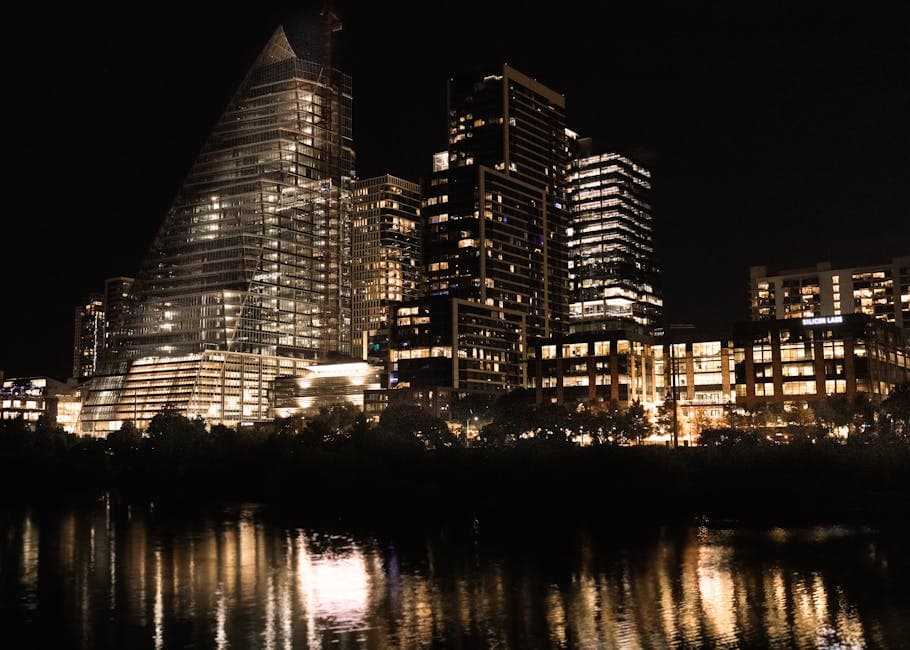
Koreatown North.
A long read on operating a restaurant in Carrollton, Texas, the city that quietly became the heart of Korean-American North Texas. Old Denton Road and Royal Lane carry one of the largest Korean restaurant clusters outside Los Angeles. H-Mart and Hong Kong Market anchor the spine. Old Downtown Carrollton, restored around the 1880s rail-side square, runs a parallel scene. The phone rings in English, Korean, and Spanish.
- Carrollton population
- ~137K
- Korean DFW residents
- ~70K+
- Combined sales tax
- 8.25%
- DART rail stations
- 3
US Census ACS, City of Carrollton
KAC DFW estimates
Texas Comptroller
DART Green Line system map
I. Sunday, 1:14 P.M., Old Denton Road
The phone rings in Korean. The kitchen does not need to translate.
On a Sunday afternoon at 1:14, a tofu house on Old Denton Road takes a phone call. The caller is a regular. She has ordered the same sundubu jjigae, with extra banchan and a side of japchae, twice a month for nine years. She is calling on behalf of her father, who joined her family after church an hour ago. Her father prefers the call in Korean. The owner has heard her voice for nearly a decade.
On a Tuesday at 6:50 in the evening that same week, a tofu house two blocks south takes a phone call from a customer who has never called the kitchen before. The caller is the executive assistant for a north-Dallas marketing firm that is hosting a Korean trade delegation later in the week. She is calling to ask whether the kitchen caters. She does not speak Korean. She is asking, structurally, in English, but with three Korean dish names mixed in (galbi, japchae, mandu) that she has been told the delegation will expect on the menu.
These are two different calls. They land at two different kitchens within walking distance of each other on the Old Denton Road Korean spine. They demand two different operating responses. The Sunday call needs Korean-language menu literacy, the Korean banchan vocabulary, and the social register that a regular customer of nine years deserves. The Tuesday call needs English-language clarity, catering-quote precision, and a dispatch plan that hits a fixed window on Thursday at 11:45 in the morning.
A monolingual English IVR can answer one of these calls. A monolingual Korean IVR can answer the other. Neither can carry the corridor as it actually runs. The Carrollton Koreatown phone trade lands in two languages structurally, and a meaningful fraction of calls switch mid-call (the child translating for the parent, the bilingual customer slipping from English to Korean at the menu item and back to English at the closing line).
The Spanish-language phone trade enters from a different direction. The hospitality workforce across the corridor, the family rooms in south Carrollton along Trinity Mills and Marsh Lane, and the multi-generational households in the residential pockets call in Spanish, particularly at the weekend family-pack hour and during quinceanera and family-event catering windows. A platform that supports English, Korean, and Spanish as first-class customer-facing languages on the voice channel is doing the operating work of the corridor at full fidelity.
The Indian and Vietnamese phone trade enters from yet another direction, on the Belt Line corridor and around the Hong Kong Market spine. The platform answer is the same: listen, identify, respond. The corridor is plural. The ordering stack should be too.
This is the Carrollton Koreatown phone trade, working as intended. The kitchen owns the relationship. The relationship is the asset.
II. The Corridor
Old Denton Road and Royal Lane carry the largest Korean restaurant cluster in Texas.
The Carrollton Korean corridor runs roughly two miles along the Old Denton Road spine between Frankford Road on the north end and Belt Line Road on the south, with cross traffic on Royal Lane reaching east into north Dallas. The corridor is one of the largest Korean-American business districts in Texas and, by per-capita Korean restaurant density, one of the largest in the United States outside of Los Angeles and Atlanta.
The anchors are physical and institutional. H-Mart Carrollton, the Korean supermarket flagship that opened in 2009, sits at the southern end of the spine. The Hong Kong Market, a pan-Asian grocer with strong Chinese and Korean overlap, sits north along Old Denton. Korean churches, two dozen plus, anchor the Sunday cadence. The Korean American Coalition and the Korean Society of Dallas anchor the cultural and civic calendar.
The restaurant economy follows the institutional shape. The Korean BBQ row, the sundubu (soft tofu) house cluster, the naengmyeon (cold noodle) summer corridor, the noraebang (karaoke) late-night-catering anchor, and the Korean fried chicken cohort each run a recognizable cadence inside the spine. Family-occasion catering for weddings, Chuseok (Korean Thanksgiving), Seollal (Lunar New Year), dol (first birthday), and hwangap (sixtieth birthday) celebrations clusters on weekends with longer lead times.
The corridor reads as a Texas suburb at street level and a Seoul neighborhood at storefront level. The architecture is North Texas strip-center. The signage, the menus, the music, the conversations, the smell of grilled galbi at 7 in the evening, the smell of sesame oil at 11 in the morning, the smell of doenjang stew at the lunch counter, are Korean.
What this rewards: a kitchen that can hold the Korean phone trade, run the late-night noraebang follow-on order, deliver the Sunday post-service catering on schedule, and bill predictably. What it punishes: marketplace dispatch that does not know the corridor, English-only IVRs that drop the Korean call at the menu item, and a pricing model that drains margin on the largest family-occasion catering tickets of the year.
Corridor anchor institutions
Korean supermarket
H-Mart Carrollton
2625 Old Denton Rd.
Anchor grocer, food court, weekend gravity well
The H-Mart Carrollton flagship anchors the southern end of the Korean spine. Its food court alone seats hundreds and runs a Korean, Japanese, and Chinese counter format. Weekend foot traffic across the parking lot reads like a small town center.
Pan-Asian supermarket
Hong Kong Market (Carrollton)
Old Denton Rd. and Frankford
Second pan-Asian grocer, Chinese and Korean overlap
The Hong Kong Market sits north of H-Mart along the same spine. The two grocers between them define the Korean weekly grocery routine for DFW. Restaurants cluster within walking distance of both.
Civic and cultural anchor
Korean American Coalition (DFW chapter)
Old Denton Rd. corridor
Community organization, programming, language and legal services
The KAC DFW chapter runs language classes, civic-engagement programming, immigration assistance, and senior services for the corridor. Catering for KAC events runs into the corridor's restaurant base directly.
Civic and cultural anchor
Korean Society of Dallas
DFW corridor (Carrollton-Royal Ln. axis)
Cultural calendar, Korean School, Chuseok and Lunar New Year programming
The Korean Society of Dallas operates a year-round cultural calendar, with a Saturday Korean School and full Chuseok (Korean Thanksgiving) and Seollal (Lunar New Year) programming. Family-occasion catering volume cycles around the holiday calendar.
Night programming
Karaoke and noraebang rooms
Royal Ln. and Old Denton Rd.
Late-night catering anchor
Multiple noraebang (Korean karaoke) rooms operate along Royal Lane and Old Denton Road. Late-night Korean BBQ delivery, fried chicken bucket orders, and noodle-and-banchan trays are the regular companion order to a four-hour karaoke booking.
Religious and community anchor
Korean Christian and Buddhist congregations
Across Carrollton, Royal Ln. axis, and north Dallas
Sunday lunch catering rhythm
More than two dozen Korean Christian congregations and several Korean Buddhist temples operate in the corridor. Sunday post-service lunch catering and weekly fellowship-meal programming is one of the largest single demand channels for Korean operators here.
III. The Curve
How Carrollton became the Korean-American capital of North Texas.
The Carrollton Korean story does not start in Carrollton. It starts on Royal Lane in north Dallas, in the 1970s and early 1980s, with the first wave of Korean families relocating to DFW from Los Angeles, Houston, and points further east. The original Korean business cluster sat along Royal Lane and Harry Hines Boulevard, anchored by the first Korean churches, the first Korean grocers, and a handful of restaurants.
The shift north begins in the late 1980s and accelerates through the 1990s. Carrollton's lower housing costs, newer schools, and Trinity Mills frontage drew the second wave of Korean families. Old Denton Road, which runs roughly parallel to Royal Lane, became the natural northward extension of the corridor. By the early 2000s, the Old Denton spine was carrying the cluster's gravity.
H-Mart's 2009 opening on Old Denton Road inflected the curve. The flagship grocery store, with its food court seating hundreds and its weekend foot traffic measured in thousands, turned the corridor from a Korean enclave into a regional destination. Customers drive in from Plano, Frisco, Allen, Lewisville, and downtown Dallas to do their weekly Korean grocery run. Restaurants within walking distance of the store inherit the foot traffic.
The post-2010 wave is institutional: the Korean Society of Dallas's Korean School (Hangul Hakgyo) cycle, the Korean American Coalition chapter operations, the multi-congregation Sunday rhythm, the noraebang and Korean cafe night programming. The restaurant scene that sits on top of this institutional base runs deeper than a strip-center cluster. It is a community-scale food economy.
The DFW Korean-American population, north of seventy thousand by current Korean American Coalition estimates, concentrates in Carrollton's north census tracts at twenty to twenty-eight percent of the residential base. The restaurant scene that serves this base, plus the broader DFW Korean and Korean-American visitor cohort, runs deeper than the official population number suggests.
Korean-American DFW population, decade by decade
| Year | Population (metro) | Corridor note |
|---|---|---|
| 1980 | ~3,000 metro | The Korean-American population across DFW sits at roughly three thousand. The Royal Lane corridor in north Dallas has the first concentration of Korean grocers and churches. |
| 1990 | ~12,000 metro | The first wave of Korean families relocates north of the LBJ Loop along Old Denton Road, drawn by lower housing costs, new schools, and proximity to existing Korean institutions. |
| 2000 | ~28,000 metro | Old Denton Road and Royal Lane consolidate as the Korean-American business district. Korean churches, hagwon (after-school) academies, salons, dental clinics, and a Korean-language newspaper anchor the corridor. |
| 2010 | ~45,000 metro | H-Mart opens its Carrollton flagship in 2009; the Hong Kong Market follows on the Korean spine. Restaurant density on Old Denton Road and Royal Lane crosses one of the highest concentrations of Korean kitchens outside Los Angeles. |
| 2020 | ~60,000 metro | Census ACS data documents Asian-American share in north Carrollton tracts at twenty to twenty-eight percent. Carrollton has more Korean restaurants per capita than almost any US city outside of Los Angeles and Atlanta. |
| 2026 est. | ~70,000+ metro | City of Carrollton and Korean-American Coalition estimates put the Korean-American DFW population north of seventy thousand, with continued density along the Old Denton Road and Royal Lane spine. |
IV. The Square
Old Downtown Carrollton sits on the 1880s rail-side square. It runs the opposite mode.
Carrollton was platted in the 1880s as a Cotton Belt and Frisco rail-line town. The Old Downtown square, restored over the past fifteen years by the City of Carrollton's Downtown Plan and the public-private investment that followed, sits a half mile east of the BNSF rail line that still passes through the historic core. The Switchyard pavilion, the public lawn, the bistro row, and the brewpub strip define the square's modern dining geography.
The square runs the opposite operating mode from the Korean corridor. Locally-owned bistros, brewpubs (the corridor's craft-beer cluster has grown steadily), coffee rooms, and a Babe's Chicken Dinner House on the south side. English-language phone trade. Weekend-residential foot traffic. A walkable urban plan in the middle of an otherwise suburban North Texas city. Festival at the Switchyard, the city's signature outdoor music and arts festival held in May, is the single-day compression event that defines the square's annual calendar.
The two scenes share a city limit and almost nothing else. The Korean corridor reads like Seoul on a Tuesday night. The square reads like a restored Texas town center on a Friday evening. A restaurant operating in both (the chef-owner of a Korean restaurant on Old Denton and a craft-brewery taproom on the square, for example, a real pattern in Carrollton) is running two parallel businesses with two parallel customer ledgers, two parallel language profiles, and two parallel catering rhythms.
A platform that segments by neighborhood is doing meaningful work in a way that a single-mode platform is not. The Carrollton restaurant scene cannot be served by a one-shape system.
Historic 1880s town center
Old Downtown Carrollton Square
Restored downtown, market events, Festival at the Switchyard
The original Carrollton town center, plat dating to 1880s rail-side platting, restored over the past fifteen years into a walkable historic district. The square hosts Festival at the Switchyard, summer concert series, and a weekend farmers market. The Switchyard pavilion is the venue.
Restored bistro and craft beer mode
Independent restaurants and breweries
Bistro, gastropub, taproom format
The square's dining roster has been rebuilt over the past decade with independent bistros, brewpubs, and coffee rooms. The mode is opposite the Korean spine: locally-owned, walkable, weekend-residential, English-language phone trade.
Event series
Switchyard Festival programming
Festival at the Switchyard, May annually
Festival at the Switchyard is the city's signature outdoor music and arts festival, held on the downtown grounds in May. It is the largest single-day catering compression of the year for the square's restaurants.
Historic infrastructure
BNSF rail-line frontage
Active BNSF freight + light-rail adjacency
Carrollton developed as a Cotton Belt and Frisco rail town in the 1880s. The BNSF line still passes through the square. The rail frontage shapes the historic district geography and the modern dining experience.
Source: City of Carrollton Downtown Plan, Visit Carrollton, Festival at the Switchyard programming.
V. The Line
Three DART rail stations sit inside Carrollton. The Green Line connects the corridor to downtown Dallas.
Carrollton is one of the few DFW suburbs with three Dallas Area Rapid Transit (DART) rail stations inside its city limits: Trinity Mills, Downtown Carrollton, and North Carrollton / Frankford, all on the Green Line. The Trinity Mills station also connects to the A-Train, the commuter rail that runs north to Denton. Carrollton is, in transit-network terms, the most transit-served suburb in north DFW.
The restaurant-economy implication is structural. The Trinity Mills station carries the morning and evening commuter wave. The Downtown Carrollton station, walking distance from the Old Downtown square, brings weekend foot traffic from Dallas into the square's restaurants. The North Carrollton / Frankford station sits at the Korean corridor's northern edge.
A customer in downtown Dallas can ride the Green Line north and walk to dinner in the Carrollton Koreatown without owning a car. Operators on the corridor read this as a real foot-traffic channel, particularly on Friday and Saturday evenings when the line is busy and the noraebang and Korean BBQ rooms are running their group-reservation peak.
The Green Line is not the dominant mode for Carrollton's restaurant trade. The dominant mode is still car (Old Denton Road, Royal Lane, Belt Line, Trinity Mills). But the Green Line shifts the corridor's customer base outward in a way that a purely suburban food district cannot match.
Operator note
A Korean BBQ room within a quarter mile of the North Carrollton / Frankford station can pull a recognizable Green Line cohort on Friday and Saturday nights, particularly when the corridor's noraebang programming is running. Pre-routed dispatch from a kitchen at the south end of the spine to a customer riding the Green Line up from north Dallas is shorter, in operator-economics terms, than a comparable Plano or Frisco run.
VI. The Other Corridors
The Korean spine is the headline. The Indian and Vietnamese corridors are the second story.
Carrollton's Indian-American population, like Plano's and Frisco's, runs deep. The Indian restaurant corridor runs along Belt Line Road, the parallel arterial running east-west across the city. North Indian, South Indian, and Indo-Chinese operators serve the Indian-American family cohort, with vegetarian and Jain options running higher than metro median. Hindi, Telugu, and Gujarati phone orders are common on weekend nights.
The Vietnamese corridor runs along Belt Line and Josey Lane. Pho operators, banh mi bakeries, and bun bowl rooms anchor the cohort. The Vietnamese phone trade is structurally Vietnamese during the late-lunch and Friday-dinner windows. The Vietnamese-American community in Carrollton overlaps with the broader DFW Vietnamese-American population in Garland fifteen miles east.
The Tex-Mex and Mexican family-room cluster anchors the residential side of Carrollton, particularly across the south and along Trinity Mills and Marsh Lane. Spanish-language phone trade runs structurally during the weekend family-pack window. Family-occasion catering for quinceaneras, baptisms, and birthday parties runs through these kitchens at a longer lead time and a larger ticket size than the weekday business.
The Chinese and broader East Asian cluster runs alongside the Korean spine, with the Hong Kong Market food court anchoring the casual mode. Mandarin-first phone trade is common on weekend group orders along Frankford and Old Denton.
Five-plus language cohorts in one city is not exceptional in DFW (Plano and Frisco run similar counts). What is exceptional in Carrollton is the density of the Korean spine and the directness with which it shapes the rest of the food map. The Indian and Vietnamese corridors run on a different rhythm. They share the same operating ask: phone trade in the customer's first language, family-occasion catering at scale, and dispatch that knows which storefront serves which cohort.
Beltline Rd. (75006)
Indian Garden / Belt Line corridor
Indian (North and South) / Thalis, biryani, dosas, weekend buffet
Carrollton's Indian corridor runs along Belt Line Road, the parallel arterial to Old Denton. The cohort overlaps with the broader DFW South Asian community across Plano, Frisco, and Irving. Vegetarian and Jain options run higher than metro median.
Belt Line + Josey Ln. (75006)
Pho operators on Belt Line and Josey
Vietnamese / Pho, banh mi, bun bowls
Vietnamese-American operators sit alongside the Korean and Indian corridors. The Vietnamese phone trade runs structurally Vietnamese during the late-lunch and Friday-dinner windows. Banh mi bakery output runs morning.
Across Carrollton, Trinity Mills + Marsh Ln. (75007)
Tex-Mex and Mexican family rooms
Tex-Mex and Mexican / Mariscos, tacos, fajitas, family-pack catering
Tex-Mex and Mexican family rooms anchor the residential side of Carrollton's dining geography. Spanish-language phone trade runs structurally during the weekend family-pack window.
Frankford Rd. + Old Denton Rd. (75007)
Chinese and pan-Asian operators
Sichuan and Cantonese Chinese / Hot pot, regional Chinese, dim sum
Chinese operators run alongside the Korean spine, with Mandarin-first phone trade common during weekend group orders. The Hong Kong Market food court anchors the casual side of the cuisine.
Source: D Magazine dining vertical, Dallas Observer, Eater Dallas, operator interviews. Cohort descriptions reflect illustrative cluster density, not single-source authoritative counts.
VII. The Math
The 8.25% sales tax breaks down across four jurisdictions.
Texas levies a 6.25 percent state sales tax on prepared food. The City of Carrollton adds the maximum 2 percent local sales tax, bringing the combined rate to 8.25 percent. Inside that local 2 percent, Carrollton splits the allocation across the City general fund, the Carrollton EDC and crime-control / street-maintenance components, and the Dallas Area Rapid Transit (DART) sales tax. Carrollton is a DART member city, served by the Green Line, with three stations inside its city limits.
The neighboring cities of Addison, Farmers Branch, and parts of Lewisville run the same 8.25 percent. Restaurants operating across the Carrollton-Addison-Lewisville corridor file a single uniform rate. The Texas Comptroller of Public Accounts publishes the rate by jurisdiction.
The structural question is who collects and remits. Marketplace platforms in Texas (DoorDash, Uber Eats, Grubhub) operate under the state's marketplace-facilitator statute. The platform collects the sales tax from the customer at the point of order and remits to the state on the restaurant's behalf. A direct ordering platform like DirectOrders does not act as a marketplace facilitator. The restaurant collects the sales tax from the customer at the point of order and remits to the state directly, via the Texas Comptroller's monthly or quarterly filing.
Carrollton sits across Dallas County (the majority of the city), with smaller footprints in Denton and Collin Counties. The county-level allocation does not change the combined 8.25 percent rate. There is no Carrollton-specific food-and-beverage surcharge beyond the standard rate. The state mixed-beverage tax (6.7 percent gross receipts tax for restaurants with a mixed-beverage permit, in lieu of sales tax on alcohol) applies the same way it does anywhere in Texas.
Carrollton restaurant sales tax stack
| Jurisdiction | Rate | Description | Cap |
|---|---|---|---|
| State of Texas | 6.25% | Texas state sales and use tax on prepared food and most non-alcoholic beverages. | Statewide flat rate. |
| City of Carrollton | 1.00% | City of Carrollton local sales tax, the standard municipal sales tax for general fund operations. | Set under Texas local-tax authority, within the 2.0 percent combined local cap. |
| Carrollton EDC and crime control | 0.50% | Special purpose district allocations under City of Carrollton authority (economic development and crime control / street maintenance components). | Within the 2.0 percent combined local cap. |
| Dallas County (DART transit) | 0.50% | Dallas Area Rapid Transit sales tax. Carrollton is a DART member city, served by the Green Line, with stations at Trinity Mills, Downtown Carrollton, and North Carrollton / Frankford. | Within the 2.0 percent combined local cap. |
| Total combined sales tax | 8.25% | The line every Carrollton cart and ticket prints. Texas restaurant operators reconcile against this flat rate. | State-mandated 8.25 percent ceiling on the combined rate. |
VIII. Three Languages
In Carrollton, the phone rings in English, Korean, and Spanish.
Carrollton's demographic profile, like Plano's and Frisco's, does not look like the rest of suburban Texas. The Korean-American population concentrates in the north census tracts at twenty to twenty-eight percent of the residential base. The Hispanic share, anchored across south and central Carrollton, runs in the high twenties. The Indian and Vietnamese cohorts add another ten-plus percent across Belt Line and Josey corridors.
The operating implication is trilingual phone trade as the floor. The tofu house on Old Denton Road runs Korean-first phone trade. The family room on Trinity Mills runs Spanish-first phone trade. The bistro on the Old Downtown square runs English-first phone trade. All three exist on the same Sunday afternoon, in the same city, inside a five-mile radius.
A multilingual Voice AI handles the call differently. It listens to the opening seconds. It identifies the language. It responds in that language. If the caller switches mid-call, which is common in second and third-generation Korean-American and Hispanic households (the child translating for the parent, the bilingual customer switching at the menu item), the Voice AI tracks the switch without dropping the order.
For a Korean BBQ operator on the Old Denton spine, this is the difference between a 38-minute Friday-night group reservation conversation and a six-minute one. For a Tex-Mex family room on Trinity Mills, this is the difference between a fully-translated weekend family-pack order and a half-translated one. For a bistro on the square, this is the difference between a steady English-language flow and a corridor's worth of dropped calls.
The Indian and Vietnamese phone trade, an additional ten-plus percent of the corridor's calls, sits inside the same multilingual stack. Hindi, Telugu, Gujarati, Vietnamese, and Mandarin all run on the same Voice AI surface, with mid-call detection. The Voice AI does not need to be told in advance which language to expect. It listens.
Carrollton Phone Trade by Language (Composite Operator Reporting)
English
48%
Default for Old Downtown square, Hebron / Trinity Mills, and corporate-corridor channels.
Korean
26%
Old Denton Road and Royal Lane corridor. Group reservations, late-night noraebang orders, Sunday post-service catering.
Spanish
11%
South Carrollton family rooms, Trinity Mills + Marsh Lane corridor, hospitality workforce.
Hindi / Telugu / Gujarati
8%
Belt Line Indian corridor. Family-occasion catering, weekend buffet orders.
Vietnamese
4%
Pho operators on Belt Line and Josey. Late-lunch and Friday-dinner phone trade.
Mandarin / Cantonese
3%
Hong Kong Market adjacency and Chinese operators on Frankford Rd.
Composite of operator interviews across Carrollton cuisine types. Illustrative of cohort weight, not a city-wide measurement.
Sample call / Carrollton trilingual surface
Voice AI
Hello, welcome. Annyeonghaseyo. Hola. How can I help you today?
Caller (Korean)
Yeoboseyo, naengmyeon dugae juseyo. Pickup samsipbun hue.
Voice AI (Korean)
Ne, naengmyeon dugae. Pickup samsipbun hue, geuraeyo. Confirming two cold noodle orders for pickup in thirty minutes. The ticket will print in English to the kitchen.
Caller (Spanish, separate call)
Hola, quiero ordenar tres fajitas de pollo y un pack familiar para llevar.
Voice AI (Spanish)
Claro que si. Tres fajitas de pollo y un pack familiar para llevar. Confirmando el pedido. Ticket en ingles para la cocina.
Illustrative call samples. The kitchen ticket prints in English; the customer conversation runs in the caller's first language; mid-call language switches are tracked without dropping the order.
IX. The Operators
Ten Carrollton rooms the city builds its calendar around.
A non-exhaustive shortlist drawn from local reporting and public information across the Korean corridor, the Belt Line Indian corridor, and the Old Downtown square. Operators are described from publicly available coverage. Inclusion is editorial, not a partnership claim. Specifics may vary as operators open, close, and relocate inside the corridor.
All-you-can-eat Korean BBQ room on the Old Denton spine. Group reservation strong, late-night kitchen, and a steady noraebang follow-on order across the weekend.
Traditional Korean kitchen with a Carrollton presence, often cited as a regional Korean classic. Group dining base, family-occasion catering through the Chuseok and Seollal calendar.
Soft tofu (sundubu jjigae) house anchoring the Old Denton corridor. Steady weekday lunch volume, Korean-language phone trade, and a structural Sunday-after-service catering ledger.
Naengmyeon (Korean cold buckwheat noodle) specialist with a Carrollton room on the Royal Lane axis. Summer peak runs heavy; Korean-language phone trade is structural.
Korean fried chicken franchise location with a regular Carrollton following. Late-night ordering anchor, noraebang companion order, and a delivery-weighted ticket mix.
Modern pan-Asian and Thai kitchen with multiple north DFW locations including the Carrollton-Addison corridor. Lunch and family-dinner volume strong, group catering an active channel.
DFW-classic country chicken-dinner-house concept with a location on the Old Downtown square. Family-style platters, group dining, and a steady Sunday-after-church anchor.
Wine-bar and Neapolitan-pizza concept with a Carrollton-area presence. Group dining base, expense-account dinner cohort, and a steady catering and private-event ledger.
Halal platter franchise serving the broader South Asian and Muslim community in Carrollton. Group catering through Ramadan iftar windows runs heavy; family-occasion volume is steady.
Indian kitchen on the Belt Line corridor, serving North Indian, South Indian, and Indo-Chinese plates. Weekend lunch buffet and Diwali / Holi / Eid catering ledger run heavy.
Sources: D Magazine, Dallas Morning News, Dallas Observer, Eater Dallas, operator public listings. The Korean operators on the Old Denton Road and Royal Lane corridor in particular are well-covered in the Dallas dining press.
X. The Stack
How DirectOrders fits Koreatown North.
A Carrollton-fit ordering platform must do five things at once. It must price flat, because marketplace commission scales with ticket size and drains margin at the worst possible moment, on the Korean-American wedding catering ticket, the Indian Diwali ticket, the Spanish-language quinceanera ticket, and the Festival at the Switchyard weekend pop-up. It must answer the phone in three languages structurally and four to six languages on the long tail, without losing the order at the language switch. It must run a catering ticket-builder that the church volunteer, the Korean Society of Dallas event coordinator, the South Asian family-occasion planner, and the Spanish-speaking family-pack organizer can use without a sales call. It must dispatch with corridor awareness across Old Denton, Royal Lane, Belt Line, Trinity Mills, and Marsh Lane. And it must move money the same day.
DirectOrders builds that stack. The pricing line is flat: $249 per month, no per-order commission, no per-channel surcharge across the fifteen-plus channels we maintain (website, Google Search and Maps, Instagram, TikTok, Apple Maps, Alexa, Siri, voice phone, QR table, kiosk, marketplace passthrough, and the rest). The catering ticket-builder is built for the church volunteer, the family-event planner, and the corporate executive assistant, with repeat-order presets and same-week scheduling. The Voice AI runs English, Korean, Spanish, Hindi, Vietnamese, and Mandarin, with mid-call language detection. The Uber Direct integration handles dispatch with corridor-aware routing. The same-day payouts sit on top of a Stripe and Adyen rail.
Put together, that stack is the answer to the opening scene. The Sunday afternoon tofu house call lands in Korean, the order prints in English, and the kitchen runs the ticket cleanly. The Thursday corporate trade-delegation catering order lands in English with the dish names rendered correctly, the dispatch arrives at the corrected pickup minute, and the executive assistant reorders the following month. The Korean BBQ group reservation lands at the noraebang follow-on order without a translation gap. The Indian family-occasion catering for a Belt Line operator lands warm and in quantity. The Spanish-language quinceanera family pack on Trinity Mills arrives on the corrected pickup minute. The payouts hit the operating account on Friday.
This is the platform-level answer to Koreatown North. The opportunity is dense. The price of admission is a stack that does not lose orders in translation, in distance, or in commission.
Carrollton is the densest Korean-American restaurant corridor in Texas. The kitchens that own the relationship win the decade. The kitchens that rent it from a marketplace fund someone else's annuity.
Flat $249 / month
No commission per order. Predictable spend at the Korean-American wedding-catering ticket size where marketplace commission compounds the worst. The Old Denton catering ledger stays yours.
See pricing →Trilingual Voice AI
English, Korean, and Spanish as first-class surfaces, with Hindi, Vietnamese, and Mandarin on the long tail. Mid-call language detection. Built for the tofu house on Old Denton, the family room on Trinity Mills, and the bistro on the square.
How Voice AI works →Catering ticket-builder
Repeat-order presets for church-group lunches, Chuseok and Seollal family catering, Diwali and Eid family-occasion orders, quinceanera packs, and Festival at the Switchyard weekend pop-ups.
Catering →Uber Direct dispatch
Corridor-aware routing across Old Denton Road, Royal Lane, Belt Line, Trinity Mills, and Marsh Lane. Pre-routed timing for H-Mart and Hong Kong Market spine adjacency.
Delivery stack →Same-day payouts
Stripe and Adyen rail with same-day settlement. The Friday line cook is paid on Friday, not in seven business days.
Payments →Fifteen-plus channels
Website, Google Search and Maps, Instagram, TikTok, Apple Maps, Alexa, Siri, voice phone, QR table, kiosk, marketplace passthrough. One menu, one inventory, one report.
Channels →XI. Editorial Coda
Two suggestions.
If you run a kitchen on Old Denton Road, Royal Lane, or the H-Mart and Hong Kong Market spine, open the demo. The Voice AI listens in Korean, the catering ticket builder writes the Chuseok, Seollal, dol, and hwangap orders without losing a dish, and the math changes after the first weekend on the corridor.
If you run a bistro, a brewpub, or a chicken-dinner-house on the Old Downtown square, book a thirty-minute walkthrough. We will map your Festival at the Switchyard weekend cadence against the residential Sunday-brunch ledger, identify the catering channels that fit your prep, and price the dispatch on a flat-fee basis.
XII. Reading List and Sources
Where the numbers and the narrative come from.
Every number on this page traces to a primary source. The narrative draws on City of Carrollton economic-development reporting, Korean American Coalition (DFW) and Korean Society of Dallas programming records, US Census ACS data, Dallas Area Rapid Transit system maps, the Texas Comptroller of Public Accounts city-tax directory, and the Dallas dining press (D Magazine, Eater Dallas, Dallas Observer, Dallas Morning News).
City of Carrollton
City of Carrollton, TX official site
The City of Carrollton publishes economic-development reporting, the Old Downtown master plan, the Festival at the Switchyard programming, and the DART Green Line station planning context.
https://www.cityofcarrollton.com/
Carrollton Economic Development
City of Carrollton Economic Development
Carrollton EDC documents the city's major employers, business-district maps, and the Old Denton Road and Belt Line corridor commercial profile.
https://www.cityofcarrollton.com/departments/departments-a-f/economic-development
Korean American Coalition (DFW)
KAC DFW chapter
The Korean American Coalition DFW chapter publishes community programming, language and legal services, and civic-engagement work tied to the Old Denton Road and Royal Lane Korean-American business district.
https://www.kacdfw.org/
Korean Society of Dallas
Korean Society of Dallas
The Korean Society of Dallas runs the Korean School (Hangul Hakgyo), the Chuseok and Seollal cultural calendar, and broader programming that anchors family-occasion catering volume for the corridor's Korean kitchens.
https://www.koreansocietyofdallas.org/
DART Green Line
Dallas Area Rapid Transit
DART publishes the Green Line schedule, station maps, and the Trinity Mills, Downtown Carrollton, and North Carrollton / Frankford station planning context. The Green Line connects Carrollton south to downtown Dallas and Buckner.
https://www.dart.org/about/dart-rail/green-line
Texas sales tax on prepared food
Texas Comptroller of Public Accounts (city directory)
State 6.25 percent plus local 2 percent on prepared food. The City of Carrollton combined rate sits at 8.25 percent. Marketplace apps remit on the restaurant's behalf under the Texas marketplace-facilitator statute.
https://comptroller.texas.gov/taxes/sales/city.php
Dallas Regional Chamber major employers
Dallas Regional Chamber
The Dallas Regional Chamber major-employers list documents the broader DFW corporate footprint, including the Carrollton, Lewisville, Plano, and north Dallas corridor.
https://www.dallaschamber.org/economic-development/about-dallas/major-employers/
US Census ACS, Dallas County
US Census ACS 5-Year (Dallas County)
ACS data documents the demographic profile of Carrollton, including the Asian-American and Hispanic share of the resident base across the north-Carrollton census tracts.
https://data.census.gov/
D Magazine dining vertical
D Magazine
D Magazine dining reporting documents the Carrollton Koreatown corridor, the Old Denton Road Korean restaurant cluster, and the Old Downtown Carrollton restaurant revival.
https://www.dmagazine.com/food-drink/
Eater Dallas
Eater Dallas
Operator openings and closings, the Carrollton Korean BBQ row, and the Old Downtown Carrollton dining-scene coverage.
https://dallas.eater.com/
Dallas Morning News
Dallas Morning News, business and metro
Ongoing reporting on the Carrollton Korean-American business district, the Old Denton Road and Royal Lane corridor, and Carrollton's broader economic development.
https://www.dallasnews.com/business/
Dallas Observer (Carrollton coverage)
Dallas Observer, dining and city coverage
Dallas Observer dining coverage of the Carrollton Korean restaurant cluster, the H-Mart food court scene, and the Old Downtown Carrollton revival.
https://www.dallasobserver.com/restaurants
City File No. 12 / Carrollton, TX / Updated 2026-05-12 / All DirectOrders city files
Editorial note: Korean-American population figures reflect best-available DFW metro estimates from the Korean American Coalition (DFW chapter) and the Korean Society of Dallas, supplemented by US Census ACS 5-Year data for Dallas County. Carrollton ranks among the cities with the highest Korean restaurant density per capita in the United States outside the Los Angeles metro and the Atlanta corridor. Demographic and language-cohort data trace to US Census ACS 5-Year. Sales tax rate is current to the Texas Comptroller of Public Accounts city directory. DART Green Line station and route data is current to the Dallas Area Rapid Transit system map. Operator descriptions reflect publicly available coverage and are not partnership claims.