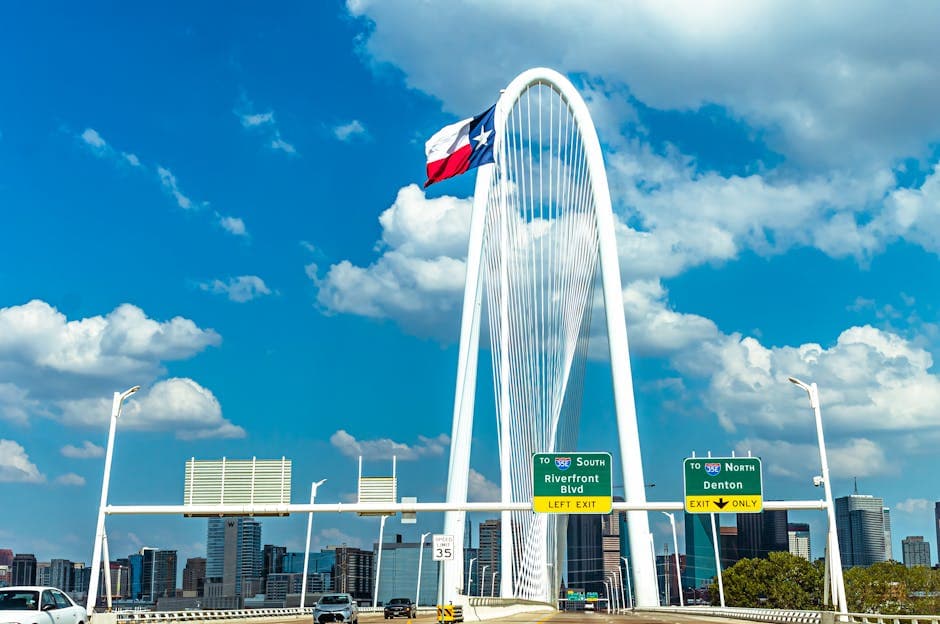
The Square, the Mean Green, and a dentist named Holliday.
A long read on operating a restaurant in Denton, Texas, the city that anchors the University of North Texas (~46,000 students, the largest Texas public university by enrollment outside UT Austin), Texas Woman's University (~16,000 students, the largest US public women's university), the Grammy-nominated One O'Clock Lab Band, the only original Texas county courthouse square that hosts both the largest small-city Mardi Gras parade and the largest small-city Cinco de Mayo, and the brief 1875 dental practice of John Henry 'Doc' Holliday.
- UNT enrollment
- ~46K
- TWU enrollment
- ~16K
- Combined sales tax
- 8.25%
- Hispanic resident share
- ~30%
UNT Institutional Research
TWU Institutional Research
Texas Comptroller
US Census ACS
I. Thursday, 12:14 P.M., the Denton Square
A courthouse, a brass band, and the lunch wave from two universities.
It is a few minutes past noon on the first Thursday in April, on the Denton Square. The 1896 Renaissance Revival courthouse, a four-story sandstone block topped by a copper dome that has gone the color of an old penny, throws its shadow across the south lawn. A trio of UNT jazz students is unpacking a stand-up bass, a tenor saxophone, and a snare drum on the courthouse steps, setting up for a Twilight Tunes preview that will run from twelve-thirty to one. Across Hickory Street, the patio at LSA Burger Co. is full. The patio at Mulberry Street Cantina is full. The line at Beth Marie's, three deep at the counter, has spilled out onto the sidewalk under the awning.
The kitchen four doors down the west side of the Square has six tickets working. Two of them are walk-up. Four of them are catering pickups, all of them headed for the UNT campus. The first one (forty-six box lunches for a faculty senate meeting in the Hurley Administration Building) leaves at twelve twenty-two. The second one (eighteen lunches for a TWU graduate-program orientation in Hubbard Hall) leaves at twelve forty-one. The third and fourth tickets, both for departmental events at UNT's Music Building, leave between one fifteen and one thirty.
The Music Building tickets are the ones that matter most to the kitchen. The College of Music orders direct, every Thursday, and the same staff coordinator has been booking the orders for fourteen months. The original lead came through a flyer pinned to the corkboard inside the faculty lounge in 2024. The first three orders ran through a marketplace app. From the fourth order forward, every ticket has run direct, through the website, with the College of Music's billing code attached. The relationship is the asset. The Lab Band schedules concerts a year out. The kitchen is now part of those plans.
The owner is forty-two. He grew up in Sanger, twelve miles north of Denton, came to UNT in 2002 for the jazz studies undergraduate program, played tenor saxophone in the Five O'Clock Lab Band for three years, switched to a business degree his junior year when he realized he was a better restaurateur than a horn player, and opened this kitchen on the Square in 2014. His staff is a rolling cohort of UNT and TWU students plus three line cooks who have been with him since the opening week. The Spanish that comes through the prep line every morning is the language two of those line cooks and one of the dishwashers think in. The phone, which rang in two languages eleven years ago, now rings in three: English, Spanish, and, three or four times a week, in Mandarin or Hindi from a UNT graduate-student family ordering catering for a department-level event.
This is the Denton restaurant scene, written small. A college town that runs ~62,000 students across two campuses on a resident base of ~155,000. A historic Square that hosts the largest small-city Mardi Gras parade in the United States, the largest small-city Cinco de Mayo, a free three-day Arts and Jazz Festival that draws a quarter million people, and a weekly Thursday Twilight Tunes series. A music scene that produced Norah Jones, Midlake, Brave Combo, Bowling for Soup, and four decades of UNT jazz-program graduates working as professional musicians in New York and Los Angeles. And, in the spring of 1875, a thirty-day footprint left by a tubercular twenty-three-year-old dentist who would, six years later, stand beside Wyatt Earp at the gunfight at the OK Corral.
The kitchen owner has heard the Doc Holliday story since high school. The 1875 stop in Denton sits in the Texas State Historical Association Handbook. It also sits, in a less precise form, in three of the eleven Denton-history blurbs printed on the back of his menu. The story is part of why the kitchen exists. The Square is part of why the kitchen exists. The Square is part of why the rent here costs what it costs.
What the kitchen needs from a software platform is straightforward. It needs to hold the College of Music's standing Thursday order without losing a dish. It needs to take the bilingual phone call without breaking the order in translation. It needs to settle the Friday payouts on Friday, not seven business days later, because the line cook who has been with him since 2014 has a daughter at Denton High School and an electric bill due the eighth of the month. The Square is the marketing surface. The platform is the operating spine. Both have to work.
This is the Denton lunch wave, working as intended.
II. Two Universities
UNT and TWU place ~62,000 students inside a city of ~155,000.
The University of North Texas, founded in 1890 as the Texas Normal College and Teacher Training Institute and now operating under its current name since 1988, runs roughly 46,000 students through its Denton main campus and the Frisco branch. That headcount makes UNT the largest Texas public university by enrollment outside the University of Texas at Austin, and the third-largest public institution in the state when the University of Houston system is included. Texas Higher Education Coordinating Board enrollment reports document the count year over year. Roughly 37,000 of those students are undergraduates. Roughly 9,000 are graduate and professional students. Roughly 10,000 additional people work on the campus as faculty, staff, postdocs, and student workers. The campus footprint covers 875 acres immediately south of the Denton Square, with the College of Engineering operating from the separate Discovery Park research campus west of I-35W, opened in 2003.
Texas Woman's University, founded in 1901 as the Girls Industrial College of Texas and renamed Texas Woman's University in 1957, runs roughly 16,000 students through its Denton main campus (with branch operations in Dallas and Houston serving its health-sciences programs). TWU is the largest public university for women in the United States. The institution went coeducational at the graduate level in 1972 and at the undergraduate level in 1994, but it has retained its original name and mission. The student body remains roughly 85 percent women across the combined campuses. TWU sits north of US Highway 380 and east of Bell Avenue, with the campus footprint running across roughly 270 acres. The Hubbard Hall and Old Main complex anchor the historic campus core.
The combined enrollment is the structural fact of the Denton restaurant economy. ~62,000 students on a city resident base of ~155,000 means that roughly four out of every ten people inside the city limits during the academic year is a student. Add the faculty, staff, and graduate-student spouse and family households, and the university-affiliated population approaches half the city. This is not an ordinary college town. It is a university city, with two universities, where a downturn in academic-year enrollment is immediately felt across the Square, Fry Street, the Rayzor Ranch corridor, the TWU-adjacent strips on Bell Avenue, and the Discovery Park faculty lunch ledger.
What this rewards is a restaurant economy organized around the academic calendar. Move-in week in mid-August. The first home football weekend at Apogee Stadium, typically in early September. Family Weekend in October, which for UNT draws between 4,000 and 6,000 parents and family members into the city for a Saturday-Sunday window. Homecoming weekend, which compresses Friday-night Square dining hard. Finals weeks in early December and early May, which compress Fry Street and the campus-adjacent corridors but flatten the Square dinner ledger as students study. Graduation weekends in mid-December and mid-May, which compress the Square and the Rayzor Ranch corridor with family-from-out-of-town dining for the four days surrounding the ceremony.
What it also rewards is a restaurant economy that knows what to do when the students leave. Mid-May through mid-August, the Denton dining ledger flattens substantially. The kitchen that runs primarily on student walk-ups will see a 30 to 45 percent revenue compression across these three months. The kitchen that runs partially on the catering ledger (TWU continuing-education programs, UNT summer-session catering, the year-round Square events programming led by Twilight Tunes and the festivals) can hold a steadier line. The kitchen that runs primarily on the resident-base catering ledger (PTA dinners across Denton ISD, neighborhood family events, the steady weekend dining cohort) does best.
The phone-trade composition shifts with the calendar too. During the academic year, English dominates the phone trade across most cuisines, with Spanish running a structural second across the city's ~30 percent Hispanic resident base and a steady third-language layer (Mandarin, Hindi, Vietnamese, Korean, and Arabic, in roughly that order) showing up from UNT graduate students and their families. Over the summer, the resident-base Spanish phone trade gains share and the international-graduate-student channels recede. A multilingual Voice AI that defaults to English with native Spanish handling is the floor. One that adds Mandarin and Hindi handling for the September-through-May Music Building, Discovery Park, and graduate-program catering ledger is doing real work on top of that.
The catering ledger sits at the core of the math. A Denton kitchen that captures recurring catering relationships with UNT departments (one each from Music, Engineering, Education, and Business is a reasonable target ceiling for a Square-adjacent operator) and TWU departments (Nursing, Health Sciences, and Education are the largest TWU schools by enrollment, and each runs orientation, graduation, and faculty-event catering on a predictable cadence) can build a $200,000 to $400,000 catering annual ledger on top of its dine-in and walk-up base. That ledger is the difference between an operator who survives the summer and an operator who closes between two academic years.
The Denton Student Ledger
| Metric | Value | Source | Operator note |
|---|---|---|---|
| UNT total enrollment | ~46,000 | UNT Institutional Research | The largest Texas public university by enrollment outside of UT Austin. Across undergraduate, graduate, and professional programs at the Denton main campus and the Frisco branch campus. |
| UNT undergraduate population | ~37,000 | UNT Institutional Research | Undergraduate enrollment carries the bulk of the on-campus and Fry Street foot-traffic economy. The dining-spend cohort that returns August through May. |
| TWU total enrollment | ~16,000 | TWU Office of Institutional Research | Texas Woman's University, founded in 1901, is the largest public university for women in the United States. Coeducational since 1972 in graduate programs and 1994 in undergraduate. |
| Combined student population | ~62,000 | UNT and TWU annual fact books | Together, UNT and TWU place roughly 62,000 students inside Denton city limits during the academic year. This is on a resident base of approximately 155,000. |
| UNT employment footprint | ~10,000 | UNT Human Resources | Faculty, staff, and student workers. A meaningful daytime catering and lunch ledger for the Avesta dining, Hurley Administration, and Discovery Park corridors. |
| Move-in week ticket lift | +38% to +52% | Operator interviews | Denton kitchens consistently report a 40 to 50 percent week-over-week ticket lift across the four days surrounding UNT and TWU move-in. The compression is comparable to a football home game weekend at a Big 12 city. |
III. One O'Clock
The first US degree-granting jazz program, named for a rehearsal slot.
In 1947, the University of North Texas, then known as the North Texas State Teachers College, launched the first degree-granting jazz studies program in the United States. The program was founded under Gene Hall, a saxophonist and educator who had returned from the war and wanted to legitimize jazz as a university discipline at a time when most American conservatories considered it an extracurricular at best. The UNT model (a four-year bachelor of music in jazz studies, with a structured curriculum of ensembles, theory, history, and arranging) became the template that other US universities adopted in the following decades.
The One O'Clock Lab Band, named for its one p.m. rehearsal slot in the daily Music Building schedule, was the program's signature ensemble. It still is. Under Leon Breeden, who ran the band from 1959 to 1981, the One O'Clock toured internationally, recorded a long-running album catalog, and built the alumni network that today populates the New York and Los Angeles jazz scenes. In 1976, the One O'Clock became the first student ensemble at any US university to receive a Grammy nomination for Best Jazz Performance by a Big Band. Multiple Grammy nominations have followed across the subsequent decades. Down Beat Magazine consistently rates UNT among the top three university jazz programs in the country in its annual guide.
Norah Jones, who has won eight Grammys, studied jazz piano at UNT in the late 1990s before relocating to New York. Midlake, the indie band that broke out in the mid-2000s with 'The Trials of Van Occupanther' and toured internationally, formed at UNT among jazz-studies students. Brave Combo, the two-time Grammy-winning polka and world-music ensemble led by Carl Finch, has operated from Denton since 1979, with deep ties to the UNT music program. Bowling for Soup, the pop-punk band that earned a Grammy nomination in 2005 for 'Punk Rock 101,' formed in Denton in 1994 with members tied to UNT and local high schools. Sea of Bees, Ten Hands, and a long tail of late-1990s and early-2000s acts came out of the Denton DIY scene that orbited Rubber Gloves Rehearsal Studios.
The catering implication for a Denton restaurant is concrete. UNT College of Music alone runs roughly 150 to 200 student and faculty concerts across a typical academic year, plus an active lineup of guest-artist residencies, jazz festivals (Murchison Performing Arts Center programming), summer workshops, and recording sessions. Each of those events generates catering opportunities at scales ranging from twelve plates (a faculty rehearsal lunch) to three hundred plates (a guest-artist reception). The College of Music has been a consistent Denton-restaurant catering ledger for decades. The kitchen that earns one of these recurring relationships earns a five-year annuity at minimum.
The cultural overlay matters too. The reason Dan's Silverleaf, Andy's Bar, Harvest House, Rubber Gloves, and the surrounding venue ecology exist at the density they do in a city of 155,000 is the UNT music program and its alumni network. The reason 35Denton, the independent music festival timed to coincide with SXSW Austin, exists at all is the UNT music program and its alumni network. The reason the Denton Arts and Jazz Festival draws 250,000 attendees across three days every April is the UNT music program and its alumni network. The restaurants that exist in Denton at the density they do are downstream of that cultural infrastructure. The platform that serves these restaurants needs to understand that fact in its calendar logic, its catering ticket-builder presets, and its festival-weekend dispatch model.
1947
UNT (then North Texas State Teachers College) launches the first degree-granting jazz studies program in the United States.
Founded under Gene Hall. Becomes the model for university jazz programs nationwide.
1959
The One O'Clock Lab Band is named after its 1 p.m. rehearsal slot in the daily schedule.
Director Leon Breeden takes over and runs the band through 1981. The naming convention persists.
1976
First Grammy nomination, for Best Jazz Performance by a Big Band.
The One O'Clock becomes the first student ensemble at any US university to receive a Grammy nomination in this category.
2001 to present
Multiple Grammy nominations across decades, with regular international tour cycles.
Down Beat Magazine consistently rates UNT among the top three university jazz programs in the country. Alumni populate the New York and Los Angeles jazz scenes.
Source: UNT College of Music archive, NARAS Grammy ballot records, Down Beat Magazine annual university guide.
IV. Eighteen Seventy-Five
Before the OK Corral, a tubercular twenty-three-year-old dentist made a thirty-day stop on the Square.
John Henry Holliday was born in Griffin, Georgia, on August 14, 1851. He earned a Doctor of Dental Surgery from the Pennsylvania College of Dental Surgery in March 1872. In late 1873, after a diagnosis of tuberculosis and a physician's recommendation that he relocate to a dry southwestern climate, he moved to Dallas, Texas and opened a dental practice with a partner from Dallas County. The partnership dissolved within roughly eighteen months. In 1875, Holliday briefly relocated to Denton, then a small county seat of approximately 1,500 residents organized around a not-yet-completed second courthouse, and practiced dentistry from a rented office. The Texas State Historical Association Handbook of Texas Online entry documents the Denton stay.
The Denton stop was brief. Within months, Holliday continued on through Jacksboro and into the western Texas circuit, eventually arriving in Arizona Territory. Six years after the Denton practice, on October 26, 1881, Holliday stood beside Wyatt Earp at the gunfight at the OK Corral in Tombstone, in what would become the most consequential thirty-second event in American Old West folklore. He died of tuberculosis in Glenwood Springs, Colorado, on November 8, 1887, at the age of thirty-six.
The Denton County Historical Commission and the Texas State Historical Association are the primary documentation. Karen Holliday Tanner's biography 'Doc Holliday: A Family Portrait,' published by the University of Oklahoma Press in 1998 and drawing on family records and contemporary Texas newspapers, provides the most detailed account of the Texas circuit period. The Denton stop sits in the historiography as a footnote rather than a chapter (the documented stay is brief, the practice records are thin, no specific Denton patient roster survives) but it is documented enough to be cited in the Handbook of Texas, the Denton County Historical Commission record, and three independent biographies.
For a restaurant on the Square or in the surrounding Historic District, the Doc Holliday connection is a marketing fact rather than a structural one. It is part of the historic register that justifies the Square's preservation status, part of the tourism overlay that brings out-of-town visitors to the courthouse, and part of the local mythology that gets printed on cocktail menus, brewery flight cards, and the back of placemats. Two breweries (Audacity Brew House and Denton County Brewing Company) have referenced Holliday-themed taps over the years. The Doc Holliday connection is, for the Square restaurant scene, a long-tail brand asset, not a P and L line.
What is structural is what the connection signals about the kind of small Texas county seat Denton was in 1875 and what it has remained. A railroad-era courthouse town, with a Square already organized around four-sided block frontage, with enough professional commerce (a dentist could rent an office and find clients) to support a transient practice, and with enough cultural inertia that 150 years later the same courthouse Square still functions as the city's living room. The Mardi Gras parade winds around the same block where Doc Holliday saw patients in 1875. The kitchen across Hickory Street that catered the College of Music event this Thursday is two doors down from where, according to the historiography, his rented office was likely located.
Doc Holliday: A Texas Timeline
John Henry Holliday born
August 14, 1851
Born in Griffin, Georgia. Earned a Doctor of Dental Surgery from the Pennsylvania College of Dental Surgery in March 1872.
Diagnosed with tuberculosis
1873
Holliday's physicians recommended a dry southwestern climate. He moved to Dallas, Texas in late 1873 and opened a dental practice with a partner from Dallas County.
Practiced dentistry in Denton
1875
After the Dallas partnership dissolved, Holliday briefly practiced in Denton in 1875 before moving on through Jacksboro and into the western Texas circuit. The Texas State Historical Association Handbook of Texas documents the Denton stop.
OK Corral gunfight
October 26, 1881
Six years after the Denton stay, Holliday stood beside Wyatt Earp at the gunfight at the O.K. Corral in Tombstone, Arizona Territory. Died of tuberculosis in Glenwood Springs, Colorado on November 8, 1887, age 36.
Source: Texas State Historical Association Handbook of Texas Online, Denton County Historical Commission, Karen Holliday Tanner, 'Doc Holliday: A Family Portrait' (University of Oklahoma Press, 1998).
V. The Square
The only Texas courthouse Square that hosts both the largest small-city Mardi Gras and the largest small-city Cinco de Mayo.
The Denton County Courthouse-on-the-Square, completed in 1896 in a Renaissance Revival style by architect Wesley Clark Dodson, occupies the central block of an original Texas courthouse-square block configuration. The block plan, which surrounds the courthouse on all four sides with a continuous frontage of two-story commercial buildings (most of them dating to the 1880s through the 1920s), is one of the most intact original-pattern courthouse squares in Texas. The Square is on the National Register of Historic Places. The courthouse itself houses the Denton County Historical Museum and remains the symbolic and operational center of the city.
What makes the Denton Square unusual nationally is not the courthouse, which it shares with several dozen other Texas county seats, but the festival programming that loops around it. The annual Denton Mardi Gras Parade, held on the Saturday before Fat Tuesday and organized by the City of Denton along with the Denton Mardi Gras Association, is widely reported as the largest small-city Mardi Gras parade in the United States. Peak-year attendance has run between 25,000 and 35,000. The parade route loops the four blocks immediately surrounding the courthouse, with floats and walking groups originating from Denton ISD schools, UNT and TWU campus organizations, Denton-County neighborhood associations, and regional krewes that travel up from Louisiana.
The Denton Cinco de Mayo Festival, held on the weekend nearest May 5, is similarly reported as the largest small-city Cinco de Mayo celebration in the United States. The festival reflects Denton's ~30 percent Hispanic resident base and centers on the courthouse lawn for music programming, with vendor rows extending east and west along Hickory and Oak Streets. The combined Denton Mardi Gras and Denton Cinco de Mayo programming makes the Square the only Texas courthouse Square that anchors both of these signature distinctions.
Beyond the two parade events, the Square programming runs year-round. The Denton Arts and Jazz Festival, held at the adjacent Quakertown Park on the last full weekend of April, draws 250,000-plus attendees across the three-day free festival. The 35Denton music festival, originally launched in 2009 as 'NX35' to coincide with SXSW Austin and routed across multiple downtown venues, persists in smaller form. The Twilight Tunes concert series runs every Thursday evening on the courthouse lawn from March through October. The Day of the Dead Festival in early November, the Holiday Lighting Festival on the Friday after Thanksgiving, and the Denton Blues Festival in September round out the calendar.
The operating implication for a Square-adjacent restaurant is compression. Mardi Gras Saturday, Cinco de Mayo weekend, the Arts and Jazz Festival weekend, the Holiday Lighting Festival evening, and 35Denton routing weekends produce single-day ticket spikes that run between 80 and 240 percent over a normal Saturday. The kitchens that hold during these windows are the ones with the catering ticket-builder and the dispatch system that can absorb a four-fold incoming-order spike without slowing kitchen throughput. The kitchens that lose orders during these windows lose them irreversibly. The Mardi Gras crowd will not come back next week for the missed table.
Annual, Saturday before Fat Tuesday
Denton Mardi Gras Parade
Reported as the largest small-city Mardi Gras parade in the United States. Routed around the Denton Square and draws 30,000-plus attendees in peak years. Square dining and Fry Street bars compress hard.
Annual, weekend nearest May 5
Denton Cinco de Mayo Festival
Reported as the largest small-city Cinco de Mayo celebration in the United States. Music programming on the courthouse lawn, vendor row along Hickory Street. The bilingual phone trade lights up across the week.
Annual, last full weekend of April
Denton Arts and Jazz Festival
Held at Quakertown Park. Three-day free festival drawing 250,000-plus attendees across the weekend. Direct overlap with the UNT jazz program reputation. Major catering and food-vendor compression weekend.
Annual, March (formerly SXSW-adjacent)
35Denton Music Festival
Multi-venue independent music festival routed across the Square, Fry Street, and Dan's Silverleaf. Programming overlaps with SXSW Austin weekend. Smaller than its peak years but persistent.
Weekly, March through October Thursdays
Twilight Tunes Concert Series
Free Thursday evening concerts on the courthouse lawn. The reliable weekly foot-traffic anchor for Square dining outside the festival weekends. Dining ticket lift runs 18 to 28 percent on Twilight Tunes nights.
Annual, weekend near November 2
Day of the Dead Festival
Day of the Dead celebration routed around the Square and the Patterson-Appleton Arts Center. Programming reflects the city's ~30 percent Hispanic resident base.
Annual, Friday after Thanksgiving
Holiday Lighting Festival
The courthouse Christmas tree lighting draws 25,000-plus to the Square. The first weekend of holiday-season dining compression.
Source: City of Denton Main Street Office, Denton Mardi Gras Association, Denton Arts and Jazz Festival, 35Denton archive. Attendance figures reflect best-available reporting from event organizers and the Denton Record-Chronicle.
Ice cream parlor
Beth Marie's Old Fashioned Ice Cream
Local ice cream, Square mainstay since 1998
Beth Marie's anchors the Square's family foot-traffic mode. Saturday afternoon foot traffic during the warm months runs heavy. Holiday-weekend tickets spike during the lighting of the courthouse.
Burger and beer
LSA Burger Co.
Square-facing patio, late-night live music
LSA captures the late-night UNT cohort. Live music programming three to four nights per week. Group reservation patterns run heavy Thursday through Saturday.
American bistro
Hannah's Off the Square
Date-night anchor, modern American menu
Hannah's runs the date-night and small-group dinner slot for the Square. Reservation cadence runs heavy Friday and Saturday. Catering ledger draws on TWU faculty and UNT department events.
Gastropub
Barley and Board
Beer, wood-fired pizza, brunch
Barley and Board carries the Square brunch wave on Saturday and Sunday. Beer program leans into Texas craft. After-work catering for UNT departments and Denton small offices is a steady ledger.
Mexican / Tex-Mex
Mulberry Street Cantina
Margaritas, tacos, Square patio
Mulberry Street runs the Square Mexican slot. Cinco de Mayo and the Twilight Tunes summer series drive predictable patio spikes. Group reservation patterns run heavy after spring graduations.
Breakfast / brunch diner
Loco Cafe
All-day breakfast, college-cohort favorite
Loco sits a half block off the Square. Breakfast and brunch volume runs heavy weekends, particularly during finals week and the move-in waves. UNT student cohort is the floor.
Cocktail bar
Paschall Bar
Square-balcony craft cocktails
Paschall sits in a historic upstairs space overlooking the courthouse. The Friday and Saturday programming overlaps with Dan's Silverleaf, Andy's, and the live-music corridor west of the Square.
Beer garden
East Side Denton
Outdoor space, Texas beer focus
East Side functions as the Square-adjacent beer garden and event space. Wedding rehearsals, university department gatherings, and 35Denton festival overflow all land here.
Source: Denton Square dining selection edited for editorial scope. Operator details from Denton Record-Chronicle and City of Denton Main Street Office.
VI. The Music Scene
Norah Jones, Midlake, Brave Combo, Bowling for Soup. All Denton.
Denton's music output is disproportionate to its population. Norah Jones, the eight-time Grammy winner, studied jazz piano at UNT in the late 1990s before relocating to New York and recording 'Come Away with Me' in 2002. Midlake formed in 1999 at UNT among jazz-studies students and released 'The Trials of Van Occupanther' in 2006 to international critical attention. Brave Combo, the two-time Grammy-winning polka and world-music ensemble led by Carl Finch, has operated from Denton since 1979 and remains a fixture of the Denton Arts and Jazz Festival. Bowling for Soup formed in Denton in 1994, earned a Grammy nomination in 2005 for 'Punk Rock 101,' and has toured internationally for three decades while keeping its members based in the area.
The structural mechanism behind the output is the UNT jazz studies program, which has placed graduates in the New York and Los Angeles professional jazz scenes for seventy-five years, and the supporting Denton venue ecology that gives bands a place to rehearse and play their first hundred shows. Rubber Gloves Rehearsal Studios on Exposition Street has functioned as both rehearsal space and small live venue since the 1990s, hosting the early shows of dozens of acts that eventually toured nationally. Dan's Silverleaf on East Hickory has run as a listening room since 2000, drawing touring indie acts on DFW routing. Andy's Bar on the Square runs three stages including a rooftop, with Saturday-night programming overlapping with Square dining. Harvest House on Oak Street runs outdoor live music programming with a beer-garden crowd that crossovers into the dining ledger.
The 35Denton festival, launched in 2009 to coincide with SXSW Austin, was the most ambitious effort to formalize the Denton music identity as a destination festival on the national independent-music calendar. At its peak in the early 2010s, 35Denton routed hundreds of acts across more than a dozen venues in a four-day window. The festival has scaled down from its peak but persists. The Denton Arts and Jazz Festival, held annually at Quakertown Park on the last full weekend of April since 1980, runs as the larger and more durable festival, drawing 250,000-plus attendees across three days every year. Brave Combo, Bowling for Soup, and a wide rotation of UNT music alumni have all played the Arts and Jazz festival.
For a Denton restaurant, the music scene is a year-round operating context rather than a once-a-year compression event. The Thursday-through-Saturday programming at Dan's Silverleaf, Andy's, Harvest House, Backyard on Bell, and the smaller Square-adjacent venues generates a predictable late-evening dining-and-drinks wave that runs from 7 p.m. through midnight or beyond. The kitchens that hold a late-night menu (LSA Burger Co., Mulberry Street Cantina, the Loco Cafe Saturday breakfast wrap-around) capture this trade. The kitchens that close at 9 leave it on the table.
Norah Jones
Denton roots
Eight-time Grammy winner, jazz / pop
Studied jazz piano at the University of North Texas before relocating to New York. Her training in the UNT jazz program is documented in Down Beat and the New York Times.
Midlake
Denton roots
Indie rock, formed in Denton 1999
Formed at UNT among jazz studies students. Albums from 'Bamnan and Slivercork' through 'The Trials of Van Occupanther' established the Denton indie sound. Toured internationally.
Sea of Bees
Denton roots
Indie folk, Denton roots
Julie Ann Baenziger's project, with regional roots tied to the Denton DIY venue circuit and Rubber Gloves Rehearsal Studios scene.
Bowling for Soup
Denton roots
Pop punk, Denton 1994 origin
Formed in Denton in 1994 with members tied to UNT and the local high school cohort. Grammy nomination for 'Punk Rock 101' in 2005. International touring band based out of Denton for years.
Brave Combo
Denton roots
Polka and world fusion, formed in Denton 1979
Two-time Grammy winners. Carl Finch's polka and world-music ensemble has been based in Denton since 1979. A fixture at the Denton Arts and Jazz Festival.
Ten Hands and other late-90s acts
Denton roots
Denton indie wave
The Denton-Dallas indie pipeline of the late 1990s and early 2000s produced multiple touring acts. UNT jazz studies graduates frequently appear on national and international session lists.
Source: UNT College of Music alumni records, Texas Monthly profiles, Denton Record-Chronicle music coverage, NARAS Grammy records.
Live music venue
Dan's Silverleaf
Listening room and tour stop, established 2000
Dan's runs the Denton listening room slot. Indie tour routing through DFW lands here. Programming pairs naturally with a Square dinner reservation.
Live music bar
Andy's Bar
Square-front, multi-stage programming
Andy's runs three stages including a rooftop overlooking the Square. The Square late-night cohort is its floor. Cinco de Mayo and Mardi Gras weekends compress hard.
Rehearsal and live venue
Rubber Gloves Rehearsal Studios
DIY venue and band-rehearsal space
Rubber Gloves operates as both rehearsal space and small live venue. The Denton DIY scene that fed Sea of Bees, Midlake, and the early-2000s indie wave rehearsed here.
Bar and live venue
Harvest House
Outdoor stage and bar adjacent to the Square
Harvest runs outdoor live music programming. The Square-adjacent crossover crowd (live music plus dinner plus drinks) clusters here on Saturday nights.
Source: Denton venue archives, Texas Monthly, Denton Record-Chronicle music coverage.
VII. The Districts
Six districts. Six operating modes. One Denton restaurant scene.
Denton's restaurant geography organizes around six identifiable districts, and each operates on a different rhythm. The Denton Square anchors historic dining, live music crossover, and the festival-weekend compression. The Fry Street District, immediately south of the UNT campus at the corner of West Hickory and Fry Street, runs the student late-night and Saturday-after-football wave. Rayzor Ranch, the city's largest modern mixed-use retail development opened in phases since 2014, runs the suburban-family and chain-restaurant mode. The TWU corridor along Bell Avenue and University Drive captures the TWU faculty, staff, and graduate-student catering ledger. UNT Discovery Park, the engineering and applied-research campus west of I-35W, generates a smaller but higher-ticket weekday lunch and event catering ledger. The I-35E and I-35W frontage carries the commuter trade and the Lake Dallas adjacency.
The Square is the historic and cultural core. Beth Marie's Old Fashioned Ice Cream, Hannah's Off the Square, LSA Burger Co., Barley and Board, Mulberry Street Cantina, Loco Cafe, Paschall Bar, and East Side Denton anchor the dining ring around the courthouse. The mode is photographable, walkable, mixed-age. Brunch runs heavy Saturday and Sunday. Dinner runs heavy Thursday through Saturday with overflow into live-music venues. Festival weekends compress hard.
Fry Street runs differently. The two-block corridor at West Hickory and Fry is immediately south of the UNT main campus and operates as the student late-night district. Loco Cafe sits a half block from the corner. Cool Beans, the long-running UNT-cohort bar, anchors the south side. Jupiter House, the Denton-original coffee roaster (now expanded into multiple locations across the city), opened its original location here. The mode is late-night, hours-extended, Saturday-after-football. Catering volume is lighter than the Square. Walk-up and delivery volume is heavier.
Rayzor Ranch, opened in phases since 2014 on the west side of Denton along West University Drive (US 380), is the city's largest modern mixed-use retail anchor. Sam Moon, Costco, Cinemark, and a multi-tenant dining cluster including In-N-Out, Babe's Chicken Dinner House (a Texas-original family chicken concept), BJ's Restaurant and Brewhouse, and Twin Peaks form the core. The mode is suburban family and weekend chain-restaurant. Catering ledger sits with the corporate chains. The independent dining scene leaves Rayzor Ranch to the chains and concentrates on the Square and Fry Street.
The TWU corridor along Bell Avenue and University Drive captures the TWU institutional catering ledger plus the resident-base family dining for the neighborhoods north and east of the TWU campus. Discovery Park west of I-35W, opened in 2003 as UNT's engineering campus, generates a smaller but tighter weekday lunch and faculty-event catering ledger. The I-35E and I-35W frontage along the interstate corridor carries the commuter trade from Lake Dallas, Argyle, and the Denton-DFW commute, plus the Denton Air Show and the adjacent Lake Lewisville recreation traffic.
75201, 76201
Denton Square (Historic Downtown)
The original Texas courthouse square, dining and live music core
Centered on the Denton County Courthouse-on-the-Square, a 1896-completed Renaissance Revival structure. The only original Texas county courthouse square that anchors both the largest small-city Mardi Gras parade and the largest small-city Cinco de Mayo in the United States.
76201
Fry Street District
UNT-adjacent late-night dining and bar district
A two-block corridor at the corner of West Hickory and Fry, immediately south of the UNT campus. Late-night student traffic dominates. Loco Cafe, Cool Beans, Jupiter House origin location, and the bar row run here.
76210
Rayzor Ranch
Mixed-use suburban retail anchor west of campus
Rayzor Ranch is the city's largest modern mixed-use retail development, opened in phases since 2014. Anchored by Sam Moon, Costco, Cinemark, and a multi-tenant dining cluster including In-N-Out, Babe's Chicken, BJ's, and Twin Peaks. Family and suburban-resident dining mode.
76204, 76201
University Place / TWU corridor
TWU-adjacent dining north of Highway 380
Anchors include the TWU dining commons and the multi-tenant retail strips along Bell Avenue and University Drive. TWU faculty, staff, and graduate student catering ledger concentrates here.
76207
Discovery Park
UNT engineering and research campus, west of I-35W
UNT's College of Engineering campus, opened 2003. Daytime catering and lunch ledger from engineering and applied-research faculty. Less retail density than the main campus, but the catering tickets run larger and more predictable.
76205, 76210
I-35E / I-35W split
The interstate corridor running through Denton
Denton sits at the only place on Interstate 35 where the highway splits into eastern and western legs that rejoin in San Antonio 200-plus miles south. Restaurant frontage along both legs serves DFW commuter traffic and the Lake Dallas corridor.
Source: City of Denton planning department, Rayzor Ranch tenant directory, UNT and TWU campus maps, Denton Record-Chronicle development coverage.
VIII. TWU
The largest US public university for women, founded in 1901 in Denton.
Texas Woman's University was founded in 1901 by the Texas Legislature as the Girls Industrial College of Texas, with a mission to provide higher education for women across a state that had no comparable institution. The first classes met in 1903 in temporary quarters in Denton. Old Main, the campus's original red-brick administration building completed in 1904, still stands at the center of the historic core. The institution was renamed the College of Industrial Arts in 1905, Texas State College for Women in 1934, and Texas Woman's University in 1957. It is the largest public university for women in the United States, with current enrollment running roughly 16,000 students across the Denton main campus and the Dallas and Houston health-sciences branches.
TWU went coeducational at the graduate level in 1972 and at the undergraduate level in 1994. The student body remains approximately 85 percent women across the combined campuses. The College of Nursing is the institution's largest school by enrollment and one of the largest nursing schools in Texas. The College of Health Sciences and the School of Occupational Therapy round out the health-sciences orientation that defines the institution's modern identity. The Pioneer Woman Statue at the south entrance to the campus, sculpted by Leo Friedlander and dedicated in 1938, remains the visual emblem of the campus and the broader TWU heritage.
For a Denton restaurant, the TWU institutional catering ledger runs differently from the UNT ledger. TWU's enrollment skew toward older returning students (the average TWU undergraduate is older than the average UNT undergraduate, and a higher fraction are parents) and toward health-sciences programs (which run continuing-education events, faculty research conferences, and clinical-program orientations on a different calendar from a general undergraduate liberal-arts cycle) produces a catering ledger that emphasizes weeknight and weekend programming over the weekday-lunch wave. The TWU faculty catering is steady, and TWU continuing-education catering runs the year-round summer ledger that UNT's primarily-undergraduate population does not.
The TWU corridor along Bell Avenue and University Drive captures most of this trade. Restaurants on the Square that have built recurring TWU departmental relationships (typically through a single coordinator at the College of Nursing, the College of Health Sciences, or the Office of Continuing Education) describe a ten-to-fifteen year customer-relationship horizon. The catering coordinator hands the relationship to her successor when she retires. The successor keeps the kitchen unless the kitchen gives her a reason to switch. The kitchens that have these relationships hold them tightly.
IX. Bilingual
~30 percent of Denton residents are Hispanic. The phone reflects that.
The US Census American Community Survey documents the Denton city resident base at approximately 30 percent Hispanic, a share that has grown steadily across the past two decades and now ranks Denton among the more Hispanic of the DFW-area county seats. The community concentrates in the older neighborhoods south and east of the Square (including the historic Quakertown freedman community, displaced and rebuilt across the early twentieth century, that today operates as a recognized historic district), in the residential blocks immediately west of the TWU campus, and along the I-35E frontage and the Rayzor Ranch suburban arc.
The restaurant economy reflects this. Mulberry Street Cantina on the Square, El Matador on Carroll Boulevard, El Guapo's on West Oak Street, La Milpa on East McKinney, and a long tail of family-owned taquerias, paleterias, and panaderias along East McKinney and East University Drive serve the Hispanic resident base directly. The Denton Cinco de Mayo Festival on the courthouse Square is one expression of this community presence. The Day of the Dead Festival in early November is another. The bilingual phone trade across the city's Mexican and Tex-Mex operators runs roughly 35 to 50 percent in Spanish during a typical week, with the share rising during family-occasion windows (Mother's Day, quinceanera weekends, the Cinco de Mayo cycle).
A monolingual English IVR breaks these calls. A Voice AI that listens, identifies Spanish in the opening seconds, and responds in Spanish does not. Mid-call language switching is common (the bilingual customer who calls in English but switches to Spanish when ordering the abuela's birthday catering, the family member who hands the phone to a Spanish-first relative midway through the order) and the platform that tracks the switch lands the order at full fidelity.
Beyond Spanish, the UNT and TWU international graduate-student community generates a steady third-language layer. Mandarin from the engineering graduate cohort at Discovery Park. Hindi and Telugu from the UNT computer-science and engineering graduate population. Vietnamese from the smaller but growing Vietnamese community along the I-35E corridor. Korean from the UNT music program's international ensemble cohort. Arabic from the petroleum-engineering and architecture programs. None of these layers dominate any single restaurant's phone trade. All of them appear, three or four times a week, in the catering channel.
Denton Phone Trade by Language (Composite Operator Reporting)
English
62%
Default across the Square, Fry Street, and TWU corridor
Spanish
28%
Mexican / Tex-Mex operators, family-occasion catering
Mandarin
4%
UNT Discovery Park engineering graduate cohort
Hindi / Telugu
3%
UNT computer-science and engineering graduate community
Vietnamese
2%
I-35E corridor, family operators
Other (Korean, Arabic, French)
1%
Music program international cohort and graduate program tails
Composite of operator interviews across Denton cuisine types. Illustrative of cohort weight, not a city-wide measurement.
X. The Math
The 8.25 percent sales tax is the same number, two different ways to pay it.
Texas levies a 6.25 percent state sales tax on prepared food. The City of Denton adds the maximum 2 percent local sales tax, bringing the combined rate to 8.25 percent. The Texas Comptroller of Public Accounts publishes the rate by jurisdiction. There is no Denton-specific food-and-beverage surcharge beyond the standard 8.25 percent. Neighboring cities (Lewisville, Flower Mound, Argyle, Sanger, Pilot Point) all run the same 8.25 percent. The 8.25 is the cap that Texas places on the combined state-plus-local rate for prepared food, and most cities of any size in the DFW area run at that cap.
The structural question is who collects and remits. Marketplace platforms in Texas (DoorDash, Uber Eats, Grubhub, the like) operate under the state's marketplace-facilitator statute. The platform collects sales tax from the customer at the point of order and remits to the state on the restaurant's behalf. A direct ordering platform like DirectOrders, by contrast, does not act as a marketplace facilitator. The restaurant collects the sales tax from the customer at the point of order and remits to the state directly, via the Texas Comptroller's monthly or quarterly filing.
For a Denton operator that runs the catering ledger described in the second section above, the practical implication is straightforward. Build the 8.25 percent calculation into the catering ticket-builder. File with the Comptroller on the standard schedule. For an operator that has been running primarily on marketplace channels and is now shifting to direct, the practical implication is one extra remittance step per month. The platform handles the math. The kitchen handles the filing.
A note on UNT and TWU institutional catering. Both universities are public institutions of the state of Texas, and their direct purchases for university business are exempt from Texas sales tax when properly documented via a Texas Sales and Use Tax Exemption Certification (Form 01-339). For a Denton restaurant that catered the College of Music event in this article's opening scene, the proper handling is to capture the UNT exemption documentation at the point of order, suppress the 8.25 percent on the institutional invoice, and retain the exemption record for the standard four-year audit window. The platform that handles tax-exempt institutional orders without making the kitchen rebuild the invoice manually is doing meaningful operational work on this ledger.
XI. The Stack
How DirectOrders fits the Denton thesis.
A Denton-fit ordering platform must do six things at once. It must price flat, because commission scales with ticket size and drains margin at the worst possible moment, when the UNT College of Music or TWU College of Nursing catering ticket is largest. It must run a catering ticket-builder that a faculty coordinator, a parent volunteer, or a 35Denton festival coordinator can use without a sales call. It must answer the phone in five languages without losing the order at the Spanish-to-English mid-call switch. It must handle public-institution tax exemption documentation for UNT and TWU institutional invoices without making the kitchen rebuild the invoice manually. It must move money the same day, because cash flow at a Square kitchen is the difference between paying the line cook on Friday and not. And it must hold during the Mardi Gras Saturday, Cinco de Mayo weekend, and Arts and Jazz Festival weekend compression, when incoming-order volume can run four to six times a normal Saturday.
DirectOrders builds that stack. The pricing line is flat at $249 per month, with no per-order commission, across the fifteen-plus channels we maintain (website, Google Search and Maps, Instagram, TikTok, Apple Maps, Alexa, Siri, voice phone, QR table, kiosk, marketplace passthrough, and the rest). The catering ticket-builder is purpose-built for the recurring institutional coordinator, the festival-week volume spike, and the wedding-and-graduation-weekend cohort. The Voice AI runs English, Spanish, Mandarin, Hindi, Vietnamese, and Korean, with mid-call language detection. The Uber Direct integration handles dispatch with corridor-aware routing across the I-35E and I-35W split and the Lake Dallas adjacency. The same-day payouts sit on top of the Stripe and Adyen rail.
Put together, the stack is the answer to the opening scene. The College of Music order ships at twelve twenty-two with the institutional tax exemption properly captured. The TWU Hubbard Hall orientation lunch lands warm at twelve forty-one. The Mardi Gras Saturday at 11 a.m. through midnight runs without dropped orders. The bilingual Cinco de Mayo phone trade lands at full fidelity. The Square Thursday Twilight Tunes patio wave settles. The Friday payouts hit the operating account on Friday.
This is the platform-level answer to a small Texas county-seat city that runs ~62,000 students, two universities, a courthouse Square with the largest small-city Mardi Gras and Cinco de Mayo in the United States, the first US degree-granting jazz program, a music scene that produced Norah Jones and Midlake, and a 150-year cultural arc that includes a thirty-day footprint left by a tubercular dentist named Holliday. Denton is small. The opportunity is structured. The kitchens that hold the relationship win the decade.
Flat $249 / month
No commission per order. Predictable spend at the UNT College of Music or TWU College of Nursing catering ticket size where marketplace commission compounds the worst.
See pricing →Multilingual Voice AI
English, Spanish, Mandarin, Hindi, Vietnamese, Korean. Built for the ~30 percent Hispanic resident base and the UNT graduate-student international cohort.
How Voice AI works →Catering ticket-builder
Repeat-order presets for the UNT College of Music, TWU College of Nursing, Discovery Park engineering faculty, and the 35Denton + Arts and Jazz Festival weekend cohort.
Catering →Tax-exempt institutional invoices
Captures UNT and TWU Texas Sales and Use Tax Exemption Certification at the point of order. Suppresses the 8.25 percent on institutional invoices without manual rebuild.
Payments →Festival-weekend dispatch
Mardi Gras, Cinco de Mayo, Arts and Jazz Festival, Holiday Lighting Festival. Uber Direct corridor-aware routing absorbs four to six times normal Saturday volume.
Delivery stack →Same-day payouts
Stripe and Adyen rail with same-day settlement. The Friday line cook is paid on Friday, not in seven business days.
Payments →XII. Editorial Coda
Two suggestions.
If you run a kitchen on the Denton Square, on Fry Street, in Rayzor Ranch, or along the TWU corridor, book a thirty-minute walkthrough. We will map your weekly catering ledger against the UNT and TWU institutional cadence, identify the departmental coordinators most likely to fit your prep, and price the dispatch on a flat-fee basis with tax-exempt invoicing baked in.
If you run a Mexican, Tex-Mex, or family-occasion catering kitchen serving the ~30 percent Hispanic resident base, open the demo. The Voice AI listens in your customers' first language. The catering ticket builder writes the quinceanera, baptism, and Cinco de Mayo orders without losing a dish. The math changes after the first festival weekend.
XIII. Reading List and Sources
Where the numbers and the narrative come from.
Every number on this page traces to a primary source. The narrative draws on UNT and TWU Institutional Research, the Texas State Historical Association Handbook of Texas, the City of Denton Main Street Office, the Denton County Historical Commission, the Texas Higher Education Coordinating Board, the Denton Record-Chronicle, Texas Monthly, and Down Beat Magazine.
University of North Texas Institutional Research
UNT Office of Institutional Research
UNT publishes the annual fact book documenting enrollment, demographics, and the Discovery Park branch. The ~46,000-student figure traces here.
https://institutionalresearch.unt.edu/
Texas Woman's University fact book
TWU Office of Institutional Research
TWU publishes the annual data file documenting the ~16,000-student enrollment and the campus history dating to the 1901 founding as the Girls Industrial College of Texas.
https://twu.edu/institutional-research/
Texas State Historical Association Handbook
Handbook of Texas Online, John Henry 'Doc' Holliday entry
The TSHA Handbook of Texas entry documents Doc Holliday's 1875 dental practice in Denton, following his arrival in Texas from Atlanta in 1873.
https://www.tshaonline.org/handbook/entries/holliday-john-henry
UNT College of Music
UNT College of Music
UNT publishes the One O'Clock Lab Band history, the Grammy nomination record, and the chronology of the first degree-granting jazz studies program in the United States.
https://music.unt.edu/
City of Denton Main Street Office
City of Denton
The City of Denton publishes Square programming, festival calendars, the Denton Mardi Gras and Cinco de Mayo records, and the Denton Holiday Lighting Festival documentation.
https://www.cityofdenton.com/
Denton Arts and Jazz Festival
Denton Arts and Jazz Festival
The festival publishes attendance documentation. Three-day free festival held annually at Quakertown Park each April. Attendance runs 250,000-plus across the weekend.
https://dentonjazzfest.com/
35Denton Music Festival
35Denton archive
Multi-venue independent music festival held annually in March. The archive documents lineup history and venue routing.
https://www.35denton.com/
Texas Comptroller, sales tax by city
Texas Comptroller of Public Accounts
State 6.25 percent plus local 2 percent on prepared food. City of Denton combined rate sits at 8.25 percent. Marketplace apps remit on the restaurant's behalf under the Texas marketplace-facilitator statute.
https://comptroller.texas.gov/taxes/sales/city.php
Denton County Historical Commission
Denton County Historical Commission
The county historical commission maintains records of the 1896 courthouse, Doc Holliday's Denton stay, the Quakertown freedman community history, and the railroad-era civic record.
https://dentoncounty.gov/Departments/Historical-Commission.aspx
Texas Higher Education Coordinating Board
THECB enrollment reports
THECB publishes Texas public university enrollment data. UNT consistently rates the largest Texas public university by enrollment outside UT Austin in the released reports.
https://www.highered.texas.gov/our-work/empowering-our-institutions/institutional-resources-and-data/
US Census ACS Denton
US Census ACS 5-Year (Denton County)
ACS data documents the Denton city demographic profile including the ~30 percent Hispanic resident share, the university-age cohort weighting, and the median household income.
https://data.census.gov/
Denton Record-Chronicle
Denton Record-Chronicle local coverage
The Record-Chronicle covers Square programming, UNT and TWU institutional news, the Denton music scene, and operator openings and closings across the city.
https://dentonrc.com/
Texas Monthly, Denton coverage
Texas Monthly
Long-form Texas Monthly coverage of the Denton music scene, UNT jazz studies alumni, and the broader cultural arc of Denton from the 1990s indie wave to the present.
https://www.texasmonthly.com/
Down Beat Magazine, university rankings
Down Beat Magazine annual university music guide
Down Beat consistently rates UNT among the top three university jazz programs in the United States in the annual guide. The One O'Clock Lab Band Grammy nomination chronology traces through Down Beat coverage as well.
https://downbeat.com/
City Files
Other long reads from the DirectOrders city desk.
City File No. 07 / Denton, TX / Updated 2026-05-11 / All DirectOrders city files
Editorial note: enrollment and institutional figures trace to UNT Office of Institutional Research, TWU Office of Institutional Research, and Texas Higher Education Coordinating Board annual enrollment reporting. Doc Holliday 1875 Denton dental practice documentation traces to the Texas State Historical Association Handbook of Texas Online, the Denton County Historical Commission, and Karen Holliday Tanner's 1998 biography. UNT One O'Clock Lab Band Grammy nomination chronology traces to the UNT College of Music archive, NARAS Grammy records, and Down Beat Magazine. Square programming and festival attendance figures trace to the City of Denton Main Street Office, the Denton Mardi Gras Association, and the Denton Arts and Jazz Festival. Demographic data traces to US Census ACS 5-Year (Denton County). Sales tax rate is current to the Texas Comptroller of Public Accounts city directory.