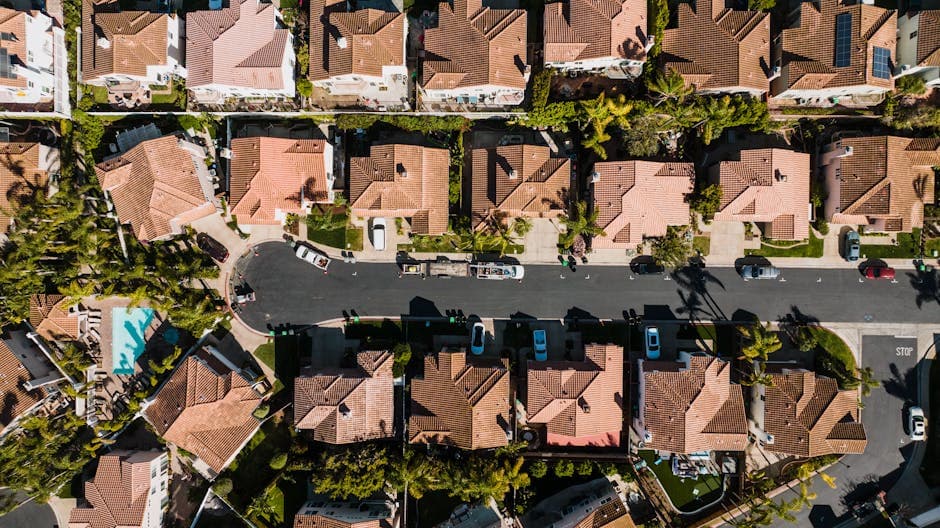
The Anti-Mall and the Highest-Grossing Mall.
A long read on Costa Mesa: how a flat Orange County city sells $2B a year in designer luxury at South Coast Plaza alongside the deliberate vintage anti-mall culture of The Lab and The Camp, and how the city's restaurants ride the seam.
City
Costa Mesa, CA (Orange County)
Geography
15.7 sq mi, ~113K residents, 405 / 55 / 73 ring
Topic
Plaza luxury, Segerstrom, anti-mall, OC Fair
It is 1:42pm on a Saturday in November, and a woman in a Tiffany shopping bag is walking out the north entrance of South Coast Plaza while two miles south, on the same Bristol Street, another woman is paying for a vintage Levi's jacket inside The Lab.
Two miles of Bristol Street separate the highest-grossing shopping center in the United States from the country's most deliberately self-styled anti-mall. South Coast Plaza opened in March 1967 on the C.J. Segerstrom family's lima bean fields and grew into a 2.7 million square foot Tiffany-Hermes-Chanel temple that sells roughly $2 billion in luxury goods a year. The Lab opened in 1993, two miles south on the same Bristol, in a converted industrial building, and named itself "the Anti-Mall" because it was. Costa Mesa contains both as a matter of city planning, not contradiction.
The city is flat (15.7 square miles, no real hills), bounded almost entirely by freeway (the 405 across the south, the 55 down the east, the 73 toll road at the bottom right corner), and built around two civic anchors that pull the city in opposite directions. South Coast Plaza pulls in luxury retail with a tourist halo: Saudi families flying in for a Hermes order, Beijing shoppers on a Chanel itinerary, the LA day-tripper on the weekend errand. The Renee and Henry Segerstrom Concert Hall pulls in classical music subscribers, the Pacific Symphony, Broadway national tours, and the South Coast Repertory's regional theater audience. The OC Fair pulls in 1.4 million attendees every July and August. Every one of those audiences is a restaurant audience.
What Costa Mesa is not, ever, is monolithic. The Plaza is a different world from The Lab. The Eastside on 17th Street has nothing operationally in common with Mitsuwa Marketplace's Japanese food court. Carlos Salgado's Michelin-starred Taco Maria, inside the SoCo design district, is a completely different proposition from Wahoo's Fish Taco, founded in Costa Mesa in 1988 by the Lee brothers and still selling $7 Cajun shrimp tacos to surfers in the same Placentia Avenue counter. A restaurant ordering platform that treats them as the same surface area loses both. A platform that takes them seriously as distinct operator types is the entire point of this piece.
This is also Orange County, which means a specific tax stack (7.75 percent sales tax, the California state base of 7.25 percent plus a 0.5 percent district tax for OC transportation), a specific labor law overlay (AB 1228's $20 chain-QSR wage floor since April 2024, and SB 478's junk fee transparency since July 2024), and a specific bilingual customer base (Latino east side, Vietnamese Little Saigon overflow from Westminster a few miles north). All of it shapes how a restaurant takes orders. None of it is the same as a national restaurant marketing strategy. The OC operator who treats it that way pays the cost in commission, customer churn, and the slow leak of a phone line that never quite handles the Spanish call right.
The rest of this piece moves through the geography. The Plaza floor sweep and the freeway ring. The cuisine mix. The operator year anchored to OC Fair, holiday Plaza, Segerstrom season, and Auto Show. Three operator personas. The cost math on a $60 Plaza dinner. And the bilingual phone reality. The pitch at the end is a flat $249 monthly subscription that replaces marketplace commission, but the pitch only lands if the geography lands first.
Costa Mesa, in seven numbers the operator should memorize.
Sources: City of Costa Mesa Economic Development; South Coast Plaza public factsheet (~$2B sales, the highest-grossing mall in the United States since the early 2000s); OC Fair and Event Center annual attendance reports (1.4M in 2023); Segerstrom Center for the Arts annual report; California Department of Tax and Fee Administration sales and use tax rates for Orange County; restaurant count approximated from Costa Mesa business license filings and OC Register restaurant directory.
South Coast Plaza, Segerstrom, the Lab, the Camp, OC Fair: all of it inside a 4 mile freeway box.
Costa Mesa is small (15.7 square miles) and almost entirely freeway-bounded. The 405 caps the south, the 55 runs down the east, the 73 toll road clips the southeast. Bristol Street is the city's retail spine, threading South Coast Plaza, SoCo, The Lab, and The Camp. Newport Boulevard is the cultural spine, running south from the fairgrounds toward the beach.
Visualization 1 of 3
South Coast Plaza floor sweep + the 405 / 55 / 73 freeway ring
Plaza opened 1967. ~2.7M sq ft, ~250 stores, ~$2B annual sales.
South Coast Plaza is the highest-grossing shopping center in the United States. It sits inside the 405 / 55 / 73 freeway ring, two miles north of the OC Fairgrounds, across Town Center Drive from Segerstrom Hall. The Lab and The Camp anti-malls deliberately reverse the Plaza grammar two miles to the south on Bristol Street. The capture geography is the perimeter of all of it.
Sources: South Coast Plaza public factsheet and historical archive; City of Costa Mesa Planning + Economic Development; OC Fair and Event Center facility profile; Segerstrom Center for the Arts archives; OC Register reporting on the SoCo / Lab / Camp redevelopment. Geometry stylized for legibility, not surveyed precision.
South Coast Plaza is a curated luxury floor plate, broken into two physically connected wings: the main building (Tiffany, Hermes, Chanel, Louis Vuitton, Saint Laurent, Dior, Cartier, the long Italian luxury row) and Crystal Court (Macy's, Bloomingdale's, Charlie Palmer at Bloomingdale's, Cha Cha's Latin Kitchen). Between the two wings runs Bristol Street, with the bridge crossing overhead. The Plaza sits inside the 405 / Bristol / Sunflower triangle, two miles north of The Lab.
Segerstrom Center for the Arts sits across Town Center Drive from the main Plaza wing, on a campus that includes Segerstrom Hall (1986, ~3,000 seats), the Renee and Henry Segerstrom Concert Hall (2006, ~2,000 seats, designed by Cesar Pelli), the Samueli Theater, and the Julianne and George Argyros Plaza. The South Coast Repertory's regional theater complex shares the campus. On any given week, the Segerstrom complex curtains roughly six to twelve shows, with most weekend curtains at 7:30pm.
Two miles south on Bristol, the Lab and the Camp anti-mall properties anchor the design district. Both were developed by Shaheen Sadeghi (the Lab opened 1993, the Camp 2002) as deliberate counter-mall environments: open-air, vintage retail, native plants, surf and wellness brand presence, and casual independent restaurants instead of the Plaza's luxury anchors. Habana is the Lab's restaurant anchor. Plums Cafe has a presence at the Camp. The grammar reverses the Plaza grammar block for block.
The OC Fair and Event Center is 150 acres at the corner of Newport Boulevard and Fair Drive, bordered on the south by the 405. It runs the OC Fair every July and August (1.4 million attendees), the OC Marketplace swap meet every weekend year-round, the Pacific Amphitheatre concert series in summer, the Orange County International Auto Show in fall, and dozens of smaller events. From an operator standpoint, the fairgrounds are a year-round seasonal halo, with the July-August fair stretch as the dominant pulse and the auto show and holiday-adjacent events as smaller secondary pulses.
Mitsuwa Marketplace sits on Paularino Avenue, northeast of the Plaza. It anchors the Japanese-American community in OC and its food court is a destination on its own: Santouka tonkotsu ramen (the OC outpost of the Hokkaido chain), Sanuki no Sato udon, Hannosuke tempura don, a matcha cafe, and a Beard Papa cream puff counter. The Mitsuwa food court reliably out-eats most standalone restaurants in OC; on a Saturday lunch hour, the Santouka line moves continuously from 11am to 3pm.
The Eastside, on the other side of Newport Boulevard, is a different city again. 17th Street is a walking grid of independent restaurants, coffee shops, and small bars, with a low chain density and a high concentration of long-tenured family businesses. Open Sesame, the Lebanese kitchen, has been on 17th since the 1990s. Plums Cafe, the Pacific Northwest brunch spot, has been on 17th since 1992. Memphis Cafe, the Southern American place adjacent to the Lab, sits at the southern end of the 17th-adjacent zone. The Eastside is not a tourist district; it is a resident main street, and it orders dinner accordingly.
Opened March 1967 by C.J. Segerstrom and Sons on the family lima bean fields. ~2.7M sq ft, ~250 stores, ~$2B annual sales, the highest-grossing shopping center in the United States.
Repurposed industrial buildings, design showrooms, OC Mix food hall. Anchors Pirch, Roger Dunn Golf Shops, and small batch food vendors.
Open-air alternative retail, opened 1993 by Shaheen Sadeghi. Vintage shops, Habana restaurant, independent labels. The deliberate counterpoint to South Coast Plaza two miles north.
Sister property to The Lab across Bristol. Native plants, surf and outdoor labels, Plums Cafe, ARC Restaurant, wellness studios.
150 acres bordered by Newport Blvd and Fair Dr. Hosts the OC Fair every July and August, the OC Marketplace swap meet on weekends, the Orange County International Auto Show, and seasonal events year-round.
Segerstrom Hall opened 1986, the Renee and Henry Segerstrom Concert Hall opened 2006. Home of Pacific Symphony, Pacific Chorale, Philharmonic Society of Orange County, and the South Coast Repertory next door.
Anchor of the Japanese-American community in OC. Food court features Santouka ramen, Sanuki no Sato udon, Hannosuke tempura, the matcha cafe, and a Beard Papa.
Walking grid of independent restaurants, coffee shops, bars. The non-mall Costa Mesa. Memphis Cafe, Plums Cafe west sibling, Hi-Time Wine Cellars adjacent in Costa Mesa eastside.
Twelve cuisines, four anchor kitchens, one Japanese food court doing more volume than most.
Costa Mesa's independent restaurant mix bends toward American craft, Mexican, and Japanese, with strong representation of Vietnamese (Little Saigon overflow from Westminster a few miles north), Korean, Italian, Lebanese, and Cuban. Each cuisine reaches a different customer base on a different schedule; an ordering platform that does not localize per cuisine is a platform that loses the call.
The cuisine mix
Cuisine share among independent Costa Mesa restaurants
Stylized share. Not a Census. Sources cited below.
Sources: cuisine share derived from a Yelp + Google Maps category scan across the 92626, 92627, and 92628 Costa Mesa ZIPs; cross-checked against the OC Register restaurant directory and the Costa Mesa Chamber of Commerce member list. Shares are illustrative, with the chain count excluded to highlight independent operator mix.
American craft is the largest single category, anchored by the Plaza and adjacent Westside breweries and by the new-American category that sweeps across the Eastside and the Lab. Mexican is the second largest, reflecting both the Latino east-side base and the touristic-Mexican concepts that proliferated through the OC retail wave (Cha Cha's, Taco Maria's tasting menu, Wahoo's fast-casual lineage). Japanese ranks third, driven by Mitsuwa Marketplace's food court anchor and by the cluster of standalone sushi and ramen counters across the Plaza-adjacent zone.
Vietnamese deserves its own emphasis: Little Saigon, the largest Vietnamese-American population concentration in the United States, sits a few miles north in Westminster and Garden Grove. Costa Mesa is on the southern edge of that diaspora and has a meaningful Vietnamese restaurant presence (pho counters, banh mi delis, Vietnamese coffee shops) that catches Vietnamese-language ordering demand from customers crossing south from Westminster to work, school, or beach trips. Korean BBQ has a footprint along Bristol and Harbor. Italian represents the Plaza-adjacent trattoria tier and the 17th Street neighborhood-Italian tier.
Lebanese and Mediterranean (Open Sesame on the Eastside, with smaller mezze counters scattered across the Westside) reflect the small but established Levantine community in OC. Cha Cha's-style modern Mexican overlaps with the Latino east-side category, which complicates the count. Cuban and Latin (Habana inside The Lab) is small in absolute count but punches above its weight as a brand-defining presence inside the anti-mall.
The operational implication is that a single English-only ordering page misses the Spanish-speaking east-side family, the Vietnamese pho-counter regular, and the Korean BBQ family. The phone line lives in three or four languages on a given weekend; the ordering page should too.
OC Fair (July-Aug), Plaza Holiday (Nov-Dec), Segerstrom Season (Sep-May), Auto Show (Oct).
A Costa Mesa restaurant runs a four-pulse year. The OC Fair fills the city for 23 days every summer. South Coast Plaza's holiday season runs Black Friday weekend through New Year's, with the heaviest pulse in the three Saturdays before Christmas. Segerstrom Hall opens its season in mid-September and runs through May with weekly curtains. The OC International Auto Show fills the Anaheim Convention Center next door in October but pulls Costa Mesa hospitality demand. The summer also overlaps with surf culture and the US Open of Surfing in neighboring Huntington Beach.
The operator year
Seasonal calendar: when Costa Mesa demand pulses
Approximate windows. Verified against 2024 to 2025 published schedules.
Sources: OC Fair and Event Center 2024 fair dates (July 19 to August 18, 2024 schedule); South Coast Plaza holiday promotion calendar; Segerstrom Center for the Arts 2024 to 2025 published season; Pacific Symphony season subscription brochure; OC International Auto Show schedule (held at Anaheim Convention Center but draws Costa Mesa hospitality demand); Vans US Open of Surfing in Huntington Beach (late July, neighboring city) included for adjacency.
The OC Fair runs from mid-July to mid-August every year on the 150 acre fairgrounds. The 2024 fair ran 23 days, July 19 to August 18, drawing about 1.4 million attendees with a published average daily attendance over 60,000. Operators near Newport Boulevard and Fair Drive feel the fair as a daily 5pm to 11pm surge, with parking spillover into adjacent retail lots and a pre-fair early-dinner pickup window from 4pm to 6pm. The fairgrounds are also home to the OC Marketplace swap meet every weekend year-round, which adds a quieter but consistent baseline lift on Saturdays and Sundays.
South Coast Plaza's holiday season is the year's other dominant pulse. The Plaza begins its holiday programming the week before Thanksgiving and runs continuously through the first week of January, with the heaviest traffic on the three Saturdays before Christmas (typically December 6, 13, and 20 in any given year). Plaza-adjacent restaurants see lunch volume roughly double during these weekends; pre-theater dinner timing tightens around the Segerstrom curtain schedule. The Black Friday weekend itself is its own surge, with the Plaza opening Thanksgiving evening for the doorbusters.
Segerstrom Center's season opens in September and runs through May. Pacific Symphony's classical subscription series, the Segerstrom Hall national tour calendar (Broadway shows, opera, ballet), and the South Coast Repertory's regional theater season layer on top of each other. The center publishes a roughly 200-event annual calendar. Pre-theater dining for the 7:30pm curtains means a tight 5:30pm to 6:30pm seating window for any Plaza-adjacent restaurant, with patrons paying their checks by 7pm and walking the four minutes across Town Center Drive to the hall.
The Orange County International Auto Show is held at the Anaheim Convention Center each fall (typically late September into early October), but it pulls Costa Mesa hospitality demand because the South Coast Metro hotels (Westin South Coast Plaza, Avenue of the Arts Hotel) serve as overflow for the show's exhibitor and VIP guest base. The result is a roughly week-long lift on the corporate dinner side of the Plaza-adjacent ledger.
Surf culture and the broader Vans / RVCA / Volcom Southern California design-and-surf nexus anchors the summer. The US Open of Surfing happens in late July in neighboring Huntington Beach, drawing a multi-day crowd that crosses into Costa Mesa for food, lodging, and design-district retail. Vans US Open of Surfing is one of the largest action sports events in the world; for the Costa Mesa Westside (especially the brewery row), it is the single largest non-Plaza event of the year.
Costa Mesa's restaurant roster, from Michelin Mexican to surf-shop tacos.
Carlos Salgado's Taco Maria, inside the SoCo design district, became one of Orange County's first Michelin-starred restaurants on the strength of a tasting menu built around heirloom corn tortillas pressed in house. Mastro's Steakhouse holds the Plaza-adjacent special occasion. Charlie Palmer at Bloomingdale's runs the rare mall fine-dining slot. Wahoo's Fish Taco was founded in Costa Mesa in 1988 and never left. The Mitsuwa food court out-eats most standalone restaurants in OC. The list below is partial, not exhaustive.
Chef Carlos Salgado. One of Orange County's first Michelin-starred restaurants. Heirloom corn tortillas pressed in house, a tasting menu that traces Salgado's Mexican-American family history.
Catfish, jambalaya, gumbo. A 1990s anti-mall mainstay. Outdoor patio, Sunday brunch line that wraps the block.
Classic special-occasion steakhouse on the South Coast Metro side. Pre-theater destination for Segerstrom Hall season subscribers.
Austin-founded chain. Mall pickup volume, kids menu, fast counter service for the South Coast lunch shopper.
Chef Charlie Palmer's mall flagship. Lunch service tied to Plaza shoppers, the rare in-mall fine dining slot that punches above its address.
Founded in Costa Mesa in 1988 by the Lee brothers. The OC surf-culture taco shop that scaled into a 50 location chain without leaving the original Placentia counter.
Santouka tonkotsu, Sanuki no Sato udon, Hannosuke tempura, a Beard Papa. A food court that out-eats most standalone restaurants in OC.
Lebanese kitchen on 17th. Hummus, kibbeh, mixed grills, the Levantine option for the east-side family table.
Salmon hash, dungeness Benedict, Pacific Northwest brunch on the OC ground. A 17th Street institution since 1992.
Anchor restaurant inside The Lab. Mojitos, ropa vieja, plantains, a dim Latin courtyard pulsing the anti-mall pulse since the early 2000s.
Tapas and Spanish-influenced cocktails. Cited here for the cross-pollination between Santa Ana east side and Costa Mesa east side late-night.
Costa Mesa adjacent coastal seafood reference. The Pacific menu vocabulary the South Coast Metro lunch crowd reaches for.
Pinkberry was founded in West Hollywood in 2005, but the frozen yogurt boom rolled through Orange County in 2007 to 2010 with Costa Mesa as a primary expansion node alongside Yogurtland (founded in Fullerton, 2006).
Mall sibling concept. Higher-volume modern Mexican adjacent to the Plaza luxury wing, capturing the post-shopping family dinner.
Sources: Michelin Guide California (Taco Maria designation, current); OC Register restaurant directory and dining coverage; Eater LA Orange County dining coverage; LA Times Food OC dining columns; restaurant publicly listed addresses verified as of 2026-05-12.
South Coast Metro, Mesa Verde, Eastside, Westside, the Lab district, the fairgrounds.
The city splits cleanly into six operationally distinct zones. Each one shapes how a restaurant inside it should think about pickup, delivery, language, and the customer base it lives off of.
Luxury retail, corporate offices, Segerstrom complex, Westin and Avenue of the Arts hotels
The destination-dining zone. Pre-theater seating, Plaza shopper lunches, expense-account dinners.
Mid-century single-family neighborhoods, Mesa Verde Country Club, family residential
Residential delivery base. Family ordering, school night dinners, the dinner-tonight-app demand.
Walkable main street, independent restaurants, boutiques, surf culture overlay
Independent operator stronghold. Walk-in dining, Yelp-rich, low chain density.
Light-industrial conversions, breweries, design and surf brand HQs (Vans / RVCA / Volcom nearby)
Brewery and casual restaurant geography. Lower rent, taproom-friendly, kitchen-incubator zone.
Anti-mall outdoor centers, vintage retail, casual independent restaurants, wellness studios
Concept-driven independent operator zone. The deliberate counterweight to South Coast Plaza luxury.
Fairgrounds, OC Marketplace swap meet weekends, Pacific Amphitheatre concerts in summer
Seasonal event halo. July-August fair surge, Auto Show in fall, weekend swap-meet crowd year-round.
Three operator types, three sets of pain, three fits for direct ordering.
The Costa Mesa operator base is not uniform. A Plaza-adjacent chef-driven restaurant, an east-side Latino family kitchen, and an anti-mall concept inside the Lab share city ZIPs but almost nothing else operationally. Each has a different ordering pain and a different shape of fit for a commission-free direct platform.
Mall-adjacent fine dining operator
Chef-driven concept at SoCo, Crystal Court, or the Avenue of the Arts hotel district
Pre-theater reservation hour collides with Segerstrom curtain time. Online catering inquiries from Segerstrom subscribers and Plaza corporate accounts are bouncing between email and DM. DoorDash takes 28 percent on the $60 per head check.
Branded direct ordering with timed pre-theater pickup windows, catering quote channel with PO upload for corporate accounts, English plus Spanish Voice AI on the same phone line.
Latino east-side family operator
Family-run Mexican or Salvadoran kitchen on the east side of Costa Mesa or just over the Santa Ana line
Half the phone calls come in Spanish, the cashier handling them is also expediting tickets, and Saturday lunch is the breaking point. Marketplace apps absorb the demand at 22 to 28 percent of the ticket.
Spanish-first Voice AI on the existing phone number, Spanish-language menu page for browser locale es-MX, flat $249 monthly subscription instead of variable commission.
Design district anti-mall casual concept
An independent restaurant inside The Lab, The Camp, SoCo, or 17th Street
The brand identity is the whole asset and the marketplace app strips it down to a logo thumbnail next to two chain competitors. Customer data lives on the marketplace, not in the operator's CRM.
Brand-controlled ordering page that ranks for the concept name (not just the cuisine), full customer data ownership, Uber Direct dispatch when delivery is needed but no marketplace tenancy required.
The holiday Saturday doubles lunch volume. Segerstrom curtain ties dinner to a 90 minute window.
On an ordinary Saturday in October, a Plaza-adjacent restaurant might run 21 orders an hour at lunch peak. On a December Saturday during the Plaza holiday season, that same restaurant runs 46 to 56 orders an hour, often more than double the baseline. The pre-theater dinner window, by contrast, is regular year-round: 5pm to 6:30pm pickup, 5:30pm to 7pm dine-in, with everyone clearing the room by 7:15pm to make the 7:30pm Segerstrom curtain across the street.
Visualization 2 of 3
Holiday mall lunch volume at Plaza-adjacent restaurants
Hourly orders, three representative Saturdays.
South Coast Plaza holiday season (Black Friday through New Year's Eve) roughly doubles the lunch order volume for a Plaza-adjacent restaurant compared to an ordinary October Saturday. Pre-theater dinner timing tightens around 5pm to 7pm regardless of the season, because Segerstrom Hall and South Coast Repertory both curtain in the 7:30pm window.
Sources: stylized order volume curves derived from publicly reported Plaza holiday traffic uplift (typically 1.6x to 2.0x year over year for the November to December window) and the curtain schedule of Segerstrom Hall (most weekend curtains at 7:30pm). Numbers are illustrative, not from a specific restaurant.
The operational implication of the holiday pulse is staffing math. A 2x lunch volume on a Plaza-adjacent Saturday in December is not just more orders; it is more orders at a tighter time band, with no slack to recover from a dropped ticket or a miscounted reservation. Restaurants that route the holiday surge through marketplace apps absorb a 22 to 30 percent commission line at the same time their staffing line is going up; that combination is what shows up in the December financial as a flat-to-down quarter despite record traffic.
The pre-theater pulse is more predictable. Segerstrom Hall publishes its season three to six months in advance. A Plaza-adjacent restaurant with a direct ordering page can build a Segerstrom-night menu (a $48 prix-fixe with two courses and a drink, designed to clear in 75 minutes), publish it on the ordering page for the specific show date, and accept reservations and pre-paid pickup orders directly. The marketplace apps cannot do this; the direct page can. The customer pays for the pre-theater dinner once, on the website, the night before the show, and walks in at 5:45pm to a fully fired ticket.
The post-theater pulse is the third volume band, smaller but real: after a 7:30pm curtain, a portion of the Segerstrom audience wants a 10:15pm drink or dessert. A Plaza-adjacent restaurant with late-night service captures it. A restaurant that closes at 9pm sharp gives the volume to the chain bar across Town Center Drive. Either decision is fine; the operator should know they are making it.
English plus Spanish, with Vietnamese available for the Little Saigon overflow.
Costa Mesa is bilingual in practice. The east side, especially the neighborhoods east of Newport Boulevard and south of 19th Street, has a Latino-majority residential base and a Spanish-first family ordering culture. The Census American Community Survey 2024 puts the city's Hispanic or Latino population at roughly 36 percent of total residents, with Spanish as the primary home language for a substantial share of that population. The phone line at any east-side Mexican or Salvadoran kitchen will run more Spanish calls than English calls on a Saturday lunch.
A monolingual English IVR drops those calls. A Voice AI that handles Spanish natively (including Mexican-Spanish dialect variation, which differs from the Castilian-default many voice systems are trained on) captures them. DirectOrders' Voice AI is built on a multilingual LLM stack that routes the caller to the appropriate language automatically and places the order in the kitchen's English-language ticket system regardless of input language. The customer in Spanish gets the order placed in Spanish; the line cook reads an English ticket.
Vietnamese is a secondary but real language overlay. Little Saigon, in Westminster and Garden Grove a few miles north, holds the largest Vietnamese-American population concentration in the United States. Pew Research's 2024 work on Asian-American immigrant language use found that 51 percent of Vietnamese Americans speak Vietnamese at home, with the older generation (60+) placing roughly 70 percent of restaurant phone calls in Vietnamese. A Costa Mesa pho counter or banh mi shop that catches the spillover demand from Little Saigon adds a Vietnamese voice channel and recovers calls that the English IVR otherwise loses. DirectOrders supports Vietnamese as an optional add-on language on the same phone number.
The same logic applies to Korean (the Bristol and Harbor BBQ rooms), Mandarin (the Plaza-adjacent Chinese kitchens), and Japanese (Mitsuwa-adjacent Japanese cafes). All available, all on a single phone number, all on the same flat subscription with no per-language add-on fee.
A $60 SCP dinner ticket: 30 percent commission versus 14 percent direct.
The take-home difference on a single $60 Plaza-adjacent dinner ticket between a 30 percent marketplace commission and a 14 percent direct-ordering blend is $9.60. Across a holiday quarter of 1,200 such orders, the delta is roughly $11,520. That funds a part-time line cook for the December quarter, or it funds the deck oven the kitchen has been quoting for two years.
Visualization 3 of 3
Cost math: $60 SCP dinner ticket, three commission paths
Take-home delta on a single $60 Plaza-adjacent dinner.
A typical pre-theater two-person dinner at a Plaza-adjacent restaurant runs $60 plus tax and tip. Across 1,200 such orders in a peak holiday quarter, the difference between 30 percent marketplace commission and 14 percent direct ordering is roughly $11,500 in retained margin. That delta funds a part-time line cook, or it funds the seven dish broiler the kitchen has needed since opening.
Sources: DoorDash merchant rate cards (typical 30% commission for the basic plan, marketing fees stacked); Uber Eats commission disclosures; DirectOrders flat $249 monthly subscription plus Uber Direct per-delivery fee (typically $7 to $9). $60 ticket size approximated from the published menu price range at Charlie Palmer at Bloomingdale's, Cha Cha's Latin Kitchen, Mastro's lighter prix-fixe options, and Hopdoddy two-person checks.
The 30 percent marketplace path is the DoorDash basic commission with stacked marketing and sponsored placement. The 22 percent blended path averages across DoorDash, Uber Eats, and Grubhub at typical Costa Mesa restaurant volumes. The 14 percent direct path is the DirectOrders $249 monthly subscription amortized over typical Plaza-adjacent volume (roughly 800 orders a month) plus the Uber Direct per-delivery fee (typically $7 to $9 in the Costa Mesa radius).
The math compounds outside the single-ticket case. A Plaza-adjacent restaurant that runs $50,000 of monthly off-premise revenue at 30 percent marketplace commission pays $15,000 a month in commission. The same revenue through direct ordering with Uber Direct dispatch costs $249 in subscription plus roughly $5,600 in Uber Direct delivery fees, for a total of $5,849. The monthly delta is $9,151, or $109,812 annualized. That is the entire wage of a full-time chef de cuisine in OC, recovered from the commission line.
The catch, and there is one, is that direct ordering does not generate marketing on its own. The marketplace app appears in search results because DoorDash pays Google for placement. The direct ordering page has to do the SEO work itself, which is why the operator who switches over should plan for the first three to six months with a mixed channel strategy: keep the marketplace presence as a backstop, but route the brand-search traffic and the repeat customer traffic through the direct page. Over 12 to 18 months, the direct page becomes the dominant channel; the marketplace becomes the long-tail acquisition pipe.
| DoorDash commission (blended 28%) | $14,000 |
| Uber Eats commission (blended 22%) | $1,540 |
| Stacked marketing / sponsored ads | $340 |
| Monthly total | $15,880 |
| DirectOrders subscription | $249 |
| Uber Direct (~800 deliveries × $7.49) | $5,992 |
| Bilingual Voice AI (English + Spanish) | $0 |
| Monthly total | $6,241 |
Why DirectOrders fits Costa Mesa.
South Coast Plaza's retail magnetism is the single largest restaurant demand generator in Costa Mesa, and it does not slow down. The Plaza pulls 24 million visitors a year, runs the highest-grossing US shopping center sales line, and stages a holiday season that doubles lunch volume at the surrounding restaurants. A Plaza-adjacent restaurant that owns its own ordering surface (a branded direct page with pre-theater menu blocks, catering quotes for corporate Plaza accounts, and a bilingual phone line) captures both the lunch shopper and the Segerstrom subscriber on the same web property. The marketplace app captures neither well.
The Segerstrom Center curtain schedule turns the pre-theater dinner block into a contractual operational mode. The 7:30pm curtain means the dinner has to clear by 7:15pm, which means the kitchen needs to fire by 6pm, which means the order has to land by 5:45pm. A direct ordering page that supports timed pickup windows, pre-paid prix-fixe reservations, and same-night reordering is the right tool for the job. Building it on a $249 monthly subscription instead of a 28 percent marketplace commission frees up the margin that funds the Segerstrom-night staffing.
The Lab and The Camp anti-mall properties are a brand-first restaurant geography. The customer who walks into Habana inside The Lab on a Saturday night is there for the property's character, not because they searched for "Cuban food near me". The marketplace app strips the brand back to a logo thumbnail and a star rating. The direct ordering page keeps the brand alive: the photography is the operator's photography, the menu copy is the operator's voice, the customer data flows back into the operator's CRM. The Lab tenancy is a brand-equity tenancy; the ordering surface should be too.
The east-side Latino family operator base on 17th and the Eastside grid is a Spanish-first ordering base. A Voice AI that handles Spanish natively, on the same phone number, captures the Saturday lunch calls that an English IVR drops. The Vietnamese overflow from Little Saigon adds a Vietnamese channel where needed; the Korean BBQ rooms add Korean. All multilingual capabilities ship on the same flat subscription. The operator who has been the multilingual phone line themselves, for years, gets the phone line back.
The OC Fair seasonal pulse, the South Coast Plaza holiday quarter, the Segerstrom curtain schedule, and the OC International Auto Show weeks are the four pulses of the operator year. Each requires a different operational stance. A direct ordering page can adapt: pre-Fair pickup windows in July and August; double-staffed holiday weekend lunch in November and December; prix-fixe pre-theater menus in September through May; corporate dinner allotments during Auto Show week. None of this is hypothetical; it is the kind of operational play that a restaurant running on a marketplace cannot make because the marketplace owns the ordering surface, not the restaurant.
Where the numbers came from. Where to read more.
- City of Costa Mesa Economic Development and Planning Department
- South Coast Plaza public factsheet and historical archive (1967 opening, ~$2B annual sales)
- OC Fair and Event Center annual attendance and program reports
- Segerstrom Center for the Arts annual report and season programming
- Pacific Symphony season subscription brochure
- Michelin Guide California, Taco Maria designation
- OC Register dining coverage and restaurant directory
- Voice of OC public-affairs reporting on Costa Mesa retail and development
- LA Times Food, Orange County dining columns and features
- Eater LA Orange County coverage of SoCo, the Lab, and the Camp
- California Department of Tax and Fee Administration, sales and use tax rate tables (OC 7.75%)
- OC Convention and Visitors Bureau (Visit Anaheim plus Visit Newport Beach tourism profiles)
- US Census Bureau ACS 2024, Costa Mesa demographic and language profile
- Pew Research Center, Asian American immigrant language use (2024)
- Anaheim, CA8 mi north; the Disney Resort capture
- Irvine, CA5 mi southeast; the master-planned suburb
- Santa Ana, CA3 mi northeast; OC's civic core
- Los Angeles, CA38 mi north; the 5pm map of LA
- Long Beach, CA22 mi northwest; the port-city ordering geography
- Commission calculatorPlug in DoorDash volume, see the Plaza-adjacent drag
- Voice AI (multilingual)English, Spanish, Vietnamese, Korean, Mandarin
- Direct ordering pageBranded, pre-theater menu blocks, catering quotes
- DirectOrders vs DoorDashThe 30 percent commission stack, line by line
- DirectOrders vs GrubhubCommission, marketing fees, customer data ownership
- PricingFlat $249/mo. No per-order commission. Zero.
Own the Plaza floor sweep. Own the Segerstrom seat next door. Own the phone line in two languages.
A 30 minute walkthrough with our Costa Mesa implementation lead covers the corridor your restaurant sits on (Bristol, 17th, Newport, the Eastside grid, the Westside brewery row), the Voice AI languages your customer base needs, and the Uber Direct radius math for your specific kitchen address. Or browse the pricing page directly. Both work.