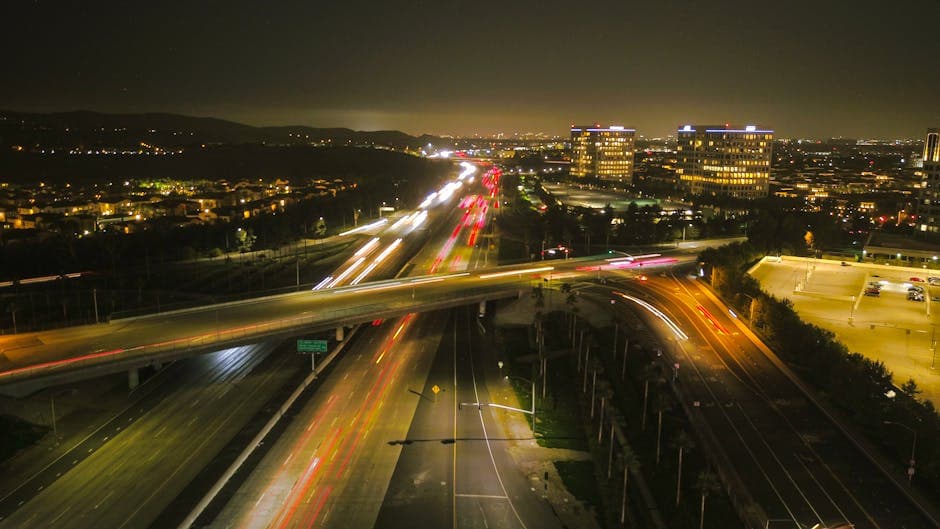
The Master Planned Suburb.
A long read on Irvine: the Irvine Company village geography, the Asian-American majority neighborhoods, the Korean BBQ row on Culver Drive, Diamond Jamboree and Spectrum Terrace, UC Irvine's Anteater economy, and the multilingual ordering reality that ties them together.
City
Irvine, CA
Demographics
~310K residents, ~45% Asian-American
Topic
Villages, UCI, tech HQ catering, Asian food halls
It is 7:43pm on a Friday in May, and Seo-yeon Park is plating the third short rib course at her family's Korean BBQ counter on the second floor of Diamond Jamboree, four miles south of UC Irvine.
The Friday rush at Diamond Jamboree is the rhythm of Asian-American Orange County. Five thousand square feet of mall corridor on the second floor wraps around 30 plus tenants. The 85C Bakery line out front is sixty deep for sea salt coffee. The Boiling Point queue spills past the Class 302 Taiwanese shaved ice counter. Sun Nong Dan is plating cheese-bubbling galbi-jjim for table fourteen. Honda-Ya's izakaya counter is mid-yakitori service. The Friday-into-Saturday volume at Diamond Jamboree is the largest concentrated Asian-American restaurant moment in Orange County.
Seo-yeon speaks four languages, and the phone line, which is how she sees the world. Saturday graduate students from UCI call in Korean for late-night takeout because their PI is paying for the lab celebration. Vietnamese families call in Vietnamese for big-table reservations on Saturday lunch. Mainland Chinese parents visiting their UCI freshman call in Mandarin asking whether the restaurant does private dining. Iranian and Persian families from Newport Coast call in Persian (Farsi) for graduation dinners. And the Friday tech-corridor calls come in mixed-language English plus a smattering of Hindi from the Broadcom and Edwards Lifesciences engineering teams ordering for shipping-deadline crunch nights.
Seo-yeon has, until now, been the multilingual phone line. There is no IVR. There is no Voice AI. There is the cordless handset at the host stand, and there is Seo-yeon, and there is her cousin Jin on the days when the grill is too busy for her to answer. The marketplace apps are turned on as a backstop, but the apps cannot describe what the panchan rotation is that night, or whether the kitchen does galbi-jjim half-portion, or whether a Mandarin-speaking grandmother can substitute the rice for a noodle bowl. The phone does that work. And the phone is Seo-yeon.
A family from a Newport Coast home walks in at 8:02pm asking whether anything on the menu is suitable for a Persian grandmother who keeps halal, a Korean-American daughter-in-law who is gluten-free, and a thirteen year old grandson who only eats short rib. Seo-yeon points them to a half-table near the window, runs the grill ticket through to the back, and pushes the order through to the kitchen in ninety seconds. The party of six at the next table is a Blizzard Entertainment crunch-time dinner offsite, eight engineers from the World of Warcraft team ordering off the corporate catering platform that their game lead pre-approved at 4:30pm earlier that afternoon.
None of this scales. Seo-yeon is one person, the phone line is one phone line, and on a 280 cover Friday with a corporate catering inquiry coming in from a Broadcom engineering manager asking for a 60 person galbi-jjim platter for Monday lunch, the math snaps. The marketplace apps are the cheap convenient answer; they take 28 percent of the ticket and the kitchen still has to plate the lamb and the language barrier is still there, just absorbed by the customer's frustration with the chatbot. The Irvine Asian-American restaurant scene, all of it, is built on the back of operators like Seo-yeon. This piece is about how to stop asking those operators to be the multilingual phone line themselves.
Irvine is not Orange County's restaurant capital in spite of being a master-planned suburb. It is the restaurant capital because the master plan deliberately concentrated a 45 percent Asian-American population into a five village geography wrapped around UC Irvine, the largest single concentration of Asian-American residents in any major US city. Because Diamond Jamboree is one of the most operationally dense Asian food halls in the western United States. Because Spectrum Terrace is its open-air weekend extension. Because the Culver Drive corridor between UCI and Irvine Boulevard is the densest Korean BBQ row in Southern California. And because the tech HQ corridor (Blizzard, Broadcom, Edwards Lifesciences, Allergan) drives the largest concentrated corporate catering demand in Orange County. None of these audiences belong to a marketplace app. All of them are direct ordering native.
The Irvine Company built the city. The city built the villages. The villages built the restaurants.
James Irvine consolidated three Mexican land grants into a 185 square mile ranch in 1864. The Irvine Company spent the 1960s and 1970s commissioning architect William Pereira and a master-plan team to develop the ranch into a planned city of villages, each with its own school, park, retail center, and demographic identity. Irvine was incorporated in 1971 with roughly 10,000 residents. Today the city holds roughly 310,000 residents across roughly 70 master-planned villages, the largest planned community in the United States.
Visualization 1 of 3
The master-planned village map
~310K residents. Largest master-planned community in the United States. ~70 villages, anchored by UCI and the Spectrum.
The Irvine Company developed nearly the entire 66 square mile city under a unified master plan starting in the 1960s. Each village is a self-contained neighborhood with its own school, park, and retail center. The food economy concentrates at the village retail centers, at Diamond Jamboree, at Spectrum Terrace, at the Irvine Spectrum, and at the campus-edge of UC Irvine.
Sources: City of Irvine General Plan; Irvine Company corporate history; UC Irvine Office of Institutional Research; Orange County Great Park master plan documents; Irvine Spectrum Center facility fact sheet; OC Register reporting on Diamond Jamboree and Spectrum Terrace. Geometry stylized for legibility, not surveyed precision.
The Irvine Company built UC Irvine first. The Regents of the University of California acquired a 1,000 acre tract from the Irvine Ranch in 1959, the campus opened in 1965, and Pereira's master plan for the surrounding villages was designed in deliberate concentric rings around the campus. Turtle Rock, the first village, opened in 1971 along Bonita Canyon Drive on the campus south flank. University Park followed on the campus north flank, with University Town Center retail at Culver and Michelson. The campus and the city grew together; the campus shaped the city more than any other US example of a planned-community plus research-university pairing.
Woodbridge, the canonical Irvine family village, opened in 1976 on the western flank of the master plan. Two artificial lakes (North Lake and South Lake) anchor the village; the village shopping centers (Woodbridge Plaza, Woodbridge Village Center) run the lake-adjacent retail. The Woodbridge Village Association is one of the largest homeowner associations in California, and the family demographic of the village (median household income above $150K, schools rated 9 or 10 out of 10 on standardized rankings) set the template for what Irvine villages came to mean to prospective buyers.
Northwood and Northpark, in north-central Irvine, became the Asian-American demographic anchor of the city in the 1980s and 1990s. The Northwood neighborhood elementary schools, middle schools, and high schools (Northwood High School, Beckman High School in adjacent Tustin Unified) consistently rank in the California top 20 for academic performance. The K-12 school quality became the demographic pull factor; immigrant Asian-American families from the Bay Area, Houston, New York, and Toronto routinely relocate to Northwood specifically for the school rankings. The Irvine Unified School District today reports an Asian-American student population share of roughly 47 percent districtwide and over 60 percent at several Northwood-zone elementary schools.
Woodbury, Cypress Village, Eastwood, and the Great Park Neighborhoods are the 2000s and 2010s extension. The Irvine Company kept developing north and east, with Woodbury Town Center as the retail anchor and Jeffrey Open Space Trail as the village-to-village walking spine. The Orange County Great Park, built on the former Marine Corps Air Station El Toro that closed in 1999, occupies 1,300 acres and is the civic centerpiece of the new development wave. The Great Park Neighborhoods (Beacon Park, Pavilion Park, Cadence Park, Parasol Park, Solis Park) opened from 2013 onward and represent the newest stratum of Irvine population.
Each village has its own retail anchor with its own restaurant tenancy curated by the Irvine Company's retail division. The same chain operators recur across the village retail centers (Coffee Bean, Trader Joe's, Whole Foods, In-N-Out, Chipotle, Panera), but the chef-driven independents concentrate at Diamond Jamboree, Spectrum Terrace, the Irvine Spectrum, and the campus-edge of UCI at University Town Center. The geographic separation between mass-market village retail (predictable, formulaic, family-safe) and chef-driven destination dining (concentrated, ethnic-specific, weekend-anchored) is one of the defining features of Irvine's restaurant economy.
The Irvine Company's curated retail tenancy is the operational gatekeeper for independent restaurants. An operator who lands a 1,200 square foot footprint at Diamond Jamboree or Spectrum Terrace is paying Irvine Company rent rates that are among the highest in Orange County (commonly $5.00 to $7.50 per square foot per month NNN), but the foot traffic and the demographic-specific anchor tenant pairing (an 85C Bakery anchor for Diamond Jamboree, a CHA For Tea anchor for Spectrum Terrace) deliver enough Asian-American weekend density to make the rent pencil out. The marketplace commission stack on top of that rent is what kills the operator margin. Direct ordering replaces it.
The Irvine Company curated the geography. The geography curated the demographics. The demographics curated the restaurants. Each village is a separate ordering surface, each indexed independently, each accessible to the customer who is one Google query away.
Irvine is the largest Asian-American share of any major US city.
The 2024 American Community Survey puts the Asian-American share of Irvine residents at roughly 45 percent, the highest among US cities with 200,000+ population. The share is up from 30 percent in 2000 and 38 percent in 2010. Honolulu is the only comparable major US city.
Visualization 2 of 3
Asian-American share, by major US city
US Census ACS 2024. Cities of 200K+ population.
Irvine is ~45% Asian-American, the largest share of any major US city. Honolulu is comparable. Fremont CA exceeds 60% but sits below the 200K size threshold for major-city comparison. Among cities with 250K+ population, Irvine and Honolulu are the only two with majority-or-near-majority Asian-American populations.
Sources: US Census Bureau American Community Survey 2024 (5 year estimates); Pew Research Center, Key facts about Asian Americans (2024); City of Irvine demographic profile. Honolulu CDP and Fremont CA values from same source. Numbers rounded to nearest whole percent for chart legibility.
The Asian-American population of Irvine is not a single community. Chinese-American (mainland Chinese plus Taiwanese plus Hong Kong heritage), Korean-American, Vietnamese-American, Indian-American, Filipino-American, Japanese-American, and Iranian-American (Persian) communities are all substantial and well-organized. Pew Research's 2024 work on Asian-American demographics in Southern California identifies Irvine as one of the three densest multi-ethnic Asian-American cities in the US (with San Francisco and the San Gabriel Valley as the others), with the distinguishing feature of Irvine being the relative balance across multiple sub-communities rather than a single dominant one.
The Chinese-American community in Irvine includes a large mainland Chinese mainland population (especially post-2000 immigration from Beijing, Shanghai, Shenzhen, Guangzhou) plus a separate Taiwanese-American community (older, multi-generational, with longer ties to the SoCal Asian-American economy). The Mandarin-speaking grandparent calling for dim sum is ordering in Standard Mandarin; the Cantonese-speaking grandmother calling for the same is ordering in Cantonese; the Taiwanese-speaking aunt calling for beef noodle soup may switch between Mandarin and Hokkien. A Voice AI that only handles Mandarin loses the Cantonese and Hokkien calls.
The Korean-American community in Irvine is anchored on Culver Drive and Walnut Avenue, with Sun Nong Dan, Kang Ho-Dong Baekjeong, BCD Tofu House, Cham Sut Gol, and a half-dozen other Korean BBQ houses concentrated within a one mile stretch. UCI's Korean-American student population is the third-largest UC campus Korean student body, and Saturday-night Korean BBQ at Sun Nong Dan or Baekjeong is the canonical UCI graduate-student social event. Korean ordering by phone is overwhelmingly in Korean on the weekend evening shift.
The Vietnamese-American community in Irvine extends from the Westminster Little Saigon anchor (12 miles north) into Irvine and Tustin proper. The 14th and Newport intersection in Tustin holds Pho Saigon Pearl, Brodard Restaurant (Tustin), and several Vietnamese cafes; the Diamond Jamboree pho counters (Pho Bosa, Pho Vie) anchor the Irvine side. Vietnamese-language phone ordering is common, especially among the older generation. The Vietnamese dialect distinction (Northern, Central, Southern) maps to a different vocabulary of food: Northern pho is broth-clarity-centric, Southern pho is sweeter, Central is spicier. A Voice AI that handles one Vietnamese dialect handles them all if built on a multilingual LLM stack.
The Iranian-American (Persian) community in Irvine and adjacent Newport Coast and Newport Beach is one of the largest concentrations of Iranian-Americans in the United States, often referred to as "Tehrangeles South" or the Newport Coast Persian community. Persian (Farsi) phone ordering for kebab, ghormeh sabzi, tahdig, and zereshk polo is routine for the Newport Coast Persian families ordering from Irvine and Costa Mesa Persian restaurants. A Voice AI that handles Persian is rare in commercial restaurant tech; DirectOrders supports it.
Diamond Jamboree is the operationally densest Asian food hall in Orange County.
Diamond Jamboree opened in 2007 as a two-story, 230,000 square foot shopping center at the corner of Jamboree Road and Alton Parkway. The tenancy is Asian-anchored: Taiwanese, Korean, Vietnamese, Japanese, Chinese, and Filipino restaurants concentrated in a single retail block. Spectrum Terrace, three miles south, opened in 2020 as the open-air weekend extension, anchored by Kang Ho-Dong Baekjeong and Class 302.
The Culver Drive Korean BBQ row, anchored between Walnut Avenue and Irvine Boulevard, holds the densest concentration of Korean BBQ restaurants in Orange County. Sun Nong Dan, Cham Sut Gol Korean BBQ, BCD Tofu House, Surawon Tofu House, Honey Pig, and Baekjeong's Spectrum Terrace location are all within a 1.4 mile drive of one another. The Saturday night Korean BBQ search query in Irvine surfaces all six restaurants on the same Google Maps screen; the operator with the strongest direct ordering page (and the only one with a Korean-language Voice AI handling reservation calls) wins the local pack.
The Vietnamese corridor in Irvine spills from Westminster Little Saigon north into the western edge of the city. Pho Saigon Pearl in Tustin, Pho Vie in Diamond Jamboree, and Pho Bosa anchor the Vietnamese pho ordering. Saigon Beach Restaurant and Tan Cang Newport Seafood (in Costa Mesa, 4 miles southwest) round out the Vietnamese seafood dining set. The Vietnamese phone-ordering customer expects to order in Vietnamese, expects the family-style serving size to be honored (a family of six expects four portions of pho and two of bun bo Hue, not six of each), and expects the Vietnamese coffee to be the dripping condensed milk version, not a generic American coffee substitute.
The Chinese corridor in Irvine is concentrated at Diamond Jamboree (Capital Seafood Cantonese banquet, JJ Bakery, Boba Mountain) plus University Town Center near UCI (Honey Boba, KCM Modern Chinese Cuisine, Tea Hut). The dim sum weekend rush at Capital Seafood is the canonical Cantonese-American Irvine weekend brunch; the order volume on a Saturday between 10am and 1pm is 80 plus percent dim sum cart service, with the remaining 20 percent on the takeout dim sum window. Mandarin-language ordering is common; the cart-service order does not translate well to a marketplace app.
The Indian and Persian corridor extends from Walnut Avenue west into the Heritage Plaza shopping center (with Pakwan Indian Restaurant, Saffron Indian Cuisine, several halal grocers) and south to Newport Coast (with Darya Persian, Caspian Persian, Wholesome Choice Market). South Asian phone ordering is common in Hindi, Urdu, Punjabi, Gujarati, and Tamil depending on community; Persian phone ordering is in Farsi. A Voice AI that handles Hindi and Farsi captures the family-event catering inquiry that is the highest-LTV customer in either community.
UC Irvine puts 36,000 students plus 17,000 faculty and staff inside a single 1,500 acre campus.
UCI opened in 1965 with 1,589 students. Sixty years later, the campus holds roughly 36,000 students across undergraduate and graduate programs, with roughly 17,000 faculty and academic and administrative staff. The campus-edge food economy concentrates at University Town Center on Culver Drive and at the Diamond Jamboree corridor four miles south.
Visualization 3 of 3
The UC Irvine Anteater student economy
~36,000 students. ~28K undergraduate, ~8K graduate. ~17K faculty and staff. Fall through Spring quarter.
UC Irvine is the demand engine for the campus-edge food economy. The Anteater (yes, the actual mascot is Peter the Anteater, adopted in 1965 in homage to the BC comic strip) drives a student-population layer plus a faculty plus staff layer plus a parent visiting weekend layer. The Asian-American share of the UCI undergraduate population is roughly 35 percent per the UCI Office of Institutional Research, the largest UC campus share by absolute headcount.
Sources: UC Irvine Office of Institutional Research Fall 2024 enrollment report; UC Irvine Strategic Communications fact sheet; UC Office of the President 2024 systemwide enrollment data. Bar widths are proportional to headcount. Undergraduate count is the largest single layer; faculty headcount is small but high spend per capita on faculty-funded department catering.
The Anteater is not a metaphor. UC Irvine's official mascot is Peter the Anteater, adopted by student vote in 1965 in homage to Johnny Hart's BC comic strip (specifically the anteater character that ate ants by saying "Zot"). The UCI battle cry is literally "Zot zot zot." The university leans into the joke: athletic gear is anteater-emblazoned, the campus statue is a fiberglass anteater, the mascot is the unofficial seal of the institution. For a restaurant trying to land the UCI student social-club catering line item, branding fluency in Anteater iconography matters.
The undergraduate population at UCI is roughly 35 percent Asian-American per the UCI Office of Institutional Research, the largest absolute Asian-American student headcount in the UC system. The K-pop dance clubs, the boba clubs, the Korean Christian Fellowship, the Vietnamese Student Association, the Chinese Association, and the Korean American Scientists and Engineers Association all run weekly meetings at on-campus venues. The catering line item for a 30 person weekly club meeting is roughly $300; the recurring 30 week academic year revenue is $9,000 per club. A restaurant that builds a campus catering channel with one-form ordering and ASUCI student government payment compatibility lands a steady $50K to $200K in annual recurring student-organization revenue.
The graduate student population is roughly 7,400, concentrated in the Henry Samueli School of Engineering, the Paul Merage School of Business, the School of Biological Sciences, and the medical school at UCI Health. Graduate students cook less, eat out more, and tend to be more language-specific in their ordering preferences than the undergraduate population. The Friday-night Saturday-night Korean BBQ and Diamond Jamboree dim sum traffic is roughly 40 percent UCI graduate student per restaurant operator surveys (informal estimates).
The faculty and staff layer drives the department catering line item. A UCI biology department all-hands lunch for 60 PhD students plus postdocs plus faculty is a $1,200 to $1,800 catering order with a 36 hour lead time, paid through the faculty PI's grant-funded research catering budget. The marketplace apps do not handle PO-based payment, do not handle 36 hour catering lead time, and do not handle UC chartstring or grant-fund accounting. The direct ordering catering channel does all three.
The visiting-parents weekend layer (parent weekend in October, commencement in June, the Lunar New Year weekend Asian-family visiting cycle) brings 15,000 to 25,000 visiting parents to campus across the peak weekends. Hotels in adjacent Newport Beach, the Anaheim resort district, and Costa Mesa fill up; restaurants within 3 miles of campus run a parents-day specific dinner rush with elder-language ordering (Korean, Mandarin, Vietnamese, Hindi) hitting peak between 6pm and 8pm on Saturday of parents weekend. The phone in that window is the ordering channel for the older parent generation. Voice AI in their language is the operational lift.
Blizzard, Broadcom, Edwards, Allergan. Four of Orange County's largest tech and biotech HQs are headquartered in Irvine.
Blizzard Entertainment, headquartered at 16215 Alton Parkway, is the largest game studio in Orange County. The campus is famous for the bronze orc statue at the entrance ("Lok-tar Ogar" plaque), the in-house Blizzard Museum, and the cyclical crunch periods that precede major game launches (Diablo IV, World of Warcraft expansions, Overwatch patches). Crunch-time catering at Blizzard is heavy on pizza, Asian takeout, ramen, and Korean BBQ; the operator that builds a corporate catering line with Blizzard's procurement team gets weekly recurring orders during crunch quarters.
Broadcom is the largest single corporate tax base in Irvine, headquartered at a campus in the Spectrum corridor following the 2018 acquisition by what was then Avago. Engineering team meeting catering, executive committee catering, sales team training catering, and customer-visit catering all route through Broadcom's centralized procurement, often via Sodexo or Bon Appetit for on-campus dining but with off-campus catering for off-site team meetings, hospitality suite events at the Irvine Marriott, and post-acquisition integration meetings. The operator that handles Broadcom's executive catering becomes a four-figure weekly revenue line for an Irvine kitchen.
Edwards Lifesciences (heart valves, medical monitoring) and Allergan / AbbVie (Botox, ophthalmology, neuroscience) both run FDA-regulated training programs that require structured catering with strict allergen tagging, full ingredient lists, gluten-free and dairy-free options clearly labeled, and an audit trail. A marketplace app cannot provide ingredient-level documentation; a direct ordering catering page with full menu transparency and allergen tagging in the order line items can. The Edwards Clinical Training Center routinely needs 100 to 300 person catering with that level of dietary specificity.
Masimo Corporation, Glidewell Dental, Western Digital (in adjacent Lake Forest), and a long tail of biotech and semiconductor smaller HQs round out the tech corridor. The total Irvine office tenancy includes roughly 100,000 to 130,000 daytime workers across the Irvine Spectrum corporate campuses, the Irvine Business Complex around John Wayne Airport, and the smaller corporate parks at MacArthur and Jamboree. The daytime worker population is roughly 30 to 40 percent of the resident population on weekday workdays.
The catering line item for Irvine tech HQs is roughly 8 to 14 percent of any given operator's revenue base if they build it. A Friday-night Korean BBQ counter at Diamond Jamboree that bolts on a Tuesday-Wednesday-Thursday corporate catering channel doubles the weekly revenue without doubling the kitchen labor. The catering channel runs on its own scheduled lead time (24 to 72 hours), its own corporate-PO payment flow, and its own delivery dispatch sized for hospitality suites and conference rooms rather than residential drops. DirectOrders builds the catering channel as a native module, not a marketplace bolt-on.
AB 1228 set the QSR floor at $20. SB 478 ended hidden junk fees. Both reshape the Irvine restaurant P&L.
California Assembly Bill 1228, signed by Governor Newsom in September 2023 and effective April 1, 2024, set the hourly minimum wage at $20 for limited-service restaurant chains with 60 or more US locations. The law applies to the typical QSR chain (McDonald's, Chipotle, Starbucks, Panera, In-N-Out, Taco Bell, Subway) but exempts most independents and full-service operators. In Irvine, the chain QSRs at the Irvine Spectrum, the Diamond Jamboree retail level, the Woodbridge village retail centers, and the Cypress Village shopping center absorbed the wage step in the first month; the Los Angeles Times reported 8 to 14 percent price increases at affected Orange County chains during Q2 2024.
Independents are not directly subject to the chain rate, but they hit it indirectly through labor competition. A line cook who can earn $20 at the Spectrum Chipotle will not stay at the Diamond Jamboree Korean BBQ counter for $17. The pressure flows up the wage curve. Many Irvine independents raised wages within the first six months of AB 1228 to retain staff. The California Restaurant Association's 2024 operator survey reported mid-single-digit percentage labor cost increases across the independent segment. For an Irvine restaurant running 30 percent labor on $1.2M annual revenue, a 5 percent labor step is $18,000 in new annual cost.
California Senate Bill 478, signed in October 2023 and effective July 1, 2024, prohibited "drip pricing" by requiring that the price advertised to a consumer at the start of a purchase include all mandatory fees and surcharges, with exceptions only for taxes and certain government fees. The California Attorney General's Office issued guidance in May 2024 clarifying that restaurants must include service fees, kitchen appreciation fees, health surcharges, and similar mandatory charges in the advertised price; only tip and tax can be separated. The marketplace apps responded by burying mandatory fees inside line items that were arguably non-compliant; some are still under regulatory scrutiny as of 2026.
The implication for direct ordering is straightforward: the labor cost step has to be recovered, and the marketplace commission line is the most controllable margin a restaurant has. The Irvine independent doing $1.2M with $18,000 in new annual labor cost recovers most of that step by moving from a 28 percent blended marketplace commission stack to a flat $249 monthly DirectOrders subscription plus Uber Direct on a per-delivery basis. The SB 478 compliance posture is also cleaner: a direct ordering page can show the full price (including any kitchen-staff surcharge or service-fee) inside the menu price, with no separate hidden line item, fully compliant with SB 478 from day one. DirectOrders' default checkout layout meets SB 478 disclosure requirements by design.
Six languages on a single Voice AI: Korean, Mandarin, Vietnamese, Spanish, Hindi, and Persian.
The US Census American Community Survey 2024 puts the share of Irvine residents speaking a language other than English at home at roughly 53 percent, with Mandarin Chinese first, followed by Korean, Vietnamese, Spanish, Persian (Farsi), Hindi, and Tagalog. The City of Irvine's demographic profile shows an Asian-American population share of roughly 45 percent, a Hispanic and Latino population share of roughly 11 percent, and a small but well-organized Iranian-American (Persian) community concentrated in the southern villages and the adjacent Newport Coast neighborhoods. Irvine is not an English-only restaurant audience by any measure.
The Korean phone-ordering customer expects to order in Korean. The Mandarin grandmother expects to order in Mandarin. The Vietnamese family expects to order in Vietnamese. The Hindi-speaking Broadcom engineer expects (sometimes) to order in Hindi, especially when ordering for a family party. The Persian family from Newport Coast expects to order in Farsi. The Spanish-speaking line cook at the Diamond Jamboree restaurant fielding the order ticket from the front of house expects the kitchen ticket to be readable in English regardless of the input language.
A Voice AI that genuinely handles six languages on a single phone number is rare. Most restaurant IVR systems route to a static menu in English; the customer who does not speak English hangs up. DirectOrders' Voice AI is built on a multilingual LLM stack that auto-detects the caller's language, routes the conversation natively, handles dialect variation within Mandarin (Standard plus Cantonese plus Hokkien), Vietnamese (Northern plus Central plus Southern), and Persian (Iranian plus Afghan Dari), and places the order. The order arrives at the kitchen ticket printer in English, regardless of which language the customer ordered in.
Multilingual menu pages matter too. The ordering page rendered to a customer whose browser locale is set to Korean should display the Korean menu, with Korean-language item descriptions and dietary tags (halal, vegetarian, gluten-free) rendered in Korean. The same logic applies to Mandarin (with simplified versus traditional character set respected based on locale), Vietnamese, Persian (right-to-left layout), Hindi, and Spanish. A monolingual ordering page loses the multi-language ordering surface that an Asian-American majority city demands. DirectOrders renders all six languages on the same menu page infrastructure with no language add-on fees.
The Irvine Spectrum Center is the open-air weekend anchor for southern Orange County.
The Irvine Spectrum Center, anchored on Spectrum Center Drive at the intersection of the I-405 and I-5 in the far south of the city, opened in 1995 as an outdoor lifestyle center and has expanded into 105 acres holding roughly 130 stores and restaurants. The Spectrum is the canonical southern Orange County weekend destination: ice cream at Salt & Straw, dinner at Eddie V's, Korean BBQ at Kang Ho-Dong Baekjeong (at the adjacent Spectrum Terrace), date-night movies at the Edwards Big Newport, and the 108 foot Ferris wheel as the visual anchor.
Spectrum Terrace, opened in 2020, sits three blocks east of the main Spectrum Center on Pacific Center Drive. The Terrace is a tighter chef-driven cluster: Kang Ho-Dong Baekjeong as the headline tenant, Class 302 Taiwanese for shaved ice and beef noodle soup, Sun Nong Dan for Korean comfort, Asian Box for fast-casual pan-Asian, Tin Roof Bistro for the American sit-down, and a half-dozen smaller bao, ramen, and tea counters. The Spectrum Terrace pull is the weekend evening Asian-American dinner crowd that the Irvine Company explicitly curated the tenancy for.
Diamond Jamboree, four miles north on Alton Parkway at Jamboree Road, opened in 2007 as a two-story 230,000 square foot center with the explicit Asian food hall positioning. 85C Bakery, Class 302, Boiling Point, Capital Seafood, Honda-Ya, Pho Vie, Pho Bosa, BCD Tofu, and roughly 25 other Asian tenants concentrate in a single retail block. The Diamond Jamboree weekend volume is the largest concentrated Asian-American restaurant moment in Orange County by foot traffic; the Friday-Saturday-Sunday evening density exceeds that of any single block in the San Gabriel Valley.
The operational fact is that an operator who lands a Diamond Jamboree or Spectrum Terrace footprint is paying premium Irvine Company rent (commonly $5.00 to $7.50 per square foot per month NNN on a 5 to 7 year lease), and the marketplace commission stack on top of that rent is what kills the operator margin. A Diamond Jamboree restaurant doing $1.5M annually pays roughly $108,000 to $135,000 a year in rent; if 35 percent of revenue runs through marketplaces at a 26 percent blended commission, that is another $136,500 in commission cost. Replacing the marketplace stack with direct ordering plus Uber Direct cuts the commission line to roughly $42,000 (in DirectOrders subscription plus per-delivery fees), a $94K savings line that more than covers a full new hire.
The University Town Center on Culver Drive, anchored at the campus-edge of UCI, runs the third concentrated weekend Asian-American restaurant volume after Diamond Jamboree and Spectrum Terrace. The UTC concept is more campus-adjacent (smaller boba shops, KCM Modern Chinese, Honey Boba, several Korean cafes, the Pieology and Mendocino Farms as the American complement) and is more student-skewed. The campus-edge ordering is dorm delivery, late-night, and Friday-Saturday social club catering. All three corridors run on direct ordering and Voice AI as the operational baseline.
Why DirectOrders fits Irvine.
The master-planned village geography becomes a ranked ordering surface when each restaurant has its own branded direct ordering page anchored to its village retail center (Diamond Jamboree, Spectrum Terrace, University Town Center, Woodbury Town Center, the Irvine Spectrum) and its own demographic-specific cuisine. A Korean BBQ counter at Spectrum Terrace ranks for Korean BBQ Irvine and Spectrum Terrace dinner, not just "Asian food near me". A Taiwanese cafe at Diamond Jamboree ranks for 85C bakery hours, sea salt coffee Irvine, and beef noodle soup Diamond Jamboree. Each is a separate search surface, each indexed independently, each accessible to the customer who is one Google query away from finding it.
The Asian-American demographic majority becomes a captured customer base when the restaurant owns the language stack. A Mandarin-speaking grandmother visiting her UCI freshman, a Korean-American graduate student ordering Friday night Korean BBQ, a Vietnamese family ordering Saturday lunch pho, a Persian family ordering Sunday kebab, a Hindi-speaking Broadcom engineer ordering Tuesday team catering. All five customers placing orders by phone in their preferred language, on a single Voice AI that routes the kitchen ticket to English. None of this is hypothetical; it is the existing DirectOrders product, available today on the standard subscription with no language add-on fees.
The UCI Anteater student economy becomes a recurring revenue line when the restaurant builds the campus catering channel. The 30 plus weekly student organization meetings, the Lunar New Year and Mid-Autumn Festival club banquets, the K-pop dance club season-end celebrations, the Vietnamese Student Association lunar new year banquet, the Korean American Scientists and Engineers Association industry mixer. Each is a 30 to 80 person catering order with a 36 hour lead time and ASUCI or department-budget payment. Marketplace apps do not handle any of that. The direct ordering catering channel does.
The tech HQ corridor becomes a four-figure weekly recurring revenue line when the restaurant builds the corporate catering channel. The Blizzard crunch-time engineering dinner, the Broadcom executive committee lunch, the Edwards Lifesciences clinical training day, the Allergan FDA training class. Each requires the catering quote, the corporate PO upload, the allergen-tagged menu, and the conference-room delivery dispatch. DirectOrders' catering channel handles all four natively.
The flat $249 monthly subscription aligns with the operator economics of the Diamond Jamboree Korean BBQ counter, the Spectrum Terrace dim sum kitchen, the University Town Center boba and dessert cafe, the Woodbury Town Center Indian kitchen, and the Irvine Spectrum chef-driven sit-down. None of these are operationally sized to pay 28 percent of revenue to a marketplace. All of them are sized to pay $249 a month for the ordering page plus the Voice AI plus the catering channel plus Uber Direct on a per-delivery basis. The math is the entire argument.
| DoorDash commission (38% off-premise, blended 23%) | $10,925 |
| Uber Eats commission | $2,470 |
| Stacked sponsored ads + featured placement | $540 |
| Monthly total | $13,935 |
| DirectOrders subscription | $249 |
| Uber Direct (1,420 deliveries × ~$7.49) | $10,636 |
| Multilingual Voice AI (Korean + Mandarin + English) | $0 |
| Monthly total | $10,885 |
Where the numbers came from. Where to read more.
- City of Irvine General Plan and demographic profile
- Irvine Company corporate history and master plan archives
- US Census Bureau ACS 2024, Irvine and Orange County profile
- UC Irvine Office of Institutional Research, Fall 2024 enrollment
- UC Office of the President 2024 systemwide enrollment data
- Pew Research Center, Key facts about Asian Americans (2024)
- Irvine Spectrum Center facility fact sheet
- Spectrum Terrace tenant directory and Irvine Company retail listings
- Diamond Jamboree tenant directory and OC Register coverage
- Orange County Great Park master plan documents
- California Department of Industrial Relations, AB 1228 (QSR $20 wage)
- California Department of Justice, SB 478 enforcement guidance
- California Restaurant Association 2024 operator survey
- LA Times Food and Eater LA coverage of Irvine Asian-American restaurant economy
- Voice of OC reporting on the Irvine tech HQ corridor
- Blizzard Entertainment, Broadcom, Edwards Lifesciences, Allergan corporate communications
- FBI Uniform Crime Reports (Irvine consistently ranked safest large US city)
- Anaheim, CA12 mi north; the Disney Resort capture story
- Long Beach, CA26 mi west; the port and Cambodia Town
- Los Angeles, CA42 mi north; the 5pm geography of LA
- San Diego, CA82 mi south; the border cuisine geography
- San Jose, CAThe other Asian-American majority Bay Area city
- Commission calculatorPlug in DoorDash volume, see the Diamond Jamboree drag
- Voice AI (multilingual)Korean, Mandarin, Vietnamese, Spanish, Hindi, Persian, English
- Uber Direct dispatchRestaurant-owned dispatch for the village corridors
- Catering channelBlizzard, Broadcom, Edwards, Allergan, UCI department PO catering
- PricingFlat $249/mo. No per-order commission. Zero.
Own the village. Own the phone line. Own the catering.
A 30 minute walkthrough with our Irvine implementation lead covers the village retail center your restaurant sits in (Diamond Jamboree, Spectrum Terrace, University Town Center, Woodbury Town Center, the Irvine Spectrum, Cypress Village, Eastwood), the Voice AI languages your customer base needs (Korean, Mandarin, Vietnamese, Spanish, Hindi, Persian, English), and the Uber Direct radius math for your specific kitchen address. Or browse the pricing page directly. Both work.