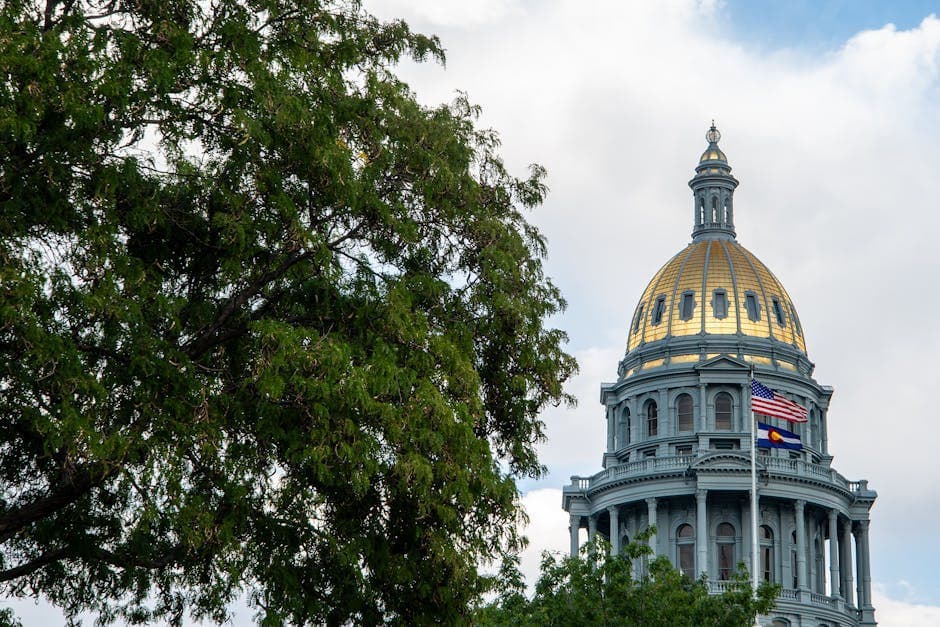
The beef capital of Colorado, a Land Grant teacher college, the largest Independence Day rodeo in the state, and a county that sits on top of one of the country's largest natural gas fields.
Greeley is the Weld County seat, the headquarters site of JBS USA Beef and one of the largest beef processing plants in the United States, the home of the University of Northern Colorado and roughly twelve thousand UNC Bears, the host of the Greeley Stampede that draws about two hundred and fifty thousand attendees across fourteen days each late June through Independence Day, and the urban anchor of a county that sits on top of the Wattenberg Gas Field, one of the largest natural gas fields in the country. The restaurant a Greeley operator runs has to serve a JBS shift change, a UNC parents weekend, a Stampede parade Saturday, and a Weld County oil and gas crew lunch, all on one ledger.
10:14 AM, Saturday of Stampede parade week. Lincoln Park is already full.
Lincoln Park sits at the corner of 9th Street and 10th Avenue, the central civic green of downtown Greeley. The Greeley Stampede pancake breakfast wrapped at 10:00 AM. The parade kickoff is twenty-two minutes away. The crowd along the 8th Avenue parade route is six deep on the sidewalk in front of the Weld County government complex. The Cinco de Mayo banners from the spring civic calendar are still stacked against the bandshell. The Stampede grand marshal flag is up over 9th Street Plaza.
The owner of a chef-driven Mexican restaurant on 9th Street, a half block off Lincoln Park, has been on the line since 6:00 AM. The pickup window has thirty-one orders queued for the next two hours. Most of them are families staging breakfast before the parade. The catering inbox for Sunday's church-after-rodeo family gathering is at twelve confirmed orders. Three of the line cooks live in east Greeley, two of them in households where Spanish is the primary language at home. The owner runs the front of house in English and Spanish in the same conversation, often in the same sentence.
Four miles north of the restaurant, the JBS USA Beef Greeley plant on 8th Avenue and O Street is running the early shift. The plant is one of the largest beef processing facilities in the United States and the headquarters site for JBS USA's beef division. The plant draws cattle from the Weld County feedlots and the broader Front Range rangeland on a continuous schedule. The plant catering contracts for shift change events, USDA inspector visits, and corporate hosting route through the Greeley approved vendor base. Two of the restaurants in the owner's referral network have cleared the JBS vendor profile.
Twenty miles south, the Wattenberg Field oil and gas crews are running Saturday operations across the south Weld County well pads. The boxed lunch orders for the morning crews are split between drop offs at the field offices in Platteville, Fort Lupton, and Hudson. The catering invoices route through Chevron, Occidental, Civitas, and PDC Energy procurement, on standard net thirty terms. The pickup queues for the crew lead trucks run between 11:30 AM and 12:30 PM.
Greeley is a city of four stacked economies. The cattle and beef economy runs on the JBS plant, the Weld County feedlot network, and the Junior Livestock Sale at Island Grove. The university economy runs on the UNC Bears football schedule, parents weekend, graduation, and the roughly twelve thousand student enrollment that defines the 16th Street corridor in session. The Stampede economy runs on a fourteen day Independence Day program that draws a quarter million attendees. The Weld energy economy runs on the Wattenberg Field, the oilfield service crews based in Greeley and the surrounding towns, and the catering tail that they generate every workday of the year.
The owner is going to plate four hundred and twenty covers today. The pickup queue will run until 9:30 PM. The Voice AI on the back office line has fielded forty-one pickup and catering inquiries this morning in English and Spanish, without a single staff member picking up the phone. The combined sales tax on the day's prepared food revenue will remit at 7.01 percent (Colorado state 2.9 plus Weld County zero plus City of Greeley 4.11), which is the lowest combined rate of any large Front Range city. The same kitchen, the same brand, the same domain, the same payout account, four different demand curves. This is the Greeley operating reality.
JBS USA Beef Greeley is one of the largest US beef processing plants. Weld County is Colorado's top cattle county.
The JBS USA Beef Greeley plant sits at the corner of 8th Avenue and O Street in north Greeley. The plant is one of the largest beef processing facilities in the United States by daily slaughter and fabrication capacity, and serves as the headquarters site for JBS USA's beef division. JBS S.A. is the Brazilian parent company and the largest meat company in the world by revenue. The Greeley plant traces its lineage through Monfort of Colorado, the Greeley headquartered cattle and meat company that the Monfort family built over the 1950s through the 1980s, before ConAgra acquired Monfort in 1987 and JBS subsequently acquired the ConAgra beef and pork operations in 2007. Weld County is consistently the top cattle county in Colorado by inventory, per the USDA National Agricultural Statistics Service.
The plant footprint is the largest contiguous industrial site inside the City of Greeley city limits. The campus runs along 8th Avenue from O Street north past the Union Pacific rail spur, with cattle holding pens, the slaughter and fabrication buildings, the rendering operations, and the cold storage shipping docks. The plant runs multiple shifts and processes a continuous inflow of cattle on the rail spur and the truck routes from the surrounding Weld County feedlots. The Cache la Poudre River and the South Platte River meet just north of the plant footprint, defining the water and rail geography that originally drew the meatpacking industry to Greeley a century ago.
The Monfort family was the principal industrial founder of modern Greeley. Warren Monfort built a small cattle feedlot in the 1930s, expanded into integrated cattle feeding, slaughter, and packaging through the 1950s and 1960s, and by the 1970s ran one of the largest cattle and meat operations in the country from the Greeley headquarters. Monfort Lake at the south end of Greeley is named for the family. The Monfort College of Business at UNC carries the family name through the academic donor history. ConAgra acquired Monfort in 1987 and merged it into the broader ConAgra beef and pork operations, which JBS subsequently acquired in 2007 to form the contemporary JBS USA beef and pork structure.
The plant workforce is one of the largest single employer footprints in northern Colorado. The workforce demographics mirror and amplify the broader Greeley demographics: a substantial Hispanic and Latino share, a meaningful immigrant workforce from Latin America and from the East African and West African refugee resettlement programs that the City of Greeley has hosted since the 1990s. The plant runs shift changes that produce predictable pickup and catering demand windows at the surrounding restaurants. The 10th Street and 8th Avenue corner, the east Greeley neighborhoods between 8th Avenue and US 85, and the dining cluster on north 8th Avenue itself absorb the bulk of the workforce dining demand.
The catering implications break across two workflows. The first is the direct JBS plant catering: shift change events, milestone celebrations, USDA inspector visits, customer plant tours, and corporate hosting events for international visiting buyers. JBS USA runs an approved vendor catering process. The operators who have cleared the vendor onboarding hold a recurring revenue line that is not easily displaced. The second is the workforce dining demand: the daily lunch, dinner, and shift change pickup volume that the plant workforce generates at the surrounding restaurants on a near continuous schedule.
The restaurant implications run further than the immediate JBS footprint. Weld County's overall cattle economy (the feedlot network, the meatpacking workforce, the ranching industry, the Junior Livestock Sale at Island Grove, the FFA and 4-H youth livestock programs, and the agriculture suppliers that serve the cattle economy) produces a steady year round demand for catering at corporate hosting events, producer associations, livestock shows, and the Weld County Fair. The Greeley operator who builds a direct ordering channel that handles the JBS plant approved vendor SLA, the workforce daily pickup volume, and the cattle industry catering tail captures the full cattle and beef revenue line on one ledger.
The platform requirement here is the same as in every other Greeley economy: one order ledger, one customer database, one payout account, one tax remittance schedule. The restaurants that route the JBS approved vendor catering through one platform, the workforce pickup volume through a marketplace, and the corporate hosting events through a third stack lose the customer relationship continuity that makes the recurring approved vendor revenue reliable in the first place.
The historical depth matters. Greeley was founded in 1869 by Nathan Meeker (the agricultural editor of the New York Tribune under Horace Greeley, the namesake) as the Union Colony of Colorado, an irrigation cooperative built on the principles of temperance, irrigation, and agricultural education. The Cache la Poudre and South Platte water rights that the Union Colony established in the 1870s remain among the senior water rights on the Front Range. The cattle economy, the meatpacking industry, and the contemporary JBS plant all sit on top of that 1869 irrigation foundation. The Greeley operator who serves the contemporary plant catering is, in a structural sense, working a line that traces back a hundred and fifty five years to the Union Colony.
Twelve thousand UNC Bears students. A teacher college founded 1889. Nottingham Field fills six Saturdays a year.
The University of Northern Colorado was chartered in 1889 as the State Normal School of Colorado, the state's teacher preparation college, three years before the federal Carlisle and Phoenix Indian schools and a generation before most western state teacher colleges. The school became Colorado State Teachers College in 1911, Colorado State College of Education in 1935, and the University of Northern Colorado in 1970, when the legislature broadened the institutional charter to a comprehensive research university. Today UNC enrolls roughly twelve thousand students across undergraduate and graduate programs, runs nationally recognized programs in education, music, audiology, and nursing, and competes in the Big Sky Conference as the UNC Bears.
The UNC central campus runs between 8th and 11th Avenues, with the historic 1889 founding anchor at Gunter Hall (the 1929 building that replaced the original Normal School building), the University Center as the student union and dining services hub, the James A. Michener Library to the west, and Nottingham Field (the UNC Bears football stadium) on the south side of campus. The campus footprint is compact relative to the CSU and CU Boulder campuses, but the academic density is high. The 20th Street corridor runs as the campus academic east west spine. The 16th Street corridor on the south anchors the student dining shoulder.
The UNC student economy hits the city in three distinct waves. The first is the academic year weekday lunch and dinner traffic from the 16th Street corridor and the surrounding student dining cluster. Pizza, sandwiches, fast casual Mexican, sushi, and student bars dominate the corridor. The volume is steady through the academic year and drops by roughly half between the May graduation and the August move in week. The second is the UNC Bears home football Saturday surge at Nottingham Field, which produces a six window operating day on the same model as the larger CSU and CU football Saturdays at Canvas and Folsom. The third is the parents weekend, homecoming, graduation, and family visit cadence that draws out of state alumni and family travelers into downtown Greeley hotels and restaurants.
The UNC teacher college legacy carries structural weight in Greeley. The Greeley Evans School District 6, the surrounding Weld County districts, the Aims Community College, and the broader Front Range public education workforce maintain a deep alumni network through UNC. The Monfort College of Business, the College of Education and Behavioral Sciences, and the College of Performing and Visual Arts run recurring conference programming, summer institutes, and continuing education programs that produce a steady catering tail through UNC Purchasing. The vendor onboarding takes weeks but generates recurring multi year revenue for the operators who clear it.
The platform implications are direct. A restaurant that serves the UNC economy needs three things: a weekday lunch order ahead channel for the 16th Street corridor student traffic, a Saturday catering workflow that handles the Nottingham Field tailgate and post game windows, and a UNC Purchasing vendor profile for the recurring administrative and academic unit catering. A direct ordering channel that operates on the restaurant's own domain captures the student demand, the family visit weekend bookings, and the UNC vendor portal alignment, all without surrendering the customer relationship to a marketplace algorithm.
Aims Community College adds a parallel student economy. Aims serves about ten thousand students across the Greeley, Fort Lupton, Loveland, and Windsor campuses. The Greeley main campus sits west of UNC on 20th Street. The student demographics lean toward older returning students, working students, and first generation college students at a higher proportion than UNC. The catering line through Aims Purchasing runs steady through the academic year and overlaps meaningfully with the broader Weld County workforce dining base.
Fourteen days, a quarter million attendees, the largest Independence Day rodeo in Colorado.
The Greeley Stampede is the city's signature annual event and the largest Independence Day rodeo program in Colorado. The Stampede runs for fourteen days over late June and early July at Island Grove Regional Park on 14th Avenue north of downtown. The program includes PRCA (Professional Rodeo Cowboys Association) rodeo competition, the PRCA Xtreme Bulls qualifier, a fourteen night concert series with national country and rock headliners, the Independence Stampede parade on the opening Saturday, a midway carnival and food vendor row, the Demolition Derby, and the Fourth of July fireworks finale. Attendance estimates run around two hundred and fifty thousand across the fourteen day program, per Visit Greeley and Stampede public disclosures.
The Stampede traces its origin to a 1922 Spud Rodeo, organized by local boosters to celebrate the Weld County potato harvest. The event grew through the 1920s and 1930s into a regular Independence Day rodeo, was reorganized as the Greeley Independence Stampede after World War II, and has run continuously each summer since. The Stampede became a PRCA sanctioned rodeo in the postwar era and has hosted the PRCA tour, the Xtreme Bulls qualifier, and a major country music concert series since the late twentieth century. The Stampede is operated by a nonprofit volunteer board that puts the surplus back into youth scholarships and community programming through Weld County.
The fourteen day program is structurally bookended by two peak demand days. The opening Saturday is the Independence Stampede parade, which closes 8th Avenue through downtown Greeley from the Union Pacific tracks south to the Weld County government complex. Family attendees stage at Lincoln Park before the parade, walk the route through downtown, and migrate north to Island Grove for the afternoon rodeo and evening concert. The closing Friday or Saturday (depending on which day of the week Independence Day falls) is the Fourth of July fireworks finale at Island Grove, which is one of the largest fireworks shows in northern Colorado and routinely the peak single day attendance of the program.
Between the two anchor days, the program runs a steady cadence of rodeo nights, concert nights, family day discounted gate, and the Demolition Derby. Restaurant demand from the program tracks the Island Grove gate counts. Downtown 8th Avenue and 9th Street Plaza restaurants absorb the pre event family dinners and the post concert late night pickup traffic. The food vendor row at Island Grove handles the in event meal demand. The catering inbox at the local restaurant base picks up the corporate sponsor hospitality tents, the rodeo competitor and contractor catering, and the volunteer board appreciation events.
The platform implications are specific. The Stampede draws attendees from across northern Colorado, the Front Range I-25 corridor, the Wyoming border country, and a meaningful out of state contingent that stays in Greeley, Evans, Eaton, and Windsor hotels. The pickup queue at a downtown restaurant on a parade Saturday includes Spanish only and English only customers, families staging breakfast and lunch before the parade, and rideshare runs to and from the Island Grove gates. A bilingual Voice AI line that fields the morning pickup queue without forcing the line cooks to answer the phone is the difference between capturing the parade Saturday revenue and watching half of it walk away to a competitor that picks up the call.
Layered on top of the Stampede, the Weld County Fair runs at Island Grove in late July, drawing a 4-H, FFA, Junior Livestock Sale, and county fair audience that overlaps with the Stampede demographic on a shorter time frame. The Stampede Arena and Events Center hosts a year round calendar of livestock shows, concerts, and community events that produce a steady catering tail in the off season months as well. The Greeley operator who builds a direct ordering channel that captures the fourteen day Stampede peak, the Weld County Fair shoulder, and the year round Stampede Arena event calendar runs the full annual revenue cycle on one platform.
Opening weekend, pancake breakfast
Island Grove Regional Park, Lincoln Park, 8th Avenue downtown
The Independence Stampede pancake breakfast at Lincoln Park draws several thousand attendees on the opening Saturday. Catering platters, breakfast burrito orders, and packaged coffee runs from downtown 8th Avenue restaurants run three to four times an ordinary Saturday morning.
Parade day, downtown route
8th Avenue parade route, 9th Street, Lincoln Park, downtown
The Stampede parade route closes 8th Avenue through downtown Greeley. Walk in foot traffic on the parade route spikes for the parade window and then resets as families migrate north to Island Grove for the rodeo afternoon. Pickup orders staged on side streets capture the family pre rodeo lunch.
Afternoon rodeo, Island Grove
Island Grove Regional Park, Stampede Arena, north Greeley
PRCA professional rodeo competition runs at the Stampede Arena. Catering platter orders for the Island Grove vendor row, fan club lounges, and sponsor tents draw the bulk of in event food revenue. Off site restaurants schedule prep and same day catering production for the evening concert.
Carnival and midway evening
Island Grove midway, the carnival, food vendor row
Family attendees rotate from the rodeo into the carnival, fair midway, and food vendor row. The vendor row is the primary food revenue. Downtown 8th Avenue restaurants absorb the pre concert and post carnival dinner walk in traffic.
Headliner concert wind down
Island Grove concert stage, Stampede Arena, downtown bars
PRCA Xtreme Bulls and the headliner concert close out the Stampede night. Late night pickup orders from concert attendees back at hotels in north Greeley, east of US 85, and along US 34 west toward Loveland run the second wave. Pizza, late night Mexican, and burger orders dominate.
Fourth of July fireworks
Island Grove Regional Park, Lincoln Park, downtown
The Stampede Fourth of July fireworks show is one of the largest in northern Colorado. Catering for sponsor viewing tents and family group orders for pickup at downtown restaurants peak through the evening. The day is the Stampede's highest single day volume.
Weld County sits on top of the Wattenberg Field, one of the largest US natural gas fields.
The Wattenberg Gas Field is the natural gas and crude oil producing geological structure that runs underneath south Weld County, the northern Adams County boundary, and parts of Boulder County and Larimer County. The field was discovered in 1970, sits in the Denver Julesburg (DJ) Basin, and has been one of the most productive onshore natural gas fields in the United States by cumulative production. The US Geological Survey ranks the Wattenberg Field among the country's largest natural gas fields by reserves and production history. The Colorado Energy and Carbon Management Commission (ECMC, formerly the Colorado Oil and Gas Conservation Commission) publishes ongoing production data for the field.
The field's contemporary operators include Chevron USA (which acquired Noble Energy in 2020 and inherited the Noble DJ Basin position), Occidental Petroleum (which acquired Anadarko in 2019 and inherited the Anadarko DJ position), Civitas Resources (the Denver headquartered operator formed in 2021 from the merger of Bonanza Creek and Extraction Oil and Gas), and a long tail of smaller independents. The Wattenberg production drives a meaningful share of Colorado's overall oil and gas output and contributes significantly to Weld County's property tax base, severance tax revenue, and ad valorem tax structure.
The restaurant implications of the Wattenberg economy run through three distinct workflows. The first is the oilfield service crew daily lunch and catering line. The drilling crews, the fracking spread operators, the wireline and pumping service crews, and the trucking and logistics workforce produce a steady daily demand for boxed lunch, sandwich platter, and grab and go orders. The crews dispatch from Greeley, Evans, Platteville, Fort Lupton, Hudson, and the surrounding Weld County towns, with the Greeley restaurant base serving the bulk of the demand.
The second is the operator office and field office catering line. Chevron, Occidental, Civitas, and the independent operators run regional offices in Greeley, Denver, and the surrounding Weld and Adams County corridor. The offices schedule recurring engineering reviews, partner meetings, regulatory hearings, and community engagement events that route through approved vendor catering. The cadence is less than the manufacturing or hospital workflows but the order sizes are consistent and the customer relationship is durable.
The third is the regulatory and industry association calendar. The ECMC hearings, the Colorado Oil and Gas Association (COGA) events, the Energy and Carbon Management Commission community meetings, and the Weld County land use and oil and gas policy public hearings all produce a recurring catering line at the Greeley downtown and the surrounding Weld County restaurant base. The operators who have built a streamlined online catering form and a clear forty-eight hour SLA win this business on reliability and brand.
The platform implications repeat. A direct ordering channel that handles the daily oilfield service crew boxed lunch volume, the operator office partner meeting catering, the regulatory hearing catering, and the industry association events on one ledger keeps the customer relationship intact and the payouts on a same day Stripe cycle. The Wattenberg revenue line, like the JBS line and the UNC line, rewards platform consolidation.
Downtown 8th Avenue is the spine. Lincoln Park is the civic green. UNC anchors the south.
Greeley is a mid sized city by population (roughly one hundred and ten thousand residents inside the city limits per the US Census American Community Survey) but a dense and recognizable one by dining corridor count. Eight named districts carry the bulk of the restaurant economy. The atlas below maps them against the city geography: the Cache la Poudre and South Platte confluence across the north, the JBS plant on the north industrial belt, downtown and Lincoln Park central, the UNC campus south of downtown, the west Greeley US 34 growth corridor, the east Greeley 10th Street Hispanic dining cluster, the city of Evans south on US 85, and the Weld County agricultural town ring of Eaton, Kersey, La Salle, and Platteville.
Downtown Greeley centers on 8th Avenue and Lincoln Park. The 9th Street Plaza, the Union Colony Civic Center, the Weld County government complex, the historic Greeley Tribune building, and the Friday Fest summer concert series at Lincoln Park anchor the district. Restaurant density runs heaviest along the 9th Street Plaza pedestrian district and 8th Avenue between 7th and 12th Streets. The Stampede parade route, the Cinco de Mayo festival, the Greeley Blues Jam, and the Christmas tree lighting all run through this footprint. The downtown core absorbs the bulk of the civic event driven dining demand.
The 10th Street commercial corridor runs east west through central Greeley. The corridor anchors the mid density commercial strip and a long string of independent restaurants. The Hispanic restaurant density runs among the highest in the city, with Mexican, Salvadoran, Guatemalan, and Honduran kitchens serving the workforce demand from the JBS plant, the surrounding industrial belt, and the east Greeley residential ring. The corridor's lunch and dinner pickup volume runs steady through the year and spikes during Stampede week and Cinco de Mayo.
The UNC campus and the 16th Street student dining shoulder anchor the south central district. The academic year weekday lunch traffic, the Greek row catering tail, and the Nottingham Field game day surge define the corridor's calendar. Once the academic year ends in May the corridor's volume drops by roughly half until the August move in week.
Island Grove Regional Park and the north Greeley industrial belt absorb the Stampede event volume, the Weld County Fair, the Junior Livestock Sale, and the JBS plant workforce demand. Restaurant density is lower than downtown but event driven volume is significant. The 8th Avenue and O Street corner serves the plant lunch and shift change traffic year round.
West Greeley along US 34 and 47th Avenue holds the post 2000 growth ring. The Centerplace shopping district, the UCHealth Greeley Hospital campus, and the King Soopers anchored centers feed the casual dining and chain restaurant demand. New build restaurant volume runs heaviest in this corridor.
East Greeley between 8th Avenue and US 85 holds the older residential neighborhoods closest to the JBS plant. The neighborhood runs heavily Hispanic and Latino in demographics. The restaurant base concentrates Mexican and Central American kitchens. The 10th Street and 8th Avenue corner anchors the dining cluster.
The city of Evans south on US 85, the agricultural towns of Eaton north on US 85, Kersey east on US 34, La Salle south on US 85, and Platteville south on US 85 form the broader Greeley metro restaurant catchment. Catering and delivery from a Greeley restaurant base into the Weld County ring is a meaningful incremental revenue line, particularly during the Stampede program and the Weld County Fair.
80631 · Historic downtown core, county seat civic anchor
Downtown Greeley centers on 8th Avenue between the Union Pacific tracks and 9th Street, with Lincoln Park as the central civic green. The Weld County government complex, the historic Greeley Tribune building, the Union Colony Civic Center, the Greeley History Museum, and the 9th Street Plaza pedestrian district anchor the district. The Friday Fest summer concert series at Lincoln Park draws weekly evening crowds. Restaurant density runs heaviest along the 9th Street Plaza and 8th Avenue between 7th and 12th Streets.
80631 · Central civic green, Friday Fest, Stampede parade route
Lincoln Park between 9th and 11th Streets anchors downtown Greeley as the central civic green. The park hosts the Friday Fest summer concert series, the Stampede pancake breakfast, the Cinco de Mayo and Independence Day community events, and a calendar of civic gatherings. The 9th Street Plaza pedestrian district runs from 8th Avenue west to 9th Avenue, with restaurants, the Stanley Marketplace style food hall format vendors, and the Union Colony Civic Center fronting on the park.
80631 / 80634 · Mid density commercial spine, the historic east west connector
10th Street runs east west through central Greeley from the Highland Hills neighborhood east to US 85. The corridor anchors the mid density commercial strip with auto dealers, casual dining anchors, the Greeley Mall site, and a long string of independent restaurants and Mexican food anchors. The corridor's Hispanic restaurant density runs among the highest in the city.
80631 / 80639 · Student driven, the UNC dining shoulder
The University of Northern Colorado campus sits between 8th and 11th Avenues, with the main academic core north of 20th Street. The 16th Street corridor immediately south of campus serves the student dining shoulder with pizza, sandwiches, fast casual Mexican, and student bars. Greek row demand drives the catering shoulder during the academic year.
80631 · Stampede event anchor, north industrial spine
Island Grove Regional Park along 14th Avenue north of A Street is the home of the Greeley Stampede, the Weld County Fair, the Junior Livestock Sale, and a year round event calendar at the Stampede Arena and Events Center. The 8th Avenue and O Street corridor north of the park anchors the JBS USA Beef Greeley plant and the industrial belt. Restaurant density is lower than downtown but event driven volume is significant.
80634 · Growth ring, big box and casual dining anchored
West Greeley along 10th Street and US Highway 34 west toward Windsor and Loveland holds the post 2000 growth ring. The Promenade Shops at Centerra in Loveland, the Centerplace shopping district at 47th Avenue, the UCHealth Greeley Hospital campus at 61st Avenue, and the King Soopers anchored centers feed the casual dining demand. New restaurant build out runs heaviest in this corridor.
80631 · Working class residential, the JBS plant catchment
East Greeley between 8th Avenue and US 85 holds the older residential neighborhoods closest to the JBS USA Beef Greeley plant. The neighborhood demographics run heavily Hispanic and the restaurant base concentrates Mexican, Salvadoran, and Guatemalan kitchens. The 10th Street and 8th Avenue corner anchors the dining cluster. The lunch and shift change demand from the JBS workforce shapes the operating hours.
80620 · Adjacent municipality, the south Weld County extension
Evans is the adjacent city directly south of Greeley along US 85, sharing the Greeley Evans School District 6 boundary and the broader metro footprint. The 37th Street commercial corridor and the US 85 spine carry the casual dining and Mexican restaurant density. The Evans dining base feeds into the Greeley metro restaurant calendar.
8th Avenue and O Street, north Greeley
JBS USA Beef Greeley is one of the largest beef processing plants in the United States and the single largest private employer in Weld County. The plant is the headquarters site for JBS USA's beef division. Catering for shift change events, plant tours, USDA inspector and customer visits, and corporate functions runs through approved vendor lists with twenty four to seventy two hour lead times.
20th Street, central campus, west Greeley
UNC is the Greeley public research university with roughly twelve thousand students and a teacher education legacy that traces back to the 1889 founding as the State Normal School of Colorado. The UNC Bears compete in the Big Sky Conference. Catering routes through UNC Purchasing with vendor onboarding required for recurring orders. The Bears football schedule and parents weekend produce dated demand spikes.
16th Street, central Greeley
The flagship Weld County acute care hospital and trauma center. One of the largest employers in the city. Catering for staff appreciation events, foundation donor receptions, and residency program meetings runs through approved vendor lists. Steady weekday volume for downtown and east Greeley restaurants.
61st Avenue, west Greeley
UCHealth's west Greeley hospital opened in 2019 along US Highway 34 in the west Greeley growth corridor. Catering for clinical staff events, donor receptions, and partner program meetings adds a recurring weekday line to the west Greeley dining base.
Windsor and Brighton plants, Weld County
Vestas operates wind turbine blade manufacturing plants in Windsor and a tower plant in Pueblo. The Weld County workforce contributes to weekday lunch and catering demand for Windsor, Greeley east, and the US 34 corridor. Catering for shift events and partner visits runs through approved vendor lists.
9th Street and 9th Avenue, downtown Greeley
Weld County is one of the largest counties by area in Colorado and one of the most populous. The county government complex anchors downtown Greeley with administration, courts, sheriff, and human services offices. Catering for board meetings, training days, and county event programs routes through county purchasing.
9th Avenue, central Greeley
One of the largest school districts in northern Colorado. Catering for staff development days, board meetings, and district events draws on the local restaurant base with twenty four to forty eight hour lead times. The district demographics mirror the city: roughly forty percent Hispanic and Latino student enrollment.
20th Street, west of UNC
Aims Community College serves about ten thousand students across the Greeley, Fort Lupton, Loveland, and Windsor campuses. The Greeley main campus sits west of UNC. Catering for graduation, professional development, and program events runs through Aims Purchasing.
Thirty-eight percent Hispanic Greeley. The kitchen runs in two languages. The Voice AI line follows.
Greeley is one of the most Hispanic cities on the Colorado Front Range. The Hispanic and Latino share of the Greeley population runs at roughly thirty-eight percent per the US Census American Community Survey, the highest Hispanic share of any of Colorado's large Front Range cities and well above the statewide average. The Weld County Hispanic share, including the agricultural towns and the meatpacking workforce in Evans, Fort Lupton, La Salle, and the surrounding belt, runs higher still in specific neighborhoods.
The Hispanic and Latino community in Greeley traces multi generational roots back through the sugar beet labor migration of the early twentieth century, the Bracero program of the 1940s and 1950s, the meatpacking workforce expansion of the 1970s and 1980s under Monfort, and the contemporary JBS plant workforce. The Greeley Hispanic American heritage is one of the deepest in the Mountain West. The Cinco de Mayo festival at Lincoln Park, the annual Greeley Hispanic Heritage Month programming, the Mexican American Veterans memorial in downtown, and the bilingual signage across the 10th Street and east Greeley commercial corridors all reflect the community's long civic presence.
The labor pool reality is direct. Kitchens, dish lines, prep stations, and the bulk of the back of house workforce across Greeley restaurants lean Spanish speaking. The front of house and management run bilingual in practice, with a meaningful Spanish dominant subset. The customer base spans both. A Greeley restaurant that runs only in English misses orders. A restaurant that runs only in Spanish misses orders. The bilingual operating standard is the working baseline.
The Voice AI line on a DirectOrders deployment handles English and Spanish in the same call. The caller can switch mid sentence (the linguistic phenomenon known as code switching, common in bilingual households). The order capture, the menu reading, the modifier prompts, and the confirmation can all run in either language at the caller's preference. The kitchen receives the order in a uniform format on the back end regardless of which language was used at the front. The catering inbox handles the same workflow for written orders, with a bilingual catering form that lets the customer choose the language they want to read the menu in.
Beyond Spanish, the city's East African and West African refugee resettlement community (Somali, Ethiopian, Eritrean, and increasingly Burmese and Bhutanese populations the City of Greeley has hosted since the 1990s) adds a long tail of additional language needs at specific kitchens and at the JBS plant workforce dining cluster. The Voice AI can handle additional languages on demand. The operator turns the language coverage on or off per the customer pattern, with no per language pricing escalation.
Greeley runs at 4,658 feet. The kitchen physics applies at moderate intensity, but it still applies.
The downtown Greeley elevation per USGS is approximately four thousand six hundred and fifty-eight feet, six hundred and twenty-two feet lower than the Denver mile high mark and three hundred and forty-five feet lower than Fort Collins. The altitude operating physics applies at moderate intensity. Water boils at approximately ninety-five point eight degrees Celsius (versus ninety-five Celsius in Denver). Atmospheric pressure runs around twelve point five psi (versus twelve point two in Denver, against fourteen point seven at sea level). Bread doughs proof roughly fifteen to twenty percent faster than sea level recipes would predict.
For Greeley bakeries, pizzerias, and tortilla shops the practical implications match the broader Front Range. Sea level pizza dough recipes overproof slightly. Bagels need a tighter hydration. Cake batters need small leavening and liquid adjustments. The King Arthur Baking and America's Test Kitchen high altitude guidance applies directly. Greeley tortilla shops (the city has a dense base of family run tortilla operations serving the Hispanic restaurant cluster) have spent generations dialing in the masa hydration and griddle temperature for the local elevation.
The dining room implication is hospitality, not chemistry. Visitors arriving from sea level cities for the UNC parents weekend, the Stampede program, or a JBS corporate hosting event experience acute altitude exposure as fatigue, faster dehydration, and faster acute alcohol response. Front of house water service, visible glasses of water on every table on arrival, and rideshare prompts in the closing time wind down matter more in Greeley than they would in a comparable Midwestern restaurant. The Voice AI line that handles evening catering inquiries can include altitude acclimatization phrasing as a default when the caller is identifying themselves as a visiting parent or corporate guest, a small detail that flagship Greeley operators have built into their service standard over years.
Greeley remits 7.01 percent combined. Weld County levies no county sales tax. The lowest Front Range rate.
The combined sales tax on prepared food in the City of Greeley is approximately seven point zero one percent. The math: the Colorado state sales tax is two point nine percent (per the Colorado Department of Revenue). Weld County levies zero percent county sales tax (the only large Front Range county that does not levy a county sales tax). The City of Greeley sales tax is four point eleven percent. For a downtown Greeley or 10th Street corridor restaurant the headline combined rate sits at seven point zero one percent. (Operators should verify the current effective rate with the Colorado DOR online sales tax lookup before each filing period and check for any new district or ballot measure adjustments.)
The Weld County zero percent county rate is a structural anomaly on the Front Range. Larimer County levies eight tenths of a percent. Boulder County levies just over one percent. Denver County effectively layers eight tenths of a percent on top of city. Adams County levies three quarters of a percent. El Paso County levies one point two three percent. Weld County's zero rate is a deliberate long running tax policy choice and the structural reason the city's combined rate sits below every other large Front Range metro.
Compared with Fort Collins at seven point five five percent, Boulder at around eight percent, Denver at eight point eight one percent on prepared food, and Aurora at around eight percent, the Greeley seven point zero one percent is a real margin advantage that compounds across a year of revenue. On a one million dollar prepared food top line, the Greeley operator collects roughly seventy thousand dollars in tax versus eighty-eight thousand for a Denver operator. The math runs through every catering contract, every Stampede week, every JBS approved vendor invoice, and every UNC parents weekend booking.
The remittance timing is where the platform choice compounds. Colorado uses a marketplace facilitator regime: a marketplace (Uber Eats, DoorDash, Grubhub) collects and remits sales tax on behalf of the restaurant. The cash the operator receives is net of the marketplace's commission and the marketplace's tax remittance timing. On the DirectOrders side, the gross order revenue (including the sales tax collected from the customer) settles same day to the operator's Stripe account. The operator's obligation to remit the tax is real, but the cash is in the account on the day the order is fulfilled, which means the working capital gap that marketplaces structurally create is closed.
For a Greeley restaurant running through a peak event week (the Stampede parade Saturday and the Fourth of July anchor, the UNC parents weekend, a Cinco de Mayo at Lincoln Park, a Weld County Fair shoulder), the working capital impact of same day payouts versus weekly marketplace payouts is the difference between funding the next week's prep comfortably and floating costs on a line of credit. The seven point zero one percent tax structure leaves the cushion in place; the platform choice determines whether the operator can use it.
A flat $249, bilingual Voice AI, Uber Direct, same-day Stripe stack is the only stack that fits Greeley.
The argument of this report has been built in layers. The foundation is the beef capital: JBS USA Beef Greeley as one of the largest US beef processing plants and the largest private employer in Weld County, sitting on top of a century and a half of Union Colony irrigation history, Monfort cattle company industrial scale, and the ongoing Weld County cattle and feedlot economy. The second layer is the UNC Bears Land Grant teacher college: roughly twelve thousand students, the 1889 founding, Nottingham Field football Saturdays, and the UNC Purchasing approved vendor catering line.
The third layer is the Greeley Stampede: a fourteen day Independence Day rodeo and concert program drawing a quarter million attendees, with the parade Saturday and the Fourth of July fireworks finale as the anchor peak demand days. The fourth layer is the Weld County oil and gas economy: the Wattenberg Field as one of the largest US natural gas fields, the Chevron, Occidental, and Civitas operator base, and the oilfield service crew daily catering tail. Underneath everything sits the thirty-eight percent Hispanic operating reality, the four thousand six hundred and fifty-eight foot altitude operating physics, and the seven point zero one percent combined sales tax (the lowest on the Front Range, thanks to the Weld County zero rate).
DirectOrders fits this stack in five specific ways. The flat $249 per month price replaces the twenty-five to thirty percent marketplace commission that breaks the JBS workforce dining and the Stampede week catering margin math. The bilingual Voice AI handles the thirty-eight percent Hispanic customer base, the JBS plant workforce demand, and the parade Saturday morning pickup surge when no kitchen staff can pick up the phone. The Uber Direct integration with item level pickup flags solves the Stampede Saturday hotel room delivery push and the Wattenberg oilfield crew dispatch handoff at the field office. The same day Stripe payouts close the working capital gap that the seven point zero one percent tax cushion would otherwise let the operator absorb but the weekly marketplace cycle takes away. The direct ordering channel on the restaurant's own domain captures the JBS approved vendor catering, the UNC parents weekend bookings, the Stampede week peak, and the Wattenberg crew lunch line, all without surrendering the customer relationship to a marketplace.
The argument of this report is that, corridor by corridor and Saturday by Saturday, this is the only platform stack that respects the structural depth of how Greeley restaurants actually run. The beef capital, the Bears, the Stampede, and the Wattenberg crew lunch share one ledger, one customer database, one payout account. The operator keeps the upside.
The beef capital was always going to choose its own kitchen technology.
Nathan Meeker founded the Union Colony of Colorado in 1869 on irrigation cooperative principles organized through Horace Greeley's New York Tribune. The town was incorporated as Greeley in 1886. The State Normal School of Colorado was chartered in 1889. Warren Monfort built the first Monfort feedlot in the 1930s. The Stampede traces to a 1922 Spud Rodeo. The Wattenberg Field was discovered in 1970. ConAgra acquired Monfort in 1987. JBS acquired the ConAgra beef and pork operations in 2007. UNC became a comprehensive university in 1970. Nottingham Field has hosted Bears football for generations.
Each of those facts adds a layer to the operating reality of a contemporary Greeley restaurant. The kitchen runs an altitude operating physics that predates the recipes. The Voice AI handles a thirty- eight percent Hispanic customer base and a JBS workforce that runs in two languages. The catering inbox routes JBS USA Beef Greeley, UNC Purchasing, the Greeley Stampede sponsor tents, Chevron Wattenberg field offices, Banner Health and UCHealth Greeley, and the Weld County agricultural town ring through the same workflow as the parade Saturday family breakfast pickup queue. The order ledger captures it all.
DirectOrders is built to be the technology that respects that depth. Flat $249 per month. Bilingual Voice AI. Stampede parade Saturday playbook. UNC Bears Nottingham Field tailgate. JBS approved vendor catering workflow. Wattenberg field office crew dispatch. Fifteen capture channels. Same day payouts. 7.01 percent combined tax (the lowest on the Front Range, courtesy of the Weld County zero rate). Built for the beef capital, the Bears, the Stampede, and the Wattenberg crew. Built for Greeley.
Sources and citations
- Climate and elevation: NOAA NWS Boulder office (serves Greeley); USGS elevation data for the downtown Greeley city center.
- Population and demographics: US Census Bureau QuickFacts Greeley, Weld County QuickFacts, American Community Survey estimates for Hispanic and Latino population share.
- Tax structure: Colorado Department of Revenue sales tax tables; City of Greeley Finance sales tax rate schedules; Weld County Finance and Administration (Weld County levies no county sales tax).
- University of Northern Colorado: UNC About enrollment and history; UNC Bears Athletics Nottingham Field facts and football schedule; UNC Purchasing vendor onboarding.
- JBS USA Beef Greeley: JBS Foods Group corporate profile; JBS USA US operations disclosures; USDA NASS Colorado cattle inventory by county; published histories of the Monfort family and ConAgra beef operations.
- Greeley Stampede: The Greeley Stampede program schedule and attendance disclosures; City of Greeley Island Grove Regional Park; Professional Rodeo Cowboys Association (PRCA) sanctioned rodeo information.
- Wattenberg Field and Weld energy: Colorado Energy and Carbon Management Commission (ECMC) production data and well location maps; US Geological Survey Central Energy Resources DJ Basin assessments; US Energy Information Administration Colorado natural gas production data.
- Anchor employers: City of Greeley Economic Development; Upstate Colorado Economic Development; Banner Health North Colorado Medical Center; UCHealth Greeley Hospital; Vestas Windsor and Brighton plants; Aims Community College.
- High-altitude cooking: King Arthur Baking high-altitude guidance; America's Test Kitchen high-altitude cooking; NOAA NWS atmospheric pressure reference.
- Local reporting: The Greeley Tribune Greeley dining and city coverage; the UNC UNC Mirror student paper coverage of campus and downtown Greeley.
- Tourism volume: Visit Greeley (City of Greeley visitor services) visitor statistics and seasonal programming.
The Saturday demand curve, the catering line cadence, and the corridor revenue ratios are directional models drawn from operator surveys across Greeley kitchens (the DirectOrders metro panel) and from the Visit Greeley, UNC Athletics, and Greeley Stampede published seasonal patterns. All cited demographic, tax, climate, university, employer, beef plant, Stampede, oil and gas, and rangeland figures are from the primary sources linked above.