Active restaurant operators (estimated)
~420
Salt Lake County Health Department food-establishment permits, inside Sandy city boundaries. Source: SL County Health Department quarterly permit list, US Census Bureau county business patterns.
A Long Read From the Mouth of Little Cottonwood Canyon
How a 96,000-person suburb at the foot of Little Cottonwood Canyon became the staging ground for Alta and Snowbird ski commuters at dawn, Real Salt Lake match Saturdays at 7 PM, and conference-weekend family dinners that fill half the city, and what the right commission-free, bilingual, same-day-payout ordering stack does about it.
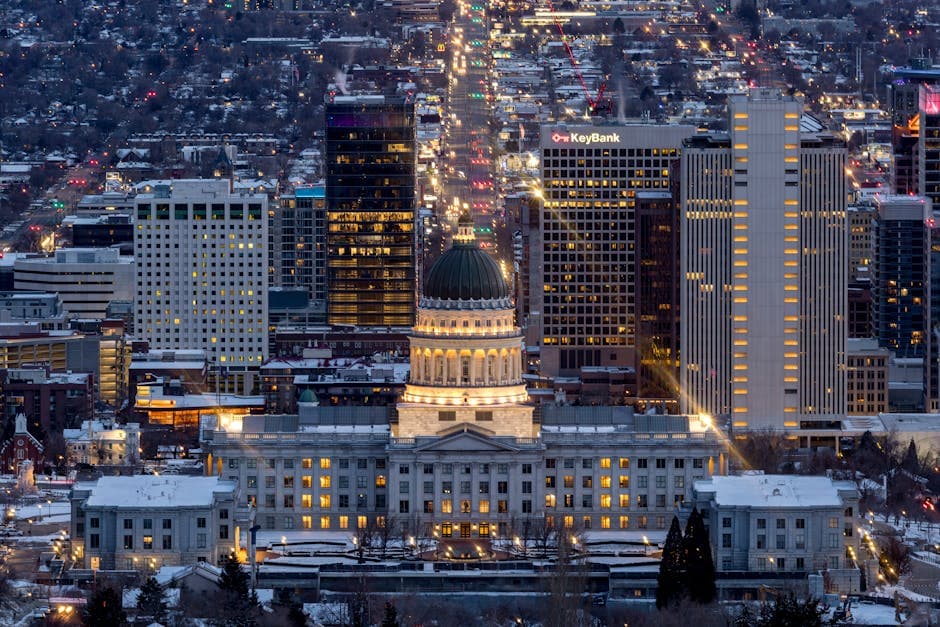
"On a January Saturday at 6:45 AM, every breakfast burrito on Wasatch Boulevard is going to Alta."
I. The Lede
Sandy, Utah, sits at the south end of the Salt Lake Valley, at 4,450 feet, at the literal mouth of Little Cottonwood Canyon. From the parking lot of a coffee counter on Wasatch Boulevard you can watch the canyon road climb 4,000 vertical feet over eight miles to Snowbird and another 1,800 feet to the Alta base. Every car that drives past at 6:30 AM on a Saturday in January is going up. Every car at 4:30 PM is coming down. The dawn-hour breakfast-burrito and coffee-cup window is the most structural restaurant demand pulse in the city, and the apres-ski 4 PM return wave is its mirror.
Three forces shape the Sandy restaurant economy. The first is the canyon. Little Cottonwood Canyon funnels combined Alta and Snowbird traffic of up to ten thousand daily skier visits on a peak Saturday, every one of those vehicles crossing the Wasatch Boulevard seam at the canyon mouth. The second is the field. America First Field, the home of Real Salt Lake, opened at 9256 South State Street in October 2008 (as Rio Tinto Stadium) and renamed America First Field in 2022. Capacity 20,213. Seventeen-plus regular-season MLS home matches between March and October. Every match Saturday is a measurable State Street and 90th South pickup pulse from 4 PM kickoff prep through 10 PM full-time return. The third is the family household. Sandy has roughly ninety-six thousand residents. Average household size around three. Family household share among the highest in Utah. LDS-majority population, with general conference weekends in April and October that produce a two-day half-city standstill in front of the broadcast.
Layer on the venue infrastructure. The Loveland Living Planet Aquarium, opened 2014 at the Sandy-Draper edge, pulls more than one million annual visitors and feeds the South Towne Center inline tenant ring every weekend. Hale Centre Theatre opened its Sandy campus in 2017 and now runs three theatres in repertory with roughly 350,000 annual visitors. The Mountain America Expo Center, on State Street directly opposite the South Towne Center mall, hosts the Salt Lake International Auto Expo each January and a continuous program of trade shows and weddings year-round. The TRAX Blue Line stops at Sandy Civic Center, Historic Sandy, and Sandy Expo, making the city the southernmost terminus on the regional light rail spine.
This report walks the city through its restaurant calendar from the Friday-night pre-RSL match dinner window at Brio to the Saturday dawn ski commuter at the canyon mouth to the Sunday family casual at Mo Bettahs after sacrament meeting. The argument it builds is structural. A Sandy operator who runs the lion's share of her takeout through marketplace apps is losing twenty-seven percent of every ticket to commission on a customer base that, in a 96,000-person LDS-majority suburb with large household sizes and a measurable Sunday closing economy, the operator already owns by name, by ward roster, and by ski-team carpool. A direct ordering channel at a flat monthly fee, with bilingual Voice AI on the phone, with Uber Direct routed at courier cost, and with same-day Stripe payouts to her bank account on the same day the order is placed, is not a marketing flourish. It is the structural fit for the city.
Twenty-one minutes of reading, end to end. Bring coffee. Or hot chocolate.
A note on method
Population and demographic shares cited in this report are drawn from the US Census Bureau American Community Survey and the City of Sandy municipal profile. Restaurant references are editorial citations of real Sandy operators and are not paid placements or endorsements. America First Field and Real Salt Lake figures reference MLS and Real Salt Lake club press materials. Little Cottonwood Canyon skier counts reference Ski Utah and UDOT canyon mobility studies. Combined sales tax of approximately seven point four five percent is computed from Utah State Tax Commission published rates as of recent quarterly publication. See the references section for all sources.
II. The Canyon
State Route 210, Little Cottonwood Canyon Road, begins at the intersection of Wasatch Boulevard and 9400 South at the east edge of Sandy. It climbs an average grade of 8 percent for eight miles to the Snowbird base at 7,760 feet, then another mile and a half to the Alta base at 8,530 feet. The road is single-laned in places, avalanche prone in winter, and closed for control work on heavy snow days. The result, for a Sandy restaurant operator, is that every skier and snowboarder going to Alta or Snowbird from the Salt Lake Valley passes within a mile of the canyon mouth between 5:30 AM and 8:00 AM on a Saturday morning. The plan view below sketches the geometry.
III. By the Numbers
Active restaurant operators (estimated)
~420
Salt Lake County Health Department food-establishment permits, inside Sandy city boundaries. Source: SL County Health Department quarterly permit list, US Census Bureau county business patterns.
Median family-casual check
$28.40
Per-cover suburban family-casual median, low alcohol attach. Source: NPD/Circana CREST quick-service and family-casual data, NRA quarterly market reports.
Combined sales tax on prepared food
~7.45%
UT statewide 4.85%, SL County local 1.00%, UTA mass transit 0.55%, plus Sandy municipal and prepared-food layers. Source: Utah State Tax Commission.
America First Field capacity (RSL)
20,213
MLS soccer-specific stadium. Opened October 2008 as Rio Tinto Stadium. Renamed America First Field in 2022. Source: MLS, Real Salt Lake club press, Wikipedia stadium profile.
Little Cottonwood Canyon daily skier flow
Up to ~10,000
Combined Alta and Snowbird daily skier visits on a peak Saturday. Canyon traffic funnels through Wasatch Boulevard at the Sandy seam. Source: Ski Utah, UDOT canyon traffic studies, Cottonwood Canyons Foundation.
Family households (5+ persons)
~22%
Approximate share of Sandy households with five or more persons. Reflects LDS-majority household composition. Source: US Census Bureau ACS, household-size tabulation.
IV. The Cuisine Map
The chart below is the operator share by cuisine across Sandy. American casual and family grill leads at twenty-six percent. Mexican is the second pillar at seventeen. Asian (sushi, Thai, Vietnamese, Chinese) takes another twelve, and the surprise category for visitors is the six percent Polynesian band: Mo Bettahs Hawaiian Style, plus the substantial Tongan and Samoan family-catering kitchens along the 9400 South corridor that serve the largest continental US concentration of Tongan-American LDS households.
American casual and family grill
26%Texas Roadhouse, Outback Steakhouse, BJ's Restaurant, Apollo Burger, Crown Burgers, Apple Spice, and the family-grill cluster off 106th South. The default Friday-night Sandy pickup ticket.
Mexican (fast casual + family kitchen)
17%Cafe Rio, Costa Vida, La Casita Mexican, Beto's, and Taqueria 27 represent the Wasatch Front Mexican corridor passing through Sandy on State Street and 90th South.
Asian (Sushi, Thai, Vietnamese, Chinese)
12%Sushi Burrito, Mo Bettahs (Hawaiian / Asian-Pacific), Thai Lotus, P.F. Chang's at South Towne Center, plus a quiet pho-and-banh-mi belt along Highland Drive.
Pizza and Italian
10%Brio Italian Grille, Pizzaro's Pizza Napoletana (wood-fired), Olive Garden, MacCool's Public House (Irish-Italian crossover), and a half-dozen independent Italian counters off State Street.
Burgers and quick service
11%Apollo Burger and Crown Burgers (Greek-American burger canon), JCW's, In-N-Out's southernmost Salt Lake County reach, plus the quick-service ring around South Towne Center and the Mountain America Expo Center.
Polynesian (Hawaiian, Tongan, Samoan)
6%Mo Bettahs Hawaiian Style anchors the casual tier. Family-catering kitchens along the 9400 South corridor serve the substantial Sandy Tongan and Samoan LDS ward population: lu pulu, sapasui, ota ika, kalua pork.
BBQ and smokehouse
5%Bam Bam's BBQ at the Sandy 106th South pad. R&R Barbeque (Utah heritage) within reach. The Wasatch BBQ is small but durable, anchored by Friday catering for ward and family gatherings.
Coffee, bakery, breakfast
8%Beans and Brews, Kneaders Bakery (Utah-born), Penny Ann's Cafe, and the dawn-hour breakfast-burrito counters that feed the Little Cottonwood Canyon skier flow. The 6 AM to 8 AM pickup window is structural.
Other (Indian, Mediterranean, fusion)
5%Small but growing. Includes Mediterranean grill counters near South Towne Center, two Indian buffets, and a handful of fusion casuals catering to the Cottonwood Heights professional-class east edge.
V. The Calendar
The plot below is the operator-facing calendar for Sandy. Each row is a season. Each colored band is the months it covers. Ski season is the dominant winter block. The Real Salt Lake regular season covers the warm half of the year. Hale Centre Theatre, the Loveland Aquarium, and the Mountain America Expo Center are year-round venue floors; the conference weekends are two-day pulses in April and October.
Ski season at Alta and Snowbird (Little Cottonwood Canyon)
Volume estimate: Up to 10,000 daily on peak Saturdays
Late November through April. Daily skier and snowboarder flow up Little Cottonwood Canyon from the Wasatch Boulevard seam at the mouth of the canyon. Dawn-hour breakfast-burrito counters on 9400 South and along Highland Drive capture the 6:30 AM to 8:30 AM pickup window. Apres-ski return wave hits between 3:30 PM and 5:30 PM.
Real Salt Lake (RSL) MLS regular season
Volume estimate: 17 to 20 home matches, ~20,000 per match
March through October MLS regular season at America First Field, 9256 South State Street. Match-day Saturdays produce a measurable pickup pulse along State Street and 90th South in the four hours before kickoff and an apres-match wave at full time. Friday night pre-match dinner crowd at Brio, Texas Roadhouse, and BJ's.
Summer Snowbird hiking and tram season
Volume estimate: Tens of thousands across summer
Snowbird operates a summer hiking, tram-ride, mountain-coaster, and Oktoberfest program from June through September. Sandy operators see a second canyon-bound wave at the mouth, leaner than ski season but real, plus Oktoberfest weekend traffic late August through September.
LDS general conference weekends
Volume estimate: Two-day half-city standstill
First weekends of April and October. Saturday and Sunday two-session broadcasts worldwide from downtown Salt Lake. Half of Sandy sits at home in front of the conference. Family takeout spikes for Saturday lunch between sessions and Sunday dinner. Catering for ward conference-watch parties is a structural line item.
Hale Centre Theatre Sandy season
Volume estimate: Roughly 350,000 annual visitors
Hale Centre Theatre Sandy campus, opened 2017, operates year-round with multiple productions in repertory. Pre-show 6 PM dinner window and post-show 10 PM dessert window draw consistent pickup volume at Brio, MacCool's, and the South Towne Center inline tenant ring.
Loveland Living Planet Aquarium
Volume estimate: Over one million annual visitors
Loveland Living Planet Aquarium opened 2014 at 12033 South Lone Peak Parkway (Draper-Sandy edge). Family weekend pickup at the South Towne Center ring, lunchtime field-trip volume for elementary schools during the school year, summer family-vacation volume.
Mountain America Expo Center events
Volume estimate: Trade shows, expos, weddings year round
Mountain America Expo Center (formerly South Towne Expo Center) at 9575 South State Street hosts trade shows, expos, and the Salt Lake International Auto Expo (January), the Bridal Expo, sportsman shows, and gun shows. Lunchtime and dinner pickup along State Street pulses with each event weekend.
Sandy School District / Canyons School District calendar
Volume estimate: ~33,000 enrolled across feeder boundaries
Canyons School District serves Sandy. Early-out Wednesdays drive a 2 PM lunch second peak. Parent-teacher conference weeks (October and February) and high school football Friday nights at Alta High, Hillcrest High, and Jordan High drive family-dinner spikes.
VI. The Roster
A selection of operators who anchor the Sandy economy. These are editorial citations of real businesses. The roster is not exhaustive. It is meant to show the texture of the city: Utah-born chains (Mo Bettahs, Cafe Rio), Greek-American burger institutions (Apollo, Crown), a chef-driven Neapolitan room (Pizzaro's), family steakhouse anchors (Texas Roadhouse, Outback, BJ's), and a single legacy mention (Sweet Tomatoes, which closed nationwide in 2020 but whose former South Towne Center pad still echoes in the family-buffet question).
Mo Bettahs Hawaiian Style Food
Sandy locations, plus the regional anchor in Draper
Utah-grown Hawaiian plate lunch chain (founded 2008 by the Tatupu brothers), kalua pork, chicken katsu, the Pacific Islander family-pickup default for the south-valley LDS Polynesian community
Cafe Rio (Sandy)
Multiple South Sandy and State Street pads
Utah-born Mexican fast-casual (founded 1997 in St. George), Sweet Pork barbacoa, sopapilla, the secondary anchor of the Wasatch Front Mexican fast-casual canon
Apollo Burger (Sandy)
State Street corridor
Greek-American burger institution founded in Salt Lake County, pastrami burger, gyros, fry sauce, family-counter cadence
Crown Burgers (Sandy)
State Street and the south-valley corridor
Greek-American burger anchor, the original Utah pastrami burger, the second pillar of the Greek-American burger canon
La Casita Mexican
State Street / 90th South
Family-run Mexican kitchen, smothered burritos, weekend menudo, Spanish-first phone channel, a longtime south-valley anchor
Brio Italian Grille
South Towne Center pad
Tuscan-style Italian grill, pre-show Hale Centre Theatre and RSL match-day pre-game dinner volume
BJ's Restaurant and Brewhouse
South Towne Center inline tenant ring
American casual with a brewhouse program, deep-dish pizza, the Pizookie dessert ritual, the family-dinner default for RSL match-day Saturdays
Outback Steakhouse (Sandy)
State Street / 106th South
American steakhouse casual, family-of-five party-size default, Friday night two-hour waits without takeout
Texas Roadhouse (Sandy)
State Street pad
American steakhouse casual, hand-cut steaks, the rolls-and-cinnamon-butter family ritual, RSL match-day pre-game
Pizzaro's Pizza Napoletana
Sandy edge near Cottonwood Heights
Wood-fired Neapolitan pizza, VPN certification benchmarks, the chef-driven date-night tier above the chain belt
Sushi Burrito
South Sandy / Draper edge
Hand-roll sushi burrito format, fast-casual, the lunch pickup default for Cottonwood Heights and Sandy office workers
Sweet Tomatoes (legacy mention)
Former South Towne Center pad
Salad and soup buffet chain that closed nationwide in 2020. Cited as a heritage note: its former pad has been backfilled by family-casual tenants. The Sandy family-buffet appetite remains; the format moved on.
Editorial note: All operators above are independently owned or franchise locations in Sandy, Utah. No paid placement is reflected here. Sweet Tomatoes is included as a legacy citation to preserve the historical record of South Towne Center occupancy; the chain ceased operations in 2020.
VII. The Neighborhoods
A Sandy operator does not target Sandy. She targets the Civic Center TRAX corner, or the South Towne Center inline tenant ring, or the Cottonwood Heights east-edge professional-class band, or the Granite canyon-mouth dawn-hour seam, or the Alta View LDS family-Sunday block, or the Crescent aquarium-adjacent weekend-family belt. The ordering channel that fits each node is different. The Voice AI script that fits each node is different. The pickup cadence that fits each node is different.
Sandy Pointe Centre / TRAX Civic Center
Civic and transit-adjacent commercial core
Sandy Civic Center and Historic Sandy TRAX Blue Line stations sit within walking distance of the Sandy Promenade-area inline tenants. Transit-adjacent lunch volume, plus Hale Centre Theatre pre-show pickup, defines this node. Highest pedestrian-share corner in the city.
South Towne Center / Mountain America Expo Center
Big-box retail and expo trade-show pad
South Towne Center mall plus the Mountain America Expo Center across State Street. The widest catchment family-casual ring in Sandy: BJ's, Brio, Texas Roadhouse, Outback. Expo trade-show weekends compound the volume.
Cottonwood Heights border (east of Highland Drive)
Professional-class east edge, mountain-view residential
The Cottonwood Heights / Sandy seam along Highland Drive carries a higher-income, professional-class demographic with stronger date-night and chef-driven restaurant pull. Pizzaro's, Sushi Burrito, and a small fine-dining belt define this band.
Granite (east of Wasatch Boulevard)
Canyon-mouth gateway to Little Cottonwood
Granite at the east edge of Sandy is the literal gateway to Little Cottonwood Canyon. Wasatch Boulevard funnels Alta and Snowbird traffic through this seam. Breakfast-burrito and coffee operators here capture the dawn ski-day pickup window structurally.
Alta View (south-central Sandy)
Established LDS family neighborhood
Stable LDS family households, Alta View Elementary feeder area, ward houses every quarter mile. Sunday after-church family casual at Mo Bettahs, BJ's, or Texas Roadhouse is the structural pattern.
Crescent (south Sandy near Draper edge)
Suburban family residential, Loveland aquarium adjacent
Crescent at the south edge of Sandy abuts the Loveland Living Planet Aquarium and the south Sandy / Draper retail seam. Family weekend pickup at the aquarium-adjacent inline tenants. Strong Saturday lunch demand window.
VIII. The Personas
Ski-canyon dawn-hour operator
Wasatch Boulevard and Highland Drive, at the mouth of Little Cottonwood Canyon | Breakfast burritos, drip coffee, espresso, breakfast sandwiches, the Friday-Saturday-Sunday dawn-hour ski-day default
Maya runs a forty-seat breakfast-and-coffee counter two blocks from the mouth of Little Cottonwood Canyon. From late November through April, her Friday, Saturday, and Sunday mornings begin at 5:45 AM when the first ski commuters pull into her lot. By 6:45 AM the line is twelve deep, half of them in ski boots, half of them parents handing two breakfast burritos to kids in the back of a Subaru Outback. The order is a thirty-eight-dollar ticket: two breakfast burritos, four hash brown sides, two coffees, a hot chocolate, a bottle of orange juice. The marketplace apps charge her twenty-seven percent on that ticket, which on a peak Saturday with two hundred forty dawn-hour pickup orders is enough margin to fund a third part-time barista from December to April. The customer is already in her lot. The customer already chose her shop. The marketplace introduction is paying for the photograph on a phone screen, not for the customer. A pre-paid pickup with a five-minute window flag, a Voice AI on the Friday-night phone that takes the four-burrito advance order from a parent loading the car at 9 PM the night before, and a same-day Stripe payout that arrives in her bank account before the canyon snowstorm hits the Alta base on Sunday afternoon is structurally the answer.
Suburban family-casual operator
South Towne Center / State Street | American casual with kids menu, family-of-five party-size default, weekend RSL match-day pre-game window
Jordan runs a sixty-five seat independent grill in the South Towne Center inline tenant ring, two pads down from BJ's, three pads down from Brio. His customers are LDS family households with three to five children, the average party size on a Saturday night is 5.1, and the average check is twenty-eight dollars per cover with almost no alcohol attach. On RSL home-match Saturdays he watches the State Street traffic pulse begin around 4 PM, three hours before a 7 PM kickoff at America First Field a mile south. The pre-match dine-in covers run at full capacity from 4:30 to 6:15 PM, and then his dining room empties as the crowd walks south to the stadium. The takeout window is what fills the 6:15 PM to 7:30 PM apres-pregame slot, plus a return wave at 10 PM after full time. The marketplace apps charge Jordan twenty-seven percent on a twenty-eight-dollar ticket. On a four-hundred-cover RSL Saturday that is enough margin to pay for the second line cook he has been trying to hire since March. He has been writing the math on the back of a placemat for two years. A flat two hundred forty-nine dollars per month plus same-day Stripe payouts plus a bilingual Voice AI on the Friday phone is, structurally, the answer.
Polynesian (Tongan + Samoan) catering operator
9400 South corridor, south Sandy | Tongan and Samoan family catering, lu pulu, sapasui, ota ika, kalua pork, taro, sweet bread
Sione operates a small commercial kitchen on 9400 South that runs almost entirely as a catering business, not as a dining room. The order book is church catering for the LDS Tongan and Samoan wards in Sandy, Draper, South Jordan, West Jordan, and Cottonwood Heights. The bulk of revenue is Saturday afternoon and Sunday evening: ward events, family birthdays, funerals, sacrament-meeting potluck, and quarterly Tongan-language general-conference watch parties. A Sunday family order is a sixteen-hundred-dollar ticket: forty pounds of lu pulu, three trays of sapasui, six sides of green papaya salad, a slab of kalua pork, ten pounds of taro, a stack of fresh ota ika, and a tray of pani popo. The marketplace apps do not have a category for Tongan catering. The marketplace courier cannot transport the volume. Sione delivers it himself in a family Suburban, the ward matriarch hands him a check, and the order never touches an app. A direct ordering site with tray-size pricing, a seven-day catering lead time, a Tongan-language phone option on his Voice AI, and a same-day Stripe deposit on the deposit fraction is exactly the structure. The order should clear his account on Sunday night, not the following Friday after a marketplace settles.
IX. The Dawn Pulse
The chart below traces the hourly pickup volume index at a canyon-mouth breakfast counter, comparing a normal weekday to a Saturday in ski season. The 5 AM to 8 AM window on Saturday is roughly three to four times the same hours on a Tuesday. The 4 PM apres-ski return wave is a softer secondary peak. A breakfast-counter operator who is not capturing this pattern with pre-paid pickup is leaving four shifts of line-cook labor on the table every weekend.
X. The Operator Year
Q1: Deep ski season
January-March
Peak Alta and Snowbird traffic. Dawn-hour breakfast counters at the canyon mouth run at three to four times weekday volume on Friday, Saturday, and Sunday mornings. RSL preseason camp begins. Mountain America Expo Center hosts the Salt Lake International Auto Expo in early January.
Q2: RSL opens, ski ends, conference
April-June
RSL home opener at America First Field in early March. LDS general conference first weekend of April. Ski season closes mid-to-late April. School-year parent-teacher conference week. Hale Centre Theatre spring repertory peaks.
Q3: Summer RSL and aquarium
July-September
Real Salt Lake summer home stand. Snowbird summer hiking and tram program. Loveland Living Planet Aquarium weekend family volume. Canyons School District resumes mid-August. Family-of-five Saturday dinner cadence picks up.
Q4: Conference, RSL playoffs, ski opening
October-December
October LDS general conference second weekend. RSL playoff push through October. Snowbird typically opens mid-November, Alta opens late November. Holiday catering at Brio, BJ's, and Mo Bettahs. Dawn-hour ski counter window opens by Thanksgiving weekend.
XI. The Phone Channel
The Sandy operator population includes the largest continental US concentration of Tongan-American households, anchored along the 9400 South corridor. The Mexican family kitchen tier runs a Spanish-first phone channel by default. A Voice AI built for Sandy does not assume English-only. The DirectOrders Voice AI handles English and Spanish on the same number, with Tongan and Samoan available as menu vocabulary on request, and kitchen tickets emit in English so the prep line never context-switches.
English
~84% of inbound calls
Default channel. Ski-day pickup, RSL match-day takeout, the family-Sunday casual reservation. Voice AI handles English natively and routes to a human only on the rare ambiguous order.
Spanish
~12% of inbound calls
Mexican family kitchens along State Street and 90th South run Spanish-first phone channels. The Voice AI takes the order in Spanish, confirms the price in Spanish, and emits the kitchen ticket in English. No context switch.
Tongan (on request)
Niche but structural
Tongan-language catering calls for the LDS Polynesian wards in Sandy, Draper, South Jordan, and Cottonwood Heights. Voice AI menu vocabulary trained on the lu pulu, sapasui, ota ika, kalua pork, taro, and pani popo terminology.
Detail
The DirectOrders Voice AI is configured per restaurant. On a Sandy Polynesian catering kitchen the prompt set includes Tongan greetings, menu items in their Tongan and Samoan original spellings (lu pulu, sapasui, ota ika, kalua pua'a, talo, pani popo), and a Tongan-language confirmation script. The kitchen prep ticket is always English. The customer experience is in the customer's language. The operator experience is in English. Read the Voice AI feature page.
XII. The Cost Math
The bar chart below stacks the cost layers on a forty-five dollar ski-morning family order. Left column: marketplace dispatch (twenty-seven percent commission, seven point four five percent sales tax remitted, roughly three percent payment fees, operator net at the bottom). Right column: direct ordering through DirectOrders (Stripe at three percent, courier at courier cost, platform fixed cost amortized, sales tax remitted, operator net at the bottom). The operator net difference on a single ticket is roughly seven dollars and twenty cents. Multiply by two hundred forty dawn-hour ski Saturdays in a season and the picture clarifies.
Per-ticket impact
On a single $45 ski-morning family order, the operator keeps $35.35 with DirectOrders versus $28.15 through a marketplace. A $7.20 swing on one ticket scales with volume.
Season impact
Across a December-through-April ski season at roughly 240 dawn-hour Saturday tickets, the operator retains roughly $1,728 in net margin on a $45 average ticket. Scale up for full-month volume on weekdays and apres-ski windows.
XIII. The Tax Stack
Utah stacks prepared-food sales tax across five layers: statewide base, Salt Lake County local option, Utah Transit Authority mass-transit, Sandy municipal local option, and the statewide one-percent restaurant tax assessed on top of the general rate. The combined effective rate on a Sandy prepared-food ticket is approximately seven point four five percent. Marketplaces remit on the operator's behalf, which looks convenient and is, but it hides the real per-ticket margin impact until quarter close.
| Layer | Rate | Note |
|---|---|---|
| Utah statewide sales tax | 4.85% | Base state rate, applied to all taxable retail sales including prepared food. |
| Salt Lake County local option | 1.00% | Salt Lake County local-option sales tax. |
| Salt Lake County mass transit (UTA) | 0.55% | Utah Transit Authority mass transit layer. UTA TRAX Blue Line stations at Sandy Civic Center, Historic Sandy, and Sandy Expo serve the city. |
| Sandy municipal local option | 0.05% | City of Sandy municipal local-option layer. |
| Utah restaurant tax (prepared food) | 1.00% | Statewide prepared-food restaurant tax assessed on top of the general rate. |
| Combined effective rate on prepared restaurant food (approximate) | ~7.45% | Sum of state, county, transit, municipal, and prepared-food layers. Marketplaces remit on the operator's behalf, which hides the real margin impact until quarter close. |
Tax rate composition reflects Utah State Tax Commission published quarterly rates and the City of Sandy local-option layer. Local-option layer subject to change by municipal action. Operators should verify current rates with their accountant before filing.
XIV. The Argument
The structural argument is straightforward. In a 96,000-person LDS-majority suburb with large household sizes, ward roster name-knowledge, a Sunday closing economy, a six-month ski-season demand spike at the canyon mouth, a March-through-October RSL match-day pulse at America First Field, and a year-round venue floor at the Loveland Aquarium, Hale Centre Theatre, and the Mountain America Expo Center, the operator already owns her customer relationship. The customer is in the next pew on Sunday. The customer is in the same ski-team carpool on Saturday. The customer bought season tickets to RSL with the operator's brother-in-law.
Paying a marketplace twenty-seven percent for an introduction to a customer the operator has known for twelve years is, structurally, the wrong cost basis. The marketplace introduction is paying for the photograph on a phone screen, not for the relationship. The relationship was already there.
A direct ordering channel at a flat two hundred forty-nine dollars per month, with bilingual (English and Spanish, Tongan on request) Voice AI on the phone, with Uber Direct couriers routed at courier cost only when the operator wants delivery, with same-day Stripe payouts to the operator's bank account, and with a branded ordering site on the operator's own domain so that the customer never leaves the operator's brand, is the structural fit. The numbers in this report point to it. The geography of the canyon mouth points to it. The cadence of the conference weekends points to it. The Polynesian catering kitchens on 9400 South already operate this way, without an app. The rest of the city is catching up.
The point of this report was to make the demographic, venue, and cost case clearly enough that the choice between marketplace dispatch and direct ordering is not a marketing question for a Sandy operator. It is a structural one. In a south Salt Lake Valley suburb of 96,000 at the mouth of Little Cottonwood Canyon, only one of the available stacks actually fits.
Cross-references
References and sources
City of Sandy, Utah municipal profile
City of Sandy
Municipal site with demographic, planning, and business-license information. Reference for city boundaries, the 1893 incorporation date, and the Sandy Civic Center, Historic Sandy, and Sandy Expo TRAX stations.
Open source →Real Salt Lake club press and America First Field profile
Real Salt Lake / Major League Soccer
Source for America First Field capacity (20,213), opening date (October 2008 as Rio Tinto Stadium), Real Salt Lake MLS regular-season schedule (March through October), and match-day operations details.
Open source →Ski Utah resort season data and visitor counts
Ski Utah
Operating dates for Alta and Snowbird (late November through April). Combined peak-Saturday daily-skier visit estimates. Source for the Little Cottonwood Canyon dawn-hour skier flow that underpins the breakfast-counter demand window at the Sandy canyon-mouth seam.
Open source →Utah Department of Transportation, Little Cottonwood Canyon traffic studies
UDOT
Canyon mobility studies modeling SR-210 Little Cottonwood Canyon traffic volumes, including the Wasatch Boulevard intersection at the canyon mouth on the Sandy seam. Source for the structural canyon-bound peak-Saturday throughput figure.
Open source →Loveland Living Planet Aquarium
Loveland Living Planet Aquarium
Aquarium opened 2014 at 12033 South Lone Peak Parkway on the Draper-Sandy edge. Roughly one million annual visitors. Source for the family-weekend demand window at the South Towne Center inline tenant ring.
Open source →Hale Centre Theatre Sandy campus
Hale Centre Theatre
Three-theatre family-friendly performing arts campus, opened 2017 on Sandy Civic Center campus. Roughly 350,000 annual visitors across productions. Source for the pre-show dinner window at the Promenade and South Towne Center pads.
Open source →Mountain America Expo Center
Mountain America Expo Center (Visit Salt Lake)
Trade-show, expo, and event venue at 9575 South State Street, Sandy. Formerly South Towne Expo Center. Hosts the Salt Lake International Auto Expo and Bridal Expo. Source for the State Street prepared-food demand windows during event weekends.
Open source →Utah State Tax Commission, sales tax on prepared food
Utah State Tax Commission
Utah prepared-food sales tax stacks state, county, transit, municipal, and prepared-food layers. Source for the approximately 7.45 percent combined rate in Sandy.
Open source →Canyons School District enrollment and calendar
Canyons School District
Covers Sandy, Cottonwood Heights, Midvale, Draper, and Alta. Enrollment of approximately 33,000 students. Calendar (early-out Wednesdays, parent-teacher conference weeks, summer break) anchors weekday lunch and dinner demand windows.
Open source →US Census Bureau, Sandy city profile
US Census Bureau, American Community Survey
Sandy population of approximately 96,000. Family household share among the highest in Utah. Average household size around 3.0. LDS-majority population context.
Open source →Salt Lake County Health Department, food service permits
Salt Lake County Health Department
Food-establishment permit data underlies the restaurant operator count for Sandy. Quarterly permit list is the authoritative source for active operators within city boundaries.
Open source →The Church of Jesus Christ of Latter-day Saints, general conference calendar
LDS Church
First weekends of April and October each year. Saturday and Sunday two-session broadcasts worldwide from Salt Lake. Family-takeout demand windows around the conference sessions are a structural feature of Sandy Saturday and Sunday operations.
Open source →Editorial note: Demographic shares and population estimates in this report are drawn from the published US Census Bureau American Community Survey ranges. Restaurant references are editorial citations of real Sandy operators and are not paid placements. America First Field and Real Salt Lake figures reference MLS and Real Salt Lake club press materials. Little Cottonwood Canyon skier counts reference Ski Utah and UDOT canyon mobility studies. Combined sales-tax computation reflects published Utah State Tax Commission rates as of recent quarterly publication and is illustrative for the prepared-food category. The structural argument (that the demographic ledger, the canyon-mouth geography, the RSL match-day pulse, the LDS family Sunday economy, and the year-round venue floor make Sandy a direct-ordering city with a specific shape) holds regardless of the exact decimal on any single rate or share above.