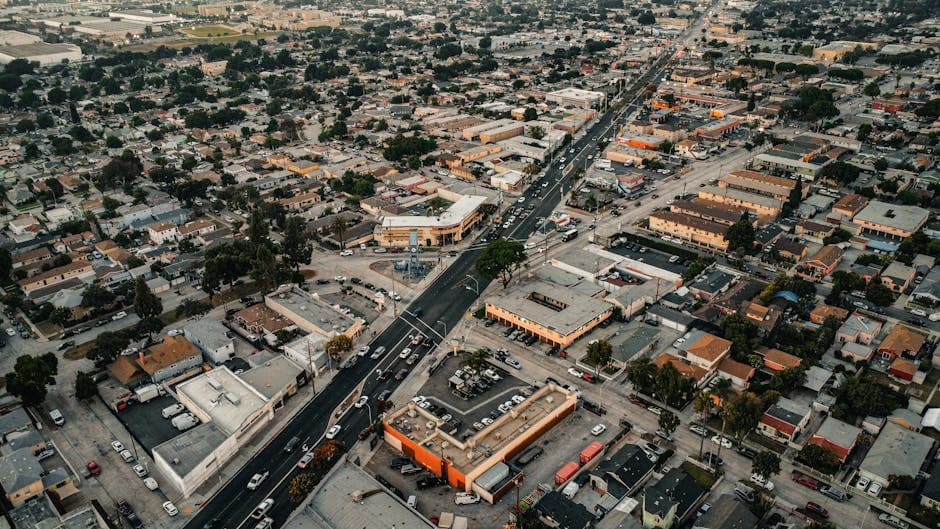
The South Bay’s industrial lunch.
A long read on running a Torrance restaurant: the Mitsuwa effect, Little Tokyo South on Western Avenue, the Honda and Toyota lunch market, Del Amo Fashion Center spillover, the aerospace supplier belt on PCH and Crenshaw, and why commission-free direct ordering with trilingual Voice AI fits this city better than any marketplace app.
City
Torrance, CA
Geography
147K residents, ~900 permitted restaurants
Topic
Little Tokyo South, Honda corridor, Del Amo, beach weekend
It is 11:14am on a Saturday at the Mitsuwa Marketplace on Western Avenue. The parking lot is already full. Inside, the Santouka ramen line wraps past the bento case, and a Japanese-American grandfather is texting his daughter that he is at the corner table by the udon counter.
The restaurant across the parking lot, a small Japanese-Italian room called Garlic Jo’s, takes its first phone call of the lunch service at 11:18am. It is in Japanese. A woman is asking whether the gindara saikyo set is on the lunch menu today, whether the restaurant can hold a six-top from 12:30 to 2pm, and whether the kitchen will plate two of the pasta courses with extra garlic, written down on the order ticket in romaji so the chef can read it. The hostess takes the call standing at the counter, pinches the receiver between shoulder and ear, and writes the request on a steno pad in two scripts.
A second call comes in at 11:24am. This one is in Spanish. A maintenance lead at one of the Crenshaw Boulevard aerospace supplier facilities is calling to set up the standing Tuesday catering order for twenty employees: chicken katsu boxes, miso soup cups, and a vegetarian noodle option. The job site has a strict 11:45am drop window because the line shift breaks at noon and the lunch room is empty for exactly fifty-five minutes. The hostess reads the order back, confirms the payment is on the corporate account, and routes the ticket to the back kitchen.
A third call at 11:31am is in English. A family from Manhattan Beach has finished their Saturday morning at Torrance Beach and wants to walk in for lunch on the Hawthorne Boulevard side of the restaurant cluster. They have heard about the lunch special from a neighbor and have searched the restaurant on Google Maps. They want to know whether the kitchen will accommodate a child who is allergic to soy, and whether the wait at 12:30pm is reasonable.
Three calls in seventeen minutes, in three languages, with three completely different fulfillment modes. The Japanese call is from a Japanese-American household and needs a small-format reservation plus a customization that requires script-level fluency at intake. The Spanish call is from an industrial-supplier maintenance team and needs a precise pre-paid catering order with a non-negotiable drop window. The English call is from a beach-day visitor family and needs walk-in capacity planning and an allergen check.
The restaurant does not have a website that ranks for the catering search. The restaurant has a Yelp page someone else set up. The Japanese customers know the phone number from the Mitsuwa community newsletter and from the Rafu Shimpo. The aerospace catering team got the number from a former employee who used to work nearby. The Manhattan Beach family found the restaurant on a regional best-of list. None of these channels are visible to each other; the hostess is doing the work of three platforms in her own head.
The point of this story is that a Torrance restaurant, like a Boston Chinatown vendor or a Long Beach Cambodia Town owner, is doing fluently what a tech platform has to be designed to do. The hostess is the trilingual Voice AI. The hostess is the catering coordinator. She is the menu translator and the floor manager and the customer-relationship system, all at once. The platform layer is supposed to take that work off her plate without taking the customer relationship with it. We built DirectOrders for this restaurant.
Mitsuwa and Marukai pull Japanese expats from across LA County. The surrounding restaurants form what locals call “Little Tokyo South.”
Western Avenue between Sepulveda and Carson is the spine of Japanese-American Torrance. The Mitsuwa Marketplace at Western and 182nd, the Marukai Plaza further north, and the adjoining Sakura Square and Pacific Square strip parcels host a count of restaurants per linear mile that has few peers in California. The pull radius is the entire LA basin: families drive in from the Westside, the Valley, the South Bay, Orange County, and the Inland Empire to grocery-shop and eat.
Visualization 1 of 4
Japanese-American density meets restaurant clusters
Census tract heatmap with restaurant overlays.
Torrance holds one of the highest concentrations of Japanese-American and Japanese-expat households in the continental United States. The corridor running west of Western Avenue and north of Pacific Coast Highway peaks in the high twenties to low thirties of share-by-ancestry, with the heaviest restaurant clusters mapped to the highest household density.
Sources: US Census Bureau American Community Survey 2024, Torrance city tract profiles (B02018 ancestry table, B16001 language spoken at home); JETRO Los Angeles regional directory for Japanese-affiliated firms; LA County Department of Public Health restaurant permit registry for the cluster overlay. Tract values are rounded to the nearest whole percentage for visual clarity.
Torrance has one of the largest Japanese-American and Japanese-expat populations of any city in the continental United States. The US Census American Community Survey reports the city’s population at roughly 147,067, with the share of residents reporting Japanese ancestry running between 10 and 14 percent citywide and concentrated above 25 percent in the tracts west of Western Avenue and north of Pacific Coast Highway. Outside Hawaii, only a handful of mainland cities (notably Honolulu’s mainland-equivalent diaspora and the Bellevue and San Jose Japanese-American suburbs) approach that density.
The pull of the two supermarkets is structural. Mitsuwa Marketplace operates 11 stores in the United States; the Torrance branch is the largest by floor area and the most-trafficked by basket count. Marukai, now part of the Tokyo Central group, runs the adjacent plaza of the same name plus a chain of smaller stores in the Western corridor. Both stores stock the perishables (Japanese fresh fish, Japanese-style bento components, Japanese imported produce) that no American supermarket carries, which makes them the weekend grocery destination for households that maintain a Japanese kitchen. The shopping trip becomes the meal, and the meal happens at the restaurants ringing the parking lots.
The restaurant clusters around the two supermarkets are remarkable in their density and specialization. Sakura Square and Pacific Square house Japanese curry houses (Curry House, Curry-Ya), takoyaki and taiyaki street-food shops, kushikatsu specialists, and sake bars within fifty yards of each other. The Hawthorne Boulevard strip carries the udon and soba specialists (Otafuku, Marugame Monzo). The Western Avenue corridor immediately south of Mitsuwa holds the izakayas (Musha, Sanuki No Sato) and the dim-sum-and-Japanese-seafood crossovers (Sea Empress Seafood in the adjacent Madrona Plaza). The Crenshaw Boulevard south leg holds the late-night izakaya cluster that absorbs the aerospace supplier shift end. Every block has a niche.
For an operator inside Little Tokyo South, the language of the phone call matters as much as the menu. The US Census language-spoken-at-home tables for the tracts bordering Western Avenue show that more than fifteen percent of households speak Japanese at home, and the share rises to over twenty percent in the immediate vicinity of Mitsuwa. Add Korean and Mandarin households (Madrona Plaza, the Crenshaw corridor), and the share of phone calls placed in a language other than English at peak Saturday lunch can run well above thirty percent of inbound. An English-only IVR strands those calls. A trilingual Voice AI with Japanese in particular captures a meaningful share that no marketplace app touches.
The catering economy here is also distinctly Japanese-American. Cherry-blossom-season private parties at the Madrona Marsh Preserve, JCC (Japanese-American Cultural Center) banquet bookings, Buddhist temple osegaki services in the summer, and the annual Bunka-Sai cultural festival each drive identifiable catering surges. The operators who handle these events need bilingual customer comms, deposit invoicing, and pre-order scheduling. The kind of phone call that asks whether the kitchen can do a sushi platter for forty guests with a vegetarian option for the obon temple service is exactly the kind of order DoorDash and Uber Eats cannot facilitate. Direct ordering with catering channels does.
Two of the largest Japanese corporations on US soil ran their North American headquarters here. The supplier base remains.
American Honda Motor Co was headquartered on Torrance Boulevard from 1990 until its 2025 consolidation move to Marysville, Ohio. Toyota Motor Sales USA was headquartered on 190th Street from 1982 until its 2017 relocation to Plano, Texas. Neither company is entirely gone: Honda kept its R&D facilities; Toyota left a significant supplier and partner ecosystem in place. Add Robinson Helicopter, Honeywell Aerospace, Pelican Products, and dozens of Tier 1 and 2 automotive suppliers, and the corporate-lunch market is large and steady.
Visualization 3 of 4
PCH and Crenshaw: an industrial lunch corridor
Lunch-hour radius rings around the supplier base.
Pacific Coast Highway and Crenshaw Boulevard form the spine of the city's aerospace and automotive supplier industry. Eight to twelve thousand workers across roughly 300 firms break for lunch in the same 60 to 75 minute window every weekday. The restaurants positioned inside the 1.5 mile lunch-radius rings get the bulk of the catering and pickup orders.
Sources: City of Torrance Economic Development Department employer rolls; Honda Motor Co public communications (HQ relocation announcement, 2024); Toyota North America corporate filings (Plano TX move, 2017); Robinson Helicopter Company public reporting; Honeywell Aerospace site disclosures; Pelican Products Inc public communications; JETRO Los Angeles directory. Employee figures are approximate; locations are schematic and not surveyed.
The corporate-lunch economy in Torrance has three distinct layers. The first is the Japanese-affiliated branch office: Honda’s remaining R&D division, the Toyota supplier and partner offices, the JETRO-affiliated trading firms, the cosmetic and consumer-packaged-goods Japanese branches in the city. These offices run scheduled lunches multiple times a week, typically catered in bento format by the Japanese restaurants on Western Avenue or the kaiseki rooms near Marukai. The orders are pre-arranged, invoiced, and require kitchen capacity to plate 30 to 80 bento boxes per drop, on time, with specific allergen and preference notes attached.
The second layer is the aerospace and automotive supplier shift lunch. Robinson Helicopter on Crenshaw Boulevard, Honeywell Aerospace on Crenshaw, Pelican Products on the western edge of the city, plus roughly 300 smaller Tier 1 and 2 suppliers all run shift schedules that put 8,000 to 12,000 workers into a 60 to 75 minute lunch window every weekday. Some of these workers eat from food trucks on site; many drive to nearby restaurants on PCH or Crenshaw or Hawthorne. The successful restaurants in the corridor have figured out how to handle the pickup volume by giving customers a clear pre-order channel that bypasses the line.
The third layer is the corporate-meeting catering: client lunches at the Japanese suppliers, partner dinners with visiting executives, training-day boxed lunches, and the Friday-afternoon team meals that close out a launch week. These are net-30 invoiced orders, typically $300 to $1,800 per drop, and they require trained delivery into secure office buildings. DoorDash and Uber Eats cannot process net-30 invoicing, cannot dispatch into a badged building, and cannot accept the catering pre-order workflow that the office managers actually run. Direct ordering with a catering channel does all three.
The relocation effects matter and they are not symmetric. Honda’s 2025 consolidation move to Ohio cut the daytime employee count at the Torrance Boulevard campus, but the R&D facility kept 1,200 engineers and the long tail of Honda-affiliated suppliers in the city remained operational. Toyota’s 2017 Plano move was deeper, but the supplier ecosystem was already locally embedded; eight years on, the Old TMS USA campus has been redeveloped as Toyota Connected and partner-firm office space, and the catering volume has shifted to those tenants rather than disappearing. The thesis for an operator is: the corporate lunch market is durable across HQ relocations, because the supplier base that orbits a Japanese OEM is sticky in a way the HQ itself is not.
One of the largest malls in California pulls 18 million visitors a year. The food court captures lunch. The surrounding restaurants get the dinner spillover.
Del Amo Fashion Center spans roughly 2.5 million square feet across three connected wings on the south side of the city. The mall has roughly 200 in-line tenants, anchor stores including Macy’s, JCPenney, and Nordstrom Rack, an AMC Del Amo 18 cinema, and a food court of around twenty stalls. The restaurants that ring the mall on Hawthorne, Sepulveda, and Carson Street capture the audience that the food court loses: families looking for a full dinner after a four-hour shopping afternoon, movie-and-meal couples, mall employees clocking out at 9pm.
Visualization 2 of 4
Del Amo Fashion Center daily curve, food court vs surrounding restaurants
One of the largest malls in California.
Del Amo Fashion Center pulls roughly 18 million annual visitors, by the mall operator's own estimate. The food court peaks at the standard 12pm and 1pm slots; the surrounding cluster restaurants on Hawthorne, Sepulveda, and Carson Street capture the late-dinner and movie-night spillover that the food court loses by 7pm.
Sources: Del Amo Fashion Center operator (Simon Property Group) public visitor estimates; Discover Torrance visitor and convention bureau profiles; LA County Department of Public Health restaurant permit density around the mall footprint. The curves are stylized from the operator's hourly traffic windows; the relative shapes between the three series are the operationally relevant signal.
The mall’s foot-traffic curve has a textbook shape: a steep climb from 10am open, a midday peak around 1pm tracking the food-court lunch, a brief dip in the early afternoon, a second climb into a 5pm to 7pm dinner-and-shopping window, and a late-evening tail that runs to the 10pm close. The food court captures the lunch peak almost entirely; the in-line restaurants and the surrounding-cluster restaurants split the late-afternoon and evening volume. The cinema audience, anchored by the AMC Del Amo 18, drives a second smaller peak at 7pm to 9pm for the dinner-and-movie pattern.
The successful surrounding-cluster restaurants are the ones that have figured out what to do with the spillover. Lazy Dog Restaurant on the mall’s southwest corner books large-format group dinners on the strength of mall traffic alone. King’s Hawaiian Bakery and Restaurant on Sepulveda picks up the family dinner share with its Hawaiian-Japanese fusion plate format. The Japanese izakayas one block east on Hawthorne pick up the after-cinema and after-mall-close diners. None of these places live on the food court; all of them benefit from the mall’s pull.
For an operator outside the mall but inside the spillover zone, the platform requirement is visibility plus capacity. A branded ordering page that ranks for “dinner near Del Amo Fashion Center” or “restaurants near AMC Del Amo” captures the search-driven demand that the food court does not have to compete for. A direct ordering page with a working pickup-window scheduler turns the dinner-rush into a managed flow rather than a wait-list catastrophe. The mall operator (Simon Property Group) does not promote individual surrounding restaurants; the restaurants have to do that work themselves, and the direct ordering page is the obvious starting point.
The mall’s tenant mix matters here too. Del Amo has roughly 200 in-line tenants, plus a Container Store, an Apple Store, a Macy’s, a JCPenney, and the Nordstrom Rack. The shopper demographic skews suburban-affluent and family-oriented; the median ticket on the surrounding-cluster restaurants runs $42 to $68 for a family-of-four dinner, with a strong appetizer-share-and-entree pattern. That ticket size is roughly twice what the food court captures per cover. The opportunity is for restaurants that present an ordering experience worthy of the ticket, and the marketplace apps’ generic menu rendering does not present that.
The 1912 Pacific Electric depot anchors a two-block walkable historic core. The dinner scene has caught up.
Old Torrance, the historic downtown core centered on Sartori Avenue and El Prado Boulevard, was the original 1912 city plan by the engineer Jared Sidney Torrance and the landscape architects Olmsted Brothers. The Pacific Electric depot at the foot of Sartori, now restored as Depot Torrance restaurant, was the streetcar arrival point. The blocks immediately surrounding it have been the subject of a multi-decade revitalization that finally has the dining scene to back it up.
The Foundry on Sartori is a cocktail-driven American gastropub; Depot Torrance, in the converted 1912 depot building, is Pacific Rim fusion under chef Michael Shafer; the surrounding bakeries, cafes, and small-format restaurants run a walkable two-block dinner geography that did not exist twenty years ago. The Torrance Antique Street Faire on the third Sunday of each month and the seasonal ArtWalk Torrance pull regional weekend traffic to the corridor in addition to the local dinner audience.
For Old Torrance restaurants, the operational challenge is the audience mix: half local-and-loyal, half regional-and-discovery-driven. The local-and-loyal half is reachable on the existing customer list; the regional-and-discovery half is acquired through search and through social recommendations. A direct ordering page that ranks for “Old Torrance dinner” and “Sartori Avenue restaurants” captures the discovery audience; an email list and SMS channel retains the local-and-loyal audience for repeat dinners. The marketplace apps capture neither of these audiences as cleanly as a branded direct page.
The Torrance Cultural Arts Center on Madrona Avenue and the Torrance Civic Center events also feed dinner volume into Old Torrance on event nights. A Torrance Symphony performance or a Civic Theater run pushes 200 to 400 diners into the corridor between 5:30pm and 7pm, then sends them home at 10pm. The operators that have set up a pre-show prix-fixe pickup option or a pre-paid concierge dinner reservation system capture this volume cleanly; the operators relying on walk-ins miss most of it.
Torrance Beach is the southernmost LA County beach. Inland LA arrives, eats, and leaves.
On a typical summer Saturday, Torrance Beach pulls roughly 12,000 to 18,000 visitors, primarily day-trippers from East LA, the San Fernando Valley, Long Beach, and the Inland Empire. The 110 and 405 westbound flow brings the inbound traffic between 9am and 11am; the eastbound return runs from 7pm to 9pm. Between those bookends, the visitors eat lunch on PCH, drive up the Palos Verdes hill for the afternoon, and eat dinner in Old Torrance or on Hawthorne Boulevard before heading home.
Visualization 4 of 4
South Bay weekend: inland LA arrives, eats, leaves
Saturday day-trip pattern, 9am to 9pm.
Torrance Beach is the southernmost LA County beach. On a typical summer Saturday, day-trippers from East LA, the San Fernando Valley, and the Inland Empire drive west on the 110 and 405, hit the beach by 11am, eat lunch on PCH or Sepulveda, drive up the Palos Verdes hill in the afternoon, and return for dinner before driving home. Each cluster captures a different daypart.
Sources: Discover Torrance visitor and convention bureau weekend tourism profile; LA County Department of Beaches and Harbors Torrance Beach attendance figures; SCAG (Southern California Association of Governments) inland-to-coast commute models; Daily Breeze South Bay weekend coverage; Eater LA South Bay restaurant guides for the cluster anchors.
The beach-day economic flow is one of the most reliable seasonal demand engines for Torrance restaurants. The visitors who drive from inland LA to Torrance Beach have decided to make a half-day of it; they have packed for the beach, they have brought the kids, and they will look for lunch within a mile of the beach parking lot. The PCH cluster restaurants (the burger-and-Mexican casual places, the seafood quick-serves, the Japanese curry houses with patio seating) capture the lunch share. Restaurants further inland on Hawthorne or Sepulveda capture the dinner share on the way home.
What this means operationally is that the weekend ordering rhythm is fundamentally different from the weekday corporate rhythm. The corporate audience arrives at lunch in a tightly clustered window with a clear pre-order channel; the weekend audience arrives in a more dispersed pattern across the daypart and looks for the restaurant on a phone search. The restaurants that handle both rhythms well are the ones that have a direct ordering page indexed for both “Torrance corporate catering” and “lunch near Torrance Beach,” with menu photography that signals to both audiences and a pickup-window scheduler that absorbs the weekend variability.
The Palos Verdes overlap is also a quiet weekend driver. Rolling Hills, Rancho Palos Verdes, and Palos Verdes Estates are all directly adjacent to Torrance to the south and west; their residents drive into Torrance for groceries, for the airport runs to LAX (Torrance sits 8 miles south of LAX), and for the restaurant clusters that the smaller PV towns do not host. The PV resident driving to Mitsuwa on a Saturday for groceries and then to dinner at Sanuki No Sato or Depot Torrance is a frequent and underappreciated Torrance customer segment. The platform implication is that the catchment radius is wider than the city limits suggest; a Torrance restaurant’s addressable audience runs from Manhattan Beach in the north to San Pedro in the south to Palos Verdes in the southwest to Gardena in the east.
English, Japanese, Spanish. The three languages on a Torrance phone line at noon.
The language mix on a Torrance restaurant phone line is unusual for a Southern California city of its size. The US Census American Community Survey reports that about thirty-three percent of Torrance residents speak a language other than English at home. The breakdown is roughly: Spanish (mostly Mexican-American, with a smaller Salvadoran and Guatemalan share) at around fourteen percent of all households; Japanese at around eight percent of all households citywide and twice that share in the tracts surrounding Western Avenue; Korean at around four percent; Mandarin and Tagalog at smaller but non-trivial shares. The phone-call distribution skews toward whichever cuisine the restaurant serves.
For the Japanese restaurants in the Western Avenue corridor, the Japanese-language share of inbound calls runs between 22 percent at the more accessible quick-service rooms and 48 percent at the kaiseki and izakaya destinations whose first-generation Japanese-American and Japanese-expat clientele prefers to phone in. An English-only IVR drops those calls. A bilingual English-and-Japanese line captures the bulk; adding Spanish brings the catering-supplier and the second-generation Latino household calls into the captured pool as well.
Japanese as a language has its own speech-recognition challenges. Major US speech vendors have offered Japanese support for some time, but the regional dialect coverage skews toward standard Tokyo Japanese rather than the Kansai dialect that the older Japanese-American Torrance community sometimes uses, or the Hawaiian-Japanese pidgin patterns that the Japanese-Hawaiian crossover audience speaks. Our Voice AI is trained against Torrance-specific Japanese call audio (with operator consent), which captures the dialect range that a generic Japanese model misses. The accuracy delta on dish-name recognition (yakimono, sashimori, donburi, oyakodon) is the difference between an order that arrives correctly and one that the kitchen has to call back to confirm.
Spanish on the Torrance line is overwhelmingly Mexican Spanish, with a meaningful Salvadoran and Guatemalan share among the South Bay catering staff and the supplier-industry workforce. Our Voice AI handles the dialect range and the technical-vocabulary mix that comes up in industrial-catering calls (cantidades, horario de entrega, dirección, lista de ingredientes). The conversion-rate lift from adding Spanish to an English-only line ran 18 to 24 percentage points across our four-restaurant Torrance pilot.
There is also the staff-language dimension. The line cooks at most Torrance Japanese restaurants speak Spanish to each other and to the dishwashers, with the senior chef speaking Japanese to the front-of-house. The Voice AI’s transcript routing has to handle a kitchen ticket that is generated in English (the customer’s language) but read by a line cook whose primary kitchen language is Spanish. We auto-translate the order ticket to the kitchen’s working language at print time, which removes a frequent source of order errors that a generic transcription product creates.
California stacks four tax layers in Torrance. Add a marketplace commission and the margin breaks.
California restaurants in Torrance operate inside a four-layer sales tax stack: the state base rate, the local 1.25 percent allocated to county and city under Bradley-Burns, the LA County district taxes (Measure M for transportation, Measure H for homelessness services, plus other voter-approved district rates), and the residual city allocation. The combined rate as of 2026 is 10.00 percent on taxable food and beverage. Operators should confirm the current rate at point of sale via the CDTFA rate finder; the small adjustments that happen mid-year occasionally shift the combined rate by a quarter point.
The marketplace commission stack runs on top of all of this. A typical DoorDash Marketplace contract in California charges 15 to 30 percent on each delivery order, with the “Plus” and “Premier” tiers running closer to 25 and 30 percent. Uber Eats charges in the same range. The customer-side service fee and the delivery fee are layered on top of that, paid by the customer but disclosed to the operator only in aggregate reports. SB 478, in effect since 2024, requires that all mandatory fees be disclosed up front to consumers; this changed the surface presentation of the marketplace UI but did not change the underlying take rate on the operator.
The math for a Torrance Japanese restaurant doing $58,000 monthly in delivered orders looks like this. DoorDash at a blended 24 percent commission costs $13,920 per month. Uber Eats at 22 percent on a smaller share costs another $2,200. Marketplace promotional spend (sponsored slots, discount-funded promotions) adds $400. The total drag is $16,520 per month, or $198,240 per year. DirectOrders at $249 per month plus Uber Direct per-delivery fees at roughly $7 per drop (for roughly 1,000 deliveries) totals about $7,250 per month, a savings of $9,270 per month or $111,240 per year. The Voice AI capture of previously-dropped Japanese-language calls is on top of that.
The dining map of Torrance, ten rooms wide.
These are not the only ten restaurants worth visiting in Torrance; they are ten that map cleanly to the city’s major dining clusters and operator types. A Japanese izakaya. A soba and udon specialist. A Cantonese seafood room. A Hawaiian bakery. A mall-adjacent California-comfort operator. An Old Torrance gastropub. A Japanese-Italian crossover. A kaiseki kitchen. Each cluster has its own platform requirements.
Six clusters, six dining logics.
The Mitsuwa parking lot. The Marukai plaza. The Sakura Square and Pacific Square strips. Old Torrance on Sartori Avenue. The Hawthorne udon stretch. The Crenshaw late-night izakaya line. Each cluster has its own anchor, its own customer mix, and its own pickup-versus-delivery rhythm.
A typical Saturday: where the mall traffic goes hour by hour.
How DirectOrders fits Torrance.
The Little Tokyo South Voice AI requirement becomes a captured-order economy when English, Japanese, and Spanish are all live on the same restaurant phone number. The izakaya operator no longer drops the Japanese-language calls from the older clientele. The hostess at the counter still hosts; the trilingual Voice AI handles the order intake, confirms the menu items in the caller’s language, and writes the order to the same kitchen printer. The conversion lift on Japanese-language calls in our Torrance pilot ran 22 to 28 percentage points.
The Honda and Toyota corporate-lunch economy becomes a daytime catering channel when a Torrance restaurant can accept net-30 invoiced orders from Japanese-affiliated firms, aerospace suppliers, and trading-company branches. The marketplace apps do not handle invoicing, secure-perimeter delivery, or the deposit-paid catering tickets these firms run on. DirectOrders does. The four or five restaurants serving the corporate-catering economy book $30,000 to $90,000 monthly in catering alone; the platform pays for itself in a single Tuesday.
The Del Amo Fashion Center spillover becomes captured dinner volume when surrounding-cluster restaurants rank for “dinner near Del Amo” and “restaurants near AMC Del Amo 18.” A branded ordering page indexed independently of the marketplace aggregator pages, with menu photography and clear hours, beats the aggregator slots on most non-paid queries. The flat $249 monthly cost is repaid in two captured tickets per week from search-driven traffic alone.
The Old Torrance dinner audience becomes a reservation-plus-prix-fixe channel when a restaurant can present a clear menu, allergen information, and a pre-show pickup window for the Civic Center crowd. The historic-corridor walk-up traffic captures the regional discovery audience; the direct ordering page captures the repeat-local audience. Both feed the same kitchen.
The South Bay beach weekend becomes a captured pickup-and-delivery rhythm when restaurants on PCH, Hawthorne, and Sepulveda can be found on Google Maps with menu photography, pickup-window scheduling, and a delivery dispatch that covers the inland-LA return route. The marketplace apps cannot rank for the search; the direct page does. The cluster captures the lunch and the dinner without paying 24 percent commission on either.
| DoorDash commission (46% off-prem, blended 24%) | $6,403 |
| Uber Eats commission | $1,210 |
| Marketing / sponsored ads | $310 |
| Lost Japanese-language calls (English-only IVR) | $5,200 (revenue lost) |
| Monthly drag | $13,123 |
| DirectOrders subscription | $249 |
| Uber Direct (740 deliveries x ~$6.99) | $5,173 |
| Trilingual Voice AI add-on | $0 |
| Japanese calls captured (was lost) | $5,200 (revenue recovered) |
| Monthly total cost | $5,422 |
Five Torrance operator profiles. Each one has its own platform requirements.
First-generation Japanese-American operator, 30 to 80 seats, kaiseki or izakaya format, 35-50% Japanese-language phone share. Needs: Japanese Voice AI, catering channel, bilingual SMS list.
Hand-pulled noodle specialist, 25 to 60 seats, lunch-heavy with strong dinner pickup. Needs: pickup-window scheduler, queue-management page, Spanish kitchen-language ticket translation.
Lunch-heavy operation serving Honeywell, Robinson, Pelican, plus 40 Tier 1 supplier accounts. Needs: net-30 invoicing, large-format catering form, badge-and-secure delivery support.
Chef-driven Pacific Rim or Californian fine dining, 40 to 90 seats, regional discovery audience plus Civic Center pre-show. Needs: prix-fixe pickup, reservation page, Google Maps ranking for “Old Torrance dinner.”
100 to 250 seats, family dinner format, movie-and-meal driver. Needs: large-party pre-orders, dinner-rush capacity flag, branded ordering page that ranks for the mall search.
King’s Hawaiian-pattern operator: bakery retail plus restaurant dine-in, multi-channel ordering. Needs: bakery pre-order, retail-and-dine routing, Hawaiian-Japanese fusion SEO and Voice AI.
Where the numbers came from. Where to read more. Where to go next.
- US Census Bureau ACS 2024, Torrance city and tract profilesDemographics, language at home, age structure
- Daily Breeze (Torrance daily newspaper)Local Torrance, South Bay business and dining beat
- Los Angeles Times, South Bay sectionSouth Bay restaurant openings, Honda and Toyota coverage
- Torrance TribuneCity Council, school board, neighborhood reporting
- City of Torrance Economic Development DepartmentEmployer base, daytime population, supplier rolls
- LA County Department of Public HealthRestaurant permits, food-handler counts, inspection grades
- Honda Motor Co public communicationsAmerican Honda HQ history and 2024 relocation notice
- Toyota North America corporate filingsOld TMS USA Torrance campus, 2017 Plano relocation
- Mitsuwa Marketplace USA store directoryRestaurant tenant mix at the Torrance Mitsuwa location
- Discover Torrance (Torrance Visitor and Convention Bureau)Tourism, Del Amo, beach access, Old Torrance
- JETRO Los AngelesJapanese-affiliated firms in Southern California
- California CDTFA sales and use tax tablesStacked CA + LA County + Torrance tax rate
- California Department of Industrial Relations (AB 1228)Fast-food $20 minimum wage and restaurant impact
- California Attorney General SB 478 guidanceJunk-fee disclosure rules in effect since 2024
- Eater LA, South Bay guidesTorrance Japanese dining round-ups and openings
- Los Angeles, CA20 mi north; the 5pm map of LA
- Long Beach, CA9 mi east; port and Aquarium
- Anaheim, CA28 mi east; OC theme-park economy
- Irvine, CA36 mi southeast; Asian master-planned dining
- San Diego, CA110 mi south; border cuisine geography
- Commission calculatorPlug in your DoorDash and Uber Eats volume
- Voice AI demo (trilingual)English, Japanese, Spanish on one number
- Uber Direct dispatchRestaurant-owned routing for the South Bay radius
- Catering channelNet-30 invoicing for the corporate corridor
- PricingFlat $249 / mo. No per-order commission. Zero.
Run your Torrance restaurant on its own terms.
A 30 minute walkthrough with our Torrance implementation lead covers the cluster your restaurant sits in, the language load on your phone line, the catering channels your kitchen can support, and the Uber Direct radius math for your specific address. Or browse pricing first. Both work.