Olde Town, Ralston Creek, Jefferson + Adams Counties, RTD G-Line
Gold Rush Creek.
In June of 1850, Lewis Ralston knelt on the gravel bar where Ralston Creek meets Clear Creek and washed the first recorded placer gold in the Colorado Territory. Eight years later that pan triggered the Pikes Peak rush. One hundred and seventy-six years later the creek bed is a city of roughly 124,000 people, a National Register historic district, a commuter rail line into Denver Union Station, and one of the largest youth-tournament economies on the Front Range. This is the field report for the operator standing at Grandview and Wadsworth.
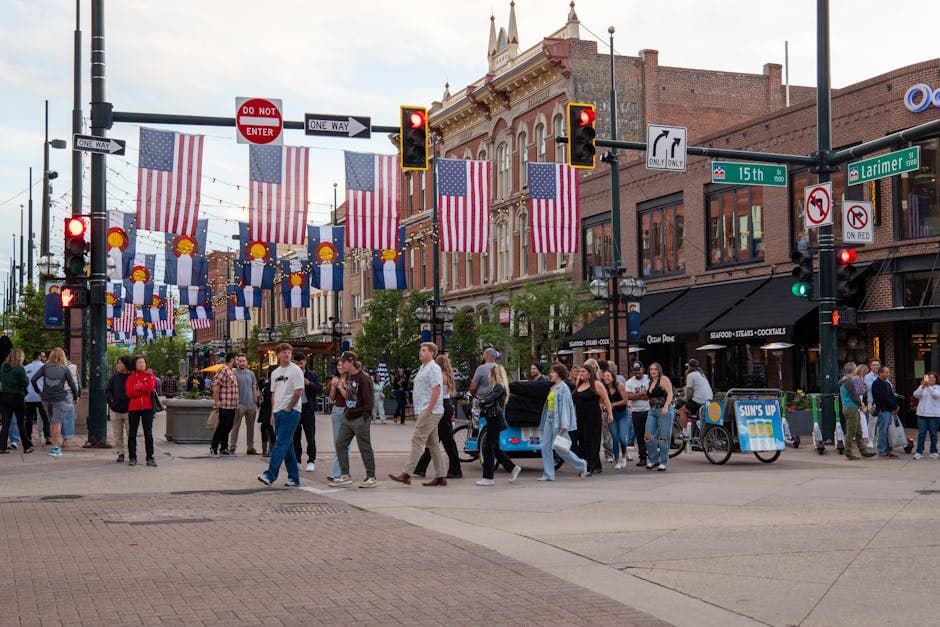
Source: US Census Bureau ACS, City of Arvada Economic Development, Olde Town Arvada BID, Jefferson + Adams Counties, RTD G-Line, History Colorado.
Arvada Brief
Seventh largest Colorado city. Jefferson + Adams Counties.
Lewis Ralston, Ralston Creek at Clear Creek. Eight years before Pikes Peak.
National Register, three-block historic core, G-Line terminus.
RTD commuter rail. Olde Town to Denver Union Station, twenty-five minutes.
CO 2.9, Jeffco 0.5, Arvada 3.46, RTD 1.0, SCFD 0.1.
Filed from Olde Town Arvada. Editorial standards: real sources, no fabricated reviews.
I. Scene
10:42 AM, Saturday, on Olde Wadsworth between Grandview and Grand. Three orders land in two minutes. They came in on three different surfaces and at three different price points.
The Arvada operator runs a twenty-six seat brunch concept on Olde Wadsworth Boulevard, a block south of the G-Line platform at the Olde Town Arvada station, two doors east of the original 1904 brick storefront that still anchors the National Register district. At 10:42 a.m. on a Saturday in late spring, three pickup orders land inside a two-minute window. The first comes from a young couple who just stepped off the inbound G-Line out of Denver Union Station, the rail line that opened revenue service in 2019 and reshaped the Saturday brunch geography of the entire northwest Denver metro. The second comes from a family driving in from the Candelas master-planned subdivision on the far west edge of the city, near Indiana Street and the Two Ponds National Wildlife Refuge. The third comes from a youth-baseball parent at the Stenger Sports Complex on the west side of Ralston Road, picking up after a 9:00 a.m. game.
The three customers will arrive at the operator's lobby inside nine minutes of each other. One walked. One drove in a minivan with two children. One drove in from a sports complex with three kids still in cleats and a fourth holding a trophy. Three different pickup cadences. One kitchen. The operator who matches her prep clock to the G-Line arrival board, the Saturday morning Apex tournament schedule, and the Candelas-side commute time wins the Saturday brunch revenue ceiling. The operator who does not, leaves the food under the heat lamp and the relationship to the marketplace channel.
On a marketplace channel that publishes a national fifteen-minute prep default, all three orders would have landed within the same algorithmic prep window, the food would have sat under the lamp for eleven minutes before the first customer walked in, and the marketplace would have taken its 28 to 30 percent commission and walked. The operator absorbs the stale food and the missed loyalty enrollment. On a direct channel with Arvada-aware pickup-time selectors keyed to the G-Line schedule, the Apex tournament bracket, and the Candelas-side drive cadence, the three orders land warm, on time, and on the operator's books at flat subscription cost.
The rest of this report is the operating frame around that brunch table on Olde Wadsworth: Ralston Creek and the first gold strike in Colorado, the NRHP Olde Town historic district, the G-Line commuter rail and what it did to weekend brunch volume, the Olde Wadsworth Hispanic family-restaurant corridor and its bilingual phone economy, the Apex Park and Recreation District tournament weekends at the Apex Center and Stenger Sports Complex, the Candelas, Leyden Rock, Indian Tree, and West Woods residential rings, the Arvada Center seasonal calendar, the Coors brewery economy spillover from neighboring Golden, the Rockies-at-Coors-Field Saturday afternoon tailgate window, the combined CO 2.9 plus Jeffco 0.5 plus Arvada 3.46 plus RTD 1.0 plus SCFD 0.1 sales tax stack at 7.96 percent on prepared food, and the DirectOrders fit. This is the Arvada stack.
Sources for this scene: US Census ACS, City of Arvada Economic Development, Olde Town Arvada BID, RTD G-Line schedule, History Colorado.
II. The Three Blocks
Olde Town Arvada is three blocks wide. The G-Line platform, the brick square, and the Grandview parking spine define the entire downtown.
Olde Town Arvada, the city's historic core, is bounded on the south by Ralston Road, on the north by Grandview Avenue, on the west by Yukon Street, and on the east by Vance Street. Three short blocks wide. The district was added to the National Register of Historic Places in 1985 and is one of the few intact late-nineteenth and early-twentieth century commercial cores remaining on the Front Range. The brick storefronts on Olde Wadsworth Boulevard were built between 1875 and 1910 to serve the agricultural community that grew along Ralston Creek after Lewis Ralston's 1850 gold strike attracted homesteaders.
The center of gravity in the district is Olde Town Square, a brick-paved public plaza at Olde Wadsworth and Grandview that hosts the year-round farmer's market, the summer concert series, the Olde Town Brick Walk in June, the Harvest Festival in September, the Trick or Treat Street in October, and the Holiday Lights season from late November through early January. The square sits one block south of the RTD G-Line platform at the Olde Town Arvada station, which opened revenue service in April 2019 and carries commuters twenty-five minutes east into Denver Union Station. The G-Line terminated three years of phased TOD investment in the district and reshaped the Saturday brunch volume curve for every restaurant inside the three blocks.
The Grandview parking spine, a series of surface lots and the two-story Yukon Street structured garage, is the practical entry point for drive-in customers from the rest of the city. Grandview pulls traffic from Wadsworth Bypass northbound, from Ralston Road eastbound out of the Apex Center fieldhouse district, and from the G-Line station's overflow Park-and-Ride lot. The operator who understands the three blocks reads the lobby cadence on a Saturday in three streams: rail arrivals from the east, drive-ins from the west and south, and walk-ups from the residential streets on the north edge.
Sources: City of Arvada Olde Town master plan, Olde Town Arvada BID, RTD G-Line schedule, National Register of Historic Places nomination.
III. The Numbers
Six numbers that frame the Arvada restaurant economy.
Restaurants
~540
Independent and chain food service licenses inside Arvada city limits, per CO DOR retail licensing rolls.
Median check
$19.20
Casual pickup ticket. Reflects suburban family two-entree pattern, weighted toward Olde Town brunch + Apex tournament parent.
Sales tax
7.96%
CO 2.9 + Jeffco 0.5 + Arvada 3.46 + RTD 1.0 + SCFD 0.1 on prepared food. Operator remits.
Olde Town foot traffic
~1.8M
Annual visitors to Olde Town Arvada Square, per Olde Town BID estimates. Saturday is the peak day.
Households with kids
~33%
Census ACS, considerably above CO suburban average. Drives Apex tournament + school catering demand.
G-Line daily riders
~3,200
RTD weekday Olde Town + Arvada Ridge boardings. Saturday brunch spike runs ~2x weekday.
Sources: Colorado Department of Revenue retail licensing, US Census ACS, Olde Town Arvada BID, RTD G-Line ridership reports, City of Arvada Economic Development.
IV. The Plate
American casual, Mexican, BBQ, Sushi, Pizza, Italian. The six corridors of the Arvada food economy.
The Arvada restaurant economy divides into six cuisine corridors that operate semi-independently across the city. The largest by sheer count is American casual, spread across Olde Town brunch operators, the 64th-Avenue family-casual pad chains, the Wadsworth-Bypass strip mall tier, and the Arvada Ridge G-Line station district where transit-oriented development has produced a fast-casual cluster anchored by the rail platform. Brunch is disproportionately represented inside this corridor, driven by the G-Line Saturday morning inbound flow.
The second largest corridor is Mexican, concentrated on the Olde Wadsworth Boulevard southern segment below 60th Avenue, on Ralston Road east of Wadsworth, and in the Arvada Park neighborhood that sits inside the Adams County portion of the city. Arvada carries a Hispanic and Latino share of roughly 17 percent citywide per the US Census ACS, with several block-group concentrations above 28 percent in the older south-central and east-side tracts. These operators run bilingual phone lines on Friday and Saturday evenings, weekend menudo and birria, and smothered burrito breakfasts seven days a week.
The third corridor is BBQ. The Front Range BBQ tradition runs through Arvada with a handful of long-tenured pit operators serving Apex Center tournament parents on Saturday afternoons, Sunday family dinners, and the seasonal sweet-corn-and-brisket pad on Wadsworth Bypass. The fourth corridor is sushi, unusual at this scale for a Front Range suburb but explained by Olde Town's walk-in brunch-and-dinner density and the Candelas and West Woods upscale west-side households who carry above-average Asian-American share. Multiple sushi rooms cluster on Olde Wadsworth and at Arvada Ridge.
The fifth corridor is pizza, spread across the Wadsworth Boulevard strip mall tier, the 64th-Avenue family pad locations, and a small NYC-style cluster in Olde Town that draws G-Line walk-ins on Friday evenings. The sixth corridor is Italian, smaller but notable for the long-tenured Olde Town Italian rooms that anchor Saturday dinner volume, with several multi-generation operators on Olde Wadsworth.
Sources: CO DOR retail licensing, US Census ACS, City of Arvada Economic Development, Olde Town Arvada BID tenant directory, Arvada Press restaurant coverage.
V. The Year
Twelve months on the Arvada restaurant calendar. The Brick Walk in June, the Harvest Festival in September, Holiday Lights through December, plus the Apex tournament weekends running March through October.
The Arvada operating year follows a Front Range Colorado seasonal pattern with several specifically Arvada overlays. The Olde Town Arvada BID schedules a rolling set of district events that anchor Saturday visitor flow for almost half the year: the Olde Town Brick Walk in June (a single-day craft and street festival across the historic district drawing 30,000-plus visitors per BID estimates), the year-round farmer's market on Sundays at Olde Town Square, the Harvest Festival in mid-September with food trucks, kid programming, and a beer garden, the Trick or Treat Street in late October with merchants dressing storefronts and a record family-trick-or-treat crawl through the district, and the Holiday Lights Olde Town season from late November through early January with daily lighting on Olde Wadsworth.
Layered on top of the BID calendar is the Arvada Center for the Arts and Humanities programming year. The Arvada Center on West 72nd Avenue is one of the largest multidisciplinary arts centers in the Mountain West, with a year-round theater season, a free outdoor summer concert series at the amphitheater, gallery exhibitions, and a busy art-instruction program. The Friday and Saturday evening theater nights pull dinner reservations into the 5:00 to 6:30 p.m. window across 72nd Avenue and Olde Town. The summer amphitheater series produces a concentrated Tuesday and Thursday evening pickup demand from July through August.
Layered on top of both the BID and the Arvada Center is the Apex Park and Recreation District tournament calendar. Apex operates the Apex Center fieldhouse and the Stenger Sports Complex on the west side of Ralston Road. The fieldhouse hosts indoor youth basketball, volleyball, and futsal tournaments most weekends from October through April. Stenger Sports Complex hosts youth baseball and softball tournaments most weekends from March through October. A typical tournament weekend carries 800 to 2,400 visiting families through the district across Saturday and Sunday. Restaurants within four miles of the Apex Center see tournament-weekend Saturday volume run roughly 1.6 to 2.2 times a normal Saturday baseline.
The two seasonal valleys are mid-January through early February (post-holiday spending collapse, cold-weather softening) and mid-March (spring break travel as Arvada families head to Vail, Steamboat, or warmer-state destinations). The Coors Field Rockies baseball season from late March through early October produces a recurring Saturday afternoon tailgate-and-pickup demand for Arvada operators within easy I-70 or US-36 access of LoDo. The Coors Brewing economy in neighboring Golden produces a small but consistent weekday and weekend brewery-tour spillover into Olde Town and Arvada Ridge.
Sources: Olde Town Arvada BID event calendar, Arvada Center for the Arts and Humanities season programs, Apex Park and Recreation District tournament schedules, Jeffco Public Schools and Adams 12 Five Star Schools calendars, Colorado Rockies and Visit Denver.
VI. The Gold Strike
June 22, 1850. A Cherokee party camped at the mouth of Ralston Creek washed the first gold pan in Colorado. Eight years later, that pan started a state.
On June 22, 1850, a party of Cherokee and white emigrants traveling the Cherokee Trail northwest along the South Platte toward the California gold fields stopped to rest at the confluence where Ralston Creek empties into Clear Creek, in what is now the southern edge of Arvada near the present-day Ralston Cove area. Lewis Ralston, a Cherokee Trail veteran, panned a sample of the creek gravel and recovered a small quantity of placer gold. Per the diary entries preserved in History Colorado's archives, the party recorded the find, concluded that the gravel was not rich enough to warrant a return, and continued west to California.
The Ralston find was not an immediate strike in the economic sense. The party did not stay. The gravel was not extensively worked in 1850. But Ralston himself returned to Georgia, told the story, and the rumor of Rocky Mountain gold spread through southeastern Cherokee country and the Georgia foothill mining community over the next eight years. When the 1858 Pikes Peak gold rush arrived, the first parties of prospectors entering the Colorado Territory specifically referenced the Ralston Creek find. The 1858-1859 Pikes Peak rush is widely recognized by Colorado historians as the proximate-cause founding event of the state of Colorado. Ralston's 1850 pan, eight years earlier, is the triggering anecdote.
The homesteading that followed the 1858 rush settled the gravel bars along Ralston Creek and the broader northwest Denver basin in the 1860s and 1870s. The community that grew along the creek became Ralston Point, then Ralston, then in 1870 the platted town of Arvada, named for an early settler family. The brick storefronts on Olde Wadsworth Boulevard between Grandview and Grand were built between 1875 and 1910 to serve the agricultural and freight economy that grew along the creek and the Colorado Central Railroad. Many of those original brick buildings still stand and now anchor the National Register historic district.
For the operator on Olde Wadsworth in 2026, the Ralston-Creek story is not a marketing prop. It is a load-bearing part of why the Saturday brunch line exists. The brick storefronts the customer walks into are 130-year-old buildings. The street pattern the customer parks on was platted around the creek. The Olde Town district's NRHP designation, the G-Line station's siting decision, the BID's preservation programming, and the customer's weekend-destination behavior all trace back to that 1850 gold pan. The branded direct-ordering channel that the operator owns is the channel that holds the Arvada customer relationship long enough to outlast a marketplace algorithm change.
Sources: History Colorado archives, Colorado Historical Society Lewis Ralston biographical materials, City of Arvada heritage program, National Register of Historic Places Olde Town nomination, Arvada Historical Society.
VII. Notable Tables
Eleven Arvada restaurants and operators cited in this report.
Editorial citations, not endorsements. Restaurant inclusion is for narrative reference.
- Schoolhouse KitchenOlde Town, brick storefrontDaytime brunch concept inside a restored Olde Town brick storefront, draws the G-Line Saturday morning inbound crowd, breakfast all day.
- Steuben's ArvadaOlde Wadsworth, Olde TownAmerican comfort-food concept across the dinner and weekend brunch windows, sister to the Steuben's Uptown Denver flagship.
- Denver Beer Co Olde TownOlde Town, brewery taproomLocal craft brewery taproom on the Olde Town pedestrian core, anchor on Friday and Saturday evening weekend service.
- GB Fish & Chips Olde TownOlde Town, brick storefrontBritish pub-style fish and chips with sides and pies, weeknight family dinner and weekend G-Line walk-in.
- Vital RootOlde Town, plant-forward conceptPlant-forward concept on the Olde Town corridor, vegetarian and vegan, weekend brunch and weekday lunch, draws West Woods and Candelas weekday lunch flow.
- McCabe's Brew PubOlde Town, neighborhood pubNeighborhood brewpub on the Olde Town corridor, Friday and Saturday evening anchor, regional craft draft list.
- La Dolce Vita ItalianOlde Wadsworth, ItalianTraditional Italian on Olde Wadsworth Boulevard, weekend dinner concept, multi-generation operator family.
- Cho77 / Sushi-Den-ish sushi roomsOlde Town and Arvada RidgeMultiple sushi rooms across Olde Town and the Arvada Ridge G-Line station district, drawing Candelas and West Woods weekend brunch and dinner crowds.
- Locker's Sports Bar64th Avenue, family-casualFamily-casual sports bar on the 64th Avenue corridor, Broncos Sunday destination, Apex Center tournament-parent Saturday lunch crowd.
- Homegrown Tap & DoughOlde Town, pizza and pastaWood-fired pizza and pasta concept on the Olde Town corridor, weekend dine-in family destination, draws G-Line walk-ins.
- Olde Town TavernOlde Town, neighborhood tavernLong-tenured neighborhood tavern on Olde Wadsworth, weeknight regulars, weekend post-event drinking-and-bar-food crowd.
VIII. The Neighborhoods
Six Arvadas under one city seal. Each runs on a different rhythm.
Arvada does not present as a unified suburb. The Jefferson County tracts in the center and west operate on a different rhythm than the Adams County tracts on the east edge, and six sub-neighborhoods across that split each carry a distinct restaurant demand profile.
Jefferson County, NRHP historic core
Olde Town Arvada
The three-block National Register historic district anchored at Olde Wadsworth and Grandview, with the G-Line commuter rail terminus on the north edge at the Olde Town Arvada station. Brick storefronts built 1875 to 1910, year-round farmer's market, summer concert series, Brick Walk in June, Trick or Treat Street in October. The brunch-and-dinner foot-traffic heart of the city.
Demand: Saturday G-Line inbound brunch 10 a.m. to noon, Friday evening pre-Arvada-Center theater dinner, Sunday outbound rail to-go.
Jefferson County, west edge master-planned
Candelas
The west-edge master-planned community along Indiana Street near the Two Ponds National Wildlife Refuge, built over the former Rocky Flats buffer area. Young dual-income families, higher household income than the city average, considerable Boulder tech-worker spillover. Walking trail network, neighborhood pools, K-8 anchor school.
Demand: Weeknight family pickup Tuesday through Thursday, Saturday morning trailhead breakfast, kid's-birthday catering.
Jefferson County, northwest master-planned
Leyden Rock
The northwest master-planned community in the rolling country between West 82nd Avenue and Indiana Street, with views toward North Table Mountain. Newer construction, family-heavy demographic, the highest single-family-home price tier in Arvada. Strong west-side road geography toward Boulder and Golden.
Demand: Sunday family dinner, brewery-tour spillover from Golden, Boulder commuter weeknight pickup.
Jefferson County, central established
Indian Tree
The established 1970s and 1980s suburban tier surrounding the Indian Tree Golf Course on West 72nd Avenue, near the Arvada Center for the Arts and Humanities. Older single-family homes, considerable retiree and empty-nester share, walkable streets, mature trees.
Demand: Weekend brunch, theater pre-show dinner at 72nd Avenue restaurants, retiree weekday lunch.
Jefferson + Adams, south-central established
Olde Wadsworth corridor
The Olde Wadsworth Boulevard corridor south of Olde Town toward Ralston Road and the Adams County line, with the highest Hispanic and Latino concentration in the city. Established Mexican family restaurants, bilingual phone lines, weekend menudo, smothered breakfast burritos seven days a week.
Demand: Weekend Mexican family dinner, Sunday morning breakfast burrito, Cinco de Mayo, Mexican Independence Day weekend.
Jefferson County, west foothills edge
West Woods
The far-west residential tier along the West Woods Golf Course and the foothills approach toward US-93 and Coal Creek Canyon. Upscale single-family homes, considerable Boulder and Golden commute mix, weekend hiking and cycling crowd, Coors Brewing tour adjacency.
Demand: Weekend brunch, Sunday brewery-tour returning, golf-course event catering, ski-commuter Saturday morning breakfast.
IX. Ideal Operator Profiles
Three Arvada restaurants for whom DirectOrders is built.
These are the operating profiles where the stack pays back fastest. Read them looking for the one that matches your kitchen.
ICP 01
The Olde Town brunch and brewery operator.
A daytime brunch concept or a craft brewery taproom inside the three blocks of the National Register district, pulling G-Line weekend volume and Olde Town Square foot traffic.
Operator profile
- Forty to ninety seats inside a restored brick storefront, with a small patio that opens for warm-weather months and a streetside walk-up window for the Square crowd.
- Saturday brunch revenue typically runs 28 to 38 percent of weekly total. G-Line inbound volume is the single largest variable.
- Average ticket $22 to $34 brunch, $30 to $48 dinner. Friday and Saturday account for 55 to 60 percent of weekly revenue.
Why DirectOrders fits
- Pickup-time selector keyed to the inbound G-Line schedule out of Denver Union Station instead of a national fifteen-minute default.
- Voice AI handles inbound brunch-reservation and brewery-tasting calls during peak service so the host stand can run the door.
- Uber Direct dispatch at courier cost for the Saturday Olde Town visitor who decided after parking that they wanted to walk the Square instead of sit down.
- Same-day Stripe payouts mean Saturday brunch revenue funds Sunday-morning prep, fresh produce, and bartender wages.
ICP 02
The 64th-Avenue suburban family casual.
A mid-market family-casual restaurant on the 64th Avenue corridor or near the Apex Center on Sheridan Boulevard, serving the youth-tournament and school-night family base.
Operator profile
- Eighty to a hundred forty seats with a kid's menu, a full bar, dine-in plus pickup plus delivery, and a private room available for team banquets and PTO catering.
- Weekend volume peaks Saturday 11:30 a.m. to 2:00 p.m. and 5:30 p.m. to 8:00 p.m., driven directly by Apex Center fieldhouse and Stenger Sports Complex tournament brackets.
- Average ticket $19 to $28. Family tournament-parent pickup carries a 2.4-times-normal Saturday spike during major brackets.
Why DirectOrders fits
- Apex-aware pickup-time selector that maps to actual tournament-bracket break windows instead of generic Saturday averages.
- Tournament team-banquet booking flow with online deposit, in-house allergen flag, and operator-controlled catering minimum.
- Family loyalty program that accumulates across the spring-summer baseball season and the fall-winter basketball bracket without resetting per marketplace order.
- Uber Direct dispatch for the family in Leyden Rock or West Woods who decided post-bracket they did not want to drive back across Wadsworth Bypass.
ICP 03
The Olde Wadsworth Hispanic family operator.
A Mexican family-owned restaurant on Olde Wadsworth Boulevard, on Ralston Road east of Wadsworth, or in the Arvada Park neighborhood inside the Adams County eastern slice, second or third-generation operator-owned with predominantly Spanish-language operating staff.
Operator profile
- Traditional Mexican menu with regional specialties: tacos al pastor, menudo on weekends, mole on Sundays, smothered breakfast burritos seven days a week, agua fresca rotating.
- Inbound phone calls run roughly 55 percent Spanish and 45 percent English on Friday and Saturday evenings, swinging closer to 70 percent Spanish on Sunday morning.
- Weekly revenue concentrates Friday through Sunday at 60 to 65 percent of total. Cinco de Mayo and Mexican Independence Day weekend produce 4-times-normal weekend volumes.
Why DirectOrders fits
- Spanish first-syllable detection on Voice AI. The Voice AI picks up in the caller's language before any English-default prompt plays.
- Dish vocabulary held in the operator's source language. Chiles rellenos, tacos al pastor, huaraches, tortas ahogadas all stay as printed on the receipt.
- Code-switching across the call is supported. Caller can begin in Spanish, switch to English to read back a phone number, switch back to Spanish to confirm pickup time, with the Voice AI tracking context the whole way through.
- Mexican and Central American conversational training so Voice AI recognition matches what the Olde Wadsworth corridor actually sounds like, not a generic Latin American neutral voice.
X. The Brunch Spike
The G-Line reshaped Saturday morning. Olde Town brunch volume runs roughly 2.2 times a normal Saturday baseline once the inbound trains start arriving from Denver Union Station.
Before the G-Line opened revenue service in April 2019, Olde Town Arvada was a destination Saturday brunch district primarily for drive-in customers from the surrounding Jefferson County and Adams County residential tracts. A typical Saturday morning was a steady curve, building from a 9:00 a.m. open through a 12:30 p.m. lunch transition, with most customers arriving by car and parking in the Grandview and Yukon Street lots. The pre-G-Line Saturday brunch curve looked similar to most Front Range suburban brunch districts.
The G-Line changed the curve. The first inbound train from Denver Union Station typically arrives at the Olde Town Arvada platform around 9:15 a.m. on Saturdays. From that arrival forward, the brunch curve picks up rail-inbound walk-ins from each scheduled train, layered on top of the existing drive-in baseline. The peak inbound period typically runs from 10:00 a.m. through 12:00 p.m., with three to four trains arriving across that window and each train delivering somewhere between 80 and 220 boardings, of which a meaningful share walk one block south to the Olde Town Square brunch district.
The net result is a Saturday brunch volume curve that spikes from 10:00 through 12:00 to roughly 2.2 times a normal Saturday at the equivalent hour, with the rail-inbound share concentrated in the 10:30 to 11:30 window. Olde Town brunch operators who optimized their prep cadence, host-stand throughput, and pickup-time selector around the G-Line arrival board have captured the bulk of the post-2019 Saturday revenue lift. Operators who continued running a generic Saturday baseline curve missed the structural shift.
The reverse pattern runs Sunday afternoon, when outbound G-Line trains pull district visitors east toward Denver Union Station between 1:30 and 4:00 p.m. A meaningful number of Sunday brunch parties grab a to-go bag for the train rather than dine-in, which produces a Sunday pickup demand curve that runs roughly 1.4 times a normal Sunday afternoon. The operator whose ordering channel supports a rail-departure pickup-time selector wins both ends of the weekend.
Sources: RTD G-Line ridership reports, Olde Town Arvada BID Saturday foot-traffic data, City of Arvada Economic Development, Arvada Press G-Line coverage.
XI. The Operator Year
Olde Town events, Apex tournament brackets, the school year, and the Rockies-at-Coors-Field tailgate season. The Arvada operator runs four overlapping calendars at once.
The Arvada restaurant operator does not run a single calendar. She runs four overlapping calendars that interlock across the twelve months and produce a forecast curve that requires daily attention. The first is the Olde Town Arvada BID event calendar, which programs the Brick Walk in June, the Sunday farmer's market year-round, the summer concert series, the Harvest Festival in September, Trick or Treat Street in October, and the Holiday Lights season from late November through early January. Each major event runs Saturday volume 1.6 to 2.4 times a normal Saturday baseline for restaurants inside the three blocks of the district.
The second calendar is the Apex Park and Recreation District tournament season. Apex operates the Apex Center fieldhouse on the west side of Sheridan Boulevard and the Stenger Sports Complex on the west side of Ralston Road. The fieldhouse hosts indoor basketball, volleyball, and futsal tournaments most weekends from October through April. Stenger Sports Complex hosts youth baseball and softball tournaments most weekends from March through October. A typical major tournament weekend carries 800 to 2,400 visiting families through the city. Restaurants within four miles of the Apex Center run 1.6 to 2.2 times a normal Saturday during major brackets, with a concentrated 11:00 a.m. through 1:00 p.m. lunch-pickup spike between tournament games.
The third calendar is the school year. Jeffco Public Schools and Adams 12 Five Star Schools together serve roughly 26,000 students inside Arvada city limits across more than thirty schools. The August back-to-school transition reshapes weekday demand across the Tuesday through Thursday window. Friday football and Saturday morning club sports add a concentrated weekend demand. The PTO fundraiser catering economy runs from late September through early May. The post-Memorial-Day summer recess produces a meaningful daytime softening that the operator has to plan staffing around.
The fourth calendar is the Colorado Rockies baseball season. From late March through early October, Coors Field hosts roughly 81 home games. Arvada is roughly fifteen minutes from Coors Field by car and roughly twenty-five minutes by G-Line from Olde Town to Union Station and a four-block walk. The Saturday afternoon home-game tailgate-and-pickup window typically produces a 1.3 to 1.7 times normal Saturday afternoon pickup spike at Arvada operators who actively serve the LoDo-bound game-day crowd. Weeknight home games produce a smaller but consistent pickup spike from 4:30 to 6:00 p.m. as fans grab dinner before driving or training in.
Layered across all four calendars is the Coors Brewing economy in neighboring Golden, six miles west of Olde Town along West 44th Avenue and US-6. The Coors brewery tour and the Golden brewery district produce a small but consistent weekday and weekend brewery-tourism spillover, with Olde Town and Arvada Ridge serving as a second-stop dining district for Coors-tour visitors returning toward Denver. The operator who maps her Voice AI overflow, kitchen staffing, ingredient ordering, and Uber Direct courier capacity against all four calendars and the brewery-spillover overlay runs a stable operating model. The operator who runs against only one calendar discovers the gap in the wrong week.
Sources: Olde Town Arvada BID event calendar, Apex Park and Recreation District tournament schedules, Jeffco Public Schools and Adams 12 calendars, Colorado Rockies home schedule, Visit Denver, Coors Brewing public tour materials.
XII. Bilingual by Default
Olde Wadsworth and Ralston Road run in Spanish before they run in English. The Voice AI picks up at the first syllable in whichever language the caller spoke.
Arvada carries a roughly 17 percent Hispanic and Latino share citywide per the US Census ACS, with several block-group concentrations on the older south side of Olde Wadsworth, on Ralston Road east of Wadsworth, and in the Arvada Park neighborhood running materially higher, several at or above 28 percent Latino. The Mexican family-owned restaurants on these corridors take inbound phone orders in Spanish more often than English on Friday and Saturday evenings and Sunday mornings. The bilingual demand is not an accommodation. It is the daily operating reality.
The DirectOrders Voice AI runs bilingual by default for Arvada operators. The system detects the language of the inbound call within the first syllable, before any English-default prompt plays. A Spanish-speaking caller hears Spanish from the very first response. An English-speaking caller hears English. Code-switching across the call is supported, so a customer can begin in Spanish, switch to English to read back a phone number, switch back to Spanish to confirm pickup time, with the Voice AI tracking conversation context the entire way through.
The Spanish voice is trained on Mexican and Central American conversational patterns, the same dialect cluster spoken on the Olde Wadsworth corridor. Dish vocabulary stays in the operator's source language: chiles rellenos, tacos al pastor, huaraches, tortas ahogadas, menudo, birria, agua de horchata, jamaica. The receipt prints in the same dish vocabulary the operator writes the menu in. A national marketplace channel that translates everything through an English-default pipeline produces a receipt the operator's Spanish-speaking customer cannot easily read.
Sources: US Census ACS Arvada tract-level language data, Jeffco Public Schools and Adams 12 language services, City of Arvada Economic Development, DirectOrders Voice AI evaluation logs.
Sample call, Olde Wadsworth
How code-switching plays on an Olde Wadsworth taqueria line.
- 00:00, Caller
"Buenas tardes, quisiera ordenar para llevar, por favor."
- 00:02, Voice AI
"Buenas tardes, claro que si. Que le gustaria ordenar hoy?"
- 00:14, Caller
"Tres tacos al pastor, una orden de huaraches, y un agua de jamaica."
- 00:42, Caller, switching
"My phone number is seven, two, zero, five, five, five, oh, one, four, two."
- 00:48, Voice AI, switching back
"Gracias, su orden estara lista en veinte minutos. Hasta luego."
Receipt prints with the dish names exactly as ordered.
XIII. The Cost Math
Direct ordering at 14 percent total cost versus DoorDash at 27 percent on a $50 Olde Town brunch order.
Pick a representative Olde Town Saturday brunch pickup: two egg-and-chorizo plates, a side of breakfast potatoes, a kids' pancake plate, a drip coffee, a fresh-squeezed orange juice. Total ticket $50.00. Run the same ticket through the DirectOrders direct channel and through a national marketplace channel like DoorDash. The cost stacks on each channel reveal the structural difference in the operator's take-home.
On the direct channel, the operator pays the flat DirectOrders platform fee allocated across the order (roughly 2 percent at typical volume), the Stripe payment processing fee at 2.9 percent plus thirty cents, and the Colorado, Jefferson County, Arvada city, RTD, and SCFD sales tax stack at 7.96 percent passed directly to the customer and remitted by the operator. For a pickup-only Olde Town brunch order (which is the default given the walking foot traffic through the district), the total operator-side cost lands at roughly 5 to 6 percent of the ticket.
On a national marketplace channel, the operator pays the marketplace commission (typically 25 to 30 percent of the ticket), the marketplace payment processing fee (typically 3 percent), and absorbs the marketplace-determined courier fee in the pricing structure the marketplace controls. The total operator-side cost on a national marketplace order frequently exceeds 28 to 32 percent of the ticket on delivery and runs 18 to 22 percent on marketplace pickup.
On the $50 Olde Town brunch order, the operator on the direct channel takes home roughly $43.00 after fees. The operator on the marketplace channel takes home roughly $36.50 after fees. The difference is $6.50 per order, or 13 percent of the ticket value. Across 600 Olde Town brunch and dinner orders a month, that difference is $3,900 per month. Across a year, that is roughly $46,800 in operator take-home. The flat DirectOrders monthly subscription of $249 is recovered after the first thirty-eight orders.
Sources: DirectOrders pricing, public DoorDash marketplace fee schedules, Stripe public fee schedule, Colorado Department of Revenue sales tax tables. Numbers stylized for narrative.
XIV. The Corridor
Arvada sits inside a northwest metro corridor. Six neighboring playbooks for context.
If you operate across multiple northwest-metro Denver cities, the corridor-specific almanacs run alongside this one. Each applies its own commuter, neighborhood, and tax-stack frame.
Playbook
Denver, CO
The G-Line east terminus at Denver Union Station. LoDo finance, Broncos Sundays, the Coors Field tailgate season.
Playbook
Westminster, CO
The US-36 halfway-house just east. Standley Lake fireworks, FlatIron Crossing, bimodal Denver and Boulder pull.
Playbook
Boulder, CO
The west anchor on US-36 past the Coal Creek Canyon. CU campus, Pearl Street, the original Flatiron.
Playbook
Lakewood, CO
West metro along 6th Avenue. The Belmar mixed-use district, foothills proximity, Federal Center commute pull.
Playbook
Thornton, CO
The Adams County north metro twin. I-25 corridor, Eastlake Light Rail, the suburban boom east of I-25.
Playbook
Centennial, CO
South metro suburban. Arapahoe County, low sales tax stack, dense school catering economy.
XV. The Fit
The Arvada thesis, brought home to a single stack.
The argument of this report has been built one corridor at a time. Below: how the DirectOrders stack maps to each pressure point Arvada operators actually feel. Flat $249 per month. Zero per-order commission. Bilingual Voice AI. Uber Direct dispatch at courier cost. Same-day Stripe payouts.
Olde Town three blocks
G-Line aware Saturday brunch.
Pickup-time selector keyed to the G-Line arrival board out of Denver Union Station. Brunch curve runs 2.2x normal between 10 a.m. and noon. The recurring weekend volume that defines the operator's quarterly revenue floor.
Apex Park and Recreation
Tournament bracket playbook.
Apex Center fieldhouse, October through April. Stenger Sports Complex, March through October. Saturday lunch spike 1.6 to 2.2x normal. Team banquet booking flow with operator-controlled minimums and allergen flags.
Olde Wadsworth corridor
Spanish at the first syllable.
Bilingual Voice AI with first-syllable detection. Mexican and Central American conversational training. Dish vocabulary held in source language. Code-switching across the call. The integration point national marketplaces miss.
64th + Wadsworth Bypass
Suburban family weeknight.
Tuesday-through-Thursday family pickup with kid's menu, allergen flags, and a loyalty program that accumulates across the soccer-and-band season instead of resetting per marketplace order.
Arvada Center + Rockies
Theater dinner and Coors Field tailgate.
Theater dinner reservation flow 5:00 to 6:30 p.m. on Friday and Saturday. Rockies home-game Saturday afternoon tailgate-and-pickup window. Coors Brewing tour spillover from Golden. Layered seasonal demand the operator runs daily.
The 7.96% tax stack
Operator-remitted, same-day funded.
CO 2.9 + Jeffco 0.5 + Arvada 3.46 + RTD 1.0 + SCFD 0.1, on the operator's own CDOR account, operator's own Arvada city license. Same-day Stripe deposits mean cash to remit is in the operator's bank account the day the order is fulfilled.
XVI. Coda
Two suggestions for the Arvada operator.
Stand the platform up before the Olde Town Brick Walk in June.
The Olde Town Brick Walk in June is the district's largest single-day craft and street festival, drawing 30,000-plus visitors in a single day inside the three blocks. Restaurants inside the district can do 4 to 6 times a normal Saturday. Build the branded ordering site, configure the bilingual Voice AI overflow handling, set the pickup-time selector to handle the noon to 8 p.m. festival window, and have the loyalty program live by the first weekend in May. The operator who is ready before the year's biggest district weekend wins the loyalty enrollment that converts to off-peak retention across the next twelve months.
Audit your Saturday morning G-Line pickup window.
The Arvada Saturday brunch curve spikes 2.2x normal between 10 a.m. and noon, driven directly by G-Line inbound trains out of Denver Union Station. If your current ordering channel publishes a single national fifteen-minute prep default, you are losing the rail-inbound window every weekend. Open the demo with your actual Olde Town prep cadence. Map the inbound G-Line schedule. Watch the recurring Saturday brunch show up in the loyalty system.
References, this report drew from
12 sources
- US Census Bureau ACS, Population, household composition, language data, ACS tract-level demographics for Arvada
- Colorado State Demography Office, Colorado state population estimates and Front Range demographic projections
- City of Arvada Economic Development, City history, municipal records, Olde Town master plan, Arvada heritage program
- Olde Town Arvada Business Improvement District, Olde Town Arvada business directory, event calendar, BID Saturday foot-traffic data
- Jefferson County, Colorado, Jefferson County records, restaurant licensing, and west-Arvada economic data
- Colorado Department of Revenue, Colorado sales tax rates, marketplace facilitator rules, retail food-service licensing
- Regional Transportation District (RTD) G-Line, G-Line commuter rail schedule, Olde Town and Arvada Ridge ridership reports
- Visit Denver, Visit Denver metro visitor data, Olde Town Arvada destination listings, Coors Field event calendar
- Arvada Center for the Arts and Humanities, Arvada Center for the Arts and Humanities theater season, amphitheater concert calendar, gallery exhibitions
- Apex Park and Recreation District, Apex Park and Recreation District facilities, fieldhouse, Stenger Sports Complex, tournament schedules
- US Fish and Wildlife Service, Two Ponds NWR, Two Ponds National Wildlife Refuge urban-edge habitat, visitor materials, west-Arvada open space
- History Colorado, Lewis Ralston 1850 gold-strike biographical materials, NRHP Olde Town nomination, Colorado state heritage