City File No. 10 · Lakewood, CO
Belmar, the Federal Center, and the western suburb that runs on three clocks.
Lakewood is Colorado's fifth largest city. Belmar draws roughly 3.5 million annual visitors to a 22 block lifestyle center on W Alameda Parkway. The Denver Federal Center holds about 6,000 federal employees across 28 agencies, anchored by the USGS National Earthquake Information Center, the Bureau of Land Management, the Bureau of Reclamation, and GSA Region 8 headquarters. Commission free direct ordering, bilingual Voice AI, same day Stripe payouts, Uber Direct integration.
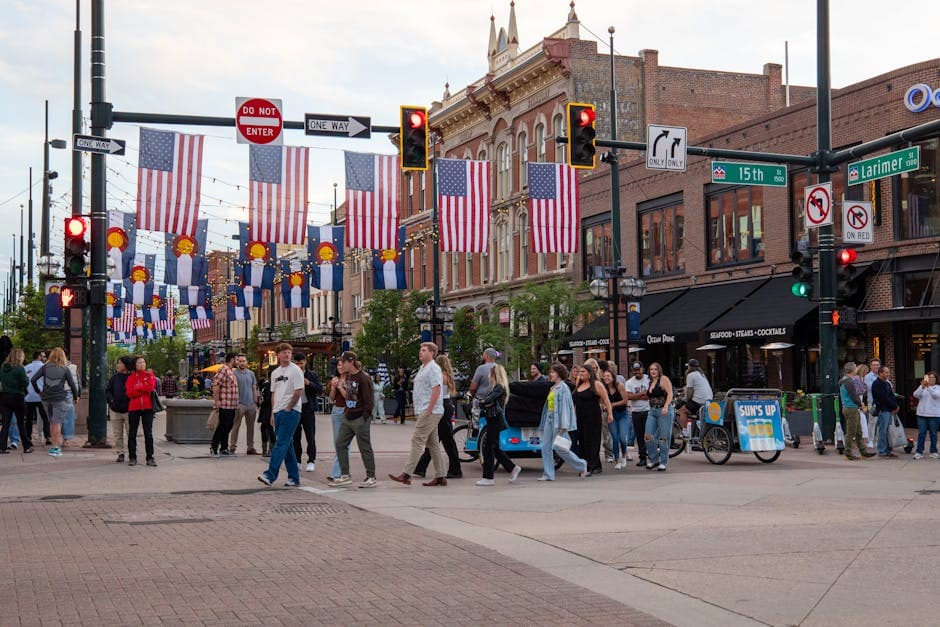
I. A Saturday at Belmar
A 12:24 lunch ticket on W Alameda Parkway threads three flows at once.
It is a Saturday in late June. A Belmar operator on W Alameda Parkway pulls a banh mi off the line at 12:23 and a green chile smothered breakfast burrito at 12:25. The first order is a direct online pickup placed at 11:52 by a family from Green Mountain heading to the Lakewood Cultural Center for a 1:00 matinee. The second is a Voice AI call placed in Spanish at 12:08 by a Federal Center maintenance contractor who finished a Saturday shift at the BLM warehouse and is driving back across W 6th Avenue toward Edgewater.
The third ticket on the board is a 35 head Uber Direct delivery to a Red Rocks Community College student services event scheduled at 1:30 sharp. The Lakewood campus sits 4 miles south on W Bowles Avenue. The order was placed Thursday afternoon by the program coordinator with line item dietary tags (12 gluten free, 6 vegan, 17 standard). Marketplace dispatch could not hold the time window. Direct ordering with pre order scheduling captured the lead time and the dietary spec at once.
Lakewood is a city built around three clocks: the Belmar weekend foot traffic clock, the Federal Center weekday garrison clock, and the mountain access corridor clock that empties downtown Lakewood every Friday at 4:00 PM and refills it every Sunday at 6:00 PM. Direct ordering with precise pickup windows and Spanish first Voice AI wins all three. This is the field report on how.
II. Belmar, Lakewood's Downtown
A 22 block lifestyle center on the footprint of Villa Italia mall.
Belmar sits at W Alameda Parkway and Wadsworth Boulevard on the 103 acre footprint where the old Villa Italia regional mall stood from 1966 until its demolition in 2002. Developed by Continuum Partners and opened in 2004, Belmar was one of the earliest large scale lifestyle centers in the western United States, built on a 22 block urban street grid with public plazas, residential lofts above retail, and a programmable central square that runs an annual concert and event calendar. Per Continuum Partners and Visit Denver tourism data, Belmar draws approximately 3.5 million annual visitors, making it the largest single retail and dining destination in Jefferson County and the de facto downtown for the city of Lakewood.
The plan matters operationally. Belmar is a grid, not a mall. Restaurants front public streets, not interior corridors. Curbside pickup is feasible on every block. The central plaza programs roughly 80 events a year, anchored by the summer concert series (Wednesday and Saturday nights from June through August), the Belmar Italian Festival in September, Cider Days in October, and the holiday tree lighting after Thanksgiving. Each event compresses lunch and dinner volume into a tight window.
The restaurant mix reflects the suburban density of Jefferson County. Belmar holds the densest concentration of full service restaurants in Lakewood, a cross section from Vietnamese pho to Italian to Tex Mex to Colorado craft beer pubs to a long running bookstore cafe. Cinemark Belmar 16 sits on the south side, generating pre and post film dining traffic that runs counter cyclical to the daytime retail crowd. The Whole Foods grocery anchor on the east block draws a separate Saturday morning prepared foods crowd that is mostly takeaway, not dine in.
The Belmar Library, a Jefferson County Public Library branch, opened on the central block in 2009 and brings a different daily traffic pattern, weekday late afternoon families and weekend morning students. A consistent percentage of those visitors orders coffee, pastries, and lunch from adjacent operators. The Lakewood Heritage Center, just south of Belmar at W Alameda and Wadsworth, runs school field trip programming that produces a reliable Tuesday and Wednesday morning catering line.
For restaurants the Belmar operating playbook is established. Tuesday through Thursday lunch runs on a corporate and Federal Center cross commute crowd. Friday lunch dominates with retail employees plus weekend retail visitors arriving early. Saturday is the year round peak, with the concert series doubling Saturday evening dinner volume in summer. Sunday brunch dominates, with the late morning crowd still inside Belmar by 1:00 PM.
Direct ordering wins this density. Belmar's pedestrian friendly grid makes curbside pickup a 90 second transaction from a Wadsworth or Alameda parking spot to the front door. Marketplace dispatch fights the grid because it routes by lat long against a single delivery pin, not against the building entrance the customer actually parks beside. Operators that publish branded ordering with named pickup spots (west door, south entrance, plaza side) cut customer confusion and order error rates.
The other Belmar operating fact is event night packaging. Concerts at the central plaza draw 1,500 to 3,500 attendees per show. Restaurants on the perimeter blocks see a 35 to 60 percent dinner volume spike for the two hour window before showtime. The kitchens that handle the spike have moved to pre order scheduling and pickup window enforcement to keep tickets flowing. Walk in chaos is the avoidable failure case.
Per Continuum Partners and the City of Lakewood Economic Development office, Belmar's 3.5 million annual visitor figure is supported by parking transactions, central plaza event attendance, and Cinemark gate counts. That number is in the same range as downtown Boulder's Pearl Street pedestrian mall and is roughly half the annual visitor count of downtown Denver's 16th Street Mall. Belmar is the largest single visitor anchor in Jefferson County by a meaningful margin.
III. Denver Federal Center
623 acres, 28 agencies, about 6,000 federal employees on Sixth Avenue.
The Denver Federal Center occupies 623 acres at W 6th Avenue and Kipling Street, making it one of the largest concentrations of federal agencies anywhere in the United States outside the Washington DC metro area. Originally built in 1941 as the Denver Ordnance Plant during World War II, the campus was converted to civilian federal use in 1949 and now hosts roughly 28 federal agencies and about 6,000 federal employees, per the General Services Administration's published Federal Center site profile.
The biggest single tenant is the US Geological Survey, which runs the National Earthquake Information Center at the Federal Center. NEIC is the United States arm of global seismic monitoring, the 24 hour operations center that detects, locates, and publishes every earthquake of magnitude 4.5 or greater anywhere in the world. The center runs shift coverage around the clock and supports about 250 USGS scientists and staff on site. Visiting research delegations from foreign earthquake agencies route through the Federal Center weekly. Catering for those visits routes through approved vendor lists and runs as boxed lunch or platter formats.
The Bureau of Land Management's Colorado State Office occupies a multi building complex on the Federal Center, supervising roughly 8.3 million acres of public land across Colorado. The Bureau of Reclamation operates its Eastern Colorado Area Office on the campus, managing Colorado River basin infrastructure across multiple states. The General Services Administration Region 8 headquarters covers Colorado, Wyoming, Montana, North Dakota, South Dakota, and Utah federal real estate. FEMA Region 8 disaster operations, EPA Region 8 enforcement and water programs, and the Forest Service Rocky Mountain Region offices all sit on the same campus.
The catering opportunity is structural. Federal Center lunch volume runs 11:30 AM to 1:00 PM with hard schedule windows tied to security badge clearance times at the campus gates. Restaurants that handle the spec well treat the Federal Center the way a Pueblo diner treats the steel mill, named pickup, gate timing, sealed packaging. Direct ordering with explicit pickup time fields and pre order lead times handles this far better than marketplace dispatch, which cannot route to the actual building entrance and which produces a 25 to 40 minute average ETA from any nearby restaurant.
Operationally restaurants on Kipling Street, W Colfax, and the W 6th Avenue corridor between Wadsworth and Indiana have the highest Federal Center catering capture rate. The two operational moves that matter: a published catering menu page with 24 hour lead time, and a Federal Center delivery address book with named building drops. The combination of those two features produces a recurring weekly catering line that runs from September through May with a meaningful summer slowdown when federal employee leave time peaks.
Per the General Services Administration's published Federal Center site profile and the USGS Denver office public information, the campus generates roughly $400 million annually in federal payroll, which translates to a measurable share of Lakewood's weekday lunch and breakfast retail spend. Restaurants that build the right catering workflow capture a recurring share of that payroll; restaurants that do not, lose it to chain caterers from outside Jefferson County.
IV. NREL Golden Adjacency
The Department of Energy renewable energy lab sits 3 miles west, on the South Table Mountain mesa.
The National Renewable Energy Laboratory is the US Department of Energy's primary research lab for renewable energy technology. The main NREL campus sits on 327 acres at the base of South Table Mountain in Golden, Colorado, immediately west of Lakewood's city limits. The lab employs roughly 3,800 researchers, engineers, and support staff and operates major user facilities including the Energy Systems Integration Facility, the Solar Energy Research Facility, and the National Wind Technology Center on the South Table Mountain mesa.
While NREL Golden is technically in the city of Golden, the operating reality for restaurants is that the lab's catering and meal spend flows substantially through Lakewood. NREL staff live across the Front Range, but the commute corridors are W 6th Avenue, the I 70 west spur, and Colfax Avenue, all of which run through Lakewood. Restaurants on Colfax between Sheridan and Kipling, and on W 6th between Wadsworth and Kipling, see a real weekday breakfast and lunch share from NREL commuters who stop on the drive west or east.
The catering pattern is similar to the Federal Center. NREL runs internal conferences, partner workshops, and visiting international researcher programs at a steady cadence. The campus operates an on site cafe and conference catering through approved vendors, but external catering for off campus partner events, recruiting visits, and program reviews runs through Lakewood and Golden restaurants. Lead time is typically 3 to 5 business days for federal vendor onboarded caterers and 24 to 48 hours for established vendors with prior NREL relationships.
Per NREL's published lab overview and Department of Energy public information, the lab's annual budget exceeds $700 million, the majority of which is federal funding routed through the National Renewable Energy Laboratory's Alliance for Sustainable Energy management contract. Restaurants that build a renewable energy and sustainability story into their brand (compostable packaging, local sourcing, EV friendly delivery vehicles, solar powered locations) tend to win NREL recurring catering business at a higher rate than competitors that do not.
Direct ordering platforms that publish a catering menu with sustainability tagging (compostable serviceware, local sourcing, vegetarian and vegan defaults) align well with NREL's procurement preferences. Marketplace platforms that strip those tags from the order receipt fail the test.
V. Red Rocks Community College
Roughly 8,000 students at the Lakewood campus on W Bowles Avenue.
Red Rocks Community College operates two main campuses in the Jefferson County system, the Lakewood campus at 13300 W 6th Avenue and the Arvada campus. The Lakewood campus enrolls roughly 8,000 students per term across associate degree programs, certificate programs, and concurrent enrollment for Jefferson County Public Schools high school students. The college's culinary arts program, the Center for Health and Wellness, and the early childhood education program drive weekday student traffic.
The student demographic is older than a four year university. The Red Rocks median student age sits near 28, with a meaningful working adult and parent share. That translates to a lunch and dinner ordering pattern that looks more like a weekday workforce catering pattern than a residential campus pattern. Quick service, single ticket orders, and pickup at the campus parking lots dominate. Group catering for student services events, faculty development workshops, and community partner meetings runs on 1 to 2 week lead times.
Per the Colorado Community College System and Red Rocks Community College published enrollment data, the Lakewood campus drew approximately 8,200 students in fall 2024 across full time and part time enrollment, making it one of the largest single educational institutions in Jefferson County by headcount. The college also operates the Mines Park student housing complex in partnership with the Colorado School of Mines for Mines undergraduate housing overflow.
For Lakewood restaurants the Red Rocks operating playbook is straightforward. A published student discount on the direct ordering site, a pickup pin labeled for the campus parking lot, and a quick service menu format suited to a 50 minute class break window all combine to capture recurring student lunch volume. The culinary arts program at Red Rocks also produces graduates who end up working at Belmar restaurants and the Lakewood independent restaurant scene, an informal pipeline that strengthens the local hiring market.
VI. Bear Creek Greenbelt and Crown Hill
Two of the Denver metro's largest urban parks anchor Lakewood's weekend recreation clock.
Bear Creek Lake Park sits at the southwestern edge of Lakewood at 15600 W Morrison Road, covering 2,624 acres with a 110 acre reservoir for fishing, swimming, kayaking, and stand up paddleboarding. The Bear Creek Greenbelt extends east along Bear Creek through Lakewood for roughly 11 miles, connecting to the South Platte River trail system and providing a continuous cycling, running, and walking corridor through the city. The greenbelt runs through Carmody Park, Bear Creek Park, and the Pierce Street natural area, generating consistent weekend morning foot and bicycle traffic from April through October.
Crown Hill Park sits at the northern edge of Lakewood at W 26th Avenue and Kipling Street, a 242 acre Jefferson County Open Space property anchored by Crown Hill Lake. The park hosts a 2.3 mile perimeter trail, a wildlife preserve at the western half (closed to the public to protect nesting habitat), and a small picnic and pavilion area on the east side. Weekend foot traffic peaks Saturday and Sunday mornings from 7:00 AM through 11:00 AM year round, with a meaningful summer evening crowd from June through August.
For restaurants the operating implication is a coffee, breakfast, and brunch ordering clock that is tighter than most suburban breakfast windows. Cyclists finishing the Bear Creek Greenbelt loop hit W Wadsworth Boulevard and W Kipling Street between 9:30 and 11:00 AM Saturday and Sunday looking for fast pickup breakfast. Crown Hill walkers and runners exit at the W 26th and Kipling intersection in the same window. Direct ordering with explicit pickup time fields and a fast counter pickup workflow captures both flows.
The seasonal pattern matters. Summer Saturday mornings see the highest greenbelt and park traffic, with a real drop in winter months when the trails are not consistently plowed. Restaurants near the greenbelt access points see a 30 to 45 percent summer weekend morning volume lift versus winter weekend morning, a swing large enough to justify a published summer weekend menu format with breakfast burritos, smoothies, espresso, and breakfast sandwiches as the lead categories.
Per Jefferson County Open Space and the City of Lakewood Parks department, the combined Bear Creek and Crown Hill park systems draw roughly 1.8 million annual visitors. That number is comparable to Denver City Park's annual visitor count and meaningfully larger than the annual visitor count at most Front Range regional parks. The Lakewood outdoor recreation economy is a real and underestimated piece of the city's restaurant demand pattern.
VII. Lakewood Neighborhoods
Belmar, Bear Valley, Green Mountain, Applewood, Edgewater. Five distinct restaurant clocks.
Belmar (central)
The lifestyle center on W Alameda Pkwy. Densest restaurant cluster in Lakewood. Saturday peak, summer concert spike Wednesday and Saturday nights June through August.
Bear Valley + Bear Creek
Southwest Lakewood. Bear Creek Greenbelt access points along Sheridan, Wadsworth, and Kipling. Saturday and Sunday morning breakfast spike from cyclists and runners.
Green Mountain
Hilltop residential on the western edge along C 470. Family driven dinner traffic. Pickup over delivery, two car families with kids in afternoon activities.
Applewood + N Lakewood
North Lakewood blending into Wheat Ridge along 32nd Ave and Youngfield. Olin and Coors brewery commuter restaurants. Older suburban demographic.
Edgewater (adjacent)
Technically a separate incorporated city but functionally a Lakewood neighborhood, adjacent to Sloan Lake. The 25th Ave dining strip captures Sloan Lake weekend traffic.
Federal Center + Sixth Ave corridor
Weekday lunch and breakfast core. Federal Center catering capture zone. Direct ordering with pre order scheduling owns this corridor.
Lakewood is geographically the largest city in Jefferson County, stretching roughly 8 miles east to west and 6 miles north to south across 44.3 square miles. The city does not have a single downtown the way Denver or Boulder do. Belmar is the closest thing to a city center, but the five neighborhood clusters each run on their own restaurant clock and their own commuter pattern.
The operating implication for direct ordering is publishing neighborhood specific pickup pins. A Belmar restaurant publishing only one pickup address on a third party marketplace cannot capture the Federal Center catering lead, the Bear Creek cyclist breakfast, or the Green Mountain family dinner without losing volume to driver confusion and routing errors. Direct ordering platforms that publish named pickup spots (Belmar plaza side, Federal Center gate drop, Bear Creek trailhead pin) cut customer error rates meaningfully.
Per US Census ACS 2024 estimates and the City of Lakewood Planning Department, Lakewood's population sits at roughly 158,000, making it the fifth largest city in Colorado after Denver, Colorado Springs, Aurora, and Fort Collins. The Hispanic or Latino share is approximately 22 percent. That share concentrates more heavily in the Federal Center corridor, the Bear Valley neighborhoods, and the Edgewater adjacent blocks.
The other geographic fact is the mountain access corridor. W 6th Avenue and I 70 both run west out of Lakewood toward the foothills and the mountain towns. Friday afternoon traffic westbound on both corridors peaks between 3:30 and 6:00 PM, with mountain bound commuters and weekend travelers leaving the city. Sunday evening eastbound traffic returns at the inverse window. Restaurants on the mountain access corridor see a measurable Friday afternoon takeaway dinner spike from travelers grabbing food before the drive, and a Sunday evening dinner spike from returning travelers who do not want to cook after a weekend in the mountains.
VIII. High Altitude Operations
At 5,518 feet, the kitchen physics are real, not trivia.
Lakewood sits at roughly 5,518 feet of elevation, slightly higher than Denver's 5,280 feet and slightly lower than Boulder's 5,318 feet. The altitude operating physics are well established. Water boils at approximately 202 degrees Fahrenheit rather than 212 at sea level. Atmospheric pressure runs about 17 percent lower, which means yeast doughs proof roughly 25 percent faster and pizza ovens need to be retuned 15 to 25 degrees higher to compensate for the drier air pulling moisture from doughs and roasts faster than a sea level recipe expects.
Beer and carbonated beverages behave differently. Less atmospheric pressure means dissolved CO2 escapes faster, which produces foamier pours and sharper head retention issues. Coors brews at 5,200 feet in Golden, immediately west of Lakewood, and built a brewing science around the constraint. Lakewood operators stocking Colorado craft beer pour cooler and store warmer than their sea level recipe books suggest. Front of house water service matters more in Lakewood than in coastal cities because the average humidity is roughly 52 percent versus 70 percent in coastal kitchens.
For non acclimatized visitors, acute altitude exposure compounds with alcohol absorption, surfacing impairment faster than the same drink at sea level. Lakewood restaurants serving Belmar weekend visitors, mountain access corridor travelers, and out of state Federal Center research delegations build front of house water service, rideshare prompts, and pacing into the service flow. This is not a marketing flourish, it is a documented operational reality from NIH clinical altitude physiology literature.
Direct ordering platforms that handle Lakewood well surface altitude aware features. Accurate cook time displays that match the actual kitchen at 5,500 feet rather than a sea level recipe time. Explicit dietary tagging for altitude sickness recovery (high sodium, high glucose, easy to digest). Beverage absorption notices in the alcohol service flow. These are small features that compound across thousands of orders.
The other altitude fact for delivery is courier behavior. Sub freezing winter mornings combined with the dry mountain air produce icy roads faster than the same weather in a sea level city. Courier ETAs from Belmar to Green Mountain or from the Federal Center to Bear Valley can extend 15 to 25 percent during the December through February icing window. Direct ordering with Uber Direct integration handles the courier pass through cleanly. Marketplace platforms hide the cost.
IX. The 6.4 Percent Tax Stack
CO state 2.9% + Jefferson County 0.5% + Lakewood 3.0% = 6.4% combined.
Lakewood is a Colorado home rule city, which means it collects its own city sales tax separately from the state. Combined sales tax on prepared food in Lakewood is approximately 6.4 percent: the Colorado state portion (2.9 percent), the Jefferson County portion (0.5 percent), and the City of Lakewood portion (3.0 percent). The Regional Transportation District (RTD) and Scientific and Cultural Facilities District (SCFD) districts add a smaller additional portion that varies by exact address. Direct ordering platforms must handle Colorado destination based home rule city tax correctly. This is where many third party platforms miss filing requirements, and operators get audit exposure they did not expect.
Sources: Colorado Department of Revenue tax schedules, Jefferson County Treasurer, City of Lakewood Revenue Division. Sales tax rates change at the start of each calendar year; verify the current rate with the City of Lakewood Sales Tax Division before filing. RTD and SCFD district adjustments apply by exact street address and can shift the total by up to 1 percent.
X. Bilingual Ordering
Spanish first Voice AI captures the orders English only systems lose.
Lakewood's Hispanic or Latino share is approximately 22 percent per US Census ACS 2024 estimates for the City of Lakewood. That share concentrates more heavily in the Federal Center corridor between Kipling and Sheridan, in the Bear Valley neighborhoods south of Belmar, and in the Edgewater adjacent blocks along Sheridan Boulevard. The Spanish first dining demand on a typical Saturday afternoon along the W Colfax corridor and the W Alameda corridor west of Wadsworth runs higher than the city average would suggest.
The operating reality is that Spanish first Voice AI captures phone orders that English only IVR systems lose entirely. A grandmother calling from a Bear Valley apartment to place a Sunday lunch order for a family of 8 hangs up on an English only phone tree. She does not hang up on a Spanish first Voice AI agent. The captured order is the visible win. The lifetime customer relationship is the invisible win that compounds over years.
DirectOrders' Voice AI runs Spanish primary, English secondary, with code switching support inside the same call. The agent recognizes green chile heat levels in both English and Spanish. The agent handles family order builders in a single call. The agent reads back the full order in the caller's preferred language. These small features compound across thousands of weekly phone orders.
XI. How DirectOrders fits Lakewood
Six pillars built for Belmar, the Federal Center, and the mountain access corridor.
Flat $249 / month
No per order commissions. Federal Center catering and Belmar event night dinner volume are pure margin retention.
Bilingual Voice AI
Spanish primary, English secondary, code switching inside the same call. Captures the 22 percent Hispanic dining demand that English only systems lose.
Uber Direct integration
Sub 30 minute delivery from Belmar to Green Mountain, the Federal Center, Bear Valley, and Red Rocks Community College.
Same day Stripe payouts
Friday Belmar concert dinner deposit lands Friday evening, not next Wednesday. Critical for inventory restocking on Saturday morning.
Pre order scheduling
Critical for Federal Center catering windows, Belmar concert dinner spike, Red Rocks Community College student services events, and Bear Creek Greenbelt Saturday morning breakfast pickup.
CO home rule tax compliance
Correct Lakewood city portion remittance, Jefferson County remittance, Colorado destination based handling, audit clean.
XII. References and Nearby Cities
Sources cited and the Front Range city files
- City of Lakewood, Economic Development and Planning Department.
- City of Lakewood Sales Tax Division, prepared food and beverage tax schedules.
- Jefferson County Treasurer, county sales tax schedules.
- Colorado Department of Revenue, destination based home rule city tax guidance.
- US Census Bureau ACS 2024 for City of Lakewood, Jefferson County, and the Denver metro.
- General Services Administration, Denver Federal Center site profile and Region 8 HQ.
- US Geological Survey, National Earthquake Information Center, Denver Federal Center.
- Bureau of Land Management, Colorado State Office, Denver Federal Center.
- Bureau of Reclamation, Eastern Colorado Area Office, Denver Federal Center.
- FEMA Region 8, EPA Region 8, USFS Rocky Mountain Region 2.
- National Renewable Energy Laboratory, Golden CO, lab overview and budget data.
- Red Rocks Community College, Lakewood campus enrollment data, fall 2024.
- Colorado Community College System, system enrollment and program data.
- Continuum Partners, Belmar development background and annual visitor data.
- Visit Denver tourism data, Belmar visitor counts, Lakewood Cultural Center programming.
- Jefferson County Open Space, Crown Hill Park and Bear Creek Lake Park visitor counts.
- City of Lakewood Parks Department, Bear Creek Greenbelt and Carmody Park.
- Brewers Association, Colorado craft beer state profile and Coors Golden brewing.
- King Arthur Baking and America's Test Kitchen, high altitude cooking guidance.
- NOAA National Weather Service, Denver Front Range climate and humidity data.
Last updated May 11, 2026.