Starbase on the border.
Matamoros across the bridge.
One ordering stack.
An editorial feature on Brownsville restaurant economics. SpaceX Starbase at Boca Chica and the rocket-launch crowd, the Gateway International Bridge to Matamoros and the cross-border lunch market, the 93 percent Hispanic Spanish-first reality, the Tamaulipas and Nuevo Leon Tex-Mex register, UTRGV student spend, and the Winter Texan seasonal layer.
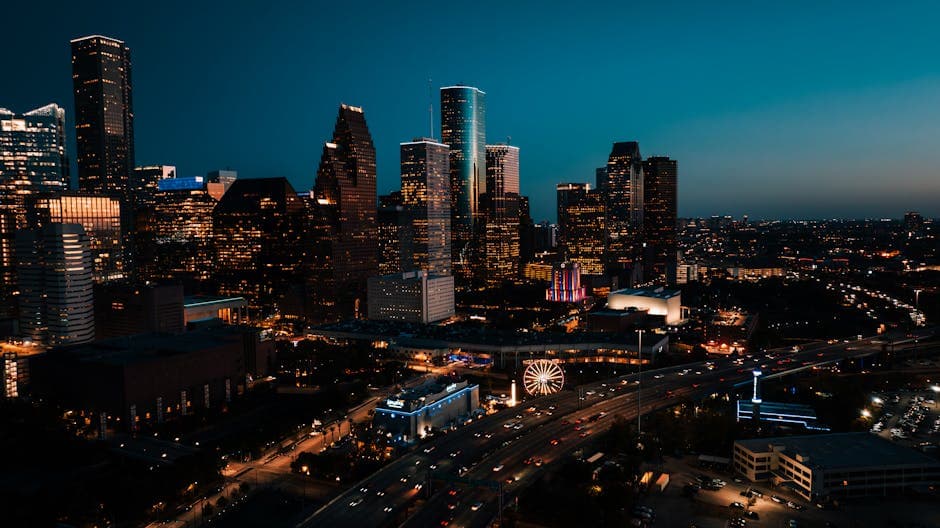
The bridge backs up. The shift bus rolls back from Boca Chica. The kitchen ticket prints in English.
At 5:42 on a Friday evening, the Gateway International Bridge backs up south into Matamoros. Brownsville families load grocery bags into trunks for the cross-border return. UTRGV students walk north toward 14th Street with backpacks slung. The SpaceX Starbase shift bus rolls back from Boca Chica village along TX-4 with a crew of welders, technicians, and engineers swapping launch-week stories. At the same minute, a third-generation family Tex-Mex room on International Boulevard fields the third Spanish call of the evening from a customer asking whether the kitchen can hold a family-style platter for eight at seven thirty for a quinceanera planning meeting.
The first call is in Spanish, from a multigenerational Brownsville family in the Southmost neighborhood. The second is in English, from a Starbase contractor staying in a Boca Chica Boulevard hotel and asking for delivery to the workforce lot near the launch site. The third is bilingual start to finish, from a UTRGV professor who switches languages between sentences without thinking. The fourth comes through the marketplace app in flat English, with a 28 percent commission baked into the line items, with no surface for the customer to ask anything more complicated than which combo plate to add. The phone has been working this way for years. The marketplace surface has not.
A direct ordering stack lets the operator render the menu in Spanish first and English second, defaults to the Spanish keyboard on mobile, surfaces a Boca Chica Boulevard pickup window for the Starbase commute and a separate International Boulevard window for the bridge-side lunch crowd, prints the kitchen ticket in English so the line cook does not have to context-switch, and answers the inbound phone in Spanish so the multigenerational family at the dinner table can speak the way they actually speak. The translation cost is paid once, at the surface.
Spanish is not a marketing accent in Brownsville. Per US Census ACS, the city is 93 percent and change Hispanic or Latino, the highest of any large city in the United States. Spanish is the household language in the majority of homes. A 14th Street panaderia, a Boca Chica Boulevard family room, a Southmost ranch-style barbacoa kitchen all run a Spanish-first operating language. The marketplace app surface has been treating Brownsville as an English-first market for a decade. It has not been.
Layered over the Spanish-first base, two distinct economies have shifted Brownsville since 2014. SpaceX Starbase at Boca Chica has rebuilt the city's outer-ring restaurant economy on aerospace workforce, journalist arrivals, and rocket-launch tourism. The Gateway International Bridge has compressed the cross-border lunch market and the bilateral shopping economy onto a clock that every operator near the bridge already knows by feel.
What follows is a feature on SpaceX Starbase's economic transformation, the cross-border lunch market, the Tamaulipas and Nuevo Leon Tex-Mex register, UTRGV student spend, the airport and Winter Texan seasonal layer, the Texas plus Cameron County tax stack, a Spanish-first Voice AI argument, ten notable Brownsville operators, and the case for a flat $249 a month direct ordering stack built for the way the southernmost city in Texas actually runs.
Starbase has rewritten the outer-ring restaurant economy since 2014.
Per SpaceX public launch information and reporting in The Brownsville Herald, SpaceX broke ground at Boca Chica in 2014 and has spent the decade since converting the dunes east of Brownsville into the company's primary rocket development and launch site. The Starhopper sub-orbital campaign in 2018 to 2019, the SN series of Starship prototype flights in 2020 to 2021, the integrated Starship and Super Heavy first orbital test in 2023, and a steady cadence of integrated flight tests through 2024 and 2025 have transformed Boca Chica from a quiet beach community into a working aerospace facility.
The economic effect on Brownsville is not subtle. The aerospace workforce on the Starbase site numbers in the thousands across SpaceX direct hires plus contractor crews. Hotel rooms south of 14th Street and along Boca Chica Boulevard fill on launch weeks. Journalists, photographers, and aerospace press from across the country and around the world camp out for major flight tests. South Padre Island runs as the spectator viewing economy, with a launch-day crowd that fills the beach observation points. Restaurants on Boca Chica Boulevard, International Boulevard, and along the TX-4 corridor absorb the wave.
The marketplace apps do not model this cadence. A DoorDash listing has no concept of a launch-week surge, no surface for an operator to push group-order capacity for a launch-day watch party, no way to coordinate workforce delivery to the Starbase staging lots, and no mechanism to communicate hold-the-kitchen instructions during a scrubbed-and-rescheduled flight test. The marketplace defaults a flat radius, a flat commission, and a flat-English customer experience onto a launch economy that runs in cycles and bilingually.
A direct ordering surface lets a Brownsville operator publish a launch-week window in Spanish and English, configure a Starbase delivery zone with a fixed Uber Direct dispatch fee, push group-order specials to a customer subscriber list two days before a launch, and shut down ordering cleanly during a TX-4 highway closure for a launch road clear. The aerospace economy is durable. The marketplace surface for it is not.
The cross-border lunch market runs on a clock the marketplace cannot see.
Per the US Bureau of Transportation Statistics Border Crossing Data, the Gateway International Bridge and the Veterans International Bridge at Los Tomates carry millions of vehicle and pedestrian crossings between Brownsville and Matamoros every year. The crossings run on a daily clock that every cross-border family already knows by feel: pre-shift commute in the early morning, shopping and medical visits through the midday, lunch and after-school traffic, and an evening return wave that fills the southbound bridge from about five thirty through seven thirty.
For Brownsville restaurants south of the bridge and along International Boulevard, the cross-border lunch market is a recurring volume driver. Matamoros residents cross north for shopping at the Sunrise Mall and the Boca Chica Boulevard retail spine, for medical appointments at HCA Valley Regional and the broader Brownsville hospital cluster, for university classes at UTRGV, and for daily errands that the binational metro encodes as the normal week. The lunch order sits on top of all of it: a family eating at a 14th Street taqueria during a Brownsville shopping trip, a Matamoros office worker grabbing a pickup tray before heading back south, a UTRGV student in line at a downtown counter.
The marketplace apps do not model this clock. They do not know that the eleven o'clock through one o'clock window runs heavier than the rest of the day because northbound traffic concentrates lunch on the US side. They do not surface that the five thirty through seven thirty window thins out on the US side as southbound traffic fills the bridge. They cannot configure pickup capacity around the cross-border foot-traffic pattern. A 14th Street operator running on a marketplace surface watches the bridge clock from their kitchen window and absorbs the routing failure the app refuses to model.
A direct ordering surface lets the operator publish a separate cross-border lunch window in Spanish, configure pickup capacity to match the bridge clock, and push group-order capacity to the cross-border customer list on a Friday for the inevitable family-shopping Saturday. The Voice AI on the inbound line answers in Spanish first and routes the cross-border lunch in the customer's working language. The kitchen ticket prints in English so the line cook can run the rush the way they always have.
Brownsville Tex-Mex carries a Tamaulipas and Nuevo Leon accent.
Per Texas Monthly Rio Grande Valley food coverage and The Brownsville Herald, the Tex-Mex register of Brownsville runs in a Tamaulipas and Nuevo Leon dialect. The ranch-style barbacoa is built on a deep family tradition that crosses the Rio Grande in both directions. The taco arabe, a Lebanese-Mexican adaptation that took root in Puebla and traveled north through Northeast Mexico, shows up on Brownsville menus in a way that does not happen in San Antonio or Houston. The carne asada plate runs on a Northern Mexican grammar of mesquite, salt, and accompanying ranchero sauces.
The neighborhood panaderias open before sunrise with conchas, marranitos, empanadas, and pan dulce that move directly from a Matamoros family-tradition baking school into a Brownsville window. Raspas, the South Texas snow-cone tradition flavored with chamoy and lechera, hold a year-round cultural weight that runs from a UTRGV student spot to a Boca Chica Boulevard family stand. Gorditas, fideo loco, and machacado-with-egg breakfast plates form a daily ordering grammar that the marketplace apps flatten into a generic Mexican-American listing.
The mechanical implication for the ordering surface is that the menu language matters. A Brownsville menu rendered in Spanish first, with the regional spellings (machacado not machaca, pan dulce with the Tamaulipas naming conventions, raspas with the specific flavors a Brownsville customer expects), reads as fluent. A marketplace flat-list Mexican menu reads as a translation. Customers know the difference. They reward operators who get the register right.
The supply chain underneath is equally bilingual. Local panaderias source flour, lard, piloncillo, and dried chile through cross-border distribution networks that move product between Reynosa, Matamoros, and the Rio Grande Valley wholesalers. The Brownsville operator who serves carne asada with a Tamaulipas ranchero salsa is sourcing inputs through a binational supply chain that the marketplace surface does not model. A direct ordering site can describe the menu honestly. The marketplace surface flattens the description into the lowest common denominator.
For the operator, the differentiation is on the customer side. A Brownsville family ordering for a Sunday family meal cares about a Tamaulipas register on the menu the way a Boston family ordering for Sunday cares about a New England seafood vocabulary. The marketplace surface treats every Brownsville order as a generic Mexican-American transaction. The direct ordering surface treats every Brownsville order as a Tamaulipas-register family meal. The retention math is mechanical.
93 percent Hispanic. The highest of any large city in the United States.
Per US Census Bureau ACS 2024, Brownsville's Hispanic or Latino share sits at roughly 93.5 percent. The figure is above El Paso (82 percent), above Laredo (95 percent and the only US large city with a higher share), well above the Texas state average, and effectively at the upper bound of US large-city demographic concentration. The Spanish-language environment is not an accent on top of an English-speaking city. Spanish is the operating language of nearly every restaurant front of house in Brownsville.
The mechanical implication for restaurant ordering is that an English-only ordering surface excludes the majority of the addressable customer base across every Brownsville zip code. A 14th Street downtown taqueria takes essentially all of its phone orders in Spanish. A Southmost family room takes a Spanish-first multigenerational base. A Boca Chica Boulevard family casual mixes a Spanish-first base with an aerospace English layer on launch weeks. A UTRGV-adjacent cafe takes a bilingual student base that defaults to whichever language the customer started in. The marketplace flattens all of this into an English checkout. The drop-off is silent.
A direct ordering site solves the surface in software. The menu renders in Spanish first with English alternates one tap away. The keyboard defaults to Spanish on mobile in zip codes 78520, 78521, and 78526. The pickup confirmation comes in the customer's chosen language. The kitchen ticket prints in English so the line cook does not have to context-switch. The operator pays the translation cost once, at the surface, and then runs every order through the same line printer.
On the inbound phone line, a Spanish-first Voice AI tuned for the Brownsville and Matamoros border dialect changes the economics. The vocabulary that a Brownsville customer uses for barbacoa, raspas, machacado, fideo, conchas, gorditas, and tacos arabes is not the vocabulary that a generic Spanish speech model defaults to. The Brownsville dialect runs in a Northeast Mexican register, with Tamaulipas-specific food terms and a working-language cadence that overlaps strongly with Reynosa, Matamoros, and Monterrey. The tuning is the difference between an ordering line that works and one that fails on the first menu read.
DirectOrders ships Spanish-first Voice AI from launch day, with the South Texas border dialect tuned for the Brownsville and Matamoros register. The Spanish-first surface is not a marketing differentiator. It is the operating reality of a Brownsville restaurant in 2026.
The UTRGV academic calendar maps directly to weekday lunch volume.
Per UTRGV Brownsville campus information, the University of Texas Rio Grande Valley Brownsville campus sits on a resaca east of downtown and carries a student population in the tens of thousands across the broader UTRGV system, with the Brownsville campus running the College of Liberal Arts, the College of Education, and the regional medical school cohort. The Brownsville student base is heavily commuter, heavily Hispanic, heavily local, and tied to family kitchens at home as well as to the downtown and campus-adjacent restaurant economy.
The academic calendar drives weekday lunch volume in a tight pattern. The August through May spring-and-fall window runs hot for downtown and campus-adjacent rooms. The June and July summer trough drops weekday lunch volume by half. Spring break in mid-March pulls a meaningful share of students out of the city. Thanksgiving week, winter break, and final-exam weeks each generate their own micro-patterns. A Brownsville restaurant that indexes pickup capacity and Voice AI staffing to the academic calendar runs steadier than one that does not.
The marketplace apps do not surface the academic calendar. A DoorDash listing has no concept of UTRGV move-in weekend or finals week. The platform default treats every Friday as the same Friday. The operator absorbs the variance. A direct ordering surface lets the operator publish a UTRGV-specific menu, a campus-pickup window, and push group-order capacity to a student subscriber list two days before midterms. The Voice AI line handles the bilingual student base in whichever language the call opens.
Student spend on the Brownsville side is closely tied to the cross-border lunch market. Many UTRGV students live in Matamoros and cross daily for class. The combined effect on a Friday afternoon at a 14th Street counter is a student wave plus a cross-border family wave converging in the same window. A direct ordering surface that can configure pickup capacity around both flows is the operating tool. The marketplace surface that flattens both into a single English-default checkout is not.
Boca Chica Boulevard, International Boulevard, 14th Street.
Brownsville runs as three primary restaurant corridors and a handful of supporting clusters. Boca Chica Boulevard, the TX-4 spine running east toward the Starbase site, carries highway-side restaurants, the Sunrise Mall retail cluster, and the aerospace commuter volume. International Boulevard, the gateway north toward I-69E and the airport, runs hotel-adjacent, family casual, and chain density. 14th Street, the historic downtown spine running south toward the Gateway International Bridge, holds the family-run taquerias, panaderias, and Tamaulipas-register kitchens that define the city's food tradition.
The UTRGV campus on the resaca east of downtown anchors a student spend cluster. The FM 802 ring and the airport-adjacent corridor on the north side hold a newer suburban density and the Winter Texan park-adjacent rooms. The Southmost neighborhood south of the Veterans International Bridge at Los Tomates is the most Spanish-first corridor in the city, anchored on multigenerational Tex-Mex and family-run ranches-style barbacoa rooms.
Each corridor has a distinct call language mix. Downtown 14th Street and Southmost run Spanish-first at roughly 78 to 80 percent. The campus and International Boulevard zones run bilingual majority. Boca Chica Boulevard runs Spanish-first with an aerospace English layer during launch weeks. The north-side FM 802 ring and Winter Texan corridor pulls slightly more English than the rest of the city. A single ordering stack that handles the Spanish-first base plus the corridor-specific overlays is the Brownsville operating playbook.
The marketplace cannot route differently across these corridors. The direct ordering surface can. The operator publishes pickup windows for each corridor, configures Uber Direct dispatch fees by zone, and surfaces a Voice AI line that opens in Spanish and pivots to English on cue. The corridor map is the operator's map. The marketplace flattens it into a single ZIP code radius.
BRO and the Winter Texans, the second seasonal economy.
Per the Brownsville to South Padre Island International Airport, BRO operates as the regional gateway on the north side of the city, off Highway 802. The airport carries Starbase journalists, aerospace contractors, and the steady Winter Texan flight arrivals that anchor the Rio Grande Valley's cool-season tourism economy. South Padre Island sits twenty-eight miles east of the city across the Queen Isabella Causeway from Port Isabel and runs as the Brownsville-Harlingen-South Padre tourism triangle.
The Winter Texan economy in the Rio Grande Valley runs from roughly November through April. Retirees and seasonal residents from the upper Midwest, the Plains states, and Canada drive south for the cool-season climate, settle into RV parks and seasonal-rental communities across the Valley, and shift the restaurant demand pattern materially. Brownsville's share of the Winter Texan economy is smaller than Harlingen, McAllen, or South Padre Island proper, but the FM 802 ring and the airport-adjacent corridor pull a meaningful seasonal layer. The Winter Texan ordering pattern leans English, leans early-bird dinner, and leans toward family casual rooms with parking and accessibility.
Layered on top of Winter Texans, the Starbase tourism economy runs on a different cadence. Aerospace journalists and contractors arrive for launch weeks across the calendar. The launch-day spectator crowd fills South Padre Island viewpoints and pulls a wave of pickup orders through the Brownsville restaurant economy that runs back across the Queen Isabella Causeway and east through Port Isabel. Charro Days Fiesta in late February to early March runs as the city's signature binational cultural festival, drawing visitors from across South Texas and Northeast Mexico.
The marketplace apps do not surface any of these seasonal layers cleanly. They do not configure a Winter Texan early-bird dinner window. They do not push a launch-week group-order menu to a subscriber list. They do not coordinate Charro Days catering with the city's festival schedule. A direct ordering site lets the operator publish seasonal windows, target subscriber segments, and configure delivery zones around the cross-causeway South Padre crowd. The seasonal layers compound. The marketplace surface flattens them.
The net effect for a Brownsville operator is that the restaurant calendar is not one calendar. It is three or four overlapping calendars: the everyday cross-border lunch pattern, the UTRGV academic year, the Starbase launch cadence, the Winter Texan November-through-April window, and the Charro Days festival. A direct ordering surface that can publish menus and capacity windows across all of them is the operating tool. A marketplace surface that flattens them into a single English-default checkout is not.
Texas state plus Cameron County plus Brownsville equals 8.25 percent.
Per the Texas Comptroller of Public Accounts, the combined sales tax for restaurant operators in Brownsville is 8.25 percent. The state component is 6.25 percent. The local component (1.50 percent City of Brownsville plus 0.50 percent Cameron County transit and special purpose) is 2.0 percent, sitting at the state-mandated local cap. The combined rate prints on every Brownsville cart and ticket. Texas restaurant operators reconcile against the flat 8.25 percent monthly.
For an ordering surface, the 8.25 percent is mechanical math. The line-item total drives the tax line, the tax line drives the total, the total drives the customer payment and the operator's tax remittance to the state. A direct ordering site renders the tax line transparently on every cart in Spanish and English. The marketplace surfaces the 8.25 percent inside a stack of additional service fees that obscure the actual tax-on-food calculation. The customer sees one number; the operator absorbs the math.
Mixed beverage (alcohol) sales carry a separate state mixed beverage gross receipts tax of 6.7 percent paid by the operator and an 8.25 percent mixed beverage sales tax paid by the customer, structured around the state's alcohol tax regime. A direct ordering platform with an alcohol-capable cart handles the two-track tax structure cleanly. The marketplace apps generally do not. They route alcohol through restricted partner flows and collect tax in ways that complicate the operator's monthly reconciliation.
DirectOrders ships with Texas tax handling configured for the 8.25 percent combined rate and the mixed-beverage two-track structure out of the box. The platform charges $249 a month flat. Stripe processes transactions at standard card-processing rates. There is no commission per order, no service fee on top of the tax, and no hidden tax-line obfuscation. The 8.25 percent the customer pays is the 8.25 percent the operator remits to the state.
| Jurisdiction | Rate | Description | Cap |
|---|---|---|---|
| State of Texas | 6.25% | Texas state sales and use tax on prepared food and most non-alcoholic beverages. | Statewide flat rate. |
| City of Brownsville | 1.50% | City of Brownsville local sales tax, including municipal sales tax and economic development components. | Set under Texas local tax authority, within the 2.0 percent local cap. |
| Cameron County (transit) | 0.50% | Cameron County transit and special purpose district allocations apply within the Brownsville city limits. | Subject to the 2.0 percent state local-tax cap. |
| Total combined sales tax | 8.25% | The line every Brownsville cart and ticket prints. Texas restaurant operators reconcile against this flat rate. | State-mandated 8.25 percent cap on the combined rate. |
The inbound phone answers in Spanish first. The ticket prints in English.
In a 93 percent Hispanic city with Spanish as the dominant household language, an English-only phone line is the largest single source of silent drop-off. A Brownsville customer calling a 14th Street family room expects to hear a Spanish greeting on the second ring. A Boca Chica Boulevard aerospace contractor calling the same room expects to be heard in English. A UTRGV student switching between languages mid-sentence expects the line to follow. The marketplace apps offer no inbound phone surface at all. The DirectOrders Voice AI does.
The Voice AI on a Brownsville line opens in Spanish first with a configurable greeting. It hears the caller's first phrase and pivots to English on cue. It reads the menu in either language, using the regional spellings and the Tamaulipas-register vocabulary the customer expects: barbacoa, raspas, machacado, fideo loco, gorditas, pan dulce, tacos arabes. It confirms the order in the caller's chosen language. It prints the kitchen ticket in English so the line cook does not have to context-switch.
The model is tuned for the South Texas border dialect, with the Northeast Mexican (Tamaulipas, Nuevo Leon, Coahuila) vocabulary that overlaps strongly with Reynosa, Matamoros, and Monterrey. A Brownsville customer ordering "una mestiza con frijol y cabrito" does not need to translate. The Voice AI hears it the way a Brownsville line cook hears it. A generic Spanish speech model defaults to a Madrid or Mexico City register and breaks on the regional food vocabulary. The Brownsville tuning is the difference between a phone line that converts and one that drops the caller.
Operators ask whether the Voice AI replaces a human. The answer is no. It runs the inbound rush when the kitchen cannot pick up the phone, it captures the caller's order, it prints a ticket the line can run on, and it confirms the pickup time the way a hostess would. The human reclaims the time the phone was eating. The Spanish-first surface reclaims the customer base the English-only line was quietly dropping.
Why a flat $249 a month is the only stack that fits Brownsville.
Step back from Starbase, the Gateway Bridge, the Tamaulipas Tex-Mex register, the UTRGV calendar, the Winter Texan layer, and the 93 percent Hispanic Spanish-first reality. The argument is mechanical. Brownsville is the southernmost city in Texas, anchored on a binational metro, a working-language Spanish base, an aerospace economy at Boca Chica, a university campus on the resaca, and an 8.25 percent tax stack that prints on every cart. The marketplace percentage model was not designed for this profile.
Tuned for the Brownsville and Matamoros border dialect. Barbacoa, raspas, machacado, gorditas, tacos arabes, fideo loco rendered correctly on the menu, the call, and the kitchen ticket.
Hear the Voice AILaunch-week menus, aerospace workforce delivery zones, group-order capacity for watch parties, road-closure communications during TX-4 launch clears. The marketplace defaults cannot do any of this.
See channelsPickup capacity configured to the Gateway Bridge clock. Spanish-first subscriber list for the cross-border customer base. International Boulevard hotel-cluster delivery zone with Uber Direct flat dispatch.
See delivery optionsAcademic-calendar pickup windows. Move-in weekend capacity. Finals week group orders. Campus subscriber list segmented from the broader Brownsville customer base. Bilingual student-friendly checkout.
Read $249 pricingWho the Brownsville stack is built for.
Multigenerational family rooms on 14th Street, Southmost, and the FM 802 ring. Spanish-first phone, Tamaulipas-register menu, family-event catering. The largest single operator type in the city.
Highway-side family casual, sports bars, and chain-and-local rooms absorbing the Starbase commute. Launch-week menus, watch-party group orders, aerospace workforce delivery.
International Boulevard hotel-adjacent rooms and downtown counters serving the Matamoros-to-Brownsville lunch crowd. Cross-border subscriber list, bilingual checkout, bridge-clock pickup windows.
14th Street counters, cafe spaces near the campus, fast casual on the resaca corridor. Academic-calendar windows, move-in week capacity, finals-week group orders.
Family-tradition panaderias and the year-round raspas culture. Spanish-first menu, pre-order capacity for weekend family events, neighborhood subscriber list anchored on cultural moments.
Las Brisas-style modern steakhouses, Palenque-style Northern Mexican grill rooms. Weekend reservation strength, family-celebration capacity, catering for quinceaneras and weddings.
The simple math.
A Brownsville restaurant doing $45,000 a month in marketplace volume at a blended 25 percent commission pays roughly $11,250 a month, or $135,000 a year, to the marketplace. A flat $249 a month DirectOrders subscription, with Uber Direct flat dispatch averaging $4 per order, costs roughly $8,500 to $10,500 a year on the same volume. The annual savings sits between $124,000 and $126,000.
The argument is not just that DirectOrders is cheaper. The argument is that the percentage commission model was designed for a market without 93 percent Hispanic call volume, without a Gateway Bridge cross-border lunch market, without a Starbase launch cadence, without a UTRGV academic calendar overlay, without a Winter Texan seasonal layer, and without a Tamaulipas-register menu vocabulary. Brownsville is a city where the percentage model breaks the operator on multiple sides simultaneously.
Ten Brownsville rooms the city builds its calendar around.
A non-exhaustive shortlist drawn from local reporting and public information. Operators are described from publicly available coverage. Inclusion is editorial, not a partnership claim.
Brownsville classic on the Boca Chica spine. Sports bar plus casual American kitchen. Hosts launch-day crowds and aerospace workforce after-shift.
Casual American room with a long Brownsville run. A daytime business-lunch and family staple, frequently called the city's classic comfort kitchen.
Downtown bar and dining room. Mexican plates, regional craft cocktails, and a cultural-event calendar that ties to the city's downtown revival.
Family-run Mexican kitchen with a Tamaulipas register. Daily plate-lunch volume runs on a Spanish-first ordering base.
Long-running seafood room serving Gulf catches. Anchors the South Padre Island day trip from Brownsville. Family-tradition reservation calendar.
Cuban sandwiches, pressed plates, and family-style trays. Caters office and aerospace workforce lunches across the FM 802 ring.
Local sports bar and grill. Late-night kitchen, group-order strong, and a fixture for launch-day watch parties and game nights.
Local pickle-and-snack concept with a strong Brownsville following. Counter service, group platters, and a social-media-forward menu.
Northern Mexican grill room. Mesquite-fired steak, fajitas, and parrillada plates. Family-event catering base across the Boca Chica corridor.
Modern steakhouse on the north side. Weekend reservation-strong, family-celebration room, and a private-event catering surface.
Brownsville does not need a smarter algorithm.
It needs a stack that understands the border.
The Gateway Bridge at evening rush and the cross-border lunch wave. The Starbase road clear and the launch-week menu. The 14th Street panaderia opening at five thirty in the morning. The UTRGV resaca-side cafe on a Wednesday at noon. The Boca Chica Boulevard family room on a Sunday afternoon. The Charro Days Fiesta in late February. Each runs a different ordering pattern. All of them run a different ordering pattern from the marketplace app's default model.
A flat $249 a month, with Spanish-first Voice AI tuned for the South Texas border dialect, a Starbase launch-week playbook, cross-border lunch subscriber capacity, UTRGV academic-calendar pickup windows, Uber Direct dispatch across Boca Chica Boulevard and International Boulevard and 14th Street, and same-day Stripe payouts, is the minimum architecture that maps to Brownsville as it actually runs. Every operator already knows the city. The only question is whether the ordering system they pay for is built for it.
Other Texas and border markets
Where the data comes from
Every claim above is grounded in primary or trade-press reporting. Specific figures come from the named source. Operator descriptions are drawn from public reporting and not from confidential operator interviews.