Two rivers.
One city.
One ordering stack.
An editorial feature on San Antonio restaurant economics. The Riverwalk two-tier atlas, the Pearl District chef movement, the 64 percent Hispanic majority that rewrites every ordering interface, the Joint Base San Antonio catering economy, the ten-day Fiesta SA that breaks every marketplace ETA, and the puffy taco the city invented in 1978.
The brunch nobody outside the Pearl sees.
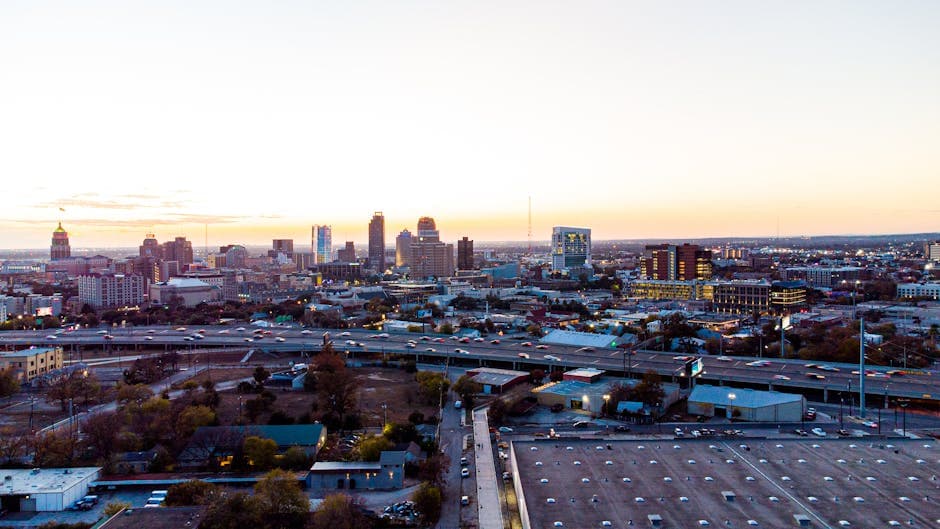
By 10:30 on a Saturday during Fiesta week, the Pearl District has already turned over its first seating. A line stretches from the bakery across the brick courtyard. A wedding party in white guayaberas is taking pictures by the old smokestack. The Pearl Brewery has been gone since 2001. The bottling-room floor where the Pearl Beer was canned is now a James Beard finalist room serving charcuterie boards. The Saturday lunch wave is forty minutes away.
The operator runs the Mexican-American kitchen on the west side of the courtyard. The phone has rung sixteen times since 10:00 AM. Eight of those calls were in Spanish: a quinceanera platter pickup for 1:00 PM, two retirement-party catering pickups for a JBSA-Fort Sam Houston civilian colleague, a delivery to a Stone Oak family who drives in once a month, and four shorter Spanish-language orders. Three calls were in English from Riverwalk hotel guests who walked north from the downtown loop and want to order ahead before they make the mile-and-a-half walk south. Five calls were a code-switching mix.
The marketplace app shows a 95-minute ETA on the courier dispatch. It is the second Saturday of Fiesta. The Battle of Flowers Parade staging is closing Commerce Street and Broadway and Houston Street for the afternoon. NIOSA at La Villita opened last night and runs again tonight. The four million Fiesta attendees that the Commission counts across the ten-day window do not move uniformly. They move in waves of seventy thousand to seven hundred fifty thousand on parade days, and the marketplace algorithm does not know that the courier supply will not arrive to catch the demand.
The operator picks up the phone. Spanish on the second ring, switching to English when the credit card number is read back, switching to Spanish to confirm the pickup window. The bilingual Voice AI on the line is handling the overflow when she steps onto the line, taking the call in the customer's preferred language and routing the ticket to the kitchen printer in English. The kitchen line cook does not need to context-switch between Spanish on the phone and English on the ticket. The system absorbs the translation cost once, at the input.
The direct site is taking pickup orders for the Pearl District wedding-party crowd ordering ahead. The catering portal is taking a $1,800 net-30 invoiced order for a Tuesday JBSA-Fort Sam Houston squadron lunch. The bilingual SMS list is reactivating customers from the Northside who normally drive down for Sunday brunch. The marketplace app is somewhere out beyond Broadway, broken on its own ETA. The Saturday brunch service moves because the stack underneath it is built for the city as it actually runs.
What follows is a feature, in seven essays and four custom inline visualizations, on the two-tier river that runs through downtown, the chef-driven district that grew on top of an old brewery, the Hispanic majority that defines every ordering interface, the military bases that feed a six-figure annual catering economy, the ten-day festival that breaks every algorithmic ETA, and the puffy taco that San Antonio invented and exported to the rest of Texas.
The Riverwalk is two restaurant economies, stacked.
Most visitors meet San Antonio through the downtown loop of the River Walk: a roughly one-mile river bend below street level, lined with mariachi stages, color-striped umbrellas, hotel patios, and the institutions that built the tourist economy. Casa Rio opened in 1946. Schilo's Delicatessen has been pouring root beer since 1917. Boudro's brought tableside guacamole to the river in 1986. The downtown loop is the Riverwalk most postcards photograph.
The real Riverwalk is much longer. Per the San Antonio River Authority, the Museum Reach extension opened in 2009 stretched the river roughly 1.3 miles north past the Pearl District and toward Brackenridge Park. The Mission Reach extension opened in 2013 took the river roughly 8 miles south through the King William historic district and along the chain of four Spanish colonial missions that anchor the Mission Trail UNESCO World Heritage designation. The total network is more than 15 miles.
The tier-one tourist economy clusters in roughly half a mile of the downtown loop. Convention hotels feed it. Cruise-ship-style packaged tours feed it. The dinner mix is heavy on the second-generation mariachi-and-margarita Tex-Mex format that traveled to Las Vegas and Disney in the 1990s. The clientele is largely English-first, weighted toward leisure travelers and the convention center crowd, and the average ticket pattern is a $42 dinner check with two margaritas.
The tier-two locals economy clusters north at the Pearl, south through Southtown and King William, west along the Northside Mexican corridors on Bandera and Culebra, and far north in Stone Oak. The clientele is Hispanic-majority, code-switches across Spanish and English, and the average check pattern is wider: $14 puffy-taco lunch on the west side, $58 chef tasting at the Pearl, $98 catering tray to a Stone Oak family party. The ordering interface has to handle all of it.
Marketplace apps lump both tiers into the same algorithmic ETA and the same English-only listing format. The result is a ranked list that treats Cured at Pearl and Casa Rio as the same business. The locals tier loses search visibility on a downtown-loop algorithm. The tourist tier loses margin on the same commission percentage that an independent locals room cannot absorb. The two tiers need different ordering surfaces, but they live on the same river.
The Pearl is what happens when an old brewery becomes a chef district.
The Pearl Brewing Company canned its last Pearl Beer in 2001. The complex sat empty until Silver Ventures bought the 22-acre brewery site in 2002 and began a slow conversion: brick warehouse to bakery, bottling room to bar, malt house to charcuterie program, executive offices to chef incubator. The result is the densest concentration of chef-driven independent restaurants in the state of Texas, anchored to the Museum Reach extension of the river and surrounded by a Saturday farmers market that runs year-round.
Steve McHugh opened Cured at Pearl in 2013 and has been a James Beard finalist multiple years for Best Chef Southwest, an unusual achievement for a chef anchored in a converted brewery building. Geronimo Lopez runs Botika as a chifa and Nikkei room, building the Asian-Latin crossover cuisine that San Antonio's Mexican and Asian-American food traditions actually invite. Jennifer Hwa Dobbertin opened Best Quality Daughter in the modern Chinese-American category and earned her own James Beard finalist nominations. The Pearl has produced more James Beard finalist chefs per square foot than any other district in San Antonio.
The economic structure underneath the chef district is independent ownership. The Silver Ventures landlord operates the Pearl as a real estate company, not a corporate restaurant group, and the operators sign their own leases, own their own menus, set their own prices, and keep their own customer relationships. The chefs are not employees of a holding company. They are independent operators with their own profit-and-loss responsibility and their own ordering surfaces.
The marketplace ordering economics make the Pearl operators particularly exposed. A Cured charcuterie board is a $38 menu item with a 65 percent food cost on the rarest house-cured cuts. A 28 percent marketplace commission drops the margin below sustainable. The same operator on a flat-fee direct stack keeps the margin and owns the relationship with the customer who reads their feature in Texas Monthly and drives in from the Northside on a Saturday.
The Pearl chefs talk about the direct ordering thesis the way Brooklyn chefs talked about CSAs in 2006: it is how the independent kitchen survives the platform layer. The James Beard finalist count is not an accident. It is what happens when the operator owns the surface, the customer relationship, and the menu without renting margin to a marketplace.
When the rent is independent and the chef owns the menu, the marketplace commission is the single largest cost line above ingredients and labor. A flat-fee direct stack returns that cost to the operator. James Beard finalist kitchens cannot run on percentage-of-revenue ordering fees.
64 percent Hispanic is not a slogan. It is the ordering interface.
Per US Census Bureau ACS 2024, the Hispanic or Latino share of the City of San Antonio is approximately 64 percent. This is one of the highest Hispanic shares of any major US city and the highest among the ten largest US cities. The Northside Mexican corridors along Bandera Road, Culebra Road, and Fredericksburg Road, the southside neighborhoods around Pleasanton Road and South Flores, and the inner west side along Guadalupe and Zarzamora are predominantly Spanish-speaking and Spanish-first in the home.
What this means for restaurant ordering is mechanical. A Northside Mexican panaderia on Bandera takes the majority of its phone orders in Spanish. A Carnitas Lonja on South Flores takes orders from a regular Saturday clientele that defaults to Spanish for the order and switches to English for the credit card and address. A west side puffy taco shop takes calls from the second-generation San Antonio Latino who code-switches naturally and from the first-generation immigrant grandmother who does not. The interface has to handle both ends of the spectrum.
English-only ordering surfaces shed Spanish-first customers on the first failed checkout. The customer hits a checkout flow that does not render in Spanish, cannot describe the spice level in their own language, and cannot confirm the pickup window through a Spanish prompt. The drop-off is silent. The operator has no analytics to confirm that the call was a Spanish-language attempt to order. The marketplace apps do not segment language. The lost revenue is invisible but real.
Spanish Voice AI on the inbound phone line changes the economics. The line opens with a bilingual greeting that the customer can answer in either language. The menu renders in Spanish with English alternates. The pickup confirmation comes in the customer's chosen language. The kitchen ticket prints in English so the line cook does not have to context-switch. The translation cost is paid once, at the input surface, and the rest of the operation stays in English on the kitchen side.
DirectOrders Voice AI ships with English and Spanish from launch day. In a Hispanic-majority city like San Antonio, this is not an accessibility feature. It is the baseline that every ordering surface needs to ship. Anything less leaves the majority of the addressable customer base outside the funnel.
San Antonio invented the puffy taco. The delivery window is ten minutes.
Henry's Puffy Tacos opened on the west side of San Antonio in 1978. The Lopez family pressed raw masa into a hot-oil fryer, watched the dough puff into an open shell, and filled it before the steam escaped. The form became the signature San Antonio taco. The puffy taco is to SA what the New York slice is to Manhattan: a hot-oil format that the city invented and that does not actually exist in the rest of the state in the same way.
The puffy taco has a delivery problem that the marketplace apps do not understand. The shell goes into the bag at roughly 350 degrees of residual frying temperature. Within four minutes, the moisture from the filling begins to soften the shell from the inside. Within ten minutes, the puffy taco has reverted to the texture of a wet tortilla. The format is built for in-restaurant service or a five-minute counter pickup. It is not built for a thirty-minute marketplace courier route.
The other San Antonio taco formats have different but related delivery windows. The Tex-Mex breakfast taco, the SA specialty that Austin eventually adopted, holds in foil for thirty minutes before going leathery. The carnitas michoacanas tradition at South Flores rooms like Carnitas Lonja holds for fifteen minutes in a sealed paper boat before the meat dries. The street-style soft corn taco holds for twenty-five minutes if it is double-wrapped and the salsa is kept separate.
The implication for the SA operator is mechanical: the delivery radius cannot be set by the marketplace algorithm. It has to be set by the food. A hardcoded two-mile cap on puffy taco delivery preserves the format. A four-mile cap on the breakfast taco preserves the format. A marketplace app that dispatches puffy tacos to a six-mile radius is engineering a refund and a one-star review that names the operator, not the app.
The military catering economy nobody outside SA tracks.
Per the Joint Base San Antonio public affairs office, JBSA is the single largest joint base in the Department of Defense by population. The three primary installations are JBSA-Lackland (Air Force basic training, the entry point for every enlisted Air Force airman in the United States), JBSA-Fort Sam Houston (Army medical training, Brooke Army Medical Center, US Army North), and JBSA-Randolph (pilot training, Air Education and Training Command). Combined active duty plus civilian workforce sits in the neighborhood of 100,000.
The catering opportunity is structural. Air Force basic military training graduates roughly five hundred to seven hundred airmen every Friday, year-round. Each graduation is a family event. Families fly in from across the country and book Thursday-night and Friday-morning catering pickups for hotel rooms, base on-post family events, and the standard graduation lunch. The annual cadence is roughly fifty graduation weeks. A single restaurant within twenty miles of Lackland can clear six-figure annual revenue on the graduation channel alone.
JBSA-Fort Sam Houston runs the Army medical training pipeline through Brooke Army Medical Center and the Medical Center of Excellence. Daily lunch catering for medical training units, weekly grand rounds for senior medical staff, and monthly heritage events for medical corps anniversaries are all recurring orders. The buyer is a unit secretary or a contracting officer. The payment is a Government Purchase Card or a small-business invoice on net-30 terms.
The marketplace apps cannot transact in this market. A Department of Defense Government Purchase Card cannot route through a DoorDash service-fee structure, and the reimbursement paperwork on a 28 percent commission is impossible to close on a $1,800 squadron lunch. A direct catering portal that accepts a GPC, generates an invoice with the unit identifier, screens for dietary restrictions, and books delivery into the appropriate base gate access pattern is the only commercial structure that fits.
Operators inside the twenty-mile JBSA radius routinely book the bases as their single largest customer relationship. The DirectOrders catering portal is built to handle the GPC, the net-30 invoice, the dietary screen, and the base access logistics on a single ordering surface.
Fiesta is ten days that break every marketplace ETA model.
Per the Fiesta San Antonio Commission, Fiesta runs roughly ten days every late April and draws an estimated 3.5 million attendees across more than one hundred events. The festival originated in 1891 as a parade honoring the heroes of the Alamo and San Jacinto. It is now one of the largest civic festivals in the United States and the single largest hospitality event of the San Antonio year.
The two structural events are Battle of Flowers Parade on the Friday of Fiesta week, which draws roughly 350,000 along the downtown parade route, and Fiesta Flambeau on the Saturday, which draws roughly 750,000 along the same route. NIOSA at La Villita runs four nights of the week and draws roughly 85,000 per night. King William Fair on the Saturday of closing weekend draws roughly 50,000 to the Southtown historic district. The convention hotels and the Riverwalk loop run at capacity for the full ten days.
For restaurants in the downtown loop, the Pearl, La Villita, and the Southtown corridor, Fiesta is a four-to-six-times normal weekend volume event sustained across the full ten days, with two peak parade days when downtown is functionally impassable. Marketplace ETAs in zip codes 78205, 78215, and 78204 break past ninety minutes on Battle of Flowers Friday and routinely cap out the algorithm on Fiesta Flambeau Saturday. The courier supply does not keep pace with the demand.
The operating playbook is unforgiving. Pre-position inventory of the five highest-velocity menu items the Wednesday before opening day. Add forty percent staffing for the parade days specifically. Cap delivery radius to a tightened two-mile envelope during the parade windows. Lean heavily on pickup with a thirty-minute window. Build a dedicated Fiesta landing page on the direct site that lists festival-specific menus, pickup-only ordering, and tightened radius. Maintain a SMS list for the regulars who pre-order ahead of the parade gridlock.
Direct dispatch with Uber Direct flat-fee fallback consistently outperforms marketplace ETAs by roughly twenty-five percent during Fiesta weekends. The reason is mechanical: when the operator controls dispatch, the operator can buy courier supply on demand without competing with every other restaurant on the marketplace queue.
Spurs home game night, east side, forty-one nights a year.
The San Antonio Spurs play forty-one regular-season home games every NBA season at the Frost Bank Center, the arena east of downtown along Interstate 35. The arena seats roughly 18,500. Game-night attendance brings between 16,000 and the full 18,500 to the east side, concentrated in the 78219 and 78220 zip codes around the AT&T Center grounds. The pregame window is two hours. The postgame window is forty-five minutes before the lots clear.
The economic structure of a Spurs home night for restaurants on the east side is different from the Riverwalk economy. The east side is not a tourist food district. The food businesses around the AT&T Center are mostly Mexican-American family restaurants on Houston Street, barbecue joints on East Commerce, and a thin scattering of bar-and-grill formats that pre-date the arena. Game nights triple their typical weeknight volume from 5:30 PM tip-off arrivals through the 10:30 PM postgame.
For an east side operator, the Spurs schedule is the single most important annual calendar input. The home game schedule is published in August. Staffing decisions for the following season are made off that schedule. A pickup-only window from 4:30 PM to 6:00 PM on home game nights captures the pregame fan order. A direct catering portal that pre-sells tailgate platters and group orders for season-ticket-holder watch parties drives the most predictable recurring revenue of the home season.
The marketplace apps tag these restaurants as standard quick-service or casual dining and do not know the Spurs schedule. A pre-tip-off order placed at 6:15 PM on the marketplace app receives a thirty-five-minute courier ETA that arrives during the second quarter. The order arrives cold. The customer leaves a one-star review. The operator has no ability to schedule a Spurs-specific delivery window because the marketplace does not surface the calendar. Direct ordering surfaces the calendar as a first-class concept.
Direct ordering surfaces the Spurs schedule as a first-class calendar input. The pre-tip-off pickup window, the postgame tailgate platter, and the season-ticket watch-party catering all become bookable channels. Marketplace apps treat every Tuesday the same. Spurs Tuesdays are not the same as other Tuesdays.
San Antonio Tex-Mex is its own dialect, not a regional copy.
Tex-Mex is not one cuisine. It is a cluster of regional dialects with shared vocabulary and meaningfully different grammars. The Dallas dialect leans on enchilada plates, queso, and the chain-restaurant fajita format that Pappasito's exported to the national market. The Houston dialect carries the Sinaloan and Gulf seafood influence of the Texas coast. The Austin dialect grew up around the breakfast taco and the food-truck culture of South Congress. The San Antonio dialect is its own thing.
The SA dialect runs enchilada-and-puffy-taco forward at the everyday tier and carnitas-and-mole forward at the chef-driven tier. The breakfast taco, often credited to Austin, is in fact much older in San Antonio and remains the workday breakfast across the city. The migas, the cabrito on weekends, the barbacoa on Sunday morning, and the menudo on Saturday after a long Friday night are the structural pillars. The puffy taco is the SA signature, but the dialect runs deeper than the signature dish.
The chef-driven Pearl District dialect layers on top: Steve McHugh's house-cured charcuterie that draws on the Northern Mexican curing tradition, Geronimo Lopez's Asian-Latin chifa room, Jennifer Hwa Dobbertin's modern Chinese-American cooking, and the regional reinterpretations that keep coming out of the converted brewery buildings. The Pearl chefs are not making fusion. They are making the next generation of San Antonio cuisine using the materials and the vocabulary of the city.
For an ordering surface, the SA Tex-Mex dialect creates a vocabulary problem. The marketplace apps render the menu in flattened American-English transliterations that strip out the specific dialect cues. A San Antonio puffy taco gets listed as a generic taco. A south side carnitas michoacanas gets listed as a generic pulled-pork tray. A Pearl District charcuterie board gets listed as a generic charcuterie. The customer who knows the dialect searches differently from the customer who does not, and the marketplace search loses the specificity that the operator depends on for differentiation. The direct site can render the dialect properly, in Spanish or English, and surface the regional vocabulary that customers actually search.
Why a flat $249 a month is the only stack that fits San Antonio.
Step back from the two tiers, the seven essays, and the four data visualizations. The argument is mechanical. San Antonio is a 64 percent Hispanic-majority city with a ten-day Fiesta that pulls 3.5 million attendees, a Joint Base catering economy with 100,000 active duty plus civilian workforce, a chef-driven Pearl District anchored to a former brewery, a Riverwalk that splits into two restaurant economies on the same water, and a puffy taco invention that has a ten-minute delivery window. No commission model with a percentage cut survives this profile.
English and Spanish at launch. The mother-tongue greeting on a 64 percent Hispanic-majority city is baseline, not premium. Kitchen tickets print in English so the line does not context-switch.
Hear the Voice AIGovernment Purchase Card payment, net-30 invoicing, dietary screening, base gate access logistics. The only commercial surface a DoD purchasing system can transact through.
See catering channelsHardcode the two-mile cap so the puffy taco does not arrive as a wet tortilla. Hardcode the four-mile cap on breakfast tacos. You own the dispatch logic, not the marketplace algorithm.
See delivery optionsFiesta Saturday revenue hits the operating account Sunday morning. The cash flow that pays for the extra parade-weekend staff arrives in 24 hours, not 7 days.
Read $249 pricingThe simple math.
A San Antonio restaurant doing $60,000 a month in marketplace volume at a blended 25 percent commission pays $15,000 a month, or $180,000 a year, to the marketplace. A flat $249 a month DirectOrders subscription, with Uber Direct flat dispatch averaging $4 per order, costs roughly $9,000 to $11,000 a year on the same volume. The annual savings sits between $169,000 and $171,000.
The argument is not that DirectOrders is cheaper. The argument is that the percentage commission model was designed for a market without 64 percent Hispanic call volume, without JBSA's Government Purchase Card catering economy, without a ten-day Fiesta that triples downtown volume, without a Pearl District chef movement, and without a puffy taco that fails at fifteen minutes. San Antonio is the city where the percentage model breaks the operator most visibly on the locals tier. A flat fee maps to the actual operating reality.
San Antonio does not need a smarter algorithm.
It needs a stack that understands the two tiers.
The downtown Riverwalk and the Pearl. The carnitas room on South Flores and the puffy taco shop on the west side. The Northside Mexican corridor on Bandera and the chef-driven brunch at the Pearl. The JBSA-Lackland graduation Friday and the Spurs home Tuesday. Fiesta Flambeau Saturday and the Stone Oak family party. Each runs a different ordering pattern. All of them run a different ordering pattern from the marketplace app's default model.
A flat $249 a month, with bilingual English and Spanish Voice AI, a Joint Base catering portal that accepts Government Purchase Cards, Uber Direct dispatch with hard radius caps that respect the puffy taco's ten-minute window, a Fiesta operational mode, and same-day Stripe payouts, is the minimum architecture that maps to San Antonio as it actually runs. Every operator already knows the city. The only question is whether the ordering system they pay for is built for it.
Other Texas markets
Where the data comes from
Every claim above is grounded in primary or trade-press reporting. Specific figures come from the named source. Operator descriptions are drawn from public reporting and not from confidential operator interviews.