Southwestern Utah · Restaurant Operations · Long Read
Red Rock Gateway and the Zion Door.
A Mojave Desert anchor on the I-15 corridor, two hours north of Las Vegas, forty miles from the south entrance of Zion National Park (the most-visited US National Park in 2021 with five million plus visitors), home of the St. George Marathon (since 1977), and of the 1877 LDS Saint George Temple, the first temple in Utah. St. George is built on four tributaries (Zion gateway, snowbird, marathon, and LDS calendar) feeding one ledger.
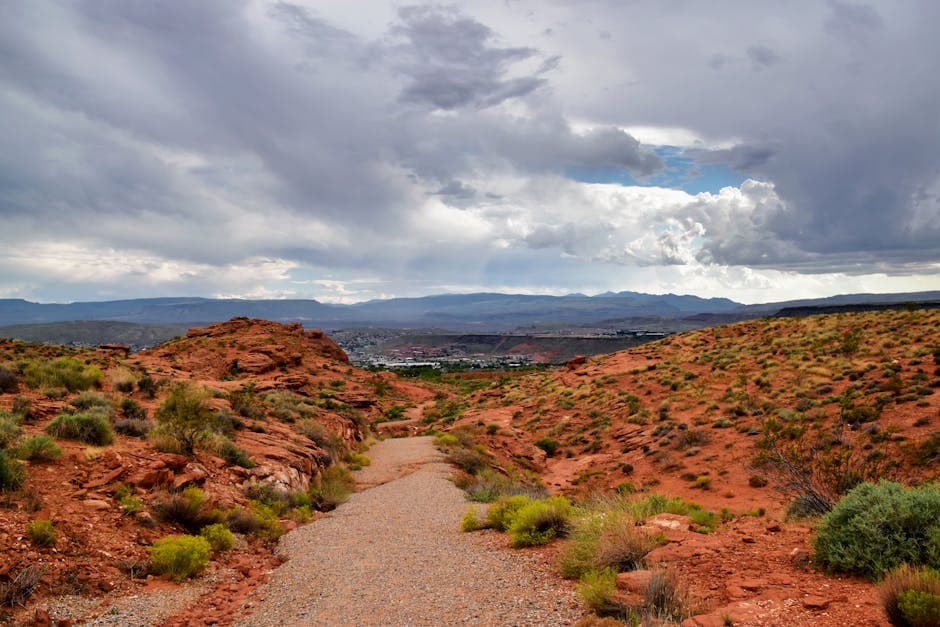
Sources: City of St. George, Washington County, National Park Service, Utah Office of Tourism, Visit St. George.
The Almanac, Page One
Combined sales tax
7.45%
UT 4.85% + Washington County 1.25% + 1% local. Per Utah State Tax Commission.
City population
~95,000
St. George city proper. Among the fastest-growing US metros over the past decade.
Zion National Park visitors
5M+
Most-visited US National Park in 2021. Per National Park Service.
St. George Marathon
Since 1977
First Saturday in October. ~7,000 runners. Nationally ranked destination race.
LDS St. George Temple
1877
The first LDS temple completed in Utah. Recently re-dedicated after major renovation.
Filed from St. George · Editorial standards: real sources, no fabricated reviews, no FAQPage schema.
I. Scene
Friday, 5:48 p.m. on Tabernacle Street. A Zion family in a dusty rental SUV, a snowbird couple walking back from the Temple grounds, and a Tuacahn ticket-holder ordering ahead for an 8:30 curtain.
Tabernacle Street, in Downtown St. George, sits at two thousand eight hundred sixty feet on the Mojave Desert bench between the Pine Valley range and the Virgin River. The brick of the St. George Tabernacle on the corner of Tabernacle and Main is the 1863 LDS pioneer building, older than statehood. Two blocks west, the brilliant white spire of the Saint George Temple, completed in 1877 and recently re-dedicated after a multi-year renovation, is the first temple the LDS Church completed in Utah. A four-top at George's Corner Cafe on Tabernacle is finishing breakfast plates at what looks like dinner hour; they are a Zion family that drove the canyon today and stopped in Downtown before the two-hour push back to Las Vegas tonight.
The phone at George's rings. A snowbird couple staying in Bloomington for the season wants to pick up two sandwiches and a slice of cherry pie at 6:30. The wife answers in clear plain English. The next ring is a tour leader for a German-speaking group of six Zion hikers staying at the Inn on the Cliff; the lead, in careful English, is asking whether the kitchen does a German vegetarian option for a 7:00 pickup. The Voice AI takes the order in English with a German hello and a German fallback line. A third ring is a back-of-house line lead from a Sunset Boulevard kitchen calling in Spanish to confirm a staff family meal pickup; the Voice AI switches to Spanish and prints the ticket in English to the line.
Outside the window of George's, the late afternoon sun is rotating off the red sandstone cliffs that frame Downtown to the north. A dusty Jeep Wrangler with a California plate, a Zion sticker on the back window, and four mountain bikes on a rack pulls past the curb. Inside are four cousins in their late twenties who have just spent three days mountain biking the Hurricane rim and Gooseberry Mesa; they are looking for a sit-down steak dinner before driving back to San Diego tomorrow, and they have an 8 p.m. table at the Painted Pony on Ancestor Square.
Across the Temple grounds, a snowbird couple is walking back toward Bloomington with grocery bags from Lin's Marketplace; they have been in Utah since early November and will leave for Oregon in late April. Their nightly pattern is dinner pickup from Cafe Rio or Magleby's, with a Twentyfive Main breakfast on Saturdays and a Painted Pony anniversary dinner once a season. Their twenty year pattern, repeated by roughly twelve thousand snowbird households Washington County tracks each winter, is the casual ticket backbone that holds the November-through-April balance sheet for every dinner house in town.
Above all of this, by Friday evening at this time of year, the Tuacahn amphitheater at the mouth of Padre Canyon (twelve miles northwest of Downtown via UT 18, past Snow Canyon State Park, into the red rock canyon at Ivins) is filling for an 8:30 curtain. Eighteen hundred seats, a stage built into the canyon, a Disney title or a Broadway adaptation lit against vermilion cliffs. The audience that is coming back to Downtown or to a West side dinner before the show has been ordering Cliffside reservations and Wood Ash Rye pickup boxes since 5. This is the spine of the St. George argument. The rest of this report is what an operator does with that fact.
II. Zion + the Gateway
Forty miles east on UT 9. Five million visitors a year. St. George is the upstream operator city.
Zion National Park was designated in 1919 (originally Mukuntuweap National Monument in 1909). In 2021, with five million four hundred thousand visitors, it was the most-visited US National Park, ahead of Great Smoky Mountains, Grand Canyon, and Yellowstone. Of those visitors, an estimated quarter were international. Springdale, the gateway town at the south entrance, has a compact roster of roughly twenty five dining operators; the larger upstream operator pool, the breakfast pickup ring, the marathon weekend dinner reservation pool, and the snowbird casual ticket book all sit upstream in St. George. A St. George operator catches a Zion family twice in a typical Park trip (the night they arrive at their Bluff Street motel, and the morning they leave for the canyon).
The Zion shuttle inside the canyon runs March through November on a mandatory basis; private vehicles cannot drive into the main canyon during shuttle hours. This means a Zion family staying in St. George has a predictable two-bookend day: a 7 a.m. departure from a Bluff Street or Telegraph Street motel toward Springdale, a full day in the canyon, and a 5 to 6 p.m. return into town. The 6 p.m. dinner pickup window on Downtown and Bluff is the largest visitor-driven daypart of the year. A direct-ordering page that opens a 5:30 dinner pickup window catches the family that the marketplace channel cannot reach in time.
The international visitor share matters for the language layer of a St. George operator. European visitors (Germany, the Netherlands, France, the UK) make up a substantial share of the Zion summer pool, and a meaningful share of the higher-end Zion lodge and Springdale resort bookings. Asian and Australian visitor flows are smaller but real. A St. George Downtown operator with a bilingual Voice AI that can handle a German tour leader, plus a Spanish channel for the back-of-house and the Sunset corridor Mexican operator pool, captures conversion that the marketplace channel does not see.
Zion peak season is March through October. The summer heat (afternoon temperatures inside the canyon push into the hundreds in July and August) reshapes the visitor flow: a Zion summer family hikes in the early morning, ducks for shade by noon, and is back in St. George by 3 p.m. The 3 to 5 p.m. afternoon pickup wave (lunch-into-early-dinner, family pool returners, a late-afternoon nap before going back out at 6) is a meaningful but underseen window. The direct page that opens an afternoon snack-bowl and family combo channel catches the pool-side family.
The fall and spring shoulder are the underrated profitable seasons. April, May, September, and October are the months with cooler daytime temperatures, full Park access without summer heat, and a willingness from visitors to extend the trip with a Tuacahn show in May, a St. George Marathon dinner the first Saturday of October, and an LDS general conference layer in April and October. The operator who books the spring and fall shoulder catches the visitor who is in town three nights, not two; the marketplace channel that charges a one-night commission price on a three-night visit is losing the operator's actual ticket.
III. The Industry, by the Numbers
Roughly three hundred fifty restaurants. A 7.45 percent combined sales tax band. Five million Zion visitors per year. Seven thousand marathon runners in October. Twelve thousand snowbird households.
Restaurants in city
~350
Per Visit St. George dining directory and Washington County operator counts.
Median dinner check
$20 to $30
Per Visit St. George dining surveys and operator interviews. Snowbird casual tier.
UT state sales tax
4.85%
Per Utah State Tax Commission.
Washington County tax
1.25%
Per Utah State Tax Commission county schedule.
Local option / city tax
1.00%
Per City of St. George Tax & Licensing. Resort and tourism rates may apply at certain operators.
Combined tax
7.45%
Sum of state + county + local. The number on every St. George check.
Zion visitors per year
5M+
Per NPS. The most-visited US NP in 2021. St. George is the upstream gateway city.
St. George Marathon
~7,000 runners
First Saturday in October since 1977. Nationally ranked destination race.
Snowbird households
~12,000
Per Washington County demographic and seasonal occupancy reporting.
LDS Temple completed
1877
First LDS temple completed in Utah. Recently re-dedicated.
Distance to Las Vegas
~120 mi
Roughly 2 hours south on I-15 via Virgin River Gorge and Mesquite.
Distance to Zion south entrance
~40 mi
East on I-15 and UT 9 to Springdale.
Two of those numbers anchor every operator's pricing conversation. The combined 7.45 percent sales tax band (Utah 4.85 percent plus Washington County 1.25 percent plus 1 percent local option) is meaningfully lower than Salt Lake City's 7.75 percent and Park City's resort tier; it is also lower than Las Vegas (8.375 percent in Clark County). The visitor rounds up at a different price point in St. George than in either of the closest comparison metros. The five million Zion visitor pool, layered with the twelve thousand snowbird households for half the year, is the largest outside-Washington-County demand driver in the city's ledger.
St. George city population at roughly ninety five thousand, plus Washington County at roughly two hundred thousand, gives a residential base larger than its nearest peer (Cedar City, the next I-15 Utah anchor north). The growth is the headline: Washington County has been one of the fastest-growing metros in the United States over the past ten years, with retiree, snowbird, and remote-worker inflows from California and the Pacific Northwest layered on a young LDS family core. The operator who anchors a catering channel for school sports families, a snowbird casual loyalty layer, and a Zion family pre-departure pickup window owns the year.
IV. The Cuisine Mix
American casual, Mexican, pizza, BBQ, Asian, Polynesian. The shape of the St. George restaurant roster.
The cuisine mix in St. George trends toward American casual and Mexican as the two largest plates, with pizza, BBQ, and Asian each holding meaningful share. The chef-driven fine-dining tier (Painted Pony, Cliffside, Wood Ash Rye, Anasazi) is small but punches above its share on average ticket. Polynesian operators, smaller in count, reflect a real community presence (St. George has one of the larger Polynesian populations in Utah, concentrated around the LDS Polynesian congregations).
Mexican as the second largest plate is regionally Sonoran and Northern Mexican influenced, with carne asada, pollo asado, breakfast machaca, and a meaningful share of Cafe Rio (the Utah-founded regional chain) plus independents along the Sunset Boulevard and Bluff Street corridors. The back-of-house Spanish-first share is substantial. A bilingual phone channel in Spanish is a baseline expectation for the Mexican roster; it is also a hiring-and-retention tool for kitchens that are competing for line cooks across Washington County.
The pizza tier splits between the regional chain operators (Magleby's Pizza & Pasta, Pizza Hut, domestic franchises along Telegraph and Sunset) and a growing independent pie tier. The BBQ and steakhouse tier is meaningful: Anasazi Steakhouse on St. George Boulevard runs a hot-stone tableside format that has become a destination ticket for snowbird and marathon weekend visitors. The Cliffside Restaurant on the hilltop above Bluff Street holds the panoramic dinner seat for the Zion family destination dinner.
The Polynesian tier reflects a real community. The LDS Polynesian congregations in St. George (Samoan, Tongan, Hawaiian) anchor a meaningful share of the Green Springs and East Bench Sunday family infrastructure. Polynesian family kitchens (mostly home-and-pop, with a handful of storefront operators) sell laulau, kalua pig, lomi salmon, and Samoan oka i'a on a weekly Sunday and special event basis. The catering channel for an LDS ward Sunday family meal is a real B2B line that the marketplace channel never sees; the direct page that opens a Sunday catering channel catches the community wallet.
The cafe and bakery tier is small in count but big in identity. George's Corner Cafe on Tabernacle (since 1995) is the Downtown breakfast standard. Twentyfive Main on Main (cupcakes, wedding cake, lunch) is the Saturday morning Downtown anchor. Wood Ash Rye inside the Advenire Hotel runs a wood-fired pizza and small-plates lunch that doubles as the Tuacahn pre-show dinner program. The morning pickup volume in St. George is a meaningful share of the daily count; the direct page that books a 6 a.m. preorder pickup wins the family wallet that the marketplace cannot.
V. The Operator Year
Zion peak March through October, snowbird November through April, marathon first Saturday in October, Tuacahn outdoor summer, LDS general conference April and October.
The St. George operator year layers four big calendars (Zion, snowbird, marathon, and LDS / Tuacahn event programming) on top of a Mojave Desert climate that keeps the winter snowbird occupancy season fully operational. The result is a year that rarely fully collapses: even the slowest single week (early November before snowbird arrival peaks, after the marathon departure pulse) still runs at roughly seventy percent of peak ground volume.
The first Saturday in October is the single largest dinner-house ticket spike of the year. The St. George Marathon, founded in 1977, runs from Pine Valley Mountain (the high elevation start) down to Worthen Park in Downtown, dropping roughly two thousand five hundred feet of elevation over the course. Roughly seven thousand runners register; an estimated three multiples of that arrive as family and support. The Friday night carb load, the Saturday morning race, and the Saturday and Sunday post-race meals fill every Downtown dinner house. The operator with a marathon-week pasta-forward menu, a marathon weekend family combo package, and an open Saturday lunch window books a single-week revenue that anchors the fall quarter.
The Zion high season runs March through October. The shuttle-mandatory window (March through November) forces a Zion day pattern that bookends in St. George: breakfast pickup at 6 a.m. and dinner pickup or reservation at 6 p.m. June and July are the absolute peak months by visitor count; April, May, September, and October are the highest profitability months because the operator can sell a longer-stay, higher-ticket visitor on a Tuacahn pairing or a marathon weekend pairing. The operator who opens a 5:30 dinner pickup window and a 6 a.m. breakfast pickup window catches both bookends.
The snowbird season is November through April. The roughly twelve thousand snowbird households that Washington County tracks each winter represent a doubling of effective senior-and-retiree ground volume from baseline through Q4 and Q1. The pattern is highly predictable: a snowbird couple arrives in early to mid November, rents a Bloomington, Sunbrook, or Sun River seasonal home through early to mid April, and dines out four to six nights a week at a casual price point. Cafe Rio, Magleby's, Iceberg, Anasazi (special occasion), and Pasta Factory are the casual snowbird favorites. A loyalty program tied to the snowbird arrival window is the operator's highest-leverage marketing move.
The Tuacahn outdoor amphitheater season (mid-May through mid-October) is the summer-evening amplifier. Eighteen hundred seats per show, six nights a week, with productions including major Disney-licensed musicals and Broadway adaptations. Show times typically run 8:30 p.m. with a 30 to 60 minute window for pre-show dinner pickup or reservation. A West side or Snow Canyon corridor operator catches the Tuacahn pickup and pre-show seat reservation. Christmas at Tuacahn (December) pulls the holiday season visitor pool and adds a December dinner-house ticket spike on top of the snowbird ground volume.
The LDS general conferences in April and October are a city-wide calendar layer. Even though general conference broadcasts from Salt Lake City, the city of St. George (a regional LDS anchor with the historic 1877 temple and the modern stake structure) sees a meaningful uptick in family travel and multi-generational meal volume across both conference weekends. The Pasta Factory, the Magleby's catering channel, and the family-pizza tier all see the lift. Pioneer Day (July 24, the Utah state holiday commemorating the 1847 arrival of LDS pioneers into Salt Lake) is a separate single-day event with city parades and family gatherings.
The Mojave Desert climate is the spine that lets all of this layer. Winter daytime highs in the mid 60s and low 70s mean a snowbird walks to a Downtown breakfast in shirtsleeves on December 30. Summer daytime highs in the 100s mean the Zion family does a Bloomington pool reset between morning hike and evening dinner. The afternoon shoulder window (3 to 5 p.m. June through August) is the highest-leverage underseen daypart in town; the operator who opens it catches the family wallet that no marketplace listing surfaces.
VI. The Operator Roster
Eleven St. George kitchens that anchor the conversation.
These are not endorsements and not a complete roster; every St. George operator (those listed here and the many that are not) gets the same offer. This is the cluster of kitchens that the Visit St. George dining directory, the St. George News food reporting, and a long roster of regional travel coverage (Sunset Magazine, Salt Lake Tribune, Las Vegas Review-Journal) cite as the operator-defining set.
Downtown / Tabernacle Square
George's Corner Cafe
A 1995-vintage Downtown institution on the corner of Tabernacle and Main. Classic American breakfast and lunch, the Zion family pre-departure pickup standard.
Downtown / Ancestor Square
Painted Pony
Chef-driven contemporary American on Ancestor Square. Long-running fine dining program. The marathon weekend and special-occasion ticket anchor.
Hilltop / Bluff
Cliffside Restaurant
Red rock canyon view dinner house with valley overlook. Steaks, seafood, and a panoramic patio facing the cliffs. The Zion family destination dinner.
Downtown / Advenire
Wood Ash Rye
Wood-fired contemporary kitchen inside the Advenire hotel on Main. Pizza, small plates, and a polished Downtown program. Tuacahn date-night anchor.
St. George Boulevard
Anasazi Steakhouse
Hot-stone tableside steakhouse on St. George Boulevard. The signature is each guest cooks their own cut on a 700-degree stone. A snowbird and marathon favorite.
Sunset Corridor
Bombay Cafe
Indian curry house on Sunset Boulevard. Lunch buffet, dinner thali, the only meaningful Indian program in southwestern Utah. NAU-and-tech-worker draw on the weekday lunch.
Downtown / Main Street
Pasta Factory
Italian-American on Main Street in Downtown. Family pasta program, kids menu, and a snowbird casual anchor that books holiday season ticket volume.
Downtown / Main Street
Twentyfive Main Cafe
Cafe, cupcake bakery, and breakfast-and-lunch program on Main and 25 North. The Downtown morning pickup standard. Wedding cake program is a Washington County fixture.
Multiple locations
Cafe Rio St. George
The Utah-founded Mexican grill chain (founded in Cedar City, 1997). Multiple St. George locations. The casual lunch and family pickup standard across the county.
Telegraph Corridor / Washington
Magleby's Pizza & Pasta
Utah-rooted family Italian and pizza format. Snowbird, family, and youth-sports volume. Multiple St. George locations carry the catering channel.
Bluff Street / Multiple
Iceberg Drive Inn
The Utah burger and shake chain (founded 1960 in Salt Lake City, expanded statewide). The St. George locations run the after-marathon shake and the snowbird casual lunch.
The pattern across this list is a blend of regional independents and Utah-rooted chains. Cafe Rio, Magleby's, and Iceberg Drive Inn are not national franchises but Utah-founded operators that scaled across the state and the Intermountain West. They carry meaningful operator economics that are different from the national chain roster (Olive Garden, Applebee's, the highway interchange tier) that sits along Telegraph Street and the Red Cliffs Mall ring. The direct-ordering stack fits the regional independent and the regional chain equally; the marketplace stack costs both the same wallet share.
VII. The Atlas
Downtown, Bluff Street, Bloomington, Sunbrook, Green Springs, Washington City. The districts of a city that fits between the red rock cliffs and the Virgin River.
Downtown anchors the city around the Tabernacle and the Temple grounds. Main Street, Tabernacle Street, St. George Boulevard, and Ancestor Square form the historic six-block grid. The 1863 Tabernacle, the 1877 Temple, the courthouse and city hall, the Painted Pony, Wood Ash Rye, George's Corner, Pasta Factory, and Twentyfive Main all sit inside the walking ring. Downtown is the marathon finish (Worthen Park), the LDS conference family-gathering core, and the Zion family pre-departure breakfast stop.
Bluff Street is the western commercial spine, running north-south along the foot of the western cliffs. The Bluff Street motel ring catches the Zion-bound visitor on arrival; Iceberg Drive Inn, the Red Cliffs Mall ring, and the Cliffside Restaurant (atop the hill) all sit on or near Bluff. This is the corridor where a Zion family is most likely to land their first dinner pickup on the night they roll into town, before they have any sense of Downtown geography.
Bloomington sits southwest of Downtown along the Virgin River. The Bloomington Country Club and golf course anchor a master-planned retiree-and-snowbird community that fills November through April. The snowbird casual ticket volume in Bloomington (Magleby's catering for grandkid visits, Cafe Rio on a Tuesday, Pasta Factory on a Sunday) is the operational backbone of the city's Q4 and Q1 ticket book.
Sunbrook sits west of Downtown along the Santa Clara River, anchored by the Sunbrook Golf Club. Like Bloomington it is a mature retiree-and-snowbird community, with a slightly higher median home price and a slightly older snowbird demographic. The pickup-and-delivery ring catches a meaningful share of casual dinner and a real share of mid-tier dinner house orders (Anasazi, Cliffside) on a weekly basis through the snowbird season.
Green Springs sits northeast of Downtown bordering Washington City. It is newer residential, with a meaningful Polynesian community concentrated around the LDS stake. Telegraph Street runs through Green Springs and into Washington City; the Magleby's catering channel, the family pizza tier, and a growing Sunday Polynesian community kitchen pool sit inside this band.
Washington City, immediately east, is a separate municipality but operationally part of the St. George operator pool. Red Cliffs Mall sits in Washington technically; Telegraph Street into the Hurricane corridor and UT 9 toward Zion is the gateway corridor for the Zion-bound visitor. The far-south retiree belt (Sun River, Little Valley) and the Snow Canyon and Tuacahn red rock corridor northwest of Downtown round out the city's operating footprint.
VIII. The Operator Personas
Three operators we built this stack for.
The St. George customer mix splits along three durable lines: the Zion-tourist gateway operator running the Bluff Street and Downtown breakfast-and-dinner pickup pulse, the snowbird family casual on Bloomington and Sunbrook, and the Mexican family kitchen on Sunset Boulevard or the Bluff corridor. The direct-ordering stack reads each of these differently.
ICP 01
The Zion gateway operator
A Downtown or Bluff Street operator catching the Zion family on the night they arrive and the morning they leave. George's Corner Cafe, Wood Ash Rye, Painted Pony, Cliffside. Breakfast preorder pickup at 6 a.m. for a 7 a.m. drive to Springdale, dinner pickup or reservation at 6 p.m. on the return. May, September, October, and the marathon weekend are the highest-profitability windows.
What this operator runs on
- Branded ordering page with English, Spanish, and a German hello for European Zion visitors.
- Open-for-preorder at 5:30 a.m., pickup by 6 a.m. for the canyon-bound family.
- Pre-show pickup window for the Tuacahn 8:30 curtain crowd.
- Uber Direct fallback to Bluff Street motel ring and Washington City.
- Same-day Stripe payouts.
ICP 02
The snowbird family casual
A Bloomington, Sunbrook, or Sun River retiree-and-snowbird favorite. Cafe Rio, Magleby's, Pasta Factory, Iceberg Drive Inn. A roughly twelve thousand snowbird household ground volume from November through April, plus the year-round Washington County retiree base. Casual dinner pickup four to six nights a week; a Painted Pony or Anasazi anniversary dinner once a season.
What this operator runs on
- Loyalty channel tied to the snowbird arrival window (early November) and departure (mid April).
- Catering channel for grandkid visits and LDS family meals.
- Predictable casual ticket pricing in round dollars at 7.45 percent inclusive checkout.
- Voice AI that answers in clear English with a slow-speak fallback for the senior caller.
- Push notification calendar tied to LDS general conference, Pioneer Day, and Tuacahn season.
ICP 03
The Mexican family kitchen
A Sunset Boulevard, Bluff Street, or Telegraph Street Mexican operator. Cafe Rio (Utah chain) plus a roster of regional independents. Sonoran and Northern Mexican formats, breakfast machaca, carne asada, family-pickup volume from the Sunday afternoon Hispanic family meal. Back-of-house Spanish-first share is substantial. A Zion-bound Hispanic family from Southern California or Las Vegas is a real share of the weekend visitor flow.
What this operator runs on
- Spanish-first Voice AI for inbound phone with English fallback to the line.
- Branded ordering page in Spanish and English.
- Family bundle pricing for Sunday afternoon and weekday dinner.
- Uber Direct dispatch from the Sunset corridor to Bloomington and Washington.
- Same-day Stripe payouts so the operator has cash in the bank by close.
IX. Snowbird Pulse + Zion Calendar
The snowbird population doubles the ground volume from November through April. The Zion visitor curve peaks June and July.
Two demand curves layer across the St. George operator year. The snowbird population doubles the effective senior-and-retiree casual ticket volume from baseline between November and April, with peak occupancy in January and February. The Zion National Park visitor curve is the inverse: it peaks May through October, with the absolute high point in June and July. Together, the two curves nearly fully cover the year. The operator who books both wins.
The snowbird arrival window is roughly November 1 to December 15. A typical snowbird couple rents a seasonal home in Bloomington, Sunbrook, or Sun River, arrives with two cars and a season's worth of personal belongings, and stays through Easter or early April. Departure is roughly April 1 to April 15. The wallet pattern is: four to six casual dinners a week, a Painted Pony or Anasazi special-occasion dinner once a season, a Magleby's catering order for a grandkid visit, and a Sunday Pasta Factory family dinner. The loyalty program tied to the arrival window is the operator's highest-leverage marketing investment.
The Zion visitor curve peaks in June and July, with roughly six hundred fifty thousand to seven hundred fifty thousand visitors in each of those months in peak years. Shoulder months (April, May, September, October) run three hundred fifty to five hundred thousand. Winter months (December, January, February) run roughly one hundred fifty thousand. The St. George operator does not see all of that traffic directly (Springdale is the upstream gateway town), but a substantial share of overnight Zion visitors stay in St. George for at least one night (the Springdale lodging pool is small; St. George is the larger overnight pool by a wide margin).
The October marathon week is the highest-leverage single-week event of the year. Seven thousand runners, three multiples that in family and support, a Friday night carb load (Pasta Factory, Magleby's pasta, Wood Ash Rye, Painted Pony for the special occasion), a Saturday morning race finish at Worthen Park, and a Saturday and Sunday post-race dinner wave fill every Downtown dinner house. The operator with a marathon-week menu wrapper and a marathon weekend catering channel books a single-week revenue that anchors the fall.
The early-November gap is the year's only meaningful thin stretch. The Zion peak season has tailed, snowbirds have not yet fully arrived, the marathon week ended a few weeks earlier, and Tuacahn closed in mid-October. The operator who runs a local-and-staff loyalty push, an LDS family dinner program, and a Thanksgiving catering channel books the November gap. The loyalty data the direct page collects is the asset that powers the November marketing push.
X. The Four Anchors
Zion, snowbird, marathon, LDS / Tuacahn. Four calendars on the same wall.
The Zion calendar is March through October, with the hardest peak June and July. The 6 a.m. breakfast pickup window and the 5:30 to 7 p.m. dinner pickup window are the two largest visitor-driven dayparts of the year. A St. George operator booking both bookends of a Zion day catches the family twice; an operator with only one bookend catches the family once. The shoulder months (April, May, September, October) are higher profitability than the absolute peak because the visitor is in town longer (Tuacahn pairing, marathon pairing, fall foliage pairing).
The snowbird calendar is November through April. The roughly twelve thousand snowbird households doubling the senior-and-retiree casual ticket volume is the largest single anchor of the city's Q4 and Q1 operations. The pattern is highly predictable, highly loyal, and highly sensitive to a casual dinner price that the operator can hold steady. A direct page that prints round-dollar pricing at 7.45 percent inclusive checkout, runs a loyalty program tied to the snowbird arrival window, and books a Sunday Pasta Factory family ticket on autopilot is the page that holds the snowbird ledger.
The marathon calendar is the first Saturday in October, with the full marathon week (Tuesday packet pickup through Sunday brunch) the operational window. The Friday night pasta-forward dinner wave is the single largest dinner-house event of the year. The Saturday morning race finish at Worthen Park pulls a 10 a.m. to 1 p.m. brunch and recovery meal pulse across the Downtown breakfast and lunch roster. The Saturday and Sunday post-race dinner waves run the dinner houses at capacity. The operator with a marathon-week menu wrapper books the fall quarter.
The LDS / Tuacahn calendar is the year's event-amplifier layer. LDS general conference in April and October pulls a city-wide family travel bump. Pioneer Day (July 24) is a single-day event with parades, family gatherings, and a catering channel that runs through every St. George Mexican, Polynesian, and family pizza operator. Tuacahn outdoor amphitheater (mid May through mid October, plus December Christmas program) is the summer-evening pre-show dinner wave that fills the West side and Downtown dinner houses. Operators with an event-wrap menu or a pre-show pickup window catch each event.
The operator year, on paper, layers as follows. The weekday floor is the resident population (roughly ninety five thousand city, two hundred thousand county) plus the snowbird households (November through April). The weekend amplifier in summer is the Zion visitor pool (March through October, peaking June and July). The single-week amplifiers are the marathon week (first weekend of October) and the LDS general conference weekends (April and October). Tuacahn is the summer evening pre-show overlay (mid May through mid October, plus December). The operator who books all four calendars holds a year that does not collapse.
XI. The Language Layer
Voice AI in English and Spanish, plus a German hello for the European Zion visitor.
St. George has a meaningful Spanish-first back-of-house labor pool concentrated in the Mexican, casual, and chain roster. The Hispanic share of the city population is closer to ten to twelve percent, lower than Las Vegas or Phoenix but real enough to matter for kitchen hiring and customer-side bilingual ordering. The Zion National Park international visitor share (roughly twenty five percent of total Park visitors per NPS surveys) pulls a substantial European tour and self-drive flow through St. George, with German-speaking visitors a particularly high share. A St. George operator with a bilingual Voice AI that handles Spanish-first calls and adds a German welcome line and tip-friendly English fallback captures conversion that no marketplace channel sees.
English
Primary
The default channel. The direct-ordering page renders in English by default. Voice AI answers in English by default, switches to Spanish on detected language, and offers a German welcome line for operators with substantial Zion European visitor flow.
Spanish
~10 to 12% of city
Per US Census Bureau ACS five-year estimates. Spanish-first kitchen labor across the Mexican and casual roster; Spanish-speaking customer flow concentrated along Sunset, Bluff, and the Telegraph corridor into Washington. Voice AI in Spanish is a baseline feature for the Mexican roster.
German + European
Zion visitor share
German-speaking visitors are a meaningful share of the Zion international visitor pool. A German hello line on the Voice AI plus an English fallback transcript is the right step for a Downtown or Bluff Street operator with substantial Zion visitor exposure. French and Dutch may layer in for the higher-end Springdale and Inn on the Cliff visitor pool.
The point of the language layer is not virtue signaling; it is conversion. A Spanish-first caller who reaches an English-only call tree hangs up roughly half the time. A Spanish-first caller who reaches a Spanish-fluent Voice AI completes the order at substantially the same rate as an English caller. The same applies to a German-speaking tour leader booking dinner for a group of six who would otherwise default to the Springdale operator at the south Park entrance: the St. George operator with a German welcome line captures the dinner the Springdale operator does not have inventory for.
XII. The Cost Math
27 percent vs 14 percent on a sixty dollar Zion tourist family dinner. Where the marketplace stack costs the operator the year.
Run the math on a typical Zion tourist family dinner in St. George: a sixty dollar Downtown dinner subtotal, ordered at 5:45 p.m. for pickup at 6:00, a family of four returning to a Bluff Street motel. Stripe charges roughly 2.9 percent plus thirty cents on the card. The combined sales tax band is 7.45 percent (Utah 4.85 plus Washington County 1.25 plus 1 percent local). Then the structural question: how is the operator delivering the order, and what does each channel cost?
On the marketplace channel, the operator pays a commission tier (typical, across DoorDash, Uber Eats, Grubhub marketplace listings) of roughly 25 to 30 percent. On a sixty dollar order that runs $15 to $18 a ticket. The operator keeps the menu subtotal minus that commission, minus the Stripe payment processing, minus the sales tax (which passes through to the state, not to the operator). The operator's effective burden vs the menu subtotal lands at roughly 27 percent.
On the direct-stack channel, the operator pays a flat $249/month platform fee. Spread across a hundred orders a month (a conservative number for a St. George operator running on direct), the platform fee allocates to roughly $2.49 a ticket. Add the same Stripe payment processing and the same sales tax pass-through, and the operator's effective burden vs the menu subtotal lands at roughly 14 percent. The 13-point spread is the year. On a St. George operator running thirty thousand dollars a month in direct ordering revenue, the savings is roughly thirty nine hundred dollars a month, or forty seven thousand dollars a year.
The math gets sharper when you layer in the typical St. George ticket mix. A casual dinner house running a 32 percent food cost on a $20 average ticket cannot absorb a 25 to 30 percent commission on top. The marketplace channel is the channel that loses the operator money on every order shipped through it; the only reason to be on the marketplace channel is customer acquisition. The Zion family who finds the operator on DoorDash should be moved to the direct page on their second order; the snowbird couple who walks in once should be on the direct page's loyalty channel by the end of their first week.
The cost-math arithmetic is the operator's decision tree on its own. Run the marketplace channel for discovery (Zion visitor first-night search). Run the direct channel for repeat (the snowbird four-night weekly cadence, the family pizza Sunday, the marathon week pasta load). Push catering, breakfast preorders, family bundles, and pre-Tuacahn dinner pickup onto direct from day one. Layer Voice AI for the inbound phone in English and Spanish; layer a German hello for the European Zion visitor; layer Uber Direct dispatch for the Bloomington, Washington, and outer-corridor delivery the marketplace cannot reach cleanly; collect same-day Stripe payouts. The 14 percent burden line is the line that holds the year.
XIII. The Thesis
Why a flat $249 a month plus bilingual Voice AI plus Uber Direct plus same-day Stripe payouts is the only stack that fits this city.
Start from the spine. St. George is a Mojave Desert town on the I-15 corridor built on four tributaries (Zion gateway, snowbird, marathon, and LDS / Tuacahn calendar) feeding one ledger, layered on a 7.45 percent combined sales tax band, a warm winter climate that anchors a Q4 and Q1 doubling of effective ground volume, and a Spanish-and-German language customer flow that the marketplace channel does not see. A marketplace stack that ignores all of that and treats St. George like a national franchise market is destroying the city's actual unit economics. A direct stack at a flat $249 a month does not.
Layer in the Zion calendar from section II. The 5 million annual visitor pool, the shuttle-mandatory day pattern that bookends in St. George, the 6 a.m. breakfast preorder window and the 6 p.m. dinner pickup window, plus the international visitor share that pulls a German-speaking tour leader to the Downtown phone, all add up to a Zion visitor wallet that the operator captures on the direct page. The marketplace listing that closes at 9 p.m. and opens at 11 a.m. does not see the canyon family at either bookend.
Layer in the snowbird ledger from section IX. The roughly twelve thousand snowbird households that Washington County tracks each winter are the most loyal, most predictable, most price-sensitive operator pool in the city. A direct page that prints round-dollar pricing at 7.45 percent inclusive checkout, a loyalty channel tied to the snowbird arrival window, and a Sunday Pasta Factory and Magleby's catering channel anchors the casual ticket book that holds Q4 and Q1. The marketplace channel that charges a 25 to 30 percent commission on a $20 casual snowbird ticket is taking the operator's entire margin.
Layer in the marathon and Tuacahn programming from section V and X. The first Saturday in October is the single largest dinner-house ticket spike of the year; the operator with a marathon-week menu wrapper books the fall quarter. The Tuacahn 8:30 curtain pre-show pickup window is the summer-evening amplifier; the operator with a 7:30 p.m. pre-show pickup channel catches the audience the marketplace cannot route. The LDS general conference family travel pulse in April and October pulls a city-wide event ticket; the direct page wraps the menu in a conference family combo.
Layer in the language layer from section XI. A Spanish-first kitchen labor pool, a Hispanic customer share, and a Zion European visitor flow all benefit from a bilingual Voice AI with English, Spanish, and a German welcome line. The conversion rate on a Spanish-first call into a Spanish-fluent Voice AI is substantially higher than a call into an English-only tree. The German welcome line is the single feature that separates a St. George Downtown dinner house from a Springdale operator with inventory constraints during peak Zion months.
Same-day Stripe payouts close the loop. The operator gets the money in the bank before close of business. The marketing channel is the operator's own customer database. The unit economics are the operator's own pricing decision. The four calendars, the four tributaries, the 7.45 percent tax band, and the snowbird-and-Zion doubling pattern all run through the operator's own direct page. Run it direct.
Build the direct ordering page
A St. George page that prices in round dollars at 7.45 percent inclusive checkout, opens a 5:30 a.m. breakfast preorder window for Zion-bound families, and quotes the same menu number the visitor sees on the chalkboard.
Set up bilingual Voice AI
Spanish-language call recovery for the Mexican and casual roster, plus a German welcome line for European Zion visitors, is the largest single-line revenue change a Downtown or Bluff Street St. George operator will see in a quarter.
Switch off the commission tax
The 13-point spread between marketplace and direct ($14 vs $27 of effective burden per $60 order) compounds across the year. Move repeat snowbird and Zion family customers to direct; keep marketplace as discovery only.
Editorial Coda
Red rock gateway, four tributaries, 7.45 percent inclusive checkout, one ledger. Run it direct.
Nearby Editions
St. George is the southwestern Utah anchor on the I-15 corridor. Two hours south is Las Vegas; four hours north is Salt Lake City; an hour east is Zion and the Hurricane corridor. Each Almanac edition runs its own ledger.
References · This report drew from
12 sources
- Utah State Tax Commission · UT state sales tax schedules, county and local option rates
- US Census Bureau · Population estimates, language and demographic ACS
- City of St. George · City tax rate, planning, neighborhood map
- Washington County, Utah · County demographic and snowbird occupancy reporting
- National Park Service · Zion National Park visitation, shuttle operations, Springdale gateway
- Visit St. George · Dining directory, event calendar, visitor reporting
- St. George Marathon · Marathon history, route, registration
- Tuacahn Center for the Arts · Outdoor amphitheater season schedule and ticketing
- Utah State Parks · Snow Canyon State Park, Sand Hollow State Park
- The Church of Jesus Christ of Latter-day Saints · St. George Temple (1877), Tabernacle, LDS general conference
- St. George News · Local reporting on dining, snowbird community, Zion gateway
- Utah Office of Tourism · Utah Office of Tourism, statewide visitor research