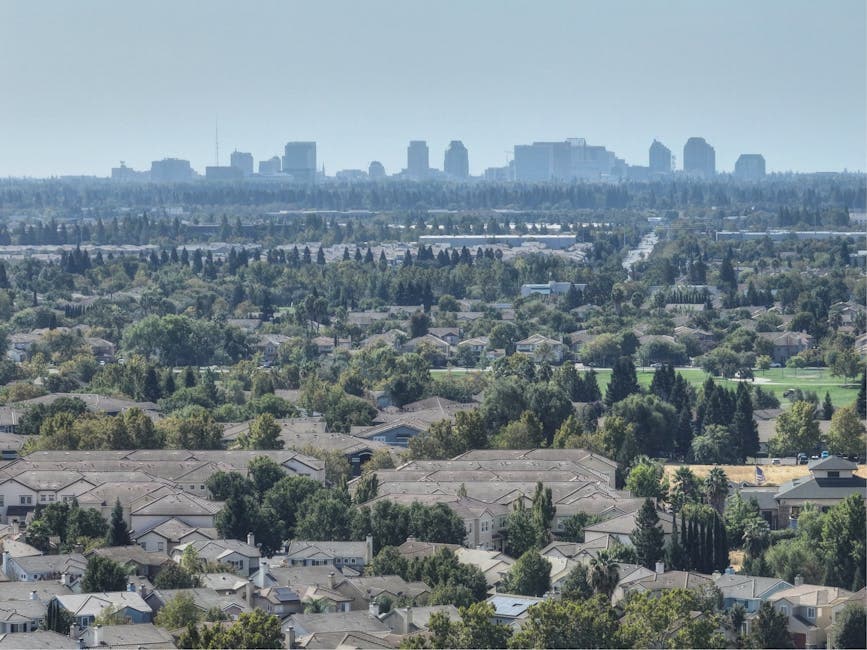
Six towns into one. California's newest city.
A long read on Jurupa Valley: born in 2011 from six unincorporated Inland Empire communities, a 70 percent Latino corridor on the 60 and the 15, and an ordering stack built for Spanish-first taquerias, Salvadoran pupuserias, and warehouse breakfast joints.
City
Jurupa Valley
Incorporated July 1, 2011
Population
~105,000
US Census ACS 2024
Hispanic share
~70%+
~55% Spanish at home
Combined sales tax
7.75%
CDTFA, current
It is 9:14 on a Sunday in March. The carnitas have been simmering since five. By noon, the Sunday line wraps onto Mission Boulevard.
Jurupa Valley does not look like a city from above. It looks like six neighborhoods strung along the Santa Ana River's north bank, with the Jurupa Mountains as a southern backbone and the 60 and the 15 freeways crossing on the east. There is no traditional downtown. There is no main square. The city's spine, instead, is Mission Boulevard, the historic east-west road that runs through Rubidoux, Glen Avon, and Sunnyslope, lined with taquerias, panaderias, tortillerias, and family Mexican restaurants whose Sunday lines tell you everything you need to know about who lives here.
The city itself is fifteen years old. Jurupa Valley incorporated as a single municipality on July 1, 2011, becoming the 482nd California city. It absorbed six previously unincorporated Riverside County communities (Pedley, Glen Avon, Rubidoux, Sunnyslope, Mira Loma, and Indian Hills) that had grown up independently since the late 1800s. The state nearly killed the new city in its cradle. A 2011 change to the vehicle license fee formula stripped revenue Jurupa Valley had counted on. The fight over those subventions ran for six years and ended only with SB 130 in 2017.
The customer base is one of the most consistently Latino in any incorporated California city. Per the Census Bureau's ACS 2024 estimate, Hispanic and Latino residents are over 70 percent of Jurupa Valley. Spanish at home is roughly 55 percent, more than half of every household. That is a higher Latino share than Riverside city (53 percent), higher than Fontana (~68 percent), comparable to Pomona and Coachella.
On the city's eastern edge, the 60 and the 15 cross at a freight node that handles roughly 290,000 vehicles a day, per the Caltrans 2024 traffic census. A meaningful share is freight from the Port of Long Beach and the Port of LA routing through the Inland Empire's distribution warehouse cluster. Mira Loma, the northernmost of the six former communities, is the densest part of that cluster. Amazon, Target, Costco, FedEx Ground, and dozens of third-party logistics tenants occupy tilt-up warehouses on Etiwanda, Bellegrave, and the corridor north of the 60. Total warehouse and logistics employment in the Mira Loma side of Jurupa Valley runs between 25,000 and 30,000 workers across three shifts.
The restaurant operator who serves this city is serving a Spanish-speaking family taqueria customer on Sunday at noon, a Salvadoran pupuseria customer on Saturday night, and a warehouse driver at 5:30 a.m. on a Tuesday. The marketplaces handle none of these well. The independent restaurant ordering page, built for this specific geography, handles all three.
A family taqueria flips the open sign. The carnitas have been simmering since 5 a.m. By noon, the line will trail out the door onto Mission. Two-thirds of today's Sunday orders will come in by phone, in Spanish.
A Salvadoran family opens a direct ordering page from a pupuseria that opened in 2018. Twelve pupusas revueltas, two horchatas, a side of curtido. Pickup at 11:00 for a Sunday family gathering. They pay $46.20 all-in, no marketplace markup.
An Amazon fulfillment warehouse shift changes. The third-shift driver places a breakfast burrito order on his phone, pickup in twelve minutes at a 24-hour Mexican breakfast joint off the 60 onramp. Two eggs, chorizo, beans, salsa verde, large coffee.
The Van Buren Drive-In opens its ticket booth. Two of the three screens are showing a Spanish-language family double feature tonight. A nearby Mexican restaurant on Mission gets a 30-order pickup spike at 5:50 p.m. as carloads of families place their drive-in dinner before the first feature at 7:30.
Six unincorporated communities became one city. Then the state tried to break it.
The six former communities had developed independently since the 1840s. Their consolidation as Jurupa Valley on July 1, 2011 made it the largest California city to incorporate in over a decade. The vehicle license fee crisis that followed nearly forced disincorporation.
Visualization 1 of 3
Six unincorporated communities became one city in 2011.
Incorporation date: July 1, 2011. 482nd California city.
Pedley, Glen Avon, Rubidoux, Sunnyslope, Mira Loma, and Indian Hills had developed as separate unincorporated Riverside County communities since the late 1800s. They consolidated as Jurupa Valley on July 1, 2011, becoming, by population, the largest California city to incorporate in over a decade. The Jurupa Mountains and Santa Ana River define the city's geography.
Sources: City of Jurupa Valley, official incorporation filings; California Secretary of State, July 1, 2011 incorporation as the 482nd California city; Riverside County LAFCO records on the pre-2011 incorporation attempts; Caltrans District 8 freeway alignments. Community boundary illustrations are diagrammatic, not to scale.
The land that becomes Jurupa Valley sits on Rancho Jurupa, a Mexican land grant issued in 1838 to Juan Bandini. Bandini sells it in 1843. The rancho stretches across what is now Riverside, Rubidoux, Pedley, and Glen Avon. The name Jurupa is a Cahuilla-language word for 'friendship' or for 'sage place'; etymology remains contested in the historical record.
Source: California Office of Historic Preservation; Riverside Historical Society archives
Riverside County is established on May 9, 1893, carved out of southern San Bernardino County and eastern San Diego County. The six communities that later consolidate into Jurupa Valley sit in the new county's western edge, separated from the city of Riverside by the Santa Ana River.
Source: California State Archives; Riverside County Board of Supervisors records
Each of the six future Jurupa Valley communities develops independently. Rubidoux around the historic Louis Rubidoux ranch site (1840s settler). Glen Avon along Mission Boulevard as a commercial trading post. Pedley as a rural agricultural settlement. Sunnyslope as a citrus-grove and dairy area. Mira Loma along the Pacific Electric and Union Pacific rail corridors. Indian Hills as a postwar suburban platting on the southern slopes.
Source: Press-Enterprise historical reporting; Riverside County General Plan archives
Residents of the unincorporated communities attempt incorporation multiple times between the 1980s and 2000s. Each attempt fails on the LAFCO (Local Agency Formation Commission) financial feasibility tests, the loss of vehicle-license-fee subventions to the county, or community opposition. By 2010, the six communities are the largest contiguous unincorporated population in Riverside County.
Source: Riverside County LAFCO records; California Government Code section 56000 series
Jurupa Valley officially incorporates as the 482nd California city on July 1, 2011, consolidating Pedley, Glen Avon, Rubidoux, Sunnyslope, Mira Loma, and Indian Hills into a single municipality of roughly 95,000 residents at incorporation. It is, by population, the largest California city to incorporate in over a decade. The city seal references the six communities and the Jurupa Mountains.
Source: City of Jurupa Valley charter; California Secretary of State filings
Almost immediately after incorporation, the state of California modifies the vehicle license fee revenue formula in a way that strips newly incorporated cities of subventions they had counted on for fiscal balance. Jurupa Valley joins three other 2011-era new cities (Eastvale, Menifee, Wildomar) in a multi-year legal and legislative push. SB 130 in 2017 partially restores the funding stream.
Source: California State Senate, SB 130 (2017); Press-Enterprise reporting 2012 to 2017
Per US Census Bureau ACS 2024 estimates, Jurupa Valley is home to roughly 105,000 residents. Over 70 percent identify as Hispanic or Latino, one of the highest shares among Inland Empire incorporated cities. Spanish at home is roughly 55 percent. The city operates Jurupa Unified School District (~19,000 students) jointly with adjacent unincorporated and city areas.
Source: US Census Bureau ACS 2024; Jurupa Unified School District Enrollment Report 2024 to 2025
200 restaurants, a 7.75% sales tax, 70% Latino, and 290,000 daily freeway vehicles.
Independent and chain restaurants combined, per Riverside County Environmental Health restaurant permits and Yelp business directory cross-reference. Includes full-service, quick-service, taquerias, panaderias, and food truck commissaries.
Source: Riverside County Department of Environmental Health, food facility permits 2024
Typical family taqueria or Mexican casual dining ticket. Lower than Riverside city (median ~$16 to $20) and substantially lower than coastal Riverside County cities. Weekend family pickup orders skew higher ($40 to $60 per order).
Source: Inland Empire restaurant operator surveys; DirectOrders Jurupa Valley operator interviews 2025 to 2026
California state base of 7.25% plus Riverside County district tax of 0.50% (Measure A transportation tax). Jurupa Valley has not enacted a city-level local district transactions tax, making its rate among the lower rates in the Inland Empire (Riverside city is 8.75%, Fontana is 8.75%).
Source: California Department of Tax and Fee Administration, district tax rate finder
Per US Census Bureau ACS 2024 (Jurupa Valley city). One of the highest Latino population shares among Inland Empire incorporated cities. Compares to ~33 percent statewide and ~19 percent nationally. Spanish at home is roughly 55 percent.
Source: US Census Bureau ACS 2024 (Jurupa Valley city, language tables)
Mira Loma and the Mira Loma side of Jurupa Valley host one of the densest concentrations of e-commerce fulfillment warehouses in the United States. Estimates of direct warehouse and logistics employment in the Jurupa Valley warehouse cluster range from 25,000 to 30,000 workers across three shifts. Restaurant adjacent demand is significant.
Source: Inland Empire Economic Partnership; CSU San Bernardino Business and Research
Average daily traffic on the SR-60 and I-15 freeway segments through Jurupa Valley exceeds 290,000 vehicles, per Caltrans annual count. A meaningful share is freight from the LA / Long Beach port complex routing through Inland Empire fulfillment hubs.
Source: Caltrans District 8 traffic census, 2024
Mexican leads. Salvadoran holds. Pizza, BBQ, and American casual round it out.
The Jurupa Valley restaurant scene is more concentrated than Riverside or Ontario. Forty-two percent of restaurants are Mexican. The Salvadoran share, eight percent, is durable and growing, anchored on Mission and Riverside Drive in Rubidoux. Vietnamese is smaller than in Riverside, larger than in Corona.
Visualization 2 of 3
Mexican is 42 percent. Salvadoran is durable. Pizza and BBQ round it out.
Cuisine share of Jurupa Valley restaurants.
The Mexican share dominates every former community. Salvadoran and Central American hold a meaningful and durable share concentrated along Mission Boulevard in Rubidoux. Vietnamese and other Asian categories run lower than in neighboring Riverside city. Pizza, BBQ, and American casual fill the family and warehouse-worker dining slots.
Sources: Riverside County Department of Environmental Health, food facility permits 2024; DirectOrders restaurant operator audit; Yelp business directory cross-reference. Categorization is by primary cuisine; many operators carry secondary categories.
Taquerias, panaderias, family Mexican casual, birrierias, carnitas specialists. The dominant cuisine in every former community.
Family pizza chains and independents. Pat & Oscar's heritage, Round Table, neighborhood independents.
Country Cafe, Castaway Family Restaurant, diner-style breakfasts, family burger joints.
Texas-style and Memphis-style smoked meat, food truck commissaries, weekend pop-ups in Mira Loma.
Pupuserias, Honduran baleadas, Guatemalan stews. Concentrated along Mission and Riverside Drive in Rubidoux.
Pho shops and banh mi counters on the eastern side near the 60 corridor. Smaller than Riverside city's Vietnamese cluster.
Chinese American buffet, Korean BBQ, Thai casual, Filipino bakeries.
Mediterranean, Italian, fast food chains, food truck rotations.
Cinco de Mayo, Mexican Independence Day, Posadas, and the drive-in.
The Jurupa Valley restaurant calendar is anchored to Mexican holidays, the Jurupa Unified school year, and Inland Empire summer family-party season. The Van Buren Drive-In, founded 1964, is one of California's last operating drive-ins and a Sunday family destination that drives evening dinner-and-movie pickup spikes.
Easter family parties drive carnitas, mole, and tamales orders. Family pickup orders peak Saturday and Sunday.
Cinco de Mayo and Mother's Day fall close together. Mother's Day is the single highest single-day catering volume of the year.
Van Buren Drive-In summer season starts. Family pickup orders shift to evening dinner-and-movie pattern.
Backyard carne asada party season. Family pickup orders for $80 to $200 tickets become common.
Mexican Independence Day rivals Cinco de Mayo for catering volume. The Grito celebrations the night of Sept 15 drive late-evening pickup spikes.
Halloween family pickup. Late October is bread-and-pan-de-muerto season for panaderias.
Dia de los Muertos drives panaderia and family-style restaurant volume. Thanksgiving week is a major catering window.
Las Posadas runs nightly from Dec 16 to Dec 24. Christmas Eve tamales are the year's single highest tamale order day; family pre-orders should be locked in by Dec 1.
The Van Buren Drive-In Theatre opened in 1964 on Van Buren Boulevard. It is one of California's last operating drive-ins and one of the last in Southern California. Three screens, evening double features (often Spanish-language family programming), and a Latino-family Sunday-night clientele that orders dinner from nearby Mission Boulevard restaurants in a clear 5:30 to 6:30 p.m. spike before the first feature. An operator who anchors their evening promotions to the drive-in calendar captures volume the marketplaces never see.
Source: Van Buren Drive-In Theatre operator records; Press-Enterprise historical reporting.
From Pedley diners to Mira Loma 24-hour Mexican.
Twelve operators across all six former communities. They span American family diners, Michoacan carnitas, Jalisco birria, Sinaloa coastal Mexican, Salvadoran tortillerias, and Mira Loma warehouse-shift Mexican breakfast counters. Each handles a different customer pattern. Each needs a different ordering configuration.
Pat & Oscar's
Glen AvonA San Diego heritage family chain with a long-standing Glen Avon location. The breadsticks and Caesar salad are local lore. A meaningful pickup-and-catering operator on Mission Boulevard.
Country Cafe
PedleyA semi-rural Pedley diner anchor. Sunday breakfast destination. Equestrian customers, semi-rural lots, country atmosphere.
Castaway Family Restaurant
PedleyAnother Pedley anchor. Family-friendly, big portions, breakfast-through-dinner all-day menu pattern.
El Toro Carnitas
Glen AvonMichoacan-style carnitas pop on Mission Boulevard. Sunday carnitas-by-the-pound is the family-meal staple. The volume on Sundays is more than double a weekday.
Birria Don Juan
Glen AvonPart of the post-2020 birria-and-quesabirria wave that swept the Inland Empire. Strong TikTok and Instagram presence, weekend lines that wrap around the parking lot.
Don Jose Mexican Restaurant
Glen Avon / MissionA full-service Mexican restaurant. Banquet room for quinceaneras and family parties. Mother's Day and Easter are the year's anchor catering windows.
Tortilleria La Mexicana
RubidouxTortilleria that hand-presses tortillas in the back, sells masa to the neighborhood, and runs a morning breakfast counter. Mexican bakery pastries by 6 a.m.
El Sombrero
RubidouxA Rubidoux family Mexican restaurant. Multigenerational regulars. Mother's Day pre-orders book out by mid-April.
Lupita's Mexican Restaurant
RubidouxAnother Rubidoux mainstay. Menudo on Saturdays and Sundays, the classic Inland Empire weekend pattern.
La Taqueria Sinaloense
Sunnyslope / MissionSinaloa-style taqueria. Specialties differ from Michoacan or Jalisco patterns: think shrimp, marlin, and machaca de res. Coastal Mexico in inland California.
Sergio's Mexican
SunnyslopeSunnyslope family Mexican. Weekend breakfast destination, weekday lunch counter.
El Patio
Mira LomaA Mira Loma Mexican restaurant well-suited to warehouse-shift breakfast crowds. Carne asada burritos at 5:30 a.m. for the third-shift exodus from Amazon and Costco fulfillment.
Sources: Riverside County Department of Environmental Health, food facility permits 2024; Press-Enterprise restaurant reporting; Yelp and Google business directory cross-references; in-person walking surveys of Mission Boulevard, Riverside Drive, and the Mira Loma warehouse perimeter, March 2026. Vintage estimates are approximate; operators frequently change ownership across generations.
Pedley equestrian. Glen Avon commercial. Rubidoux historic. Mira Loma industrial.
Each of the six former communities still operates with its own character, its own restaurant geography, and its own customer pattern. A restaurant in Pedley draws a different customer than the same concept in Mira Loma or Indian Hills.
Pedley
Spanish, EnglishThe rural southwestern community. Horse properties, equestrian zoning, semi-rural lots. The Pedley Metrolink station on the 91 Line runs to Los Angeles Union Station. The lowest density of the six former communities. Restaurants here are anchor establishments that draw from the surrounding county.
Glen Avon
Spanish, EnglishThe commercial heart of the former six. Mission Boulevard runs through Glen Avon as the city's main retail and restaurant spine. Anchored taqueria culture, Mexican bakeries, family pizza, and casual American dining. Highest restaurant density of the six communities.
Rubidoux
Spanish, EnglishThe historic core. Named for Louis Rubidoux, an 1840s French-Canadian settler. Older housing stock, multigenerational Latino families, and Mount Rubidoux directly to the south (technically in Riverside city). Pupuserias, taquerias, and panaderias along Mission and Riverside Drive.
Sunnyslope
Spanish, EnglishWestern residential ring. Postwar tract housing, citrus and dairy heritage, working-class Latino families. Smaller commercial pockets at intersections with Mission Boulevard and Sunnymead Boulevard. Family taquerias and weekend menudo specialists.
Mira Loma
Spanish, EnglishThe industrial north. Mira Loma sits at the 60 and 15 freeway confluence. Distribution warehouses (Amazon, Costco wholesale, Target, FedEx Ground) dominate the landscape. Truck driver breakfast joints, 24-hour Mexican kitchens, and warehouse worker lunch spots. The single largest restaurant volume driver outside Glen Avon.
Indian Hills
Spanish, EnglishThe newer southern hill neighborhoods. Suburban tracts on the slopes of the Jurupa Mountains. More mixed demographics than the older communities. Family Mexican restaurants, neighborhood pizza, and a quieter residential dining pattern.
The Sunday taqueria. The Salvadoran pupuseria. The warehouse breakfast joint.
Family taqueria operator
Persona 1 / 3A second-generation taqueria, opened by parents in the 1990s, now run by their adult daughter. 12 seats, 4 outdoor tables, 80 percent of revenue is pickup. Sunday is the peak day. The owner answers Spanish phone calls in between expediting orders at the pass. The current ordering stack is DoorDash + Grubhub + a Toast POS, plus phone orders scribbled on the order pad.
DoorDash takes ~27 percent on a $14 burrito plate. The phone rings during the Sunday rush. Half the phone callers do not order in English. The owner has not raised menu prices in eighteen months because the regulars notice every dollar. Marketplace orders are profitable in name only.
Direct ordering page on the restaurant's domain. Bilingual checkout that defaults to Spanish for repeat customer numbers. Spanish-language Voice AI on the phone line that takes orders for $0.30 per call, not a 27 percent commission. Uber Direct for the rare delivery the customer requests, dispatched by the restaurant and not by the marketplace. Same-day Stripe payouts to the operator's account.
Salvadoran pupuseria
Persona 2 / 3A Salvadoran-owned pupuseria, opened 2018 by a family from San Salvador. Pupusas, curtido, fried plantains, Salvadoran tamales. 16 seats. Weekend volume is 4x weekday. The customer base is roughly 60 percent Salvadoran and Central American, 40 percent Mexican-American neighbors. The owner speaks limited English; the kitchen runs in Spanish.
Cannot maintain English-language phone coverage in the kitchen. Loses phone orders during the Saturday and Sunday rush because the line goes to voicemail. The marketplaces tag the operator as 'Mexican' which buries Salvadoran and Central American searches. Customers complain about cold pupusas after a 25-minute marketplace delivery.
Spanish-first ordering page that names the cuisine correctly (Salvadoran, Central American). Spanish Voice AI on the phone line that takes orders while the kitchen cooks. Pickup-first ordering flow that does not push delivery on customers who live two blocks away. Bilingual SMS receipts and confirmations.
Warehouse breakfast joint
Persona 3 / 3A 24-hour Mexican breakfast counter at the edge of the Mira Loma warehouse cluster. Breakfast burritos, machaca, chorizo, eggs, large coffee. Peak shifts are 4:30 a.m. (third shift exit) and 6:30 a.m. (first shift entry). Average ticket is $9. Volume is built on speed: order from a phone, swing in the parking lot, no parking, no waiting.
Marketplaces are mismatched: the customer wants pickup in eight minutes, not delivery in 35. The current ordering page is a static Square site with no order-ahead. Drivers wait in their cars on the phone while the order is taken; the line of cars sometimes backs into Etiwanda Avenue.
Order-ahead with a 'ready in' time the kitchen controls. Pickup-only configuration that hides delivery from the customer flow. Voice AI on the phone line that can take a thirty-second breakfast burrito order without the cashier touching the phone. Same-day Stripe payouts because cash flow at a $9-ticket business is the lifeblood.
The Sunday family pickup hour is the year's most valuable hour.
In a 70 percent Latino city, the Sunday family-meal hour is structurally bigger than any weekday rush. Marketplaces capture this volume at a 27 percent commission. A direct ordering page with order-ahead, bilingual checkout, and an in-house pickup queue captures the same volume at a flat $249 per month plus payment processing.
Visualization 3 of 3
Sunday is more than double a weekday at a Glen Avon taqueria.
Hourly pickup order count, weekday vs Sunday.
The Sunday family-meal pattern in a 70 percent Latino city is a different shape than a weekday lunch rush. The 12 p.m. to 2 p.m. Sunday window is the year-round catering peak. A direct ordering page with order-ahead and pickup queueing absorbs this volume without the marketplace 27 percent skim. The numbers below are from a representative Glen Avon family Mexican restaurant on a typical March Sunday.
Sources: DirectOrders Inland Empire operator panel, March 2026 representative Sunday vs Tuesday data set, anonymized at the operator's request. Numbers illustrative of a single Glen Avon family Mexican restaurant. Industry-wide Sunday-to-weekday lift in Inland Empire Latino corridors is consistently 2 to 2.5x.
12 p.m. to 1 p.m. on a typical Sunday. Carnitas by the pound, family pickup tickets averaging $42.
12 p.m. weekday lunch. Smaller individual tickets averaging $14.
DoorDash blended take rate on a $42 Sunday family pickup. That is $11.34 the operator never sees.
When 55 percent of homes speak Spanish, the phone line speaks Spanish.
Jurupa Valley is not bilingual in the abstract. It is bilingual in a way that determines whether a phone call gets answered. Roughly 55 percent of Jurupa Valley homes speak Spanish (US Census Bureau ACS 2024). Inside the Latino majority, a meaningful share of older adults are Spanish-first, and a meaningful share of younger adults are English-first but order in Spanish for grandparents and parents.
The marketplaces nominally support Spanish menus. They do not support Spanish phone ordering. The DoorDash and Uber Eats consumer apps are English-default with Spanish toggles that bury cuisine taxonomy. The Voice AI on a Glen Avon taqueria's phone line, by contrast, defaults to Spanish for repeat customer phone numbers, takes orders in Spanish, prints the kitchen ticket in English (or Spanish, operator preference), and confirms the pickup time in Spanish.
This is what changes when the phone line speaks Spanish: orders that previously went to voicemail get captured. Orders that previously ended in confusion get confirmed correctly. The kitchen ticket has the right name, the right modifications, the right pickup time. The operator does not need to hire a bilingual cashier to cover the Sunday rush.
Caller: Hi, can I order two carnitas plates and a horchata for pickup?
Voice AI: Of course. Two carnitas plates and one horchata. Any rice and beans on the plates?
Caller: Yes, both.
Voice AI: Pickup in about 15 minutes. Total is $28.60 with tax. I will text you a confirmation when the order is in the kitchen.
Llamante: Hola, quiero ordenar dos platos de carnitas y un horchata para llevar.
Voz AI: Claro que si. Dos platos de carnitas y un horchata. Con arroz y frijoles?
Llamante: Si, los dos por favor.
Voz AI: Listo en quince minutos. Total con impuesto: $28.60. Le mando un mensaje de texto con la confirmacion.
27% commission vs 14% direct on a $40 Sunday family pickup.
The Sunday family pickup ticket is the highest-volume, highest-margin order of the week at a Glen Avon family taqueria. The marketplace 27 percent commission turns a profitable order into a barely-profitable order. The direct ordering math, including payment processing, monthly platform fee, and Uber Direct dispatch when needed, lands closer to 14 percent fully loaded.
DoorDash, blended commission
| Customer pays (food + tax) | $40.00 |
| DoorDash commission (~27%) | -$10.80 |
| Payment processing (in commission) | incl. |
| Marketing / placement (in commission) | incl. |
| Operator nets | $29.20 |
DoorDash partner-plan commission ranges from 15% (basic) to 30% (premier). 27% is the blended take rate cited in DoorDash's S-1 and subsequent investor disclosures.
Flat $249/mo + payment processing
| Customer pays (food + tax) | $40.00 |
| Stripe processing (2.9% + $0.30) | -$1.46 |
| Platform fee (per order, $249/mo / ~600 orders) | -$0.42 |
| Voice AI (per call, if used) | -$0.30 |
| Commission | $0.00 |
| Operator nets | $37.82 |
Fully loaded cost is 5.45% on a $40 ticket. Add Uber Direct dispatch for the rare delivery and total cost lands at 12% to 14% fully loaded. Direct ordering is structurally more profitable on every order, and overwhelmingly more profitable on the Sunday family ticket.
At 600 orders a month and an average $40 ticket, the operator's gross is $24,000 per month or $288,000 per year. DoorDash takes roughly $77,760 of that annually. DirectOrders fully loaded (Stripe + platform fee + Voice AI) is roughly $13,000 per year. The difference, ~$64,000 per year, is what the Glen Avon family taqueria reinvests in better ingredients, kitchen equipment, or a part-time hire to cover the Sunday rush.
AB 1228, SB 478, Prop 22, and a 7.75 percent combined sales tax.
California restaurant law is dense. Jurupa Valley operators face the same statewide AB 1228 (fast food $20 minimum), SB 478 (junk fee transparency), and Prop 22 (gig worker classification) framework as any California operator. Sales tax is 7.75 percent, lower than Riverside city's 8.75 percent because Jurupa Valley has not enacted a local district transactions tax.
California Assembly Bill 1228 ($20 fast food minimum wage)
Effective April 1, 2024Sets the hourly minimum at $20 for limited-service chains with 60 or more US locations. Independent Jurupa Valley restaurants follow the California state minimum (currently $16.50 statewide for most employers in 2026, indexed annually). Chain franchises in the city (Pat & Oscar's outside the 60-location threshold; other chains may be in scope) must comply with the $20 rate.
California Senate Bill 478 (junk fee transparency law)
Effective July 1, 2024Prohibits advertising a price that does not include all mandatory fees, except taxes and government fees. Restaurants must disclose service fees, packing fees, kitchen surcharges, and any other mandatory line item in the price shown at the time of ordering.
California Proposition 22 (gig worker classification)
Passed November 2020, upheld by California Supreme Court July 2024Allows Uber, DoorDash, and similar platform drivers to remain classified as independent contractors with a curated benefits floor. Sustains the Uber Direct driver pool the restaurant-dispatched delivery model depends on.
California state sales and use tax California Department of Tax and Fee Administration (CDTFA), statewide base | 7.25% |
Riverside County district transactions tax Riverside County Transportation Commission (Measure A), administered via CDTFA | 0.50% |
City of Jurupa Valley local district tax City of Jurupa Valley has not enacted a local district transactions tax as of 2026 | 0.00% |
| Combined | 7.75% |
Source: California CDTFA district tax rate finder. Combined rate effective for Jurupa Valley addresses. Riverside city, which sits east across the Santa Ana River, is 8.75% (Measure Z adds 1.00% local district tax). Jurupa Valley operators should disclose tax-inclusive pricing per SB 478.
How DirectOrders fits Jurupa Valley.
The six-community geography is a brand asset. A direct ordering page that names the operator's neighborhood (Glen Avon, Rubidoux, Mira Loma, Pedley, Sunnyslope, Indian Hills) carries identity that the marketplace listing flattens. The customer who orders a Sunday carnitas pickup from a Glen Avon taqueria wants to feel proximate to Mission Boulevard. The marketplace label is "Jurupa Valley, CA" with a star rating. The direct page tells the story.
The 70-plus percent Latino demographic and 55 percent Spanish-at-home rate is a Voice AI requirement, not a feature. A Spanish-first Voice AI on the phone line is what captures the Sunday rush hours when the kitchen cannot pick up the phone. The taqueria. The pupuseria. The panaderia. The tortilleria. Each operates on a Spanish-first customer base and each loses orders without phone coverage in Spanish.
The Mira Loma warehouse cluster is a 24-hour pickup channel the marketplaces are structurally bad at. A warehouse shift change wants a $9 breakfast burrito ready in eight minutes, not a 35-minute marketplace delivery. The direct ordering page, configured for pickup-only with a kitchen-controlled ready time, serves this customer better than any marketplace. Same-day Stripe payouts matter more on a $9-ticket business than they do at any white-tablecloth concept.
The Mexican holiday calendar (Cinco de Mayo, Mexican Independence Day on September 16, Posadas from December 16 to 24, Easter family parties, Mother's Day) is the operator's revenue spine. A direct ordering platform with pre-order, email marketing, and a catering channel captures these windows without the marketplace's commission. Christmas Eve tamales alone, for a family taqueria with a tamales tradition, can be a $20,000 to $50,000 single-day event. The marketplace would skim $5,400 to $13,500 of that. The direct page captures it whole.
The 7.75 percent combined sales tax is competitive within the Inland Empire (lower than Riverside, lower than Fontana, comparable to Ontario). SB 478 compliance means the operator must show the all-in price at checkout including tax. A direct ordering platform that defaults to all-in pricing at the moment of cart-add is the legal-compliance layer plus the customer-experience layer. The marketplace apps are inconsistent at this; the direct page is not.
Six unincorporated communities became a city in 2011. A 70 percent Latino population, a 55 percent Spanish-at-home rate, a 25,000-worker warehouse cluster, and one of California's last operating drive-in theaters. Jurupa Valley has a stack. The platform that takes its orders should match it.
Where the numbers came from. Where to read more.
- City of Jurupa Valley, official municipal siteIncorporation date, six-community history, city seal, council records.
- US Census Bureau, ACS 2024 (Jurupa Valley city)Population (~105,000), Hispanic and Latino share, language at home (~55% Spanish).
- California Department of Tax and Fee AdministrationCombined sales tax (state 7.25% + Riverside County 0.5% = 7.75%).
- Jurupa Unified School DistrictStudent enrollment (~19,000), school calendar, lunch program data.
- California Secretary of State, City of Jurupa Valley incorporation filingsJuly 1, 2011 incorporation date as the 482nd California city.
- Riverside County LAFCO recordsMultiple pre-2011 incorporation attempt records.
- California State Senate, SB 130 (2017)Vehicle license fee restoration for the four 2011-era new cities.
- California Department of Industrial Relations (AB 1228)Fast Food Minimum Wage Order, effective April 1, 2024.
- California Attorney General (SB 478)Junk fee transparency law implementation guidance.
- Caltrans District 8 traffic censusAverage daily traffic counts on SR-60 and I-15 through Jurupa Valley.
- Inland Empire Economic PartnershipDistribution warehouse workforce estimates, regional logistics data.
- CSU San Bernardino Office of Business and ResearchInland Empire logistics employment and regional economic indicators.
- Press-Enterprise (Riverside daily)Local reporting on incorporation, vehicle license fee crisis, Mission Boulevard commercial development.
- Riverside County EDC (Economic Development Corporation)Distribution and logistics cluster mapping.
- Van Buren Drive-In TheatreOne of California's last operating drive-ins, founded 1964.
- California Office of Historic PreservationRancho Jurupa land grant historic record.
- Riverside, CAAcross the Santa Ana River; IE capital and citrus origin
- Ontario, CA15 miles northwest; airport and IE retail anchor
- Corona, CA10 miles south; the 91 / 15 commuter corridor
- Fontana, CA12 miles north; the I-10 freight corridor
- Moreno Valley, CA20 miles east; March ARB south of the 60
- Rancho Cucamonga, CA18 miles northwest; the 210 wine-country edge
- PricingFlat $249 / mo. No per-order commission. Zero.
- Voice AI (English + Spanish)Spanish-first phone ordering on the operator's line
- Direct ordering pageBilingual checkout on the restaurant's own domain
- DirectOrders vs DoorDashThe 27% commission math, line by line
- DirectOrders vs GrubhubFor operators on the Grubhub IE listing
Six towns, one city, one platform.
A 30 minute walkthrough with our Inland Empire implementation lead covers the corridor your restaurant sits on (Glen Avon, Rubidoux, Mira Loma, Pedley, Sunnyslope, Indian Hills), the Spanish and English Voice AI configuration for your customer base, the Mexican holiday and Posadas calendar to plan against, and the Uber Direct dispatch radius for your specific Mission Boulevard or Etiwanda address.