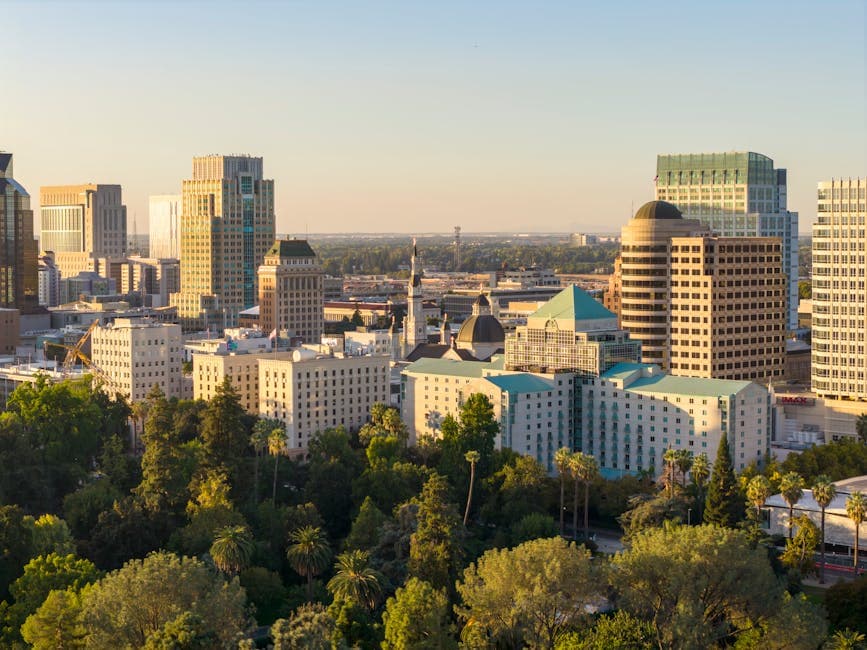
The geographic center of the Inland Empire.
A long read on Ontario, CA: the IE's primary airport, the largest outlet mall in California, the AHL's Ontario Reign at Toyota Arena, a Hispanic-majority near 70 percent, and an ordering stack built for all of it.
City
Ontario, CA
~180,000 (Census 2024)
Airport
ONT
~6M pax + 11th US cargo
Hispanic share
~70%
Census ACS 2024
Combined sales tax
8.5%
CDTFA, current
It is 5:42 on a Wednesday morning in March. A 737 is on short final to runway 26R. A flight crew at the Hampton Inn is ordering breakfast burritos from a cafe two blocks east.
Inland Empire Boulevard runs east-west along the north edge of Ontario International Airport. The hotels stack up along it like dominoes: Hampton Inn, DoubleTree, Marriott, Embassy Suites, Hyatt Place, Hilton Garden Inn, more than thirty brand properties inside a square mile, all sized to absorb business travelers and convention attendees who fly into ONT for a meeting at the Ontario Convention Center or a trade show at one of the satellite venues.
At 5:42 AM a flight crew on a 6:55 ONT departure to Salt Lake City is winding up at the Hampton Inn lobby. The crew is on a tight schedule. The hotel's grab-and-go cooler is fine but uninspired. One of the first officers opens the direct ordering page for a Mexican cafe on Vineyard Avenue, two blocks east, that the crew has bookmarked from a prior overnight. Three breakfast burritos with chorizo and egg, three large coffees, a side of salsa. The order is paid all-in at $34.20 with a 15 percent dining tip baked into the checkout flow. Pickup at 6:05 AM.
The cafe owner is in the back doing the morning prep. A printer chirps. The kitchen ticket is in English even though the order's notes are in Spanish (the crew member is bilingual and used the Spanish version of the menu, which keeps the kitchen-side workflow English by default). The cafe does not pay a marketplace commission on this $34.20. The customer does not pay a $7 marketplace service fee plus a $4.50 delivery fee plus a 12 percent restaurant-side commission concealed in the menu price. Both sides win because the transaction is direct.
Eleven hours later, at Ontario Mills, a family from Chino Hills splits a Saturday lunch order between the food hall and a sit-down Mexican grill on the outer ring. The sit-down restaurant takes the order in Spanish through the direct page on a phone the mom is using, pickup at the Mills Circle Entry 5 in 20 minutes. Sixteen miles west, at the Convention Center, a national insurance association is breaking for lunch from a Wednesday seminar block. Their boxed-lunch orders go through a downtown Ontario sandwich shop's direct catering page with a net-15 invoice.
At 6:34 PM, the Ontario Reign play San Diego at Toyota Arena, a few blocks east of the Mills. A pizzeria on Concours Street handles a stack of pre-game pickup orders through its direct page. The Voice AI on the restaurant's phone line takes a 38-second Spanish-language phone order from a season-ticket holder calling from his car on the I-15 northbound off-ramp. The pizza is ready when he walks in.
At 9:08 PM, in Ontario Ranch (the master-planned community south of the 60 freeway), a family near Edenglen Parkway orders Filipino takeout from a small shop a mile away. The shop dispatches the delivery on its own Uber Direct account through DirectOrders. No marketplace surge applies because there is no marketplace involved.
Five different customers across five different corridors of the same city, in five different settings, speaking three different languages, ordering across four different dayparts. They share two things. They are all inside Ontario city limits, and none of them is paying a 30 percent commission to a third party. This is what an ordering platform built for Ontario has to do.
A flight crew on a 6:55 ONT departure orders pickup breakfast burritos and three large coffees from a Mexican cafe two blocks east. Direct page, paid all-in at $34.20. Pickup at 6:05.
A family from Chino Hills splits a halal lunch order between the food hall and a sit-down Mexican grill on the outer ring. The grill takes the order through its direct page in Spanish, pickup at the Mills Circle Entry 5.
The Ontario Reign play San Diego at 7:00. A nearby pizzeria handles a stack of pre-game pickup orders through its direct page. The Voice AI takes a Spanish-language phone order from a season-ticket holder in 38 seconds.
A new master-planned subdivision south of the 60. A Filipino takeout shop near Edenglen routes a delivery dispatch via Uber Direct. The restaurant chose the dispatch; no marketplace surge applies.
Six million annual passengers and the 11th-busiest cargo airport in the country.
Ontario International Airport (ONT) is the IE's primary commercial airport and one of the country's larger cargo hubs. Two parallel runways, a passenger terminal complex on the north, a major freight ramp on the south, Amazon Air operations, a UPS regional gateway, and no overnight curfew. The airport drives the restaurant geography around it.
Visualization 1 of 4
ONT: two parallel runways, two cargo aprons, one terminal complex.
~6.0M annual passengers + 11th-busiest US cargo airport.
Ontario International Airport (ONT, ICAO KONT) operates a passenger terminal complex on the north side and a major freight ramp on the south, with two roughly east-west parallel runways. Amazon Air and UPS both operate hub-tier sortation pads. The diagram below is a schematic plan; runway lengths and apron locations are approximated from the FAA Airport Diagram.
Sources: Ontario International Airport Authority, annual passenger and cargo statistics; ACI North America cargo airport rankings; FAA Airport Diagram KONT; Amazon Air route disclosures. Diagrammatic plan, not to scale. Runway lengths approximated from FAA documentation.
Ontario International Airport handled roughly 6.0 million annual passengers in its most recent reporting year, making it the IE's primary commercial airport and one of the fastest-recovering medium hubs in California post-pandemic. ONT operates from a single passenger terminal complex with two parallel runways.
Source: Ontario International Airport Authority, annual passenger statistics
ONT consistently ranks among the top 15 US airports by cargo tonnage and inside the top dozen in recent ACI North America cargo rankings. The IE's distribution geography and the absence of overnight curfew restrictions make ONT a primary West Coast cargo node.
Source: Airports Council International North America, cargo airport rankings
Amazon Air operates ONT as a regional West Coast sortation hub, with daily widebody and narrowbody arrivals serving Southern California fulfillment centers. Amazon's investment in ONT was a meaningful share of the airport's 2010s cargo-tonnage growth.
Source: Ontario International Airport Authority cargo announcements; Amazon Air route disclosures
UPS operates a regional gateway facility at ONT serving Southern California and parts of the Southwest. The combination of UPS and FedEx ground operations puts the ONT cargo apron among the busiest west of Memphis.
Source: Ontario International Airport Authority cargo operations
ONT operates two parallel runways oriented roughly east-west, both long enough to handle widebody freight aircraft fully fueled. The longer runway 8L/26R is among the longer commercial runways in the IE-LA basin and one reason ONT can absorb cargo demand LAX cannot.
Source: FAA Airport Diagram KONT; Ontario International Airport Authority
The ONT passenger story is the story of an airport that has spent the last decade building out from a sleepy regional alternative to LAX into the primary commercial hub for an MSA of 4.7 million people. The Ontario International Airport Authority took over operations from LAWA in 2016, and the years since have featured aggressive route additions (long-haul to East Coast hubs, dense regional service to the major western cities, and a rebuilding international portfolio anchored by Mexico and Taiwan). Annual passenger counts have climbed from roughly 4 million in the mid-2010s to roughly 6 million in the current reporting year.
The cargo story is the larger story. ONT is one of the busiest cargo airports in the country by tonnage. The combination of LAX-adjacent geography, two long runways, no overnight noise curfew, and the surrounding IE distribution-warehouse belt makes ONT the natural West Coast airfreight node. Amazon Air operates ONT as a regional sortation hub serving Southern California fulfillment centers; UPS operates a regional gateway facility on the south cargo ramp; FedEx Ground is heavy on the perimeter. Airports Council International North America has consistently ranked ONT inside the top dozen US cargo airports.
The restaurant implication of all this is the hotel zone north and east of the field. Inland Empire Boulevard, Haven Avenue, Vineyard Avenue, and Convention Center Way carry north of thirty brand-affiliated hotels, sized to absorb business travelers, convention attendees, layovers, and cargo crews. The breakfast and lunch demand is the most predictable surge cycle in Ontario, with morning pickup orders concentrated from 5 AM through 9 AM and evening from 6 PM through 10 PM. The hotels themselves typically have limited F&B; restaurants two to five blocks east of the airport collect the spillover.
The cargo crew demand is the other layer. Widebody Amazon Air and UPS aircraft turn through ONT on overnight schedules, with crews on multi-day rotations. They eat. They order. They tip well. The Vineyard Avenue and Haven Avenue cafes and casual restaurants that have built direct ordering presence around the crew schedule run a meaningful share of their daily revenue against this customer. The marketplace apps do not target them; the hotels do not either; the cafe with the direct ordering page and a customer base that has the page bookmarked owns the channel.
The convention overflow rounds out the airport-zone economy. Tuesday through Thursday weeks at the Ontario Convention Center fill out the airport hotels and bleed into the surrounding QSR and fast-casual dinner economy. A direct ordering platform with corporate catering forms (net-15, net-30, tax-exempt billing for government and nonprofit convention attendees) captures the boxed-lunch order business that the convention center's in-house caterer cannot exclusively absorb.
One last operational note: ONT is a meaningful share of the broader Uber Direct dispatch geometry. The airport hotel zone covers roughly two square miles, the cargo ramp another half mile, and the surrounding QSR and fast-casual restaurants within a five-minute drive of the field. Uber Direct dispatch sized for that geometry, with the restaurant choosing when to dispatch, beats the marketplace flat-rate dispatch structure on margin and on cycle time.
The Ontario airport's growth pattern matters for the timing of any ordering platform investment. The current trajectory points toward 8 to 10 million annual passengers within the decade as new routes come online and the Asia and Latin America international portfolio fills out. Restaurants that build a direct ordering presence anchored to the ONT hotel zone now are positioning into a curve, not a flat market.
The largest outlet mall in California, with roughly 250 stores and 22 million visitors a year.
Ontario Mills runs the classic Mills-format racetrack plan: a single continuous indoor loop ringed by anchor pads, with the food hall and entertainment anchors distributed around the perimeter. Outer-ring sit-down restaurants and pad-site chains capture the spillover from AMC and Dave & Buster's evening traffic. The mall is operated by Simon Property Group.
Visualization 2 of 4
Ontario Mills: 250+ stores, the largest outlet mall in California.
Simon Property Group; ~22M visitors annually.
Ontario Mills runs on the classic Mills-format racetrack plan: a single continuous loop ringed by anchor pads, with the food hall and entertainment anchors distributed along its perimeter. Outer-ring sit-down restaurants and pad-site chains capture the spillover crowd from AMC and Dave & Buster's evening traffic.
Sources: Simon Property Group, Ontario Mills tenant directory and investor disclosures; Inland Empire Magazine retail rankings; trade-press coverage of Simon Mills-format center traffic. Diagrammatic plan, not to scale.
Ontario Mills carries roughly 250 stores and restaurants under a single roof, anchored by outlet flagships including Last Call, Saks Off 5th, Nordstrom Rack, Burlington, Marshalls, AMC theaters, and Dave & Buster's. It is operated by Simon Property Group.
Source: Simon Property Group, Ontario Mills directory
By gross leasable area and tenant count, Ontario Mills is the largest outlet and value-retail mall in California and one of the largest in the western US. The center draws cross-county traffic from LA, Orange, San Bernardino, and Riverside counties.
Source: Simon Property Group; Inland Empire Magazine retail rankings
Simon Property Group consistently reports Ontario Mills among its highest-traffic Mills-format centers in the country, with annual visitor estimates reaching into the low-20 millions. Holiday and back-to-school weekends are the peak.
Source: Simon Property Group investor disclosures; trade press coverage
Ontario Mills operates a multi-corridor food hall plus pad-site sit-down restaurants on the outer ring. The mix runs from international QSR to sit-down Mexican grills, Asian noodle houses, and chain steakhouses. F&B is its own customer-capture surface inside the mall.
Source: Simon Property Group Ontario Mills tenant directory
Ontario Mills pulls cross-county. The mall sits at the I-10 / I-15 interchange, with primary catchment from San Bernardino County, Riverside County, eastern Los Angeles County, and northern Orange County. Simon Property Group consistently reports the property among its highest-traffic Mills-format centers nationally, with annual visitor estimates reaching into the low-20 millions. Weekend traffic surges, and Thanksgiving through Christmas is the calendar high.
The F&B story has two layers. The food hall inside the mall handles the lunch crowd: international QSR brands, a stack of Asian noodle and rice concepts, a couple of Mexican grills, a sushi counter, the predictable dessert and boba operators. The pad sites on the outer ring handle the dinner and event crowd: Yard House, BJ's Restaurant and Brewhouse, Lazy Dog, Rainforest Cafe, and a rotating cast of mid-tier sit-down chains. The mid-mall AMC 30 movie theater complex and the Dave & Buster's both drive evening peaks for the adjacent F&B.
What makes Ontario Mills a direct-ordering play is the customer demographic. Mall visitors lean Hispanic-majority and family-oriented in line with Ontario's broader demographics. A sit-down Mexican grill on the outer ring with a direct ordering page in Spanish, with order-ahead curbside pickup at a specific mall entry door, captures a higher share of Saturday-afternoon lunch demand than a comparable restaurant relying on DoorDash. The customer is already at the mall; the question is whether they wait in the dine-in line, walk into the food hall, or order ahead for pickup and walk out at a specified door fifteen minutes later.
The marketplace conversion for Mills outer-ring restaurants is also poor in a way that matters. Marketplace delivery is geographically tricky inside a mall (no clear delivery address; food gets cold by the time the courier finds the pad-site entrance; the customer waits at the wrong door). Direct ordering with pickup wins the geometry; the customer is in the building and walks to the door rather than trying to direct a courier to a sit-down pad site. The mall geometry actually favors direct ordering over marketplace delivery in ways most operators do not appreciate.
Holiday traffic at Ontario Mills is its own event. Black Friday weekend, Christmas week, the post-Christmas return-and-redeem rush all stack into roughly five high-revenue weeks for the perimeter restaurants. A direct ordering platform with pre-order pickup, scheduled promotions, and email capture can run a multiweek campaign timed to the mall's foot-traffic curve, in a way the marketplace funnel does not enable for an independent operator.
Eleven thousand seats, 70-plus concert nights, and a hockey schedule that runs October through April.
Toyota Arena is the IE's largest indoor concert and sports venue. The Ontario Reign (the AHL affiliate of the LA Kings) play 36 home games a year. The concert calendar runs the rest of the year and pulls in everything from Latino music tours to K-pop dates to wrestling pay-per-views. East Street and Concours Street are the perimeter restaurant beneficiaries.
Visualization 3 of 4
Toyota Arena: 11,000 seats, Ontario Reign hockey + 70+ concert nights.
AHL affiliate of the LA Kings. Year-round event flywheel.
Toyota Arena anchors Ontario's civic district. Hockey for half the year, touring concerts for the rest. Sits across East Street from the Ontario Convention Center, doubling the perimeter restaurant demand on overlap weekends.
Sources: Oak View Group Facilities (Toyota Arena); American Hockey League (Ontario Reign team page); LA Kings affiliate disclosures. Ice rink diagram is NHL regulation (200 x 85 feet); seating splits approximated.
Toyota Arena opened in 2008 and seats roughly 11,000 for hockey and concerts. The arena is operated by Oak View Group Facilities and is the IE's largest indoor concert and sports venue.
The Ontario Reign are the American Hockey League affiliate of the LA Kings. Home schedule runs roughly October through April with about 36 home games, drawing a sticky season-ticket base from across the IE and east LA County.
Toyota Arena books a steady calendar of touring concerts (Latino music, country, K-pop, classic rock), professional wrestling, mixed martial arts cards, and family programming. Event nights are a measurable surge on the East Street and Haven Avenue corridors.
Toyota Arena sits across East Street from the Ontario Convention Center, a 225,000 sq ft conference hall. Trade-show weeks and arena events frequently overlap, doubling the perimeter restaurant demand during the largest weekends.
The Reign are a sticky season-ticket base. The team draws from across the IE and east LA County, with a meaningful share of fans coming in from Riverside, Fontana, Rancho Cucamonga, Chino, and the Inland Valley. Hockey is a niche sport in Southern California, but the Reign capture the demand that does exist and the AHL price point is friendly to family attendance. The team's 36-game home schedule, October through April, is the dominant evening rhythm on East Street.
Concert nights are bigger by revenue. Toyota Arena books 30 to 40 touring concerts a year alongside hockey, with Latino music tours (regional Mexican, banda, reggaeton crossover) consistently among the best-selling acts. Roughly 70 percent of the IE's Hispanic population sits inside the arena's two-hour drive radius, and the booking team programs accordingly. Pre-show dinner traffic for these concerts can fill every perimeter sit-down restaurant within a half mile and overspill onto Holt Boulevard and Mills Circle.
Where direct ordering wins on Reign and concert nights is the pickup-versus-delivery decision. The arena's perimeter parking is dense and post-game traffic out of the East Street lot is slow. Customers ordering pickup at 6:00 PM for a 7:00 PM puck drop are not waiting for a courier; they are walking. A restaurant with a direct ordering pickup channel, a clear pickup time selector, and a clean curbside flow captures the pre-game order at a margin the marketplace cannot match.
The wrestling and MMA cards are their own demand spike. WWE house shows, AEW tour stops, UFC Fight Nights, and the regional MMA promotions all draw a young-male demographic that orders aggressively in the 5 PM to 7 PM window and again at 11 PM as the crowd clears the building. A direct ordering platform with a late-night daypart, voice AI on the phone line for last-minute orders, and a curbside pickup window built into the checkout flow captures both peaks.
The Convention Center across East Street doubles the demand on overlap weekends. A Saturday with a Reign game and a trade-show closing reception, or a Friday with a concert and a Thursday-evening corporate function, runs the perimeter restaurants at concert-floor saturation for the full evening daypart. Direct ordering's ability to handle catering and consumer orders on the same platform, with separate dispatch and pickup rules, is the operational layer that makes both work simultaneously.
A 225,000 sq ft conference facility with 2,500 hotel rooms inside a one-mile walk.
The Ontario Convention Center is the largest conference facility in the IE outside of LA's downtown convention complex. It runs over 200 events a year, with the hotel ring around it built to absorb attendee traffic. The catering BD calendar is one of the more predictable surges in the city.
Ontario Convention Center operates a 225,000 sq ft event facility with a 70,000 sq ft column-free exhibit hall, 20 meeting rooms, and a 20,000 sq ft ballroom. Owned by the City of Ontario, managed under a venue agreement.
OCC hosts over 200 conferences, expos, trade shows, and corporate events each year, ranging from regional consumer expos to national trade-association annual meetings.
Ontario's airport hotel cluster sits within a 1-mile walk of the Convention Center, with roughly 2,500 brand-affiliated rooms available to attendees on most event weekends. The hotel ring is built into the OCC's pitch.
Convention week catering surges Tuesday through Thursday for lunch and Wednesday or Thursday evening for receptions. Local Ontario restaurants compete with the in-house caterer for boxed-lunch volume and off-floor catering.
The convention center's calendar is steady. Regional consumer expos (home and garden, bridal, recreational vehicle), national trade-association annual meetings, government and nonprofit conferences, and the steady drumbeat of corporate sales meetings all stack into a Tuesday-Wednesday-Thursday demand pattern. Lunch is the catering surge: 200 to 800 boxed lunches across a single seminar block, multiple times per week. Wednesday-evening receptions are the other peak.
The in-house caterer at the convention center has the floor business, but a meaningful share of off-floor catering (breakfast bookings before the seminar opens, late-evening receptions in the adjacent hotel ballrooms, post-event closing parties at restaurants within walking distance) is competitive. A downtown Ontario or Euclid Avenue restaurant with a direct ordering catering channel, a net-15 or net-30 invoice option, and tax-exempt billing for the government and nonprofit attendees captures that business at zero marketplace commission.
The hotel ring around the convention center matters too. Most events fill out the Hyatt Place, Embassy Suites, Marriott, and DoubleTree blocks. A direct ordering platform that surfaces in-room delivery options through the hotel's QR code in the room (or a printed card at the concierge) captures the dinner-back-at-the-room demand on every event night. Hotels are not blocking this; they just do not have the F&B operation to compete with a high-quality local restaurant's direct page.
The catering channel is also where Spanish-language ordering meets corporate convention business. A meaningful share of the regional and national associations that book at OCC pull from Hispanic-majority membership (Latino business associations, regional immigrant service nonprofits, education and labor groups), and the boxed-lunch and reception menus often skew toward Mexican and Tex-Mex options. A downtown Mexican restaurant with a Spanish-language catering form and a clean tax-exempt billing flow captures more of this business than any marketplace catering product can.
Ontario is roughly 70 percent Hispanic. Half the city speaks Spanish at home.
Per US Census Bureau ACS 2024, Hispanic and Latino residents are roughly 70 percent of Ontario, among the highest shares of any IE city of this size. Spanish at home reaches above 50 percent. Foreign-born share is roughly 32 percent, with the majority arriving from Mexico, El Salvador, Guatemala, and the Philippines. A bilingual ordering surface is not a feature; it is the baseline.
Per US Census Bureau ACS 2024 (Ontario city), Hispanic and Latino residents are roughly 70 percent of Ontario, among the highest shares of any IE city of this size. Compares to ~53 percent in Riverside and ~33 percent statewide.
Per US Census Bureau ACS 2024 language-at-home tables for Ontario city, roughly half of residents speak Spanish at home. This is the dominant non-English home language in the city by a wide margin.
Per US Census Bureau ACS 2024, Ontario's median household income is near the California state median and above the national median, with measurable variance between Ontario Ranch's new construction and the older Euclid Avenue and downtown neighborhoods.
Per US Census Bureau ACS 2024, roughly a third of Ontario residents are foreign-born, the majority arriving from Mexico, El Salvador, Guatemala, and the Philippines. This drives both consumer-side Spanish-language ordering and a deep bilingual workforce on the restaurant side.
The Hispanic-majority threshold in Ontario sits above almost any other IE city's of comparable size, and meaningfully above the next-tier IE Hispanic-majority cities like Riverside (around 53 percent) or San Bernardino (around 67 percent). For a restaurant operating in Ontario, the customer base defaults to Spanish for both menu reading and phone ordering, and the bilingual workforce on the kitchen side reflects this. The ordering tech needs to default to that reality, not retrofit it.
The phone-order surface is where the language layer becomes operationally critical. A taqueria on Holt Boulevard, a panaderia on Euclid Avenue, or a mariscos restaurant on Mountain Avenue takes a high share of orders by phone. Voice AI that handles Spanish properly (Mexican Spanish, the dominant variant in Ontario), that pronounces birria, aguachile, chilaquiles, mojarra, and tortas ahogadas correctly, and that routes orders into the kitchen without bouncing to voicemail recovers a meaningful share of phone volume that English-only IVRs lose entirely.
The Filipino community in Ontario is smaller than the Hispanic majority but durable, concentrated in particular subdivisions in Ontario Ranch and along the Archibald Avenue ring near Chaffey College. Filipino bakeries (pandesal, ensaymada, ube halaya), turo-turo style cafeterias, and Filipino-American fusion concepts all hold their own. The Tagalog phone-order surface on the marketplace apps is essentially absent. A Voice AI on the restaurant's phone line that handles Tagalog is a competitive moat for any Ontario Filipino operator that the marketplace will not match.
The foreign-born share matters because it shapes the customer's confidence in the ordering channel. A first-generation immigrant who is comfortable in Spanish but reads menus more slowly in English is meaningfully more likely to complete an order on a Spanish-language version of a familiar restaurant's direct page than on a generic marketplace listing. The marketplace's Spanish translation is inconsistent and frequently truncates menu descriptions; the direct ordering page renders the menu as the restaurant wrote it.
The bilingual ordering surface also matters on the customer-service side. When a phone order needs to be modified (allergy substitution, family member adding a side, change in pickup time), the restaurant's bilingual kitchen staff can handle it directly. The marketplace customer service line, with its English-only first-tier routing and offshore Spanish-language second-tier support, is one of the more measurable customer-experience gaps the platform inflicts on a Hispanic-majority city like Ontario.
Airport hotel zone, Mills, downtown Euclid, Holt, Ontario Ranch, the Arena, and the Chaffey ring.
Ontario's food geography divides cleanly along seven corridors, each with its own customer base, language profile, daypart pattern, and delivery radius. A direct ordering page that anchors to the corridor outranks a generic city-level page in Google search and in the customer's mental map.
Visualization 4 of 4
Seven corridors of Ontario.
Airport hotel zone, Mills, downtown, Holt, Ontario Ranch, Arena, Chaffey.
Ontario's food geography is layered between the airport on the north, Ontario Mills on the east, downtown and Euclid Avenue in the middle, Ontario Ranch on the south, and the Holt Boulevard Route 66 corridor running east-west through the historic Hispanic-majority center. Each corridor has its own customer base, language, and daypart.
Sources: City of Ontario General Plan; Ontario International Airport Authority; Simon Property Group; Oak View Group Facilities. Diagrammatic, not to scale.
The cluster north and east of Ontario International Airport, anchored by 30-plus brand hotels (Hampton Inn, DoubleTree, Marriott, Hilton, Hyatt Place, Embassy Suites) serving airport business and convention traffic. Early-morning breakfast and late-night pickup are the dominant patterns.
Outlet mall pad sites and food hall. Cross-county shopping traffic plus AMC theater and Dave & Buster's evening crowd. Lunch peaks Friday through Sunday; holiday weekends are the calendar high.
Historic downtown anchored by Ontario's signature Euclid Avenue palm-lined parkway. Independent Mexican bakeries, taquerias, panaderias, and the Ontario Museum of History and Art. A meaningful Hispanic-majority service area.
West Holt Boulevard is a historic Route 66 spine running east from Pomona into downtown Ontario. The corridor is densely Hispanic-majority residential with taquerias, birrierias, and Mexican seafood markets.
The new master-planned community south of the 60 freeway, built out through the 2010s and 2020s. New-construction subdivisions, family demographic, mixed-use retail nodes. Order volume skews dinner pickup and weekend brunch.
The civic-arena district. Toyota Arena, the Ontario Convention Center, the Citizens Business Bank Arena Plaza, and the Ontario Sports Center. Event-night surges are the dominant pattern, with concert traffic outweighing hockey for revenue lift.
The Chaffey College and Chaffey Joint Union High School District ring. Student lunch traffic, mid-priced casual chains, plus a long-standing Mexican-American family-restaurant corridor. Hispanic-majority customer base with a college-age weeknight pattern.
Euclid Avenue is the spine. The palm-lined parkway runs north-south through the heart of Ontario and was designed in the 19th century as a grand boulevard linking downtown to the agricultural land south of the city. The historic district along Euclid (downtown, the Ontario Museum of History and Art, the historic civic center) anchors the city's identity. Mexican bakeries like Ontario Bakery (founded 1908) and family-restaurant institutions like Lola's Mexican Cuisine sit on or just off Euclid, and the corridor's restaurants benefit from the brand equity the parkway provides.
Holt Boulevard is the historic Route 66. The mother road ran through Ontario along Holt before the interstate system bypassed it, and the corridor today carries the city's densest Hispanic-majority residential pattern with a long-running Mexican-American restaurant economy. Taquerias, birrierias, mariscos restaurants, and panaderias line the corridor. A direct ordering page anchored to a specific Holt segment ranks for tacos holt boulevard ontario, mariscos ontario, birria holt corridor, and the Spanish-language long-tail queries that come from the residential customer base.
Ontario Ranch is the new layer. The master-planned community south of the 60 freeway has built out through the 2010s and 2020s on what was historically dairy land. New subdivisions, new schools, new mixed-use retail nodes (Edenglen, Park Place, Ontario Ranch Marketplace), and a younger family demographic with higher household incomes than the older downtown core. The dinner-pickup pattern here is suburban and predictable; weekend brunch demand is rising. Restaurants opening in Ontario Ranch are setting the new operating standard for the city.
The Chaffey College ring on Archibald Avenue and the 4th Street corridor catches the student daypart. Chaffey is a community college serving roughly 20,000 students across the IE; the ring of cafes, mid-priced casual restaurants, and long-standing Mexican-American family restaurants along Archibald handles the weekday lunch and afternoon traffic. The Hispanic-majority customer base on this corridor reflects the broader Ontario demographic, with college-age weekday peaks and family dinner weekends.
The airport hotel zone and the Ontario Mills periphery sit on the same north-east quadrant of the city. They are commercially co-dependent: convention attendees who fly into ONT spend Saturday afternoon at Ontario Mills; mall shoppers from Riverside or Chino Hills stop at the airport-area chain restaurants on the way home. Direct ordering pages anchored to specific Mills entries, hotel cluster, or the East Street arena district outrank a generic Ontario listing.
Operationally, the corridor segmentation drives the delivery economics. A downtown Holt taqueria's delivery radius is roughly 2.5 miles. A Mills outer-ring pad-site restaurant's is roughly 3 miles. An Ontario Ranch restaurant's is roughly 4 miles (lower density). The airport hotel zone is roughly 1.5 miles (hotels are clustered tight). Uber Direct dispatch sized to each restaurant's actual radius beats the marketplace flat-rate structure on both margin and on-time rate.
Ontario sits at the buckle of the country's largest distribution belt.
US Census Bureau ACS 2024, Ontario city
US Census Bureau ACS 2024, Riverside-San Bernardino-Ontario MSA
Riverside-San Bernardino-Ontario MSA is named for the three anchor cities; Ontario is the western anchor
City of Ontario General Plan; the IE's primary airport, primary outlet mall, and primary indoor arena all sit inside the city
The Inland Empire is one of the country's largest distribution-warehouse regions. The combination of Port of Los Angeles / Long Beach proximity (the largest container port complex in the western hemisphere), available industrial land east of the Pomona pass, and direct interstate access via I-10, I-15, I-215, and SR-60 has driven decades of warehouse and fulfillment-center construction across San Bernardino and Riverside counties. Amazon, Walmart, Target, Costco, FedEx, UPS, and a long tail of third-party logistics operators all operate at scale in the IE.
Ontario sits at the geographic and operational center of this belt. The I-10 and I-15 cross inside the city limits; ONT is a primary West Coast airfreight node; the city has direct freeway access to the LA basin, the High Desert (via I-15), and the Coachella Valley (via I-10 east). The Ontario General Plan describes the city as the geographic center of the IE, and the description is correct both literally and economically.
The restaurant implication is that Ontario's customer base includes a sizable share of distribution-center workers. Amazon fulfillment centers, FedEx Ground hubs, Walmart distribution facilities, Target import centers, and dozens of third-party logistics operators all run multi-shift operations that drive lunch and dinner-pickup demand at predictable shift-change hours. Restaurants on Holt Boulevard, Mission Boulevard, and Mountain Avenue catch this demand. A direct ordering page with group-order functionality (one person ordering for a five-person warehouse-floor team, with a single pickup) is the operational layer.
The logistics belt also drives the catering demand at the corporate side. Distribution-center managers and corporate logistics teams hold safety meetings, quarterly all-hands, and customer-visit luncheons on predictable cycles. The catering volume from these is reliable and high-ticket. Net-30 invoicing with corporate purchase orders, tax-exempt forms for the larger operators with public-sector contracts, and bilingual menus all matter for capturing this business.
One last note on the IE logistics geometry. The metro's growth has been faster than California's overall growth through the 2010s and 2020s, with Ontario itself growing measurably from a 2010 population of roughly 163,000 to a 2024 estimate near 180,000. The trajectory matters because it shifts the underlying restaurant demand curve upward; a direct ordering platform that helps an operator grow with the city's population captures meaningfully more revenue than a marketplace listing that flattens the operator into a generic city-wide funnel.
AB 1228, SB 478, Prop 22, and an 8.5 percent combined sales tax.
The three California laws that have reshaped the Ontario P&L since 2020, plus the combined sales tax stack restaurants charge customers at checkout. State 7.25 percent base + San Bernardino County 0.25 percent district tax + City of Ontario 1.0 percent local tax = 8.5 percent combined.
Sets the hourly minimum at $20 for limited-service chains with 60 or more US locations. Independent Ontario restaurants follow the California state minimum (currently $16.50 statewide for most employers in 2026, indexed annually). The state Fast Food Council can index the chain rate annually.
Prohibits advertising a price that does not include all mandatory fees, except taxes and government fees. Ontario restaurants must disclose service fees, packing fees, kitchen surcharges, and any other mandatory line item in the price shown at the time of ordering.
Allows Uber, DoorDash, and similar platform drivers to remain classified as independent contractors with a curated benefits floor. Sustains the Uber Direct driver pool the Ontario restaurant ordering geography depends on, particularly across the ONT airport hotel zone and Ontario Mills periphery.
Effective rate, current per CDTFA
California state sales and use tax California Department of Tax and Fee Administration (CDTFA), statewide base | 7.25% |
San Bernardino County district transactions tax San Bernardino County (Measure I) transportation tax, administered via CDTFA | 0.25% |
City of Ontario local district tax City of Ontario voter-approved transactions and use tax | 1.00% |
| Combined | 8.5% |
Source: California CDTFA district tax rate finder; City of Ontario local tax. Combined rate effective for Ontario addresses; surrounding IE cities and unincorporated San Bernardino County addresses may differ.
The 8.5 percent combined rate in Ontario sits in the middle of the IE pack. Surrounding cities run from 7.75 percent (county base only) up to 9.5 percent (cities with multiple voter-approved local tax increments). Ontario's 1.0 percent local layer was adopted to fund city services and capital projects, and the rate has been stable since adoption. Restaurants charge the rate; CDTFA collects it; the city receives its share quarterly.
SB 478 is the most operationally relevant of the three state laws for direct ordering. The transparency requirement means the price shown at the start of the ordering flow must be the price the customer pays at checkout, with the only allowed additions being taxes and government fees. Restaurant service charges, packing fees, kitchen surcharges, and similar mandatory line items must be included in the listed menu price or disclosed in the price displayed at the time of the order. The DoorDash and Uber Eats listings have been inconsistent at this on the consumer-facing side; the direct ordering page is consistent because the restaurant controls the checkout flow.
AB 1228 affects Ontario the way it affects every California city. Chain operators with 60-plus US locations pay the $20 fast food minimum; independents and smaller chains pay the state minimum (currently $16.50, indexed annually). The economic effect on the price gap between chain QSR and independent QSR has been measurable but smaller than the early forecasts predicted. Ontario's independent taquerias and family restaurants on Holt and Euclid have absorbed the regional wage pressure without dramatic menu-price increases, supported in part by direct ordering's lower take rate versus the marketplace.
Prop 22 sustains the Uber Direct driver pool the direct ordering platform's delivery layer depends on. The July 2024 California Supreme Court ruling in Castellanos v. State upheld the independent-contractor classification for platform drivers, settling the legal challenge that had threatened the operating model since 2020. For an Ontario restaurant evaluating direct ordering with Uber Direct dispatch versus the marketplace, the legal architecture is now stable.
How DirectOrders fits Ontario.
The airport zone is the most underbuilt direct-ordering opportunity in the IE. Thirty-plus brand hotels, a cargo-crew rotation pattern, a Tuesday-through-Thursday convention overflow, and a breakfast-and-late-dinner pickup demand pattern combine to produce an unusually predictable revenue surface. A direct ordering page anchored to the Inland Empire Boulevard corridor, with QR-code in-room cards at the partner hotels and Voice AI on the phone line for crews calling from the curb, captures this demand at a flat $249 monthly subscription versus the marketplace blended commission stack.
Ontario Mills favors direct ordering on the geometry. The mall's outer-ring sit-down restaurants and food-hall operators run their highest-margin business through pickup, not delivery, and the customer base is already physically inside the building. A direct ordering page with order-ahead pickup at a specific entry door, with pickup-time selection and SMS confirmation, converts the in-mall foot traffic at a higher rate than the marketplace listings that route delivery couriers to confused pad-site entrances.
Toyota Arena and the Convention Center generate event-night surges that the marketplace flattens. A pizzeria on Concours Street that builds its direct ordering page around the Reign schedule and the concert calendar, with pre-game pickup windows built into the checkout flow, captures the 6-to-7 PM window at full margin. The Convention Center catering channel, with corporate net-30 billing and tax-exempt forms, captures the boxed-lunch volume the in-house caterer cannot exclusively absorb.
The Hispanic-majority demographic at near 70 percent makes multilingual Voice AI a baseline requirement rather than a feature. The taqueria on Holt. The mariscos restaurant on Mountain. The panaderia on Euclid. The family Mexican grill on Archibald near Chaffey. Each operates on a customer base that defaults to Spanish for phone ordering. Voice AI that handles Mexican Spanish correctly, that pronounces birria and aguachile properly, and that routes orders into the kitchen without bouncing to voicemail captures phone volume that English-only IVRs lose entirely.
Ontario Ranch is the new layer. The master-planned community south of the 60 is the fastest-growing residential zone in the city, with younger families, higher household incomes, and a suburban dinner-pickup pattern that direct ordering serves cleanly. Restaurants opening in Edenglen, Park Place, and the Ontario Ranch Marketplace pads are setting up their operating playbook for the next decade, and a direct ordering page that anchors to the corridor instead of the marketplace is the strongest position to start from.
The combined 8.5 percent sales tax is competitive within the IE and the LA basin (lower than Los Angeles at 9.5 percent, comparable to Anaheim and Riverside). The pricing impact on consumer orders is real but predictable. A direct ordering platform with SB 478-compliant all-in pricing displayed at the start of the checkout flow is the customer-experience layer that respects the law and the customer. The marketplace apps are inconsistent at this; the direct page is not.
A six-million-passenger airport, the country's 11th-busiest cargo node, California's largest outlet mall, an 11,000-seat indoor arena, a 225,000 sq ft convention center, and a Hispanic-majority near 70 percent. Ontario has a stack. The platform that takes its orders should match it.
Where the numbers came from. Where to read more.
- Ontario International Airport AuthorityAnnual passenger statistics, cargo tonnage, runway data, Amazon Air and UPS hub disclosures.
- Airports Council International North AmericaAnnual cargo airport rankings placing ONT in the top 15 US cargo airports.
- US Census Bureau, ACS 2024 (Ontario city)Population, Hispanic and Latino share, language at home, foreign-born share, median income.
- California Department of Tax and Fee Administration (CDTFA)Combined sales tax (state 7.25% + San Bernardino County 0.25% + City 1.0% = 8.5%).
- California Department of Industrial Relations (AB 1228)Fast Food Minimum Wage Order, effective April 1, 2024.
- California Attorney General (SB 478)Junk fee transparency law implementation guidance.
- California Supreme Court, Castellanos v. State (Prop 22)Prop 22 upheld unanimously, July 25, 2024.
- Simon Property Group, Ontario MillsTenant directory, store count, annual visitor estimates.
- Ontario Convention CenterFacility size (225,000 sq ft), event count, adjacent hotel ring.
- Toyota Arena (Oak View Group Facilities)Capacity, event calendar, concert and hockey programming.
- American Hockey League (Ontario Reign)Reign affiliation with LA Kings, home schedule footprint.
- Amazon Air route disclosuresONT regional air cargo hub operations.
- City of Ontario General PlanGeographic position in the IE, Ontario Ranch master plan, downtown / Euclid Avenue heritage corridor.
- Inland Empire Daily Bulletin / Press-EnterpriseLocal daily reporting on Ontario airport growth, arena bookings, downtown revitalization.
- Riverside, CA15 mi south; the IE capital + citrus origin
- Anaheim, CA40 mi west; Orange County resort corridor
- Los Angeles, CA45 mi west; the LA basin restaurant economy
- Long Beach, CA55 mi west; port-adjacent restaurant geography
- Irvine, CA50 mi west; planned-city restaurant economy
- San Diego, CA95 mi south; border cuisine geography
- Commission calculatorPlug in your DoorDash volume, see the Ontario dollar drag
- Voice AI demo (multilingual)Hear Spanish and Tagalog orders
- Uber Direct dispatchHow restaurant-owned dispatch beats marketplace
- Catering channelNet-15 / net-30 invoicing for the Convention Center
- PricingFlat $249 / mo. No per-order commission. Zero.
Build for the center of the Inland Empire.
A 30 minute walkthrough with our Ontario implementation lead covers the corridor your restaurant sits on, the Voice AI languages your customer base needs, the ONT or Mills or Toyota Arena calendar effects to plan against, and the Uber Direct radius math for your specific kitchen address.