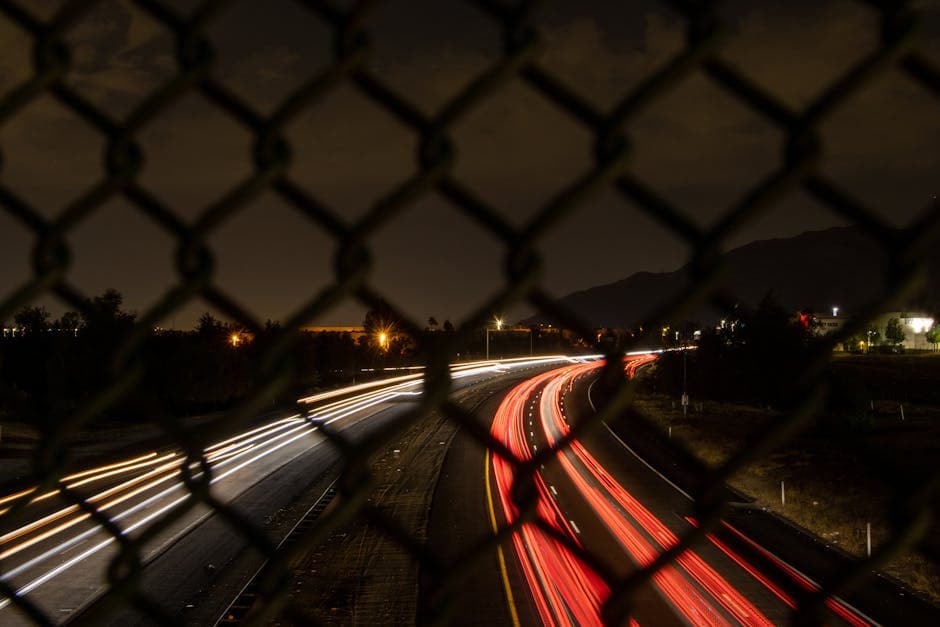
The Inland Empire's logistics belt, with March ARB on its southern fence.
A long read on Moreno Valley: the AFRC HQ-Pacific town, the warehouse capital of Riverside County, the 58 percent Hispanic majority, the Moreno Valley Mall, and an ordering stack built for all of it.
City
Moreno Valley, CA
~210,000 (Census 2024)
Anchor
March ARB
~9K personnel, AFRC HQ
Hispanic share
~58%
Census ACS 2024
Combined sales tax
8.75%
CDTFA, current
It is 11:42 on a Saturday in May. The Moreno Valley Mall food court is three deep at the boba counter. The kids in the AMC line carry direct-order pickup bags. The C-17 contrail above the Box Springs is from March ARB.
Moreno Valley sits on a high plateau at 1,631 feet of elevation, ringed by the Box Springs Mountains to the west, the Badlands to the north, the San Jacinto foothills to the east, and Lake Perris to the south. The plateau gets hot in summer, and dry. From any retail corner in town you can see at least one of the four ridges around the basin. The C-17 contrails from March Air Reserve Base, climbing out east-southeast on a typical morning, are visible from most of the city.
The Moreno Valley Mall is the city's primary indoor retail anchor. It sits at Day Street and Town Circle in the Sunnymead area, the older grid of the city, on the south side of SR-60. JCPenney, AMC Theatres, the food court, and a Round 1 entertainment center pull steady Saturday and Sunday traffic. Towngate Center across Frederick Street holds the bigger-box dining (Olive Garden, BJ's Restaurant, Yard House-style mid-tier chains). The Saturday lunch window from 11:30 to 1:30 is the mall's densest food traffic of the week.
One mile north, on Perris Boulevard, an Amazon DXG7 warehouse-shift end pulls fifty cars onto the boulevard at the lunch whistle. A taqueria on the corner of Cactus and Perris takes thirty pickup orders inside a ten-minute window. The kitchen had them stacked because the orders came in pre-sequenced through the restaurant's direct ordering page. The same shift in eight hours will pull another fifty cars onto Perris in the opposite direction. Three shifts a day, 365 days a year. The shift cadence is the most predictable demand pattern in the city.
Six miles south, at March Air Reserve Base, a 452d Air Mobility Wing squadron coordinator places a Wednesday change-of-command catering order with a Moreno Valley restaurant on Alessandro Boulevard. Forty plates of carne asada, rice, beans, salsa roja, an extra tray of guacamole, a flat of horchata. Net-15 invoice, paid by squadron MWR fund. Pickup at the Visitor Control Center on Cactus Avenue at 11:30 sharp. The restaurant has run this exact order seven times this year.
Five miles southeast, in Mission Grove, a homeowner orders Vietnamese pho from a Cactus Avenue shop. Two large pho ga, an order of cha gio, a Vietnamese iced coffee. Order placed in English on the direct site, $36 all-in, Uber Direct dispatch in fourteen minutes. The marketplace listing for the same shop charges $48 for the same order. The customer chose direct because the price was honest at checkout.
Each of these scenes is a different customer, a different geography, and a different payment model. They share two things. They are all within twelve miles of each other on the Moreno Valley plateau. And none of them is paying a 30 percent marketplace commission to a third party. This is what an ordering platform built for Moreno Valley has to do.
Saturday lunch. Families queue at the food court between JCPenney and the AMC. A bilingual mom toggles between English and Spanish ordering for her three kids. Two of three orders today were placed on the restaurant's direct ordering page before the family arrived.
An Amazon DXG7 warehouse-shift end pulls fifty cars onto Perris Boulevard at the lunch whistle. A taqueria on the corner of Cactus and Perris takes thirty pickup orders inside a ten-minute window. The kitchen had them stacked and bagged at 11:45 because the orders came in pre-sequenced.
A 452d Air Mobility Wing squadron coordinator places a Wednesday change-of-command catering order with a Moreno Valley restaurant on Alessandro Boulevard. Forty plates of carne asada, rice, beans, salsa roja. Net-15 invoice. Pickup at the Visitor Control Center gate.
A Mission Grove resident orders Vietnamese pho from a Cactus Avenue shop. Two large pho ga, an order of cha gio, a Vietnamese iced coffee. Order placed in English on the direct site, $36 all-in, Uber Direct dispatch in fourteen minutes. The marketplace listing for the same shop charges $48.
~9,000 personnel on Moreno Valley's southern fence line, headquarters for AFRC Pacific.
March Air Reserve Base is the headquarters of Fourth Air Force, the Air Force Reserve Command west of the Mississippi. The 452d Air Mobility Wing flies C-17 and KC-135 missions globally. The catering BD calendar is one of the more predictable surges in the Moreno Valley restaurant economy.
Visualization 1 of 5
The March ARB catering perimeter.
AFRC HQ-Pacific + the 452d Air Mobility Wing, on Moreno Valley's southern fence line.
March Air Reserve Base is the Air Force Reserve Command headquarters installation for the western US. Roughly 9,000 service members and civilians work the base across the 452d Air Mobility Wing, the California Air National Guard 163rd Attack Wing, Navy Operational Support Center, and Marine Forces Reserve detachments. The catering surface (squadron lunches, change-of-command ceremonies, retirement luncheons) flows through the Cactus Avenue gate to a perimeter ring of Moreno Valley restaurants.
Sources: March Air Reserve Base public affairs; Air Force Reserve Command, 4th AF public affairs; March Joint Powers Authority; City of Moreno Valley GIS. Diagrammatic, not to scale. Visitor Control Center gate location indicative.
Combined Air Force Reserve Command HQ-Pacific staff, 452d Air Mobility Wing (Reserve), the California Air National Guard 163rd Attack Wing, Navy Operational Support Center, Marine Forces Reserve detachments, and DoD civilian workforce. Personnel live broadly across Moreno Valley, Perris, and Menifee.
Source: March Air Reserve Base public affairs; Air Force Reserve Command
March ARB is the headquarters installation for Fourth Air Force, which oversees all AFRC units west of the Mississippi. The 452d Air Mobility Wing is the largest air mobility wing in the Air Force Reserve, flying C-17 Globemaster III and KC-135 Stratotanker missions worldwide.
Source: Air Force Reserve Command, 4th AF public affairs
The installation straddles Moreno Valley and Riverside city limits with the main entrance on Cactus Avenue at the southern edge of Moreno Valley. Most squadron operations and the flight line are on the Moreno Valley side of the fence.
Source: March Joint Powers Authority; City of Moreno Valley GIS
Established March 1918 as a US Army Air Service flight training field, named for 2nd Lt. Peyton C. March Jr. Realigned from March AFB to March ARB in 1996. One of the oldest continuously operating military airfields in the United States, with more than a century of Inland Empire ties.
Source: Air Force Historical Research Agency; March Field Air Museum
When held (biennial pattern), draws 200,000-plus visitors over one weekend. The largest single-weekend food vending and perimeter restaurant catering event in the Inland Empire calendar.
Source: March Field Air Museum; Press-Enterprise air show coverage
March ARB's catering pattern is the most regular demand surface in Moreno Valley. Squadron and command lunches Tuesday through Thursday. Change-of-command ceremonies on Friday afternoons. Retirement luncheons, promotion ceremonies, family days, and unit picnics on the predictable cadence the Air Force Reserve sets through its annual training calendar. C-17 and KC-135 crews bring family-week catering when they return from deployment cycles. A Moreno Valley restaurant that builds the catering channel on its direct ordering platform, with a net-15 or net-30 invoice option and a tax-exempt government billing form, catches the inbound inquiries the base's MWR coordinators are already sending out.
The largest single-weekend event is Thunder Over the Empire, March ARB's biennial air show. When it runs, attendance is reliably in the 200,000-plus range over a single weekend. The food vendor lottery is its own ecosystem, but the perimeter restaurants on Cactus, Alessandro, and the southern Mission Grove ring absorb the spillover dinner and breakfast demand from the out-of-town crowd. A direct ordering page with a clear no-line message converts the air show crowd at scale; the marketplace surface is saturated with surge pricing the same weekend.
The AFRC HQ-Pacific designation matters because it pulls a steady stream of Reserve and Guard personnel through the installation from across the western United States. Inspector visits, joint exercises, and command rotations all bring per diem visitors who eat at Moreno Valley restaurants for the duration. The catering channel for visiting-officer luncheons is distinct from squadron lunches; both run through the same gate, but the billing entity is different. Direct ordering's catering form can route to the right account; the marketplace cannot.
Operationally, base access requires either a CAC card or a sponsored visitor pass. Restaurants cannot drive themselves onto the installation. Catering orders are picked up at the Visitor Control Center on Cactus Avenue, handed to a base coordinator's vehicle, or staged at the gate. Building those handoff details (gate location, sponsor name, contact phone, contact rank, expected pickup time) into the catering form is a small surface that pays off in fewer cancellations. The marketplace catering products do not have these fields.
The family ring matters as much as the catering ring. Active duty and Reserve personnel at March ARB live broadly across Moreno Valley, Perris, Menifee, and southern Riverside city limits. Family dinner orders from those addresses are a meaningful share of any Moreno Valley QSR or fast-casual restaurant's evening volume. Uber Direct dispatch sized for a ten-mile delivery radius covers most of the military family ring without venturing into the surge-priced freeway corridors. The restaurant chooses the dispatch fee; the marketplace does not.
The seventh layer is heritage. March Field was established in 1918 as a US Army Air Service flight training field, named for Peyton C. March Jr. It is one of the oldest continuously operating military airfields in the United States. The March Field Air Museum sits just outside the gate and draws steady weekend visitor traffic. Restaurants that anchor to this heritage (the airfield-themed menus, the Air Force discount, the air show pop-up offers) build a brand the marketplace listing cannot replicate.
Amazon, Skechers, Walgreens, Harbor Freight. 30 million square feet. 25,000-plus logistics jobs.
Moreno Valley is among the densest single-city warehouse footprints in California. The Highland Fairview Industrial Park alone hosts the Skechers North American DC (1.8 million square feet, the largest single-tenant warehouse in the city), plus Walgreens, Amazon, and Procter & Gamble. The Knox Industrial corridor adds Ross, Lowe's, Aldi, Walmart, and a long tail of smaller tenants.
Visualization 2 of 5
The Inland Empire warehouse belt, by tenant.
Amazon, Skechers, Walgreens, Harbor Freight, Ross, P&G, Aldi, Lowe's, Walmart.
Moreno Valley sits inside one of the densest logistics corridors in the western US. The Highland Fairview Industrial Park and the Knox Industrial corridor together host more than 30 million square feet of distribution space. Combined logistics employment in the city exceeds 25,000 jobs. The Skechers Moreno Valley DC alone, at 1.8 million square feet, is among the largest single-tenant warehouses in California.
Sources: City of Moreno Valley economic development annual report; Riverside County Economic Development Agency; Skechers USA corporate logistics. Square footage figures are approximate and from public filings; tenant assignments reflect the broader Highland Fairview and Knox Industrial corridors.
Multiple Amazon facilities operate in Moreno Valley, including a roughly 1.2 million square foot fulfillment center on Indian Street (DLA3) and the Highland Fairview Industrial Park (Skechers neighbor). Combined Amazon footprint in the city is among the largest of any Inland Empire jurisdiction.
Source: City of Moreno Valley economic development office; Riverside County EDA
Skechers' Moreno Valley DC is the company's largest distribution center in North America and one of the largest single-tenant warehouses in California. The facility opened in 2011 and routes North American footwear distribution from a single 175-acre footprint.
Source: Skechers USA public filings; City of Moreno Valley economic development
Walgreens operates a regional distribution center in the same Highland Fairview corridor. The facility serves Walgreens stores across the western US.
Source: Walgreens Boots Alliance regional logistics
Harbor Freight operates a major distribution center on Cactus Avenue, anchoring tools and hardware distribution for the western US store network.
Source: Harbor Freight Tools corporate logistics
Ross Stores' apparel distribution and Procter & Gamble's western distribution both operate from Moreno Valley addresses. P&G's center is one of the company's largest in the western US.
Source: Ross Stores, Procter & Gamble corporate logistics filings
Aldi, Lowe's, Walmart, FedEx, UPS, Mike's Hard Lemonade, and Olympus all operate warehousing and distribution out of Moreno Valley. Combined logistics employment in the city exceeds 25,000 jobs.
Source: City of Moreno Valley economic development annual report
The warehouse density matters operationally because it sets a predictable lunch and end-of-shift cadence at the perimeter restaurants. Most large Moreno Valley DCs run 24/7 on three eight-hour shifts. The lunch window on shift one (roughly 10am-11am), the shift one end (2pm-3pm), and the shift two end (10pm-11pm) all drive 20-to-30 minute demand surges at QSR and fast-casual restaurants within a one-mile ring of the warehouse. A direct ordering platform with pre-order pickup queues and time-slot enforcement (the kitchen can cap the volume in any five-minute slot) captures that surge without overrunning the kitchen.
The Skechers DC is the largest single-tenant warehouse in California and one of the largest in the western US. The combined logistics employment in Moreno Valley exceeds 25,000 jobs, and Amazon's multi-facility footprint in the city is among the largest of any Inland Empire jurisdiction. The mix of warehouse jobs (full-time, part-time, peak-season, temp through Aerotek and Adecco) creates a workforce that orders QSR and fast-casual at scale across a five-day week and into Saturday.
Warehouse catering is a distinct demand stream from base catering. Most large DCs have monthly all-hands meetings, peak-season morale events, family days, and supervisor recognition lunches. Procurement runs through facility managers and HR, not through a central buyer. A Moreno Valley restaurant that builds a catering channel with an invoicing option (net-15 or net-30), a tax-ID upload field, and a kitchen-capacity calendar wins recurring orders the marketplace catering products lose to commission rates and to the marketplaces' inability to accept enterprise procurement workflows.
The trucking ecosystem matters too. The I-215 and SR-60 freeways through Moreno Valley carry tens of thousands of truck movements per day. Truck-driver-targeted breakfast and dinner concepts on the freeway exits (especially the Day Street and Perris Boulevard exits off SR-60) operate around a 24-hour clock. A direct ordering page with a pre-order pickup window and a designated trucker parking note converts truck traffic that the marketplace apps mishandle because they default to consumer delivery addresses.
The Highland Fairview Industrial Park, on the eastern side of the city near the SR-60 / Theodore exit, is the densest single-jurisdiction warehouse cluster in the IE. Restaurants in the corridor between the park and the Moreno Valley Mall capture lunch, end-of-shift, and dinner volume from a workforce that does not have time to drive home. The geography is built for direct ordering: tight delivery radii, predictable demand cadence, and a workforce that is heavily phone-and-app native. A multilingual Voice AI on the restaurant phone line captures the Spanish-first share that the apps either ignore or mishandle.
Moreno Valley is one of the IE's most Hispanic cities. Spanish at home is 41 percent. The Voice AI requirement is real.
Hispanic and Latino residents are roughly 58 percent of Moreno Valley. Spanish at home reaches 41 percent (US Census ACS 2024). The Black or African American share is 17 percent, notably higher than neighboring Riverside city. Vietnamese, Filipino, and Korean clusters concentrate in Mission Grove and Towngate.
Visualization 3 of 5
Moreno Valley is one of the IE's most Hispanic cities.
100 residents, by race and ethnicity.
Per US Census Bureau ACS 2024, Hispanic and Latino residents make up roughly 58 percent of Moreno Valley, with Spanish at home reaching 41 percent. Black or African American residents are 17 percent, a notably higher share than most California cities. Vietnamese, Filipino, and Korean clusters concentrate around Mission Grove Plaza and Towngate. Each dot below represents one of one hundred Moreno Valley residents.
Sources: US Census Bureau ACS 2024, Moreno Valley city profile and language-spoken-at-home tables. The 17 percent Black share and the 41 percent Spanish-at-home share are both notably higher than neighboring Riverside city.
Per US Census Bureau ACS 2024 (Moreno Valley city). Compares to ~33 percent statewide and ~19 percent nationally. Moreno Valley is one of the largest Hispanic-majority cities in the Inland Empire by absolute count.
Per US Census Bureau ACS 2024 language-spoken-at-home tables. The single largest non-English home-language population in Moreno Valley. Higher density than Riverside city.
Per US Census Bureau ACS 2024. Moreno Valley has one of the larger Black population shares of any Inland Empire city. The community concentrates in the Sunnymead and Edgemont neighborhoods on the north side of the city.
Vietnamese, Filipino, and Korean clusters concentrate in Mission Grove Plaza, Towngate Center, and along Alessandro Boulevard. Smaller in absolute terms than Riverside but distinct in corridor geography.
The Hispanic-majority threshold matters for how Moreno Valley restaurants market and how they take orders. Sunnymead Boulevard, the Perris Boulevard corridor north of SR-60, and the Edgemont neighborhood are anchored by taquerias, panaderias, birrierias, and mariscos kitchens whose customer base is bilingual but defaults to Spanish on the phone. A direct ordering page in Spanish, with the same checkout flow as the English page, is not a translation project. It is a primary-language design problem the marketplace apps handle inconsistently and that the Voice AI on the restaurant's phone line has to handle natively.
The phone-order surface is where the language layer becomes most operationally critical. A taqueria on Sunnymead Boulevard takes a high share of its non-pickup orders by phone. A Voice AI that understands Mexican Spanish (not the Spain-Spanish defaults of off-the-shelf IVRs), pronounces birria and aguachile and chilaquiles correctly, knows the difference between asada and adobada, and routes the order into the kitchen without dropping to voicemail recovers a meaningful share of phone calls that English-only IVRs lose. The Voice AI is the answer to a problem the marketplace cannot solve.
The Black or African American share at 17 percent is one of the higher concentrations in any IE city. The community concentrates in Sunnymead and Edgemont and supports a soul food, wings, hot link, and BBQ corridor that is genuinely distinct from the Hispanic-majority taqueria corridor a quarter mile away. A direct ordering page that anchors to that corridor identity (the soul food kitchen on Cottonwood, the wings concept on Heacock) carries brand identity the marketplace listing flattens out.
The Vietnamese, Filipino, and Korean clusters around Mission Grove and Towngate are smaller in absolute terms than Riverside's but distinct in corridor geography. A multilingual ordering surface (English, Vietnamese, Korean, Tagalog, Spanish) on the restaurant's direct page captures the variance. The marketplace listing does not split the multilingual order surface; it forces a single English-default checkout that loses the customer who would have called.
There is no city in the western Inland Empire for whom multilingual Voice AI matters more than Moreno Valley relative to its size. The Hispanic concentration is denser than Riverside city. The Black share is higher than most California suburbs. The Asian corridor concentrations exist but in tight pockets. A direct ordering platform with Voice AI handling Spanish, Tagalog, Vietnamese, Korean, and Mandarin on the restaurant's phone line covers nearly the entire non-English phone order surface for the city. The DoorDash listing does not.
Mall + Towngate, Sunnymead, Alessandro, Mission Grove, Cactus, Hidden Springs, Edgemont.
Moreno Valley's food geography is street-coded. Each corridor has its own character, demographic, dominant cuisine, and customer-base language. A direct ordering page that anchors to the corridor outranks a generic city-level page in Google search and in the customer's mental map of where to order from.
Visualization 4 of 5
Mall, Towngate, Mission Grove, Sunnymead, Alessandro.
Seven retail corridors, indexed by character.
Moreno Valley is organized around five primary retail anchors: the Moreno Valley Mall on Day Street, Towngate Center across Frederick Street, Mission Grove Plaza on Cactus Avenue, the Sunnymead Boulevard taqueria corridor, and the Alessandro Boulevard fast-casual spine. Hidden Springs and Edgemont round out the city. Each corridor has its own demographic and language profile.
Sources: City of Moreno Valley General Plan; Census Bureau ACS 2024 (by zip code); Riverside County GIS. Diagrammatic, not to scale.
The Moreno Valley Mall (Town Circle anchor, JCPenney plus AMC Theatres) plus Towngate Center is the city's largest retail node. Family dining, mid-priced QSR, and a fast-casual mix oriented around mall and movie traffic. Saturday afternoon and Sunday evening are the peak windows.
Older Moreno Valley grid. Hispanic-majority residential ring with taquerias, panaderias, birrierias, and mariscos as anchor formats. The city's most concentrated Spanish-first ordering surface.
East-west spine that runs from the I-215 freeway to the Moreno Valley College campus and out toward Lake Perris. Mid-density commercial. March ARB-adjacent on the south end. Highest density of family fast-casual restaurants and chain QSRs in the city.
South Moreno Valley neighborhood retail anchor. Higher disposable income than the Sunnymead corridor. Vietnamese pho, Korean BBQ, sushi, brunch concepts. Pickup-heavy. Mission Grove residential pulls a Saturday morning brunch volume.
The corridor on the southern edge between Moreno Valley and March ARB. Military-facing fast-casual, breakfast taquerias, and catering kitchens. Net-15 invoicing and base-access handoff procedures matter here more than anywhere else in the city.
Eastern Moreno Valley adjacent to Lake Perris State Recreation Area. Weekend recreation customer base in spring through fall. Breakfast burrito stops, BBQ, and lake-trip provisioning are the dominant formats.
Older Moreno Valley + unincorporated Edgemont. Working-class Hispanic and Black community. Soul food, BBQ, Mexican mom-and-pop kitchens, hot wing concepts. Phone-order surface is high because broadband adoption is mixed; the Voice AI requirement is real.
The Moreno Valley Mall is the city's civic retail anchor. The food court runs a Saturday lunch peak from 11:30 to 1:30 and an early-evening peak around the AMC showtimes. Towngate Center, on the other side of Frederick Street, carries the larger casual-dining chains. Pickup volume from the mall ring is meaningfully higher on Saturday and Sunday than the rest of the week, and a direct ordering page that handles the pre-order pickup queue catches the customers who walk into the mall already having ordered.
Sunnymead Boulevard, the older Moreno Valley grid north of SR-60, is the Spanish-first taqueria corridor. Birrieria El Borrego, the panaderias on the Perris Boulevard junction, and the mariscos kitchens up to Pigeon Pass Road are the anchors. The customer base is bilingual but defaults to Spanish on the phone. A multilingual Voice AI on the kitchen line is not optional in this corridor; it is the difference between booking the order and losing it to a voicemail no one returns.
Mission Grove Plaza, on Cactus Avenue south of SR-60, is the city's higher-disposable-income neighborhood retail anchor. The Vietnamese pho shops, the sushi counters, the Korean fried chicken concepts, and the brunch kitchens cluster around the Mission Grove Parkway intersection. Pickup density is higher than delivery; weekend brunch hours are the peak. A direct ordering page indexed for Mission Grove (not just Moreno Valley) outranks the marketplace listing on local search.
Alessandro Boulevard is the fast-casual chain spine, running east-west from the I-215 freeway through Moreno Valley College and out toward Lake Perris. Chipotle, Panda Express, Wingstop, In-N-Out, and a long tail of national chains line the corridor. Independent fast-casual concepts here compete with national chains directly; a direct ordering page with first-party loyalty (vs the third-party marketplace promo) is what builds repeat customers in this corridor.
The Cactus Avenue corridor between Heacock and the March ARB perimeter is the catering-kitchen and military-facing corridor. Net-15 invoicing, gate-handoff details, and breakfast-burrito kitchens that open at 5am for the base are the operational reality. Hidden Springs, the eastern Moreno Valley adjacent to Lake Perris, has a weekend recreation customer base in spring through fall. Edgemont, an older unincorporated pocket on the city's west side, is working-class Hispanic and Black; the soul food, BBQ, and family taqueria mix is dominant.
Outdoor recreation on the city's eastern and western edges.
Lake Perris State Recreation Area, Box Springs Mountain Reserve, Sycamore Canyon, and the Lake Perris Fairgrounds together bring more than 2 million visitors a year through the Moreno Valley basin. The weekend recreation customer flow is a measurable demand layer for the city's breakfast and lunch operators.
California State Park on the south edge of Moreno Valley. The lake is a 2,200-acre reservoir built by the State Water Project. Camping, boating, swimming, fishing, and rock-climbing at the Big Rock formation. Annual visitation regularly exceeds 1.5 million.
Riverside County regional park system. The Box Springs Mountains form the western wall of Moreno Valley with elevations to roughly 3,000 feet. The 'M' Mountain (the giant white 'M' for UC Riverside) sits at the southwest corner.
On the northwest side of the city, a 1,500-acre regional park with miles of hiking and equestrian trails. The trails connect to the Box Springs system to the south.
Hosts the Southern California Fair each fall, drawing tens of thousands of visitors over a single weekend. Food vendor and perimeter restaurant catering volume during fair week is one of the larger annual surges in the city's F&B calendar.
Lake Perris State Recreation Area sits on the south edge of Moreno Valley, just over the city line into Perris but reached through the Moreno Valley plateau. The 2,200-acre reservoir is part of the California State Water Project. It is open for boating, swimming, fishing, camping, and rock climbing at the Big Rock formation on the lake's north shore. Annual visitation regularly exceeds 1.5 million, with weekend peaks in spring and fall. The recreation crowd routes through Moreno Valley restaurants in the morning (breakfast burrito stops, coffee counters) and on the way home (BBQ, casual dining, ice cream).
The Box Springs Mountains, the western ridge of the city, top out at roughly 3,000 feet of elevation. The Box Springs Mountain Reserve is part of the Riverside County regional park system, with miles of hiking and equestrian trails. The giant white "M" on the southwestern slope marks the UC Riverside campus on the other side of the ridge. Sunday morning hikers from Moreno Valley, Riverside, and the broader IE use the reserve heavily. Breakfast pickup density at the foot of the trails (Old 215 corridor) follows the trailhead schedule.
Sycamore Canyon Wilderness Park, on the northwest side of the city, is a 1,500-acre regional park system that connects through to the Box Springs Reserve. The Southern California Fair, held at the Lake Perris Fairgrounds each fall, draws tens of thousands of visitors over a single weekend. Fair-week perimeter restaurant demand is concentrated and predictable; a direct ordering page with a pre-order pickup window and a clear "no-line" message captures the spillover.
The recreation economy in Moreno Valley is not the biggest demand driver in the city, but it is the most weather-dependent one. Spring blooms, summer water sports, fall climbing season, and the holiday camping circuit all bring out-of-town visitors who eat in Moreno Valley restaurants on the way to and from the lake. A direct ordering page is the way a Moreno Valley restaurant captures those visits at first-party economics; the marketplace listing flattens them into commission stacks.
25,000-plus logistics jobs. Three shifts a day. 38-minute commute averages.
Moreno Valley's warehouse and distribution workforce is the largest single employment category in the city after retail and healthcare. It is also one of the most predictable demand patterns in the IE restaurant economy.
Combined warehouse, distribution, and trucking employment in Moreno Valley. The largest single employment category in the city after retail and healthcare.
Most large Moreno Valley DCs run 24/7 on three eight-hour shifts. Lunch and end-of-shift windows (roughly 10am-11am, 2pm-3pm, 10pm-11pm) drive predictable QSR and fast-casual demand surges at perimeter restaurants.
Per US Census Bureau ACS 2024. Above the California state median but below Orange County and below the Riverside city median. Family-driven order volume runs slightly above the IE average on a per-household basis.
Among the longer commute averages in California. Many Moreno Valley residents commute to Riverside, Ontario, Long Beach, and even LA County. Evening pickup at home addresses runs late (6:30pm-8:30pm peak).
The Moreno Valley warehouse workforce sits across the largest single tenant in the city (Skechers DC, 1.8 million square feet), the multi-facility Amazon footprint, and a long tail of distribution and trucking tenants in the Highland Fairview and Knox Industrial corridors. The workforce skews Hispanic-majority, working-class, family-driven, and bilingual. The lunch and end-of-shift order density is the most repeatable revenue pattern any QSR or fast-casual restaurant in the perimeter can plan around.
The 38-minute average commute is among the longer commute averages in California. Many Moreno Valley residents commute to Riverside, Ontario, Long Beach, or LA County for work; the Moreno Valley warehouse jobs are themselves the in-bound commute for residents of Perris, Menifee, Hemet, and Beaumont. The two-way commute drives early-morning (5:30am to 7am) and late-evening (6:30pm to 8:30pm) demand at breakfast and dinner kitchens. Drive-thru concepts dominate; direct pickup ordering with a pre-paid "grab and go" window outpaces drive-thru on throughput when the queue is long.
Warehouse all-hands meetings and peak-season catering events drive a recurring monthly demand at large Moreno Valley DCs. A facility manager booking a Q4 morale lunch for 200 floor workers will not put that order on DoorDash for Business; the procurement workflow does not support it. Direct ordering with a catering channel, invoicing, and a kitchen-capacity calendar wins that order at first-party economics. The same restaurant will see the same facility manager again three times a year.
There is a public health and infrastructure dimension to this community that the ordering platform respects. The Inland Empire's warehouse density has generated air-quality, road-wear, and labor-condition concerns reported on by the South Coast AQMD, the LA Times, and Press-Enterprise over the last decade. The workforce that drives Moreno Valley's warehouses earns less than the Orange County retail workforce and lives in a more concentrated affordability constraint. A direct ordering platform that respects the worker (transparent pricing, no inflated marketplace upcharge, Spanish-first phone ordering) is a small contribution to a workforce that does not need any more inflation.
AB 1228, SB 478, Prop 22 across the Moreno Valley P&L.
The three California laws that reshape the Moreno Valley restaurant P&L since 2020. Each shifts a cost line. Direct ordering is one of the few platform decisions that does not move adversely against any of the three.
Sets the hourly minimum at $20 for limited-service chains with 60 or more US locations. Independent Moreno Valley restaurants follow the California state minimum (currently $16.50 statewide for most employers in 2026, indexed annually). The state Fast Food Council can index the chain rate annually.
Prohibits advertising a price that does not include all mandatory fees, except taxes and government fees. Restaurants must disclose service fees, packing fees, kitchen surcharges, and any other mandatory line item in the price shown at the time of ordering.
Allows Uber, DoorDash, and similar platform drivers to remain classified as independent contractors with a curated benefits floor. Sustains the Uber Direct driver pool the rest of this page depends on.
AB 1228's $20 hourly minimum for limited-service chains applies to the national QSRs along Alessandro Boulevard and around the Moreno Valley Mall. Independent Moreno Valley operators stay on the California state minimum (currently $16.50). The result is a labor-cost asymmetry that pushes the national chains to thinner margins on Alessandro and gives the independent operators a small but real cushion. A direct ordering platform that captures the savings the chain ordinarily passes to its marketplace partner (commission stack) extends that cushion.
SB 478's junk fee transparency law took effect July 1, 2024 and reshapes how Moreno Valley restaurants display checkout prices. Every mandatory fee (kitchen surcharge, service fee, packaging fee) has to be included in the price the customer sees at the time of ordering, not added at the end. The direct ordering page with an all-in price displayed at checkout respects the law cleanly. The marketplace apps have been inconsistent on this. Operators who run both channels are exposed to enforcement risk on the marketplace side they cannot directly control.
Proposition 22 sustains the Uber Direct dispatch driver pool that direct ordering depends on for delivery. The California Supreme Court upheld Prop 22 unanimously in July 2024 (Castellanos v. State). The driver pool is stable for the foreseeable future. Uber Direct's flat per-delivery fee model is compatible with the direct ordering platform's flat monthly subscription model in a way the marketplace commission stack is not.
7.25 + 0.50 + 1.00 = 8.75 at the Moreno Valley register.
California state base 7.25 percent + Riverside County Measure A 0.50 percent + City of Moreno Valley Measure G 1.00 percent. Same combined rate as Riverside city and San Bernardino. Higher than Fontana and Ontario, which have not adopted a city-level transactions tax.
Visualization 5 of 5
The 8.75 percent combined sales tax, layer by layer.
CA state + Riverside County + City of Moreno Valley.
California state sales tax is 7.25 percent. Riverside County's Measure A district tax adds 0.50 percent. The City of Moreno Valley's voter-approved Measure G local tax adds 1.00 percent. Combined: 8.75 percent at the Moreno Valley register, the same rate as neighboring Riverside city.
Sources: California CDTFA district tax rate finder; City of Moreno Valley Measure G; Riverside County Measure A. Inland Empire comparison rates current as of CDTFA most recent publication. Ontario and Fontana sit at 7.75 percent because neither has yet adopted a city-level transactions tax.
Effective rate, current per CDTFA
California state sales and use tax California Department of Tax and Fee Administration (CDTFA), statewide base | 7.25% |
Riverside County district transactions tax Riverside County Transportation Commission (Measure A), administered via CDTFA | 0.50% |
City of Moreno Valley district tax City of Moreno Valley Measure G transactions and use tax (voter-approved) | 1.00% |
| Combined | 8.75% |
Source: California CDTFA district tax rate finder; City of Moreno Valley Measure G.
The combined 8.75 percent rate is competitive within California. It is the same as Riverside, San Bernardino, and Corona. Ontario and Fontana sit at 7.75 percent because neither has yet adopted a city-level transactions tax. Los Angeles is 9.50 percent. Moreno Valley's consumer pricing impact on a $30 order is roughly $2.63 in tax, a number the customer expects and a direct ordering page's SB 478-compliant all-in display handles cleanly.
Measure G, the 1.00 percent City of Moreno Valley local transactions and use tax, was voter-approved in 2020 to fund city services. The revenue funds public safety, road maintenance, and other municipal operations. The tax applies at the Moreno Valley register for sales of tangible personal property and for prepared food at restaurants. The direct ordering platform's checkout displays the combined rate; the marketplace apps have had mixed disclosure consistency.
Operationally, the tax stack matters because customers comparison-shop direct vs marketplace on all-in price. A Moreno Valley taqueria's $14.99 plate plus 8.75 percent tax on the direct page is $16.30; the same plate on the marketplace marked up by 28 percent commission plus delivery fees plus tax can reach $24 to $27. The marketplace upcharge is not the tax; it is the platform's rent extracted on the way to the customer. Direct ordering removes that rent.
How DirectOrders fits Moreno Valley.
The warehouse belt is a recurring catering channel the marketplaces do not serve. Skechers, Amazon, Walgreens, Harbor Freight, and the long tail of Moreno Valley DCs each run monthly all-hands meetings, peak-season morale events, and quarterly recognition lunches. The procurement workflow runs through facility managers, not through a consumer marketplace app. Direct ordering's catering channel with net-15 invoicing, tax-ID upload, and a kitchen-capacity calendar wins those orders. The marketplace catering products charge restaurant-side commissions and do not accept enterprise procurement.
The March Air Reserve catering surface is structurally similar but more regular. AFRC HQ-Pacific runs the largest Reserve mobility wing in the Air Force on a predictable annual calendar. Squadron lunches, change-of-command ceremonies, retirement luncheons, and family days are a steady demand stream a Moreno Valley restaurant can plan against. Direct ordering's catering form handles the gate-handoff, sponsor name, and CAC-access fields the marketplace does not.
The 58 percent Hispanic majority is a Voice AI requirement, not a feature. A multilingual Voice AI that handles Spanish (Mexican Spanish, properly pronounced birria and aguachile), Tagalog, Vietnamese, and Korean on the restaurant's phone line captures phone-order volume that English-only IVRs lose to voicemail. The taqueria on Sunnymead Boulevard. The pho shop on Cactus Avenue. The Filipino bakery in Mission Grove. Each operates on a non-English first-language customer base, and each loses orders when the phone line cannot handle it.
The shift-end demand cadence at the perimeter warehouses (10am-11am lunch, 2pm-3pm shift one end, 10pm-11pm shift two end) is the most predictable demand surge in the city. A direct ordering platform with pre-order pickup queues and time-slot enforcement (the kitchen caps the volume in any five-minute slot) captures that surge without overrunning the kitchen. The marketplace surge model handles peaks by raising prices on customers; the direct platform handles peaks by managing the kitchen pipeline.
The Moreno Valley Mall ring is a Saturday and Sunday peak the city's independent operators around Towngate, Day Street, and Mission Grove compete for. A direct ordering page anchored to the corridor (not the city) outranks the marketplace listing on local pickup search. The customer who is already walking to the mall picks up an order placed twenty minutes earlier on the restaurant's page; the marketplace listing routes through delivery and skips the pickup volume entirely.
The combined 8.75 percent sales tax is competitive and predictable. The SB 478-compliant all-in pricing displayed at checkout respects the law and the customer. The AB 1228 chain-vs-independent labor-cost asymmetry is a small cushion for the Moreno Valley independents; the direct ordering platform's zero per-order commission extends that cushion. The Prop 22 driver pool is stable, sustained by the July 2024 California Supreme Court decision; Uber Direct dispatch is operational for the foreseeable future.
A 1918 airfield, a 2,200-acre base, a 9,000-personnel headquarters, a 25,000-job warehouse workforce, a 58 percent Hispanic majority, a 41 percent Spanish-at-home rate. Moreno Valley has a stack. The platform that takes its orders should match it.
Where the numbers came from. Where to read more.
- US Census Bureau, ACS 2024 (Moreno Valley city)Population, Hispanic and Latino share, Black share, language at home, median income, median age.
- California Department of Tax and Fee Administration (CDTFA)Combined sales tax (state 7.25% + Riverside County 0.5% + City 1.0% = 8.75%).
- California Department of Industrial Relations (AB 1228)Fast Food Minimum Wage Order, effective April 1, 2024.
- California Attorney General (SB 478)Junk fee transparency law implementation guidance.
- California Supreme Court, Castellanos v. State (Prop 22)Prop 22 upheld unanimously, July 25, 2024.
- March Air Reserve Base public affairs452d Air Mobility Wing personnel and mission summary; AFRC HQ designation.
- March Joint Powers AuthorityJoint powers authority overseeing redevelopment of former March AFB acreage adjacent to the active installation.
- March Field Air MuseumAir show history; March Field heritage from 1918.
- City of Moreno Valley economic developmentWarehouse and distribution tenants, logistics employment counts.
- Riverside County Economic Development AgencyInland Empire logistics belt summaries; Moreno Valley industrial park tenants.
- California State Parks, Lake Perris SRALake Perris State Recreation Area visitation, boating, camping summary.
- Riverside Press-EnterpriseLocal daily reporting; logistics, air show, and Moreno Valley city coverage.
- Air Force Reserve Command, 4th AF public affairsFourth Air Force headquarters at March ARB; mission profile.
- Air Force Historical Research AgencyMarch Field 1918 founding; named for Peyton C. March Jr.
- City of Moreno Valley, Measure G transactions and use tax1.0 percent city-level local tax.
- Skechers USA, corporate logisticsNorth American distribution center, 1.8 million square feet, Moreno Valley.
- Riverside, CA12 mi west; the IE capital and citrus origin
- Fontana, CA22 mi northwest; IE rail and steel heritage
- Anaheim, CA42 mi west; Orange County resort corridor
- Los Angeles, CA68 mi west; the 5pm drive-time tax
- Chula Vista, CA110 mi south; South Bay border ordering
- Bakersfield, CA190 mi north; southern San Joaquin freight
- Commission calculatorPlug in your DoorDash volume, see the MV dollar drag
- Voice AI demo (multilingual)Hear Spanish, Tagalog, and Vietnamese orders
- Uber Direct dispatchHow restaurant-owned dispatch beats marketplace
- Catering channelNet-15 / net-30 invoicing for March ARB and DC catering
- PricingFlat $249 / mo. No per-order commission. Zero.
Plant your kitchen on the plateau.
A 30 minute walkthrough with our Moreno Valley implementation lead covers the corridor your restaurant sits on, the Voice AI languages your customer base needs, the March ARB or warehouse catering channels to wire up, and the Uber Direct radius math for your specific kitchen address.