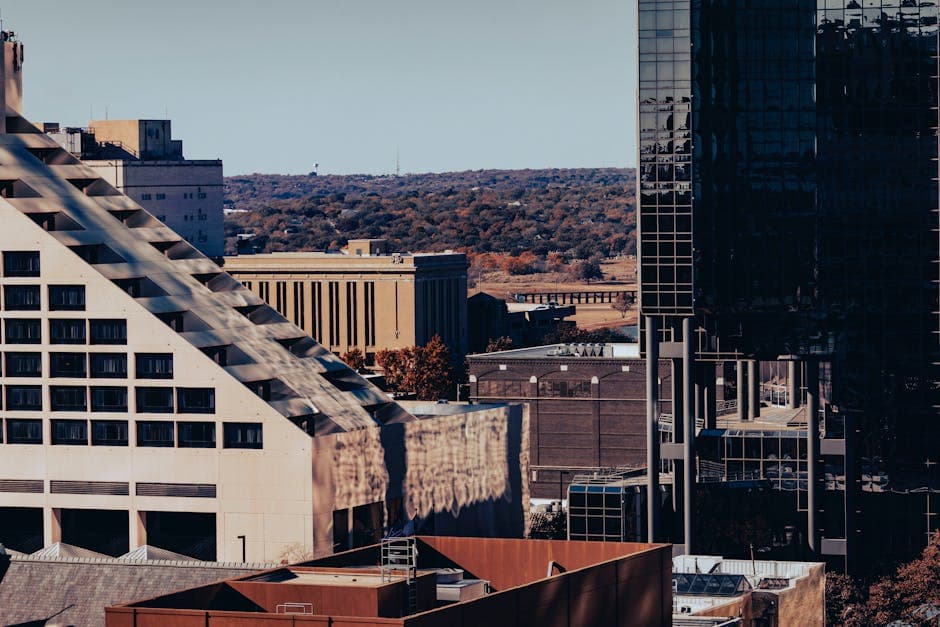
Buddy Holly Country and Texas Tech.
A long read on operating restaurants in Lubbock, the Hub City of West Texas, where Saturday in fall is Jones AT&T Stadium and 60,000 fans putting their Guns Up, downtown is Buddy Holly Avenue and the Depot Entertainment District, and roughly 30 percent of US cotton is produced inside a 100-mile circle around the city.
- Texas Tech enrollment
- ~40K
- Jones AT&T Stadium
- ~60K
- US cotton within 100 mi
- ~30%
- Hispanic / Latino share
- ~35%
TTU Institutional Research
Texas Tech Athletics
Plains Cotton Growers
US Census ACS, Lubbock County
I. Saturday, 9:42 A.M., Buddy Holly Avenue
The kickoff that bends the city.
It is the second Saturday in October. The forecast is 71 and clear, a perfect West Texas football morning. At a chef-driven restaurant on Buddy Holly Avenue, the host stand has been printing tickets since 7:00 a.m. The first tailgate trays (two-dozen brisket sandwich boxes, a large pan of mac, a pan of slaw) went out the back door at 8:15. The next two are on deck, a breakfast-taco order for fifty (potato, egg, chorizo) headed to a tailgate at the Frazier Alumni Pavilion, and a small-plate platter (queso, pimento cheese, ham biscuits) for an alumni-relations pre-game inside the stadium club.
The owner is standing in the doorway, sleeves rolled, doing the calendar math out loud. Kickoff is 2:30 p.m. against a Big 12 opponent on a clear, calm Saturday. By 10:00 a.m. the tailgate lots on the north side of Jones AT&T Stadium will be full of pickup trucks, popup tents, color-flagged with the school's red and black. Every Buddy Holly Avenue restaurant has a stack of tickets out the door. Every kitchen on 19th Street is working a parallel ticket. The whole downtown is bent toward a 2:30 kickoff and a 5:45 final whistle.
The owner has watched this same morning play out for fifteen consecutive falls. The trick is not the volume. The trick is the shape. A Texas Tech home Saturday produces three distinct order waves: a pre-game tailgate window from roughly 8 a.m. to 11 a.m., then a quiet hour while the stadium fills, then a post-game wave from roughly 6:30 p.m. to 10 p.m. when 60,000 fans pour out of Jones AT&T and start hunting for somewhere to eat. Restaurants that staff for one wave miss the others. Restaurants that run their ticket printer like a regular Saturday miss the day.
The ordering stack on the host computer was sold to the owner two years ago by a national marketplace rep who had never been to Lubbock in October. It assumes a generic 11:30 to 1:30 lunch window. It assumes pickup trade is roughly even across Saturdays. It assumes the courier pool sits at constant density downtown. None of those assumptions hold inside a Tech home weekend. The owner has, for two years, been paying a commission rate on every Saturday order that finds the restaurant through the marketplace, and the math on a $2,400 tailgate ticket stings noticeably more than the math on a $36 dine-in burger.
This page exists because Lubbock is not Dallas. It is not Austin. It is not even El Paso. It is the Hub City of West Texas, anchored by Texas Tech, defined by the cotton economy, threaded by the heritage of Buddy Holly and the Crickets, and shaped at the household level by a Hispanic population that sits at roughly thirty-five percent of the county. A platform built for downtown Houston or downtown Atlanta misses the entire structure of this city.
At 9:42 a.m. the breakfast-taco runner clocks back in. The owner counts the next ticket on the printer, hits the call bell, and walks back to the line. Kickoff is in four hours and forty-eight minutes. The day has barely started.
II. Guns Up
Six Saturdays a year, Jones AT&T Stadium is the third-largest city in West Texas.
Jones AT&T Stadium sits on the eastern edge of the Texas Tech main campus, just off 4th Street and University Avenue, about a mile and a half from the heart of the Depot Entertainment District. Capacity runs roughly 60,000. The Red Raiders host six to seven home dates per season, usually one in late August or early September (the home opener), two in September, two in October, and one or two in November. On any given home Saturday, the stadium and its tailgate footprint hold more people than the entire population of every West Texas town outside Lubbock and Amarillo combined.
Tailgating opens roughly seven hours before kickoff. The North University lots, the Drane Hall lots, the United Supermarkets Arena lots, and the Frazier Alumni Pavilion grounds all fill in a rolling wave that starts at sunrise. Sponsored tailgate areas (Raider Alley) host the marquee pre-game programming. The Goin' Band from Raiderland plays a march to the stadium. The cheerleaders raise the Guns Up hand sign (index finger and pinky extended) as the team enters. Will Rogers and his horse Soapsuds, the 1950 bronze statue that has stood on Memorial Circle for three-quarters of a century, faces, by tradition, away from rival Texas A&M to the southeast.
Operationally, a home football Saturday is the most consequential calendar event in the Lubbock restaurant year. A typical Saturday runs three operating windows, not one. The pre-game window opens at 7 a.m. and closes around 11 a.m.; this is the tailgate-catering window, with brisket sandwich trays, breakfast tacos, smoked sausage, pimento cheese and crackers, and full-pan sides moving out the back door in numbers the kitchen does not see on a regular Saturday. The mid-day window (11 a.m. to 2:30 p.m.) is quieter because the stadium is filling. The post-game window opens at the final whistle and runs until close; Lubbock restaurants describe the 6:30-to-9:30 p.m. window after a 2:30 kickoff as their single highest-volume Saturday wave of the year.
The implication for the platform is structural. A generic marketplace stack does not know the difference between a regular Saturday and a Tech home Saturday. It runs the same courier-pool model, the same fee structure, the same surge logic. A Lubbock-fit platform needs to read the calendar, raise pickup-window granularity inside the seven hours pre-kick, coordinate with on-foot pickup runners through the tailgate lots, and protect catering routes that cross the 19th Street, 4th Street, and Brownfield Highway approaches to the stadium during the parking surge.
Beyond football, the Texas Tech home-event ledger reaches deeper into the year than fans might assume. Big 12 basketball runs from November through March in United Supermarkets Arena (capacity ~15,000). Big 12 baseball runs at Dan Law Field from late February through May. Women's basketball, volleyball, soccer, and softball all add home-event nights through the fall and spring. On a calendar that already runs an SEC-tier football intensity for six or seven dates, the secondary sports add another fifty to seventy home dates spread across nine months. The catering and pickup waves move with the calendar.
For a chef-driven kitchen on Buddy Holly Avenue or a barbecue operator in Wolfforth, the question is not whether the calendar matters. It is whether the ordering stack can keep up with the calendar.
Source convention
Home-event counts on this page draw on Texas Tech Athletics published schedules and Jones AT&T Stadium / United Supermarkets Arena event calendars. The "third-largest city in West Texas" framing is illustrative: stadium-plus-tailgate footprint on a sold-out home Saturday exceeds the population of every West Texas town outside of Lubbock and Amarillo.
Twelve-Month Red Raiders Ledger
III. Peggy Sue and the Crickets
Lubbock is the city that wrote the first chord of rock and roll.
Charles Hardin Holley was born in Lubbock on September 7, 1936, the youngest of four children in a working-class neighborhood near 6th Street. He learned guitar and steel guitar in his teens, formed his first band at Lubbock High, and by 1957 had recorded what contemporary music historians describe as one of the foundational sessions in popular music: a small studio in Clovis, New Mexico, ninety minutes northwest, the Crickets, and a song called Peggy Sue. The "e" in Holley was dropped on his first record contract. The Holly spelling stuck.
Holly's career lasted roughly eighteen months at full national altitude before the February 3, 1959 plane crash in Iowa that took his life along with Ritchie Valens and J.P. "The Big Bopper" Richardson. In that short window he wrote and recorded music that the Beatles, the Rolling Stones, Bob Dylan, and Bruce Springsteen would later cite as direct influences. The Beatles named themselves, in part, as an homage to the Crickets.
Lubbock honors Holly across the city. The Buddy Holly Center on Crickets Avenue holds the permanent collection of his guitars, glasses, and recording artifacts. A bronze statue of Holly with his Fender Stratocaster stands on the Walk of Fame on 7th Street. Avenue H, the long downtown north-south street, was renamed Buddy Holly Avenue and now runs through the Depot Entertainment District. The Buddy Holly Hall of Performing Arts and Sciences, the 220,000-square-foot venue that opened in 2020, is the city's flagship performing arts facility and one of the most architecturally ambitious civic buildings in West Texas.
For restaurants on Buddy Holly Avenue, the heritage is not nostalgia. It is foot traffic. Pre-show and post-show dining around Buddy Holly Hall is one of the steadiest downtown waves in the city's restaurant year. Buddy Holly Week (the annual celebration tied to the September 7 birthday) brings a separate compression: tribute concerts, gallery openings, a downtown street fair, and a measurable lift across every Depot operator's calendar. The heritage runs through the host stand every night that the Hall has a show.
A Depot kitchen needs to know when the Hall has a curtain time. The platform that helps the kitchen run pre-show pickup windows from 5:30 to 7:00 p.m. and post-show wine bar refills from 10:00 p.m. onward is doing work no marketplace app, designed for a generic suburban Saturday, can do.
Buddy Holly Center
Permanent collection on Crickets Avenue. Guitars, glasses, recording artifacts. Operated by the City of Lubbock.
Buddy Holly Hall
220,000-square-foot performing arts venue opened 2020. Downtown anchor for post-show dining trade.
Walk of Fame statue
Bronze statue of Buddy Holly with his Fender Stratocaster. 7th Street and Crickets Avenue.
Buddy Holly Avenue
Avenue H renamed in his honor. Runs north-south through the Depot Entertainment District.
IV. The Cotton Capital of the World
Roughly thirty percent of US cotton is produced inside a one-hundred-mile circle around Lubbock.
Plains Cotton Growers Inc., the producer organization that represents the High Plains, draws its membership from forty-one Texas counties. USDA NASS county-level production data confirms the regional density: in a normal crop year, the forty-one-county South Plains region produces roughly thirty percent of total US cotton. No other region in the country comes close on a per-mile-of-radius basis. Lubbock sits at the geographic center.
Cotton sets the annual rhythm of the region. Planting runs April through June. Squaring and boll-setting carries through July and August. Defoliation runs September through October. Harvest and module-staging runs October through December. Gin season, the most labor-intensive phase, runs October through January, with co-op gins in Idalou, Slaton, Wolfforth, and Brownfield operating round-the-clock shifts through the peak weeks. The number of working hours absorbed by the region in November is enormous. Restaurants that serve gin towns or sit along the FM roads that connect gin to grain elevator see a measurable late-shift catering wave in those months.
Cotton is not only an agricultural fact about Lubbock; it is a downtown fact. The Plains Cotton Cooperative Association, the Plains Cotton Growers headquarters, and the cottonseed oil and warehouse infrastructure sit inside the city. Texas Tech runs the Fiber and Biopolymer Research Institute, one of the country's leading cotton-research centers, on the main campus. The annual Caprock Cotton Festival and the Bayer Museum of Agriculture (just south of the city) anchor a public-facing layer of the industry.
A restaurant platform that does not understand the cotton calendar is missing the year. A catering ticket in mid-November is shaped by the gin crew working a 16-hour shift outside Slaton. A Sunday brunch in early September is shaped by the harvest crews moving in from the western counties. A January slowdown looks different in a cotton town than in a coastal city. Lubbock-fit operations need a calendar that reads as fluently as Texas Tech's.
South Plains Cotton Ledger
| Metric | Value | Source |
|---|---|---|
| US cotton produced within ~100 mi of Lubbock | ~30% | Plains Cotton Growers Inc., Texas A&M AgriLife Extension |
| Texas High Plains cotton-producing counties | 41 | USDA NASS Texas Field Office |
| Lubbock County crop value (cotton dominant) | Top 10 Texas counties | USDA NASS county-level reporting |
| Cotton-related employment, South Plains | Tens of thousands across gins, warehouses, oil mills | Texas Workforce Commission, regional economic profile |
V. The Depot
Buddy Holly Avenue runs through the Depot, and the Depot runs the downtown dining year.
The Depot Entertainment District traces back to the early-twentieth-century warehouse blocks that ran along the Fort Worth and Denver City Railway line, just east of the central business district. The freight depot itself, built in 1928, anchors the southern end. Over the past two decades, the warehouse stock has been adapted into restaurants, bars, music venues, art galleries, and small theaters. Buddy Holly Avenue (the renamed Avenue H) is the district's main spine. 19th Street crosses it. The LHUCA arts campus sits at the northern edge.
The chef-driven layer of the district has thickened steadily through the 2010s and 2020s. The West Table Kitchen and Bar, anchored inside the Pioneer Hotel, set the modern Lubbock new-American template. Triple J Chophouse and Brew Co. paired a steakhouse menu with an in-house lager line. La Diosa Cellars made Texas High Plains AVA wines a downtown staple. The Funky Door Bistro extended the wine-bar hours past midnight. Cocina De La Sirena brought a Mexican coastal idiom (shrimp cocktail, ceviche, aguachiles) into a city more accustomed to Tex-Mex.
The district runs on three overlapping calendars: the Texas Tech academic-and-athletic calendar, the Buddy Holly Hall performance calendar, and the LHUCA arts and gallery calendar. Each calendar produces a distinct pickup-and-pickup-and-catering wave. A First Friday Art Trail evening at LHUCA brings a different crowd than a country-music night at Cook's Garage; both bring a different crowd than a Big 12 home basketball night at United Supermarkets Arena. The host stand on Buddy Holly Avenue is reading all three calendars at once.
The platform implication is granularity. Pickup windows need to bend to a curtain time, not a generic dinner hour. Catering tickets need to read the alumni-relations calendar at the Frazier Pavilion, not a generic Tuesday lunch window. The Depot is too varied for a generic marketplace stack to serve correctly.
Pioneer Hotel, 19th and Texas
The West Table Kitchen and Bar
Chef-driven New American with West Texas product
Anchor of the chef-driven Depot scene. Catering trade reaches downtown banks, law firms, and the Lubbock County courthouse complex.
Buddy Holly Avenue
The Brewery (Triple J Chophouse)
Steakhouse plus brewpub
Cowboy-cut ribeyes, in-house lager. Pickup wave is heavy on Texas Tech home football Fridays for the tailgate party trade.
Buddy Holly Avenue
La Diosa Cellars
Spanish-Mediterranean small plates plus Texas wine
Pours Texas High Plains AVA bottlings. Catering ticket lines run for art-gallery openings at LHUCA and Buddy Holly Hall events.
Buddy Holly Avenue
The Funky Door Bistro
Wine bar plus full kitchen, late-night menu
Late closure (post-event window) makes it a downtown after-show stop. Pickup trade peaks 9:30 to 11 p.m. on weekends.
Buddy Holly Avenue
Cocina De La Sirena
Coastal Mexican plus mariscos
Mexican coastal idiom (shrimp cocktail, ceviche, aguachiles) in a city more known for Tex-Mex. Spanish-first phone trade runs heavier than the neighborhood baseline.
Avenue Q (near Depot edge)
Cast Iron Grill
Chicken-fried steak, pie, blue-plate breakfast
The breakfast and chicken-fried standard. Catering trade reaches TTUHSC and downtown county offices. Pickup heavy from 7 to 10 a.m. on weekdays.
VI. Smoke, Mesquite, and Cowboy-Cut Ribeyes
The West Texas barbecue and steakhouse dialect is its own canon.
Texas Monthly's Daniel Vaughn has spent more than a decade documenting the regional dialects of Texas barbecue, and the South Plains has earned its place on his map. Evie Mae's Pit Barbeque in Wolfforth, southwest of Lubbock, has been a Top 50 entry through multiple cycles: a brisket, jalapeno-cheddar sausage, and banana-pudding line-up that draws a Saturday line from the Plains every weekend. Tom and Bingo's Hickory Pit Barbeque on Avenue Q is a Lubbock institution that has rung the same phone line for decades. Together they bracket the West Texas smoke-and-sausage tradition: one a chef-driven Top 50 contender, the other an old-school cash-or-card walk-up.
The steakhouse layer runs parallel. Cagle Steaks, west of Reese Center along Highway 84, serves cowboy-cut ribeyes and family-style sides from a roadhouse footprint that has hosted ranch and oil-services parties for generations. Las Brisas Southwest Steakhouse on 82nd Street is the more urban dialect, a tequila list and a peppered ribeye and a ranch-Mexican plate. Triple J Chophouse and Brew Co. on Buddy Holly Avenue is the downtown business-catering archetype. Each operator is running the same fundamentals: mesquite, beef, salt, time.
The pickup pattern is distinct from coastal urban steakhouse markets. West Texas barbecue operators report 60 to 75 percent of online volume as pickup (versus 35 to 45 percent for coastal-city peers). The roadhouse-steakhouse customer drives to dinner; the customer expects parking, expects a server who knows the doneness, and expects a take-home portion. Sell-out cadence at Evie Mae's, in particular, has reshaped weekend ordering windows: a kitchen that closes at sold-out, not at a clock, requires an online stack that can shut a menu mid-day without breaking the customer experience.
The ordering platform built for a Brooklyn pizza shop or a Seattle ramen counter does not carry these operating realities. The kitchen needs sell-out logic, sales-tax compliance on alcohol-and-beer pairings, group-reservation tools for ranch parties, and a clean way to take a 50-tray catering ticket without losing the dine-in line. West Texas is its own canon, and the platform needs to know it.
Wolfforth (just southwest of Lubbock)
Evie Mae's Pit Barbeque
Brisket, jalapeno-cheddar sausage, banana pudding
Texas Monthly Top 50 BBQ entry. Operates a sell-out cadence (open until sold out, often early afternoon). Online ordering windows must coordinate with daily sell-out.
Avenue Q
Tom and Bingo's Hickory Pit Barbeque
Old-school chopped beef and ribs
Lubbock institution. Drive-through and walk-up only model is the West Texas template; online ordering replaces a phone line that has rung for decades.
Highway 84 west, just past Reese
Cagle Steaks
Cowboy-cut steaks, family-style sides, mesquite grill
Roadhouse steakhouse on the road to Plains. Group-reservation trade. Catering for ranch and oil-services parties pulls a separate revenue stream from dine-in.
82nd Street corridor
Las Brisas Southwest Steakhouse
Mesquite-grilled steaks, ranch-Mexican accents
South Plains steakhouse dialect. Tequila list, peppered ribeye, ranch-Mexican plates. Catering trade is event-driven (rehearsal dinners, oilfield-service parties).
Buddy Holly Avenue (Depot)
Triple J Chophouse and Brew Co.
Steakhouse plus on-site lager
Listed in both Depot and steakhouse sections. The downtown steakhouse archetype for Lubbock business catering.
Source: Texas Monthly BBQ (Daniel Vaughn), Texas Monthly steakhouses, Lubbock Avalanche-Journal. Operator selection edited for editorial scope and regional spread.
VII. White Coats and Shift Calendars
The Health Sciences Center is the quiet, year-round catering account.
Texas Tech University Health Sciences Center (TTUHSC) sits at 4th Street and Indiana Avenue, immediately adjacent to the main Texas Tech campus. It carries schools of medicine, pharmacy, nursing, health professions, and a graduate school, plus a public-health program. The campus trains roughly five thousand health-care professionals at any given time and supports a catering trade that runs through the academic year without the calendar swings of the undergraduate side.
TTUHSC catering has a structure most Lubbock operators recognize. Faculty grand rounds and morbidity-and-mortality conferences cluster on Tuesday and Thursday mornings. Continuing education seminars in pharmacy and nursing cluster Wednesday and Thursday. Pharmaceutical industry lunch-and-learns are common, and dietary specificity is high (vegetarian, vegan, halal, gluten-free requests run higher than the citywide median). Average ticket bands sit between $280 and $1,600 per drop, with department-level reviews compressing higher.
The parallel catering layer runs at University Medical Center (UMC) at 4th and Quaker and at Covenant Health on 21st and Louisville. These two hospitals together carry the bulk of inpatient and emergency care for the South Plains. Their catering trade has a structurally different shape than the academic campus: it runs all day and into the evening, follows shift rotations rather than class schedules, and includes a meaningful 5-to-8 p.m. window that no college-town catering map reaches. A platform that ignores the evening hospital window is missing roughly a third of the city's repeatable catering trade.
The implication for the platform is window granularity plus dietary specificity. The catering ticket builder needs allergen and dietary flags. Repeat-order presets need to cover the TTUHSC department-by-department cadence. Pickup windows need to operate in fifteen-minute increments, not hour blocks, because the 11:30 grand-rounds break is exactly nineteen minutes long.
TTUHSC + UMC + Covenant Catering Map
| Account | Location | Window | Ticket | Notes |
|---|---|---|---|---|
TTUHSC School of Medicine | 4th Street and Indiana Avenue | Tue and Thu, 11:30a to 1:00p | $420 to $1,600 | Faculty grand rounds and morbidity-and-mortality conferences drive midweek lunch catering. Dietary requests run higher than Lubbock baseline. |
TTUHSC School of Pharmacy and School of Nursing | TTUHSC campus core | Wed and Thu, 11:30a to 1:00p | $280 to $1,100 | Continuing-education lunch-and-learns. Vegetarian and halal selections requested at higher rates than the campus median. |
University Medical Center (UMC) | 4th Street and Quaker Avenue | Daily, 11a to 2p and 5 to 8p | $180 to $900 | Hospital catering plus staff-meal trade. The 5-to-8 evening window is unusual for a college-town catering map; it follows shift rotations. |
Covenant Health (formerly Covenant Medical Center) | 21st and Louisville Avenue | Mon to Fri, 11:30a to 1:30p | $220 to $950 | Sister hospital system, similar shift-driven evening trade. Catering ticket runs steadier through summer than university accounts. |
Texas Tech University main campus catering | Broadway and University Avenue | Variable across departments | $300 to $3,200 | Department-by-department catering map. Athletics, alumni relations, and Rawls College of Business run the largest tickets. Volume tracks the academic calendar. |
VIII. 79403, 79404
East Lubbock answers the phone in Spanish first.
Lubbock County is roughly thirty-five percent Hispanic or Latino, per the most recent US Census American Community Survey five-year estimates. The share is not evenly distributed. East Lubbock (the zip codes east of Martin Luther King Boulevard and Avenue A) carries significantly higher concentrations than the citywide median. In 79403 (north of 19th Street) and 79404 (south of 19th), Hispanic-origin households are the majority, and Spanish-at-home rates run multiple times the citywide average.
Mexican panaderias, taquerias, mariscos restaurants, and family-run kitchens cluster along Avenue A south, Avenue Q south, MLK Boulevard, and Idalou Road. The household ordering behavior follows a pattern operators in Houston's East End or Dallas's Pleasant Grove recognize: a meaningful share of incoming phone orders open in Spanish, often from a family member who is not the principal household orderer. Ticket sizes run larger (multi-generational households, shared plates, more sides). The household ordering system is the phone, not the app.
A Lubbock mariscos operator describes the call pattern simply. Of an evening's incoming phone orders, roughly thirty to forty percent open in Spanish, fifteen percent are bilingual callers who switch mid-call (often the children calling on behalf of a parent), and the balance are English-first. A monolingual English IVR breaks roughly half of those calls. A monolingual Spanish IVR breaks the other half. A Voice AI that listens, identifies the language switch, and responds in the language being spoken protects the order and the relationship.
The implication for the platform: bilingual Voice AI is not a feature flag in East Lubbock. It is the price of operating respectfully and accurately in 79403 and 79404. The same call running on an English-only IVR is a half-served call.
Field Note: An East Lubbock Friday
The restaurant sits on Avenue A south, in 79404. The owner runs the front and her son runs the printer. The kitchen is mariscos: shrimp cocktail, ceviche, mojarra frita, aguachiles, camarones a la diabla. The phone rings hardest from 5 to 8 on Fridays. The owner answers in Spanish first.
On a recent Friday, the owner counted: of 37 phone orders between 5 and 8 p.m., 14 opened in Spanish, 11 opened in English, and 12 were callers switching mid-call. The 12 switching callers are the structural fact of the trade. They will spell a name in Spanish, then ask for chicken tenders for the kids in English, then thank in Spanish.
The math: the 37-call evening is roughly $1,180 in tickets. The same evening on the marketplace app is roughly $840 in tickets net of commission. The difference is the rent on Avenue A, and most of the trade is already on the phone, not the app.
A bilingual Voice AI changes the ratio. The English-and-Spanish lines do not need to be split. The kitchen does not need to staff a second phone. The order error rate drops. And the relationship with the household, the elderly mother who has called this number for fifteen years, does not have to bend through an app.
ZIP 79403
East Lubbock (north of 19th, east of MLK)
Hispanic-majority residential population. Spanish-first phone trade. Family-restaurant ticket sizes run larger (multi-generational households).
ZIP 79404
East Lubbock (south of 19th)
Hispanic-majority residential and small-business mix. Mexican panaderias, taquerias, and mariscos restaurants concentrated along Avenue A and Avenue Q south.
ZIP 79401
Downtown plus near-east
Bilingual phone trade across downtown depot operators. Spanish-first calls share a printer with English-first dinner reservations.
IX. The Suburban Half-Ring
Northwest Lubbock and Wolfforth carry a different operating problem than downtown.
The city's growth over the past decade has bent decisively to the northwest and the southwest. Northwest Lubbock (79407, the corridor along Milwaukee Avenue and West Loop 289) has filled with single-family residential subdivisions and a retail strip pattern that looks more like North Dallas or Northwest Austin than like the historic core of the city. Wolfforth, immediately southwest of Lubbock proper, has grown from a small farming town into a residential bedroom community on the Brownfield Highway corridor.
The dining infrastructure follows the residential pattern. Chick-fil-A, Chuy's, Whataburger, Texas Roadhouse, and regional fast-casual operators carry the bulk of the volume on the Milwaukee and West Loop strips. Suburban steakhouses and Mexican plates carry the rest. Evie Mae's Pit Barbeque sits in Wolfforth, a Top 50 BBQ entry whose Saturday line draws pickup trucks from the South Plains every weekend.
The pickup-and-delivery pattern is structurally different from the Depot. Suburban households drive. Pickup ratios are higher. Catering volume is event-driven (rehearsal dinners, birthday parties, oil-services and ranch parties at private venues). Delivery is longer-radius (a five-mile delivery radius in Northwest Lubbock covers far fewer households than the same radius downtown). The 82nd Street corridor in South Lubbock and the West Loop 289 strip act as the dining arteries.
The platform implication is dispatch radius. A Wolfforth kitchen needs courier dispatch that can reach a private venue in South Lubbock without compounding the courier-pool sparsity that defines a low-density market. Same-day Stripe payouts matter more for a single-location suburban operator than a chain franchisee. A flat $249-per-month fee compounds less against the higher ticket sizes of a suburban steakhouse than against the lower ticket sizes of a downtown sandwich shop.
| Submarket | Zip | Vibe | Signature operators |
|---|---|---|---|
| Northwest Lubbock (West End at Milwaukee) | 79407 | Newer single-family residential plus retail strips | Chick-fil-A, Chuy's, Whataburger, Texas Roadhouse, regional fast-casual |
| Wolfforth | 79382 | Small-town residential immediately southwest of Lubbock | Evie Mae's Pit Barbeque, family Mexican spots, breakfast cafes |
| Tech Terrace and Maxey Park | 79410 | Established neighborhood adjacent to Texas Tech | Cast Iron Grill nearby, neighborhood breakfast and burger spots |
| South Lubbock (98th Street and Slide) | 79424 | Master-planned residential plus 82nd Street retail corridor | Las Brisas, Cap Rock Cafe, suburban steakhouses and chain catering |
| 82nd Street corridor | 79423, 79424 | South Lubbock dining and retail spine | Chain casual and the bulk of the city's suburban catering volume |
Operating note
Suburban Lubbock catering trade is concentrated at Texas Tech alumni gatherings, oil-services rehearsal dinners, ranch-family birthdays, and church-and-private-school events. The catering ticket builder needs templates that read these accounts, not generic suburban catering presets.
X. The Phone, in Two Languages
Bilingual ordering is a city-wide platform feature, not an East Lubbock add-on.
The Spanish-first phone trade is concentrated in East Lubbock, but the bilingual ordering case extends across the city. A Buddy Holly Avenue chef-driven kitchen takes incoming calls in Spanish on a Friday evening from family members of a multi-generational household booking a Saturday-night dinner reservation. A Wolfforth barbecue counter takes a Spanish- first catering call for a ranch-services party from a foreman whose English is fluent but whose preferred ordering language is Spanish. A TTUHSC catering ticket can run in either language depending on the department lead. The cohort is not segregated by neighborhood.
A bilingual Voice AI changes the kitchen's labor model. The owner does not need to staff a second phone line. The kitchen does not need to ask the caller to repeat in English. The order error rate drops, the call-handle time drops, and the relationship with the household stays intact. The platform does the language-detection work that the small kitchen owner used to do by switching languages mid-sentence between her son at the printer and her husband at the grill.
The website, the menu, the order confirmation email, the SMS receipts, and the in-restaurant kiosk all need a bilingual layer to match the Voice AI layer. The platform that ships an English-only website and a Spanish-only Voice AI as two separate features is a half-built platform. Lubbock needs both layers, integrated.
Voice AI, English and Spanish
Mid-call language detection. Listens to the language being spoken, responds in the same language. No menu prompts, no IVR press-1.
How Voice AI works →Bilingual menu and checkout
Menu items, modifiers, prices, and checkout flow rendered in English or Spanish based on caller or browser preference.
Channels →Bilingual SMS confirmations
Order confirmations, pickup reminders, and delivery updates in the customer's language.
SMS flow →Bilingual kiosk and QR table
Walk-in and table ordering flows match the Voice AI layer. One menu, two languages.
Kiosk and QR →XI. The Stack
The platform that fits Lubbock fits no other city the same way.
A Lubbock-fit ordering platform has to do five things at once. It must price predictably, because the catering ticket at the alumni-relations pre-game or the rehearsal dinner at Cagle is large enough that a marketplace commission rate compounds badly. It must read the Texas Tech home-event calendar with enough granularity to bend pickup windows around a kickoff. It must run Spanish and English on the same phone line without a second hire. It must dispatch couriers across a low-density radius from Wolfforth to South Lubbock without breaking on courier-pool sparsity. And it must move money the same day, because the operating-account margin at a single-location restaurant is thin enough that a Friday payout is not optional.
DirectOrders builds that stack. The pricing line is flat: $249 per month, no per-order commission, no per-channel surcharge across the fifteen-plus channels we maintain (website, Google Search and Maps, Instagram, TikTok, Apple Maps, Alexa, Siri, voice phone, QR table, kiosk, and the rest). The Uber Direct integration handles courier dispatch with corridor-aware routing across the Lubbock metro. The Voice AI runs Spanish and English with mid-call language detection. The catering ticket builder reads the TTUHSC calendar by department. Same-day Stripe and Adyen payouts hit the operating account on Friday.
Put together, the stack answers the opening scene. The Saturday-morning tailgate ticket runs out the back door at 8:15 a.m. The Buddy Holly Hall post-show pickup wave is staffed for at 9:45 p.m. The Friday East Lubbock phone trade is taken in Spanish, every call. The Wolfforth Saturday line at Evie Mae's closes on sell-out without breaking the customer experience. The TTUHSC grand-rounds tray arrives in the nineteen-minute window. The payout hits Friday.
This is the platform-level answer to the operating problem this page describes. It is the reason the Lubbock file is its own page, not a sub-section of a regional Texas summary.
Flat $249 / month
No commission per order. No per-channel surcharge. Predictable spend at the tailgate-and-rehearsal-dinner ticket sizes where marketplace commission compounds worst.
See pricing →Bilingual Voice AI
Spanish-and-English voice answering with mid-call language detection. Built for the call that opens in Spanish and ends in English.
How Voice AI works →Game-day catering tools
Pickup-window granularity tuned to a 2:30 kickoff. Catering presets for tailgate trays, breakfast tacos, and stadium-club platters.
Catering →Uber Direct dispatch
Corridor-aware courier routing across the Lubbock metro, Wolfforth, and South Lubbock. Low-density-friendly dispatch logic.
Delivery stack →Same-day payouts
Stripe and Adyen rail with same-day settlement. The Friday prep-cook is paid on Friday.
Payments →Sell-out logic for BBQ
Menu shut-down by item and by station, mid-day, without breaking the customer experience. Built for the Saturday Evie Mae's line.
Ordering features →XII. Editorial Coda
Two invitations.
If you run a chef-driven kitchen on Buddy Holly Avenue or 19th Street, book a thirty-minute walkthrough. We will map your weekly Texas Tech calendar against pickup windows, identify the Buddy Holly Hall curtain times that matter, and price your catering on a flat-fee basis.
If you run a mariscos restaurant on Avenue A or a barbecue counter in Wolfforth, open the demo. The Voice AI listens in Spanish first. The catering ticket builder writes in either language. The sell-out logic shuts the menu when the brisket runs out, not when a clock says so.
XIII. Reading List and Sources
Where the numbers and the narrative come from.
Every number on this page traces to a primary source. The narrative draws on Texas Tech Athletics, Plains Cotton Growers Inc., the Buddy Holly Center, Visit Lubbock, the Lubbock Avalanche-Journal, Texas Monthly West Texas coverage, and US Census American Community Survey county-level data.
Texas Tech University enrollment
Texas Tech University Office of Institutional Research
Texas Tech enrolls roughly 40,000 students at the Lubbock main campus, with growth tracked annually. Enrollment is the single biggest variable in the city's restaurant calendar.
https://www.depts.ttu.edu/opa/resources/
Jones AT&T Stadium capacity and event hosting
Texas Tech Athletics
Jones AT&T Stadium seats roughly 60,000 for Texas Tech Red Raiders football. The stadium hosts six to seven home dates per season plus occasional bowl-tier events.
https://texastech.com/sports/football
Buddy Holly Center and Lubbock music heritage
Buddy Holly Center, City of Lubbock
Buddy Holly was born in Lubbock in 1936. The Buddy Holly Center on Crickets Avenue and the bronze statue downtown anchor the city's music-heritage identity.
https://www.civiclubbock.com/buddy-holly-center.html
Buddy Holly Hall of Performing Arts and Sciences
Buddy Holly Hall
Downtown performing arts venue opened 2020. Pre- and post-show dining drives a measurable wave of pickup and dine-in trade across the Depot district.
https://www.buddyhollyhall.com/
Texas High Plains cotton production
Plains Cotton Growers Inc.
Plains Cotton Growers Inc. represents producers across 41 South Plains counties. Roughly 30 percent of US cotton is produced within 100 miles of Lubbock, the highest density in the country.
https://plainscotton.org/
USDA NASS Texas Cotton
USDA National Agricultural Statistics Service
Authoritative county-level production data for cotton in the Texas High Plains. The agricultural calendar (gin season, harvest, planting) sets a parallel cadence to the university calendar in Lubbock.
https://www.nass.usda.gov/Statistics_by_State/Texas/
Texas Tech University Health Sciences Center
TTUHSC
TTUHSC operates schools of medicine, pharmacy, nursing, health professions, and a graduate school in Lubbock. Catering trade across the campus is shift-driven and runs through evening hours.
https://www.ttuhsc.edu/
Visit Lubbock and Depot Entertainment District
Visit Lubbock
Visit Lubbock documents the Depot Entertainment District (the historic warehouse district along Buddy Holly Avenue and 19th Street), the Buddy Holly Hall corridor, and the cultural calendar that drives restaurant trade.
https://www.visitlubbock.org/
US Census ACS Lubbock County
US Census American Community Survey 5-Year
Hispanic or Latino share of Lubbock County population sits at roughly 35 percent. East Lubbock zips (79403, 79404) carry significantly higher Spanish-at-home rates than the citywide median.
https://data.census.gov/
Texas Monthly West Texas dining coverage
Texas Monthly
Long-running coverage of Evie Mae's Pit Barbeque, Cagle Steaks, and West Texas dining culture. Daniel Vaughn's BBQ Top 50 has placed Evie Mae's repeatedly.
https://www.texasmonthly.com/
Lubbock Avalanche-Journal
Lubbock Avalanche-Journal
Local-paper reporting on real estate, food and dining, Texas Tech, downtown development, and the Buddy Holly Hall opening. Primary source for operator profiles and neighborhood reporting.
https://www.lubbockonline.com/
Texas Comptroller sales tax (Lubbock)
Texas Comptroller of Public Accounts
State 6.25 percent plus local 2 percent on prepared food. City of Lubbock combined rate sits at 8.25 percent. Marketplace apps remit on the restaurant's behalf.
https://comptroller.texas.gov/taxes/sales/city.php
City File / Lubbock, TX / Updated 2026-05-11 / All DirectOrders city files
Editorial note: home-event counts on this page reflect typical published Texas Tech Athletics schedules and may vary by season. Cotton-economy figures trace to Plains Cotton Growers Inc. and USDA NASS Texas Field Office reporting. Buddy Holly biographical detail traces to the Buddy Holly Center and Lubbock Avalanche-Journal historical coverage. Hispanic-share figures trace to the most recent US Census American Community Survey five-year estimates for Lubbock County.