Hot Springs
Boom
Town.
Murrieta sits in the southwest Inland Empire, on the I-15 / I-215 split between Los Angeles and San Diego, just north of Temecula. About 111,000 residents (US Census). Incorporated 1991. Between 2000 and 2010 it was one of the single fastest-growing cities in the United States, climbing roughly 300 percent. The Murrieta Hot Springs Resort, a 1902 spa property developed by Fritz Guenther, closed in 2010 and reopened in staged phases through 2024 under Calvary Chapel ownership. This is a long read on how one ordering stack serves hot springs visitors, Bear Creek tournament weekends, Jefferson Avenue Mexican family rooms, and the Temecula wine country traffic that spills back through town on Sunday afternoons.
- Restaurants
- ~320
- Riverside County DEH food permits, est.
- Sales tax
- 7.75%
- CA 7.25% + Riverside 0.5%
- Population
- ~111K
- US Census, Murrieta city
- 2000s growth
- ~300%
- US Census 2000 to 2010
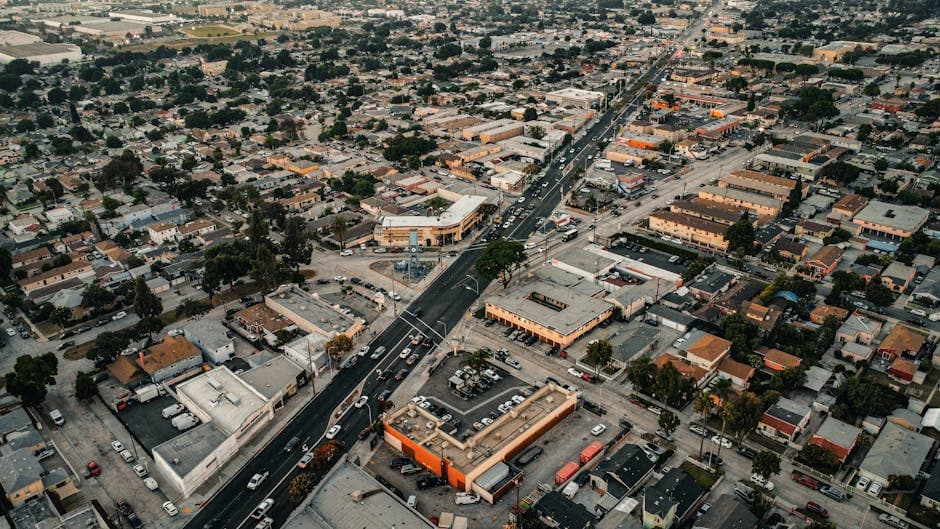
9 AM on Murrieta Hot Springs Road.
The first day-pass spa guests walk the half-mile from the lot. Forty minutes later, the youth tournament traffic lights up the I-15.
The 9 AM start at Murrieta Hot Springs Resort is not the rush of a downtown brunch. It is a procession. Day-pass guests, towels rolled under their arms, walk the long path from the parking lot through the eucalyptus to the central reception lodge that Fritz Guenther started building in 1902. A cafe across Whitewood Road is plating breakfast burritos for the 9:15 AM pickup window. Three direct orders are already paid, packed, and waiting on the heated shelf. The Stripe payout from yesterday already cleared.
Two miles west, a family of four drives out of the Bear Creek gate. The mother taps a pickup order on her phone. A sandwich tray for the soccer team picnic, scheduled for 11:45 AM at Los Alamos Sports Park, a soda case, a salad. Forty-eight dollars and change, all-in, no service fee on top, no driver tip stacked on a tip. The order will be on the curb at 11:40 AM in a paper bag with a sticker on it that says her last name.
At Murrieta Valley High School on Nighthawk Way, the bell for lunch rings at 11:35 AM. A history teacher orders a chicken tortilla soup, an iced tea, and a brownie from a cafe across the street, scheduled to pick up at 11:55. She has a fifteen-minute walk back to her classroom for sixth period. The kitchen will have the soup on the counter when she walks in.
And down on Jefferson Avenue near Kalmia Street, a Mexican family-casual operator clears the morning prep board at noon. Six direct lunch orders are stacked in. Two were booked overnight by a Spanish-language Voice AI conversation while the host stand was dark. The kitchen never had to answer the phone. The orders are pre-paid, pre-printed, and waiting for the line at 11 AM sharp.
Murrieta is a city of four overlapping trade economies. The hot springs visitor economy is the newest of the four, reopened in 2024 after a 14-year dormancy. The Murrieta Hot Springs Road and California Oaks Road retail rings are a national chain casual stack, layered with strong independent operators. The Jefferson Avenue corridor runs a deep Mexican family economy with bilingual phone trade. The master-planned suburbs (Bear Creek, Greer Ranch, the Vineyard, French Valley) run on a school-year and youth-sports clock. The combined sales tax is 7.75 percent (California state base 7.25 plus Riverside County district tax 0.5, per California CDTFA). The population sits around 111,000 (US Census ACS 2024). The city incorporated in 1991, the youngest large city in the southern Inland Empire.
This is what an ordering stack that respects all four of those economies has to look like.
A line of guests in resort sandals walks the half-mile from the parking lot to the Murrieta Hot Springs Resort entry plaza. A nearby cafe operator on Jefferson is plating breakfast burritos for a 9:15 AM pickup window. Three direct orders are already paid and printed.
A family of four drives out of Bear Creek for a soccer tournament at Los Alamos Sports Park. The mother taps a pickup order on her phone, a sandwich tray for the team picnic, scheduled for 11:45 AM at the Wickerd Road exit. Forty-eight dollars, all-in.
Lunch period at one of the largest comprehensive high schools in Riverside County. A teacher orders a chicken tortilla soup, an iced tea, and a brownie from a nearby cafe. Pickup at 11:55 AM. The kitchen will hand it to her at the door inside the seven-minute walk back to her classroom.
A Mexican family-casual operator on Jefferson clears the morning prep board. Six direct lunch orders are stacked in. Two are bilingual phone orders booked overnight by Voice AI in Spanish while the host stand was dark. The kitchen never had to answer the phone.
A 120-year timeline at the foot of the Plateau.
The Murrieta Hot Springs Resort is the city's single most distinctive feature. A 46-acre historic spa campus on a sulfur-mineral aquifer, started in 1902 by Swiss immigrant Fritz Guenther. After a long mid-century run as a destination spa, the property closed to the public in 2010. Calvary Chapel acquired the campus in 2015 and reopened it in staged phases. Public hot springs amenities reopened in 2024. The freeway exit named for the resort, Murrieta Hot Springs Road, has been on California highway signage for decades; it is once again an active destination, not just a piece of historic infrastructure.
Sketch is illustrative; building placements are approximate. Property history and timeline maintained by the Murrieta Hot Springs Resort (Calvary Chapel Bible College).
- 1Luiseno and Cahuilla landsPre-1880The sulfur-mineral springs at the foot of the Santa Rosa Plateau were used by Luiseno and Cahuilla communities long before European settlement. The hot water carries a distinctive geothermal signature from the same fault complex that runs south to Temecula.
- 2Fritz Guenther builds the original spa1902Swiss immigrant Fritz Guenther purchases the springs property and builds the first commercial bath house. The site becomes one of the earliest destination spa resorts in southern California, drawing visitors by rail from Los Angeles.
- 3Hollywood golden age guest list1920s and 1930sThrough the silent and early sound era, the resort hosts a working-class therapy crowd alongside Hollywood actors and Los Angeles industrialists. Wood-frame bath houses, a hotel, and a chapel anchor the campus.
- 4Family ownership cycles1940s to 1990sThe property changes ownership multiple times through the mid-century. New cottages and treatment buildings rise on the campus. The aquifer continues to feed the original baths uninterrupted.
- 5Aging resort, deferred maintenance2000sBy the early 2000s the historic buildings show their age. Local press reports periodic closures of treatment facilities while ownership groups attempt redevelopment plans.
- 6Closure2010The resort closes to the public. The 46-acre historic core sits dormant. Murrieta Hot Springs Road, the freeway exit named for the property, continues to draw drivers expecting a spa that is no longer open.
- 7Calvary Chapel acquisition2015Calvary Chapel Bible College acquires the property and announces a phased restoration plan. The campus pivots to a religious retreat and education use with public-facing spa amenities planned.
- 8Phased restoration2018 to 2023Cottages, the historic chapel, and the central lodge are restored. The campus operates as a Bible college, conference center, and event venue while the public hot springs amenities are rebuilt.
- 9Public hot springs reopen2024Murrieta Hot Springs Resort welcomes day-pass guests back to the springs. Treatment buildings, a hot springs garden, and the Guenther-era heritage trail reopen to public booking. The freeway exit name is once again an active destination, not just a piece of historic infrastructure.
The hot springs reopening matters to the local restaurant economy in two specific ways. First, the resort runs a guest cycle that hands food and beverage demand to the surrounding cafes, breakfast spots, and casual rooms inside a clean morning window (check-in eats before treatments, lunch after, dinner after the second treatment block). Second, the freeway exit name has been part of every Riverside County driver's mental map for forty years; reopening the resort restores demand pull on the surface streets adjacent to Whitewood Road and the Murrieta Hot Springs Road retail strip.
The operators who run hot springs visitor menu cards and the operators who push QR codes to the resort lobby are the operators who convert a one-day visitor into a year-long direct customer. Marketplace apps will not. They cannot route inside the campus, and they cannot capture the customer email. Direct can.
See direct ordering for the visitor-window menu card pattern, and Voice AI for the Saturday morning phone overflow at the resort cafe ring.
Six numbers that frame the city.
Restaurant count, median check, sales tax, family share, decade growth rate, and the hot springs reopening date. Every operator playbook decision on this page comes back to one of these six.
The I-15 / I-215 split sits at the top of town.
The I-15 carries the corridor from Los Angeles County and Orange County down through the Inland Empire to San Diego. At the very north end of Murrieta, the I-215 peels east toward Moreno Valley and San Bernardino. Almost every Murrieta restaurant trade decision flows from this split. Bear Creek sits west of the I-15. The Vineyard and French Valley sit east. The hot springs corridor is on the I-15 / Murrieta Hot Springs Road exit. The Temecula wine country traffic comes back north up the I-15 on Sunday afternoons. The map below names the major surface arterials and the city anchors that the freeway feeds.
Sketch is illustrative; positions are approximate. Freeway alignments and exit locations are maintained by Caltrans District 8 and the City of Murrieta.
Bear Creek, Old Town Murrieta, and the Jefferson Avenue corridor sit west of the I-15. The trade economy here is anchored by master-planned community households and the older downtown surface arterial.
The Vineyard, French Valley, the hot springs resort, and the I-215 split fed neighborhoods sit east of the I-15. The retail anchors are along California Oaks Road and Murrieta Hot Springs Road.
What Murrieta eats.
About 320 permitted food facilities run inside Murrieta city limits (Riverside County DEH). The mix is American casual heavy at the top, Mexican strong across all neighborhoods, a chain-Italian and pizza band reflecting the suburban catchment, and a steakhouse and BBQ slice anchored by the I-15 retail corridor (Black Angus, Texas Roadhouse, Outback, Hangar 24 brewery). Below is an approximate cuisine share, based on Riverside County DEH facility classifications and local directories.
Shares are approximate, based on Riverside County DEH facility classifications and local Murrieta restaurant directories. Categories sum to ~100 percent with a small "other" tail (juice bars, ice cream, food trucks, donut shops) absorbed across categories.
- American Casual28%Chain sit-down and independent family casual. Black Angus, BJ's, Outback, Chili's, Olive Garden along the I-15 retail ring and California Oaks Road. Largest single category.
- Mexican22%From taqueria counter-service on Jefferson Avenue to sit-down family rooms like El Patron and Hacienda-format operators. Riverside County Mexican is its own register.
- Italian12%Olive Garden anchors the chain Italian. Buona Forchetta and a handful of independents fill the higher-check independent Italian shelf, often trading on Temecula wine country adjacency.
- Pizza10%BJ's deep-dish, BLAZE-format fast casual, and a strong independent shop tail. Pizza is the family-meal default on Bear Creek and Greer Ranch Friday nights.
- Steakhouse and BBQ10%Black Angus, Texas Roadhouse, and Outback anchor the chain steakhouse band. Hangar 24 brings a brewery-and-smokehouse crossover into the mix.
- Sushi and Asian9%Sushi Avenue and a cluster of independent Japanese and Thai rooms along California Oaks Road. Family-friendly conveyor-belt and chef-counter formats both work here.
- Cafe, Bakery, Breakfast9%Breakfast burrito and breakfast sandwich trade on Jefferson Avenue, plus the late-morning hot springs visitor cafe ring near Whitewood and Murrieta Hot Springs Road.
Two operator takeaways. First, the American Casual share is national-chain heavy here. Differentiation for an independent operator on Murrieta Hot Springs Road or California Oaks Road requires a stronger direct channel because the chain stack absorbs the SEO and the marketplace traffic by default. Second, the Mexican category is deep but not necessarily showy. Family-casual Mexican on Jefferson Avenue and adjacent surface arterials runs on word-of-mouth and bilingual phone trade, not on chain marketing budgets. A bilingual direct ordering page and a Spanish-language Voice AI both punch above their weight here.
Eight seasons on the Murrieta calendar.
The Murrieta year moves through a school-year clock, a youth-sports tournament clock, a hot springs visitor clock, and a Town Square civic clock. The two single biggest weeks are the May graduation rush and the Thanksgiving catering rush. The two single biggest months are July (Birthday Bash, Independence Day, hot springs visitor peak) and December (Christmas at Town Square, holiday catering, hot springs holiday retreat). Below is the calendar, season by season, with the operator anchor for each.
School winter break ends. Youth basketball season runs. Hot springs visitor volume is in its slowest period; Bear Creek tournament golf is the suburban catering peak. Restaurant operators trade on weeknight family dinner and Friday pizza.
Soccer, baseball, lacrosse at Los Alamos Sports Park drive Saturday morning catering. Spring break (Murrieta Valley USD) pulls a single-week family vacation pulse. Easter Sunday brunch pickup.
Quinceanera season and high school graduation (Murrieta Valley HS, Vista Murrieta HS, Murrieta Mesa HS) drive the spring catering peak. Multi-generational Vineyard and Mapleton catchment is the heaviest catering quartile of the year.
City anniversary celebration at Town Square. Independence Day spreads out the family-meal weekend. Hot springs visitor summer peak ramps. Pre-stage breakfast burrito trays.
Murrieta Valley USD school year opens. Friday night football kicks off. Working parents look for weeknight family dinner solutions. Booster clubs book Friday pre-game catering at school adjacent restaurants.
Temecula Valley wine country weekend traffic crests through Murrieta on Sunday afternoons. Hot springs visitor season holds. Halloween weekend catering builds. NFL Sundays drive a steady carryout window.
Thanksgiving catering is the highest single tray-sale week of the year. Hot springs holiday retreat season fills the resort campus. Bear Creek and Greer Ranch home-entertaining ramp begins.
The city's signature winter event. Evening Town Square traffic drives the December pickup peak. Christmas Eve family-meal catering. New Year's Eve at the hot springs and Town Square retail close out the operator year.
The operator who treats May, July, November, and December as their four highest-leverage windows books a full year of direct customers. The trick is to convert each peak window into a year-long direct customer list, not just a one-week payday. Email a Birthday Bash customer in October for the Christmas at Town Square holiday menu. Email a Thanksgiving catering customer in April for a quinceanera package. Marketplaces never give you that customer email. Direct does.
Twelve restaurants that define the city.
Chain steakhouses on the I-15 retail ring, an independent brewery, a sushi room on California Oaks Road, a Neapolitan pizza import from San Diego, a Jefferson Avenue family-casual Mexican operator, and a hot springs visitor cafe. Together they cover the shapes of demand we have to build for.
The Hangar 24 satellite location is one of the city's signature brewpub anchors. Smokehouse menu pairs against the brewery's session lager and IPA program. Family-friendly patio.
Long-running chain anchor on the Murrieta Hot Springs Road retail strip. Sit-down family dinner workhorse, particularly strong on Friday and Saturday nights.
Family meal default on report card nights and youth sports tournament weekends. Catering trade for school-league dinners.
Tournament-weekend volume engine. Deep-dish pizzookie is the dessert anchor. Heavy curbside and to-go pickup ring.
Cross-shopping retail trade. Sunday family dinner anchor with the Bear Creek and Greer Ranch suburban catchment.
Late-week pickup volume and chips-and-salsa appetizer trade. School fundraiser nights run through Chili's here.
Weekend wait-list staple. Birthday and youth-team celebration trade. Catering trade through the dinner peak window.
Independent family-casual Mexican operator. Bilingual phone trade and the suburban Mexican family-meal mainstay. Catering ring across Greer Ranch and the Vineyard.
Independent sushi room. Higher-check chef-counter trade. Stronger Friday and Saturday volume than weeknights.
A San Diego import that opened in the Murrieta market. Higher-end Italian operator. Wood-fired pizza trade is the calling card.
Family-meal seafood default. Heavy summer pickup volume during youth sports tournament weekends.
Local independent cafe serving the hot springs visitor cafe ring and the early-morning Bear Creek commuter run.
The list is intentionally diverse. Hangar 24, Black Angus, BJ's, Outback, Chili's, and Texas Roadhouse anchor the I-15 retail ring. El Patron, Buona Forchetta, Sushi Avenue, and Joe's Crab Shack anchor the independent and import dining shelf. Bizarre Coffee anchors the hot springs visitor cafe ring. One ordering stack has to serve a chain steakhouse, an independent brewery, a Mexican family room, a hot springs cafe, and a Neapolitan pizza import without forcing any of them to operate on someone else's grammar.
Six zones, six playbooks.
The hot springs corridor runs on a visitor-window clock. Bear Creek runs on a tournament and golf clock. French Valley runs on an aviation and commuter clock. Greer Ranch runs on a school-year clock. The Vineyard runs on a multi-generational family clock. Central Park and Town Square run on a civic event clock. Each zone deserves a different pickup window, a different delivery radius, and a different marketing voice on the direct ordering page.
The 46-acre Murrieta Hot Springs Resort campus and the surrounding 1902-era cottages, the chapel, and the Guenther-era heritage block. The Calvary Chapel reopening has brought day-pass spa visitors back to the corridor.
Hot springs visitor cafe ring. Breakfast and lunch pickup peaks 8 AM to 11 AM and 1 PM to 3 PM around guest check-in and check-out cycles. Strong appetite for healthier and bowl-format menus alongside the cafe staples.
Day-pass weekends drive the highest volume. Retreat-weekend Sundays add a single-bus catering pulse. Late summer through fall is the peak hot springs visitor season.
Master-planned country club community west of the I-15. Single-family homes, two golf courses (Mountain Course and Meadow Course), gated entry, established families. The most affluent corner of the city.
Catering for HOA events and tournament-weekend volume. Pickup ring on weekends from the gate. Family-meal volume during the school year. Smaller share of weekday lunch traffic; the catchment skews evening and weekend.
Golf tournament weekends (spring and fall), holiday catering Nov to Dec, end-of-school events (June), youth sports tournaments (year-round at Los Alamos and Bear Creek complexes).
Northeast Murrieta. Newer master plans, French Valley Airport in the unincorporated county, light industrial and aviation services. Mix of growing families and aviation-industry households.
Family-casual dine-in plus weekday breakfast pickup for the airport-and-industry commute. Lunch pickup ring across the office parks adjacent to the airport.
Weekday breakfast and lunch peak. Weekend brunch ring on Saturdays. Holiday Park (Holiday Bowl) tournaments fill the youth sports calendar.
Master-planned hillside neighborhoods east of the I-15. Single-family homes built in the late 1990s and early 2000s suburban boom. Family-heavy, school-age catchment.
After-school pickup ring 4 PM to 7 PM weekdays. Saturday morning soccer-league catering. Sunday family takeout. Pizza, casual American, and Mexican are the three dominant formats here.
School year (August to June) drives the steady weekday volume. Spring sports season (March to June) is the catering peak. Holiday season Dec is the home-entertaining peak.
Newer master-planned neighborhoods on the south and east. Built into the 2010s. Strong young-family share. Multi-generational households are common; some homes hold three generations.
Bilingual demand is real here. Catering for family birthdays and graduation parties. Sunday family-meal volume runs the highest single-day check. Spanish phone trade is consistent.
Quinceanera and graduation season (May and June). Holiday catering Nov to Dec. Summer family-dinner pickup runs steady.
Civic center, library, City Hall, Town Square retail district. The closest thing the city has to a downtown. Christmas at Town Square is the city's signature winter event.
Lunch pickup for City Hall and the surrounding professional offices. Evening pickup around Town Square retail and library events. Holiday Christmas at Town Square evenings push the year's December peak.
Murrieta Birthday Bash (July, city anniversary), Christmas at Town Square (Dec), Movies in the Park (summer Fridays), Concerts on the Green (summer Saturdays).
Three operators who win in Murrieta.
Every market has the three or four operator shapes that punch hardest with a direct channel. In Murrieta, those shapes are the hot springs visitor cafe, the Murrieta Hot Springs Road suburban family casual, and the Jefferson Avenue Mexican family room. Below is each, with the scene, the pain, the channel mix, and the move.
Saturday and Sunday day-pass guests fill the resort. Visitors arrive between 8 AM and 11 AM, leave between 3 PM and 6 PM. The cafe runs a strong breakfast and lunch trade with a bowl-and-smoothie menu. Resort guests prefer to-go cafe meals before treatments and pickup boxes after.
Marketplace apps cannot route the resort campus internally and rank the cafe poorly because the visitor catchment shifts by treatment schedule. Phone volume on a busy Saturday morning overwhelms the front-of-house. The cafe loses orders that flip to a chain breakfast spot on Jefferson when the line gets long.
Direct ordering page tied to the hot springs visitor window. Voice AI for phone overflow at the 8 AM to 10 AM peak. Stripe same-day payout to fund the produce purchase from the Riverside County farmers market.
Build a hot springs visitor menu card. Push a QR code to the resort lobby for direct pickup orders. Capture every hot springs visitor's email. Send a follow-up the Tuesday after with a return-visit lunch offer. Convert the day-pass into a year-long direct customer.
Friday night family dinner is the operator's peak. The kitchen seats 140. Wait times on a tournament weekend hit 90 minutes. Curbside pickup window runs heavy 5 PM to 8 PM Tuesday through Thursday, then surges Saturday and Sunday. Bear Creek catering inquiries land by phone.
DoorDash and Uber Eats stack courier surge pricing into a $24 entree at $42 on Friday nights, and the screenshots end up on local parent Facebook groups. The catering inquiries that arrive by phone get lost when the host stand is in the weeds.
Direct ordering with a curbside pickup placard system. Voice AI to handle the catering inquiries 24/7 and the Friday-night wait-time questions. Same-day Stripe payouts to manage tournament-weekend produce ordering.
Run a Bear Creek tournament catering page on the direct ordering site. Send a Friday-afternoon push notification to the Saturday tournament catering list. Pre-pay catering orders by Friday 5 PM. Build a tournament-season recurring revenue line.
Bilingual customer base, about 35 percent of phone orders in Spanish. Weekday lunch runs to 1 PM, dinner from 5 PM. Saturday morning soccer leagues, Sunday family takeout. Quinceanera and graduation catering trade in May and June.
Marketplace apps treat this corridor as generic Inland Empire suburbia and miss the local nuance. Spanish phone inquiries pile up at the host stand when the bilingual manager is in the back. Quinceanera deposits booked by phone slip through without a deposit capture form.
Direct ordering. Bilingual English and Spanish Voice AI for phone orders, with proper menu pronunciation. Loyalty plus same-day Stripe payouts to keep weekly cash flow predictable.
Run a Spanish-language landing page on the direct ordering site. Use Voice AI to capture every Spanish quinceanera inquiry as a deposited booking. Send a graduation-season catering campaign to last year's quinceanera customers. Build a multi-generational family direct list.
The single fastest-growing US city of the 2000s.
Between 2000 and 2010, Murrieta grew approximately 300 percent, from about 44,000 residents to about 104,000, per US Census Population Estimates. It was repeatedly ranked among the very fastest-growing US cities of that decade. The growth came from Los Angeles County and Orange County housing displacement, the I-15 commute corridor opening up the southwest Inland Empire, and the master-planned community boom (Bear Creek, Greer Ranch, Copper Canyon, French Valley). The chart below benchmarks Murrieta against Temecula, the broader Riverside County, the California statewide rate, and Los Angeles County.
Growth rates from US Census Population Estimates. The 2000 to 2010 decade was Murrieta's steepest. Growth has continued at a far more modest pace through the 2010s and 2020s, with the city stabilizing around 111K residents (US Census ACS 2024).
The implication for restaurant operators is that the residents who moved into Murrieta in the 2000s are now in their forties and fifties, with teenagers and college-aged children. The catering trade for graduations, quinceaneras, and team dinners is the demographic legacy of the decade of growth. The 2030s will see this same cohort moving into the wedding-and-grandchildren window, which will reshape catering categories again.
Operators who set up direct ordering with proper customer lists now are positioning to retain those families through the next demographic transition. Marketplace customer data evaporates when the contract ends. Direct customer data compounds for fifteen years.
The operator's twelve months.
Anchored to the city's real calendar. The May graduation rush and the November Thanksgiving rush are the two heaviest catering weeks of the year. The July Birthday Bash and the December Christmas at Town Square are the two heaviest civic event months. The Murrieta Valley USD school year (August through June) keeps the suburban dinner trade steady. The hot springs visitor season runs through summer and fall and quiets in winter. Below is the move for each window.
Suburban catering for youth basketball tournament weekends. The hot springs resort is in its low-visitor period; Bear Creek tournament golf is the suburban catering peak. Run a January family-meal subscription on the direct ordering page.
Soccer and baseball tournament catering at Los Alamos Sports Park drives a Saturday morning catering peak. Easter Sunday family-meal brunch pickup. Pre-build holiday tray menus a month early.
Graduation catering volume is the spring peak. Quinceanera trade runs deep on the Vineyard and Mapleton catchment. Pre-pay catering deposits via the direct ordering page; capture the family for the next graduation in four years.
The Birthday Bash at Town Square is the city's civic peak. Hot springs visitor weekends drive the cafe ring volume. July 4 family-meal pickup peaks 11 AM to 3 PM. Pre-stage breakfast burrito trays for hot springs check-in.
Pre-build a back-to-school dinner menu for working parents the week before school opens. Friday night high school football drives a halftime and post-game pickup window. Wickerd Road and Nighthawk Way restaurants book Friday catering for booster clubs.
Temecula wine country weekend traffic spills back through Murrieta Hot Springs Road on Sunday afternoons. Build a hot springs and wine country combo lunch box menu. NFL Sunday pickup runs steady. Halloween weekend family-meal catering.
Thanksgiving family-meal catering is the highest single tray-sale week of the year. Christmas at Town Square evenings push the December pickup peak. Lock Thanksgiving catering deposits by Nov 1 via direct ordering. Sell direct, ship same-day Stripe payouts to keep cash flow steady.
Voice AI, English and Spanish.
Murrieta sits inside the southern Inland Empire, where Riverside County's Hispanic and Latino share is approximately 50 percent (US Census ACS 2024). Murrieta city is about 31 percent Hispanic and Latino, with high multi-generational household density in the Vineyard and Mapleton catchments. For Jefferson Avenue Mexican operators and family-casual rooms east of the I-15, every third or fourth phone order is in Spanish. A monolingual English IVR loses those orders to a competitor or, worse, to a marketplace.
DirectOrders ships Voice AI tuned for restaurants. Both languages are native, both can switch mid-call if a customer flips, both pronounce menu items correctly (carne asada, al pastor, tres leches, chile relleno, machaca, mole), and both write the order directly into the same kitchen ticket system as a direct online order. The host stand never sees the phone.
See Voice AI for restaurants for menu pronunciation and call routing.
- 1Caller dials the restaurant.
The phone rings the operator's Voice AI number, not the host stand. Greeting opens in English with a beat for the caller to switch languages naturally.
- 2Language detection.
If the caller responds in Spanish, the agent switches. No menu prompt. No language press-one. The conversation continues in Spanish for the rest of the call.
- 3Order taken, menu pronounced.
The agent reads the menu in the language the caller is speaking. Carne asada pronounced correctly. Al pastor pronounced correctly. House specials pronounced as the restaurant stores them.
- 4Ticket prints.
Order routes to the kitchen ticket system the same way as an online direct order. Payment is captured by Stripe link sent via SMS or taken in-call.
- 5Same-day Stripe payout.
A Spanish phone order on Saturday morning lands in the operator's bank account on Saturday night.
A $50 family dinner tab.
The Murrieta family dinner is the city's most common single check. Four people, two adults and two school-age children, mid-range entrees, two soft drinks, two kids drinks, an appetizer, tax. A real ticket near $50 before tip. Below is the cost math run two ways: through a 27 percent marketplace commission stack (typical DoorDash and Uber Eats blended take-rate on a sit-down concept) versus through DirectOrders at a 14 percent all-in operating cost on a direct ordering page including Stripe processing and the Uber Direct flat dispatch when it is used.
Marketplace commission rates vary by contract and channel and have been published by US Senate hearings and trade press in the 15 to 30 percent range. The 27 percent reference here is a blended figure for a sit-down concept selling through DoorDash and Uber Eats. The DirectOrders 14 percent operating cost is a representative all-in including Stripe processing, software, and Uber Direct flat dispatch on the percentage of orders that need delivery.
On a $50 family dinner. Same dish, same diners, same drinks. The difference is what channel the order came through.
If a family-casual operator books five $50 family dinners a week for fifty weeks a year through direct rather than marketplace.
An extra line cook every Saturday during graduation season. A pickup placard system. A back-to-school print campaign in Valley News. A bilingual sales person for quinceanera and graduation catering. The math compounds.
Run your own numbers in the commission calculator. Or read the head-to-head against DoorDash and Grubhub.
What an ordering stack for Murrieta has to do.
- 1Handle the hot springs visitor window.
The resort runs guests on a treatment-block schedule. The cafe ring needs to pre-stage breakfast and lunch boxes, accept pickup orders by QR code at the resort lobby, and capture the guest email for the return visit.
- 2Route a Bear Creek tournament catering order in one form.
Saturday morning soccer tournaments at Los Alamos book by Wednesday. The form should accept party size, drop time, sandwich tray choice, dietary notes, and a pre-paid Stripe deposit by Friday 5 PM.
- 3Serve a Friday night family dinner curbside.
Murrieta Hot Springs Road and California Oaks Road family-casual operators handle peak waits Friday 5 PM to 8 PM. The order needs a curbside pickup placard, an SMS handoff when ready, and a path back to a direct loyalty list.
- 4Take a Spanish-language phone order on the first ring.
Jefferson Avenue and the Vineyard catchments both run a bilingual customer base. The Voice AI has to switch mid-call if the customer flips. Menu items have to be pronounced correctly. The order has to go to the same kitchen ticket as an online order.
- 5Pay out same day.
Family-casual operators buy produce mid-week. Mexican family rooms run on weekend cash flow. Same-day Stripe payouts mean Friday morning produce purchases are funded by Friday lunch direct orders.
- 6Hold the I-15 / I-215 corridor delivery radius without overpaying.
Uber Direct flat dispatch on a per-order basis lets the operator decide which orders are worth delivering and which should be pickup-only. Marketplace one-size-fits-all delivery does not work in a city where Bear Creek is gated and the Vineyard is fifteen minutes south of the I-15 / I-215 split.
Marketplace apps cannot do all six because their pricing logic, routing logic, and language logic are built for a city that operates on one mode. Murrieta operates on four (hot springs visitors, I-15 retail chain casual, Jefferson Avenue Mexican family, master-planned suburban families) and a 7.75 percent sales tax. A direct ordering platform that gives the operator control of the channel, the price, the language, the pickup window, the radius, and the customer data is the only stack that fits this city. That is what DirectOrders is.
The Friday family dinner still belongs to the kitchen that runs it.
The last hour of Friday service at a family-casual room on Murrieta Hot Springs Road. The host stand has cleared. A line cook is plating the last steaks of the evening. A booth in the corner is finishing the slice of pizookie that has been the kitchen's standby dessert since 2008.
The family that just paid $72 for four on the direct ordering page paid the same $72 a marketplace would have charged them. The difference is that the restaurant netted $62 instead of $53. The difference is that the parents' email is now in the operator's list, not the marketplace's. The difference is that the operator will email them in three weeks with a back-to-school dinner offer, and they will come back.
On a marketplace platform, the answer to who owns the relationship is: not the restaurant. On a direct ordering platform built for the way Murrieta actually operates, the answer is: the restaurant. That is the entire argument. The rest is execution.
Sources and citations.
Stats on this page are drawn from the following public sources. Where a figure is approximate, it is noted with a tilde. Where a number is rounded, the source carries the full precision.
- City of Murrieta
Incorporation date (1991), city government, Town Square events (Birthday Bash, Christmas at Town Square, Movies in the Park, Concerts on the Green), municipal services.
- US Census Bureau ACS 2024 (Murrieta)
Population (~111K), median household income, Hispanic and Latino share, household composition, family size.
- US Census Bureau Population Estimates (decennial 2000 and 2010)
Murrieta growth rate 2000 to 2010 (~300 percent). Comparison benchmarks for Temecula, Riverside County, California state, Los Angeles County.
- California CDTFA
Combined sales tax (7.75 percent): CA state base 7.25 percent plus Riverside County district tax 0.5 percent. No additional Murrieta city add-on.
- Murrieta Hot Springs Resort (Calvary Chapel Bible College)
Historic timeline: 1902 founding by Fritz Guenther, 2010 closure, Calvary Chapel acquisition, phased restoration, public hot springs reopening in 2024.
- Murrieta Valley Unified School District
School-year calendar, enrollment patterns, athletic events (Murrieta Valley HS, Vista Murrieta HS, Murrieta Mesa HS) that drive the operator weekly rhythm.
- Riverside County Department of Environmental Health
Food facility permit data and food handler programs for Murrieta and Riverside County.
- California Department of Tax and Fee Administration
Sales and use tax remittance schedule, prepay calendar for restaurant operators.
- US Department of Transportation, Federal Highway Administration
I-15 / I-215 split traffic counts; Inland Empire commuter movement between Murrieta, Temecula, Moreno Valley, San Bernardino, and the Los Angeles basin.
- Press-Enterprise (Riverside County daily)
Local reporting on Murrieta growth, hot springs reopening, school district news, tournament-weekend traffic.
- Valley News Murrieta
Local community reporting on Town Square events, Bear Creek, French Valley, the Vineyard, and other Murrieta neighborhoods.
- Visit Temecula Valley
Cross-city tourism research relevant to the Temecula wine country weekend traffic that spills north into Murrieta on Sunday afternoons.
- California State Parks (Mt. San Jacinto)
Mt. San Jacinto State Park overview for the inland recreational catchment that frames Murrieta's regional context.