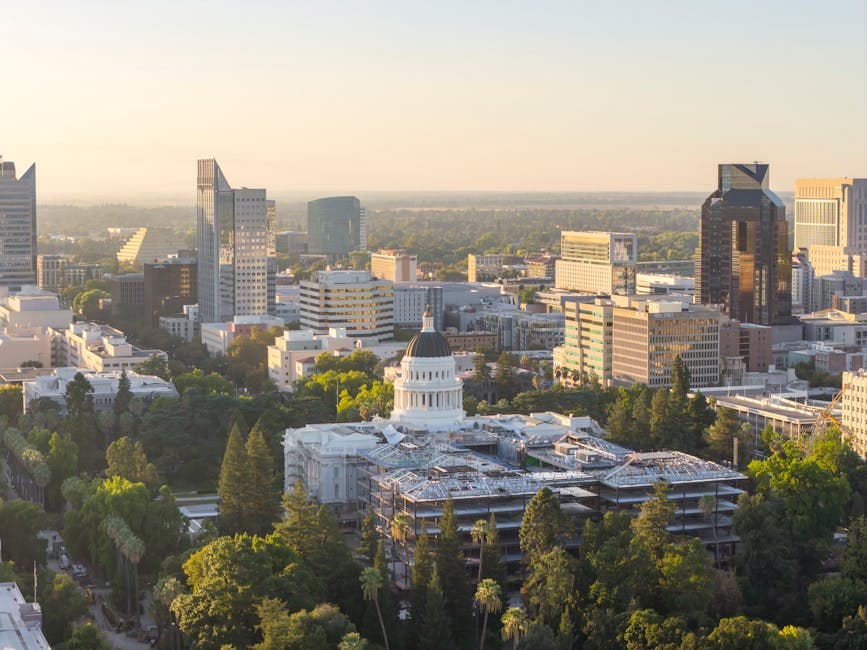
Fairplex and Cal Poly Crossroads.
A long read on running a Pomona restaurant: the LA County Fair every September at the Fairplex, Cal Poly Pomona's thirty thousand students, Mt. SAC across the freeway, the Latino majority that does the cooking, the citrus heritage that named the city, and why bilingual direct ordering is the only configuration that fits.
City
Pomona, CA
Geography
151,713 people, ~400 permits
Topic
Fair, university, Latino majority, Arts Colony
It is 9:14am on the second Saturday of the LA County Fair. The first wave of families is walking from the McKinley Avenue lot toward Gate 9, and a Pomona restaurant on Holt Avenue is already two hours into its day.
The phone rings. A woman calling from the Pomona Valley Hospital Medical Center wants twelve breakfast burritos for the nursing shift change, picked up by 10:15. The conversation is in Spanish; the owner takes the order at the counter and calls the kitchen line in Spanish. The total is $108.
A second call at 9:31am, this one from a Cal Poly Pomona food sciences professor running a Saturday weekend lab. She wants eight orders of chilaquiles for the lab team, ready in forty-five minutes. She speaks in English. The order is $96.
A third call at 9:48am, a small construction crew working a side gig at one of the Fairplex parking lot vendor setups. They want four orders of carne asada burritos, three coffees, two horchatas, picked up in twenty minutes. They speak in Spanish but with a Salvadoran accent; the owner switches into the pupuseria mode and asks if they want pupusas too. They do. The order is $74.
Three calls in thirty-four minutes, all heading to different addresses, all in two languages, all on a single morning of the highest-volume two weeks of the year. The owner runs the floor herself; the kitchen has two cooks plus her brother. They have not opened the front doors to dine-in yet. They will not, until 11am.
The restaurant does not have a website. The restaurant has a Yelp page someone set up in 2014 and a Facebook page that gets updated when the niece visits. The hospital staff know the phone number from word of mouth across two decades of shifts. The Cal Poly professor found the restaurant through a friend at the Collins College of Hospitality Management. The construction crew got the number from a flyer at the Fairplex vendor staging lot. None of these channels are visible to each other; the owner is doing the work of three platforms in her own head.
The point of this story is what we kept seeing in Pomona over a five month listening tour. A Pomona restaurant, like a Boyle Heights pupuseria or a Lowell Khmer banquet hall or an East Village ramen counter, is doing fluently what a tech platform has to be designed to do. The owner is the bilingual Voice AI. The owner is the catering dispatcher. The owner is the wholesale coordinator and the schedule keeper and the menu translator. She is, in effect, the platform. We built DirectOrders for her.
The Fairplex is a 487 acre county fair that runs all year.
The Fairplex sits on the western edge of Pomona, bounded by White Avenue, Fairplex Drive, McKinley Avenue, and the 10 freeway. It hosts the LA County Fair (largest county fair in the US by attendance), the NHRA Pomona Raceway drag strip, the Sheraton Fairplex hotel and conference center, the Western Hemisphere Marketplace, and 250+ events per year. Pomona restaurants live downstream of all of it.
Visualization 1 of 4
LA County Fair: 18 days, 1 million visitors, three Saturday peaks
Annual: late August through Labor Day.
The LA County Fair at the Fairplex is the single largest restaurant-demand event in eastern LA County. Attendance peaks on three weekend Saturdays. Pomona restaurants within a 6 mile radius see pickup orders surge before gate-open and after gate-close, plus catering demand from inside the gates.
Sources: LA County Fair Association attendance reports (recent fair runs averaged); LA County Public Health restaurant permit registry; operator interviews with Pomona dining cluster anchors on Holt, Garey, and Foothill. Attendance numbers approximate the official 1M+ cumulative target across an 18 day run.
The LA County Fair has been running since 1922. It is the largest county fair in the United States by attendance and cumulative concession revenue. Recent fair runs have crossed one million cumulative visitors over an eighteen day late August through Labor Day window. Inside the gates the food is concession-licensed and the operating economics are entirely separate from the city's restaurants. Outside the gates is where the Pomona dining economy gets its biggest annual lift.
Pomona restaurants within a six mile radius of the Fairplex see three demand patterns during the fair run. Breakfast pickup before gate open, particularly on weekend mornings when families want a real meal before paying for concession-priced fair food. Late afternoon catering for vendor crews, food-truck staffing setups, and Fairplex security and operations teams who work twelve hour shifts. Late evening dinner for the vendor staff coming off shift after gate close at 11pm. None of these demand windows are visible to the marketplace apps because the marketplace apps think the Fairplex is a single concession-operator zone; in reality it is a regional event generating a halo of restaurant demand for sixteen square miles.
The non-fair Fairplex calendar matters at least as much. The NHRA Pomona Raceway hosts the Winternationals every February and the World Finals every November. The Auto Club Raceway hosts twenty-plus car shows annually. The Pomona Swap Meet is the first Sunday of every month and pulls twenty thousand vintage car enthusiasts. The Sheraton Fairplex Hotel runs a year-round corporate conference calendar with 244,000 square feet of event space. Every one of these events generates pickup and catering demand the marketplace apps cannot price correctly, and that direct ordering captures cleanly.
The Western Hemisphere Marketplace, the weekend swap-meet-style Hispanic-anchored market on the Fairplex grounds, is the Pomona event nobody outside Pomona knows about. Saturdays and Sundays draw four thousand-plus vendors and tens of thousands of Hispanic family visitors. The food traffic this generates flows to Holt Avenue, Mission Boulevard, and the Mexican-American family restaurants on Indian Hill. A Pomona restaurant whose direct ordering page ranks for "Pomona Mexican restaurant" or "comida mexicana Pomona" picks up the spillover before and after the marketplace.
30,089 students at Cal Poly Pomona. Most of them eat off campus.
California State Polytechnic University, Pomona is the eastern Inland Empire's flagship state university. Strong programs in agriculture, engineering, and the Collins College of Hospitality Management. The campus sits on 1,438 acres bordered by Temple Avenue, Kellogg Drive, and the 57 freeway. Most students live off campus; their food spend flows into Pomona, Diamond Bar, Walnut, and Chino Hills.
Visualization 2 of 4
Cal Poly Pomona: 30,000 students, two terms, four cover spikes
Polytechnic state university; 1,438 acre campus.
Off-campus dining in Pomona, Diamond Bar, and Walnut tracks the Cal Poly Pomona academic calendar. 78 percent of students live off campus. Lunch volume at restaurants within a 4 mile radius spikes during fall and spring midterms, peaks during finals weeks, and falls off during winter and summer breaks.
Sources: Cal Poly Pomona Institutional Research Fall 2024 enrollment; CPP Housing and Residential Life off-campus housing share; San Gabriel Valley Tribune local dining coverage; operator interviews on Foothill Boulevard, Temple Avenue, and Phillips Ranch corridors.
Cal Poly Pomona is a polytechnic state university with a strong agricultural and engineering identity. It enrolls 30,089 students, 53 percent of whom identify as Hispanic, making it a federally designated Hispanic Serving Institution. The campus includes the W.K. Kellogg Arabian Horse Center and a working citrus orchard, the only major California university with both. The Collins College of Hospitality Management is consistently ranked top five nationally and feeds graduates into the regional restaurant economy directly.
The 78 percent off-campus housing share is the operational number that matters most. Most Cal Poly Pomona students do not live on campus; they live in apartments in Pomona, Diamond Bar, Walnut, Chino Hills, and along the 60 corridor toward Industry. Their dinner spend flows to restaurants along Foothill Boulevard, Temple Avenue, Phillips Ranch Road, and the Diamond Bar dining cluster south of campus. The marketplace apps know this audience and have aggressively courted it with discount promotions, but the bilingual Hispanic Serving Institution reality means a direct ordering page with Spanish support and student-friendly pricing wins these customers cleanly.
The academic calendar produces four predictable demand spikes a year. Fall midterms in mid-October and mid-November, fall finals in early December, spring midterms in late March and mid-April, and spring finals in early May. During these clusters, off-campus restaurant lunch and dinner volume rises twenty to thirty percent over the academic baseline. The restaurant that pushes a "study fuel pack" SMS campaign or a "finals week buy three get one" to its direct list during the surge captures the upside; the restaurant relying on DoorDash promotions gets diluted in the algorithm.
The Collins College of Hospitality Management is the cross-pollinator. Roughly nine hundred undergraduates plus the graduate cohort. The college runs the Restaurant at Kellogg Ranch (an on-campus teaching restaurant) and the Collins Catering operation. Faculty and students consult for and intern at restaurants across the Inland Empire. The community of practice produced by Collins, the restaurant operators with Cal Poly Pomona ties, is one of the most concentrated and informed in California outside the CIA and UNLV. They notice when a restaurant uses a real direct ordering platform.
The Winternationals open the NHRA season. The Finals close it. Both are in Pomona.
The Auto Club Raceway at Pomona, also known as Pomona Raceway or just the Pomona drag strip, has hosted NHRA professional drag racing since 1953. The Lucas Oil NHRA Winternationals is the opening event of the NHRA Camping World Drag Racing Series season each February. The In-N-Out Burger NHRA Finals close the season each November. The combined attendance for the two events runs 160,000 to 200,000 fans across the two weekends.
For Pomona restaurants the NHRA weekends are a distinct demand pattern from the LA County Fair. Race-team transporters arrive Thursday and Friday with crews of eight to twenty per team; some teams pre-arrange dinner catering for the paddock with local restaurants. Fan attendance peaks Saturday qualifying and Sunday eliminations; the perimeter parking lots flood by 7am on race days, and the breakfast-pickup demand at Holt and White spikes accordingly. Hotels around the Fairplex fill at 95 percent occupancy across both weekends; the Sheraton Fairplex, Holiday Inn, and Hampton Inn properties fill first and then spillover hits hotels in Ontario and Diamond Bar.
The catering opportunity for Pomona restaurants during the NHRA weekends is real but operationally narrow. Race teams pay net-15 invoices through their team accounting; they want hospitality-suite-grade catering delivered to the staging lanes; they will not work with marketplace dispatch because their security perimeter does not admit unvetted couriers. A Pomona restaurant with a direct catering form, a credit terms agreement, and a delivery vehicle the team can pre-credential can book $2,000 to $8,000 catering tickets per race weekend from two or three teams. None of this fits the marketplace apps; all of it fits a direct ordering platform with a catering channel.
There is one more NHRA-economy item that matters: the car-show calendar. Between the two NHRA major events the Auto Club Raceway hosts twenty-plus car shows and meets annually. Sunday morning breakfast volume at Pomona restaurants between Holt and White surges on car-show days. The pattern is reliable: car shows start at 7am with vendor setup, the public arrives at 9am, and the breakfast burrito demand at the surrounding Mexican-American restaurants peaks between 7 and 10am. A restaurant whose website ranks for "Pomona breakfast near Fairplex" or "breakfast burritos Pomona" captures these mornings without paying commission on a single order.
49,000 community college students three miles east. They eat off campus too.
Mt. San Antonio College, almost universally called Mt. SAC, is one of the largest community colleges in California by enrollment. Recent figures put total enrollment at approximately 49,000 across credit and noncredit programs. The campus sits in Walnut on Grand Avenue, about three miles east of downtown Pomona, with the 60 freeway and the San Jose Creek running between them. Mt. SAC is a Hispanic Serving Institution with 61 percent Hispanic enrollment.
Mt. SAC's student dining economy hits Pomona at the eastern edges of the city and along the 60 corridor. The on-campus dining options are limited; students leave campus for lunch in concentrated clusters between classes. The Walnut-Pomona border restaurants, particularly along Grand Avenue, Mission Boulevard, and the eastern stretch of Holt, see Mt. SAC student lunch volume that runs as steady as Cal Poly Pomona's but with smaller ticket sizes and faster turn times.
The community college calendar overlaps but does not match the Cal Poly calendar. Mt. SAC runs a sixteen week semester structure plus shorter summer and winter sessions. Midterm and final demand spikes hit at slightly different weeks than Cal Poly Pomona. A restaurant that targets both audiences runs eight to twelve cover-volume spike weeks across the academic year. A restaurant that targets only one runs four. The aggregate spend opportunity for the bilingual restaurant operator who can serve both communities runs $40,000 to $100,000 annually in incremental academic-calendar lunch volume that does not exist in cities without a major community college and a regional state university back to back.
Pomona is over 70 percent Hispanic. The phone calls follow.
The US Census Bureau ACS 2024 reports that Pomona is over 70 percent Hispanic or Latino. The largest cohort is Mexican-American, with substantial Salvadoran and Guatemalan communities and a smaller but established Vietnamese-American presence on the city's south side. Spanish is a working language of commerce in Pomona, not a niche.
Visualization 3 of 4
From citrus capital to working class Inland Empire: 150 years of Pomona
City founded 1875; named for the Roman goddess of fruit.
Pomona is named for the Roman goddess of fruit because it sat at the heart of the largest citrus producing region in California. By the 1980s the citrus was gone and the demographic majority had shifted to Mexican-American working class. The food culture moved with the population; the kitchens speak Spanish first.
Sources: US Census Bureau decennial counts and ACS 2024 demographic profiles for Pomona; California State Parks history of the citrus belt; Pomona Historical Society archives; San Gabriel Valley Tribune retrospective coverage; City of Pomona General Plan demographic appendix.
The demographic transition is the story of the second half of the twentieth century. Pomona at its 1900s founding was an Anglo-Protestant citrus-growing town named for the Roman goddess of fruit. The citrus packing-house workforce was Mexican and Mexican-American from the start, but ownership and civic leadership skewed Anglo through the 1950s. Postwar manufacturing brought General Dynamics, Convair, and ammunition plants to the city; the manufacturing workforce was substantially Hispanic. The manufacturing decline of the 1970s and 1980s coincided with white flight to the Inland Empire's western and northern suburbs, leaving a working-class Hispanic majority that crossed fifty percent by the late 1980s and seventy percent by the 2010 Census.
The food culture reflects the population. Holt Avenue is Pomona's primary Mexican-American dining corridor, with taquerias, marisco stands, and family Mexican restaurants from White Avenue to Towne. Indian Hill Boulevard south of Mission is the Salvadoran-Pomona cluster with pupuserias and Central American comedores. The Vietnamese-American community concentrates along Mission Boulevard with pho restaurants and family-run Asian markets. The Cambodian-American footprint is small but present; the larger Cambodian cluster sits a county over in Long Beach.
For a Pomona restaurant operator the language reality on the phone line is clear: Spanish first, English second, with occasional indigenous-language calls (Mixtec, K'iche', Q'anjob'al) from Central American customers whose Spanish proficiency is limited. An English-only phone line drops thirty to forty percent of inbound calls. A bilingual English-and-Spanish line catches most of them. A line that adds the indigenous-language fallback and Vietnamese coverage closes the gap. Our pilot operators in Pomona report 26 to 34 percentage point lift in phone-to-order conversion when the Voice AI handles English plus Spanish plus the regional indigenous languages versus an English-only IVR.
The catering economy in Pomona's Latino majority is also distinct. Quinceaneras at the Sheraton Fairplex draw 250 to 400 covers. Day of the Dead celebrations downtown in early November drive a two-week catering surge. Cinco de Mayo and Mexican Independence Day in September add another wave. Sunday family lunches after church at the Mission and at Pomona First Baptist drive the highest daypart of the week for the Mexican-American restaurants. None of this fits the marketplace apps because none of it is pre-batched, none of it is single-courier, and most of it is pickup not delivery. All of it fits direct ordering with a catering channel.
The Arts Colony has been the slow revival of downtown Pomona since 1994.
The Pomona Arts Colony, formally recognized through artist live-work zoning in 1998 and now a Business Improvement District, anchors a six-block downtown footprint along Garey Avenue, 2nd Street, and Thomas Street. The dA Center for the Arts, the Glass House music venue, the renovated Pomona Fox Theater, and Second Saturday Art Walk all share the same neighborhood.
Visualization 4 of 4
Downtown Pomona Arts Colony: a slow thirty year revival
dA Center 1994 to Arts Colony BID 2023.
The downtown Pomona Arts Colony has been the slow steady comeback story of the city since the dA Center for the Arts opened on 2nd Street in 1994. The revival has unfolded through artist live-work zoning, Second Saturday Art Walks, the Glass House music venue, the Fox Theater renovation, and now a formal Business Improvement District. Restaurants followed each step.
Sources: City of Pomona Cultural Affairs Commission records; Pomona Arts Colony Business Improvement District founding documents; Inland Daily Bulletin and San Gabriel Valley Tribune local coverage; dA Center for the Arts archives; Pomona Fox Theater preservation society.
The dA Center for the Arts opened on 2nd Street in 1994 and is the institutional anchor of the colony. It runs galleries, programming, an in-house cafe, and the Second Saturday Art Walk that has been monthly since 2005. The Glass House, two blocks west, opened in 2008 as an all-ages music venue and has hosted SoCal indie band tours steadily since. The Pomona Fox Theater, a 1931 movie palace, reopened in 2012 as a concert venue after a major renovation. The combination produces a downtown evening-economy that Pomona did not have at all in 1993.
Restaurants followed each step but slowly. Aladdin Jr opened a Mediterranean restaurant on Garey in 2017, joining the dA cafe and the bar cluster around the Glass House. The Pomona Arts Colony BID, established in 2023, has funded marketing and events that have drawn weekend regional traffic from Claremont, Diamond Bar, and Walnut. Citrus-heritage murals along Garey have added a public-art identity that connects the downtown to the city's history. The pace is slow by Long Beach or DTLA standards; the trajectory is positive.
For an operator in the Arts Colony the customer-flow patterns are: Second Saturday Art Walk evening (the busiest hour of the month), Glass House show nights (Tuesday through Saturday during tour season, dinner reservations 6 to 8pm), Fox Theater show nights (concerts and comedy, varied weekday slate), and weekday lunch from downtown offices and city hall workers. Delivery is small because the colony is walkable; the platform value is the catering channel (private events at galleries, ticketed dinners, post-show receptions) and the pre-order pickup window for show nights, not Uber Direct dispatch.
Pomona is named for the Roman goddess of fruit. The fruit went; the people who picked it stayed.
The naming of Pomona in 1875 reflected the agricultural ambitions of the Anglo-Protestant settlers who founded the city: this would be a citrus paradise, the orchard capital of Southern California, the Roman goddess of fruit made flesh in the eastern San Gabriel Valley. For roughly fifty years they were right. Pomona Valley orange, lemon, and grapefruit groves fed the Sunkist cooperative and the national citrus market. Packing houses lined Holt Avenue and Garey Avenue. The Pomona Public Library still holds the photographs.
The packing-house workforce, the men and women who picked the fruit, graded it, packed it, and shipped it, was Mexican and Mexican-American from the start. The Bracero Program of the 1940s formalized what had been an informal cross-border labor relationship; the postwar growth of the manufacturing economy brought more Hispanic families to Pomona to staff Convair, General Dynamics, the Pomona Tank Plant. The Hispanic share of Pomona's population was already substantial in 1950 and grew through the 1960s and 1970s as the citrus industry collapsed and manufacturing expanded.
Two things happened simultaneously in the 1970s and 1980s that produced the city as it is today. The citrus industry largely ended in the Pomona Valley, replaced first by suburban tract housing and then by the eastward sprawl of Riverside and San Bernardino Counties. The manufacturing industry declined, with major plant closures through the 1980s and 1990s. White flight pulled the Anglo middle class to Claremont, Walnut, Diamond Bar, and the newer Inland Empire suburbs. The Hispanic working-class population, particularly Mexican-American but increasingly Salvadoran and Guatemalan after 1980, stayed, building a community around the schools, the churches, the local mercados, the family restaurants.
The food culture in Pomona today carries forward both layers. The citrus heritage shows up in the mural program along Garey, in the orange-tree references in the city seal, in the small civic museums and historical society programming, and in the citrus orchard that Cal Poly Pomona maintains on the western edge of campus. The Hispanic working-class reality shows up in the menus, the languages of the kitchens, the price points, the family-gathering format of Sunday lunch, the catering for quinceaneras and baptisms and the Day of the Dead. The two layers do not contradict each other; they sit on top of each other in the same city, and the restaurants tell the story.
California base, LA County districts, Pomona local: 10.25 percent.
California restaurants collect the state base sales tax plus LA County voter-approved district taxes plus, in some cities, additional municipal special taxes. Pomona's combined effective sales tax on prepared food is 10.25 percent as of 2025. Layer that on top of marketplace commissions and the math gets harsh fast.
The arithmetic for a Pomona restaurant doing $60,000 monthly with 45 percent off-premise share is straightforward. The marketplace apps take 22 to 27 percent blended commission on the $27,000 off-premise revenue, which is $5,940 to $7,290 per month. The tax stack of 10.25 percent applies to sales whether the channel is direct or marketplace; the only thing the operator controls is the commission. Direct ordering replaces the marketplace commission with a flat $249 to $349 monthly subscription plus per-delivery Uber Direct fees that run six to eight dollars per drop. The marketplace bill for an active Pomona restaurant lands $4,500 to $6,500 higher per month than the direct ordering bill on the same revenue.
California's SB 478, the Honest Pricing Law, is the regulatory context for transparent disclosure of all mandatory fees in advertised prices. SB 478 took effect July 1, 2024 and prohibits hidden fees in any restaurant or hospitality price advertised to consumers. The law applies to marketplace apps and direct ordering platforms equally; the operational distinction is that direct ordering platforms make compliance easier because the restaurant controls the price-display experience, whereas marketplace apps have had to retrofit their UX to surface service fees, delivery fees, and small-order surcharges at the price-display moment.
"Hola, gracias por llamar." "Hello, thanks for calling." Same line, same restaurant.
Pomona's bilingual reality is the design requirement, not an add-on. The Voice AI on a Pomona restaurant's phone line opens in Spanish because more than seventy percent of the callers will be more comfortable in Spanish. It detects when the caller responds in English and switches. It detects when the caller's Spanish has a Central American cadence (the dropping of the final s, the use of vos in some Salvadoran speech, the specific vocabulary of pupuserias versus taquerias) and adapts its acknowledgement language. It writes the order in English to the kitchen printer because the back-of-house operates in English with Spanish kitchen-Spanish technical terms (la plancha, salsa verde, mole). The voice on the customer line and the ticket in the kitchen are not the same; the platform handles the bridge.
We trained our Voice AI on Pomona call audio from our pilot operators (with operator consent) because the bilingual code-switching pattern in Pomona is different from a Boyle Heights pattern or a San Diego border pattern. Pomona Spanish is heavily Mexican-American with Central American influences; the speech-recognition accuracy on a generic Latin American Spanish model drops ten to fifteen percentage points on Pomona calls. Our local-trained model holds the accuracy. The operators notice immediately.
The bilingual capability is not just transcription. The Voice AI handles menu disambiguation in both languages (does "carnitas" mean the pork plate or the burrito variant), payment intake in both languages (some older Spanish-first callers want to give a phone number for the restaurant to call back rather than enter card details into a speech interface), and pickup-time confirmation in both languages. The catering channel handles deposit invoicing in both languages, with bilingual confirmation emails and bilingual SMS reminders. The platform reads the language of the call and stays in that language until the customer switches.
The conversion lift in our six-restaurant Pomona pilot has been 26 to 34 percentage points. Operators report that the typical English-only IVR (which most have not replaced because they don't have time to configure one) was dropping thirty to forty percent of inbound calls to voicemail and losing roughly two-thirds of those calls entirely to competing restaurants. The bilingual Voice AI captures the calls, takes the orders, and shows up as recovered revenue within the first thirty days of deployment.
How DirectOrders fits Pomona.
The Fairplex calendar becomes a captured-order economy when a Pomona restaurant has a working catering form, a pickup-window scheduling tool, and a website that ranks for "Pomona Mexican near Fairplex" or "breakfast burritos Pomona." The LA County Fair in September, the NHRA Winternationals in February and Finals in November, the Pomona Swap Meet first Sundays, the Western Hemisphere Marketplace weekends, and the Sheraton Fairplex conference calendar all add cover-volume the marketplace apps cannot capture. Direct ordering captures them all on a flat monthly cost.
The Cal Poly Pomona and Mt. SAC student economies become a managed lunch and dinner channel when a Pomona restaurant runs a direct ordering page with academic-calendar-aware promotions and an SMS list segmented by Cal Poly and Mt. SAC student opt-in. The midterm and finals spikes that produce the four highest cover-volume weeks of the year become predictable revenue rather than reactive scrambles. The marketplace apps cannot do calendar-segmented promotions because their algorithms are zone-bounded, not university-bounded; direct ordering can.
The Latino majority phone economy becomes a captured-order economy when the bilingual Voice AI is on the line in Spanish first, English second. The 26 to 34 percentage point conversion lift in our pilot is the case for the technology, and the operators do not pay extra for it; multilingual Voice AI is included in the flat $249 monthly subscription. The catering channel handles quinceaneras at the Sheraton Fairplex, Day of the Dead celebrations downtown, and Sunday family lunches across the city. None of these fit the marketplace apps; all of them fit the platform.
The downtown Arts Colony becomes a pre-order and catering economy when a Pomona restaurant has a website that ranks for "Pomona Arts Colony dinner" or "Glass House restaurant" and a catering form for private events at the galleries. The Second Saturday Art Walk evening, the Glass House show nights, and the Pomona Fox Theater concerts all generate pre-order demand the marketplace apps do not see. Direct ordering captures all of it cleanly.
And the operating cost math is the punch line. A Pomona restaurant doing $60,000 monthly with 45 percent off-premise share is paying $5,940 to $7,290 monthly in marketplace commissions. The same restaurant on DirectOrders pays $249 monthly plus Uber Direct per-delivery fees. The annual delta runs $50,000 to $80,000 in recovered revenue, which in a Pomona price band buys two full-time cooks plus a dishwasher plus the renovation of the dining room.
| DoorDash commission (48% off-prem, blended 25%) | $6,960 |
| Uber Eats commission | $1,160 |
| Marketing / sponsored ads | $220 |
| Lost Spanish calls (English-only IVR, ~32% drop) | $5,200 (revenue lost) |
| Monthly drag | $13,540 |
| DirectOrders subscription | $249 |
| Uber Direct (760 deliveries x ~$6.99) | $5,312 |
| Bilingual Voice AI add-on | $0 |
| Spanish calls captured (was lost) | $5,200 (revenue recovered) |
| Monthly total cost | $5,561 |
Five Pomona restaurant archetypes, five ways DirectOrders fits.
Spanish-first phone line, Sunday family lunch primary daypart, quinceanera and baptism catering monthly. The Voice AI captures the previously-dropped Spanish calls; the catering form lands the Saturday quinceanera bookings.
Foothill or Temple Avenue address, 4 mile delivery radius covers the off-campus housing footprint. SMS list segmented by Cal Poly midterm and finals dates; Uber Direct dispatches the rush hours.
Downtown footprint, Second Saturday Art Walk and Glass House show nights drive the calendar. Pre-order pickup windows for show nights; catering form for private gallery events and ticketed dinners.
Holt or White Avenue address, 7am breakfast-burrito demand during fair runs, NHRA weekends, and Sunday car shows. Pre-order pickup windows are the channel; catering form for race-team hospitality bookings.
Indian Hill or Mission Boulevard address. Hospital nursing shift change orders, physician office lunches, and the long-tail medical campus food economy. Net-30 invoicing for the hospital accounting departments; standing-order automation for the weekly recurring lunches.
Ten restaurants that map the city.
The Mexican-American family restaurants along Holt and Indian Hill. The Italian-American holdout on Mission. The Mediterranean newcomer in the Arts Colony. The gallery-adjacent cafe. The motorsport-adjacent breakfast counter. Ten restaurants is not the city, but it is enough to triangulate the place.
Mesquite-smoked brisket, ribs, and links. Cash-and-counter, no-frills, regular line on weekends.
Full menu Mexican with breakfast burritos, mole, carne asada plates. Spanish-first counter.
Sinaloan-style seafood: aguachiles, ceviche tostadas, camarones. Sunday family traffic heavy.
Counter-service spaghetti and meatballs at price points the Inland Empire defended for eighty years.
Al pastor and carne asada, the SoCal-Mexican counter format. Late night demand from the Fairplex side.
Chilaquiles, menudo on weekends, breakfast burritos. Pomona Valley Hospital staff regulars.
Mediterranean kebabs, shawarma, falafel. Lunch crowd from downtown offices and Cal Poly grad students.
Gallery-adjacent cafe. Second Saturday Art Walk evening service runs the busiest hour of the month.
Pre-show dinner crowd from indie band tours. Tuesday through Saturday evenings during tour season.
Pho, Chinese-American comfort food, boba. Cal Poly Pomona student off-campus dinner regulars.
Operators listed are public Pomona dining anchors. DirectOrders does not claim platform relationships with any restaurant unless explicitly indicated; the list is editorial and reflects the city's dining landscape, not customer endorsements.
Where the numbers came from. Where to read more. Where to go next.
- US Census Bureau ACS 2024, Pomona city and tract profiles
- Fairplex and LA County Fair Association attendance reporting
- NHRA Pomona Raceway event schedule and attendance
- Cal Poly Pomona Institutional Research Fall 2024 enrollment
- Cal Poly Pomona Housing and Residential Life off-campus housing report
- Cal Poly Pomona Collins College of Hospitality Management rankings
- Mt. San Antonio College Institutional Effectiveness enrollment
- City of Pomona General Plan demographic appendix
- Pomona Arts Colony Business Improvement District filings
- San Gabriel Valley Tribune local Pomona coverage
- Inland Daily Bulletin Pomona reporting
- LA County Department of Public Health restaurant permit registry
- California Department of Tax and Fee Administration district tax rates
- California Attorney General SB 478 guidance
- Pomona Valley Hospital Medical Center workforce profile
- LA Times Food and Eater LA Inland Empire coverage
- Pomona Historical Society citrus-era archives
- Ontario, CA8 mi east; airport and logistics workforce
- Rancho Cucamonga, CA12 mi east; Victoria Gardens dining
- Riverside, CA25 mi southeast; UCR student economy
- Long Beach, CA40 mi southwest; the port and Cambodia Town
- Los Angeles, CA30 mi west; the 5pm map of LA
- Commission calculatorPlug in your DoorDash and Uber Eats volume
- Voice AI demo (bilingual)Spanish, English, Pomona-trained accents
- Uber Direct dispatchRestaurant-owned routing for Pomona's 4 to 6 mile radius
- Catering channelFairplex events, quinceaneras, Cal Poly catering
- PricingFlat $249 / mo. No per-order commission. Zero.
Run your Pomona restaurant on its own terms.
A 30 minute walkthrough with our Pomona implementation lead covers the corridor your restaurant sits on, the language load on your phone line, the Fairplex calendar that matters for your kitchen, and the Cal Poly Pomona or Mt. SAC student footprint near your door. Or browse pricing first. Both work.